

What do you think?

Vi anklagede
Alexander Weissberg was a young Viennese physicist and engineer who emigrated to the Soviet Union in 1931 to help, as he thought, to build Socialism. Six years later, he was arrested on the usual imaginary charges during the Great Purges. He spent three years in prison.
After the Nazi-Soviet Pact of 1939, the Soviet Union demonstrated its fealty to its new friends in many devoted ways. One way was to turn imprisoned German and Austrian Communists, including Weissberg, over to the Gestapo. Weissberg was able to escape from the Gestapo after transfer, and survived WWII underground in Poland.
The book (now out of print) describes the period immediately preceding his arrest, and then his three years in Soviet prisons. The early part of the book explains the social background within which the Great Purges can, in a sense, be understood.
...The technique was the same in each case. Every new prisoner brought in was asked the same two fatal questions: "Who recruited you?" and "Whom did you recruit?" Within a very short time after his arrest the half a dozen innocents he had been forced to denounce would join him in the cells. And then the mechanism would start up again on a wider scale; each of these new prisoners denounced another half a dozen. And so on, and so on, and so on. In this way the purge mechanism became self-operating, and each wave of arrests was followed by a still bigger one.
When in my report a prisoner uses the term "recruited" then the reader must not suppose that any real recruitment is indicated. If someone says: "Lebedev has 'recruited' Kondratchenko," it merely means that although both Lebedev and Kondratchenko are loyal Soviet citizens, Lebedev has broken under torture and "confessed": "I was a counterrevolutionary and recruited Kondratchenko for my counterrevolutionary organization."
The mass arrests began in the late summer of 1937, but the arch-recruiters had already passed through the cells in 1936, and grass was growing on their graves. At first we had supposed that all our organizations were descended from the leaders of the opposition, the men who were physically exterminated in the big show trials, but later on a careful analysis of the stories of hundreds of my fellow unfortunates revealed that this was not so. Up to the spring of 1937, the G.P.U. arrested not only those who were directly or indirectly connected in some way with the great trials, but also everyone whose name was in its dossiers as in some way suspect or compromised from former days. By the spring of 1938, a very large section of the population was registered in the dossiers of the G.P.U. as "compromised" or "suspect" in some way or other. At that period it must have been easy to reckon by simple multiplication when the whole Russian people would finally be "recruited".
After the Nazi-Soviet Pact of 1939, the Soviet Union demonstrated its fealty to its new friends in many devoted ways. One way was to turn imprisoned German and Austrian Communists, including Weissberg, over to the Gestapo. Weissberg was able to escape from the Gestapo after transfer, and survived WWII underground in Poland.
The book (now out of print) describes the period immediately preceding his arrest, and then his three years in Soviet prisons. The early part of the book explains the social background within which the Great Purges can, in a sense, be understood.
...The technique was the same in each case. Every new prisoner brought in was asked the same two fatal questions: "Who recruited you?" and "Whom did you recruit?" Within a very short time after his arrest the half a dozen innocents he had been forced to denounce would join him in the cells. And then the mechanism would start up again on a wider scale; each of these new prisoners denounced another half a dozen. And so on, and so on, and so on. In this way the purge mechanism became self-operating, and each wave of arrests was followed by a still bigger one.
When in my report a prisoner uses the term "recruited" then the reader must not suppose that any real recruitment is indicated. If someone says: "Lebedev has 'recruited' Kondratchenko," it merely means that although both Lebedev and Kondratchenko are loyal Soviet citizens, Lebedev has broken under torture and "confessed": "I was a counterrevolutionary and recruited Kondratchenko for my counterrevolutionary organization."
The mass arrests began in the late summer of 1937, but the arch-recruiters had already passed through the cells in 1936, and grass was growing on their graves. At first we had supposed that all our organizations were descended from the leaders of the opposition, the men who were physically exterminated in the big show trials, but later on a careful analysis of the stories of hundreds of my fellow unfortunates revealed that this was not so. Up to the spring of 1937, the G.P.U. arrested not only those who were directly or indirectly connected in some way with the great trials, but also everyone whose name was in its dossiers as in some way suspect or compromised from former days. By the spring of 1938, a very large section of the population was registered in the dossiers of the G.P.U. as "compromised" or "suspect" in some way or other. At that period it must have been easy to reckon by simple multiplication when the whole Russian people would finally be "recruited".
548 pages, Hardcover
First published January 1, 1951
Ratings & Reviews
Friends & Following
Create a free account to discover what your friends think of this book!
Community Reviews
Displaying 1 - 2 of 2 reviews

October 13, 2024
Read in Ukrainian: Олександр Вайсберг "Холодна Гора".
This is a memoir of an interesting person: Олександр Вайсберг (Alexander Weissberg-Cybulski) was a German scientist and communist who came to the USSR in 1931. He had a complex origin overall: a Jew, born in Polish Kraków in 1900 (i.e., in the territory of the Russian Empire), then moved to Vienna (Austria) and later to Berlin (Germany). He was a prominent physicist, and the Soviets were very interested in such specialists in the 1920s-30s, especially if they had any sympathy for communism. Well, Weissberg was not only an ardent communist; he had been a member of the Communist Party of Austria since 1927, and of course, he loved the idea of helping the USSR to develop their science and technology.
He worked in the USSR from 1931 to 1937, in particular in the Ukrainian SSR (in Kharkiv). From the preface to the book: “Тому немає нiчого дивного, що, отримавши запрошення директора Українського фiзико-технiчного iнституту (УФТI) I.В. Обреїмова переїхати на роботу до Харкова, Вайсберг без вагань і застережень погоджується на його пропозицiю. Він вважає, що його мiсце комунiста, iнженера, науковця у країнi будiвникiв соцiалiзму. У березнi 1931 року вiн разом із дружиною Євою Штрiккер уже в Харковi, де для нього почалися роки гарячкової наукової, органiзацiйної та адмiнiстративної дiяльностi.
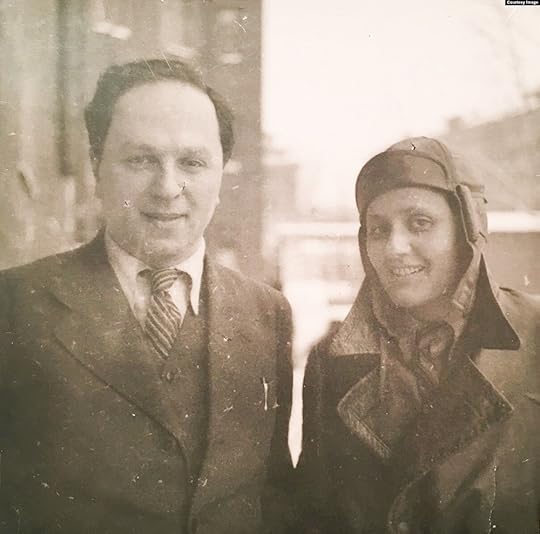
Свою наукову роботу в Харковi Вайсберг почав у крiогеннiй лабораторії, якою керував молодий, але вже досить вiдомий у науковому свiтi професор Л.В. Шубников. Маючи деякий досвiд видавничої дiяльностi, Вайсберг проявляє iнiціативу в започаткуваннi в Харковi мiжнародного фiзичного журналу, що став видаватися в 1932 роцi нiмецькою, французькою та англiйською мовами. Вiн був незмiнним членом його редколегiї. Під час вирiшення формальностей, пов’язаних із заснуванням журналу, Вайсберг знайомиться з М. Бухарiним, С. Орджонiкiдзе, Ю. П’ятаковим та iншими дiячами компартiї та Наркомату важкої промисловостi. Перед лабораторiєю низьких температур УФТI на той час постала складна дилема: як поєднати фундаментальнi та прикладнi дослiдження в однiй лабораторiї. I тодi було прийнято, мабуть, чи не єдине правильне рiшення — роздiлити лабораторiю. У селищi Липовий Гай на околицi Харкова розпочинається будiвництво примiщень дослідної станції глибокого охолодження ДСГО. Проект станцiї та її будiвництво з самого початку очолив Вайсберг, який проявив при цьому неабиякi господарськi та органiзаторськi здiбностi. Будiвлi ДСГО, для зведення яких Вайсберг віддав п’ять рокiв свого життя, стоять ще й досi.”
Yes, a very precious specialist, indeed, and very dedicated to his work. He did not stop even after his wife was arrested in 1926 (they divorced in 1934 but were still close friends, and he tried to help with her release but without any results). Like all the most prominent people, he was arrested himself in 1937, underwent all the usual cycles of torture and humiliation, and spent 3 years in Soviet prisons.
You can understand the level of this scientist considering who was trying to help with his release:
“…не останню роль вiдiграла потужна кампанiя на його захист, що була органiзована на Заходi і в якiй узяли участь видатнi вченi того часу.
Нижче ми подаємо листа Альберта Ейнштейна до Сталiна, який, здається, нiколи не друкувався в колишньому Радянському Союзi i на який учений так i не отримав вiдповiдi:
«Пасадена, 16 травня 1938 року.
Пановi Йосифу Сталiну, Москва, СРСР.
Вельмишановний пане Сталiне, останнiм часом менi все бiльше доводиться чути про те, що запрошенi до Росiї вченi звинувачуються в злочинах як люди, які мають стосунки зі своїми зарубiжними колегами. Я розумiю, що пiд час криз та соцiальних напруг на подiбних людей можуть падати звинувачення. Але я впевнений, що під загальнолюдським кутом зору, а також в iнтересах розвитку росiйської науки треба знайти спосiб тактовного поводження з людьми виняткових творчих сил та рiдкiсних здiбностей.
З огляду на це прошу Вас звернути увагу на справу Олександра Вайсберга, м. Харкiв. Вайсберг, австрiйський громадянин, iнженер-фiзик, працював в Українському фiзико-технiчному iнститутi в Харковi.
Я особливо хочу попросити Вас узяти до уваги свiдчення щодо доктора Вайсберга, професора Мартіна Руемана, керiвника дослiдної дільниці вiддiлу низьких температур, яке вiн направив навеснi 1937 року в Наркомат важкої промисловостi.
З повагою, професор Альберт Ейнштейн».
Мартін Руеман, британський громадянин, був колегою Вайсберга. Пiсля арешту останнього вiн активно став на його захист.
Аналогiчного змiсту телеграму надіслали Сталiнові в червнi 1938 року лауреати Нобелевської премії Жан Перрен і подружжя Жолiо-Кюрi. Не обмежившись телеграмою, Нобелевськi лауреати також направили Генеральному прокуроровi СРСР Вишинському листа, в якому доводили, що Вайсберг — видатний учений i що вiн нiколи не був ворогом радянської влади та що вони вимагають негайного його звiльнення.”
Despite this unprecedented support, he would have been certainly killed or sent to rot in the GULAG anyway, of course, but he was “lucky” in this regard just because he still had citizenship of Germany (while those of his fellow foreign specialists who agreed to become Soviet citizens were executed very quickly) and he was “returned” to Germany together with other Germans imprisoned in the USSR as part of the prisoner exchange based on the Nazi-Soviet (= Molotov–Ribbentrop) pact in 1940. This was actually a forced deportation, regardless of the desire of the prisoners, and as many of these Germans were Jews and/or Communists who came to the USSR fleeing Nazism or being dedicated to the Soviet idea (as Alexander Weissberg himself), their future was very endangered. Of course, after the exchange, Alexander Weissberg was imprisoned again, this time by the Gestapo. This imprisonment was not long, only 3 months, and after that, he was sent to a Jewish ghetto in Kraków, from which he would probably be referred to some extermination camp soon, but he fled the ghetto and spent World War Two in hiding (first in Kraków, and then in Warsaw, where he even participated in the Warsaw uprising). In the meantime, all his family was killed in the Holocaust. After the war, he emigrated and lived in Britain and France for the rest of his life (“A plague o’ both your houses!”, yeah).
So, an interesting person and an incredible life. Unfortunately, this memoir covers only his Soviet imprisonment and it ends with the prisoner exchange in 1940. However, it is still a large book, containing not only a very detailed account of his personal experiences but also stories of many other people related to his story and his own reflections and observations about various aspects of Soviet life. It is an interesting and thoughtful book that contains a lot of very important evidence both on a systematic and personal level, and I can recommend it. For me, there was little new in principle, except for the very curious treatment of those Germans who were “prepared” for the prisoner exchange. Also, I was especially impressed by the story of his weird relationship with another prisoner, Рожанський. This is just some fucking “Soviet Dostoevsky” story…
Alexander Weissberg is a very thorough narrator, which has its positive and negative sides: although he provides a lot of very exact and important details, it is easy to “get tired” reading this book, especially considering that he tends to add a lot of additional stories about other people to his own story, and therefore, you often feel “lost” about where we are now. Due to this and the large volume of the book overall, I had the impression that I had read three or four different books.
Still, it’s a good and important memoir, especially in view that it was published in the early 1950s, when the world was still under the illusion that the USSR was a “good guy” and “an ally” to the civilized world.
This book was published in various countries under different names: “Перша книжка вийшла 1951 року в лондонському видавництві «Геміш Гамілтон» під назвою «Змова мовчання» (англ. Conspiracy of Silence), того ж року її перевидало видавництво «Simon & Schuster» у Нью-Йорку під назвою «Звинувачений» (англ. The Accused), а також вона вийшла у Франкфурті-на-Майні у видавництві журналу «Frankfurter Hefte» під назвою «Відьомський шабаш. Росія в горнилі чисток» (нім. Hexensabbat. Russland im Schmelzetiegel der Sauberungen). Пізніше книжку було перевидано у Франції, Чехословаччині, Польщі. Польський переклад 1990 року вийшов з передмовою письменника Ґустава Герлінґа-Ґрудзінського, також в’язня радянської тюрми. В Україні книжку було видано під назвою «Холодна гора» 2010 року.”
Радио Свобода: “Его книга стала бестселлером в Германии, Великобритании и США. Александр Вайсберг принимал активное участие в деятельности “Конгресса за свободу культуры”, антикоммунистической организации, которая поддерживала многих передовых интеллектуалов и писателей. Он был одним из свидетелей на антикоммунистическом процессе в Париже (Давид Руссе против газеты Les Lettres Françaises). Его резко критиковали, но я думаю, что он считал это честью для себя.”
This is a memoir of an interesting person: Олександр Вайсберг (Alexander Weissberg-Cybulski) was a German scientist and communist who came to the USSR in 1931. He had a complex origin overall: a Jew, born in Polish Kraków in 1900 (i.e., in the territory of the Russian Empire), then moved to Vienna (Austria) and later to Berlin (Germany). He was a prominent physicist, and the Soviets were very interested in such specialists in the 1920s-30s, especially if they had any sympathy for communism. Well, Weissberg was not only an ardent communist; he had been a member of the Communist Party of Austria since 1927, and of course, he loved the idea of helping the USSR to develop their science and technology.
He worked in the USSR from 1931 to 1937, in particular in the Ukrainian SSR (in Kharkiv). From the preface to the book: “Тому немає нiчого дивного, що, отримавши запрошення директора Українського фiзико-технiчного iнституту (УФТI) I.В. Обреїмова переїхати на роботу до Харкова, Вайсберг без вагань і застережень погоджується на його пропозицiю. Він вважає, що його мiсце комунiста, iнженера, науковця у країнi будiвникiв соцiалiзму. У березнi 1931 року вiн разом із дружиною Євою Штрiккер уже в Харковi, де для нього почалися роки гарячкової наукової, органiзацiйної та адмiнiстративної дiяльностi.
Свою наукову роботу в Харковi Вайсберг почав у крiогеннiй лабораторії, якою керував молодий, але вже досить вiдомий у науковому свiтi професор Л.В. Шубников. Маючи деякий досвiд видавничої дiяльностi, Вайсберг проявляє iнiціативу в започаткуваннi в Харковi мiжнародного фiзичного журналу, що став видаватися в 1932 роцi нiмецькою, французькою та англiйською мовами. Вiн був незмiнним членом його редколегiї. Під час вирiшення формальностей, пов’язаних із заснуванням журналу, Вайсберг знайомиться з М. Бухарiним, С. Орджонiкiдзе, Ю. П’ятаковим та iншими дiячами компартiї та Наркомату важкої промисловостi. Перед лабораторiєю низьких температур УФТI на той час постала складна дилема: як поєднати фундаментальнi та прикладнi дослiдження в однiй лабораторiї. I тодi було прийнято, мабуть, чи не єдине правильне рiшення — роздiлити лабораторiю. У селищi Липовий Гай на околицi Харкова розпочинається будiвництво примiщень дослідної станції глибокого охолодження ДСГО. Проект станцiї та її будiвництво з самого початку очолив Вайсберг, який проявив при цьому неабиякi господарськi та органiзаторськi здiбностi. Будiвлi ДСГО, для зведення яких Вайсберг віддав п’ять рокiв свого життя, стоять ще й досi.”
Yes, a very precious specialist, indeed, and very dedicated to his work. He did not stop even after his wife was arrested in 1926 (they divorced in 1934 but were still close friends, and he tried to help with her release but without any results). Like all the most prominent people, he was arrested himself in 1937, underwent all the usual cycles of torture and humiliation, and spent 3 years in Soviet prisons.
You can understand the level of this scientist considering who was trying to help with his release:
“…не останню роль вiдiграла потужна кампанiя на його захист, що була органiзована на Заходi і в якiй узяли участь видатнi вченi того часу.
Нижче ми подаємо листа Альберта Ейнштейна до Сталiна, який, здається, нiколи не друкувався в колишньому Радянському Союзi i на який учений так i не отримав вiдповiдi:
«Пасадена, 16 травня 1938 року.
Пановi Йосифу Сталiну, Москва, СРСР.
Вельмишановний пане Сталiне, останнiм часом менi все бiльше доводиться чути про те, що запрошенi до Росiї вченi звинувачуються в злочинах як люди, які мають стосунки зі своїми зарубiжними колегами. Я розумiю, що пiд час криз та соцiальних напруг на подiбних людей можуть падати звинувачення. Але я впевнений, що під загальнолюдським кутом зору, а також в iнтересах розвитку росiйської науки треба знайти спосiб тактовного поводження з людьми виняткових творчих сил та рiдкiсних здiбностей.
З огляду на це прошу Вас звернути увагу на справу Олександра Вайсберга, м. Харкiв. Вайсберг, австрiйський громадянин, iнженер-фiзик, працював в Українському фiзико-технiчному iнститутi в Харковi.
Я особливо хочу попросити Вас узяти до уваги свiдчення щодо доктора Вайсберга, професора Мартіна Руемана, керiвника дослiдної дільниці вiддiлу низьких температур, яке вiн направив навеснi 1937 року в Наркомат важкої промисловостi.
З повагою, професор Альберт Ейнштейн».
Мартін Руеман, британський громадянин, був колегою Вайсберга. Пiсля арешту останнього вiн активно став на його захист.
Аналогiчного змiсту телеграму надіслали Сталiнові в червнi 1938 року лауреати Нобелевської премії Жан Перрен і подружжя Жолiо-Кюрi. Не обмежившись телеграмою, Нобелевськi лауреати також направили Генеральному прокуроровi СРСР Вишинському листа, в якому доводили, що Вайсберг — видатний учений i що вiн нiколи не був ворогом радянської влади та що вони вимагають негайного його звiльнення.”
Despite this unprecedented support, he would have been certainly killed or sent to rot in the GULAG anyway, of course, but he was “lucky” in this regard just because he still had citizenship of Germany (while those of his fellow foreign specialists who agreed to become Soviet citizens were executed very quickly) and he was “returned” to Germany together with other Germans imprisoned in the USSR as part of the prisoner exchange based on the Nazi-Soviet (= Molotov–Ribbentrop) pact in 1940. This was actually a forced deportation, regardless of the desire of the prisoners, and as many of these Germans were Jews and/or Communists who came to the USSR fleeing Nazism or being dedicated to the Soviet idea (as Alexander Weissberg himself), their future was very endangered. Of course, after the exchange, Alexander Weissberg was imprisoned again, this time by the Gestapo. This imprisonment was not long, only 3 months, and after that, he was sent to a Jewish ghetto in Kraków, from which he would probably be referred to some extermination camp soon, but he fled the ghetto and spent World War Two in hiding (first in Kraków, and then in Warsaw, where he even participated in the Warsaw uprising). In the meantime, all his family was killed in the Holocaust. After the war, he emigrated and lived in Britain and France for the rest of his life (“A plague o’ both your houses!”, yeah).
So, an interesting person and an incredible life. Unfortunately, this memoir covers only his Soviet imprisonment and it ends with the prisoner exchange in 1940. However, it is still a large book, containing not only a very detailed account of his personal experiences but also stories of many other people related to his story and his own reflections and observations about various aspects of Soviet life. It is an interesting and thoughtful book that contains a lot of very important evidence both on a systematic and personal level, and I can recommend it. For me, there was little new in principle, except for the very curious treatment of those Germans who were “prepared” for the prisoner exchange. Also, I was especially impressed by the story of his weird relationship with another prisoner, Рожанський. This is just some fucking “Soviet Dostoevsky” story…
Alexander Weissberg is a very thorough narrator, which has its positive and negative sides: although he provides a lot of very exact and important details, it is easy to “get tired” reading this book, especially considering that he tends to add a lot of additional stories about other people to his own story, and therefore, you often feel “lost” about where we are now. Due to this and the large volume of the book overall, I had the impression that I had read three or four different books.
Still, it’s a good and important memoir, especially in view that it was published in the early 1950s, when the world was still under the illusion that the USSR was a “good guy” and “an ally” to the civilized world.
This book was published in various countries under different names: “Перша книжка вийшла 1951 року в лондонському видавництві «Геміш Гамілтон» під назвою «Змова мовчання» (англ. Conspiracy of Silence), того ж року її перевидало видавництво «Simon & Schuster» у Нью-Йорку під назвою «Звинувачений» (англ. The Accused), а також вона вийшла у Франкфурті-на-Майні у видавництві журналу «Frankfurter Hefte» під назвою «Відьомський шабаш. Росія в горнилі чисток» (нім. Hexensabbat. Russland im Schmelzetiegel der Sauberungen). Пізніше книжку було перевидано у Франції, Чехословаччині, Польщі. Польський переклад 1990 року вийшов з передмовою письменника Ґустава Герлінґа-Ґрудзінського, також в’язня радянської тюрми. В Україні книжку було видано під назвою «Холодна гора» 2010 року.”
Радио Свобода: “Его книга стала бестселлером в Германии, Великобритании и США. Александр Вайсберг принимал активное участие в деятельности “Конгресса за свободу культуры”, антикоммунистической организации, которая поддерживала многих передовых интеллектуалов и писателей. Он был одним из свидетелей на антикоммунистическом процессе в Париже (Давид Руссе против газеты Les Lettres Françaises). Его резко критиковали, но я думаю, что он считал это честью для себя.”

January 7, 2018
More info on Stalin’s purges.
It’s an interesting read, well worth it for anyone who want to see how communism failed and why it is not the answer to the worlds ill. In the end, communism can not stand up to opposition or it falls apart as a political system, and it only took the deaths of 30 million Russians to prove it didn’t work.
It’s an interesting read, well worth it for anyone who want to see how communism failed and why it is not the answer to the worlds ill. In the end, communism can not stand up to opposition or it falls apart as a political system, and it only took the deaths of 30 million Russians to prove it didn’t work.
Displaying 1 - 2 of 2 reviews