

What do you think?

Ange Pitou #1/2
Ange Pitou, Volume 1
Angel Pitou es parte de una serie de cuatro novelas historicas de Dumas que cubren diversos hechos desde el reinado de Luis XV hasta la Revolucion Francesa. La serie esta compuesta por Memorias de un medico, El collar de la reina, Angel Pitou y La condesa de Charny. En esta novela, la Revolucion Francesa ha comenzado, el hambre ha hecho que el pueblo frances tome las armas para destruir todo lo que consideran causante de sus desgracias. El protagonista es joven y se convierte en uno de los principales personajes de la toma de la Bastilla."
414 pages, Paperback
First published January 1, 1969
About the author
Alexandre Dumas
6,861 books13.2k followersThis note regards Alexandre Dumas, père, the father of Alexandre Dumas, fils (son). For the son, see Alexandre Dumas fils.
Alexandre Dumas père, born Alexandre Dumas Davy de la Pailleterie, was a towering figure of 19th-century French literature whose historical novels and adventure tales earned global renown. Best known for The Three Musketeers, The Count of Monte Cristo, and other swashbuckling epics, Dumas crafted stories filled with daring heroes, dramatic twists, and vivid historical backdrops. His works, often serialized and immensely popular with the public, helped shape the modern adventure genre and remain enduring staples of world literature.
Dumas was the son of Thomas-Alexandre Dumas, a celebrated general in Revolutionary France and the highest-ranking man of African descent in a European army at the time. His father’s early death left the family in poverty, but Dumas’s upbringing was nonetheless marked by strong personal ambition and a deep admiration for his father’s achievements. He moved to Paris as a young man and began his literary career writing for the theatre, quickly rising to prominence in the Romantic movement with successful plays like Henri III et sa cour and Antony.
In the 1840s, Dumas turned increasingly toward prose fiction, particularly serialized novels, which reached vast audiences through French newspapers. His collaboration with Auguste Maquet, a skilled plotter and historian, proved fruitful. While Maquet drafted outlines and conducted research, Dumas infused the narratives with flair, dialogue, and color. The result was a string of literary triumphs, including The Three Musketeers and The Count of Monte Cristo, both published in 1844. These novels exemplified Dumas’s flair for suspenseful pacing, memorable characters, and grand themes of justice, loyalty, and revenge.
The D’Artagnan Romances—The Three Musketeers, Twenty Years After, and The Vicomte of Bragelonne—cemented his fame. They follow the adventures of the titular Gascon hero and his comrades Athos, Porthos, and Aramis, blending historical fact and fiction into richly imagined narratives. The Count of Monte Cristo offered a darker, more introspective tale of betrayal and retribution, with intricate plotting and a deeply philosophical core.
Dumas was also active in journalism and theater. He founded the Théâtre Historique in Paris, which staged dramatizations of his own novels. A prolific and energetic writer, he is estimated to have written or co-written over 100,000 pages of fiction, plays, memoirs, travel books, and essays. He also had a strong interest in food and published a massive culinary encyclopedia, Le Grand Dictionnaire de cuisine, filled with recipes, anecdotes, and reflections on gastronomy.
Despite his enormous success, Dumas was frequently plagued by financial troubles. He led a lavish lifestyle, building the ornate Château de Monte-Cristo near Paris, employing large staffs, and supporting many friends and relatives. His generosity and appetite for life often outpaced his income, leading to mounting debts. Still, his creative drive rarely waned.
Dumas’s mixed-race background was a source of both pride and tension in his life. He was outspoken about his heritage and used his platform to address race and injustice. In his novel Georges, he explored issues of colonialism and identity through a Creole protagonist. Though he encountered racism, he refused to be silenced, famously replying to a racial insult by pointing to his ancestry and achievements with dignity and wit.
Later in life, Dumas continued writing and traveling, spending time in Belgium, Italy, and Russia. He supported nationalist causes, particularly Italian unification, and even founded a newspaper to advocate for Giuseppe Garibaldi. Though his popularity waned somewhat in his final years, his literary legacy grew steadily. He wrote in a style that was accessible, entertaining, and emotionally reso
Alexandre Dumas père, born Alexandre Dumas Davy de la Pailleterie, was a towering figure of 19th-century French literature whose historical novels and adventure tales earned global renown. Best known for The Three Musketeers, The Count of Monte Cristo, and other swashbuckling epics, Dumas crafted stories filled with daring heroes, dramatic twists, and vivid historical backdrops. His works, often serialized and immensely popular with the public, helped shape the modern adventure genre and remain enduring staples of world literature.
Dumas was the son of Thomas-Alexandre Dumas, a celebrated general in Revolutionary France and the highest-ranking man of African descent in a European army at the time. His father’s early death left the family in poverty, but Dumas’s upbringing was nonetheless marked by strong personal ambition and a deep admiration for his father’s achievements. He moved to Paris as a young man and began his literary career writing for the theatre, quickly rising to prominence in the Romantic movement with successful plays like Henri III et sa cour and Antony.
In the 1840s, Dumas turned increasingly toward prose fiction, particularly serialized novels, which reached vast audiences through French newspapers. His collaboration with Auguste Maquet, a skilled plotter and historian, proved fruitful. While Maquet drafted outlines and conducted research, Dumas infused the narratives with flair, dialogue, and color. The result was a string of literary triumphs, including The Three Musketeers and The Count of Monte Cristo, both published in 1844. These novels exemplified Dumas’s flair for suspenseful pacing, memorable characters, and grand themes of justice, loyalty, and revenge.
The D’Artagnan Romances—The Three Musketeers, Twenty Years After, and The Vicomte of Bragelonne—cemented his fame. They follow the adventures of the titular Gascon hero and his comrades Athos, Porthos, and Aramis, blending historical fact and fiction into richly imagined narratives. The Count of Monte Cristo offered a darker, more introspective tale of betrayal and retribution, with intricate plotting and a deeply philosophical core.
Dumas was also active in journalism and theater. He founded the Théâtre Historique in Paris, which staged dramatizations of his own novels. A prolific and energetic writer, he is estimated to have written or co-written over 100,000 pages of fiction, plays, memoirs, travel books, and essays. He also had a strong interest in food and published a massive culinary encyclopedia, Le Grand Dictionnaire de cuisine, filled with recipes, anecdotes, and reflections on gastronomy.
Despite his enormous success, Dumas was frequently plagued by financial troubles. He led a lavish lifestyle, building the ornate Château de Monte-Cristo near Paris, employing large staffs, and supporting many friends and relatives. His generosity and appetite for life often outpaced his income, leading to mounting debts. Still, his creative drive rarely waned.
Dumas’s mixed-race background was a source of both pride and tension in his life. He was outspoken about his heritage and used his platform to address race and injustice. In his novel Georges, he explored issues of colonialism and identity through a Creole protagonist. Though he encountered racism, he refused to be silenced, famously replying to a racial insult by pointing to his ancestry and achievements with dignity and wit.
Later in life, Dumas continued writing and traveling, spending time in Belgium, Italy, and Russia. He supported nationalist causes, particularly Italian unification, and even founded a newspaper to advocate for Giuseppe Garibaldi. Though his popularity waned somewhat in his final years, his literary legacy grew steadily. He wrote in a style that was accessible, entertaining, and emotionally reso
Ratings & Reviews
Friends & Following
Create a free account to discover what your friends think of this book!
Community Reviews
Displaying 1 - 6 of 6 reviews

July 22, 2012
_Ange Pitou_, also known as _Taking the Bastille_, continues the “Marie Antoinette Romances” and further details the travails of the French monarchy in the dying days of its power. The title refers to the ‘hero’ of the story, Ange Pitou, an orphan being raised by his tyrannical and parsimonious aunt in the environs of Villers-Cotterêts (Dumas’ birthplace). As the story in volume 1 begins Ange Pitou is on the verge of being expelled from his school under the tutelage of the Abbé Fortier for his heinous use of “three barbarisms and seven solecisms in a theme of only twenty-five lines” which are anathema to the Latinist churchman’s ears. Pitou, much more inclined to his life as a poacher and haunter of the forests around Villers-Cotterêts, is not personally upset by this set-back, but rather fears the wrath of his aunt who harboured dreams of the young man becoming an Abbé and supporting her in her old age. As events continue Pitou eventually finds himself in the care of a much more moderate guardian ‘Father’ Billot, a farmer of some standing and the local agitator of political unrest (he also happens to be the father of the beauteous Catherine, a fact not altogether without interest to Pitou). So far so pastoral. Of course Dumas will not leave things in this state and it soon comes to light that not only was Pitou once under the guardianship of our old friend Gilbert (now known as Doctor Gilbert), but Billot himself is both a tenant of Gilbert’s and a fiery adherent to his more advanced political philosophies. Through not only the ownership of a banned political tract composed by Gilbert and found in the possession of Pitou while on Billot’s farm, but also the theft of a mysterious casket left in the farmer’s care by Gilbert, both the farmer and the former schoolboy find themselves on the run from secret police and on the road to Paris where they will take not insignificant roles in the historic storming of the Bastille, the symbol of tyrannical oppression in the eyes of the people, and un-official commencement of the French Revolution.
One of the things that can be annoying about reading Dumas, especially when considering his longer series of books that follow the progress of a specific historical period and group of characters, is that there are often large swathes of time that separate the volumes and important events that occur which are mentioned in passing in a “oh yeah, and while you were gone this happened” kind of way. I don’t totally fault Dumas for this since he wanted to write about long ranging periods of the history of France, and in order to do this in a completely continuous way would have made his already voluminous output unbelievably large and unwieldy. Add to that the problem of reading in translation and the situation of abridgment which unfortunately can occur, especially in some of his lesser known works, and it can be more than a bit frustrating. In this case it has been six years since the last volume (The Queen's Necklace) and the last time we saw Gilbert was even earlier, at the end of Memoirs of a Physician wherein he apparently took ship for America with Philip de Taverney. Balsamo did drop some hints about Gilbert in The Queen's Necklace where he chastised Philip for leaving him for dead (or maybe even killing him, the implications were unclear), but suddenly we have Gilbert locked in the bastille for his incendiary pamphlets, apparently he is also the father of a fifteen year old boy currently going to school in Paris who used to be Pitou’s foster-brother. So, that’s a bit of an information bomb. Added to that is the fact that Gilbert, in addition to being a political philosopher and practicing physician, has also been the pupil of Balsamo/Cagliostro at some point and displays to full effect his mesmeric abilities. Seems to me that this probably could have made for an interesting volume in itself, or at least a bit more exposition from Balsamo on the subject in the last one, but I guess Dumas was too busy to trouble himself with such things…continuity doesn’t seem to have always been his first concern.
Dumas delivers on his usual combination of interesting characters, fast paced action, and excellent dialogue. Ange Pitou himself is mildly interesting, a lanky country bumpkin with just enough book learnin’ to sound like he understands what the revolutionaries are talking about even though he doesn’t. There is also some romantic tension that ties nicely into the political situation given that Pitou’s object of adoration, Catherine Billot, only has eyes for one of the Charny boys, a nobleman and brother-in-law of Andree de Taverney, now the Countess de Charny (oh the wonderfully tangled plot lines of Dumas). Père Billot is a salt of the earth farmer of the gruff but lovable variety looking to level the field and bring equality to the people. More interesting by far is Gilbert, now a man of distinction and some influence far advanced from his previous position of pining unrequited lover to Andree and aspiring philosopher and revolutionary under the auspices of Jean-Jacques Rousseau. The King is still a feckless, though well-intentioned, monarch on the eve of disaster and Marie Antoinette herself has become jaded by her unpopularity with the people and surrounded herself with a sort of anti-court who are opposed to the more moderate wishes of the king and is something much more akin to the vain dragon-lady of popular conception than her previous role of uncertain victim of circumstance. Volume 1 ends, of course, on a cliffhanger as the newly freed Gilbert has just acquired the position of personal physician to the king and regained his stolen casket from Andree after displaying his mesmeric abilities. Andree herself was on the verge of explaining her antipathy for Gilbert to the Queen and detailing the secret contained by the casket when the curtains were drawn. I’m looking forward to volume 2.
One of the things that can be annoying about reading Dumas, especially when considering his longer series of books that follow the progress of a specific historical period and group of characters, is that there are often large swathes of time that separate the volumes and important events that occur which are mentioned in passing in a “oh yeah, and while you were gone this happened” kind of way. I don’t totally fault Dumas for this since he wanted to write about long ranging periods of the history of France, and in order to do this in a completely continuous way would have made his already voluminous output unbelievably large and unwieldy. Add to that the problem of reading in translation and the situation of abridgment which unfortunately can occur, especially in some of his lesser known works, and it can be more than a bit frustrating. In this case it has been six years since the last volume (The Queen's Necklace) and the last time we saw Gilbert was even earlier, at the end of Memoirs of a Physician wherein he apparently took ship for America with Philip de Taverney. Balsamo did drop some hints about Gilbert in The Queen's Necklace where he chastised Philip for leaving him for dead (or maybe even killing him, the implications were unclear), but suddenly we have Gilbert locked in the bastille for his incendiary pamphlets, apparently he is also the father of a fifteen year old boy currently going to school in Paris who used to be Pitou’s foster-brother. So, that’s a bit of an information bomb. Added to that is the fact that Gilbert, in addition to being a political philosopher and practicing physician, has also been the pupil of Balsamo/Cagliostro at some point and displays to full effect his mesmeric abilities. Seems to me that this probably could have made for an interesting volume in itself, or at least a bit more exposition from Balsamo on the subject in the last one, but I guess Dumas was too busy to trouble himself with such things…continuity doesn’t seem to have always been his first concern.
Dumas delivers on his usual combination of interesting characters, fast paced action, and excellent dialogue. Ange Pitou himself is mildly interesting, a lanky country bumpkin with just enough book learnin’ to sound like he understands what the revolutionaries are talking about even though he doesn’t. There is also some romantic tension that ties nicely into the political situation given that Pitou’s object of adoration, Catherine Billot, only has eyes for one of the Charny boys, a nobleman and brother-in-law of Andree de Taverney, now the Countess de Charny (oh the wonderfully tangled plot lines of Dumas). Père Billot is a salt of the earth farmer of the gruff but lovable variety looking to level the field and bring equality to the people. More interesting by far is Gilbert, now a man of distinction and some influence far advanced from his previous position of pining unrequited lover to Andree and aspiring philosopher and revolutionary under the auspices of Jean-Jacques Rousseau. The King is still a feckless, though well-intentioned, monarch on the eve of disaster and Marie Antoinette herself has become jaded by her unpopularity with the people and surrounded herself with a sort of anti-court who are opposed to the more moderate wishes of the king and is something much more akin to the vain dragon-lady of popular conception than her previous role of uncertain victim of circumstance. Volume 1 ends, of course, on a cliffhanger as the newly freed Gilbert has just acquired the position of personal physician to the king and regained his stolen casket from Andree after displaying his mesmeric abilities. Andree herself was on the verge of explaining her antipathy for Gilbert to the Queen and detailing the secret contained by the casket when the curtains were drawn. I’m looking forward to volume 2.

April 29, 2016
The original French text is available at La Bibliothèque électronique du Québec.
This book is the third in the "Marie Antoinette" series - sequel of "Le Collier de la Reine" - which describes the decline of the French monarchy. As historical background, the author describes the period dealt with is that of the weeks immediately preceding and succeeding the fall of the Bastille in 1789.
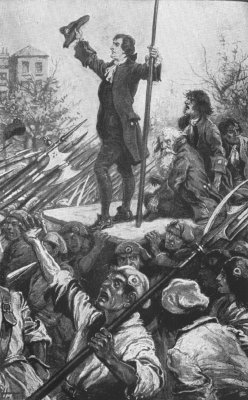
The doctor was raised above this sea of heads. by Paul Hardy.
In the beginning, Dumas drew upon his boyhood's memories, and undoubtedly some of his finest passages in the work are those which reveal to us the inhabitants and the life of the district of Villers-Cotterets (where he was born) and its forest.
4* The Count of Monte Cristo
4* The Black Tulip
5* The Two Dianas
3* La chemise de la Sainte Vierge
3* La Comtesse De Salisbury
3* Les mille et un fantômes
3* Les Frères corses
TR Ascanio
TR Georges, Or, the Isle of France
TR The Women's War
TR The woman with the velvet necklace
TR The Prussian Terror
The D'Artagnan Romances series
4* The Three Musketeers
4* Twenty Years After
4* Vicomte de Bragelonne
4* Ten Years Later
TR Louise de La Vallière
4* The Man in the Iron Mask
The Last Valois series
5* Queen Margot, or Marguerite de Valois
4* Chicot the Jester (La Dame de Monsereau)
4* The Forty-Five Guardsmen
The Marie Antoinette Romances series
4* Joseph Balsamo
4* Le Collier de la Reine
CR Taking the Bastille
TR The Countess de Charny
TR The Knight of Maison-Rouge
The Sainte-Hermine Cycle series
TR The Companions of Jehu
TR The Whites and the Blues
TR The Last Cavalier: Being the Adventures of Count Sainte-Hermine in the Age of Napoleon
Celebrated crimes series
TR The Borgias
TR The Cenci
TR Massacres of the South
TR Mary Stuart Queen of Scots
TR Karl Ludwig Sand
TR Urbain Grandier Celebrated Crimes
TR Nisida
TR Derues Celebrated Crimes
TR La Constantin
TR Joan of Naples
TR Martin Guerre Celebrated Crimes
TR Ali Pacha
TR The Countess Of Saint Geran Celebrated Crimes
TR Murat
TR The Marquise de Brinvilliers
TR Vaninka Celebrated Crimes
TR The Marquise de Ganges
Auto-biography
5* My Memoirs, Vol. 1
4* My Memoirs, Vol. 2
5* My Memoirs, Vol. 3
4* My Memoirs, Vol. 4
3* My Memoirs, Vol. 5
5* My Memoirs, Vol. 6
This book is the third in the "Marie Antoinette" series - sequel of "Le Collier de la Reine" - which describes the decline of the French monarchy. As historical background, the author describes the period dealt with is that of the weeks immediately preceding and succeeding the fall of the Bastille in 1789.
The doctor was raised above this sea of heads. by Paul Hardy.
In the beginning, Dumas drew upon his boyhood's memories, and undoubtedly some of his finest passages in the work are those which reveal to us the inhabitants and the life of the district of Villers-Cotterets (where he was born) and its forest.
4* The Count of Monte Cristo
4* The Black Tulip
5* The Two Dianas
3* La chemise de la Sainte Vierge
3* La Comtesse De Salisbury
3* Les mille et un fantômes
3* Les Frères corses
TR Ascanio
TR Georges, Or, the Isle of France
TR The Women's War
TR The woman with the velvet necklace
TR The Prussian Terror
The D'Artagnan Romances series
4* The Three Musketeers
4* Twenty Years After
4* Vicomte de Bragelonne
4* Ten Years Later
TR Louise de La Vallière
4* The Man in the Iron Mask
The Last Valois series
5* Queen Margot, or Marguerite de Valois
4* Chicot the Jester (La Dame de Monsereau)
4* The Forty-Five Guardsmen
The Marie Antoinette Romances series
4* Joseph Balsamo
4* Le Collier de la Reine
CR Taking the Bastille
TR The Countess de Charny
TR The Knight of Maison-Rouge
The Sainte-Hermine Cycle series
TR The Companions of Jehu
TR The Whites and the Blues
TR The Last Cavalier: Being the Adventures of Count Sainte-Hermine in the Age of Napoleon
Celebrated crimes series
TR The Borgias
TR The Cenci
TR Massacres of the South
TR Mary Stuart Queen of Scots
TR Karl Ludwig Sand
TR Urbain Grandier Celebrated Crimes
TR Nisida
TR Derues Celebrated Crimes
TR La Constantin
TR Joan of Naples
TR Martin Guerre Celebrated Crimes
TR Ali Pacha
TR The Countess Of Saint Geran Celebrated Crimes
TR Murat
TR The Marquise de Brinvilliers
TR Vaninka Celebrated Crimes
TR The Marquise de Ganges
Auto-biography
5* My Memoirs, Vol. 1
4* My Memoirs, Vol. 2
5* My Memoirs, Vol. 3
4* My Memoirs, Vol. 4
3* My Memoirs, Vol. 5
5* My Memoirs, Vol. 6
July 6, 2025
Dumas to mój ulubiony autor, za każdym razem gdy sięgam po jego książkę wiem że będzie to świetna historia! Tak było też z tą. Uwielbiam z jaką swadą pisze, jakby rozmawiał z czytelnikiem, styl lekko prześmiewczy, jego gry słowne + piękne opisy, także ludzkich zachowań i sytuacji - jego styl to mój ulubiony.
W tym tomie wreszcie dochodzi do tego, do czego poprzednie budowały napięcie - do rewolucji francuskiej. Przez jakieś pierwsze 200 stron śledzimy losy nowej postaci, jaką jest tytułowy bohater - da się go lubić w przeciwieństwie do większości bohaterów tego cyklu! Autor jak zawsze trafnie podsumowuje ludzkie charaktery, uwielbiam jak zawsze celnie opisuje ludzi. Później na szczęście pojawiły się też postacie z poprzednich tomów, trochę bałam się że ich zabraknie. Jak nie przepadam za Balsamem vel Cagliostro jako człowiekiem to tu zabrakło tej łączącej postaci. Ale to dopiero 1 część tego tomu.
Ogólnie chyba nie mam nic szczególnego do powiedzenia - jak ktoś lubi Dumasa, to ta powieść z pewnością się mu spodoba. Solidna, świetna książka!
Uwaga, bo dalej mogą być SPOJLERY!
Nie mogłam znieść, że sprawiedliwości nie stało się zadość, a bohater który w 1 tomie wyrządził okropną krzywdę, ma się dobrze a wręcz cieszy się szacunkiem i dobrze się mu powodzi! Jest to jednocześnie ogromnie frustrujące (czekam na sprawiedliwość!!) a jednocześnie rozumiem takie podejście autora i jest ono w sumie dość ciekawe. Dumas czesto ukazuje swych bohaterów jako szarych i pełnych sprzeczności (to samo uwielbiam w Trzech Muszkieterach!) - chociaż Gilberta nie nazwę inaczej jak gnidą - a także że los często jest niesprawiedliwy.
W tym tomie wreszcie dochodzi do tego, do czego poprzednie budowały napięcie - do rewolucji francuskiej. Przez jakieś pierwsze 200 stron śledzimy losy nowej postaci, jaką jest tytułowy bohater - da się go lubić w przeciwieństwie do większości bohaterów tego cyklu! Autor jak zawsze trafnie podsumowuje ludzkie charaktery, uwielbiam jak zawsze celnie opisuje ludzi. Później na szczęście pojawiły się też postacie z poprzednich tomów, trochę bałam się że ich zabraknie. Jak nie przepadam za Balsamem vel Cagliostro jako człowiekiem to tu zabrakło tej łączącej postaci. Ale to dopiero 1 część tego tomu.
Ogólnie chyba nie mam nic szczególnego do powiedzenia - jak ktoś lubi Dumasa, to ta powieść z pewnością się mu spodoba. Solidna, świetna książka!
Uwaga, bo dalej mogą być SPOJLERY!
Nie mogłam znieść, że sprawiedliwości nie stało się zadość, a bohater który w 1 tomie wyrządził okropną krzywdę, ma się dobrze a wręcz cieszy się szacunkiem i dobrze się mu powodzi! Jest to jednocześnie ogromnie frustrujące (czekam na sprawiedliwość!!) a jednocześnie rozumiem takie podejście autora i jest ono w sumie dość ciekawe. Dumas czesto ukazuje swych bohaterów jako szarych i pełnych sprzeczności (to samo uwielbiam w Trzech Muszkieterach!) - chociaż Gilberta nie nazwę inaczej jak gnidą - a także że los często jest niesprawiedliwy.

February 21, 2011
Alexandre Dumas is one of my favorite authors. I can't out his books down - they are fun and keep you on the edge of your seat, plus the time period they are all set in in my favorite.

January 17, 2014
Classic Dumas, weaving fiction into history with a touch of magic and court intrigue.
February 21, 2018
Part 1 of Dumas classic book. Not regarded as Dumas best work but very interesting story.
Displaying 1 - 6 of 6 reviews