Jest to nowela Edgara Allana Poe napisana w 1842 roku, często określana jako kontynuacja "Zabójstwa przy Rue Morgue". Bazuje ona na szczegółach prawdziwego morderstwa. Ukazała się w "Snowden's Ladies' Companion" w trzech częściach, w listopadzie i grudniu 1842 oraz w lutym 1843 roku.
The name Poe brings to mind images of murderers and madmen, premature burials, and mysterious women who return from the dead. His works have been in print since 1827 and include such literary classics as The Tell-Tale Heart, The Raven, and The Fall of the House of Usher. This versatile writer’s oeuvre includes short stories, poetry, a novel, a textbook, a book of scientific theory, and hundreds of essays and book reviews. He is widely acknowledged as the inventor of the modern detective story and an innovator in the science fiction genre, but he made his living as America’s first great literary critic and theoretician. Poe’s reputation today rests primarily on his tales of terror as well as on his haunting lyric poetry.
Just as the bizarre characters in Poe’s stories have captured the public imagination so too has Poe himself. He is seen as a morbid, mysterious figure lurking in the shadows of moonlit cemeteries or crumbling castles. This is the Poe of legend. But much of what we know about Poe is wrong, the product of a biography written by one of his enemies in an attempt to defame the author’s name.
The real Poe was born to traveling actors in Boston on January 19, 1809. Edgar was the second of three children. His other brother William Henry Leonard Poe would also become a poet before his early death, and Poe’s sister Rosalie Poe would grow up to teach penmanship at a Richmond girls’ school. Within three years of Poe’s birth both of his parents had died, and he was taken in by the wealthy tobacco merchant John Allan and his wife Frances Valentine Allan in Richmond, Virginia while Poe’s siblings went to live with other families. Mr. Allan would rear Poe to be a businessman and a Virginia gentleman, but Poe had dreams of being a writer in emulation of his childhood hero the British poet Lord Byron. Early poetic verses found written in a young Poe’s handwriting on the backs of Allan’s ledger sheets reveal how little interest Poe had in the tobacco business.
Brilliant follow-up to 'The Murders in the Rue Morgue'. Who killed Marie Roget, the perfumery girl? Was it a group of blackguards or a single perpetrator? Dupin investigates at his very best here. In some long analysis he's taking the press articles apart and comes up with great findings who might have committed the crime. Incredibly good research in detail and plausible facts. His perspective is unique and his thinking could be a role model for every police force all over the world. An extremely compelling book to read in a single session. Absolutely recommended, a classic!
"El misterio de Marie Roget" se supone que es la continuación de "Los crímenes de la calle Morgue", pero, en sí mismos, no tienen relación alguna. En esta obra, Dupin hace un recorrido por los periódicos y realiza la investigación basándose en los artículos sobre el supuesto asesinato de Marie Roget. Refuta o confirma las informaciones de los periódicos y aplica su especial método deductivo. Dupin no sale a la calle a investigar. Simplemente, analiza los artículos del periódico. Es un texto bueno, pero no está al mismo nivel de suspense y creatividad de "Los crímenes de la calle Morgue".
------------------------------
"The Mystery of Marie Roget" is supposed to be a sequel to "The Crimes in the Rue Morgue", but, in themselves, they are unrelated. In this work, Dupin goes through the newspapers and conducts the investigation on the basis of the articles about the alleged murder of Marie Roget. He refutes or confirms the newspaper reports and applies his special deductive method. Dupin does not go out on the streets to investigate. He simply analyses the newspaper articles. It is a good text, but it is not on the same level of suspense and creativity as "The Crimes in the Rue Morgue".
Oh. My. Gosh. Seriously. For reals? Did I actually really just read that? Can anyone think this is a good book? The first part was slightly interesting, but then it just got worse and worse and worse. Every second was like:
Let me give you an example:
"If, the feet of Marie being small, those of the corpse were also small, the increase of probability that the body was that of Marie would not be an increase in a ratio merely arthimetical, but in one highly geometrical, or accumulative."
There is literally pages and pages and pages of this crap.
We wander through mires of Dupin analyzing and over-analyzing and re-analyzing every single little thing. And then, the worst bit of all, after all of that suffering through we end up with this horrible non-resolution ending:
Are you freaking kidding me?!?!
So far in my journey through Poe's short stories I'm persuaded more and more that he is a far better poet than novelist.
1.) Murders in the Rue Morgue by Iron Maiden pops up on my playlist. 2.) Proceeded to Wikipedia for inspiration on which un-read Poe stories to add to my spooky season read list. 3.) Found out this was a sequel to the Rue Morgue story. 4.) Possibly did a 'I cannot contain my excitement’ lap around the room. 5.) Read the quick short in one sitting.
Based on a true story, Dupin tries to solve the murder of a perfume saleswoman who is found floating in the Seine. Was it a group of no-good scoundrels, someone close to the victim, or just a random criminal act? Fear not! Dupin is on the case. An entertaining, albeit methodical detective story. Considered to be some of the first ever written.
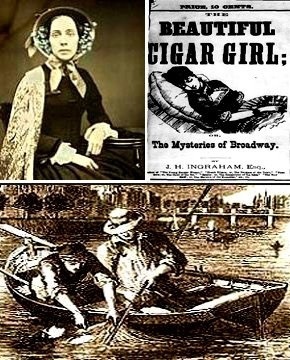
القصة الثانية لأول مخبر في التاريخ...لغز أختفاء ماري روجيه ولكني للاسف لا اعتبرها قصة...هي خبر صحفي قرأ السيد دوبين كل ما كتب عنه في كل صحيفة بالتفصيل الممل ليقوم بعد ذلك بااستقراء لكل جوانب الحادث، ووضع الاحتمالات والاستنتاجات..حتي وضع خطة لحل اللغز فقط خطة -أكيدة- للحل، وهذا كل شئ بعد المقدمة الطويلة المملة عن ارادة الله والامور الخارقة للطبيعة!!؛ ان يحدث حادثان متشابهان تماما لكن في اماكن مختلفة بعيدة تماما بنفس الوقت، تكتشف أن بو قدمها فقط ليستخدم حادث اختفاء وقتل حقيقي لماري روجرز (فتاة السجائر) من نيويورك ليقدم حادثه الخيالي عن مقتل ماري روجيه الفرنسية
ليقدم استقراءات دوبين حول كل ما كتب عنها في الصحف الفرنسية (بينما يقدم في الملاحظات اسماء الصحف الامريكية الحقيقية التي قدمت نفس الخبر الذي قام بتعديله بو فقط ليتناسب مع الاحداث في فرنسا) بشكل مفصل ثم يقوم دوبين باستقراء الحادث مرة اخري في حوار مع صديقه الرواي حول كل خبر بالتفصيل ، ثم ليقدم الاستنتاجات المنطقية الذكية وطرقة معرفة حل اللغز لغز الجثة التي عثر عليها في نهر السين/ التايمز في باريس/نيويورك ولغز اختفاء ماري روجيه/ماري روجرز ~~~~~~~~~~~~~~~ بالرغم من اعجابي بأجزاء عديدة من الملاحظات الذكية التي اطلقها دوبين حول الحادث، وبالرغم من البداية التي تعد بالكثير من الغموض والافكار المختلفة والتكهنات حول المصير الحقيقي وسر اختفاء ماري روجيه الا ان هذه القصة القصيرة كانت صفحاتها اطول بالنسبة لقصص دوبين ، بينما تخلو تقريبا تماما من الاحداث او الحوار إلا هم الحوار بين دوبين ورفيقه فيبدو أن بو كما في العالم وقتها تأثر بحادث اختفاء ماري روجرز والتي عثر علي جثة يشك إنها لها في يوليو 1841 لتستمر التحقيقات والتكهنات والشائعات لشهور، وحتي انتحار خطيبها الغريب ، والشكوك حول رجال العصابات بالمنطقة
ليقدمها بو بشكل تخيلي من خلال مقالات في اواخر 1842
وهي فعلا لاسلوب المقالات اقرب ، ويبدو فيها ايضا سخرية ونقد بو علي اسلوب صياغة بعض الصحف للخبر كما حدث في قصص سابقه له
ولكن عاما... حتي وان خاب أملي ان تكون القصة مقدمة روائيا بشكل افضل ، وبرغم اني فعلا تضايقت لعدم وجود روح للشخصيات هنا او حوار ملائم...-بل وهذه نفسها الانتقادات التي وجهت للقصة قديما ، حيث تعتبر اضعف قصة لدوبين لكني فعلا لا أنكر اني حزنت شيئا ما علي مصير ماري روجيه/ماري روجرز... ربما لا يكون اخلاقيا تحويل قصة حادث مأسوي حقيقي بشكل مباشر ادبيا، إلا ان الغموض وراء ماري يستحق القراءة، واستنتاج حل السيد دوبين لا بأس به لا بأس به علي الاطلاق
A story about a dragged dead body that feels like you're dragging a dead body. Based on the news report, the narrator speculates his opinions without leading anywhere. The end.
Okay, I don't really know how to rate this. It was a completely different experience from The Murders in the Rue Morgue because Dupin basically decided to not let the narrator speak and just talked endlessly about his deductions without even pausing for a trip to the loo. It was almost unreadable. And then when it gets to the very end, suddenly the editors decided not to leave the part in where he solves it, "for reasons which we shall not specify". WTF??
They did include his epilogue, but as a final affront it is founded on a gross misstatement about the facts of probability. He had to explain how it is possible that Dupin is solving a case unbelievably similar to an actual case in New York, even though it's all a ruse in order for Poe to try to solve the actual case with this hoax publication. But he didn't need to blaspheme mathematics to do it!
The fact that Poe/Dupin's analysis turned out to be correct on a number of points, according to later confessions by witnesses in New York, has got to be worth at least one extra star, but really, if you are calling this a short story then it should be written as a short story and not just a letter to the editor with quotes around it and preceded by "Dupin said".
Original Publication November 1842 - February, 1843
When the beautiful and alluring Marie Roget goes missing, her mother informs the police. Having previously disappeared before and returning after a few days very much alive, madame Roget hopes that this will be the case again. Except it is not. Marie's body is found floating in the Seine, apparently a direct result of murder. The newspapers cover the story and claim that it was a local gang behind the terrible incident. Enter C. Auguste Dupin. He disagrees and goes to Paris to reveal the truth.
With all due respect to Poe, this was a narrative that brought me no joy. The beginning was quite promising but from there on, reading this "short" story became a chore. Marie Roget worked in a Perfume shop and attracted male attention, quite a bit of it. She had disappeared before but returned. This time around, her body is found floating in the river. As she was a local "celebrity", the media takes the story and runs with it, laying blame with the local gang. Based on newspaper articles, Dupin thinks this not to be the truth. His unamed narrator walks us through Dupin's reasoning as to who really is to blame. This story, to me, was bogged down in technical details and read more like a textbook than a murder-mystery. My favorite aspect of a whodunit is the reveal which was a let down in this story. For a narrative that is just under sixty pages, it sure felt like it dragged on and on. I can appreciate Poe's hand and ability but I would be lying if I said I liked this book. This book is not my cup of tea.
Originally published in 1842, as a three part series in Snowden's Ladies' Companion this is the sequel to The Murders in the Rue Morgue. Poe is given the credit of creating the first modern detective. Sure enough, many characteristics from Dupin can be appreciated in the sleuths we love today. This book is based on the real murder of Mary Cecilia Rogers in 1841, in New York. Through Dupin, Poe was actually trying to solve the real-life murder. Poe changed the location and a few details but otherwise used the same data for the fictional Marie Roget. The culprit for Rogers' murder was nver caught. Reception of the story varied: some thought this was a masterpiece while others thought it tedious to read.
As Poe mentions at the beginning of this story, he never intended on writing a follow up to the Murders in the Rue Morgue, however there was a rather shocking murder in New York, and it spurred him to try his hand at attempting to solve it. Basically, this story is based on a number of newspaper reports regarding the body of a woman named Mary who was found floating in the Hudson River. However, Poe decided that he would move the story to Paris, bring back Dupin, and have him attempt to solve it. The problem is, that unlike the previous story, this one doesn’t really have a forgone conclusion.
One thing that struck me is the discussion on how long it would take for a corpse to float. Now, I was always under the impression that human bodies will automatically float, meaning that throwing them into the water without any weights to tie them down would be a rather fruitless way of disposing of a body. However, that doesn’t seem to really be the case, since a quite glance over the internet suggests that the corpse will initially fill with water, and it is only when it begins to decompose, and gasses begin to build up, will the body then float back to the surface.
There also seems to be this talk of the woman being murdered by a gang, but Poe, or at least Poe through the mind of Dupin, suggests that maybe it wasn’t a gang that killed her but rather a random sailor, a sailor that is never named, and is never even arrested. I guess this is why I was a little disappointed with this story, namely because it really isn’t the type of detective story that we would normally equate with the genre.
However, the concept still holds, and we do need to remember that Poe was pretty much experimenting with a genre that basically didn’t exist. That means that at the time there really wasn’t any hard and fast rules as to how to construct such a story. The other interesting thing is how he used the newspaper stories, which he was no doubt reading at the time, to construct his story. In a way this could even be the progenitor of what would become true crime, even though he is moving the action to Paris, and also changing the names, and the dates
That is another interesting idea that seems to appear in writings around this time. Years would be very vague, namely written as 18__, and even street names and such would be written similarly, with the first letter and that is it. I’m not entirely sure why the wrote that way. Maybe it was just to not tie the events down to a specific time or place, and to rather focus on the action as opposed to trivialities such as street names or years.
Opening: THERE ARE few persons, even among the calmest thinkers, who have not occasionally been startled into a vague yet thrilling half-credence in the supernatural, by coincidences of so seemingly marvellous a character that, as mere coincidences, the intellect has been unable to receive them. Such sentiments- for the half-credences of which I speak have never the full force of thought- such sentiments are seldom thoroughly stifled unless by reference to the doctrine of chance, or, as it is technically termed, the Calculus of Probabilities. Now this Calculus is, in its essence, purely mathematical; and thus we have the anomaly of the most rigidly exact in science applied to the shadow and spirituality of the most intangible in speculation.
This is the second in the Auguste Dupin detective series by Poe that I am going through and sadly less well written than the original. Though the mystery follows a real life murder mystery in the U.S. that Poe has mirrored and placed in France, it sadly falls flat in writing style. I will say that like Arthur Conan Doyle, Poe seems to have shown an interest in solving real life crimes in his personal time and this story was his offer of a solution which gives some very good arguments. Unfortunately, some of the arguments make little sense and contradict themselves, and Dupin talks so much and so wordily throughout the whole of the story that I several times lost his train of thought and got frustrated. The combination of extremely long run-on sentences and Poe/Dupin's tendency to say in 2 pages what could be said in a paragraph try the reader's patience and make one wonder whether he was paid by the word. Still, on the basis of a possible solution to the murder, he does appear to have put forth a well thought out argument that may well have been the solution to the crime. An interesting though difficult read.
The only disappointing thing is that it does not have any conclusion to the mystery, just like the movie Zodiac (1995). Though I thoroughly enjoyed reading it and learned how to deconstruct the sensational (fake) news articles.
"Misterul Mariei Roget" este net inferioară nuvelei "Crimele din Rue Morgue". Ambele îl au ca protagoniste pe legendarul Auguste Dupin, ambele se bazează pe deducţii logice, ambele "anchete" pleacă de la nimic concret şi ajung să fie explicate pe zece căi lăturalnice. Lucrul interesant, specific acestei serii "criminale" (şi la propriu şi la figurat) e acela că autorul, Poe, da dovadă de o colosală erudiţie -îmbinând elemente ce aparţin unui cerc larg de ştiinţe, de sorginte reală şi umană deopotrivă. Ceea ce e "savuros", cel puţin pentru mine, e faptul că, deşi vizibilă această erudiţie, ea nu este deloc ostentativă, pedantă. Analizând-o îndeaproape, am observat că fiecare detaliu e la locul lui, iar nu pus acolo ca o dovadă a pedanteriei. Lipsind nuvela de elementul respectiv, cade tot firul. Acest fapt cere, din partea artistului, o muncă imensă. Ca în orice operă din seria Dupin, sunt prezente acele raţionamente logice romanţate. Se regăsesc atâtea presupuneri şi deducţii încât cititorul -fie el şi iniţiat- trebuie să citească de două ori paragraful pentru a fixa cum trebuie informaţia. Acest lucru dezvoltă spiritul de "anchetator". Un al treilea lucru interesant -şi vizibil aici mai mult decât în oricare operă din serie- este dedublarea personalităţii lui Dupin şi punerea ei în postura criminalului, uzând de presupoziţia "eu cum aş fi reacţionat dacă tocmai aş fi săvârşit crima în cauza?".
"În ochii celor mulţi nu pare profund decât acela care le înfăţişează lucruri în contradicţie acută cu părerea tuturor."
"Căci tribunalul, călăuzindu-se după principiile generale privitoare la dovezi, principii recunoscute şi legiferate, este departe de a se lasă influenţat de cazurile mai deosebite."
Growing up with CSI: Miami is bound to make these stories feel bland, but I get why they were revolutionary in Poe's time. Still, this one drags and drags, with way too much newspaper clippings. The whole idea of re-creating a crime in retrospect has since been copied endlessly, with varying degrees of success.
I was mostly bored reading it, though unlike some reviewers the ending didn't piss me off. And, honestly, I read it out of a completist impulse rather than genuine enjoyment.
That said, considering Poe's attempt to reconstruct the real murder of Mary Cecilia Rogers in New York, he clearly enjoyed writing this "newspaper" investigation. In the pre-Internet age, I suppose peculiar personalities like Poe would spend their free time exactly this way.
Compared to Rue Morgue (invented bloody drama with a conclusion) and Purloined Letter (philosophical musings about logic and art), Marie Rogêt is the odd one out in the series.
I am a fan of Poe and must admit that I had not read this short book which features Chevalier Dupin, who also was in Murders in the Rue Morgue (which I have read).
In this tale, Poe takes the true story of the unsolved murder of Mary Rogers in NYC and moves it to Paris where a shop girl mysteriously disappears and eventually is found murdered. The Prefect of Police comes to Dupin to ask his help as the police are stumped. Dupin takes an entirely new approach to the "clues" that the police uncovered and proves that most of them are wrong. But he does not solve the case and the reader is left with no answer.
An unusual book which I found rather frustrating since, as most people, I expected the case to be solved. But since it is written to reflect the Mary Rogers case, the author wanted it to be true to the situation. The writing is pure Poe and must be carefully read. For such a short book, it is not a particularly fast read. I enjoyed it but did not think it was one of Poe's best.
در این داستان نیز خامی و نبوغ باهم درآمیخته است خام است از آن جهت که در ابتدای راه هنوز پو نمی دانست که شخصیت پردازی از ضد قهرمان داستان چقدر برای یک داستان جنایی مهم است بنابراین خیلی راحت از صحبت درباره قات�� و شخصیتش طفره رفته است اما نبوغ آمیز است از جهت استدلال های فوقالعاده ای که دوفن برای کشف جنایت می آورد ( بهترین استدلال های کارآگاه دوفن در واقع در همین داستان آورده شده) این بهترین داستان جنایی پو است بنظرم و من خیلی دوست ش دارم
So. Boring. There are only two good things about this short story that are worth mentioning. First of all, because of this story Mary Rogers, who was brutally murdered in 1841, has been immortalized. Chances are, without Poe's interest in the case of her murder, and his subsequent writing of this story, Mary Rogers would have been a murdered woman lost to history. So there's that.
The second good thing that came out of this short story is The Beautiful Cigar Girl: Mary Rogers, Edgar Allan Poe, and the Invention of Murder. The Beautiful Cigar Girl does a wonderful job of exploring the murder of Mary Rogers, the life of Edgar Allan Poe, and the processes and events that went into the production of The Mystery of Marie Rogêt. If you like Edgar Allan Poe, then The Beautiful Cigar Girl is a book worth reading. You can probably skip this short story, though.
3 Stars. I am unsure what to make of this. Set in Paris, it is an adaptation of a real 1841 New York murder; Mary Rogers was a beautiful, 21-year-old cigar store attendant popular with customers. Her body was found in the Hudson soon after her disappearance. The case was never solved. Poe took the facts, with little change other than names, to Paris. The fictional Marie Roget is a sales representative in a perfume shop. This time the body shows up in the Seine. Both women had fiancés who later committed suicide. By delving into New York news reports, Poe, through Dupin, presents an alternate focal point in Paris to the one the public was leaning toward. "Marie Roget" came out in 1842 in "Snowden's Ladies' Companion." It's a 46-page novella in the 2006 collection, "The Murders in the Rue Morgue, The Dupin Stories." Why am I unsure? Most importantly, it presents no solution - just ideas for investigative direction. Second, rather than a detective working towards a resolution, it is just Dupin's detailed analysis and questioning of the news reports. And again we confront Poe's difficult writing style. Is it actually a mystery story? I can't decide. You? (December 2020)
Poe expands his groundbreaking detective fiction into new territory which is only now in the 21st century featured on tv shows like CSI. His detective, the proto Sherlock, August Dupin presents forensic facts, then sifts through them to deduce how the crime was committed. Poe was amazingly ahead of his time in this and it is scientifically exact and impressive. I’m just personally not a huge CSI fan, It’s a little dry compared to the emotion of motives but I was really astounded at how modern a story this is. Poe, Jose Luis Borges and Dostoyevsky pointed the way. Oh and Jack London and...
A lesser known story of Poe’s investigator Dupin. This one regarding the disappearance and murder of a young woman in Paris, is based on a true crime involving a woman in New York City. Poe based his detective’s investigation on articles written in the US newspapers of the period.
Here, we're in Paris, a city teeming with shadows and whispers and the only detective on the scene is Monsieur C. Auguste Dupin – a man whose intellect is so sharp it could probably dissect a butterfly's thought process. But unlike his previous outing, Dupin isn't sifting through physical evidence so much as he is sifting through newspapers. Yes, you read that right! This is a cold case solved (or, well, analyzed) almost entirely through the obsessive examination of conflicting news reports.
Poe presents us with the baffling disappearance and subsequent discovery of the body of Marie Rogêt, a beautiful parfumerie employee. The press offers a hundred theories, each more convoluted than the last. Dupin, with an almost supernatural ability to connect seemingly disparate dots, dissects each article... exposing inconsistencies, challenging assumptions and generally making everyone else in the room feel rather dim-witted.
Now, a word of warning: if you're looking for thrilling chases, dramatic confrontations or a tidy "aha!" moment delivered by a suave detective, you might find "The Mystery of Marie Rogêt" a tad… cerebral. This is less a thrilling narrative and more a masterclass in logical reasoning, a demonstration of how the human mind can, with enough dedication (and perhaps a touch of madness), untangle the most Gordian of knots.
Is it a page-turner in the traditional sense? Perhaps not. But for anyone who appreciates the sheer power of intellect and the subtle art of deduction.
I know you probably have a lot of high school students writing to you, complaining about finding symbolism in The Raven or examining the psychology of the narrators in The Black Cat and The Tell Tale Heart. Don't worry. I'm not writing to complain about those things. In fact, I'm more than happy to do them. I just wanted to request a small thing of you: break down your paragraphs. A paragraph that is a page long is frightening, especially when it comes to your prose. Everything else I don't mind.
With this I am also sending you a collection of Sherlock Holmes stories. You might recognize a few things: the use of someone other than the detective as the narrator, the observation of small details to solve crimes, a long drawn-out explanation at the end of the stories, etc. Sir Arthur Conan Doyle did borrow a bit from you, but he managed to do something you couldn't: breathe life into his detective. There is a reason everyone my age is watching Sherlock and not Dupin. Dupin is not a dynamic character. There is nothing interesting about him. You don't let us know him, and it's clear you didn't put too much time into him. S0 yes, you do get mentioned on Gilmore Girls, and I'm sure a movie was made about your life at some point, but you don't have any work on popular TV. You should watch Sherlock. You'd like it.
While it started out interesting, about 1/3 of the way through it got tedious, as it became clear that the entire story was just going to be a discussion between Dupin and the narrator. Even more frustrating, there's no real conclusion as you would hope to have in a mystery.
That said, since this is considered to be the first "true crime" story it is pretty cool. In my opinion the fact that the real life New York City murder was unsolved (and still is) didn't have to necessitate that Poe not end the story with a solution though. This story definitely gives you detailed insight into what a mystery author must imagine as the inner workings of a fictional sleuth's mind (like Dupin or Sherlock Holmes).
A sequel to The Murders in the Rue Morgue, The Mystery of Marie Rogêt is a much more complex tale than both its predecessor and The Purloined Letter. Ergo, it is also much less popular.
Marie Rogêt, a French young woman soon to be married, is found dead floating in the middle of the river Seine; possibly the product of a jealous party, or the evil doing of a band of ruffians. It’s up to Detective Dupin and his companion to try to determine the bottom of the truth.
This is the first murder mystery written based on true events! The murder case of Mary Cecilia Rogers, in 1841. Poe ever the pioneer.
This could’ve been a good story if it had included any action at all; rather than just conjectures, hypotheses, and ruminations over the falsehood and validity of a number of facts published in a bunch of newspaper articles. Dupin sure is an expert at putting every little thing into question, and that’s pretty much all he does in this fifty page story, that doesn’t even have a real resolution. Sigh. Can’t recommend it really, but it’s always a unique experience to know the very first of the first.
Marie Rogêt, una joven francesa pronto a casarse, aparece muerta flotando en el medio del río Seine; posiblemente el producto de una parte celosa, o el mal haber de una banda de rufianes. Depende del Detective Dupin y su compañero el tratar de llegar a la verdad del asunto.
¡Este es nada menos que el primer misterio de asesinato escrito basado en hechos reales! El caso del asesinato de Mary Cecilia Rogers, en 1841. Poe siempre el pionero.
Esta podría haber sido una buena historia si hubiera incluido al menos un poco de acción; en lugar de puras conjeturas, hipótesis y cavilaciones sobre la falsedad y validez de una serie de hechos publicados en un montón de artículos periodísticos. Dupin es sin duda un experto en poner en cuestión hasta el último detalle, y eso es prácticamente todo lo que hace en esta historia de cincuenta páginas, que ni siquiera tiene una resolución real. Y bue. No puedo recomendarlo la verdad, pero siempre es una experiencia única poder conocer el primero de los primerísimos.
----------------------------------------------- NOTA PERSONAL: Basado en el caso real de Mary Cecilia Rogers. [1842] [49p] [Crimen] [No Recomendable] -----------------------------------------------
This was nowhere near as good as Murders In The Rue Morgue. I found it boring, as this time around, the horrific murder descriptions and inventively unexpected conclusions were both sacrificed to an overly-detailed analysis on what kind of clothes the deceased was wearing, and how they would have torn different based on different angles and bullshit like that. I'm not saying the story was bad. I'm just saying that, for more simple-minded readers like myself, the intricate structure and inevitable dismantling of it felt a little too pretentious this time around. Poe was so intent on impressing his readers with how smart and clever he was, that he forgot to make what he was writing more than slightly interesting.
No pude terminarlo. La historia iba interesante aunque algo lenta y tediosa en un principio pero luego con tanta explicación de parte de Dupin se vuelve insoportablemente aburrida. Llegué al punto de leer sin saber lo que estaba leyendo de lo muy aburrida que me pareció. Una lástima, porque de verdad le tenía fe a esta historia y tenía muchas ganas de leerla. Me decepcionó completamente.













![Profile Image for Saranya ⋆☕︎ ˖ [hiatus].](/_next/image?url=https%3A%2F%2Fi.gr-assets.com%2Fimages%2FS%2Fcompressed.photo.goodreads.com%2Fusers%2F1771166965i%2F187457635._UX200_CR0%2C0%2C200%2C200_.jpg&w=128&q=75)


