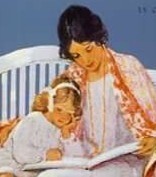
It's the year 1900, the dawn of a new century and a chance for a new beginning for Verna and Carlie, whose mother died two years ago. They are headed to their new home—the grounds of an asylum for the mentally ill. Their father, a doctor, has been hired to treat its patients while the girls are under the strict and watchful eye of their aunt Maude. The towering asylum, the murmuring patients with their tormented pasts, the exquisite locked garden at the center of the grounds—Verna perceives forbidden mystery and enchantment everywhere. Even Aunt Maude's temper will not keep her from striking out on her own exciting adventures. But is Verna ready to confront all the secrets and emotions that have been locked within—even those of her own heart?
Gloria Whelan is the best-selling author of many novels for young readers, including Homeless Bird, winner of the National Book Award; Fruitlands: Louisa May Alcott Made Perfect; Angel on the Square and its companion, The Impossible Journey; Once on This Island, winner of the Great Lakes Book Award; Farewell to the Island; and Return to the Island. She lives with her husband, Joseph, in the woods of northern Michigan.
This is an okay story, but don't be fooled by descriptors such as forbidden mystery and enchantment everywhere and the ghostly-looking cover into expecting that this story will have any ghosts or enchantments. You will be disappointed. Like me, you may then feel duped into having read a book about feeeelings that you would otherwise have skipped.
Also, Whelan sometimes mixes verbal tenses in a way that is not exactly wrong, but confusing. Like, you think this the first day exploring the new home and then time seems to shift and you are all, "Wait, is it a week later now? Or is the narrator telling this story after the fact?" It had a sort of old-ladyish feel that made me wonder if it were meant to be a recollection told long after.
I don't know why the locked garden was in the title, either. It was mostly just of symbolic importance. Man, I've almost talked myself into taking off a star. But I won't, because the writing is mostly okay, the girls are presented with some nuance, and the treatment of crazy people is respectful and not sensational.
Interesting plot and very well-written but I thought for a book aimed at around 12-14 year olds the ending was too frustrating. Every time the two girls tried to make things right, their plans were thwarted by the grown ups and their obviously-stupid conventions and strict social rules. In the end the heroine pretty much said 'I guess we'd better just stay out of it and let the grown-ups figure it out - I'm sure eventually they'll work it out for themselves' and that was it. I felt like the whole time they were fighting for nothing. I'm sure it's very realistic, especially in that time period, but I found it really frustrating and I think I would have been even more disappointed if I'd read this at a young age. Also, at times the dialogue didn't ring true for the era and sounded too slangy and casual - for instance other characters when talking to the girls about their father would say 'your dad'. It just seemed wrong.
I have to say though the author writes an excellent villain - Aunt Maude was so well-meaning yet so subtly sinister - and so realistically flawed; you could kind of see why she did the things she did, and feel a little bit sorry for her. And Elanor's father just made my skin crawl.
Worst. Narrative. Voice. Ever. Supposed to be from the POV of a spunky young girl whose family has come to live in a mental asylum in the late 1800s/early 1900s -- solid premis, right? But the voice is so horribly dull and explanatory that it sucked the life out of the whole thing. Did not finish, shame on me.
I am so confused now!! I could try to explain the plot but that's a bit hard, seeing as the ideas were tangled up in each other...
Anyway, the characters:
Eleanor: she was nice and pretty sweet. The best character.
Aunt Maude: GO AWAY!! She was soooo annoying and let me tell you, Aunt Maude, you don't make people like you by being mean to others!
Carlie: Meh. Kind of annoying but better than her sister.
Verna: Why must you interfere in everyone's lives to try to make them all better??? It makes it worse! *drags hands down my cheeks*
Anyway, it's nothing like I expected. I think the best thing about it is how the asylum was portrayed. Instead of being looked at as a place where crazy people are locked up, it's where people go for doctors to actually care about their patients and make them heal. 👍
The year is 1900. Two years after the death of their mother, twelve-year-old Verna Martin and her six-year-old sister, Carlie, leave their home in the city. They are moving with their father, a psychiatrist, to an asylum in the countryside that is testing out new ideas for the treatment of the mentally ill. Their strict Aunt Maude, who has cared for them since their mother's death, accompanies them.
Much to Verna's surprise, the asylum is a lovely place, with trees, flowers, and animals. And the patients aren't scary at all. One patient is Eleanor, a young woman who, thanks to the care and peaceful setting of the asylum, has improved enough to work. She comes to work at their house, to cook, clean, and help care for the sisters. Verna and Carlie become very close to Eleanor, and this causes Aunt Maude to become very jealous, which results in terrible consequences for Eleanor's health, leaving Verna to try and fix the situation.
The Locked Garden is a very interesting historical novel for young readers about a topic not much explored in children's fiction - the beginnings of modern mental health treatment. This book is both an interesting look at the subject as well as a touching story about family and friendship. I recommend it to young readers who like historical fiction as well as those readers who have enjoyed other books by the author.
Definitely not my favorite Gloria Whelan novel. It was alright, just not as moving or engaging as her other books, many of which are outstanding. I think the description is pretty misleading, too, as there is really no big "mystery" to this story. The ending was fairly ambiguous, as well, so I wonder if there will be a sequel. If so, I will read it because I like closure, not because I'm anxiously anticipating it. I also really wish the author would provide a bibliography. I'm curious about her research. The asylum certainly sounds more progressive than what I had previously understood about mental health treatment so long ago, although I am certainly am no expert by any stretch of the imagination.
The cover of these book was intriguing. I was expecting it to be like The Secret Garden or a mystery, but the name and cover of the book really only showed up in one chapter. It never picked up speed or surprised me, just kept going at the same pace, nothing more. The only suprise was the ending. I am still shocked I finished the book the ending was so bad. I was just like, "Is there another book?", "Wait, that's it". It just stopped so abruptly, like my book didn't have the ending. Really disappointing since I really loved Gloria Whelan's Small Acts of Amazing Courage.
This was a quiet story, and I enjoyed it for the most part.
The setting and premise—two girls moving with their doctor father to live near an insane asylum in 1900—could have been absolutely fascinating. Unfortunately, it was only somewhat interesting, since none of this was explored in much depth. The most interesting part was the director's philosophy that being in a beautiful setting surrounded by nature would help people heal…especially in combination with kindness and useful work. The girls' father believed that ailments of the mind could be treated with medicine, just like ailments of the rest of the body. But…we didn't get any details about that, or about his work. We hardly met any of the patients, and the topic of mental illness seemed quite simplified and sanitized. I know this is a book for kids, but it still felt too simplistic. I loved Eleanor, but even her struggles didn't ring quite true.
Aunt Maude's character was very interesting. I didn't like her, but she was a complicated, flawed, and somewhat sympathetic "villain."
The voice felt a little too old and circumspect for the age of the POV character, and the narrative moved in fits and starts, several time narrating what felt like many weeks and then going back to a scene a week in. All this gave the impression of being a story told long after the fact. That's not necessarily bad, and fit with the old-fashioned setting, but it felt a bit distancing.
And then the ending… It was far too abrupt. Endings are very subjective, but this just felt unfinished.
The younger sister was cute and felt quite realistic, and I loved the relationship between the sisters. I also loved their relationship with Eleanor. The power struggles between Aunt Maude and other characters were subtly exciting and quite revealing.
The writing was good overall, and though it was a quiet read, it held my interest.
The story of this book is very different from the other books writer by Gloria. The setting takes place in 1900, where Martin family moves from the city to the village near an asylum after where Edward will be working as a Psychiatrist. Edward has 2 daughter, Verna and Carlie and his wife's sister Maude. Verna and Carlie recently lost their mother and is being taken care by their aunt Maude. The story revolves around these character and Elenore who is a patient at the asylum recovering from her illness and given opportunity to work at Martin's house.
Since it's 1900, the book shows how society used to view asylum. From aunt Maude to neighboring school district thought asylum is for crazy people and not safe. I'm that's how people viewed back than... and even now.. probably. Either we think mental illness is not real or it's crazy. Either way, a lot of people never seems to accept that their loved one cou
The Locked Garden Set in Traverse City, Michigan in 1900 at an asylum for the mentally ill, this was a fun, quick read from a beloved children’s author. Children in grade 3-6 will easily identify with Verna and her little sister as they try to get rid of their guardian, dour Aunt Maude in favor of Eleanor, an asylum patient who comes to work in their home as a housekeeper. Although the locked garden was only a small part of the narrative, it symbolized not only the lives of those locked within its walls, but also the things we keep locked within our own hearts as we navigate our way through life. The ending was a bit abrupt and unsatisfying yet showed readers that as long as we learn from our mistakes there is still hope.
While an interesting premise, the main character was extremely annoying and acted much younger than her age (7th grade). But what bothered me most was the way adults spoke very forcefully to and condemned each other, even in the presence of the children. There was no redemption or forgiveness, and only the smallest bit of understanding. It was hard to finish this one. Not my favorite Whelan at all.
I did not connect with this book as much as I have with other Gloria Whelan books, but it was a good book anyway. This book is about a girl who lives near a mental hospital and her interactions with people there. I liked it.
While I enjoyed the story - it is well written and gives readers much to think about - I struggled with its audience. Readers who like history, strong characters, and the comfort of a familiar story (i.e., not a lot of surprises) may find this enjoyable.
What a waste of time! It was unrealistic and just went back and forth like she was trying to fill up the book. And the ending wasn't satisfying at all.
4.5 stars - there is no mystery or even enchantment really. but i still really enjoyed the story for what it turned out to be. moved quickly with lots of plot points. the ending was just okay though.
he Locked Garden is set in the year 1900, and is primarily the story of two sisters: Verna, age 12, and Carlie, age 6. After the recent death of their mother, the girls move with their father, who is a physician, to a new home located on the grounds of an insane asylum where he will be given the opportunity to test his theories of treating mental illness with medication. Joining the family in their journey is Aunt Maude, their maternal aunt, who seems determined to constantly remind the children and their father of the recent loss they have suffered in an effort to keep the memory of her sister alive. Shortly after starting life in their new home, their father hires a young patient, Eleanor, to assist in the care of Verna and Carlie. Eleanor's arrival changes everything, and soon Verna and Carlie find themselves at odds with both their father and their aunt as they try to ensure that Eleanor will remain one of the family.
This was an enjoyable read, which at times reminded me of Sarah, Plain and Tall. I found the understanding and treatment of mental illness at the time of the novel to be especially interesting. The book certainly didn't feel like a history lesson, but I felt that I learned a lot during the course of my reading. This book would be a perfect introduction to helping children have an understanding of the concepts of mental illness and depression. I can picture myself someday reading it to my own children when they are older so that we can have a discussion about what mental illness is, and how such illnesses are treated today versus in the past. The book also deals with death and grieving, although this is certainly a minor focus of the book. I am mentioning it because I really appreciated Whelan's handling of this topic.
The story itself is very fast paced. I found this to be a quick read. I was able to finish it in an afternoon. The target age group is 8-12, or grades 3-7, and I feel that this book was perfectly suited to this audience. The only reason I can't give this book a higher rating is because of the abrupt ending. I really felt that the story came to a screeching halt just as I was bracing for the climax. Perhaps this is because Whelan is planning to write a sequel, but I just found myself shocked that this book was actually over.
I would like to thank Harper Collins for generously providing me a review copy. Whelan is a great writer, and this isn't the first novel of hers that I have read. It certainly won't be my last.
In 1900, Verna and her little sister Carlie move with their father to a small house on the grounds of an asylum for the mentally ill, where he has been hired to work as a doctor. Unfortunately for the girls, their ill-tempered Aunt Maude goes with them – their mother died two years ago, and Aunt Maude has been caring for them ever since.
Verna and Carlie both love the gorgeous grounds surrounding the asylum and soon make friends with several inmates, including young Eleanor, who has been hired to help Aunt Maude keep house. The only fly in the ointment – and it’s a big nasty one – is Aunt Maude and her nasty, critical vindictive temper. Jealous of the affection the sisters show Eleanor, she behaves more and more cruelly to her, until finally Eleanor is forced to leave both the asylum and her job and return home to her unhappy home. Verna, not content to let this injustice stand, hatches a plan to get rid of Aunt Maude and get Eleanor back.
Now that I think about it, that really doesn’t sound like much of a plot, and so it is a tribute to the writing that I became fully immersed in the small dramas of Verna’s life. Aunt Maude’s petty cruelties loom large because they are so horrible for poor Eleanor, and Verna’s outrage – and her responses - are vivid and understandable. Their father, although not often around, makes the right choices when he sees what is happening – he isn’t one of those well-meaning but oblivious adults that is found so frustratingly often in children’s literature.
The jacket art and title bring to mind The Secret Garden by Burnett, but this is deceptive – the garden plays a small part, but really this is the story of a small family’s intense dynamics. The asylum itself also plays a role, and it is fascinating to read about the innovative therapies that were being practiced, even as early as 1900, in some places.
This is one of those books that will make readers forget almost instantly that it is “historical fiction,” so caught up in the story will they be. Recommended for grades 4 – 7.
Is an insane asylum a suitable place to raise children? Verna's Aunt Maude asks this question when her brother-in-law, a psychiatrist, brings his family to live on the grounds of an institution. Following the death of their mother, Aunt Maude comes to the institution to look after the upbringing of Verna and her younger sister, Carlie. Maude, stern and uptight, continues to keep the family in a dreary state of mourning. Luckily, the girls find happiness by spending time with a patient named Eleanor. Maude is jealous of the family's love for this young woman, and her cruelty gradually drives Eleanor from the brink of contentment back to the depths of depression. Verna and Carlie show their father how much their aunt has hurt Eleanor, and, in the end, he sends Maude away.
The Locked Garden is a well-crafted period piece which explores stereotypes and the effects that human beings can have on one another. The story takes place at the beginning of the 20th century, when attitudes about mental illness were just beginning to evolve. Dr. Thurston, director of the asylum, believes that a beautiful environment will eventually penetrate the patients' troubled minds. On the other hand, Verna's father believes that diseases of the mind can be treated just like diseases of the body. Both ideologies contain useful elements. Whelan succeeds in creating a rich, realistic setting full of believable and complex characters. While the reader may grow tired of the ever-cycling controversy surrounding Maude, there is enough texture in the story to keep the reader interested and engaged.
This entire review has been hidden because of spoilers.
The loss of their mother and then the move to a new home so that their father (Edward Martin) could work at a new asylum, left twelve year old Verna and her younger sister, six year old Carlie (Caroline) to be looked after by their stern Aunt Maude. When the new help (Eleanor Miller), a patient at the asylum, started to become close to the girls, Aunt Maude became jealous of the relationship and started to take an even meaner approach to dealing with Eleanor and the children. Between the cruelty of Aunt Maude and of her own father, Eleanor had a set back causing Verna and Carlie to take drastic measures in order to help their friend.
This is a great children’s historical that has the main characters doing things that many kids would like to do. The decision making process is impulsive and selfish with no concern with how it may affect others. This wonderful story really brings across the lesson of consequences to Verna. There is a lot of sad parts to this book that also brings out how differently people respond to one another. Verna saw the patients of the asylum as friends while Aunt Maude saw them as something to be afraid of. For a youth book, this is dealing with serious emotional and social concepts that can leave a good opening for honest conversations. It is a historical so it also shows mental health treatment in its infancy and gives kids an idea of how different many things are now than it was just over 100 years ago.
This is a very well-written book about a young girl whose family moves to the grounds of an asylum in the early 1900s. Her psychologist father, recently widowed, hires a patient to serve as a housekeeper and nanny. The book centers around the relationship between his daughters and the housekeeper as the housekeeper recovers from her psychological problems.
This book is beautifully written, but it has two problems: one, the book is nothing like the cover suggests. When I picked it up, I expected a mysterious story that would revolve around, well, a locked garden. But the locked garden only shows up for about five pages and it isn't central to the plot at all. Instead, it functions as a metaphor for the asylum. Secondly, the book ends in the middle of the story. It's okay for some books to end without resolving everything and tying the plot into a neat bow. But this is different--the story just slams into a brick wall and stops. It was actually quite strange.
So this is a good book, it's just not at all what you'd expect from the cover, and make sure your airbags are working before you finish the last chapter.
(If you like this book, you might also like Al Capone Does My Shirts by Gennifer Choldenko; in that book, a family moves to Alcatraz Island because the father is a prison guard.)
12 year old Verna and 6 year old Carlie move with their father and aunt to the grounds of a mental institution in northern Michigan. The year is 1900, and their father is a well-known psychiatrist who has radical ideas about the improvement of mental health. The children enjoying playing on the beautiful grounds and get to know the patients who are well enough to be outside and work, though Verna wonders about the patients in the locked ward and how they will ever get better by being locked up. Eleanor, who is recovering from depression, comes to work for the family and quickly endears herself to the children, causing tension in the household. When dour Aunt Maude becomes jealous, her actions nearly cause irreparable damage and it's up to Verna and Callie to try to help Eleanor free herself from her harsh father and inner demons.
The ending happens rather abruptly and is too insightful to be from a child's point of view. I didn't feel this book was as well written as some of her previous novels for the same age group but I liked learning about the treatment of mental health patients at the turn-of-the-century.
This was a quick read, and definitely a girl book, with a unique perspective on mental illness and its treatment. Verna and her younger sister Carlie and their father move to Michigan after their mother's death. Their father is a doctor, and will be working with patients at the asylum there. The girls think that the asylum will be a scary and depressing place, but it's not at all. There are beautiful grounds, gardens, fountains, and lots of nice people - both patients and staff. One young woman named Eleanor comes to work for them as a maid, and the girls both become quite fond of her - much to the dismay of their crabby spinster aunt who has made the trip with them. A jealous Aunt Maude tries to get rid of Eleanor any way she can, and the girls try their hardest to get rid of her instead. A good story that has some interesting historical information as well.
I enjoyed this book right up until the end where it left me feeling unresolved. Is there a sequel I don't know about?
Nonetheless, I found it engaging. I appreciated looking at mental illness through the eyes of a twelve-year-old girl and following her decision making process.
I also especially enjoyed the author's note at the end about her inspiration for the novel and look forward to doing further research about the care of those with mental illness in the 1900s.
However, I think more could have been done throughout the book to emphasize the idea of people being like gardens, some open and some locked rather than just briefly introduced in the last pages before an abrupt end.
Abrupt or not, I think this book brings up many great discussion topics that could be used in a class setting.
Whelan writes lovely, quiet tales of girls planted into foreign settings. In Listening for Lions, our heroine is taken to a wild game preserve in Africa. In her newest novel for children, Verna and her sister Carlie go to live on the grounds of a turn-of-the-century insane asylum, where their widowed father has a new job. They quickly learn to love exploring the grounds--especially when it gets them out from under the thumb of their domineering Aunt Maude. When Eleanor, a patient from the asylum, comes to work in the girls' home taking care of them, they learn to love her, as well.
I call Whelan's stories "quiet" because you won't find much action, but a lot of human interaction and emotion. I didn't like this one as much as Lions, but it was still a good story.
This book sounds much more exciting than it really is. There wasn't much of a plot, and the ending was too abrupt, with no real resolution. It was a little interesting to learn about the treatment of the mentally ill at this time, but even that was not explored very fully. The main characters do a lot of conniving and lying, which--problematically--results in everything working out neatly and with no negative consequences. I feel like their intentions could have been carried out in a less duplicitous way. Even if their hearts are in the right place, it still bothers me, especially considering the age group that this book is geared toward. While this isn't a terrible book, it's not one that I really loved or would recommend.
1900 Michigan. After her mother dies of typhoid, Verna's father takes a job as a doctor at an asylum. At first, Verna and her younger sister Carlie are unhappy to be there, but they learn to love the woods and gardens surrounding the hospital. When Eleanor, a recovering patient, starts working at their house as a maid, Verna and Carlie find her a lot easier to get along with than their strict, solemn Aunt Maude. When their aunt becomes jealous and causes Eleanor to be sent away, the girls decide they must get Eleanor back somehow.
An interesting story that includes a lot of information about how views of treating mental illnesses were changing in the early 1900s. The readers find that, like Carlie and Verna, life at the asylum is not what they expected.
Even though I just finished the it last night, I can't remember half the names. Ok, it could be me, not the book, which is about a family whose father works at a home for the mentally ill, or home for the insane as they were called around the turn of the nineteenth century. The daughters in the family form a strong bond with a patient who works for them. But a couple of strong-willed authority figures bully the young woman until she falls once more into a severe depression. The daughters (and I was not entirely this was realistic) help her break out of the depressive cycle. We'll see what the next book brings.