

What do you think?

Biographia Literaria
Originally conceived as a short preface to Sibylline Leaves, by the time Coleridge's Biographia Literaria was published in 1817 it had expanded into a two-volume apologia for the Romantic poet's "literary life and opinions." Coleridge here develops a theory of the poetic imagination, in which an artist's passion, will, memory, and perception intersect to engender her or his work. This unique edition is essential to understanding the influences and ideology of Romanticism.
303 pages, Hardcover
First published January 1, 1817
About the author
Samuel Taylor Coleridge
2,324 books909 followersSamuel Taylor Coleridge (1772-1834) was an English poet, critic, and philosopher who was, along with his friend William Wordsworth, one of the founders of the Romantic Movement in England and one of the Lake Poets. He is probably best known for his poems The Rime of the Ancient Mariner and Kubla Khan, as well as his major prose work Biographia Literaria.
Ratings & Reviews
Friends & Following
Create a free account to discover what your friends think of this book!
Community Reviews
Displaying 1 - 30 of 30 reviews
August 3, 2021
There are more things in Heaven and Earth, Horatio,
Than are dreamt of in your philosophy.
Shakespeare
After 73 years on the Autism spectrum, I no longer listen closely to folks who complain overmuch. Why should I? I have a far better time reading my ebullient buddies' books. As in LITERARY buddies…
And Coleridge was one of the first of 'em!
But coming of age comes even to those with Asperger's, and it means coming down to the crunch. Being a believer in a Higher Being, I loudly protested and attempted to avoid it.
This is the dense memoir, full of amusing literary segues and reminiscences, of which the style primarily decided my own present-day way of writing. When I read it over the Christmas break in 1969, I immediately sensed that it was, for me, the right way to write.
So my reviews now are chock full of my own dreams and memories.
When Coleridge wrote it, he was a full-fledged opium addict. Hence its style is somewhat loose and disjointed. But, man, is he fun to read!
Here Coleridge revels at first in his rocky relationship with the epochal William Wordsworth, after their initial meeting and melding of minds in Lyrical Ballads, co-written in the English Lake Country. And, natch, he dishes the dirt on his critics.
So it is fun, though not so much for me at the time, for various reasons which I'll divulge later. And Coleridge?
Well, his heyday was over and he knew it. The reason he could still write with any joy lies in the medicinal laudanum (opium) he was prescribed for his nerves. So it goes. Like my own meds.
But first a bit about how reading it made me later spiral downward to the point where I finally made my decision to boycott my own coming of age. I know now that it was a 'bad play, Shakespeare,' but I did it anyway...
***
I would find soon enough under intense sequestered scrutiny that the evil Siegfried in the sixties sitcom, Get Smart, really DID have 'Vays to make us Talk!' It all started by my reaction to a single essay in my Music and Tonality course, which ended that March.
You see, the essay that would determine my mark on that course hinged on was an outline of the tonalities in Wagner's Tristan.
Simple? Wait for it...
It was anything but.
Wagner's late tonal structure is ALL OVER THE MAP. It was, of course, impossible to map that chromaticism into tonalities. I thus abandoned the essay as it was humanly impossible. And barely passed that course.
It was due to that anomaly that I decided to adopt that same party line with the abandoning of adolescent absolutes that is coming of age. I boycotted it. And as I said earlier, the Siegfrieds of this world opposed me.
I became, as with Coleridge here, an avid supporter of the puritanical Clerisy: the imaginary Kingdom of Heaven for true idealists!
But modern psychological treatments are a rum thing. If you don't fit the square hole nowadays, you're MADE square, alas...
***
Now that you know of my boycott on ever fully maturing, I can go back to reading Coleridge that Christmas break...
I got to the point in my reading, you see, where I needed to find a certain Coleridgean reference in Mom's library to decide on a matter of interpretation. You couldn't Google it back in '69! So I walked over a few paces to go see an adult library clerk.
There was some sort of discussion going on, but I went ahead anyway, after excusing myself. They wouldn't mind - it'd only take a sec. That clerk was only asserting her power -
Only, back then, I had never encountered raw power in process between adults!
I thought it was just assert, bargain, come to a compromise and make a deal. Jacques Derrida, in his study of Rousseau - Of Grammatology - told me that it was something Much different. He calls it The Supplement. We Faithful Ones call it Sin.
Accepting it or rejecting it are both thresholds into adulthood. In my day and political climate acceptance was encouraged, and I rejected it. The repercussions were difficult, to say the least!
And Jean-Jacques Rousseau and Jacques Derrida Rejected this coming of age as well because of it, also, preferring their natural manner.
But read Derrida on Rousseau if you want to glimpse a Vaster and Higher World… this is not a joke.
***
And now, on clear days like today, I'm happy.
Constrained by my meds, as Rousseau and Coleridge were later constrained in modern times by a mocking diagnosis of bipolar disorder -
I can Still see my original, natural life clearly - Through a Glass Darkly.
Just as Coleridge did all the rest of his life...
With a little help from his friend, medicinal opium.
Than are dreamt of in your philosophy.
Shakespeare
After 73 years on the Autism spectrum, I no longer listen closely to folks who complain overmuch. Why should I? I have a far better time reading my ebullient buddies' books. As in LITERARY buddies…
And Coleridge was one of the first of 'em!
But coming of age comes even to those with Asperger's, and it means coming down to the crunch. Being a believer in a Higher Being, I loudly protested and attempted to avoid it.
This is the dense memoir, full of amusing literary segues and reminiscences, of which the style primarily decided my own present-day way of writing. When I read it over the Christmas break in 1969, I immediately sensed that it was, for me, the right way to write.
So my reviews now are chock full of my own dreams and memories.
When Coleridge wrote it, he was a full-fledged opium addict. Hence its style is somewhat loose and disjointed. But, man, is he fun to read!
Here Coleridge revels at first in his rocky relationship with the epochal William Wordsworth, after their initial meeting and melding of minds in Lyrical Ballads, co-written in the English Lake Country. And, natch, he dishes the dirt on his critics.
So it is fun, though not so much for me at the time, for various reasons which I'll divulge later. And Coleridge?
Well, his heyday was over and he knew it. The reason he could still write with any joy lies in the medicinal laudanum (opium) he was prescribed for his nerves. So it goes. Like my own meds.
But first a bit about how reading it made me later spiral downward to the point where I finally made my decision to boycott my own coming of age. I know now that it was a 'bad play, Shakespeare,' but I did it anyway...
***
I would find soon enough under intense sequestered scrutiny that the evil Siegfried in the sixties sitcom, Get Smart, really DID have 'Vays to make us Talk!' It all started by my reaction to a single essay in my Music and Tonality course, which ended that March.
You see, the essay that would determine my mark on that course hinged on was an outline of the tonalities in Wagner's Tristan.
Simple? Wait for it...
It was anything but.
Wagner's late tonal structure is ALL OVER THE MAP. It was, of course, impossible to map that chromaticism into tonalities. I thus abandoned the essay as it was humanly impossible. And barely passed that course.
It was due to that anomaly that I decided to adopt that same party line with the abandoning of adolescent absolutes that is coming of age. I boycotted it. And as I said earlier, the Siegfrieds of this world opposed me.
I became, as with Coleridge here, an avid supporter of the puritanical Clerisy: the imaginary Kingdom of Heaven for true idealists!
But modern psychological treatments are a rum thing. If you don't fit the square hole nowadays, you're MADE square, alas...
***
Now that you know of my boycott on ever fully maturing, I can go back to reading Coleridge that Christmas break...
I got to the point in my reading, you see, where I needed to find a certain Coleridgean reference in Mom's library to decide on a matter of interpretation. You couldn't Google it back in '69! So I walked over a few paces to go see an adult library clerk.
There was some sort of discussion going on, but I went ahead anyway, after excusing myself. They wouldn't mind - it'd only take a sec. That clerk was only asserting her power -
Only, back then, I had never encountered raw power in process between adults!
I thought it was just assert, bargain, come to a compromise and make a deal. Jacques Derrida, in his study of Rousseau - Of Grammatology - told me that it was something Much different. He calls it The Supplement. We Faithful Ones call it Sin.
Accepting it or rejecting it are both thresholds into adulthood. In my day and political climate acceptance was encouraged, and I rejected it. The repercussions were difficult, to say the least!
And Jean-Jacques Rousseau and Jacques Derrida Rejected this coming of age as well because of it, also, preferring their natural manner.
But read Derrida on Rousseau if you want to glimpse a Vaster and Higher World… this is not a joke.
***
And now, on clear days like today, I'm happy.
Constrained by my meds, as Rousseau and Coleridge were later constrained in modern times by a mocking diagnosis of bipolar disorder -
I can Still see my original, natural life clearly - Through a Glass Darkly.
Just as Coleridge did all the rest of his life...
With a little help from his friend, medicinal opium.

May 26, 2012
Poor Coleridge. It's impossible to go against the almost unanimous judgment of his contemporaries regarding his brilliant intelligence and conversation. But the reality is that he never, ever was able to make that intelligence and brilliance as productive as it should have been. And as can be attested by some others who have been opium slaves (some, not all, viz: DeQuincey, Burroughs et al.), Coleridge's serious and life-long addiction to laudanum is most probably the cause. And so we have Biographia Literaria, a mildly interesting but failed work the prose of which winds back and forth and in and around itself in a manner that makes it difficult to read except in fits and starts and little bits and pieces now and then. I owned this book for more than thirty years, frequently taking it off the shelf in attempts to read through it as with other books. No. Impossible. An hour's worth of BL would always either have me asleep or bored out of my sconce. Poor Coleridge.

September 6, 2015
An absorbing read as Coleridge seeks a philosophical foundation for his aesthetics. He mounts a convincing defense of Wordsworth's poetic genius and a withering attack on his poetic theory. An impressively serious intellectual endeavor written in the trail-blazing form of an intellectual autobiography.

December 15, 2010
Samuel Taylor Coleridge completed his Biographia Literaria on September 15th in 1815. A sort of intellectual autobiography, the Biographia contains reflections on wide range of philosophical and literary issues. The work is long and seemingly loosely structured, and although there are autobiographical elements, it is not a straightforward or linear autobiography. Instead, it is meditative, with numerous essays on philosophy. In particular, it discusses and engages the philosophy of Immanuel Kant, Johann Gottlieb Fichte, and Friedrich Wilhelm Joseph von Schelling. Being fluent in German, Coleridge was one of the first major English literary figures to translate and discuss Schelling, in particular.The concluding paragraph is a speculation on the connection between reason and religious faith, the two a continuum “even as the day softens away into the sweet twilight, and twilight, hushed and breathless, steals into the darkness.” The final sentence contains the sort of ringing (though often obscure or wandering) prose that can be found throughout:
"The upraised eye views only the starry heaven which manifests itself alone: and the outward beholding is fixed on the sparks twinkling in the awful depth, though suns of other worlds, only to preserve the soul steady and collected in its pure act of inward adoration to the great I AM, and to the filial WORD that re-affirmeth it from eternity to eternity, whose choral echo is the universe."
"The upraised eye views only the starry heaven which manifests itself alone: and the outward beholding is fixed on the sparks twinkling in the awful depth, though suns of other worlds, only to preserve the soul steady and collected in its pure act of inward adoration to the great I AM, and to the filial WORD that re-affirmeth it from eternity to eternity, whose choral echo is the universe."

Want to Read
March 5, 2019I must wait to give this my undivided attention... either in the near-future, or somewhere 50 years from now puffing on a pipe in a labyrinthine library sunken into leather chair, pausing to reflect on how strange it was that no one else ever seemed to notice that sirens sound just like babies wailing, lighting an opium candle
July 1, 2023
I wish he would explain his explanation

July 13, 2026
Master Poet divulges his larger metaphysics and personal thoughts. Read this if you have an interest in philosophy, poetry, the author, german literature, german language. (All of which I am interested in.)
Some gems of writing poetry:
1. The best poems are those which we return to.
2. The best lines are those which cannot be translated into other words of the same language without diminuniton
3. A poem contains the same elements as a prose composition. The difference therefore must consist in a different combination of them, in consequence of a different object proposed. According to the difference of the object will be the difference of the combination.
4. The reader should be carried forward, not merely or chiefly by the mechanical impulse of curiosity, or by a restless desire to arrive at the final solution; but by the pleasurable activity of mind excited by the attractions of the journey itself. […] as far as meter acts in and for itself, it tends to increase the vivacity and susceptibility both of the general feelings and of the attention. This effect it produces by the continued excitement of surprise, and by the quick reciprocation of curiosity still gratified and still re-excited, which are too slight indeed to be at any one moment objects of distinct consciousness, yet become considerable in their aggregate influence.
5. Constant reading of the Bible will naturally form a more winning and commanding rhetoric than those that are learned, and the intermixture of tongues and of artificial phrases debasing their style.
The End of his Metaphysics:
“The scheme of Christianity, as taught in the liturgy and homilies of our church, though not discoverable by human reason, is yet in accordance with it; that link follows link by necessary consequence; that religion passes out of the ken of reason only where the eye of reason has reached its own horizon; and that faith is then but it’s continuation.”
(Further reading: John 7:17)
Some gems of writing poetry:
1. The best poems are those which we return to.
2. The best lines are those which cannot be translated into other words of the same language without diminuniton
3. A poem contains the same elements as a prose composition. The difference therefore must consist in a different combination of them, in consequence of a different object proposed. According to the difference of the object will be the difference of the combination.
4. The reader should be carried forward, not merely or chiefly by the mechanical impulse of curiosity, or by a restless desire to arrive at the final solution; but by the pleasurable activity of mind excited by the attractions of the journey itself. […] as far as meter acts in and for itself, it tends to increase the vivacity and susceptibility both of the general feelings and of the attention. This effect it produces by the continued excitement of surprise, and by the quick reciprocation of curiosity still gratified and still re-excited, which are too slight indeed to be at any one moment objects of distinct consciousness, yet become considerable in their aggregate influence.
5. Constant reading of the Bible will naturally form a more winning and commanding rhetoric than those that are learned, and the intermixture of tongues and of artificial phrases debasing their style.
The End of his Metaphysics:
“The scheme of Christianity, as taught in the liturgy and homilies of our church, though not discoverable by human reason, is yet in accordance with it; that link follows link by necessary consequence; that religion passes out of the ken of reason only where the eye of reason has reached its own horizon; and that faith is then but it’s continuation.”
(Further reading: John 7:17)
March 14, 2026
Thought provoking stuff, but a little circuitous and meandering at a times. This certainly shouldn’t be among the first few Coleridge books you read, but it works well when you already know a lot about his life and work.

June 16, 2020
I reread the Biographia after many years and after reading Richard Holmes huge biography. that helped a lot - I could hear his voices and stay with him through all the digressions, the obscure dives into metaphysics and right to the incoherent ending. Of course it isn't a complete work of aesthetics or autobiography or criticism: it's a way into Coleridge's mind, for those who wish to take it. And we will do so most likely because we already believe that this is a worthwhile pursuit.
For my money, account of the imagination is powerful and persuasive; the analysis of Wordsworth holds up well, you can see how Coleridge was carving out the shape of what eventual became literary criticism, and the autobiography is mostly entertaining.
If you want to immerse yourself in the Romantics, you need to read the Biographia. Otherwise ...keep an open mind and just keep reading.
For my money, account of the imagination is powerful and persuasive; the analysis of Wordsworth holds up well, you can see how Coleridge was carving out the shape of what eventual became literary criticism, and the autobiography is mostly entertaining.
If you want to immerse yourself in the Romantics, you need to read the Biographia. Otherwise ...keep an open mind and just keep reading.

September 25, 2010
I actually have a 1920's roughly pocket sized hard back Everyman edition of this that I picked up in Powell's in Portland on a visit there.
I've browsed around in it a bit and read some excerpts previously. I like it pretty well. It's not as engaging to me as Ezra Pound's literary musings but in much the same vein.
I just recently read Wordsworth's Preface to the Lyrical Ballads and intend to follow up by reading Coleridge's thoughts on the matter here.
I've browsed around in it a bit and read some excerpts previously. I like it pretty well. It's not as engaging to me as Ezra Pound's literary musings but in much the same vein.
I just recently read Wordsworth's Preface to the Lyrical Ballads and intend to follow up by reading Coleridge's thoughts on the matter here.
October 13, 2008
A mind-numbingly dull and utterly pretentious attack on the poetic principles espoused by my new hero, William Wordsworth. For someone who claims imagination is the poet's highest faculty, he uses very little imagination in his own writing. I'm definitely not a fan.

June 30, 2025
It’s frustrating that the book description of this edition of Coleridge’s Biographia Literaria should perpetuate the traditional account of its genesis, an account that the editor, George Watson, takes pains to refute.
Watson describes the origins of the book, dating back to more than fifteen years before its eventual publication. From the outset, Coleridge intended a work that would reflect his dual interest in philosophy and poetry. Watson concedes that the formal design of the book cannot be defended, but argues that Coleridge succeeded “for the first and (so far) for the last time in English criticism” in “discovering a causal link between the two” in the poet’s imagination, set out by Coleridge in chapters 12 and 13, the heart of the book. Hitherto, “imagination” and “fancy” had been used interchangeably, but Coleridge differentiates the two, assigning to imagination, especially the poetic imagination, the power to dissolve sense perceptions to recreate, idealize, or unify them. In contrast, fancy, a lesser power, can only recall, with its creativity limited to association. At least that’s what I make of it, though I had a hard time following his discussion. He even coined a term to describe this faculty, “esemplastic” (the power to form into one), but this hasn’t caught on.
This achievement has been clouded not only by the ever-perpetuated tale that the Biographia is nothing more than an overgrown preface to a collection of poems, but also because a printer’s miscalculation forced Coleridge to hurriedly pad the manuscript at the last minute. This edition omits the padding and thus, Watson claims, is “the first to present the Biographia as nearly as possible according to the author’s intention.”
I can understand the widespread currency of the “garrulous preface” legend, however. Like a magpie, Coleridge seems to hop about, collecting shiny objects. The result: a fascinating record of a lively mind. He read widely and thought deeply, but the fecundity of his mind seems to have sabotaged his production. The footnotes of this book teem with announcements of forthcoming projects that never saw the light of day, mirroring the fifteen-year gap between plan and execution of this book.
One of the pleasures of reading Biographia was to follow a great literary critic at work as he shows by precept and example what makes great poetry. I noted several passages, including this: “The ultimate end of criticism is much more to establish the principles of writing than to furnish rules how to pass judgement on what has been written by others; if indeed it were possible that the two could be separated.” Coleridge’s work as a great critic is supported by his acute psychological insight.
One of Coleridge’s notable services rendered was to transmit the best of contemporary German philosophy to the English-speaking world. This book includes lengthy passages translated from Schelling and Lessing. He names both, but should have been clearer about where their words (in his translation) begin and end. His carelessness left him open to charges of plagiarism. He, in turn, felt misunderstood, one of many things that rankled him when others criticized his work. No doubt much of the criticism was unjustified, but his counterattacks are some of the least enjoyable passages in this book.
Still, overall, I enjoyed the book and learned a great deal from it.
Watson describes the origins of the book, dating back to more than fifteen years before its eventual publication. From the outset, Coleridge intended a work that would reflect his dual interest in philosophy and poetry. Watson concedes that the formal design of the book cannot be defended, but argues that Coleridge succeeded “for the first and (so far) for the last time in English criticism” in “discovering a causal link between the two” in the poet’s imagination, set out by Coleridge in chapters 12 and 13, the heart of the book. Hitherto, “imagination” and “fancy” had been used interchangeably, but Coleridge differentiates the two, assigning to imagination, especially the poetic imagination, the power to dissolve sense perceptions to recreate, idealize, or unify them. In contrast, fancy, a lesser power, can only recall, with its creativity limited to association. At least that’s what I make of it, though I had a hard time following his discussion. He even coined a term to describe this faculty, “esemplastic” (the power to form into one), but this hasn’t caught on.
This achievement has been clouded not only by the ever-perpetuated tale that the Biographia is nothing more than an overgrown preface to a collection of poems, but also because a printer’s miscalculation forced Coleridge to hurriedly pad the manuscript at the last minute. This edition omits the padding and thus, Watson claims, is “the first to present the Biographia as nearly as possible according to the author’s intention.”
I can understand the widespread currency of the “garrulous preface” legend, however. Like a magpie, Coleridge seems to hop about, collecting shiny objects. The result: a fascinating record of a lively mind. He read widely and thought deeply, but the fecundity of his mind seems to have sabotaged his production. The footnotes of this book teem with announcements of forthcoming projects that never saw the light of day, mirroring the fifteen-year gap between plan and execution of this book.
One of the pleasures of reading Biographia was to follow a great literary critic at work as he shows by precept and example what makes great poetry. I noted several passages, including this: “The ultimate end of criticism is much more to establish the principles of writing than to furnish rules how to pass judgement on what has been written by others; if indeed it were possible that the two could be separated.” Coleridge’s work as a great critic is supported by his acute psychological insight.
One of Coleridge’s notable services rendered was to transmit the best of contemporary German philosophy to the English-speaking world. This book includes lengthy passages translated from Schelling and Lessing. He names both, but should have been clearer about where their words (in his translation) begin and end. His carelessness left him open to charges of plagiarism. He, in turn, felt misunderstood, one of many things that rankled him when others criticized his work. No doubt much of the criticism was unjustified, but his counterattacks are some of the least enjoyable passages in this book.
Still, overall, I enjoyed the book and learned a great deal from it.

July 14, 2021
(If you are willing to launch into this, find an edition with bigger print and more leading. This is physically hard to read -- which doesn't help when you reading an intellectually difficult book)
What would be the reasons for reading "Biographia Literaria?" Well, interest in Coleridge. And in Wordsworth, since the best parts of this are discussions of Wordsworth's poems and poetic theories. Interest in early 19th century Romantic philosophy, and how it grew from German models. Those were some of mine.
But it IS a difficult read. I have to admit that I couldn't really follow the arguments in the first half of the book. They are difficult enough on their own, but then Coleridge was famous for his digressive conversations. In fact, he was remembered as the greatest "talker" of his time. Just plug him in and watch him go! And that is one of the pleasures of this. We get to see/hear the great man just go -- ramble through the dark corners of his mind as he moves toward the light. Yes, this prose is a reflection of his speech, and it may be a reflection of his opium addiction. There is not a sense of self-critical introspection, which there clearly is in his poems.
One of his biographers advised that we just read this and let the language wash over us. I think that is good advice. There are moments when the arguments are easy to follow -- particularly when he is talking about the literary culture of his time -- but then much, indeed most, of it is hard, even impossible, to follow after a couple of clauses.
But moments arise. Just sentences. And they are wonderful. I'll look back through in no order and find ones I marked"
"I write in metre because I am about to use a language different from that of prose."
"A second promise of genius is the choice of subjects very remote from the private interests and circumstances of the writer himself."
And then, of course, this -- ". . . that willing suspension of disbelief for the moment, which constitutes poetic faith." (And, yes, it might be worth all the struggle of this to get to this statement in its context)
I could go on. There are many many more gems buried in here. But the mining of these gems is difficult. I fear I many have missed too many in all the prose. I am glad I made my way through this, but someone would have to have very specific interests for me to recommend this to them.
What would be the reasons for reading "Biographia Literaria?" Well, interest in Coleridge. And in Wordsworth, since the best parts of this are discussions of Wordsworth's poems and poetic theories. Interest in early 19th century Romantic philosophy, and how it grew from German models. Those were some of mine.
But it IS a difficult read. I have to admit that I couldn't really follow the arguments in the first half of the book. They are difficult enough on their own, but then Coleridge was famous for his digressive conversations. In fact, he was remembered as the greatest "talker" of his time. Just plug him in and watch him go! And that is one of the pleasures of this. We get to see/hear the great man just go -- ramble through the dark corners of his mind as he moves toward the light. Yes, this prose is a reflection of his speech, and it may be a reflection of his opium addiction. There is not a sense of self-critical introspection, which there clearly is in his poems.
One of his biographers advised that we just read this and let the language wash over us. I think that is good advice. There are moments when the arguments are easy to follow -- particularly when he is talking about the literary culture of his time -- but then much, indeed most, of it is hard, even impossible, to follow after a couple of clauses.
But moments arise. Just sentences. And they are wonderful. I'll look back through in no order and find ones I marked"
"I write in metre because I am about to use a language different from that of prose."
"A second promise of genius is the choice of subjects very remote from the private interests and circumstances of the writer himself."
And then, of course, this -- ". . . that willing suspension of disbelief for the moment, which constitutes poetic faith." (And, yes, it might be worth all the struggle of this to get to this statement in its context)
I could go on. There are many many more gems buried in here. But the mining of these gems is difficult. I fear I many have missed too many in all the prose. I am glad I made my way through this, but someone would have to have very specific interests for me to recommend this to them.

October 27, 2020
just finished this at 4 am and i adore how much coleridge loves his pal wordsworth... yes show ur love for ur friend by writing him a highly academic critical text that literally only the two of you fully understand.. luv that for u <33
June 1, 2026
Samuel Taylor Coleridge এই গ্রন্থে কবিতার তত্ত্ব, কল্পনার ভূমিকা এবং সাহিত্য সম্পর্কে ব্যক্তিগত অভিজ্ঞতার এক গভীর মিশ্রণ উপস্থাপন করেছেন। এটি একদিকে আত্মজীবনীমূলক, অন্যদিকে ইংরেজি রোমান্টিক সমালোচনার অন্যতম গুরুত্বপূর্ণ তাত্ত্বিক কাজ
January 19, 2021
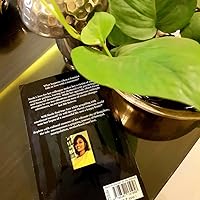
Read a detailed review:
http://chethanaramesh.blogspot.com/20...
http://chethanaramesh.blogspot.com/20...
November 13, 2024
TIL imagination is a Protestant invention
January 18, 2026
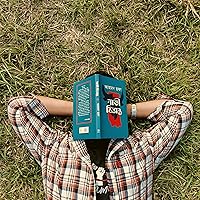
সারারাত জেগে পড়ে গেলাম Difference between Fancy and Imagination আর পরীক্ষায় আসল আর এক ছাতার মাথা! ইংলিশে অনার্স করার চাইতে ঘু খাওয়া বহুত ভালো 😩
April 21, 2026
Girl come on.
Read
October 10, 2026EN1201 - The Literary Imagination (Chapter XIV)
May 7, 2024
An autobiography after my own heart, as Coleridge provides us with very little biographical information and instead focuses more on the "Opinions" aspect of the title, which, fortunately, are opinions about poetry, literature, and philosophy -- some of the few things in our world worth having opinions about. The major topics of the book are an analysis of Wordsworth's ideas of poetry, which are then contrasted with Coleridge's own; and a long philosophical treatise regarding idealism that is cut off near the end because a friend told him it would be boring. It's funny to me that he doesn't then go back and delete the chapter, but instead just stops writing right at the point where he was when his friend's letter arrived, and even inserts the letter as an explanation.
So, the book is a bit of a mess, but there is a lot of good stuff in it. I especially appreciated his chapter imploring young writers to never try to make money through writing. Although it's probably best to learn that the hard way.
So, the book is a bit of a mess, but there is a lot of good stuff in it. I especially appreciated his chapter imploring young writers to never try to make money through writing. Although it's probably best to learn that the hard way.

April 23, 2011
coleridge, 1772-1834, the romanticism, english poet and critic....originality, unity, and transcendence.
a triangle, the poetry, the poet, and the reader.
nothing really new there, right, didn't aristotle acknowledge the....followers, or the lack thereof?
only when the poet "diffuses a tone and spirit of unity...blends and harmonizes the natural and the artificial" will the triangle be completed by the reader.
...supposes a literate crowd...i guess, hey? not those extremists mentioned in the empty chamber?
"the power of exciting the sympathy of the reader by a faithful adherence to the truth of nature, and the power of giving the interest of novelty by the modifying colors of imagination."
yay, say true and thank god, big big, verily. i see a bad moon risin...blue moon! you left me standing alone! w/o a drink in my hand!
"the reader should be carried forward, not merely or chiefly by the mechanical impulse of curiosity, of be a restless desire to arrive at the final solution; but by the pleasureable activity of the mind excited by the attractions of the journey itself."
yay! say true...the journey, not the end...the getting there, seeing what happens along the way.
the reader is on the raft, heading down the river, yes?
good sense and imagination...a plus...the idea of transcendence is there, originality, too.
"the poet gives us the liveliest image of succession with the feeling of simultaneouosness."
as if it exists outside itself, perhaps...
coleridge seems to be of the opinion that genius is inherited, or mutated...not something that one can develop...well, back to pounding nails i guess...no great loss there. not like i was ever going to make a dent, unless it be in a publisher's car...that would be one approach, instead of the anonymous manuscript tied to a concrete block, tossed, w/hope, thru a window...crash...i replace windows, too, so if one didn't work, there is the job security...and so on.
"utter aloofness." another idea from sam tee. a "gentle and unnoticed control" yes.
i believe he also addresses the disagreement wordsworth received...all that "low and rustic life"
poo white hillbillie trash i spose, paula jones, the whites in huck finn, who were able to sneak in under the radar, for all the good that did...and so on.
a triangle, the poetry, the poet, and the reader.
nothing really new there, right, didn't aristotle acknowledge the....followers, or the lack thereof?
only when the poet "diffuses a tone and spirit of unity...blends and harmonizes the natural and the artificial" will the triangle be completed by the reader.
...supposes a literate crowd...i guess, hey? not those extremists mentioned in the empty chamber?
"the power of exciting the sympathy of the reader by a faithful adherence to the truth of nature, and the power of giving the interest of novelty by the modifying colors of imagination."
yay, say true and thank god, big big, verily. i see a bad moon risin...blue moon! you left me standing alone! w/o a drink in my hand!
"the reader should be carried forward, not merely or chiefly by the mechanical impulse of curiosity, of be a restless desire to arrive at the final solution; but by the pleasureable activity of the mind excited by the attractions of the journey itself."
yay! say true...the journey, not the end...the getting there, seeing what happens along the way.
the reader is on the raft, heading down the river, yes?
good sense and imagination...a plus...the idea of transcendence is there, originality, too.
"the poet gives us the liveliest image of succession with the feeling of simultaneouosness."
as if it exists outside itself, perhaps...
coleridge seems to be of the opinion that genius is inherited, or mutated...not something that one can develop...well, back to pounding nails i guess...no great loss there. not like i was ever going to make a dent, unless it be in a publisher's car...that would be one approach, instead of the anonymous manuscript tied to a concrete block, tossed, w/hope, thru a window...crash...i replace windows, too, so if one didn't work, there is the job security...and so on.
"utter aloofness." another idea from sam tee. a "gentle and unnoticed control" yes.
i believe he also addresses the disagreement wordsworth received...all that "low and rustic life"
poo white hillbillie trash i spose, paula jones, the whites in huck finn, who were able to sneak in under the radar, for all the good that did...and so on.

July 14, 2014
In some form of irony, I feel that I lack understanding like, perhaps even more so than, the Coleridge who anonymously writes to himself within this text. This book has opened my eyes and ears to poetry and I am left feeling gratefully more knowledgeable of my ignorance than before.
My ignorance is not limited to poetry but also to the classics and contemporaries discussed in this book. Without the editor's footnotes this volume would have been nearly indecipherable to me.
Although no review is without the context of the reader, more needs to be said of the book. This is an exceptionally interesting treatise on the writing of poems and the poems of and up to that time. Particular attention is paid to the works of William Wordsworth, an acquaintance of Coleridge.
Much of the discussion and critique of poems, poetry and philosophy was beyond my current knowledge, however, the clarity of language (as one would expect from Coleridge after reading this book) even allows novices to follow much of what is said, if only from a distance.
Please note that this is far from being a collection of poems. It is a discourse on poetry and philosophy in the context of literary theory. A fascinating experience nonetheless.
My ignorance is not limited to poetry but also to the classics and contemporaries discussed in this book. Without the editor's footnotes this volume would have been nearly indecipherable to me.
Although no review is without the context of the reader, more needs to be said of the book. This is an exceptionally interesting treatise on the writing of poems and the poems of and up to that time. Particular attention is paid to the works of William Wordsworth, an acquaintance of Coleridge.
Much of the discussion and critique of poems, poetry and philosophy was beyond my current knowledge, however, the clarity of language (as one would expect from Coleridge after reading this book) even allows novices to follow much of what is said, if only from a distance.
Please note that this is far from being a collection of poems. It is a discourse on poetry and philosophy in the context of literary theory. A fascinating experience nonetheless.

August 18, 2014
An important book, but not an easy read, particularly the first half, before Coleridge sets into his thesis about what constitutes poetry (an argument with the preface to Lyrical Ballads, which he persuaded Wordsworth to write), and then critiques poets of his time and of antiquity (including Wordsworth and Shakespeare). Grab a highlighter, but don't expect his prose to be as good as his poetry -- it isn't.

July 24, 2007
Coleridge's outstanding theoretical inquiry, while occasionally hard to muddle through, remains a brilliant statement of both Romantic sensibility and timeless observations of literature - as well as a real smack-down for William Wordsworth. This is where Coleridge comes into his own, even more so than his literary works.
December 10, 2007
This is a really important milestone in Liteary history, as it was the first real literary critique. The personal frendship and rivalry between Wordsworth and Coleridge invite the reader to speculate on some of Coleridge's observations and motives; however his insights are well argued and the publication of this work ushed in what we understand today to be Literary Theory.

December 15, 2007
Dense dopey as a laudanum dream, but when a kindly old Coleridge scholar in his last year before retirement forces you to read it through, and then again once more, infinitely rewarding.

June 25, 2008
it took me 3 years to make my way through this, and now that its all said and done, i think they're needs to be an abridged version.

December 31, 2020
Biographia Literaria has proven that Coleridge's obsessions and interests are not for me.

February 11, 2009
I had trouble maintaining my interest in this book.
Displaying 1 - 30 of 30 reviews