Jump to ratings and reviews
Rate this book

Pollaks Arm

Rate this book
Rom, am Vorabend des 16. Oktober 1943. Im Wissen um die für den Morgen geplante Razzia der SS schickt Monsignore M. den deutschen Lehrer K. zum Palazzo Odescalchi. Seine Mission: Er soll Ludwig Pollak mit seiner Familie möglichst unauffällig und schnell in den Vatikan, in Sicherheit bringen. Pollak aber nötigt den ungebetenen Besucher, sich hinzusetzen, und beginnt zu erzählen: Wie er in Prag Archäologie studiert hat, von seiner Leidenschaft für Rom und für Goethe, von der Arbeit am Museo Baracco und vor allem, da ihm als Juden eine akademische Karriere verwehrt blieb, als renommierter Kunsthändler. Und schließlich von seinem spektakulärsten Fund, dem fehlenden Arm der Laokoon- Gruppe. K. hin- und hergerissen zwischen der ebenso faszinierenden wie erschütternden Erzählung des alten Mannes und seinem Auftrag drängt zum Aufbruch. Es beginnt zu dämmern in Rom

144 pages, Hardcover

First published January 1, 2021

42 people are currently reading
666 people want to read

About the author

Hans von Trotha

10 books7 followers
Hans von Trotha is a German historian, novelist, and journalist who spent ten years as editorial director of the Nicolai publishing house in Berlin. He is regarded as a specialist in the landscape gardens of the 18th century.

Von Trotha studied literature, history, and philosophy in Heidelberg and Berlin. He did his doctorate at the Freie Universität on literature and gardens in the 18th century, and his dissertation deals with the mutual influence of literature, philosophy, and garden art. While working on it, he began writing for radio and various newspapers as a freelance journalist. He later managed the Nicolai Verlag publishing house in Berlin for more than ten years.

Since then, he has worked independently as a curator, publicist, and consultant in the field of culture, including as a freelance journalist for Deutschlandfunk Kultur. In 2020-2021, he was curator of the Moosbrand Music and Literature Festival of the Nantesbuch Foundation.

Ratings & Reviews

What do you think?
Rate this book

Friends & Following

Create a free account to discover what your friends think of this book!

Community Reviews

5 stars
103 (31%)
4 stars
127 (38%)
3 stars
61 (18%)
2 stars
27 (8%)
1 star
10 (3%)
Displaying 1 - 30 of 70 reviews
Profile Image for Richard Derus.
4,176 reviews2,263 followers
January 14, 2024
Real Rating: 4.75* of five, rounded up because it's very beautiful if still just slightly disorganized

I RECEIVED A DRC FROM THE PUBLISHER VIA EDELWEISS+. THANK YOU.

My Review
: First, read this:
Rome is so eerie these days. The city seems caught in the chokehold of some immense, capricious beast, especially at night. Pollak said the same thing, worded a little differently, but similar. A monster lying in wait, outwardly quiet, but ready to strike at any moment. Every monster strikes eventually. It's in its nature. Those of us harbored here in the Vatican feel a wave of gratitude and relief whenever we reach a building that the German embassy has marked as Vatican property. It's like a magic spell keeping the monster at bay. One may feel safe here.

In a nutshell, that's the book's burden of meaning. In this tightly paced read, you'll be subjected to a high level of frustration because it's just not possible not to be. These are Jews fleeing Nazis by hiding behind the Vatican's skirts. ... Talk about emotional whiplash.

The man narrating the book to Monsignor F., called K., is the one sent on the delicate, but very important for the Vatican, mission to see that Ludwig Pollak is brought to safety in the Vatican's boundaries. Pollak, a Jew, is about to be deported and, as we reading the book know from before we so much as blink, that means death for an elderly man, his diabetic wife, and his disabled progeny. K. is busily trying to instill in an elderly man who's been exiled from his Roman home before (for being an Austrian subject during World War I), who's lost his first wife during exile and been forced to serve an Emperor he had no slightest regard for, but who's been fêted and celebrated by that Emperor before and who now wants nothing to do with the Jew...there are simply too many miles on the clock, K. Pollak winds his hours down by emulating Sheherezade and using K.'s ears to pour his meaning into. After all, K. will survive and Pollak, well...the past means more to him:
One tends to think the weather was nicer and people were friendlier when remembering the past, and although it's not true, there is some truth to it. Every memory has its own truth; otherwise it wouldn't exist.

So we're going down the garden path with a man who's been mistreated many times, in many ways, for being a Jew. For being an Austrian in Italy, for being Czech in Austria, and a Jew to boot. This is a man whose life is Art. He's been ushered in ahead of Barons to the presence of J. Pierpont Morgan because he has, knows, can connect the dots...
What could possibly surpass the exhilaration a collector experiences after making a significant find or finally acquiring a piece he has long coveted and lost sleep over? This realm of terrific, silent joys has revealed itself to me as well, Pollak said; it may be the only joy that truly exists. Collectors, he continued, are the most passionate people on earth. People prepared to venture into the foulest corners of the criminal code to take possession of a teacup, a painting, or some other objet d'art.

And Morgan is not the first powerful man who has used Pollak's art-sense to make something extraordinary his own, or explain why what he has is extraordinary from Pollak's vast stores of knowledge. It is this quality of Pollak's mind that K. is called upon by the gods, via the peculiar institution of the Vatican, to witness. It is this extraordinary votary of Art who is, at long last, saying out loud why his life mattered and what he has done cannot be undervalued because of his Jewishness. It is there, in all its glory, the objet d'art and the sculptures and...and...and...it's physical. While Pollak as a name might vanish (not really, though not for lack of the world trying) his work remains:
Pleasant memories cannot exist, Pollak stated for no reason I could figure, if the experience itself wasn't pleasant. Or, he asked, can they? He didn't think so; he had written down everything important, or at least, everything that seemed important to him, because who knew what would prove important in the long run?
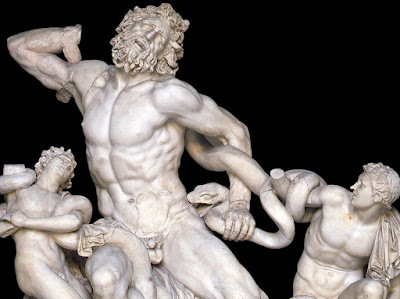
False modesty, or real, we the readers know that Pollak always knew what was always going to be important in the long run: Art. He was correct. This récit gets its title from a discovery Pollak made in the early 1900s, a piece of a sculpture made in Greece in times most ancient, and spoliated by the Empire's vast greed for Art and what were, even to them, antiquities.

from the Musei Vaticani
They {their arms} are not, however, extended in pride but in a fight against death, to fend off the snakes. Their death is certain. Whether one is fighting death or fighting certain death makes all the difference. Is it noble? Pollak asked. Naïve? Quiet? Grand? Or is it just terrible, plain and simple?

This is the sculpture in question. The right arm, the one bent at the elbow ever so slightly, is the one recovered by Pollak, and then donated to the Vatican Museum...he explains why in the text, but that is something you'll need to read for yourself, there's no way to excerpt it without typing many paragraphs. For this splendid act of generosity, he is awarded all sorts of attention and perks in the archeological community, and his (barely post-Dreyfus Affair) Jewishness is grandly overlooked as the crowned heads pin medals of merit all over him. The arm completes the emotional arc of the story of Laocoön as the gods mete out punishment for his unforgivable act of hubris. Read the story, I am not discussing it here.

When Pollak returned from his Austrian exile, he resumed his life-long career in service to the culture industry. His life spent as an art dealer, now spent being the director of a museum dedicated to sculpture, a collection assembled by an old friend of Pollak's. I don't imagine it will surprise you to know that there were vicissitudes...and betrayals...and that Pollak, in the end, cared less for any of that than he cared for the art, and for the stories inherent in caring for Art. The Vatican (for better or worse) has a very long memory. They sent K., a car, and their urgent invitation to Pollak and his family to accept rescue from certain death.
It's different in the Vatican, I quietly offered, and you know it. ... You will be safe there. And they're expecting you. I sleep very little, he said, barely at all now. It must be nice. How could I possibly wake them when the world they'd wake up to is the world they'd wake up to? I didn't know how to respond. We sat there in silence until he, rather than getting up and rousing his family, resumed his tale.

Despite the urgency, the despairing urgings of K., the certainty of death...is not troubling Pollak. He knows, from his connection to Laocoön, that the gods send what they will and it's not up to puny mortals to complain. He saw what was coming. He was, at sixty-plus years of age and in frail health, not going to argue with the gods again. Men, as he has bitter cause to know, are not creatures of reason. They are snakes, they are beings without character but with brute, brutal strength, when they serve their passions:
Not one of them wrote about what they saw; instead, they wrote about what they thought. And when a man thinks long enough about what he wants, it eventually becomes what he sees.

It is nothing but the truth, put in the mouth of Ludwig Pollak, guilty of the crime of Jewishness in a world where the powerful hate you for that unforgivable breach.

It is no accident that New Vessel Press chose this title to come out hard on the heels of The Vanished Collection. Fiction and non-fiction about spoliation. The parallels between Pollak and Jules Strauss, the parallels in our own times' spoliation crisis and restitution failings. There is so much to be said about the concept of "Museums" in today's world, the one where facing up to the past is at last becoming effective...and the immensity of the hate-stoking that is working against the deepening of the many, many overdue reckonings with the Imperial Past (not to mention present). The world is, sadly for some and confusingly for all, changing. The problem with resisting that change is it does not work. It merely stores energy to be released in the eventual great change. 1789 ring any bells?

We live in interesting times. Read this slender, one-sitting meditation on just how interesting, just how much there is still to be accounted for and dealt with. You will be glad you did.

This review has lots of hyperlinks. Since they aren't impossible to understand the story without having, I reproduce the whole review here without them. The whole linked-up version is here: https://expendablemudge.blogspot.com/...
Profile Image for Paul Fulcher.
Author 2 books1,953 followers
March 14, 2023
Shortlisted for the 2022 Republic of Consciousness Prize US & Canada

Rome has long since succumbed to the sea serpents, he said. They are unpredictable. They will strangle one man until he can no longer breathe, while biting the other and relishing in his ruin. Surely it’s much safer for us not to go out, to simply stay here. What could they possibly want from an old man like me? But the snake always wins. Laocoön teaches us that. Man will never win against serpents sent by the gods. Not in this world.

Pollak's Arm is Elisabeth Lauffer's translation of Hans von Trotha's novel of the same title, and is published by New Vessel Press:

In bringing books from other countries to English-speaking readers, we offer captivating, thought-provoking works with beautifully-designed covers and high production values. We scour the globe looking for the best stories, knowing that only a fraction of the books published in the United States each year are translations. That leaves a lot of great literature still to be discovered.

At New Vessel Press, we believe that knowledge of a multitude of cultures and literatures enriches our lives by offering passageways to understand and embrace the world. We also regard literary translation as both craft and art, enabling us to traverse borders and open minds. We are committed to books that offer erudition and enjoyment, that stimulate and scintillate, that transform and transport.

And of course, what matters most is not where the authors hail from, or what language they write in. The most important thing is the quality of the work itself. And hence our name. We publish great books, just in a new vessel.


The book was recommended to be my one of the prize's judges who, knowing my taste in books, described it as written by someone who had imbibed Bernhard and Sebald, but then written their own, different book. Which is a great way to put it.

And it is also a great example of the Cercasian Blind Spot novel, one that uses the device of the novel, here but not always for Cercas of fiction, to attempt but fail to answer a historical question whose answer is known only to the real-life protagonists, and perhaps not even to them.

The novel is based on the real-life story of antiquarian Ludwig Pollak - I use the word antiquarian deliberately, given the two meanings of the word, highlighted in the novel, as Pollak both studied and collected antiquities, and indeed was an archaeologist in his own right, but also dealt in them.

Pollak died at Auschwitz, having been caught up in the raids of 16 October 1943 where, post the fall of Mussolini and with Rome under Nazi control, Jews in the city were rounded up, with 1,259 people detained, 1,023 identified as Jews and deported to Auschwitz. Only 16 survived - Pollak, his wife and his children were among those who didn't.

Pollak had been offered refuge for him and his family in the Vatican by a retired Vatican official, Monsignor F. The novel imagines that in the days before the raid, he dispatched an envoy to make a final attempt to persuade Pollak, but he refused, and it imagines the conversation that took place, drawing on Pollak's diary, papers and correspondence for his views and history. The novel is set on 17 October 1943, and has K., the person sent to persuade Pollak, reporting back on why his mission failed:

A small room on the ground floor, where little sunlight reaches the large double window. A modern desk lamp with a black metal shade casts its light on the keyboard of a bulky typewriter; along the top of the carriage, Remington stands in peeling gold lettering. It holds a blank sheet of paper.

K. sits at the typewriter, Monsignor F. facing him, late on the afternoon of October 17, 1943. K., a secondary school teacher from Berlin stranded in occupied Rome and harbored in the Vatican, has come to this austere vestibule in a building near the German cemetery Campo Santo Teutonico at the request of Monsignor F., a retired prelate and ecclesiastical diplomat whose German is flawless, virtually accentless except for a trace of Italian inflection. K., wiry and wan, seems tense. He looks tired. His blue eyes are opened wide, disproportionately large in his narrow face with its taut, pale skin. The monsignor asks K. if he would prefer to tell him his story or write it down. He would rather tell him, K. responds, but isn’t sure he can, doesn’t know where to start.

Giving a personal account. That was something Pollak kept repeating. That we all have a duty to give a personal account.


Which gives us a Bernhardian flavour to the text, given the reported speech that comprises much of the novel (although without the trademark 'said Pollak, said K., said Monsignor F'). Indeed the author has explained in interviews how the distancing of using Pollak’s voice as reported, rather directly, gave him permission to write the novel, and, further, the novel’s answer to the question of why Pollak did not flee with K. is in part that Pollak wanted his story, rather than his person, to survive.

The Sebaldian side comes from the erudition (and drawn from research not googling and Wikipedia) as Pollak deflects any acknowledgement of the present danger he faces with his memories of his rich cultural career in Rome, but also across Europe and the World (the real-life JP Morgan makes a cameo appearance):

Pollak kept talking and talking. One association followed the other, tumbling dominoes of reminiscence. How could I have stopped him ... He was using memories of the past to defer the present.

Although those memories of the past do include a recurrent theme of increasing anti-Semitism, albeit his first expulsion from Rome, in WW1, was actually due to anti-German sentiment.

Order and knowledge is important to Pollak, as is his idol Goethe, the epitome of German culture:

When Pollak gets to talking about catalogues, there’s a spark that must have been a blazing fire in his younger years. The catalogue is his calling. It’s his medium, his way of leaving a tangible legacy of answers, not just questions. Perhaps it expresses his desire to impose order on the bewildering world around us; the narrower context provided by an art collection allows us to examine that world and convert it into a system, a unified whole accessible to all. The catalogue may serve to demonstrate that order or harmony, even completeness is possible. As far as Pollak is concerned, both building a collection and cataloguing it are forms of art.

Collecting has always been synonymous with life to me, whether collecting for myself or others. Even during those hideous years in Vienna, I would at least keep an eye out for drawings. There are three things I primarily collected— Goethe, Prague, and Judaism. To my mind, Goethe is culture, Prague is home, and Judaism is my destiny.


Which again makes for a contrast with the present horrors.

Pollak is best known to history for his inspired discovery of the missing arm of the Laocoön Group, and the most powerful parts of the story are when he draws on the story of Laocoön and the different interpretations of the statue to indirectly address his own situation:

Winckelmann wrote his famous text about the Laocoön group in Dresden, not Rome. Noble simplicity, quiet grandeur. Winckelmann was looking at a small copy when he wrote that. The Laocoön group is a colossal, immense work from which howls a violent, superhuman agony, reverberating inside anyone who comes to stand, however unwittingly, in its presence. And then there’s Winckelmann, studying a diminutive replica that sits on his desktop in Dresden. Different ideas occur to you there. Had he been in the Belvedere Courtyard, noble simplicity wouldn’t have suggested itself, much less quiet grandeur ... According to Winckelmann, Laocoön isn’t screaming; he’s sighing. But we do not sigh in the face of true misery. We scream. And that is Laocoön.

The blind spot at the centre of the novel is why Pollak chose not to be rescued, condemns if not just himself but his wife and young children to a horrible death. And the novel does not, can not, answer that question although it implicitly suggests several, sometimes overlapping, alternatives:

- unworthiness - why Pollak should be saved if not all of the Jews in Rome could be saved

- purpose - it being more important that Pollak’s story, and his archaeological legacy survive than his physical body - the marble arm more important than his own made of flesh

- hubris - surely the Nazis would not come for someone so connected with the Rome establishment and the worldwide cultural scene

- terror - the Laocoönian scream

- apocalypse - not being able, with Nazism at its height; to imagine a world in which survival is even worthwhile.

Highly impressive. 4.5 stars.
Profile Image for Hugh.
1,293 reviews49 followers
January 19, 2023
This was the first of a batch of five books that I ordered because they were included in the Mookse group's favourites of 2022 list, and this one thoroughly deserves its place.

It is a short novel that tells the true story of Ludwig Pollak, a Czech-born Jewish antiquities dealer and expert who spent most of his life in Rome. It is 1943, and the narrator has been despatched to persuade Pollak and his family to take refuge in the Vatican, as the city's Jewish population is about to be rounded up. Pollak cannot face leaving his collection, and insists on telling his life story to the narrator instead.
Profile Image for Alwynne.
940 reviews1,597 followers
February 9, 2023
A brief but complex piece based on aspects of the life of Ludwig Pollok a classical archaeologist and antiquarian. An Austro-Hungarian Jew Pollok spent the final years of his life in Rome, and was deported with his family to Auschwitz as part of a mass round-up of Jewish people in mid-October 1943. Pollak is still known in art history circles because of his discovery of a missing section of a culturally-significant sculpture depicting the death of Laocoon and his sons just before Troy is laid waste by encroaching Greek forces. Although von Trotha’s narrative is fictionalised, a version of what might have happened on Pollak’s last night in Rome, it’s also based on meticulous archival research, including Pollak’s surviving diaries and letters.

In von Trotha’s story, K. a German in exile was sent by the Vatican to offer sanctuary to Pollak - who’s now in his seventies – together with his wife and adult children, so enabling them to evade the coming round-ups. But neither Pollok or his family have come to the Vatican and now K. is recounting the substance of his visit to Pollok. There surrounded by his precious collection of artworks, Pollok weaves together the threads of his life and offers them up to K., a form of testimony, perhaps a personal philosophy, perhaps an explanation for his inability to act on K.’s information.

Pollok’s tale brings together a history of the rise of a specific incarnation of European anti-Semitism, a form which blighted Pollok’s early dreams of life as an academic, forcing him to improvise a career as a consultant for private collectors. Just as Pollok once catalogued art, he now presents an overview of his own experiences. Through his account he teases out wider questions about Jewish identity and displacement, about roots and rootlessness, about the interactions between malign political forces and art as symbol and cultural repository.

Underlying K.’s reconstruction is the burning question of how to interpret Pollok’s final decision, is he bowing to fate? Or is he embracing his destiny? Is his refusal to accept asylum an inability to comprehend the threat he faces or an act of solidarity with Rome’s Jewish community? Although there’s also the under-explored issue of Pollok’s family and his right to speak for them too. I found the novel compelling despite being less convinced by the ways in which notions of ‘high art’ are deployed here. And although it can be a little dry, and sometimes unbalanced in its depiction of K. versus Pollok, I was impressed by its mythic qualities, and its probing of issues around truth, memory and storytelling. It also raises interesting points about what happened in Rome in 1943, seeing versus action, and the position of the Catholic authorities headed by Pope Pius XII. Translated by Elizabeth Lauffer.

Thanks to Edelweiss and publisher New Vessel Press for an ARC

Profile Image for Matthew.
765 reviews58 followers
April 23, 2023
A quiet but powerful fictionalized narrative examining the night in October 1943 when Vatican authorities offered an eleventh-hour refuge to famous Jewish archaeologist, museum director and art dealer Ludwig Pollak. Rome's Jews are scheduled to be rounded up the next day by the Nazis, but Pollak seems to want only to talk about the art that he has worked with and loved over his long career.

Author Hans von Trotha had access to Pollak’s letters and diaries in writing this book, and the result is a convincing look at the stark juxtaposition between art and fascism.
763 reviews95 followers
September 21, 2022
This is a little gem and a must-read for anyone with an interest in are and classical history.

Set in German-occupied Rome, 1943 it recounts the story of Ludwig Pollak, the Jewish discoverer of the missing arm of the incredible Laocoon statue in the Vatican Museums.

It is a frame story in which K. tells the Monsignor in the Vatican of his failed attempt to warn Pollak for the imminent SS round-up of Rome's Jews and take him to safety in the Vatican.

Instead of waking up his sleeping wife and daughter and fleeing with K., Pollak chooses to recount his life story, from his humble upbringing in Prague under the Austro-Hungarian empire, to his growing love for ancient Rome, to his talent for distinguishing fake from authentic, to his admiration for Goethe, to the many fascinating people he befriended. All the while, in the background, there is the tension of the possible German raid.

I loved reading about early 20th century Rome, in which excavations were ongoing in every hill and private collectors were building their collections - many of which we can now visit (e.g. especially the fascinating Museo Barracco plays an important role in the novella). I loved learning about the history of the Laocoon group. And I also enjoyed the pace of the book - clearly, an enormous amount of research has gone into it but the author was disciplined enough to limit himself to 140 pages.
Profile Image for WndyJW.
680 reviews153 followers
December 31, 2022
A moving fictional account of the real Ludwig Pollak telling his story of a life spent in the study, collecting, and preservation of art and antiquities to K. a man sent by the Vatican to bring Pollak and his family to safety before the SS round up the Jews of Rome the next day.

Reading about a life spent in the veneration of art, of the sublime, of the best of which humankind is capable, while aware of the looming barbarism, violence, and hateful bigotry-the worst in humankind, had a visceral effect on me. I highly recommend this.

Profile Image for LindaJ^.
2,517 reviews6 followers
August 3, 2022
What a gem of a book is Pollak's Arm. It is only 136 pages but is packed with meaning, complexity, and history. Pollak's Arm is a reference to the right arm of Laoroon, a large sculpture that currently resides at the Vatican. Ludwig Pollak found the missing right arm in an antique store in Rome in 1903, bought it, and gave it to the Vatican. He gave other antiquities to the Vatican and had good friends there.

Ludwig Pollak was a Jew. He was an art dealer, a cataloguer, and a collector. He loved art. On the day before the Nazi roundup of Jews in Rome, Z is sent to bring Pollak and his family to the Vatican to prevent their being taken. Pollak, rather than immediately gathering his family and leaving, tells Z many stories about his life and his work. Occasionally Z alerts Pollak of the need to leave before it gets dark, never believing that Pollak does not mean to take advantage of the Vatican's offer.

The reader hears what happened when the next morning Z reports to Monsignor F. During their discussion, the Monsignor, who knows Pollak well, makes remarks that enlighten Z on some points of what he was told. Much of what Z tells the Monsignor is in Pollak's words.

The author (and translator) do a tremendous job at creating tension. There are a lot of names and art works discussed, causing frequent use of x-ray function on Kindle.

I will likely reread this one and I now need it in paper or hardcover for my keeper shelf.
Profile Image for Jane.
428 reviews46 followers
July 16, 2022
Stunning and fascinating. Stories within stories. Heartbreaking. About the endurance of civilization against barbarism. Dovetailed neatly with some of my preoccupations about collecting, memory, the nature of a life. Art. The endurance of stories. For such a short book it is sublimely full.

https://therumpus.net/2022/01/25/a-pa...

Above is an article detailing far better than I could do the stories-within-stories, or the palimpsest the writing effects. Probably better to read after, though I made multiple detours to Wikipedia as I read.

One of the things I most loved was how von Trotha handled the surface story within the story, that is, the oral retelling by K. to the Monsignor of K’s long afternoon interview with Pollak. K. is sent to rescue Pollak and his family from a round up of Jews in Rome and bring them to the safety of the Vatican. The interjections of the Monsignor and K’s comments flow seamlessly in and out of Pollak’s words and K’s comments to him. You sometimes have to pay attention not to miss a transition. There is something poignant in this method that suggests the equally seamless flow of connections and influence, « stories », from Troy, to Rome, to the Renaissance, to Goethe, to Mussolini, to the destruction of European Jewry. It is, dare I say it, the story of western civilization from its glories of ideas and art to its crash and burn in the 20th C. It is a moving tale to contemplate.
Profile Image for ♑︎♑︎♑︎ ♑︎♑︎♑︎.
Author 1 book3,800 followers
May 20, 2022
The novel reminded me of what matters, and it did so in a slow, careful, irrevocable way--a way that both acknowledged the smallness of our lives, and also made room to celebrate the preciousness of our individual life experiences, including our sufferings. As a reading experience, this novel reminded me less of any other novel I've read, and reminded me more of what it was like to read The Consolation of Philosophy by Boethius, in that it's a lament, but that it is also somehow full of hope.
Profile Image for Jill Meyer.
1,188 reviews121 followers
February 21, 2022
It seems difficult to write a novel based on a real life. What do you include; what do you leave out? And why wouldn’t an author simply write a work of nonfiction about the person? I don’t know but we have Hans von Trotha’s view of the last few years of Ludwig Pollak, before his arrest and deportation from Rome to Auschwitz. Pollak’s family of four - wife, and two middle-aged children - were murdered on arrival at the death camp.

Hans von Trotha’s book, “Pollak’s Arm”, is the story of Ludwig Pollak, a Czech art expert in Antiquities who has settled in Rome in the early 1900’s. He did consulting work for private people and museums, as well as the Vatican. He was Jewish but moved fairly easily between secular and religious clients. He was famous for finding an arm that had fallen off a famous Greek statue “Laocoon and His Sons”.

The short novel begins in Rome in October, 1943. The Germans had taken over Italy when the Mussolini and his government were overthrown. The occupation by the Nazis began a stepped up attack on Italian Jews. Lists were made of prominent Jews and arrest orders went out. Ludwig Pollak and his family were on the list and the family was offered safe keeping in the Vatican by those who appreciated his work. But how to get the Pollaks to safety? An official was charged with moving the old man and his family from their villa to the safety of the Vatican.

Von Trotha’s book is the story of the official’s visit and attempt to get the Pollaks moving. Told in at least two voices, we learn about Ludwig Pollak’s long life and work. The writing is a bit confusing until the reader figures out how to distinguish between the voices, often set in the same paragraph. We also learn about the antiquities business and how individual pieces of art are turned into collections.

I’d really advise anyone interested in reading the book to read the e version, with a ready connection to Wikipedia. I was constantly looking up people, places, and art work on Wiki. The book is complicated but, oh, what you’ll learn.
Profile Image for Jan.
1,327 reviews29 followers
September 13, 2022
A short novel by a German historian and novelist that left me contemplating anew the horrors that societies can convince themselves are right and just. I admire the way von Trotta constructed the story and I enjoyed learning about the life and work of the Czech antiquities dealer and museum administrator Ludwig Pollak, who was rounded up in Italy and died in the Holocaust.
Profile Image for nancy!.
109 reviews
September 9, 2025
* FREE PALESTINE * !!!!!!
Interesting, quick read.... Definitely catered more towards fans of art history BUT I did enjoy the historical references!
A bit difficult to explain in writing, but I've found myself trying to be very open minded of *mostly* all books regarding WW2 and the unjust, gross mistreatment of the Jewish population. However, because Israel is (and has been) unjustly occupying Palestine, I've been conflicted of whether or not to put a book down if gets too? Zionist (something I used to be unaware of before).... Obviously I did choose to finish this book, but just something to keep in mind if you're considering picking this up!
Profile Image for 〰️Beth〰️.
815 reviews62 followers
September 9, 2022
I was surprised at how well this book flowed because there are stories within the story. You can feel the anxiety of K trying to get Pollak and his family to safety before they are rounded up by the Nazis but also his respect for Pollak as he remembers his life as an Austrian Jew living in Rome. I remember some of my art history lessons but I did stop several times to look something up. I personally liked learning while reading and for me it did not detract from the story.
3,539 reviews184 followers
December 21, 2024
I have read or looked at all the reviews I could find of this breathtakingly beautiful and moving short novel about a real life antiquarian who chose not be saved from the Nazi round up of Rome's Jews in WWII. But that is only the smallest part of what this novel is about. Indeed this novel is, or can be, or maybe, about many things. There is no real agreement amongst reviewers about meaning any more than there is about Pollak's nationality. German? Czech? Habsburg? I don't disagree with what others have said I just think they have missed the obvious, this is a novel about a Jew who rediscovers himself as a Jew, and is proud of his Jewishness, as the world changes and sees him as nothing more than a Jew.

Very early in this novel Pollak says of his early career when he leaves Prague's Jewish Ghetto behind and comes to Rome where he is a scholar, an antiquary (which then meant being both an archaeologist and dealer in antiques) a respected member of academic institutes in Berlin and Rome and the recipient of glittering gongs from the Pope and various German Princes. 'Those were the days when Jews received medals'. By the time the novel is set that time has passed. Pollack was part of German Mittel Europa and like its other Jewish members like Joseph Roth, Stefan Zweig and Leo Perutz (to name drop just a fraction) he discovered at the end of his life that everything he thought he had accomplished, established and proved by his learning, awards, admittance to the right circles and into the lives of everyone from eminent collectors, popes, princes, academics and celebrated figures like Richard Strauss and J.P. Morgan counted for nothing. He was and always had been nothing more than a Jewish boy from the Prague ghetto. Even his nominal country post WWI Czechoslovakia (before the Nazis swallowed it up) cared nothing for him because he was a German speaker so not a Czech.

He sits in his splendid apartment in a Roman Palazzo in the eternal city and by the time of the novel everything that mattered has been taken from him or set at nought. All he has is his Jewishness and he questions what right or purpose is there in avoiding the fate of the rest of his people and so he refuses rescue and goes where his people go.

It is for me one of the most beautiful and heart rending meditations on belonging, identity, staying true to who you are and a powerful meditation on vanitas. Pollak finds that it is as a Jew he is important, everything else that he thought was important are just inessentials.

There are many other threads and themes, it is a novel that marvellously evokes the classical idea of Rome and what its history and art mean, most powerfully through the complex image/metaphor of the Laocoon as both object and symbol. It is an extraordinarily rich and thought provoking novel. It is one I will return to and I can recommend reading its barely 140 pages as one of the best investments in time you will make.
Profile Image for Marc.
988 reviews136 followers
December 22, 2023
"It finally registered that he wasn’t even speaking to me. He needed someone to listen, and anyone would do. It just happened to be me. I just happened to be there. … But he does care. I was a stand-in for everyone who needed to hear his story. I was a witness. Because he made me one. I now understood that this was why he was making me wait, that he had no intention of coming with me until he’d said everything that needed saying."

I both learned about this book and read it because it was submitted for consideration for the inaugural Republic of Consciousness US/Canada Prize (to be awarded in 2023). Took me 4 to 5 days to read it as reading more than about 20 pages at a time felt like a struggle. I'm not sure why. I knew nothing about Laocoön, nor the famous sculpture of he and his sons. I found this fascinating but most of my interest and excitement was reading about it outside of the book. Unfortunately, I did not find Ludwig Pollak fascinating and that is the book's central focus. It felt like the book wanted to elevate the role of dealer/antiquarian and examine the importance of culture and storytelling through Pollak's telling of his own story. But Pollak comes off as so full of hubris that I did't even sympathize with him. This is no small feat to get a reader to not sympathize with a real person hunted by the Nazis during WWII. His interest in art seems centered around himself and his accomplishments/status. He thinks he has better intel/intuition than the Pope with respect to the immediate threat he's under. He doesn't just put his own life at risk, but that of his children and that of K, which never seems to occur or matter to Pollak in this telling. It feels as if he casts himself in the role of the Laocoönian victim, singled out by the gods for death, making way for another new Rome that needs building. And yet his only "crime" is that of being Jewish. Did his discovery ruin the reputation/context of the Laocoön and His Sons sculpture as a monumental piece of art? History doesn't seem to reflect that, but then in this book Pollak doesn't seem to care for anyone's version of events but his own.
---------------------------------------
OF INTEREST OR JUST NEW TO ME
majolica | Laocoön group | Barn Giovanni Barracco | Haggadah | [image error]Marsyas | purlieus | The Finding of Laocoön by Hubert Robert | Sepia by Helga Schütz (the book that brought Pollak to the author's attention)
---------------------------------------
"There is little one cannot do with Laocoön and his sons. It isn’t a sculpture. Like Rome, it is an idea."
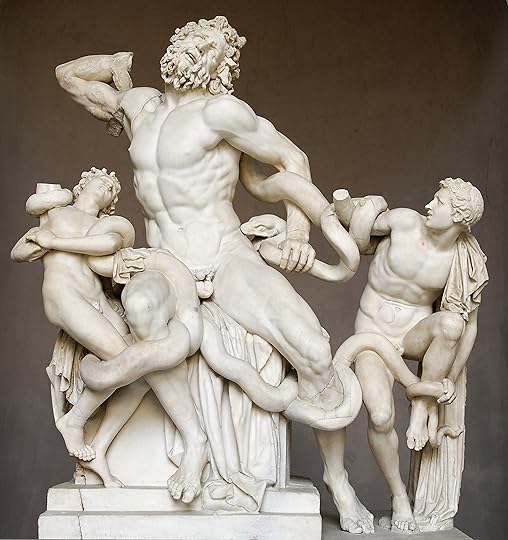
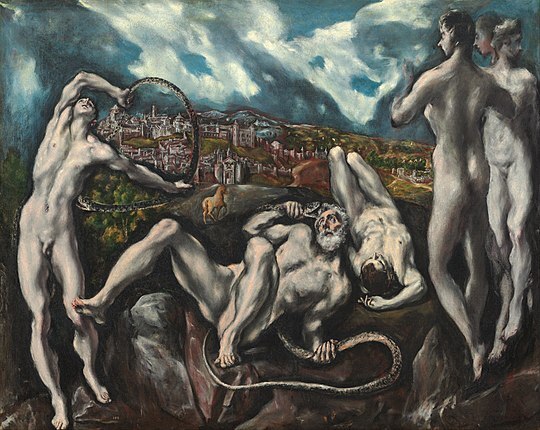
SO MANY LAOCOÖNS, SO LITTLE TIME....

Laocoön & His Sons


El Greco's Laocoön


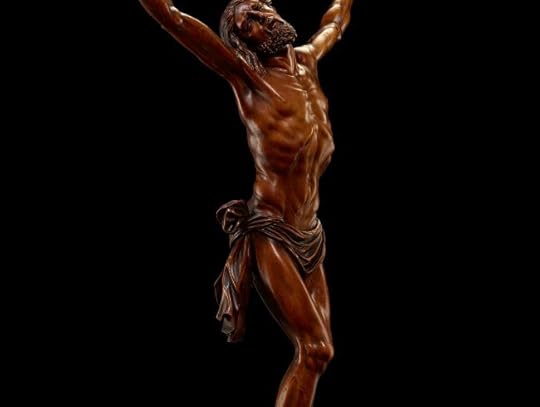
George Petel's Christ sculpture (inspired/influenced by Laocoön & His Sons)
------------------------------------------------
My Longlist Rankings for the U.S./Canada Republic of Consciousness Prize
1) Family Album: Stories by Gabriela Alemán
2) A New Name: Septology VI-VII by Jon Fosse
3) Moldy Strawberries: Stories by Caio Fernando Abreu
4) Get ’em Young, Treat ’em Tough, Tell ’em Nothing by Robin McLean
5) God's Children Are Little Broken Things: Stories by Arinze Ifeakandu (Prize Winner)
6) The Sleeping Car Porter by Suzette Mayr
7) New Animal by Ella Baxter
8) Blood Red by Gabriela Ponce Padilla
9) Pollak's Arm by Hans von Trotha
10) New and Selected Stories by Cristina Rivera Garza
Profile Image for Rachel.
142 reviews
April 29, 2023
This book is beautifully written, and Lauffer's translation is frankly flawless, but I have complex feelings regarding von Trotha's treatment of the material. Writing a fictionalized account of a real historical figure is a tricky business, and I don't believe it's done with any particular skill or grace here, despite the quality of the prose.
Profile Image for Giordana.
78 reviews
December 8, 2024
Letto per un esame universitario, non mi è piaciuto il modo di scriverlo, non riuscivo a concentrarmi per più di una pagina di fila.
Profile Image for Jose Carlos.
35 reviews1 follower
April 22, 2024
Muy interesante. Quizás algo falto de ritmo, pero apasionante
Profile Image for Intervalla Insaniae.
141 reviews39 followers
April 21, 2022
Il libro è orrendamente scritto.
Il soggetto, però, è fra i più interessanti: Ludwig Pollak è stato quel lungimirante archeologo che, fra gli altri, ebbe il merito di riconoscere e riattribuire il braccio destro originale al celeberrimo gruppo del Laocoonte e che fu deportato insieme agli altri ebrei romani ed assassinato ad Auschwitz nell’ottobre del ’43.
Mi sento di poter attribuire la tremenda scrittura di questo testo proprio al suo autore e non ad una sgarbata traduzione: ho assistito personalmente alla presentazione del libro proprio da parte di Trotha al Goethe-Institut di Roma e le risposte che egli ha dato alle domande sono state perlopiù deludenti, se non confuse, addirittura incoerenti con le domande stesse.
Nel libro Trotha ha avuto la seguente, infelice idea: ha deciso di creare una cornice in cui il fittizio K. racconta al tale Monsignore la vicenda di Pollak. Nessun segno grafico, però, segna l’inizio o la fine dei dialoghi; inoltre, Trotha lascia che K. racconti di Pollak riportando il discorso diretto di quest’ultimo, che quindi si inserisce come io narrante, anche questa volta senza segni grafici ad aiutare noi poveri lettori a capire dove inizi la bocca dell’uno e dove quella dell’altro.
Questa grande confusione è condita dall’ormai consolidata tendenza alle frasi-sentenza, con quelle orrorifiche subordinate relative separate dalla reggente da un punto: “E con loro andai a vivere a Vienna. Che in realtà ho solo odiato”. Mi si accappona la pelle.
Facendo così parlare il povero Pollak, Trotha lo trasforma in una figura un po’ patetica e svenevole: no, grazie.
L’approfondimento, inoltre, è davvero poco significativo. Si tratta, perlopiù, di una serie di nomi e circostanze che somigliano più ad un verboso curriculum vitae.
Se Trotha, evidentemente carente del talento dello scrittore, si fosse limitato a scrivere un buon saggio su Pollak senza disturbare “la letteratura” con questa ridicola messinscena di K. e del Monsignore e avesse dato contezza della sola figura di Pollak, di per sé bastante senza necessità di essere romanzata, ecco che avrebbe potuto produrre davvero qualcosa di utile, forse persino di piacevole.
Profile Image for Justine Kaufmann.
285 reviews121 followers
March 11, 2025
Pollak’s Arm by Hans von Trotha is based on the real-life story of Ludwig Pollak, a Jewish Austro-Czech ‘antiquarian’ and archeologist in Rome who was rounded up in 1943 and sent to Auschwitz. The Vatican tried to save him and his family, but Pollak refused their offers of refuge. This is where the story of the book takes place, the Vatican’s messenger and his evening spent trying to convince Pollak to leave at once, but instead Pollak recounts the important moments of his life—his humble childhood in Prague, his worshipping of Goethe, his love for Ancient Rome, and, most importantly, his discovery of Laocoön’s right arm and the significance this finding had on the narrative around this statue, Rome, and a culture’s ideals. This is where the tension lies, these two discussing art and history, while outside the SS could arrive at any moment. And the history and culture obsessively discussed by Pollak is at odds with the present. Goethe, that idol of German greatness, is brought up again and again, almost clung to by Pollak, while outside the Germans are perpetrating unimaginable horrors.

“Rome has long since succumbed to the sea serpents, he said. They are unpredictable. They will strangle one man until he can no longer breathe, while biting the other and relishing in his ruin. Surely it’s much safer for us not to go out, to simply stay here. What could they possibly want from an old man like me? But the snake always wins. Laocoön teaches us that. Man will never win against serpents sent by the gods. Not in this world.”

Pollak’s Arm is a short novel, but it is rich in reflections on society, art, culture, and human brutality. There is Goethe (have I mentioned Goethe already?), but the book also descends from the literary lines of authors like Kafka, Sebald and Bernhard, in style as well as themes, while still remaining distinct. A book fitting for the past and our current times.

‘I assure you my time would have been far better spent blocking out the present moment altogether and reading Goethe. Yes, that’s exactly what I should have done then, and exactly what I should do now.’

(tr. Elisabeth Lauffer)
Profile Image for Brian Hanson.
363 reviews6 followers
January 6, 2025
Pollak's Arm is one of those novels you feel blessed to have found: a calm, thoughtful, serious work that instructs as it captivates. It is a chamber piece - one man relating to another what had just transpired in a meeting he has returned from. The meeting was with the titular Pollak, a distinguished dealer in antiquities and compiler of catalogues of art collections who has lived for many years in Rome. However, he is Jewish, it is 1943, and Rome is full of Nazis. The titular "Arm" is that of Laocoön, from an antique statue of great virtuosity dug up in the early cinquecento, but separated from the main work, until Pollak's discovery of it (Pollak is, by the way, an historical figure). Can Pollack and his family be spared transportation by agreeing to take refuge in the Vatican? This is what the narrator, K, seeks to bring about. Pollak seems to have other ideas. Pollak is "a virtuoso of seeing", a connoisseur not originally by choice but by being, as a Jew, excluded from the
academic life he once sought. He thus stands as a foil to all the idealists who refuse to see what is before them, just as his "Arm" ultimately deflates the centuries-long idealisation of Laocoön's plight.
Profile Image for cycads and ferns.
817 reviews95 followers
May 14, 2023
“…but because the Haggadah itself is so important in times like these. It’s name is derived from the Hebrew word for storytelling. A guide for storytelling- that’s what a Haggadah is. The stories we tell are all that remain in the end, you know. Stories, and art. It’s how life goes on. It’s what we leave to those who come after. On the eve of Passover, following the order set forth in the Haggadah, Jews tell stories of the Israelites’ enslavement and liberation, but particularly that of liberation.”
27 reviews
February 27, 2022
One tragic episode of the holocaust that is also a metaphor for the broader cultural implications of totalitarian regimes. The context is the particular world of antiquarians in Rome and the big R Romantic relationship between Germany and Italy epitomized by Goethe and lived by Ludwig Pollak. This is about loss. For me it raises larger questions about the acceptance of what might be considered inevitable versus the need to resist brutality.
Profile Image for Mark.
1,609 reviews134 followers
June 14, 2022
This is historical fiction, set in WWII. It begins at the Vatican and it involves Monsignor F. trying to persuade Ludwig Pollak, an Austrian jew living in Rome, to go into hiding, to evade capture by the Nazis. There is a lot of fascinating detail packed into this short novel and the writing is excellent. A great surprise. 4.5 stars
980 reviews16 followers
June 22, 2023
Art history and 20th century history coming together in the story of a man who won’t leave.
Profile Image for Isaac.
12 reviews1 follower
Read
December 30, 2024
First actual book i think i’ve finished a while outside of an academic setting or like mangas. Was a bit hard at first to follow what was going on but after a while i got the story and got invested. Lots of mentions of archeology findings and art which I made notes of to look at while reading the book.Major points that stuck to me were to journal and keep a diary and use lots of exclamation points!!! Cant wait to read more books next year. This feels nice
Profile Image for Jean.
Author 14 books24 followers
Read
January 24, 2022
Rome, 1943. Italy has surrendered to the Allies, but the Nazis still occupy Rome. Hans von Trotha has told a beautiful, complex story in Pollak’s Arm. In writing about it, the temptation is to keep quoting and quoting. There is so much in it; it’s crammed with precious treasures, as is Pollak’s apartment itself, and Pollak’s memory. My full review at The Rumpus
Displaying 1 - 30 of 70 reviews

Can't find what you're looking for?

Get help and learn more about the design.