

What do you think?

The Pump
A Gothic collection of stories featuring carnivorous beavers, art-eaters, and family intrigue, for fans of Alice Munro and Shirley Jackson
The small southern Ontario town known as The Pump lies at the crossroads of this world’s violence—a tainted water supply, an apathetic municipal government, the Gothic decay of rural domesticity—and another’s.
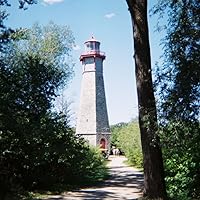
In Brooman’s interconnected stories, no one is immune to The Pump’s sacrificial games. Lighthouse dwellers, Boy Scouts, queer church camp leaders, love-sick and sick-sick writers, nine-year-old hunters, art-eaters—each must navigate the swamp of their own morality while living on land that is always slowly (and sometimes very quickly) killing them.
“The Pump is populated with the kind of tough, awkward, dark, and tender characters you often find trapped in small town, no-place Canada. You’ll also find beavers, salt domes, a lighthouse, marshes, more beavers, a Mercury Villager, mosquitoes, and the rest of the beavers. Brooman has woven an inescapable, ferocious dream of a book. Good luck getting out.”—John Elizabeth Stintzi, author of Vanishing Monuments
“Bristling with magic, horror, and romance, Sydney Warner Brooman’s The Pump transforms small-town Southern Ontario into a place of violence and sacrifice — or maybe presents it as it truly is. Like nothing I’ve ever read before, these killer beavers, strange diseases, and infectious waters wouldn’t leave my head and drew me back to their world again and again. If only I blurbed delightfully weird books like this for the rest of my life, I’d be happy.”—Jess Taylor, Author of Pauls and Just Pervs
“This is the Southern Ontario that we don’t openly acknowledge but that scrapes at the back of our memories. The Pump shows us the surreal violence of living in the 401’s sprawl and the staggering beauty of the nature that surrounds it. Don’t be fooled by the nightmarish quality of these stories: they are as real as the Mercury Villager that Sydney Warner Brooman drives us in on. This is horror in broad daylight. These are the living ghosts that haunt so many of us who grew up here.”— Jia Qing Wilson-Yang, Lambda Award-winning author of Small Beauty
“This is what small-town Ontario looks like when David Attenborough is a distant memory, when social structures are as polluted as the water, when myth has returned—big time—in mounting waves, sweeping our smaller stories out to sea. I don’t what is more terrifying: that The Pump exists, or that here, in this wretched, sinking place, you can find something that you desperately love, something that you want to survive. The Pump is an astonishing debut collection from a writer who is just warming up.”—Tom Cull, author of Bad Animals
The small southern Ontario town known as The Pump lies at the crossroads of this world’s violence—a tainted water supply, an apathetic municipal government, the Gothic decay of rural domesticity—and another’s.
In Brooman’s interconnected stories, no one is immune to The Pump’s sacrificial games. Lighthouse dwellers, Boy Scouts, queer church camp leaders, love-sick and sick-sick writers, nine-year-old hunters, art-eaters—each must navigate the swamp of their own morality while living on land that is always slowly (and sometimes very quickly) killing them.
“The Pump is populated with the kind of tough, awkward, dark, and tender characters you often find trapped in small town, no-place Canada. You’ll also find beavers, salt domes, a lighthouse, marshes, more beavers, a Mercury Villager, mosquitoes, and the rest of the beavers. Brooman has woven an inescapable, ferocious dream of a book. Good luck getting out.”—John Elizabeth Stintzi, author of Vanishing Monuments
“Bristling with magic, horror, and romance, Sydney Warner Brooman’s The Pump transforms small-town Southern Ontario into a place of violence and sacrifice — or maybe presents it as it truly is. Like nothing I’ve ever read before, these killer beavers, strange diseases, and infectious waters wouldn’t leave my head and drew me back to their world again and again. If only I blurbed delightfully weird books like this for the rest of my life, I’d be happy.”—Jess Taylor, Author of Pauls and Just Pervs
“This is the Southern Ontario that we don’t openly acknowledge but that scrapes at the back of our memories. The Pump shows us the surreal violence of living in the 401’s sprawl and the staggering beauty of the nature that surrounds it. Don’t be fooled by the nightmarish quality of these stories: they are as real as the Mercury Villager that Sydney Warner Brooman drives us in on. This is horror in broad daylight. These are the living ghosts that haunt so many of us who grew up here.”— Jia Qing Wilson-Yang, Lambda Award-winning author of Small Beauty
“This is what small-town Ontario looks like when David Attenborough is a distant memory, when social structures are as polluted as the water, when myth has returned—big time—in mounting waves, sweeping our smaller stories out to sea. I don’t what is more terrifying: that The Pump exists, or that here, in this wretched, sinking place, you can find something that you desperately love, something that you want to survive. The Pump is an astonishing debut collection from a writer who is just warming up.”—Tom Cull, author of Bad Animals
130 pages, Paperback
First published September 7, 2021
About the author
Sydney Hegele
6 books57 followersSydney Hegele is the author of Bird Suit (Invisible Books, 2024) and The Pump (Invisible Books, 2021). They are the winner of the ReLit Literary Award for Short Fiction, and a finalist for the Sunburst Award for Excellence in Canadian Literature and the Trillium Book Award. Their essays have appeared in the Toronto Star, Catapult, Electric Literature, and many others. Their essay collection Bad Kids: A Polyphony is forthcoming with Invisible Books in 2028. They live with their husband and French Bulldog on Treaty 13 Land (Toronto).
Ratings & Reviews
Friends & Following
Create a free account to discover what your friends think of this book!
Community Reviews
Displaying 1 - 30 of 102 reviews

February 13, 2022
At some point while reading this short story collection I fell into a vivid, visceral memory of a time when I was four years old and conspired with a friend to make a cake for a boy we both hated. Not because he was mean, but because his nose was always running. We made the cake out of sawdust and wooly-bear caterpillars, both of which could be found in abundance in the mill town where we lived, the kind of place where every step put you in danger of encountering one or the other. The cake-making process was gleeful. I don't remember feeling sorry for the caterpillars.

January 4, 2025
The Pump is a mix of body horror and environmental horror with a queer lens. This is one of those well-done books that was just not for me. A series of linked short stories set in a Southern Ontario wasteland town where the water is killing everyone, the book works best as an allegory of the grotesque and darkness underneath Southern Ontario and humanity in general.
Except for in the story about the queer boys who are church group leaders, I didn't feel like the characters were as fully realized as I would have liked, but that's hard to do in the space of a short story, and if there's an allegorical higher motive happening. I don't think the stories were necessarily trying to do what I wanted them to, so maybe I shouldn't fault them for it.
Basically every content warning for this: child/baby death, abusive parents/partners, animal death/abuse, sexual assault.
Except for in the story about the queer boys who are church group leaders, I didn't feel like the characters were as fully realized as I would have liked, but that's hard to do in the space of a short story, and if there's an allegorical higher motive happening. I don't think the stories were necessarily trying to do what I wanted them to, so maybe I shouldn't fault them for it.
Basically every content warning for this: child/baby death, abusive parents/partners, animal death/abuse, sexual assault.
April 22, 2021
Was "pump"ed to be able to blurb this strange and engaging book of stories. Recommend it for anyone interested in story collections with shared landscapes (and anyone who needs more beavers in the books they read).
[[Check out my blurb in the book's description]]
[[Check out my blurb in the book's description]]

February 12, 2024
The best short story collection I’ve ever read. Right from the first page, there are surprises, small and large truths hidden between absurd carnivorous beavers, mysterious cats and dangerous landscapes. Both political and personal with recurring themes in entirely different contexts and returning characters to bring you back to the start.
Mal aux Dents especially was real, raw and beautiful. Highly recommend to all of you!
Mal aux Dents especially was real, raw and beautiful. Highly recommend to all of you!

March 2, 2023
what in the hamilton-grimsby chimera small-town ontario queer romance body horror una fan service was this ………….. favourite read of 2023 so far

December 5, 2021
The stories in The Pump are concise, eerie, and often horrific. Some of the stories I found to be abrupt, and I wanted more. I did love figuring out how the different characters were connected to each other in the town. Brooman really conveyed a small, repressive community very well.

June 10, 2024
Quite an odd book, but in the best way possible.
Read
November 17, 2023very weird. at first I thought it was too weird, but by the end I came around, and thought it was good weird. I liked the story with the storks, the cute gay church camp one, the one with the dead friend and the girl who ate paintings where they turned into beavers and the other gay one where the mom is homophobic and their girlfriend drives a truck. i never came around to really "getting" what was up with the beavers, and the rash story was just too gross yuck ew yuck, but overall, a very solid canlit debut collection. this book was like if Helen Oyeyemi came from small town Ontario and was more into gross body horror.

February 14, 2024
Holy holy holy heck I am so floored this was amazing !! There’s something so magical when stories all connect together and you as the reader get to be part of building something beautiful. Gothic, murky, odd, and a strange mix of hopeless and -full
It’s really about relationships and there’s nothing more beautiful (and sometimes quietly sad) than that
It’s really about relationships and there’s nothing more beautiful (and sometimes quietly sad) than that
December 13, 2023
An insane book about small town queernes and human- eating beavers? I am the target audience. Loved it

December 29, 2025
3.5 icl some of this was actually quite concerning, absolutely ruined beavers for me

September 6, 2021
THE PUMP by Sydney Warner Brooman is a terrific debut short fiction collection! There’s so much packed into these 132 pages. These interconnected stories all take place in “The Pump”, a small southern Ontario town where there’s a contaminated water supply, killer beavers, and an unconcerned Mayor.
.
I loved reading this book! The writing is inventive, whimsical, surreal, macabre, and intricate. I loved the Canadian setting and how me meet several of the same characters throughout the book. I really enjoyed all of the stories and my fave was Mal aux Dents (or Toothache) which is about Taylor, a young gay man, and his crush on Laurent. This is a unique book that I’m so glad to have read! Highly recommend!
.
Thank you so much to the author for this signed review copy!
.
I loved reading this book! The writing is inventive, whimsical, surreal, macabre, and intricate. I loved the Canadian setting and how me meet several of the same characters throughout the book. I really enjoyed all of the stories and my fave was Mal aux Dents (or Toothache) which is about Taylor, a young gay man, and his crush on Laurent. This is a unique book that I’m so glad to have read! Highly recommend!
.
Thank you so much to the author for this signed review copy!

April 21, 2021
Delicious in its strangeness. Slipping repeatedly into fantasy, The Pump is a space where fable becomes reality and urban legend becomes confirmed fact. Gorgeous, disturbing, and heart wrenching.
May 27, 2025
This was really REALLY good! Perfect mix of the gothic and Canadian history. It was the most delicious amount of gross and gory without being too graphic. The shifts in perspective were intimidating at first (i am weak when it comes to understanding books like this) but then I got used to it and the story flourished. 🦫🦫🦫🦫🦫🦫🦫🦫🦫🦫🦫🦫🦫🦫🦫🦫🦫🦫🦫🦫
July 16, 2025
read this during a camping trip to killbear. definitely sat jaw dropped on the beach after a couple of these stories. disturbing but in a good way
December 29, 2021
3.5 stars rounded up to 4.

January 25, 2022
I enjoyed reading this but have mixed feelings about a rating. This is a collection of short stories that take place in a small town, with an element of gothic horror/body horror mixed in. Some stories were a 3, some were a 4, but I had a hard time digesting some of the more experimental writing style used. An interesting read though, by an upcoming young Canadian author.
December 22, 2023
The Pump is memory: marsh up to your waist, beaver lodges built of bones, lakewater and violence and church camp crushes. the feeling of being raised and bruised by a Place. when the land eats you back, speaks back at you. there’s a sanctity in remembering such a blasphemous place, and I enjoyed this collection very very much.
January 12, 2023
Ontario :(

January 19, 2024
So strange and horrific at times but yet compelling and funny as well. Did I like it…I don’t really think so, but it intrigued me. The unique writing style was off-putting for me.

November 12, 2024
Wonderfully strange
October 28, 2025
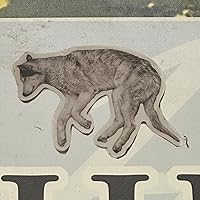
"Your mother sits in the van and watches the beavers for hours. Day breaks and the grey clouds begin to clear. She sits and watches as all of them leave the water. They run through dense trees and across the soft ground. Acorn bits wedge between their toes. They do not look back as they run. They are not afraid of losing one another. They know where to go. They cannot stay in The Pump any longer."
The Pump feels very similar to the stop-mo film “The House” (2022) in the way that it plays on the strange and indescribable weirdness that feels like a deeper meaning for grief and change and death. It is beautiful, and I love the way the small town is constructed; it feels impossible to leave, and it is impossible not to love-- you grew up in The Pump. It is your childhood. How could you not harbor some sort of love for it? How could you not harbor some sort of hate?
It's a place where, as you grow, you're constricted to the disease and death of it's tiny bubble. Big ideas are trapped, and anything different or estranged from the binary feels like the call of freedom. The beavers feel like they mean something different to everyone, and I really enjoy that-- I think, at least in the way that I'm interpreting it-- that they're either a symbolism of grief, freedom, and death-- which could all be summarized under "change".
The beavers bring a sort of violent change into the lives of the people of The Pump, which roots them deeper into the marshes of their hometown. It brings meaning into their lives- "no one leaves The Pump" because it is rooted inside. This is the sort of feeling that is evoked when growing up in a small town: everyone knows everyone, and the world is only as big as you let it be.
If you can look past the beavers, you can make it out. Either that or there's brain-eating amoeba in the water system.
The Pump feels very true to living in the grossness and marsh of bumfuck nowhere Ontario. The characters feel alive and real, and their stories resonate so so deeply. It's funny reading a book that fantasizes about a town that slowly kills you, and moving into the big unknown; when I moved to Toronto this year, with similar feelings. Hegele just expertly crafts their books, and it is impossible not to feel an intense connection to their writing.
"They leave behind the following: a collection of broken rubber bands; the notion that mismatched socks are good luck; a time capsule, opened the day after it was buried; an unwavering trust in adults; female pronouns.
Their presence will sit on playground slides; initials in sidewalks; the old rainbow streamer Skip-It in their mother's garage."
The Pump feels very similar to the stop-mo film “The House” (2022) in the way that it plays on the strange and indescribable weirdness that feels like a deeper meaning for grief and change and death. It is beautiful, and I love the way the small town is constructed; it feels impossible to leave, and it is impossible not to love-- you grew up in The Pump. It is your childhood. How could you not harbor some sort of love for it? How could you not harbor some sort of hate?
It's a place where, as you grow, you're constricted to the disease and death of it's tiny bubble. Big ideas are trapped, and anything different or estranged from the binary feels like the call of freedom. The beavers feel like they mean something different to everyone, and I really enjoy that-- I think, at least in the way that I'm interpreting it-- that they're either a symbolism of grief, freedom, and death-- which could all be summarized under "change".
The beavers bring a sort of violent change into the lives of the people of The Pump, which roots them deeper into the marshes of their hometown. It brings meaning into their lives- "no one leaves The Pump" because it is rooted inside. This is the sort of feeling that is evoked when growing up in a small town: everyone knows everyone, and the world is only as big as you let it be.
If you can look past the beavers, you can make it out. Either that or there's brain-eating amoeba in the water system.
The Pump feels very true to living in the grossness and marsh of bumfuck nowhere Ontario. The characters feel alive and real, and their stories resonate so so deeply. It's funny reading a book that fantasizes about a town that slowly kills you, and moving into the big unknown; when I moved to Toronto this year, with similar feelings. Hegele just expertly crafts their books, and it is impossible not to feel an intense connection to their writing.
"They leave behind the following: a collection of broken rubber bands; the notion that mismatched socks are good luck; a time capsule, opened the day after it was buried; an unwavering trust in adults; female pronouns.
Their presence will sit on playground slides; initials in sidewalks; the old rainbow streamer Skip-It in their mother's garage."

January 25, 2023
It’d be interesting to see Hegele write something longform, closer to the tenor of HOME than the rest of the book, as the stories herein are always a bit withheld, asking questions about whether or not a character will survive, never investing in the well-being of a character beyond wondering what grisly, bucktoothed fate they’ll meet. That’s the risk with genre, I suppose, which is executed to great effect throughout. Aside from some motif redundancies, and my own suspicion about the endless Ontarian tales I hear about their ‘bad water’* and the like, and my frustration with how brisk (and thus superficial) the stories often feel, the writing is often quite beautiful, and scratched many an itch; I am nitpicking because the book is very fine, and I feel compelled to to do so while it continues to push its way into my focus.
Definitely worth reading. Exquisitely gothic, irreverent, damply queer and cynical. Childhood games like GROUNDERS offering the opportunity to escape terrible marriages, to end the lives of your enemies, this is the power of open ports of melodrama.
I’m really, really excited to read what Hegele writes next.
*In all the copy for “Chemical Valley,” David Huebert at least has the sense to name one (probably most important) version of it, “environmental racism,” a concept that better reflects the populations that suffer toxicity this way and more often than others (compounded by class and other vectors), though Hegele’s book is much more readable than Huebert’s (CV was dnf for me, though maybe I’ll give it a go again now that I’m back on this wavelength) as a literary object, bite-sized portions and tidy as I complain it is.
But where is the Fort Chipewyan literary treatment?Would that be gauche? I mean there’s got to be someone (Indigenous, obviously) out there who can tackle bile-duct cancer rates skyrocketing, doctors being disbarred for speaking out about it, etcetera; it’d be less fun to read about your loved ones suffering in hospital with a super-rare cancer for months on end, often times several people you know at once, than to do the genre thing (often helpful, when expression feels otherwise impossible): the condensation where someone walks into the swamp to be devoured by beavers instead of wasting away, the constellation and re-figuration of our fears instead of the literal report of what people are enduring. It just feels like every other Ontarian artist I meet goes on about chemical waste, but so many without firsthand experience, a kind of disaffected toying with the subject.
——> If Hegele nails it, re: what it’s like to feel both trapped and poisoned by the small town, I’m still not sure. But certainly they don’t seem to disrespect the materials at hand, just has a lot of fun with them. All these thoughts are very peripheral. I just use GR as a book diary, that’s why I’m writing thru these thoughts here. I’m just wondering what the borders of genre’s “usefulness” and “honesty” are, I guess.
Definitely worth reading. Exquisitely gothic, irreverent, damply queer and cynical. Childhood games like GROUNDERS offering the opportunity to escape terrible marriages, to end the lives of your enemies, this is the power of open ports of melodrama.
I’m really, really excited to read what Hegele writes next.
*In all the copy for “Chemical Valley,” David Huebert at least has the sense to name one (probably most important) version of it, “environmental racism,” a concept that better reflects the populations that suffer toxicity this way and more often than others (compounded by class and other vectors), though Hegele’s book is much more readable than Huebert’s (CV was dnf for me, though maybe I’ll give it a go again now that I’m back on this wavelength) as a literary object, bite-sized portions and tidy as I complain it is.
But where is the Fort Chipewyan literary treatment?Would that be gauche? I mean there’s got to be someone (Indigenous, obviously) out there who can tackle bile-duct cancer rates skyrocketing, doctors being disbarred for speaking out about it, etcetera; it’d be less fun to read about your loved ones suffering in hospital with a super-rare cancer for months on end, often times several people you know at once, than to do the genre thing (often helpful, when expression feels otherwise impossible): the condensation where someone walks into the swamp to be devoured by beavers instead of wasting away, the constellation and re-figuration of our fears instead of the literal report of what people are enduring. It just feels like every other Ontarian artist I meet goes on about chemical waste, but so many without firsthand experience, a kind of disaffected toying with the subject.
——> If Hegele nails it, re: what it’s like to feel both trapped and poisoned by the small town, I’m still not sure. But certainly they don’t seem to disrespect the materials at hand, just has a lot of fun with them. All these thoughts are very peripheral. I just use GR as a book diary, that’s why I’m writing thru these thoughts here. I’m just wondering what the borders of genre’s “usefulness” and “honesty” are, I guess.
This entire review has been hidden because of spoilers.
June 24, 2023
Being from the place where The Pump originated from brought out a lot of old feelings of back home. Old memories of adventures with friends and that weird bubble that no matter what there’s always a piece wanting to return.
November 17, 2022
I thoroughly enjoyed this collection of short stories! They were fantastically odd and shed a light onto a a subject that is rarely explored in literature, and Hegele writes the southern Ontario Gothic so well. I look forward to reading their other work!
April 21, 2024
Phenomenal and weird and might have given me an irrational fear of beavers and a rational fear of contaminated water.
November 10, 2021
Wow, what a well-crafted wild ride The Pump is. It’s a surreal collection of linked stories set in a rainy town on a rotten marsh. A world of blighted water, brutal fathers, ailing children, and beavers with a taste for blood.

July 22, 2024
I think this will be the kind of book that leaves a seed inside of me and grows something in the corner of my mind that will keep catching my attention.

October 21, 2021
haunting and bizarre on one page, then warm and mythic on the next. this book is the perfect Southern Ontario Gothic collection i didn't know i needed. also, i'm scared of beavers now.
Displaying 1 - 30 of 102 reviews