

What do you think?
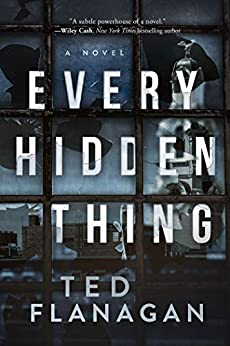
Every Hidden Thing
Big city politics, nasty secrets, a dirty cop, and a deranged sociopath set the stage for a riveting journey deep into the urban jungle.
The last scion of a once-powerful political family, Worrcester mayor John O'Toole has his sights set on vastly higher aspirations. When night shift paramedic Thomas Archer uncovers a secret that could upend the mayor's career, O'Toole is set on silencing him, and sends Eamon Conroy, a brutal former cop, to ensure the truth remains under wraps.
But O'Toole doesn't stop there. With bribes, buried secrets, and personal attacks, he wreaks havoc on Archer's life in an attempt to save himself. Archer's troubles continue to mount when domestic terrorist and militia member Gerald Knak, who blames Archer for his wife's recent death, sets in motion a deadly plan for revenge.
With two forces of evil aligned against him, Archer doesn't stand a chance. But things aren't always what they seem--and he may just have a few tricks up his sleeve in a last gambit to get out alive.
The last scion of a once-powerful political family, Worrcester mayor John O'Toole has his sights set on vastly higher aspirations. When night shift paramedic Thomas Archer uncovers a secret that could upend the mayor's career, O'Toole is set on silencing him, and sends Eamon Conroy, a brutal former cop, to ensure the truth remains under wraps.
But O'Toole doesn't stop there. With bribes, buried secrets, and personal attacks, he wreaks havoc on Archer's life in an attempt to save himself. Archer's troubles continue to mount when domestic terrorist and militia member Gerald Knak, who blames Archer for his wife's recent death, sets in motion a deadly plan for revenge.
With two forces of evil aligned against him, Archer doesn't stand a chance. But things aren't always what they seem--and he may just have a few tricks up his sleeve in a last gambit to get out alive.
336 pages, Kindle Edition
First published October 12, 2021
Ratings & Reviews
Friends & Following
Create a free account to discover what your friends think of this book!
Community Reviews
Displaying 1 - 30 of 50 reviews

October 5, 2021
As a first-time fiction author, Ted Flanagan’s Every Hidden Thing is based on his own experience as a paramedic and Massachusetts newspaper reporter. An ambulance is called to a flat, only for the paramedics to discover a botched home birth and the mother still bleeding. Also present is a former crooked policeman who is out of jail and working for the mayor’s team and planned Governor’s campaign. So begins the saga, with all the hallmarks of a good suspense thriller, crooked cops, city politicians, revenge and a killer out to seek justice. With three great protagonists, changing loyalties and action aplenty leading to a confrontational finale this novel makes for a good read. The final chapter was somewhat glib, so only a three-and-a-half-star rating. With thanks to Crooked Lane Books and the author, for an uncorrected proof copy for review purposes. As always, the opinions herein are totally my own and are made without fear or favour.
August 28, 2021
The "city of the hills" is as much a living, breathing character as any of Flanagan's layered and complicated antagonists and protagonists in this stunner of a debut novel. Flawed characters making bad decisions despite (some) good intentions make this one impossible to put down. To make comparisons to other crime writers wouldn't be apt—Flanagan is in a category all his own. Readers will be ready to pre-order his next book by the time they finish the final page.

September 3, 2021
Worster, Mass EMT Thomas Archer and his partner have a problem. It isn't the woman who has just delivered a baby who is in respiratory distress, it isn't even the woman's boyfriend. The real problem is Eamon Conroy, a corrupt and sadistic cop Archer helped send to prison years ago.
Conroy is the fixer for John O'Toole, mayor of Worster from a prominent political family, who has his sites set on the Governor's mansion. His issue is greasing the right palms, and getting Conroy to take care of other problems in a more violent way. That includes Archer now, given he and his partner's witness of the baby scene.
Archer's young son has a brain tumor, and one of the places they stop on their rounds is at a church where a young woman lies in a persistent vegetative state, while her mother stands by her, convinced that the power of god flows through her daughter. Many people come to pray in front of the woman in her be, seeing her through a window on the opposite wall, where a bench sits, ready for them to kneel. Archer and the mom have a number of conversations through the book, and at the end there's a gigantic gathering where people can come to ask for miracles/to be blessed/and whatever other stuff religion does for people who believe. I'm not a fan of fraudsters and hucksters, so these parts had me rolling my eyes.
Luckily, the majority of the book is taken up by Archer trying to avoid crossing paths with Conroy.
We then switch gears to the POV of a reporter, who is going to be laid off not terribly far down the road. Her editor tells her it's the best he could get for her, and she decides to go out with a bang, by investigating the new gubernatorial candidate, his shady deals, and his employ of Conroy. She faces some real danger, as an old white woman going to a rather rough part of town to talk to the woman who gave birth. She makes it out of there, but not before her car is set on fire by the crowd.
There's a separate subplot about a man who is obviously a QAnon kind of nutjob, ascribing all sorts of ills in the world on Democrats, liberals, activists, and of course the LGBTQI+ category. He's further indoctrinated by his father in law, and his father in law and what seems to be a council of sorts for the local militia have a job for him: go to Worster and assassinate someone. I found this the least compelling o the various storylines, not because it's unrealistic, but because crazy seems to be his only character trait.
As we return to the main story, things stat getting out of hand and O'Toole is becoming impatient with Conroy. Conroy gets harder into his work, offering Archer's partner enough money to put toward a new house for his family. Archer continues to be pressed by his life seemingly spinning out of control.
The end is....the end is good, and matches nicely with the events of the book. There is a loose string here and there, but nothing to make the ending less believable, and I kind of welcome that from time to time, since most writers seem to think everything has to be 100% in tying up everything that has happened in a book. In books like this, there's too much ambiguity to do that, so like a lot of life, people wring what they can from it.
A very solid four out of five stars.
Thanks to Crooked Land Books and NetGalley for the reading copy.
Conroy is the fixer for John O'Toole, mayor of Worster from a prominent political family, who has his sites set on the Governor's mansion. His issue is greasing the right palms, and getting Conroy to take care of other problems in a more violent way. That includes Archer now, given he and his partner's witness of the baby scene.
Archer's young son has a brain tumor, and one of the places they stop on their rounds is at a church where a young woman lies in a persistent vegetative state, while her mother stands by her, convinced that the power of god flows through her daughter. Many people come to pray in front of the woman in her be, seeing her through a window on the opposite wall, where a bench sits, ready for them to kneel. Archer and the mom have a number of conversations through the book, and at the end there's a gigantic gathering where people can come to ask for miracles/to be blessed/and whatever other stuff religion does for people who believe. I'm not a fan of fraudsters and hucksters, so these parts had me rolling my eyes.
Luckily, the majority of the book is taken up by Archer trying to avoid crossing paths with Conroy.
We then switch gears to the POV of a reporter, who is going to be laid off not terribly far down the road. Her editor tells her it's the best he could get for her, and she decides to go out with a bang, by investigating the new gubernatorial candidate, his shady deals, and his employ of Conroy. She faces some real danger, as an old white woman going to a rather rough part of town to talk to the woman who gave birth. She makes it out of there, but not before her car is set on fire by the crowd.
There's a separate subplot about a man who is obviously a QAnon kind of nutjob, ascribing all sorts of ills in the world on Democrats, liberals, activists, and of course the LGBTQI+ category. He's further indoctrinated by his father in law, and his father in law and what seems to be a council of sorts for the local militia have a job for him: go to Worster and assassinate someone. I found this the least compelling o the various storylines, not because it's unrealistic, but because crazy seems to be his only character trait.
As we return to the main story, things stat getting out of hand and O'Toole is becoming impatient with Conroy. Conroy gets harder into his work, offering Archer's partner enough money to put toward a new house for his family. Archer continues to be pressed by his life seemingly spinning out of control.
The end is....the end is good, and matches nicely with the events of the book. There is a loose string here and there, but nothing to make the ending less believable, and I kind of welcome that from time to time, since most writers seem to think everything has to be 100% in tying up everything that has happened in a book. In books like this, there's too much ambiguity to do that, so like a lot of life, people wring what they can from it.
A very solid four out of five stars.
Thanks to Crooked Land Books and NetGalley for the reading copy.

June 15, 2021
Every Hidden Thing by Ted Flanagan—A dark, gritty thriller filled with suspense, double-crosses, and buried secrets.
When Worcester (Massachusetts) EMT Thomas Archer and his partner respond to a childbirth emergency call, they find the child already delivered and in severe respiratory distress. Archer is then shocked to learn the person who delivered the baby, still at the scene and is none other than Eamon Conroy, a sociopathic former crooked cop Archer once helped send to prison. Things go downhill fast from there for Archer, who already has more than enough problems in his life, including a young son suffering from life-threatening brain cancer. He’s also a recovering alcoholic in a marriage that has grown shaky due to his son’s serious medical problems. But when Archer learns the child’s mother is a low-level city employee and the father a crooked and powerful local city politician who hired Conroy to keep the affair and baby out of the press, he is determined to do the right thing. He reports Conroy’s unethical conduct. In response, Conroy goes about doing everything in his power to destroy Archer’s credibility and silence him by blaming him for the botched delivery that left the child brain-damaged.
A lot is going on in this book. Every major character, of which there are many, has backstories and character flaws that bear on the primary plot. Besides the former bent cop, plenty of buried secrets get unearthed, and lots of dirty big city politics are involved. It’s a deep dive into the gritty underbelly of the urban jungle. There are multiple points of view and several subplots that the author weaves into this dark, gritty tale.
With multiple forces of evil arrayed against him, it doesn’t seem as if Archer stands a chance of surviving the salvos of personal attacks even if he manages to escape with his life.
I really liked this book because Flanagan touches so realistically on the very sort of political sleaze and media dishonesty that is so much in evidence today at almost every level in the country. Some of it reads almost as if it were ripped from recent headlines and serves as a sad reminder of how modern society and culture today seems to be coming apart at the seams because of shady, power-grabbing politicians and a corrupt media that readily distort the truth to make a fast buck and to promote its own social agenda.
Despite the multiple story lines and numerous major characters, Flanagan’s plotting chops keep the reader on track and free of confusion. I found it an intriguing read with plenty of suspense and surprising twists that kept me turning the pages until the very end. I recommend Every Hidden Thing to those who enjoy suspenseful thrillers, especially when such novels offer something more than the usual thriller story lines and plots.
I received an advance review copy of the book from the publisher via NetGalley used for this review, representing my own unbiased opinion.
When Worcester (Massachusetts) EMT Thomas Archer and his partner respond to a childbirth emergency call, they find the child already delivered and in severe respiratory distress. Archer is then shocked to learn the person who delivered the baby, still at the scene and is none other than Eamon Conroy, a sociopathic former crooked cop Archer once helped send to prison. Things go downhill fast from there for Archer, who already has more than enough problems in his life, including a young son suffering from life-threatening brain cancer. He’s also a recovering alcoholic in a marriage that has grown shaky due to his son’s serious medical problems. But when Archer learns the child’s mother is a low-level city employee and the father a crooked and powerful local city politician who hired Conroy to keep the affair and baby out of the press, he is determined to do the right thing. He reports Conroy’s unethical conduct. In response, Conroy goes about doing everything in his power to destroy Archer’s credibility and silence him by blaming him for the botched delivery that left the child brain-damaged.
A lot is going on in this book. Every major character, of which there are many, has backstories and character flaws that bear on the primary plot. Besides the former bent cop, plenty of buried secrets get unearthed, and lots of dirty big city politics are involved. It’s a deep dive into the gritty underbelly of the urban jungle. There are multiple points of view and several subplots that the author weaves into this dark, gritty tale.
With multiple forces of evil arrayed against him, it doesn’t seem as if Archer stands a chance of surviving the salvos of personal attacks even if he manages to escape with his life.
I really liked this book because Flanagan touches so realistically on the very sort of political sleaze and media dishonesty that is so much in evidence today at almost every level in the country. Some of it reads almost as if it were ripped from recent headlines and serves as a sad reminder of how modern society and culture today seems to be coming apart at the seams because of shady, power-grabbing politicians and a corrupt media that readily distort the truth to make a fast buck and to promote its own social agenda.
Despite the multiple story lines and numerous major characters, Flanagan’s plotting chops keep the reader on track and free of confusion. I found it an intriguing read with plenty of suspense and surprising twists that kept me turning the pages until the very end. I recommend Every Hidden Thing to those who enjoy suspenseful thrillers, especially when such novels offer something more than the usual thriller story lines and plots.
I received an advance review copy of the book from the publisher via NetGalley used for this review, representing my own unbiased opinion.
October 26, 2021
October 26, 2021
Book Review Submission
“Every Hidden Thing” by Ted Flanagan
Reviewer: James Baker
jameswbaker3@gmail.com
Quick, what characteristics and traits would you like to see from an author before investing your time, energy, and money in reading a debut novel? Ted Flanagan, author of debut novel “Every Hidden Thing”, exhibits most if not all of them. In short, he has been in the “Catbird Seat of Insightful Observation” for his entire life but why and how did this opportunity come to pass?
He is an only child, so growing up he self-developed his vivid imagination and sense of curiosity. His family valued current events as evidenced by six, count em six, home delivered newspaper editions per day. His father was a successful tool salesman with the gift of gab that accompanies his Irish heritage. His mother was a personable elder care advocate and pianist who was a high school beauty queen. And his grandmother was the first licensed lobsterwoman in the State of Maine. When he was not cavorting with the neighborhood posse of teen boys, he was devouring books - sometimes two or three a week.
Ted’s command of the English language is legendary. Perhaps it comes from taking Latin in high school. And doing so voluntarily!! For 3 years!!! His verbs resonate. His adjectives are so vivid that you feel like you are in the same room as the action unfolds - almost like being the paint on the wall with magic seeing eye capability. He is extremely bright and extraordinarily observant - a deadly combination for the author of a crime thriller. This skill may be inherited from his Irish roots that tell him when a story is indeed a tale his audience would be interested in. Then add that he is a voracious, lifelong reader with a good memory..
REVIEW “EVERY HIDDEN THING” 1
Just possessing these character traits is necessary but not sufficient to be a good author. He must have had the opportunity to apply them in the real world. And thankfully he has done so as represented by his professional life and these career choices:
US Marine - not just your average “gy-rine” but a Force Recon Marine who served four years including time aboard the Teddy Roosevelt Aircraft Carrier doing lazy eights off the coast of Bosnia. Mission: part of team who would fly helicopters behind enemy lines and “fast rope” to the surface to rescue downed pilots.
EMT/Paramedic - riding trucks throughout Central Mass and Northern Connecticut all the while witnessing and treating carnage from auto accidents, gang shootings, heart attacks, structure fires, and ordinary ouchies, sometimes life threatening, most times not, but always an emergency in the eyes of the victim or his family. He rode the only helicopter on duty for the entire state of New Hampshire for over a year. From the Canadian border to Nashua and the other border towns with Massachusetts if you needed a Flight Paramedic anywhere in the state, Ted was your guy.
Reporter for daily newspapers throughout Central Massachusetts covering every kind of story from obituaries to selectman meetings to Town Meetings to fires in Lowell, Lawrence, or Worcester plus any news story with local interest for larger and more urban areas. Here he learned the importance of accuracy as well as the demands of a deadlines-oriented profession. Two keys for a novice author. He has the knack for knowing when a story would be compelling for his reader. Sound good? Yep!! It is!!
On the other hand, Ted’s personal life contributes to his skill set as well. He has had to make life and death decisions regarding the experimental treatment for his son’s multiple brain tumor diagnosis. (Son is now thriving as a Dean’s List college sophomore. Thank you, Dana Farber and the Jimmy Fund). He is well loved and supported by his family. He is a man of faith who follows his Lord and believes what He says about who He is and what He expects us to do in following Him. In Ted’s case, his actions speak louder than mere words. He has endured the angst of almost losing the family homestead due to unforeseen medical expenses. Really, who
REVIEW “EVERY HIDDEN THING” 2
expects to be crushed with medical bills for a two year old with brain cancer? He has foregone many a holiday to pick up a shift with overtime to help dig out of debt - one shovel at a time. And yes he knows what it is like to “punch the clock”. Over and over and over again.
Oh yeah, and the result is? Debut novel “Every Hidden Thing” by author Ted Flanagan and Crooked Lane Publisher. Summary book rating? Outstanding. Five stars. Read it.
Book Review Submission
“Every Hidden Thing” by Ted Flanagan
Reviewer: James Baker
jameswbaker3@gmail.com
Quick, what characteristics and traits would you like to see from an author before investing your time, energy, and money in reading a debut novel? Ted Flanagan, author of debut novel “Every Hidden Thing”, exhibits most if not all of them. In short, he has been in the “Catbird Seat of Insightful Observation” for his entire life but why and how did this opportunity come to pass?
He is an only child, so growing up he self-developed his vivid imagination and sense of curiosity. His family valued current events as evidenced by six, count em six, home delivered newspaper editions per day. His father was a successful tool salesman with the gift of gab that accompanies his Irish heritage. His mother was a personable elder care advocate and pianist who was a high school beauty queen. And his grandmother was the first licensed lobsterwoman in the State of Maine. When he was not cavorting with the neighborhood posse of teen boys, he was devouring books - sometimes two or three a week.
Ted’s command of the English language is legendary. Perhaps it comes from taking Latin in high school. And doing so voluntarily!! For 3 years!!! His verbs resonate. His adjectives are so vivid that you feel like you are in the same room as the action unfolds - almost like being the paint on the wall with magic seeing eye capability. He is extremely bright and extraordinarily observant - a deadly combination for the author of a crime thriller. This skill may be inherited from his Irish roots that tell him when a story is indeed a tale his audience would be interested in. Then add that he is a voracious, lifelong reader with a good memory..
REVIEW “EVERY HIDDEN THING” 1
Just possessing these character traits is necessary but not sufficient to be a good author. He must have had the opportunity to apply them in the real world. And thankfully he has done so as represented by his professional life and these career choices:
US Marine - not just your average “gy-rine” but a Force Recon Marine who served four years including time aboard the Teddy Roosevelt Aircraft Carrier doing lazy eights off the coast of Bosnia. Mission: part of team who would fly helicopters behind enemy lines and “fast rope” to the surface to rescue downed pilots.
EMT/Paramedic - riding trucks throughout Central Mass and Northern Connecticut all the while witnessing and treating carnage from auto accidents, gang shootings, heart attacks, structure fires, and ordinary ouchies, sometimes life threatening, most times not, but always an emergency in the eyes of the victim or his family. He rode the only helicopter on duty for the entire state of New Hampshire for over a year. From the Canadian border to Nashua and the other border towns with Massachusetts if you needed a Flight Paramedic anywhere in the state, Ted was your guy.
Reporter for daily newspapers throughout Central Massachusetts covering every kind of story from obituaries to selectman meetings to Town Meetings to fires in Lowell, Lawrence, or Worcester plus any news story with local interest for larger and more urban areas. Here he learned the importance of accuracy as well as the demands of a deadlines-oriented profession. Two keys for a novice author. He has the knack for knowing when a story would be compelling for his reader. Sound good? Yep!! It is!!
On the other hand, Ted’s personal life contributes to his skill set as well. He has had to make life and death decisions regarding the experimental treatment for his son’s multiple brain tumor diagnosis. (Son is now thriving as a Dean’s List college sophomore. Thank you, Dana Farber and the Jimmy Fund). He is well loved and supported by his family. He is a man of faith who follows his Lord and believes what He says about who He is and what He expects us to do in following Him. In Ted’s case, his actions speak louder than mere words. He has endured the angst of almost losing the family homestead due to unforeseen medical expenses. Really, who
REVIEW “EVERY HIDDEN THING” 2
expects to be crushed with medical bills for a two year old with brain cancer? He has foregone many a holiday to pick up a shift with overtime to help dig out of debt - one shovel at a time. And yes he knows what it is like to “punch the clock”. Over and over and over again.
Oh yeah, and the result is? Debut novel “Every Hidden Thing” by author Ted Flanagan and Crooked Lane Publisher. Summary book rating? Outstanding. Five stars. Read it.

October 17, 2021
Tom Archer was not afraid of going against powerful people in order to make sure that the truth was being told, however, this position in life was costing him everything. His son was dying, he rarely saw his wife and he was being followed by very bad men. Lu, a long-standing reporter also pursues the truth with all her might, but she is faced with a harsh reality when divorced, with no financial help from her ex-husband, and a son in the university, she is dumped from her 30-year job. Both of their lives intersect with those of the mayor, John O'Toole, who wants to become a governor, his right-hand man, Conroy, who just left prison, and Knak a man who wants to fight and go against the system. All characters are deeply in angst for their loss, whichever it is, and this angst is easily seen in the way Flanagan writes and describes situations and feelings. A great plot, with very interesting characters who are relatable to many in their pursuit of the meaning of life.
I downloaded a free copy of this book through NetGalley and this is my honest review.
I downloaded a free copy of this book through NetGalley and this is my honest review.
October 15, 2021
So good I will read it twice!
Treat yourself to the audible version too. It is a rare gift that a writer engages a reader so thoroughly you feel the characters emotions. Talented writing that brings the characters to life. You can smell and see the city. Listened to the audible version at work and read the electronic version while having a soak. This book has surprising twists and memorable characters. There are no loose ends in this story. I hope this author writes more books. Favorite phrase from this book; mechanical necessities. There is nothing mechanical about the writing. BRAVO Mr. Flanagan!
Treat yourself to the audible version too. It is a rare gift that a writer engages a reader so thoroughly you feel the characters emotions. Talented writing that brings the characters to life. You can smell and see the city. Listened to the audible version at work and read the electronic version while having a soak. This book has surprising twists and memorable characters. There are no loose ends in this story. I hope this author writes more books. Favorite phrase from this book; mechanical necessities. There is nothing mechanical about the writing. BRAVO Mr. Flanagan!
November 30, 2021
Having lived in Worcester for 45 years, I enjoyed this book on two levels. The story is fast moving, complicated and compelling. Figuring out the new renamed places, street and institutions was an added bonus to a great read (one of my favorites Gong Pond)!! Very much reminded me of Jack O’Connell’s series set in the old factory down of “Quinsigamond”.

October 19, 2021
There are some debut novels that simply don't hint that a newcomer has been published. This debut is gripping realism that could easily have been a story torn from news headlines. The author is a paramedic and a former daily newspaper reporter that is no stranger to the life of an EMT and shows his prowess with the written word.
Thomas Archer and partner Julio Tavares are paramedics in Worcester, Massachusetts. They take the calls of the night for emergency assistance week in and week out. Everyone knows EMTs are on the front lines, first responders to emergencies and quite often without accompaniment by fire fighters or police. But I think it is rare that we pause to think of them as husbands, wives, brothers, sisters, fathers, mothers, working to support their own families, stretching limits of endurance to pay bills or to give their family a better opportunity than he/she had when growing up, or coping with the heartaches of a child with brain tumors. This is an inside look and it is not for the faint of heart.
One quickly enters the darkness of the tale and wonders if evil will outweigh the possibilities of goodness and hope. Read it. It's a story that is thought-provoking and is impossible to put down.
I am very appreciative of the Early Reviewer opportunities by LibraryThing as I've found it a wonderful chance to introduce a new author to one’s reading repertoire.
Thomas Archer and partner Julio Tavares are paramedics in Worcester, Massachusetts. They take the calls of the night for emergency assistance week in and week out. Everyone knows EMTs are on the front lines, first responders to emergencies and quite often without accompaniment by fire fighters or police. But I think it is rare that we pause to think of them as husbands, wives, brothers, sisters, fathers, mothers, working to support their own families, stretching limits of endurance to pay bills or to give their family a better opportunity than he/she had when growing up, or coping with the heartaches of a child with brain tumors. This is an inside look and it is not for the faint of heart.
One quickly enters the darkness of the tale and wonders if evil will outweigh the possibilities of goodness and hope. Read it. It's a story that is thought-provoking and is impossible to put down.
I am very appreciative of the Early Reviewer opportunities by LibraryThing as I've found it a wonderful chance to introduce a new author to one’s reading repertoire.

February 8, 2022
This book had a slow start but eventually turned into a compelling drama of big town political corruption. Most people in this story are not clear-cut good or evil but a mixture of both. The compulsion to do the right thing is definitely present but requires some self-convincing. The two main characters are a City EMT worker and a newspaper reporter. Both are trying to make an honest living but local politics cause complications. Life is hard and these characters provoke plenty of sympathy. All the way through I was cheering for them.

May 27, 2022
“He thought about his son, struggling to breathe in a hospital room in Boston, his heart pumping in a parakeet’s cage of a chest, transparent, his skin like onion paper. Archer could actually see his heart beating. Breathing. Hearts beating. This city beating, a sickness in it, in the air around them. And for what? For another rung, so some people could get forward in a city going nowhere. Everyone protecting themselves, furtive conversations in dark-wooded bars and concrete-block strip clubs and hockey games at the War Memorial designed to nail someone, someone from another tribe in this crumbling industrial village that no one would ever want but was worth almost any price to those who did.”
I've read EVERY HIDDEN THING three times now, and found myself frustrated by it. That is, until I learned to sort of unfocus on the plot, as if I was staring at one of those find-the-hidden-thing-in-plain-sight wall-hangings, and appreciate it for its own hidden things: its tone and its texture, its properties as an assemblage of passages that bristle and crackle with pure ... interestingness, is the only way I can put it. The sum may be a little less than satisfying, but the parts are like a cerebral Shiatsu massage that leaves you feeling pulped with pure pleasure.
Author Ted Flanagan, in his debut novel, knows the territory: A former Marine and newspaper reporter, he works as a paramedic in Worcester, Massachusetts, the setting of EVERY HIDDEN THING. And every page feels pleasantly slimed with the sights and smells and sounds of greater Boston, a place of great prideful sleaze atop an unmovable slab of dark Catholic fidelity and identity. And his characters reflect that: there's a paramedic, the novel's putative hero; a newspaper reporter who's not entirely comfortable being compromised; a dirty mayor; a murderous mayor's fixer (an ex-cop, of course); a vengeful blank canvas of MAGA-styled hate; and a host of others.
Too many others, perhaps; they're all interesting but few get anything resembling a full and satisfying character arc, and I can't escape the sense that the structure of the novel cannot support their full weight, and that Flanagan's reach might have exceeded his grasp. It takes a stretch to maintain one’s suspension of disbelief when being asked to accept that the coldblooded fixer of a major political figure, someone who multiple-murdered his way to a pardon from prison in the space of a few seconds, so continually botches a cleanup job for the corrupt politico (“His driving desire in life was to be voted for”) that everyone’s future hinges on framing a paramedic through a pressure campaign highlighted by news stories written by a compromised reporter who just happens to be the paramedic’s estranged half-sibling.
I followed it all with interest while finally being forced to admit that I couldn’t parse its path or its logic. A separate plot thread, including another man who blames the same paramedic for another personal tragedy, feels like it’s a separate story from a separate novel awkwardly grafted onto this one even though the two storylines merge in the late going.
But even as I struggled with the interconnections of the characters, and the choppiness of their arcs, I found them incredibly interesting on a passage-by-passage basis. And in my book, sins of ambition are far preferable to sins of the lack thereof. And Flanagan's are more than forgivable given his gutter poet's eye for dirty detail on a granular level, his unimpeachably jaded but still grimly hopeful sense of place, and the pithy human and tribal insights that accompany all of the above.
One of my personal tells for a good read is in its quotability, and I found myself highlighting Twitter-sized passages time and time and time again, bits of knife-edged prose with a deliciously nasty bite. And it's those dozens of thought-prickling passages, all seasoned with the salt of the street, that ultimately make this subtly layered novel a pleasurable read — and re-read. A few choice passages:
“He liked that the retired wiseguys ate there, with their pinkie rings and flannel pants pulled up over their stomachs, primary-colored silk shirts tucked in tight. He loved how they spoke close and cupped each other’s cheeks when they talked.”
“Archer stepped out of the ambulance and took a deep breath, enjoying the air on this side of the city. It was a quiet enclave of comfort and leafy sidewalks occupied by midlevel civil servants, cops who doubled their salaries with detail pay, and firefighters who worked second jobs as carpenters and painters and machine shop foremen, all of them married to teachers or human resources reps or nurses. Unwilling to leave the city, they worked themselves to the bone to belong to it. Archer envied them. They’d understood early in life how to make this happen. He’d grasped the concept only recently, and felt his grip loosening.”
“It was the smell of the city as Archer and Julio knew it—stale cigarette butts and worn concrete sidewalks and bus exhaust and the hot dog vendor over by the Empire who steamed the vilest sauerkraut he’d ever encountered.”
“The Dinger itself had many charms. A thatched-hut ceiling over the dining area. The long bar of dark wood that reflected the tin ceiling tiles above, except in the spots where the water rings never quite scrubbed off. The checkerboard white-and-black tile floor. The small parquet dance floor that Lu had never seen anyone dance on. A corner jukebox. The Keno machine above the bar, framed with bubbling electric-orange liquid lights. A buzzy atmosphere charged with clouds of cheap cologne and the sweet tang of fried lo mein noodles.”
“Guinness. Can you stand it? What a f***ing stereotype. A mick and his Guinness. But I love it. You’ve got to love a beer that you have to eat with a fork and knife.”
“Davey McCarthy was as city as city got, was proud of it. He’d been born and raised in the same neighborhood where he now reigned supreme. He pounded beers at Salve Mater tailgates and sipped Christmas whiskey that came in bottles wrapped in blue silk bags. He was loud and slapped backs and cried at Old Yeller replays, just to let everyone know Davey McCarthy was more than just a man’s man, that he had a sensitive side.”
“This city? It’s all there is. I am bound to it, like a black hole. Nothing escapes. Enmity is short-lived here. It has to be. There’s only so many of us. Only so many. A grudge is a luxury.”
“Lu, if you can’t trust a crooked ex-cop, who can you trust?”
“He thought about his son, struggling to breathe in a hospital room in Boston, his heart pumping in a parakeet’s cage of a chest, transparent, his skin like onion paper. Archer could actually see his heart beating. Breathing. Hearts beating. This city beating, a sickness in it, in the air around them. And for what? For another rung, so some people could get forward in a city going nowhere. Everyone protecting themselves, furtive conversations in dark-wooded bars and concrete-block strip clubs and hockey games at the War Memorial designed to nail someone, someone from another tribe in this crumbling industrial village that no one would ever want but was worth almost any price to those who did.”
“We’re janitors,” Julio said. “Got our mops. Slopping this place up, move the misery from one place to another.”
I've read EVERY HIDDEN THING three times now, and found myself frustrated by it. That is, until I learned to sort of unfocus on the plot, as if I was staring at one of those find-the-hidden-thing-in-plain-sight wall-hangings, and appreciate it for its own hidden things: its tone and its texture, its properties as an assemblage of passages that bristle and crackle with pure ... interestingness, is the only way I can put it. The sum may be a little less than satisfying, but the parts are like a cerebral Shiatsu massage that leaves you feeling pulped with pure pleasure.
Author Ted Flanagan, in his debut novel, knows the territory: A former Marine and newspaper reporter, he works as a paramedic in Worcester, Massachusetts, the setting of EVERY HIDDEN THING. And every page feels pleasantly slimed with the sights and smells and sounds of greater Boston, a place of great prideful sleaze atop an unmovable slab of dark Catholic fidelity and identity. And his characters reflect that: there's a paramedic, the novel's putative hero; a newspaper reporter who's not entirely comfortable being compromised; a dirty mayor; a murderous mayor's fixer (an ex-cop, of course); a vengeful blank canvas of MAGA-styled hate; and a host of others.
Too many others, perhaps; they're all interesting but few get anything resembling a full and satisfying character arc, and I can't escape the sense that the structure of the novel cannot support their full weight, and that Flanagan's reach might have exceeded his grasp. It takes a stretch to maintain one’s suspension of disbelief when being asked to accept that the coldblooded fixer of a major political figure, someone who multiple-murdered his way to a pardon from prison in the space of a few seconds, so continually botches a cleanup job for the corrupt politico (“His driving desire in life was to be voted for”) that everyone’s future hinges on framing a paramedic through a pressure campaign highlighted by news stories written by a compromised reporter who just happens to be the paramedic’s estranged half-sibling.
I followed it all with interest while finally being forced to admit that I couldn’t parse its path or its logic. A separate plot thread, including another man who blames the same paramedic for another personal tragedy, feels like it’s a separate story from a separate novel awkwardly grafted onto this one even though the two storylines merge in the late going.
But even as I struggled with the interconnections of the characters, and the choppiness of their arcs, I found them incredibly interesting on a passage-by-passage basis. And in my book, sins of ambition are far preferable to sins of the lack thereof. And Flanagan's are more than forgivable given his gutter poet's eye for dirty detail on a granular level, his unimpeachably jaded but still grimly hopeful sense of place, and the pithy human and tribal insights that accompany all of the above.
One of my personal tells for a good read is in its quotability, and I found myself highlighting Twitter-sized passages time and time and time again, bits of knife-edged prose with a deliciously nasty bite. And it's those dozens of thought-prickling passages, all seasoned with the salt of the street, that ultimately make this subtly layered novel a pleasurable read — and re-read. A few choice passages:
“He liked that the retired wiseguys ate there, with their pinkie rings and flannel pants pulled up over their stomachs, primary-colored silk shirts tucked in tight. He loved how they spoke close and cupped each other’s cheeks when they talked.”
“Archer stepped out of the ambulance and took a deep breath, enjoying the air on this side of the city. It was a quiet enclave of comfort and leafy sidewalks occupied by midlevel civil servants, cops who doubled their salaries with detail pay, and firefighters who worked second jobs as carpenters and painters and machine shop foremen, all of them married to teachers or human resources reps or nurses. Unwilling to leave the city, they worked themselves to the bone to belong to it. Archer envied them. They’d understood early in life how to make this happen. He’d grasped the concept only recently, and felt his grip loosening.”
“It was the smell of the city as Archer and Julio knew it—stale cigarette butts and worn concrete sidewalks and bus exhaust and the hot dog vendor over by the Empire who steamed the vilest sauerkraut he’d ever encountered.”
“The Dinger itself had many charms. A thatched-hut ceiling over the dining area. The long bar of dark wood that reflected the tin ceiling tiles above, except in the spots where the water rings never quite scrubbed off. The checkerboard white-and-black tile floor. The small parquet dance floor that Lu had never seen anyone dance on. A corner jukebox. The Keno machine above the bar, framed with bubbling electric-orange liquid lights. A buzzy atmosphere charged with clouds of cheap cologne and the sweet tang of fried lo mein noodles.”
“Guinness. Can you stand it? What a f***ing stereotype. A mick and his Guinness. But I love it. You’ve got to love a beer that you have to eat with a fork and knife.”
“Davey McCarthy was as city as city got, was proud of it. He’d been born and raised in the same neighborhood where he now reigned supreme. He pounded beers at Salve Mater tailgates and sipped Christmas whiskey that came in bottles wrapped in blue silk bags. He was loud and slapped backs and cried at Old Yeller replays, just to let everyone know Davey McCarthy was more than just a man’s man, that he had a sensitive side.”
“This city? It’s all there is. I am bound to it, like a black hole. Nothing escapes. Enmity is short-lived here. It has to be. There’s only so many of us. Only so many. A grudge is a luxury.”
“Lu, if you can’t trust a crooked ex-cop, who can you trust?”
“He thought about his son, struggling to breathe in a hospital room in Boston, his heart pumping in a parakeet’s cage of a chest, transparent, his skin like onion paper. Archer could actually see his heart beating. Breathing. Hearts beating. This city beating, a sickness in it, in the air around them. And for what? For another rung, so some people could get forward in a city going nowhere. Everyone protecting themselves, furtive conversations in dark-wooded bars and concrete-block strip clubs and hockey games at the War Memorial designed to nail someone, someone from another tribe in this crumbling industrial village that no one would ever want but was worth almost any price to those who did.”
“We’re janitors,” Julio said. “Got our mops. Slopping this place up, move the misery from one place to another.”

October 13, 2021
Every Hidden Thing brings together an EMS worker whose son has a life-threatening illness, a corrupt politician, a dirty cop, a disillusioned reporter, and a deranged domestic terrorist in a twisty tale that grabs you from the first page and never lets go. Set in the gritty city of Worcester Massachusetts, it evokes the work of Dennis Lehane and Michael Harvey while shining a light on a blue-collar world where hope is fragile and despair is just around the corner. As its main character Archer struggles against seemingly insurmountable problems, Every Hidden Thing will move you, even as you race to turn the pages. Highly recommended!

October 25, 2021
Every Hidden Thing is a gripping story that you won’t be able to put down! I so enjoyed Flanagan’s debut novel about an underdog paramedic who acts on his values to undermine corrupt politicians and public servants. As a Massachusetts native, I enjoyed the references to the gritty city of Worcester, the New Hampshire countryside and the respite of the Cape. The characters are well developed and the plot is multilayered.
I hope the author is working on a new book because I will definitely read whatever he writes.
I hope the author is working on a new book because I will definitely read whatever he writes.
October 19, 2021
Fantastic
Having been born and raised only a handful of miles away from the setting location of this book, Worcester, Massachusetts, I could feel a real connection to the story, to the area. And the multitude of characters, each with their own personal issues, helps tell the story of the book’s main character. What a tremendous debut novel! Highly recommend.
Having been born and raised only a handful of miles away from the setting location of this book, Worcester, Massachusetts, I could feel a real connection to the story, to the area. And the multitude of characters, each with their own personal issues, helps tell the story of the book’s main character. What a tremendous debut novel! Highly recommend.
October 19, 2021
I love this book so much. It's a great story, with thoughtful well-formed characters. The book explores themes of loyalty, greed, good and evil, in an engaging and fast paced story. It takes place almost entirely at night in a gritty complicated city which makes the perfect setting for this crime novel. Extremely well written. A total page turner.
November 11, 2021
A well-written drama about a paramedic (Thomas Archer, referred to as Archer) and authored by a knowledgeable paramedic.
The local married mayor, John O'Toole, has been having an affair with a low-level city employee, who later gives birth to a mentally challenged infant. The baby is delivered by one of the mayor's henchmen (Conroy), who commits several mistakes during the delivery. The mother's friend is present when the birth takes place and calls 911, whereupon paramedics Archer & his long-time partner Julio soon arrive. The mother & others present later claim that it was Archer who delivered the child & caused the child's problem. Archer files a written complaint. The mayor plans on running for governor & asks Conroy to take care of the matter by eliminating Archer.
At the same time a deranged militia man & domestic terrorist (Gerald Knack) decides that it was the paramedic Archer who was responsible for the death of his wife, Charlotte. The local militia initially assist Knack in formulating details for him to carry out his plan for revenge on Archer by silencing him permanently. The group doesn't take lightly any form of cowardice on the part of Knack or any other member to execute a plan they devised.
These two forces collide in making Archer's life a living hell. Archer's wife, Elaine, is about to give birth. However much of their free time is spent caring for their son, Michael, who has serious medical issues of his own & spends much time in the hospital.
Readers will thoroughly enjoy this one.
The local married mayor, John O'Toole, has been having an affair with a low-level city employee, who later gives birth to a mentally challenged infant. The baby is delivered by one of the mayor's henchmen (Conroy), who commits several mistakes during the delivery. The mother's friend is present when the birth takes place and calls 911, whereupon paramedics Archer & his long-time partner Julio soon arrive. The mother & others present later claim that it was Archer who delivered the child & caused the child's problem. Archer files a written complaint. The mayor plans on running for governor & asks Conroy to take care of the matter by eliminating Archer.
At the same time a deranged militia man & domestic terrorist (Gerald Knack) decides that it was the paramedic Archer who was responsible for the death of his wife, Charlotte. The local militia initially assist Knack in formulating details for him to carry out his plan for revenge on Archer by silencing him permanently. The group doesn't take lightly any form of cowardice on the part of Knack or any other member to execute a plan they devised.
These two forces collide in making Archer's life a living hell. Archer's wife, Elaine, is about to give birth. However much of their free time is spent caring for their son, Michael, who has serious medical issues of his own & spends much time in the hospital.
Readers will thoroughly enjoy this one.

June 21, 2021
This title has a nice blend of characters, all part of a larger web Eamon Conroy, a brutal former cop, has woven all to help Worcester mayor John O'Toole's aspirations.
Unfortunately for both Conroy and O'Toole, paramedic Thomas Archer isn't going to go quietly into the night.
Plenty of twists and turns for a decent read.
The way he portrayed politicians grabbing for power and the way the media can be convinced to help them resonated true to me. The inclusion of subplots also added to the authentic feel.
I received an advance review copy of the book from the publisher via NetGalley used for this review. All opinions are my own.
Unfortunately for both Conroy and O'Toole, paramedic Thomas Archer isn't going to go quietly into the night.
Plenty of twists and turns for a decent read.
The way he portrayed politicians grabbing for power and the way the media can be convinced to help them resonated true to me. The inclusion of subplots also added to the authentic feel.
I received an advance review copy of the book from the publisher via NetGalley used for this review. All opinions are my own.

October 13, 2021
Every Hidden Thing is one hell of a debut from Ted Flanagan. The intelligent, intricate plot is brought to life by an array of characters faced with unthinkable decisions throughout. This book has everything: back room deals, hush money, murder, and conspiracy. What truly lends authenticity to this novel is Flanagan’s personal experiences as an EMT; the protagonist, Thomas Archer, like Ted, has seen the best and worst of humankind. I can’t recommend this enough.

February 20, 2022
First-rate gritty urban crime novel that benefits greatly from its setting in one of New England's hollowed-out industrial cities. I tend to think Worcester, Mass. has never received this kind of attention in a work of fiction before.
What's more the characters and plot are excellent. Conroy was a splendid nasty. Even the tertiary characters, like the broken-down basketball hero Red, are well drawn.
What's more the characters and plot are excellent. Conroy was a splendid nasty. Even the tertiary characters, like the broken-down basketball hero Red, are well drawn.

November 28, 2021
Review of Advance Uncorrected Proofs
A botched home birth leaves a newborn baby on the verge of death; paramedics Thomas Archer and Julio Tavares answer 9-1-1 call; they find an unscrupulous ex-policeman, Eamon Conroy, there in the flat with the mother. They bring the mother and child to the hospital, but Archer is unsettled . . . he and Conroy have a past connection.
Mayor John O’Toole aspires to the governorship . . . and perhaps even the White House. But Archer’s discovery of a secret could derail all of the mayor’s grandiose plans. Using personal attacks and bribes, O’Toole tries to keep Archer from revealing the truth; he even resorts to sending the ruthless Eamon Conroy to ensure Archer’s silence.
Reporter Lu McCarthy has been following the story of the baby and the paramedic as she faces her final days at the newspaper; her connection to Archer plays into her decisions. But when she must decide between her own ethics and a windfall she sorely needs, what will she choose?
As this story is playing out, other events keep Thomas unsettled and concerned. His four-year-son, Michael, remains hospitalized in grave condition with multiple cancerous brain tumors; a terrorist Gerald Knak [proselytized by his late wife’s father, Avis Locke] holds a grudge against Archer, the man he blames for the death of his wife Charlotte.
Will O’Toole succeed in keeping his secrets as he sets his sights on the governorship? How will Archer defend himself against Conroy and Knak? And how will Lu and the newspaper fit into the story of Worcester?
=========
Well-drawn, nuanced, and flawed characters populate this tense tale of power, politics, scandal, and secrets. As the compelling narrative reveals the characters’ interconnectedness, it also lays bare the moral dilemmas each face.
With loyalties tested, personal issues play an integral part in the unfolding story that takes an uncompromised look at corruption. At the same time, the tension, the foreboding, and the suspense all combine with a twisty plot to reveal the grittiness of the inner city and the strength and integrity of first responders. Readers will find much to appreciate in this well-told tale of hope amidst despair.
Highly recommended.
A botched home birth leaves a newborn baby on the verge of death; paramedics Thomas Archer and Julio Tavares answer 9-1-1 call; they find an unscrupulous ex-policeman, Eamon Conroy, there in the flat with the mother. They bring the mother and child to the hospital, but Archer is unsettled . . . he and Conroy have a past connection.
Mayor John O’Toole aspires to the governorship . . . and perhaps even the White House. But Archer’s discovery of a secret could derail all of the mayor’s grandiose plans. Using personal attacks and bribes, O’Toole tries to keep Archer from revealing the truth; he even resorts to sending the ruthless Eamon Conroy to ensure Archer’s silence.
Reporter Lu McCarthy has been following the story of the baby and the paramedic as she faces her final days at the newspaper; her connection to Archer plays into her decisions. But when she must decide between her own ethics and a windfall she sorely needs, what will she choose?
As this story is playing out, other events keep Thomas unsettled and concerned. His four-year-son, Michael, remains hospitalized in grave condition with multiple cancerous brain tumors; a terrorist Gerald Knak [proselytized by his late wife’s father, Avis Locke] holds a grudge against Archer, the man he blames for the death of his wife Charlotte.
Will O’Toole succeed in keeping his secrets as he sets his sights on the governorship? How will Archer defend himself against Conroy and Knak? And how will Lu and the newspaper fit into the story of Worcester?
=========
Well-drawn, nuanced, and flawed characters populate this tense tale of power, politics, scandal, and secrets. As the compelling narrative reveals the characters’ interconnectedness, it also lays bare the moral dilemmas each face.
With loyalties tested, personal issues play an integral part in the unfolding story that takes an uncompromised look at corruption. At the same time, the tension, the foreboding, and the suspense all combine with a twisty plot to reveal the grittiness of the inner city and the strength and integrity of first responders. Readers will find much to appreciate in this well-told tale of hope amidst despair.
Highly recommended.
December 1, 2021
Choices have consequences. Very interesting characters throughout the story and most were faced with choices that impact the narrative and their own character. Archer’s choice to file the complaint, Lu’s choice to write the articles (and then not write the article), O’Toole’s choices to pursue power, Julio’s choice to take the money, all have justification and all give us some understanding of their motivations. I enjoyed the journey of the characters and seeing them interact with each other over the consequences of these decisions.
Evangeline vs. Michael. I didn’t quite understand the divinity of Evangeline. I think she survived a near drowning (which Archer was connected to) and this somehow made her a vessel for religion and evidence of God. Evangeline was propped up and I was confused on why that was the case. I did really enjoy Archer’s confusion in the end on what saved Michael – was it science or faith? And him not needing an answer. I liked his decision to continue with the ritual of applying the brown oil in an effort to run out every grounder and be open to all possibilities. I think there’s a parallel between these two kids but I’m probably not smart enough to grasp it.
Plot setting. The story is set in an area of the country that I’m not familiar with so I’m sure if you know Worcester and Boston the landmarks will make a lot more sense and be more impactful. It did not distract me at all however but I think if you know the area it would be more appealing and interesting.
Worst character. Certainly Knak and Conroy are the front-runners as these two did not have a lot going for them in terms of likeability. Both saw fitting ends although Knak’s was way way way more chilling. I must admit that I did laugh when Conroy punched the bearded political advisor. However, I would like to make a case for Lu. It seemed she knowingly published articles for cash against her own step-brother that she either knew were false or didn’t do any research on. Her ending as a seemingly successful author and her ironic quote about checking out your mother’s love just rubbed me the wrong way. I really disliked her.
"Choices have consequences."
Evangeline vs. Michael. I didn’t quite understand the divinity of Evangeline. I think she survived a near drowning (which Archer was connected to) and this somehow made her a vessel for religion and evidence of God. Evangeline was propped up and I was confused on why that was the case. I did really enjoy Archer’s confusion in the end on what saved Michael – was it science or faith? And him not needing an answer. I liked his decision to continue with the ritual of applying the brown oil in an effort to run out every grounder and be open to all possibilities. I think there’s a parallel between these two kids but I’m probably not smart enough to grasp it.
Plot setting. The story is set in an area of the country that I’m not familiar with so I’m sure if you know Worcester and Boston the landmarks will make a lot more sense and be more impactful. It did not distract me at all however but I think if you know the area it would be more appealing and interesting.
Worst character. Certainly Knak and Conroy are the front-runners as these two did not have a lot going for them in terms of likeability. Both saw fitting ends although Knak’s was way way way more chilling. I must admit that I did laugh when Conroy punched the bearded political advisor. However, I would like to make a case for Lu. It seemed she knowingly published articles for cash against her own step-brother that she either knew were false or didn’t do any research on. Her ending as a seemingly successful author and her ironic quote about checking out your mother’s love just rubbed me the wrong way. I really disliked her.
"Choices have consequences."
This entire review has been hidden because of spoilers.

January 15, 2025
Perhaps because I'm a relative newcomer to the Noir genre, I had not yet heard the name "Ted Flanagan", until a recent author-guest on my show mentioned him. We'd been reviewing, for their followup appearance as guest co-host, whom they wanted to invite to the show. Ted Flanagan was an immediate selection!
I was excited to dive into this debut novel, and be introduced to a new author. It was obvious the enthusiasm for Mr. Flanagan's work was well-placed!
"Every Hidden Thing" was a wonderful piece of writing, one which drew me into the story and the main character's world rather effortlessly. Flanagan's prose was tight, well-crafted, and brought a dark, heady realism to his narrative and breathed life into the people who populated it. These well-developed characters were nuanced, strong, flawed, intelligent, yet just as easily prone to making a bad decision or two (or 12). What happened to them, and how things happened, were key in keeping me turning the pages, sometimes expecting one thing but finding something entirely different. Every Hidden Thing that took me on a hard-driven ride through pain and loss, morality and pride, trying to rise above the tide or just doing one's best to survive.
I thoroughly enjoyed many, many delicious turns of phrasing Flanagan wove throughout the fabric of his story, these which felt to me like stumbling across hidden poetry.
This was a banger of a first novel from an author to keep one's eyes on! If you're still thinking about whether to read this book, stop! Then run and get yourself a copy right away. I'm sure you'll love it. Stay tuned as well for Ted Flanagan's appearance on the show soon. Can't wait. Cheers!
I was excited to dive into this debut novel, and be introduced to a new author. It was obvious the enthusiasm for Mr. Flanagan's work was well-placed!
"Every Hidden Thing" was a wonderful piece of writing, one which drew me into the story and the main character's world rather effortlessly. Flanagan's prose was tight, well-crafted, and brought a dark, heady realism to his narrative and breathed life into the people who populated it. These well-developed characters were nuanced, strong, flawed, intelligent, yet just as easily prone to making a bad decision or two (or 12). What happened to them, and how things happened, were key in keeping me turning the pages, sometimes expecting one thing but finding something entirely different. Every Hidden Thing that took me on a hard-driven ride through pain and loss, morality and pride, trying to rise above the tide or just doing one's best to survive.
I thoroughly enjoyed many, many delicious turns of phrasing Flanagan wove throughout the fabric of his story, these which felt to me like stumbling across hidden poetry.
This was a banger of a first novel from an author to keep one's eyes on! If you're still thinking about whether to read this book, stop! Then run and get yourself a copy right away. I'm sure you'll love it. Stay tuned as well for Ted Flanagan's appearance on the show soon. Can't wait. Cheers!

December 24, 2021
In Ted Flanagan’s Every Hidden Thing, everyone hates Thomas Archer. It’s not hard to imagine why – he talks when the wise decision would be to stay quiet and had a past stint of showing up to work as a paramedic drunk. But Archer has his reasons why he’s done what he’s done, and Flanagan unveils his backstory and those of myriad other characters suspensefully throughout this authentic and thrilling novel.
Though the plot centers on the misdeeds of a mayor and one of his henchmen, what makes this book a standout is how accurately it depicts life working in EMS. I worked as an EMT for six years in some of the most densely populated areas of New Jersey and Every Hidden Thing is the most authentic piece of fiction I think I’ve every read about life in the ambulance. Flanagan goes beyond the technical accuracy of ambu-bags, stair chairs, and suction units and gets right to some of the most difficult yet intangible aspects of the profession – how it can feel like the world is closing in on you and how random moments can cause the screw holding your brain together to just pop.
I highly recommend Every Hidden Thing.
Though the plot centers on the misdeeds of a mayor and one of his henchmen, what makes this book a standout is how accurately it depicts life working in EMS. I worked as an EMT for six years in some of the most densely populated areas of New Jersey and Every Hidden Thing is the most authentic piece of fiction I think I’ve every read about life in the ambulance. Flanagan goes beyond the technical accuracy of ambu-bags, stair chairs, and suction units and gets right to some of the most difficult yet intangible aspects of the profession – how it can feel like the world is closing in on you and how random moments can cause the screw holding your brain together to just pop.
I highly recommend Every Hidden Thing.

October 28, 2021
This is a tense, fast paced thriller that reminds me of Dennis Lehane if he wrote about Worcester and not Boston.
I don;t want to spoil anything, but it's the story of a veteran paramedic caught up in a scandal that could damage the career and aspirations of the mayor, a scion of a political dynasty with his sights on grander things. Things that he isn't about to let a humble medic stand in the way of.
Flanagan draws ion his experiences as a paramedic and a newspaper reporter to lend a feel of gritty realism to his depictions of the struggles of emergency services and the seedy underbelly of city politics.
This is a story that grabs hold of you and won;t let you go until you've finished.
I don;t want to spoil anything, but it's the story of a veteran paramedic caught up in a scandal that could damage the career and aspirations of the mayor, a scion of a political dynasty with his sights on grander things. Things that he isn't about to let a humble medic stand in the way of.
Flanagan draws ion his experiences as a paramedic and a newspaper reporter to lend a feel of gritty realism to his depictions of the struggles of emergency services and the seedy underbelly of city politics.
This is a story that grabs hold of you and won;t let you go until you've finished.

November 21, 2021
*I received this book through LibraryThing Early Reviewers.*
This novel certainly has some great moments - I particularly like one towards the end featuring a dirty cop meeting his end and the more I read the more I liked Lu, a gritty local journalist - but overall I struggled to get into this story. There a number of nonlinear moments throughout and as a reader I felt these time jumps were both confusing and didn't work for the story. I also didn't take to the character of Thomas Archer - his partner Julio and the journalist Lu both struck me as more interesting characters. Finally, the ending felt somewhat anti-climatic and in need of something more. Readers who enjoy thrillers and mysteries may well enjoy this book more than I did, and I would encourage them to check it out.
This novel certainly has some great moments - I particularly like one towards the end featuring a dirty cop meeting his end and the more I read the more I liked Lu, a gritty local journalist - but overall I struggled to get into this story. There a number of nonlinear moments throughout and as a reader I felt these time jumps were both confusing and didn't work for the story. I also didn't take to the character of Thomas Archer - his partner Julio and the journalist Lu both struck me as more interesting characters. Finally, the ending felt somewhat anti-climatic and in need of something more. Readers who enjoy thrillers and mysteries may well enjoy this book more than I did, and I would encourage them to check it out.
December 28, 2021
This is an exciting review for me to write, but it must be prefaced by some very personal biases. Not only do I consider Ted Flanagan a very close friend, I have worked on the very streets profiled in the book with him as my paramedic partner. Traditionally, noir style novels are not my bag but I found Every Hidden Thing an exciting story. It was a little bit of a slow start for me personally but it kept me curious to keep going and I was rewarded with an exciting adventure that I enjoyed immensely. To the unknowing, the overall quality of the book could definitely surprise the casual reader that this is his freshman debut. I would highly recommend this to anyone and look forward to Ted's next offering!

February 17, 2022
There's a lot to like in Ted Flanagan's "Every Hidden Thing". The deep dive in the lives of the paramedics, Archer and Tavares, comes straight out of Flanagan's personal experience and it shows. The writing is superb. We can smell the streets of Worcester. The characters have depth and are realistically portrayed. The plot is a tad overwrought. Packing pervasive corruption, an unspeakably sadistic antagonist, a miraculous saint in the making, an unhinged militia member (and his equally nuts co-conspirators), a botched baby delivery, a dying child, and more ... into a single narrative is hard to pull off. Accordingly, the end feels rushed. Too many threads to knot. I still give it 4 stars, for the thrill ride and the joy of reading a good writer.

November 2, 2021
In Every Hidden Thing, author Ted Flanagan exposes the dark and seamy underbelly of politics.
Paramedic Thomas Archer has a strong sense of right and wrong. Years earlier, he helped put away crooked cop Eamon Conroy. In the present, Thomas files an ethics complaint that puts him in the crosshairs of ambitious Mayor John O’Toole. Thomas and his partner Julio Tavares unwittingly stumble into a secret that O’Toole wants to bury and he won’t just settle for trying to ruin Archer. As if trying to stay ahead of his latest trouble with the mayor is not enough, militia member Gerarld Knak is also gunning for Thomas.
Thomas has his share of serious problems in his personal life. He has gone through difficult times in the past that he managed to overcome. Thomas is undergoing a very challenging ordeal but he refuses to withdraw his complaint even when he knows Eamon is after him.
Newspaper reporter Lu McCarthy has a tumultuous past with Thomas. This figures into a decision she makes that comes back to haunt her. Trying to right her wrong, Lu learns just far Mayor O’Toole will go to achieve his political goals.
Gerald has plenty of grievances but his issue with Thomas is personal. He has been on the fringes of his father-in-law’s militia for years and he is a big believer of conspiracy theories. Gerald is out for revenge but will he accomplish his goal?
Every Hidden Thing is a well-written novel that is quite suspenseful. Most of the characters are decently developed but difficult to like. The action in the present is interrupted by flashbacks that provide interesting backstory. Some parts of the storyline drag a little which makes the pacing a little uneven. Readers can expect plenty of moral dilemmas as loyalties are tested by greed. Ted Flanagan brings this debut novel to an action-packed conclusion that is not completely satisfying.
Paramedic Thomas Archer has a strong sense of right and wrong. Years earlier, he helped put away crooked cop Eamon Conroy. In the present, Thomas files an ethics complaint that puts him in the crosshairs of ambitious Mayor John O’Toole. Thomas and his partner Julio Tavares unwittingly stumble into a secret that O’Toole wants to bury and he won’t just settle for trying to ruin Archer. As if trying to stay ahead of his latest trouble with the mayor is not enough, militia member Gerarld Knak is also gunning for Thomas.
Thomas has his share of serious problems in his personal life. He has gone through difficult times in the past that he managed to overcome. Thomas is undergoing a very challenging ordeal but he refuses to withdraw his complaint even when he knows Eamon is after him.
Newspaper reporter Lu McCarthy has a tumultuous past with Thomas. This figures into a decision she makes that comes back to haunt her. Trying to right her wrong, Lu learns just far Mayor O’Toole will go to achieve his political goals.
Gerald has plenty of grievances but his issue with Thomas is personal. He has been on the fringes of his father-in-law’s militia for years and he is a big believer of conspiracy theories. Gerald is out for revenge but will he accomplish his goal?
Every Hidden Thing is a well-written novel that is quite suspenseful. Most of the characters are decently developed but difficult to like. The action in the present is interrupted by flashbacks that provide interesting backstory. Some parts of the storyline drag a little which makes the pacing a little uneven. Readers can expect plenty of moral dilemmas as loyalties are tested by greed. Ted Flanagan brings this debut novel to an action-packed conclusion that is not completely satisfying.
October 31, 2021
A gritty new novel about a corrupt mayor and a plethora of characters entangled in his quest to state office. Many characters are innocent and many characters are not. Most are down on their luck and trying to get by. Many are manipulated into doing things (some criminal) that they would not normally do. The primary characters are a man on an EMS team accused of mishandling the delivery of a baby and a small town newspaper reporter in jeopardy of losing her job. A nice first novel.

November 22, 2021
Archer is a city EMT who runs up against trouble in the form of crooked politicians and a scandal that the would-be governor of Massachusetts would rather not be uncovered. This is a gritty, dark thriller with a colorful, if unsavory, cast of characters and a fast-paced plot that keeps the reader interested. There are twists and turns, a protagonist the reader roots for, and just enough corruption to make it grippingly realistic.
Displaying 1 - 30 of 50 reviews