

What do you think?
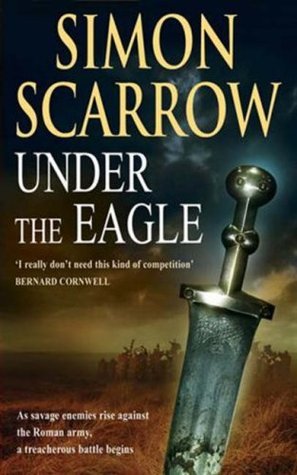
Eagles of the Empire #1
Under the Eagle
Simon Scarrow's brilliant adventure novels about the Roman army appear with stunning new covers.
It is 42 AD, and Quintus Licinius Cato has just arrived in Germany as a new recruit to the Second Legion, the toughest in the Roman army. If adjusting to the rigours of military life isn’t difficult enough for the bookish young man, he also has to contend with the disgust of his colleagues when, because of his imperial connections, he is appointed a rank above them. As second-in-command to Macro, the fearless, battle-scarred centurion who leads them, Cato will have more to prove than most in the adventures that lie ahead. Then the men discover that the army’s next campaign will take them to a land of unparalleled barbarity - Britain. After the long march west, Cato and Macro undertake a special mission that will thrust them headlong into a conspiracy that threatens to topple the Emperor himself...
It is 42 AD, and Quintus Licinius Cato has just arrived in Germany as a new recruit to the Second Legion, the toughest in the Roman army. If adjusting to the rigours of military life isn’t difficult enough for the bookish young man, he also has to contend with the disgust of his colleagues when, because of his imperial connections, he is appointed a rank above them. As second-in-command to Macro, the fearless, battle-scarred centurion who leads them, Cato will have more to prove than most in the adventures that lie ahead. Then the men discover that the army’s next campaign will take them to a land of unparalleled barbarity - Britain. After the long march west, Cato and Macro undertake a special mission that will thrust them headlong into a conspiracy that threatens to topple the Emperor himself...
256 pages, Paperback
First published January 1, 2000
About the author
Simon Scarrow
176 books2,251 followersSimon Scarrow is a UK-based author, born in Nigeria, and now living in Norfolk. He completed a master's degree at the University of East Anglia, and, after working at the Inland Revenue, went into teaching as a lecturer at City College, Norwich.
He is best known for his "Eagle" series. This is Roman empire military fiction, starting with the second invasion of Britain, and continuing with subsequent adventures in every corner of the empire. The stories are told through the eyes of two centurions, Macro and Cato. To date there are eighteen books in the series.
Scarrow has also written a series of four novels on the Napoleonic wars, focusing on the lives of Wellington and Napoleon.
He is best known for his "Eagle" series. This is Roman empire military fiction, starting with the second invasion of Britain, and continuing with subsequent adventures in every corner of the empire. The stories are told through the eyes of two centurions, Macro and Cato. To date there are eighteen books in the series.
Scarrow has also written a series of four novels on the Napoleonic wars, focusing on the lives of Wellington and Napoleon.
Ratings & Reviews
Friends & Following
Create a free account to discover what your friends think of this book!
Community Reviews
Displaying 1 - 30 of 804 reviews

August 3, 2012
I bought the first three parts of Scarrow's series on my trip to Scotland, excited to finally stock up my book shelves, and I cannot tell you how disappointed and infuriated I am with the books. Not worth any amount of money, even the six pounds I spent on them in a second-hand bookshop.
After a hundred and fifty pages of the first book, I gave up. I usually try to give a book a chance, but if Under The Eagle gets better at a latter point, I'll never find out. My brain hurt every time a Roman officer addressed his inferior as a 'son' or a 'lad' - the British slang in the dialogue was ridiculous. The whole army description felt as if the writer watched too many U.S. military movies with psychopathic superiors. The characters are unbelievable, weakly portrayed and the dialogue is abnormally horrible. His battle descriptions made me feel as if Macro pressed a 'Pause' button every time he started speaking (a moment before being faced with a horde of crazy, dully-portrayed Germans). The word 'fucking' and 'shit' was used in sentences that would be much better off without it too many times to count. If Scarrow thinks that the way to portray a bastardly character is to make it into a violent bag unable of speaking anything beyond curses and shouts, then he's got a lot to learn about human behaviour. When the author referred to the seventeen-years old Cato as a 'wet kid, young for a soldier', I realized that Scarrow had no idea how quickly people had to grow up two thousand years ago, when 16 was the starting age for most of the soldiers and women gave birth even earlier.
The whole time (which is to say, the seven times I came back to this book to try again) I felt as if I was on a Hollywood film set for a horribly-made, low-budget Roman movie and the actors kept slipping out of their roles.
Tasteless, boring, unbelievable. I've been dreaming of posting this comment the whole week, and I cannot believe the good grade this series has received. Please don't buy this book.
After a hundred and fifty pages of the first book, I gave up. I usually try to give a book a chance, but if Under The Eagle gets better at a latter point, I'll never find out. My brain hurt every time a Roman officer addressed his inferior as a 'son' or a 'lad' - the British slang in the dialogue was ridiculous. The whole army description felt as if the writer watched too many U.S. military movies with psychopathic superiors. The characters are unbelievable, weakly portrayed and the dialogue is abnormally horrible. His battle descriptions made me feel as if Macro pressed a 'Pause' button every time he started speaking (a moment before being faced with a horde of crazy, dully-portrayed Germans). The word 'fucking' and 'shit' was used in sentences that would be much better off without it too many times to count. If Scarrow thinks that the way to portray a bastardly character is to make it into a violent bag unable of speaking anything beyond curses and shouts, then he's got a lot to learn about human behaviour. When the author referred to the seventeen-years old Cato as a 'wet kid, young for a soldier', I realized that Scarrow had no idea how quickly people had to grow up two thousand years ago, when 16 was the starting age for most of the soldiers and women gave birth even earlier.
The whole time (which is to say, the seven times I came back to this book to try again) I felt as if I was on a Hollywood film set for a horribly-made, low-budget Roman movie and the actors kept slipping out of their roles.
Tasteless, boring, unbelievable. I've been dreaming of posting this comment the whole week, and I cannot believe the good grade this series has received. Please don't buy this book.

February 16, 2021
7/10, tal vez un poco más.
Mi primer Scarrow. No me acuerdo por qué lo metí al "to read", creo que lo recomendó alguien y...bueno, bien, se lee de forma grata, hay mucha acción, mucho diálogo y la trama tiene su interés. Ahí gana las estrellas.
Y las pierde en los personajes, flojitos. Y en la ambientación, flojita. Y en que la vida en la legión romana es una pincelada simplota y las batallas tres cuartos de lo mismo. Pero entretiene.
El protagonista es un ex-esclavo de 17 años que vivía en palacio en los primeros años del emperador Claudio y al que hace libre a costa de tener que ingresar en la legión. El chaval tiene cultura por eso de haber vivido entre cultos peo es poca cosa y parece un poco apocado. Y así empieza la cosa.
He visto que son un montón de libros la serie del optio protagonista este, Cato. Voy a continuar con el siguiente a ver si merece o lo dejo.
P.D. A años luz de Posteguillo, Negrete o Reverte. Y yo, de momento, tb prefiero a Kane o Iggulden o Cornwell o incluso a un tal Riches. Y a pesar de eso tengo curiosidad por el siguiente.
Mi primer Scarrow. No me acuerdo por qué lo metí al "to read", creo que lo recomendó alguien y...bueno, bien, se lee de forma grata, hay mucha acción, mucho diálogo y la trama tiene su interés. Ahí gana las estrellas.
Y las pierde en los personajes, flojitos. Y en la ambientación, flojita. Y en que la vida en la legión romana es una pincelada simplota y las batallas tres cuartos de lo mismo. Pero entretiene.
El protagonista es un ex-esclavo de 17 años que vivía en palacio en los primeros años del emperador Claudio y al que hace libre a costa de tener que ingresar en la legión. El chaval tiene cultura por eso de haber vivido entre cultos peo es poca cosa y parece un poco apocado. Y así empieza la cosa.
He visto que son un montón de libros la serie del optio protagonista este, Cato. Voy a continuar con el siguiente a ver si merece o lo dejo.
P.D. A años luz de Posteguillo, Negrete o Reverte. Y yo, de momento, tb prefiero a Kane o Iggulden o Cornwell o incluso a un tal Riches. Y a pesar de eso tengo curiosidad por el siguiente.

March 14, 2026
Britannia
The benefit of historical fiction, when decently written, is to make the people who populate the past real.
Nonfiction, even when individuals from generations long gone can be quoted, can rarely if ever make you feel the sweat and fear and riptide of adrenaline.
It’s historical fiction’s task to make you feel what it’s like, in this story’s case, to be a Roman soldier in Germany and Britain (Britannia) thousands of years ago.
And here I feel Scarrow has succeeded in doing that.
Not a heavy read. But not fluff either.
And there is a touch of passion with a green-eyed beauty for our young Cato (more comfortable in a library of scrolls) who is less a rugged soldier than a dreamy-eyed poet.
Yet the poet too, like many another warrior poet from the past and right up to our present day, must also learn to wield his weapon and fight for his life.
4/5 stars ⚔️
The benefit of historical fiction, when decently written, is to make the people who populate the past real.
Nonfiction, even when individuals from generations long gone can be quoted, can rarely if ever make you feel the sweat and fear and riptide of adrenaline.
It’s historical fiction’s task to make you feel what it’s like, in this story’s case, to be a Roman soldier in Germany and Britain (Britannia) thousands of years ago.
And here I feel Scarrow has succeeded in doing that.
Not a heavy read. But not fluff either.
And there is a touch of passion with a green-eyed beauty for our young Cato (more comfortable in a library of scrolls) who is less a rugged soldier than a dreamy-eyed poet.
Yet the poet too, like many another warrior poet from the past and right up to our present day, must also learn to wield his weapon and fight for his life.
4/5 stars ⚔️

March 7, 2014
"Simon Scarrow's Pulp Fiction-esque Roman adventure is a win for me and nil for the bores"
Simon Scarrow use to be on the Goodreads author, but apparently after some embarrassing comments by a well known member he removed his account. After confirming this with the author, it rather made me think, really some people need to step back from the keyboard! An opinion is one thing, stupid is something else.
The year is 42AD - what a boring opening! Never start off with dates, it'll kill interest faster than you can speak!
Let's talk about Under The Eagle by Simon Scarrow. It's good, in a sort of balls-to-the-wall way. Having read this before, I knew what to expect. Blood, betrayal, lots of swearing and gladius slashing fun. With any historical novel, there's a fine line between historical accuracy and story-telling. Conn Iggulden, as much as I respect him for taking on Caesar is a fine example of bad story-telling set against historical accuracy (which in part is well researched). Simon Scarrow doesn't pretend to be 'historical accurate', yes it is accurate in the sense of being set within the reign of Claudius-I've-The-Mind-Of-A-Child-And-The-Eating-Habit-Of-A-Ox. Yes it is accurate given the timeline, the invasion of Britain was what solidified Claudius's Emperor-ship - without it, he would have been history (ironic).
Ok tangent there. What's the story about? Picture this, 42AD, Rome isn't doing too bad - yes it still stinks there, a mixture of sweat, people and shit - I swore, for which is common place in Rome with the rabble. Caligula has just been assassinated, Claudius is placed as Imperator and ruler of the Empire. He has to have a triumphant quickly, something that will enthor him to the plebeians and stop 'noble' daggers piecing him from the dark. Welcome to Germania - tales of several Legions being lost in a particular Rheine forest is common place here. A border has been established and in some respects the flow of the river is a natural wall that keeps the conflict from eschewing. More recruits are needed, so newly appointed Centurion Marco and the somewhat unusual appointment of Cato to his second-in-command 'Optio' begin the story. Well after a few harsh words from Centurion Bestia "You there, shut you're fucking mouth or I'll be spitting you on my gladius - you won't be smiling then will you book boy". Not all Roman's spoke like politicians of the day, some had to get down and fight the attritional battle that Rome was famous for. Think of the Legions as a meat grinder and everything the meat, you won't be far wrong.
While the new recruits get a daily dressing down, Vespasian, Legate of The Second Legion Augusta receives secret orders that a invasion of Britain will take place. This really begins the story and shoves you arse-first into a serious of events that are (at times) a bit too quick, From the skirmish with Germanic hordes, to plotters from Rome and with the Second Legion itself, things become a tad overawing you would think. Not so, Simon Scarrow seems to have the ability to tell several side-plots while not having to deviate from the main story. It helps keep the pace flowing fast but not to the point where I'm going '... the hell just happened?' I like that- what I also liked was how well thought out Cato and Macro are. They couldn't be further from each other in upbringing and attitudes to life - Cato a 17 year old, who has known nothing more that palace life, that being easy living and books, a lot of books. Macro, a hardnosed bastard, who cannot read or write but is very good with a gladius. Seems a good balance, and it works very well. The humour is brilliant between the two, not to mention how dumbfounded Cato comes across at times. Foils within foils, if you like.
There's plots and intrigue to find here, a few choice fights 'where the metal meets the meat' and beyond this, a intelligent plot that leads Macro and Cato above the call of duty - that's a very bad game by the way! If you want something story-driven rather than historically accurate, then I'd suggest Simon Scarrow's Eagle series as a good yarn.
I was going to talk about why some readers find swearing and curse words to be abhorrent to them. I was also going to share some 'historically' accurate Latin phrases, that highlight that not all were well mannered individuals - am I going to? Maybe a little. The problem is, we all come from different backgrounds. Swearing, I'm always told, isn't intelligent. Swearing isn't acceptable in society and shows a clear lack of intellect. Using curse words reflects badly upon one-self. Bollocks. Swearing, whether you do or don't, has no bearing upon one's intelligence. It is the makeup of a individual and those who judge upon well used paths really should lighten up - especially when taking offense from written words in a novel. Now I was going to sit on the fence and say... neither side is right or wrong. However, it is wrong to sit judgement upon someone else - imagine if myself, as a academic dismissed Livy's work because it 'read' like propaganda for Augustus reign. Or thought, no Hipponax is a sexual deviant and I don't want to read his work, neither does it have any merit within Classical antiquity. Herodotus wrote with fanciful words, embellishing his stories with tales of grandeur and inaccuracies. He spent time with Persians, so his evidence must be dismissed as both propaganda and potentially being one sided.
Most Latin insults (that we know of) are generally referring to a individuals mentula (penis), coleus/colei (testicle/s). Do you want examples? Read Martial, Hipponax, Sallust, I could suggest many more. One of Martial's lines was "If you want to piss over a boat, do so, and do so again, until you piss on some Greek's" - Even Cicero is at it in Brutus something about mentioning cunnus. They must have been ALL thick and stupid - I mean who would use rude words - heaven forbid.
By the way - I respect those who are offended by profanity, just not in a judgemental context.
Simon Scarrow use to be on the Goodreads author, but apparently after some embarrassing comments by a well known member he removed his account. After confirming this with the author, it rather made me think, really some people need to step back from the keyboard! An opinion is one thing, stupid is something else.
The year is 42AD - what a boring opening! Never start off with dates, it'll kill interest faster than you can speak!
Let's talk about Under The Eagle by Simon Scarrow. It's good, in a sort of balls-to-the-wall way. Having read this before, I knew what to expect. Blood, betrayal, lots of swearing and gladius slashing fun. With any historical novel, there's a fine line between historical accuracy and story-telling. Conn Iggulden, as much as I respect him for taking on Caesar is a fine example of bad story-telling set against historical accuracy (which in part is well researched). Simon Scarrow doesn't pretend to be 'historical accurate', yes it is accurate in the sense of being set within the reign of Claudius-I've-The-Mind-Of-A-Child-And-The-Eating-Habit-Of-A-Ox. Yes it is accurate given the timeline, the invasion of Britain was what solidified Claudius's Emperor-ship - without it, he would have been history (ironic).
Ok tangent there. What's the story about? Picture this, 42AD, Rome isn't doing too bad - yes it still stinks there, a mixture of sweat, people and shit - I swore, for which is common place in Rome with the rabble. Caligula has just been assassinated, Claudius is placed as Imperator and ruler of the Empire. He has to have a triumphant quickly, something that will enthor him to the plebeians and stop 'noble' daggers piecing him from the dark. Welcome to Germania - tales of several Legions being lost in a particular Rheine forest is common place here. A border has been established and in some respects the flow of the river is a natural wall that keeps the conflict from eschewing. More recruits are needed, so newly appointed Centurion Marco and the somewhat unusual appointment of Cato to his second-in-command 'Optio' begin the story. Well after a few harsh words from Centurion Bestia "You there, shut you're fucking mouth or I'll be spitting you on my gladius - you won't be smiling then will you book boy". Not all Roman's spoke like politicians of the day, some had to get down and fight the attritional battle that Rome was famous for. Think of the Legions as a meat grinder and everything the meat, you won't be far wrong.
While the new recruits get a daily dressing down, Vespasian, Legate of The Second Legion Augusta receives secret orders that a invasion of Britain will take place. This really begins the story and shoves you arse-first into a serious of events that are (at times) a bit too quick, From the skirmish with Germanic hordes, to plotters from Rome and with the Second Legion itself, things become a tad overawing you would think. Not so, Simon Scarrow seems to have the ability to tell several side-plots while not having to deviate from the main story. It helps keep the pace flowing fast but not to the point where I'm going '... the hell just happened?' I like that- what I also liked was how well thought out Cato and Macro are. They couldn't be further from each other in upbringing and attitudes to life - Cato a 17 year old, who has known nothing more that palace life, that being easy living and books, a lot of books. Macro, a hardnosed bastard, who cannot read or write but is very good with a gladius. Seems a good balance, and it works very well. The humour is brilliant between the two, not to mention how dumbfounded Cato comes across at times. Foils within foils, if you like.
There's plots and intrigue to find here, a few choice fights 'where the metal meets the meat' and beyond this, a intelligent plot that leads Macro and Cato above the call of duty - that's a very bad game by the way! If you want something story-driven rather than historically accurate, then I'd suggest Simon Scarrow's Eagle series as a good yarn.
I was going to talk about why some readers find swearing and curse words to be abhorrent to them. I was also going to share some 'historically' accurate Latin phrases, that highlight that not all were well mannered individuals - am I going to? Maybe a little. The problem is, we all come from different backgrounds. Swearing, I'm always told, isn't intelligent. Swearing isn't acceptable in society and shows a clear lack of intellect. Using curse words reflects badly upon one-self. Bollocks. Swearing, whether you do or don't, has no bearing upon one's intelligence. It is the makeup of a individual and those who judge upon well used paths really should lighten up - especially when taking offense from written words in a novel. Now I was going to sit on the fence and say... neither side is right or wrong. However, it is wrong to sit judgement upon someone else - imagine if myself, as a academic dismissed Livy's work because it 'read' like propaganda for Augustus reign. Or thought, no Hipponax is a sexual deviant and I don't want to read his work, neither does it have any merit within Classical antiquity. Herodotus wrote with fanciful words, embellishing his stories with tales of grandeur and inaccuracies. He spent time with Persians, so his evidence must be dismissed as both propaganda and potentially being one sided.
Most Latin insults (that we know of) are generally referring to a individuals mentula (penis), coleus/colei (testicle/s). Do you want examples? Read Martial, Hipponax, Sallust, I could suggest many more. One of Martial's lines was "If you want to piss over a boat, do so, and do so again, until you piss on some Greek's" - Even Cicero is at it in Brutus something about mentioning cunnus. They must have been ALL thick and stupid - I mean who would use rude words - heaven forbid.
By the way - I respect those who are offended by profanity, just not in a judgemental context.

January 5, 2022
**Should Read as 4.5 Stars!**
This very likeable Roman adventure is the 1st volume of the wonderful "Cato & Macro" series.
The tale is set in the year AD 42, and we find Macro in Germania with the 2nd Legion, when a new recruit will be introduced as second in command to Macro, his name being Cato.
As a privileged youth at the Capitol in Rome, Cato will have to prove himself very soon with Macro and his other comrades against the local tribes.
Their next campaign will be the invasion of Britannia with the Roman army, until in Britannia they will stumble into a conspiracy to overthrow the Emperor.
What is to follow is a very exciting and suspenseful Roman adventure, in which Cato will be looked after by Macro, as a kind father and son, and together with their army unit they will encounter various devious and treasonous actions in Britannia, and in a desparate attempt to stop these actions they will have to give their life for Rome and the Emperor, if they want to survive and live for another day.
Very much recommended, for this is a wonderful start of a great series, and that's why I like to call this first outing: "A Very Enjoyable Cato & Macro Begin"!
This very likeable Roman adventure is the 1st volume of the wonderful "Cato & Macro" series.
The tale is set in the year AD 42, and we find Macro in Germania with the 2nd Legion, when a new recruit will be introduced as second in command to Macro, his name being Cato.
As a privileged youth at the Capitol in Rome, Cato will have to prove himself very soon with Macro and his other comrades against the local tribes.
Their next campaign will be the invasion of Britannia with the Roman army, until in Britannia they will stumble into a conspiracy to overthrow the Emperor.
What is to follow is a very exciting and suspenseful Roman adventure, in which Cato will be looked after by Macro, as a kind father and son, and together with their army unit they will encounter various devious and treasonous actions in Britannia, and in a desparate attempt to stop these actions they will have to give their life for Rome and the Emperor, if they want to survive and live for another day.
Very much recommended, for this is a wonderful start of a great series, and that's why I like to call this first outing: "A Very Enjoyable Cato & Macro Begin"!

June 22, 2020
Solid historical fiction, despite the fact that a significant portion of the military behaviour seems anachronistic. Particularly one of the protagonists, Macro, behaves like a stereotypical modern day sergeant moved straight into a Roman context.
That being said, there are several praiseworthy elements. Overall, the historical elements are strong. Depictions of Claudius' reign, the invasions of Britain, the discord between the court and the army, and the generall overall flavour are all close enough to documented historical reality to be believable, while leaving enough room for artistic liberty to fill in the blanks, and come out with a product that's overall enjoyable, if slightly simplistic.
If I end up sticking with the series, I imagine it'll shape my perception of the historical Vespasian and Flavia, as they are a couple of fantastically crafted characters, and considerably more interesting than the more basic and archetypal main characters.
That being said, there are several praiseworthy elements. Overall, the historical elements are strong. Depictions of Claudius' reign, the invasions of Britain, the discord between the court and the army, and the generall overall flavour are all close enough to documented historical reality to be believable, while leaving enough room for artistic liberty to fill in the blanks, and come out with a product that's overall enjoyable, if slightly simplistic.
If I end up sticking with the series, I imagine it'll shape my perception of the historical Vespasian and Flavia, as they are a couple of fantastically crafted characters, and considerably more interesting than the more basic and archetypal main characters.

October 24, 2025
First off I have to give big thanks to my friend Elliot for bringing this series to my attention because while I’ve never read many old historical fiction based novels or really anything based in roman times, this rocked and completely sucked me in. This series started off admittedly a bit slow with plenty of times I had to stop and look up a word or phrase but most likely do to the care and attention to detail and past events the author being a history teacher obviously put into crafting this series, I can’t wait deeply say it shows and makes a strong impact in me not feeling like this is a cheap historical rewrite but instead more of an exciting potentially embellished portrayal of epic and bloody events in our historical past and ones I am very intrigued to learn more about. Macro and Cato were wonderful and I loved the companionship and camaraderie in which they developed and the fact that real historical events and characters were used actually made me want to do a bit more research of my own behind the scenes afterwards which I think is excellent. This isn’t the best action series I’ve ever read but a great entry point and concept nonetheless and I can’t wait to see what Simon has to give going forward, are where he may even improve on as his series continues. 3.75/5

November 26, 2019
I go through genre phases, and historical fiction and Greek/Roman philosophy and history is where my mind was focused for a while. I finished studying stoicism and decided to read this novel by Scarrow that has been in my Kindle library for a couple of years. I am glad I did.
I have noticed that WHEN I read something often affects the way I review it. This book really hit the spot. The author knows his story well, and is able to bring the setting to life. The background information provided a nice backdrop, and what little research I did do as I read concerning people, times and places, liked pin point accurate. Granted, I did not exhaustively research every aspect of it, but I looked at the major people form history while avoiding spoilers, and studied some of the battles.
I particularly liked the way Germany and Britain are shown through the eyes of a Roman soldier. We have Cato's point of view, which is a literate, non-military trained perspective, as well as Macro, a military veteran. Looking at the Brits and the German through the perspectives of this unlikely pair really rounded out the experience.
This author is a master of writing combat sequences and making the reader feel the confusion that participants would. There were times that I felt tension and unease along with the characters as situations grew tense and dangerous.
There is a good amount of plotting and intrigue as well, which is fitting for a novel set in this Roman era. I found this to be a compelling part of the read.
Overall, I enjoyed this novel and am looking forward to reading the next installment in the series.
4 stars.
I have noticed that WHEN I read something often affects the way I review it. This book really hit the spot. The author knows his story well, and is able to bring the setting to life. The background information provided a nice backdrop, and what little research I did do as I read concerning people, times and places, liked pin point accurate. Granted, I did not exhaustively research every aspect of it, but I looked at the major people form history while avoiding spoilers, and studied some of the battles.
I particularly liked the way Germany and Britain are shown through the eyes of a Roman soldier. We have Cato's point of view, which is a literate, non-military trained perspective, as well as Macro, a military veteran. Looking at the Brits and the German through the perspectives of this unlikely pair really rounded out the experience.
This author is a master of writing combat sequences and making the reader feel the confusion that participants would. There were times that I felt tension and unease along with the characters as situations grew tense and dangerous.
There is a good amount of plotting and intrigue as well, which is fitting for a novel set in this Roman era. I found this to be a compelling part of the read.
Overall, I enjoyed this novel and am looking forward to reading the next installment in the series.
4 stars.

November 21, 2019
Amena Lectura
Trama rápida que cautiva y absorbe como lector. Permite que el lector se sumerja en la trama de principio a fin.
Trama rápida que cautiva y absorbe como lector. Permite que el lector se sumerja en la trama de principio a fin.

September 25, 2025
3.5 stars
The first in a series of historical novels about the Roman Empire. This one is set in 42 BCE, just after the start of the reign of Claudius. It starts in Germania and continues with the invasion of Britain. This is more about the daily lives of common soldiers and there are two principal characters: a centurion called Macro and his Optio (second in command) Cato. Cato is very inexperienced, a former slave from Rome, he was in an aristocratic household. Unlike Macro, he can read and write. The novel and series is also very much about their relationship. There are plenty of twists, turns and subplots. The minor characters are well developed and several are historical, including future emperors Vespasian and Vitellius.
This is obviously a formula that works for Scarrow as the series has now reached well over twenty titles. It was entertaining and not too taxing, so a good last thing at night read.
The first in a series of historical novels about the Roman Empire. This one is set in 42 BCE, just after the start of the reign of Claudius. It starts in Germania and continues with the invasion of Britain. This is more about the daily lives of common soldiers and there are two principal characters: a centurion called Macro and his Optio (second in command) Cato. Cato is very inexperienced, a former slave from Rome, he was in an aristocratic household. Unlike Macro, he can read and write. The novel and series is also very much about their relationship. There are plenty of twists, turns and subplots. The minor characters are well developed and several are historical, including future emperors Vespasian and Vitellius.
This is obviously a formula that works for Scarrow as the series has now reached well over twenty titles. It was entertaining and not too taxing, so a good last thing at night read.

January 25, 2021
Spannend, historisch, unterhaltsam. Mal eine ganz neue Zeit für mich, in der ich literarisch unterwegs bin. Mir hat dieser Serienauftakt sehr gut gefallen, so dass ich weitermachen möchte mit dieser Buchreihe. Obwohl ich diese Schlachten- und Kampfszenen eigentlich gar nicht so mag, hat mich das Drumherum sehr gefesselt.

January 15, 2014
I am boggled at the hugely positive reviews of this "historical" fiction, and I don't put "historical" in quotes lightly. This is basically a Bat Durston story, to borrow a term from 50s and 60s SF - a genre story (typically a Western) which has been "re-genre-fied" with the trappings of SF. In this case, a "mean streets of [city]" novel has been tarted up with vaguely Roman names and plunked down into Roman-era Britain. Simon, honey, you ain't no Rosemary Sutcliff.

November 11, 2020
So I've been avoiding (intentionally or not) these books for a while now. It seems like everyone who's really excited about Roman military fiction just gushes over Scarrow's books. And that's why I've been a little nervous about them. Military fiction fanboys are a whole different breed from historical fiction ones.* At some level people who seek out military fiction expect to see an experience they can relate to. When centurions issue commands to their men they want to feel not "how interesting the way the Roman class structure coexists with army ranks" but "ah, I remember when my NCOs acted like that." And that is perhaps not an approach I find rewarding. Christian Cameron (one of the best writers of ancient military fiction) sums it up best: there's no such thing as military history. It's impossible to understand ancient warfare (or the warfare of any period) without understanding how it interacted with all other aspects of ancient life. Without a good grounding in the economic, political, administrative, cultural, and technological history of the past it is impossible to really depict ancient warfare. Which, as you might imagine, is where I find this book frustrating.
This book was... pretty much exactly what I expected. It's good in some ways and kind of meh in a lot of others. For convenience I've grouped them as such below.
The Good
The characters are pretty good (or at least the two leads). Cato and Macro (what an odd choice of names) are both distinct and believable within the world they share. Macro's probably the least surprising: a grizzled illiterate NCO who just recently worked his way up from the ranks to reach centurion. But Cato's the exciting one: a recently-freed slave from the imperial palace with a sensitive personality and a lot of book smarts. This is his story and we get a lot of fun with it.
The action scenes are pretty thrilling and seem like you're part of a grand adventure. There was nothing particularly new or original in this book's depiction of a village under siege, but it is drawn out well enough that you actually care about the outcome. I suspect this is enough for most people.
The Bad
Just as I expected the book exists entirely within the army in ways that just don't make sense. And a very modern army too. Generals appear as career army instead of senators serving merely one stage in their career. All centurions are grizzled veterans raised from the ranks and the suggestion that Cato could be appointed directly to the position is treated as absurd despite an imperial command. Pretty much everything that exists outside the army is a skeletal sketch or vague caricature. If it's not army, it doesn't matter.
The plots and secret missions are, quite frankly, silly. A secret mission carried out by a small band to recover buried treasure left by Julius Caesar so that the emperor can finance his invasion is... well... stupid. So is the way they choose to go about it. Selecting a small band (led by a centurion and optio no less!) to recover the gold from the middle of enemy territory in such secrecy that they're officially listed as deserters is not the best way of going about this to put it mildly. And things deserve to go as badly as they end up doing. The constant plots also do nothing. I'm not one of those who quickly spots the perp in mystery novels, but I knew who the spy was from a very early point. Another example of no focus going into anything not army related.
Characters outside of the leads are pretty bad. Especially the historical figures. I suppose Vespasian's not the worst, but Julius Caesar cussing in fury is just such a contrast with the cerebral and reputation-obsessed man of history that the reveal was genuinely shocking. And not in a good way.
Accuracy, as you might imagine, is poor. Especially when we're dealing with attitudes. The army feels more like an amalgamation of the British army from the Napoleonic Era to today than the Roman one of any period. A few other things: there was no general staff, slaves inherited their status from their mother not their father, freedmen weren't allowed in the army (I suppose the emperor could order an exception but it should be seen as weird), freedmen took the name of their former master and not their father (Cato's name should be Claudius Cato), homosexuality wasn't frowned on so long as you weren't on the receiving end, and Romans didn't have uniforms in the same way they do today.
Conclusion
I get why people would like this (though I still can't believe how silly the secret mission was) I just expect more from my historical fiction. It wasn't wretched and in fact did some things very well so I may continue with the next one. Especially since the book made the odd choice of cutting off at the very beginning of the invasion of Britain. But this is not likely to become one of my favorite series. I prefer books that aim to capture what life was really like instead of ones that place modern soldiers in a vaguely Roman context.
If you find yourself looking for better accounts of ancient warfare there are quite a few good authors out there. Christian Cameron is the best, although all his ancient world series (Tyrant, Long War, and Commander) are all set in the Greek world. For Rome you have Ben Kane's Eagles and Clash of Empires. I find Kane frustratingly uninterested in nonmilitary topics, but he does at least understand them. Preston Holtry's Arrius books are an often underlooked series. And Harry Sidebottom's Warrior of Rome books are what you get when you cross a gifted novelist with a genuine historian. All come highly recommended.
* On a lot of levels this is true of military historians as well. I won't claim this is universally the case (some amazing work being done by Hans Van Wees and his followers), but military historians are the only type of historian I know of who seem to think they can study past cultures without ever learning anything about the functioning of society outside their field.
This book was... pretty much exactly what I expected. It's good in some ways and kind of meh in a lot of others. For convenience I've grouped them as such below.
The Good
The characters are pretty good (or at least the two leads). Cato and Macro (what an odd choice of names) are both distinct and believable within the world they share. Macro's probably the least surprising: a grizzled illiterate NCO who just recently worked his way up from the ranks to reach centurion. But Cato's the exciting one: a recently-freed slave from the imperial palace with a sensitive personality and a lot of book smarts. This is his story and we get a lot of fun with it.
The action scenes are pretty thrilling and seem like you're part of a grand adventure. There was nothing particularly new or original in this book's depiction of a village under siege, but it is drawn out well enough that you actually care about the outcome. I suspect this is enough for most people.
The Bad
Just as I expected the book exists entirely within the army in ways that just don't make sense. And a very modern army too. Generals appear as career army instead of senators serving merely one stage in their career. All centurions are grizzled veterans raised from the ranks and the suggestion that Cato could be appointed directly to the position is treated as absurd despite an imperial command. Pretty much everything that exists outside the army is a skeletal sketch or vague caricature. If it's not army, it doesn't matter.
The plots and secret missions are, quite frankly, silly. A secret mission carried out by a small band to recover buried treasure left by Julius Caesar so that the emperor can finance his invasion is... well... stupid. So is the way they choose to go about it. Selecting a small band (led by a centurion and optio no less!) to recover the gold from the middle of enemy territory in such secrecy that they're officially listed as deserters is not the best way of going about this to put it mildly. And things deserve to go as badly as they end up doing. The constant plots also do nothing. I'm not one of those who quickly spots the perp in mystery novels, but I knew who the spy was from a very early point. Another example of no focus going into anything not army related.
Characters outside of the leads are pretty bad. Especially the historical figures. I suppose Vespasian's not the worst, but Julius Caesar cussing in fury is just such a contrast with the cerebral and reputation-obsessed man of history that the reveal was genuinely shocking. And not in a good way.
Accuracy, as you might imagine, is poor. Especially when we're dealing with attitudes. The army feels more like an amalgamation of the British army from the Napoleonic Era to today than the Roman one of any period. A few other things: there was no general staff, slaves inherited their status from their mother not their father, freedmen weren't allowed in the army (I suppose the emperor could order an exception but it should be seen as weird), freedmen took the name of their former master and not their father (Cato's name should be Claudius Cato), homosexuality wasn't frowned on so long as you weren't on the receiving end, and Romans didn't have uniforms in the same way they do today.
Conclusion
I get why people would like this (though I still can't believe how silly the secret mission was) I just expect more from my historical fiction. It wasn't wretched and in fact did some things very well so I may continue with the next one. Especially since the book made the odd choice of cutting off at the very beginning of the invasion of Britain. But this is not likely to become one of my favorite series. I prefer books that aim to capture what life was really like instead of ones that place modern soldiers in a vaguely Roman context.
If you find yourself looking for better accounts of ancient warfare there are quite a few good authors out there. Christian Cameron is the best, although all his ancient world series (Tyrant, Long War, and Commander) are all set in the Greek world. For Rome you have Ben Kane's Eagles and Clash of Empires. I find Kane frustratingly uninterested in nonmilitary topics, but he does at least understand them. Preston Holtry's Arrius books are an often underlooked series. And Harry Sidebottom's Warrior of Rome books are what you get when you cross a gifted novelist with a genuine historian. All come highly recommended.
* On a lot of levels this is true of military historians as well. I won't claim this is universally the case (some amazing work being done by Hans Van Wees and his followers), but military historians are the only type of historian I know of who seem to think they can study past cultures without ever learning anything about the functioning of society outside their field.

July 21, 2013
8/10
A very good start to the series. I enjoyed the style of writing which made it a quick and enjoyable overall. The two main characters were both interesting and I can see them growing more and more as the series continues and the friendship growing with each battle they enter into.
The plot isn't groundbreaking but allows for some great action such as the siege in the German village which was excellently done and allowed Cato to really shine and show his potential, especially with his bravery.
There is political plotting throughout with some of the fringe characters seeking ways to progress up the career ladder which leads to a major part of the final third of the book. Nothing is really resolved in this book which means I'm expecting some big things from this series and some of these issues to roll on.
I've noted in a couple of reviews that they didn't like the interactions between characters and said the vocabulary they use is too modern etc but I quite liked it and it gave it a good style that flowed and allowed me to get involved quickly. I don't know what terms the Romans would have used back then but as far as I'm concerned I think it works well.
A good start to the series which is easy to get into, quick to read and I am keen to pick up more. Well worth a read if you're interested in this time period and/or life in the army.
If you like this try: "The Gates of Rome" by Conn Iggulden"
A very good start to the series. I enjoyed the style of writing which made it a quick and enjoyable overall. The two main characters were both interesting and I can see them growing more and more as the series continues and the friendship growing with each battle they enter into.
The plot isn't groundbreaking but allows for some great action such as the siege in the German village which was excellently done and allowed Cato to really shine and show his potential, especially with his bravery.
There is political plotting throughout with some of the fringe characters seeking ways to progress up the career ladder which leads to a major part of the final third of the book. Nothing is really resolved in this book which means I'm expecting some big things from this series and some of these issues to roll on.
I've noted in a couple of reviews that they didn't like the interactions between characters and said the vocabulary they use is too modern etc but I quite liked it and it gave it a good style that flowed and allowed me to get involved quickly. I don't know what terms the Romans would have used back then but as far as I'm concerned I think it works well.
A good start to the series which is easy to get into, quick to read and I am keen to pick up more. Well worth a read if you're interested in this time period and/or life in the army.
If you like this try: "The Gates of Rome" by Conn Iggulden"

February 6, 2020
This was fantastic Roman historical fiction! We learn all about Roman military structure, what life was like as a legionary, an officer and a legate. Plus there's treachery, conniving, backstabbing, ass kicking and last but not least... BROMANCE!!! Macro and Cato are a stellar duo.
My only gripe is that the language used is 100% modern slang. That wasn't a deal-breaker for me but it may be for some of you. I almost deducted a star for that but the ending was so great that the warm and runnies wouldn't allow me to give it less than 5 stars.
My only gripe is that the language used is 100% modern slang. That wasn't a deal-breaker for me but it may be for some of you. I almost deducted a star for that but the ending was so great that the warm and runnies wouldn't allow me to give it less than 5 stars.

July 1, 2018
3,75/5
Novela que me ha sorprendido de forma bastante grata. Tengo claro que tanto la prosa como el estilo narrativo son bastante reguleros, pero oye, la lectura me ha parecido muy entretenida.
Destacaría además de lo bien que se lee, la gran cantidad de acción con la que nos vamos a topar. Además, siempre sucede algo por lo que es imposible aburrirse. También me ha gustado la ambientación militar, dando un punto de vista de las legiones romanas bastante interesante.
Los peros, bueno, quizás para aquellos que busquen una novela romana se quede algo corta su ambientación, ya que como decía se centra en las legiones, dejando de lado el resto. El desenlace es un poco a corre prisas y la trama secundaria a mi no me ha aportado nada.
Como siempre, os dejo el enlace a mi blog por si queréis darle un vistazo a la reseña que publiqué allí:
https://fantasiascifiymuchomas.blogsp...
Novela que me ha sorprendido de forma bastante grata. Tengo claro que tanto la prosa como el estilo narrativo son bastante reguleros, pero oye, la lectura me ha parecido muy entretenida.
Destacaría además de lo bien que se lee, la gran cantidad de acción con la que nos vamos a topar. Además, siempre sucede algo por lo que es imposible aburrirse. También me ha gustado la ambientación militar, dando un punto de vista de las legiones romanas bastante interesante.
Los peros, bueno, quizás para aquellos que busquen una novela romana se quede algo corta su ambientación, ya que como decía se centra en las legiones, dejando de lado el resto. El desenlace es un poco a corre prisas y la trama secundaria a mi no me ha aportado nada.
Como siempre, os dejo el enlace a mi blog por si queréis darle un vistazo a la reseña que publiqué allí:
https://fantasiascifiymuchomas.blogsp...

June 7, 2023
4.5 stars

August 23, 2012
 Nutty NUUT read
I've skipped the prologue, which may be read after; who knows!
Opening: THE RHINE FRONTIER in the second year of the reign of Emperor Claudius: Late 42 AD.
An icy blast of wind swept into the latrine with the sentry.
"Wagons approaching, Sir!"
"Shut the bloody door! Anything else?"
"Small column of men."
"Sodiers?"
"Hardly." The sentry grimaced. "Unless there's been some change in marching drill."

Marco - Centurion
Cato - Optio
Vitellius - Tribune
All under Vespasian the Legate
 I sleep under the Eagle!
#46 TBR Busting 2013

July 4, 2020
En realidad la cosa estaría entre 1,5 y 1,75 estrellas.
Aunque Macro y Cato están medio perfilados, el resto de personajes son estereotipos del imaginario anglosajón, con piernas, cara y ojos.
Los comportamientos y la trama están trufados de un tufillo holliwoodiense que tira para atrás. El soldado débil y vejado por los compañeros que demuestra su valor, el que no sabe leer pero quiere aprender,... no caben más tópicos señora.
Lo peor, la uniformidad en la forma de hablar; ¿un analfabeto diciendo agreste? No sé Rick...
Hay que reconocerle al engranaje de la trama que, aunque simple, funciona a la hora de mantener la tensión narrativa. Eso es lo que salva la novela del suspenso. Creo que la ambición de esta novela es entretener, y si no fuera por los fallos que sacan a uno de la historia, casi lo consigue.
Aunque Macro y Cato están medio perfilados, el resto de personajes son estereotipos del imaginario anglosajón, con piernas, cara y ojos.
Los comportamientos y la trama están trufados de un tufillo holliwoodiense que tira para atrás. El soldado débil y vejado por los compañeros que demuestra su valor, el que no sabe leer pero quiere aprender,... no caben más tópicos señora.
Lo peor, la uniformidad en la forma de hablar; ¿un analfabeto diciendo agreste? No sé Rick...
Hay que reconocerle al engranaje de la trama que, aunque simple, funciona a la hora de mantener la tensión narrativa. Eso es lo que salva la novela del suspenso. Creo que la ambición de esta novela es entretener, y si no fuera por los fallos que sacan a uno de la historia, casi lo consigue.

January 15, 2013
Reading Simon Scarrow's initial volume of his Eagles series, Under the Eagle brought back happy memories of sitting in Ancient Civilizations university seminars and Latin tutorials. I loved studying all aspects of Roman life, society, politics, and history. If you are looking for an bird's eye view into the daily life of an ordinary Roman legionary during battle, on the march, or settling into camp, this book is for you. Additionally, this book will introduce you to the common theme of life and death intrigue among senators, tribunes, wives and lovers, emperors and generals. It will describe the complicated activities required to move a legion and all the supplies and support required to keep it moving-that is, about 5,500 men.
When I was teaching various elements of Roman life to my grade sixes, one of the areas that really fascinated them, was learning about the items and concepts commonly used today, that are accredited to Roman origins. As I read this book, I kept finding paragraphs that I would have read aloud to them, to facilitate discussion or illustrate real life applications of Roman technology or philosophy.
This book serves as an introduction to series of books focused around the exploits of legionary Marco, a grizzled and gruff mentor to soon-to-be seventeen year old Quintus Licinius Cato, a freed slave who has been sent to Germany, as an army recruit by Emperor Claudius ( of "I Claudius" fame), to satisfy a debt to Cato's father on his death bed. Cato has no interest in becoming a soldier, and has been trained to be an academic at the imperial court. Military life is not what he wants, nor does he think he can adapt well enough to survive, let alone advance through the complicated ranks within the highly-structured Roman military organization.
The story reveals itself mainly from the perspectives of Marco and Cato, as one teaches the other soldierly skills, and to become a proud member of the Legion. Then, they prepare for a campaign against the wild inhabitants of Britain. Obviously, this after Julius Caesar's visit there and before Britain became a Roman colony. Cato experiences the first pangs of love and lust, as part of what I suspect will be a continuing plot line, involving political intrigue swirling around Lavinia ( a slave belonging to Flavia, the Legate Vespasian's wife), the Senior Tribune Vitellus, and those plotting against the Emperor Claudius. No spoilers here!
The next book, has moved up my TBR list. I do not want to wait too long to discover what happens to Macro and Cato next, in the foggy hills of wild Britain. My appetite for political skulduggery, bloody battles, and further insight into life during the time of Emperor Claudius, has been whetted, and I don't have to translate any Latin to do so!The Eagle's Conquest
When I was teaching various elements of Roman life to my grade sixes, one of the areas that really fascinated them, was learning about the items and concepts commonly used today, that are accredited to Roman origins. As I read this book, I kept finding paragraphs that I would have read aloud to them, to facilitate discussion or illustrate real life applications of Roman technology or philosophy.
This book serves as an introduction to series of books focused around the exploits of legionary Marco, a grizzled and gruff mentor to soon-to-be seventeen year old Quintus Licinius Cato, a freed slave who has been sent to Germany, as an army recruit by Emperor Claudius ( of "I Claudius" fame), to satisfy a debt to Cato's father on his death bed. Cato has no interest in becoming a soldier, and has been trained to be an academic at the imperial court. Military life is not what he wants, nor does he think he can adapt well enough to survive, let alone advance through the complicated ranks within the highly-structured Roman military organization.
The story reveals itself mainly from the perspectives of Marco and Cato, as one teaches the other soldierly skills, and to become a proud member of the Legion. Then, they prepare for a campaign against the wild inhabitants of Britain. Obviously, this after Julius Caesar's visit there and before Britain became a Roman colony. Cato experiences the first pangs of love and lust, as part of what I suspect will be a continuing plot line, involving political intrigue swirling around Lavinia ( a slave belonging to Flavia, the Legate Vespasian's wife), the Senior Tribune Vitellus, and those plotting against the Emperor Claudius. No spoilers here!
The next book,
has moved up my TBR list. I do not want to wait too long to discover what happens to Macro and Cato next, in the foggy hills of wild Britain. My appetite for political skulduggery, bloody battles, and further insight into life during the time of Emperor Claudius, has been whetted, and I don't have to translate any Latin to do so!The Eagle's Conquest
November 3, 2013
Goodreads just fucking ate my first copy of this review, which means this is gonna be a short one (I can just hear the masses crying "NO!") It was a short one anyways, as I usually don't have enough steam to bitch about books I didn't like for more than a couple paragraphs. I really had good expectations for this one, I wanted something shorter and more fast-paced than the usual tomes I've been reading lately and this seemed like a good one, even bearing a Cornwell endorsement on the cover...those sneaky marketing pricks. Why would you lie to me, Uncle Bernie? It started out well enough, I liked being introduced in detail to the roman military system including the chain of command, ranks, equipment, etc. and I definitely enjoyed the author's sense of humor. I was also charmed by Macro and Cato's dynamic. I didn't even mind the fact that the "Roman" soldiers are clearly English (it's the same on HBO's Rome and that didn't bother me).
But about halfway through the book I just hit this brick wall. The plot seemed almost nonexistent, and when it began to focus on the future Emperor Vespasian's intrigues and the Legion's march from the Rhine to the impending invasion of Britain I just became acutely bored with the whole thing. Don't get me wrong, I love me some good intrigue but it just lacked the taste of danger and suspense that that kind of stuff needs. Every time I'd come to a Vespasian chapter I just wanted to groan. Even Macro and Cato's chapters became dull, lacking the fun and spark in the first few hundred pages. There seemed to be whole chapters where nothing happened, and what was with the whole "two-page chapter" concept? It's funny, I just finished reading a David Anthony Durham novel and he seems to think that two hundred pages is a good chapter point (in a 500 page book.) Honestly, I prefer the latter to the former. The constant back-and-forth just really began to break up the momentum for me. So yeah, obviously there's good things and merit in this book--plenty of people adore them and he's written like seventy of them at this point. I suppose I'm just not gonna be one of those people.
But about halfway through the book I just hit this brick wall. The plot seemed almost nonexistent, and when it began to focus on the future Emperor Vespasian's intrigues and the Legion's march from the Rhine to the impending invasion of Britain I just became acutely bored with the whole thing. Don't get me wrong, I love me some good intrigue but it just lacked the taste of danger and suspense that that kind of stuff needs. Every time I'd come to a Vespasian chapter I just wanted to groan. Even Macro and Cato's chapters became dull, lacking the fun and spark in the first few hundred pages. There seemed to be whole chapters where nothing happened, and what was with the whole "two-page chapter" concept? It's funny, I just finished reading a David Anthony Durham novel and he seems to think that two hundred pages is a good chapter point (in a 500 page book.) Honestly, I prefer the latter to the former. The constant back-and-forth just really began to break up the momentum for me. So yeah, obviously there's good things and merit in this book--plenty of people adore them and he's written like seventy of them at this point. I suppose I'm just not gonna be one of those people.
June 14, 2024
War according to Prussia writer Von Clausewitz is the implementation of political policy through other means. The invasion of Britain in this novel is based on the Imperial Roman power politics of Emperor Claudius who seeks a military expedition to keep potential rivals occupied and to prove his legitimacy as Emperor. Macro and Cato are Roman Legion commanders in the middle of political intrigue that most of the action revolves around. There are some parallels to Soviet Russia with the purges, spies, and plots to gain power. Von Clausewitz is right about how political policy influences war as the Legion moves on to the second novel in this series.
June 17, 2026
Un libro entretenido. Me gusta mucho las historias ambientadas en la antigua Roma. Tiene de todo; intriga, traición, odio, amistad e incluso tenuemente amor.
Es una saga bastante larga lo que me fastidia bastante porque se vuelve muy pesado con el tiempo.
Cato como personaje es muy tierno, no encaja mucho en la legión pero poco a poco se abre su hueco.
Es una saga bastante larga lo que me fastidia bastante porque se vuelve muy pesado con el tiempo.
Cato como personaje es muy tierno, no encaja mucho en la legión pero poco a poco se abre su hueco.

August 17, 2020
An enjoyable read. Historical fiction about a Roman legion, soon after 40AD, firstly facing some hairy, bloodthirsty German barbarians at the frontiers of the Roman Empire, and then taking part in the invasion of Britain and facing some hairy, bloodthirsty British barbarians!
Regarding the specific story the two main POVs are endearing and interesting - Macro, an experienced centurion and Cato, his deputy (‘optio’) who is a new recruit to the army. I believe this book is the start of a series featuring this pair. Cato’s backstory is pretty well defined; that of Macro and other characters rather less so. Cato and Macro hit it off nicely and complement each other well in the drama and difficulties that unfold.
Another attractive feature of the story is that it is well researched (so I’m told, and I’ve no reason to disbelieve that especially when I did my own online checks out of interest). If you want to know how a legion functioned and why it was the military conquering machine that it was, this book gives you plenty of background on training and organisation.
The story itself includes less military action than I expected, though there are intense action scenes in it. There is a fair amount of political intrigue, mainly because many army officers had political, even imperial, ambitions. I thought that balance was good and was glad it wasn’t a long battle bloodfest.
All in all, I found it entertaining and educational. I thought there were one or two wobbly components to the plot, and certainly one occasion where I thought a legion commander would have been rather more ruthless in finding the truth than he was when questioning a slave! I also guessed who the ‘spy’ in the camp was well ahead of the reveal and I’m one of the world’s slowest to see such things. Maybe it was intended, in that case.
It’s not strong on female characters, though there is one of significance, but as it’s mainly about Roman legions and their barbarian warrior opponents that won’t be a surprise.
The story isn’t too long either, just over 250 pages, which seemed right for the tale being told.
Historical fiction is less favoured by me than fantasy because of the imaginative possibilities of fantasy while historical fiction must follow more discipline in not defying the actual history of the period it tackles. However, if it’s a period I’m interested in then I’ll give it a go. And I have an interest in the Roman Empire. Not least they founded the small city where I now live purely because of its natural hot water springs. Anyone who does that in order to enjoy hot baths and spa relaxation can’t be all bad despite their cruel, imperialistic reputation.
I enjoyed it and from time to time I’m sure I’ll be reading more of this author’s series when I fancy some historical fiction that’s interesting and undemanding.
Regarding the specific story the two main POVs are endearing and interesting - Macro, an experienced centurion and Cato, his deputy (‘optio’) who is a new recruit to the army. I believe this book is the start of a series featuring this pair. Cato’s backstory is pretty well defined; that of Macro and other characters rather less so. Cato and Macro hit it off nicely and complement each other well in the drama and difficulties that unfold.
Another attractive feature of the story is that it is well researched (so I’m told, and I’ve no reason to disbelieve that especially when I did my own online checks out of interest). If you want to know how a legion functioned and why it was the military conquering machine that it was, this book gives you plenty of background on training and organisation.
The story itself includes less military action than I expected, though there are intense action scenes in it. There is a fair amount of political intrigue, mainly because many army officers had political, even imperial, ambitions. I thought that balance was good and was glad it wasn’t a long battle bloodfest.
All in all, I found it entertaining and educational. I thought there were one or two wobbly components to the plot, and certainly one occasion where I thought a legion commander would have been rather more ruthless in finding the truth than he was when questioning a slave! I also guessed who the ‘spy’ in the camp was well ahead of the reveal and I’m one of the world’s slowest to see such things. Maybe it was intended, in that case.
It’s not strong on female characters, though there is one of significance, but as it’s mainly about Roman legions and their barbarian warrior opponents that won’t be a surprise.
The story isn’t too long either, just over 250 pages, which seemed right for the tale being told.
Historical fiction is less favoured by me than fantasy because of the imaginative possibilities of fantasy while historical fiction must follow more discipline in not defying the actual history of the period it tackles. However, if it’s a period I’m interested in then I’ll give it a go. And I have an interest in the Roman Empire. Not least they founded the small city where I now live purely because of its natural hot water springs. Anyone who does that in order to enjoy hot baths and spa relaxation can’t be all bad despite their cruel, imperialistic reputation.
I enjoyed it and from time to time I’m sure I’ll be reading more of this author’s series when I fancy some historical fiction that’s interesting and undemanding.

July 4, 2011
At first I couldn’t decide to give two or three stars.
Maybe because of the praises others reviewers had given to this book I was disappointed to discover that it was average story. The characters are not remarkable, the plot is simple, little or almost no suspense, (I guessed who is spy and who traitor easy and early), Cato and Lavinia scenes reminded me of a big lipped alligator moment, it was quite pointless as if author thought he must involve some sort of romance.
It was historical bits and battle scenes who made me to finish the book plus towards the end story slowly started to improve.
I’m not interested to read second book in the series...But I might.
Maybe because of the praises others reviewers had given to this book I was disappointed to discover that it was average story. The characters are not remarkable, the plot is simple, little or almost no suspense, (I guessed who is spy and who traitor easy and early), Cato and Lavinia scenes reminded me of a big lipped alligator moment, it was quite pointless as if author thought he must involve some sort of romance.
It was historical bits and battle scenes who made me to finish the book plus towards the end story slowly started to improve.
I’m not interested to read second book in the series...But I might.

March 19, 2013
-La mejor manera de no fumar es no empezar a fumar jamás. Pasa lo mismo con algunos libros.-
Género. Novela histórica
Lo que nos cuenta. Quinto Licinio Cato, a punto de cumplir los 17 años y esclavo liberto bajo la condición de alistarse en el ejército, se incorpora a la Segunda Legión a orillas del Rin portando un mensaje del propio emperador Claudio para el Legado de la Legión Augusta, Vespasiano. Primer libro de la serie de Quinto Licinio Cato.
¿Quiere saber más del libro, sin spoilers? Visite:
http://librosdeolethros.blogspot.com/...
Género. Novela histórica
Lo que nos cuenta. Quinto Licinio Cato, a punto de cumplir los 17 años y esclavo liberto bajo la condición de alistarse en el ejército, se incorpora a la Segunda Legión a orillas del Rin portando un mensaje del propio emperador Claudio para el Legado de la Legión Augusta, Vespasiano. Primer libro de la serie de Quinto Licinio Cato.
¿Quiere saber más del libro, sin spoilers? Visite:
http://librosdeolethros.blogspot.com/...

October 10, 2021
Pues ni tan mal. Bien es cierto que pasa poca cosa y que históricamente no está muy ahí, pero te mete la curiosidad por saber cómo sigue la historia.
Alguien que haya leído más de la serie, ¿podría decirme si mejora, peora o cómo evoluciona?
Alguien que haya leído más de la serie, ¿podría decirme si mejora, peora o cómo evoluciona?

June 19, 2018
A fun little historical romp through the year of 42AD and the Empire of Rome. Under the rule of Emperor Claudius, Rome is beginning to weaken. A centurion in the army, Marco is gritting his teeth and keeping his head down, when a posh young lad is promoted to Optio (his second in command) as a favour from on high up. Cato doesn't fit in in the army: he likes high literature, poetry, and fine clothes. Now he has to pick up a sword and learn to use it in time for the legions to invade Britain.
This book was fun. Some of the battle scenes went on forever and the narrative jumped around a lot, but this book just brought to mind all of those films and books I loved as a teenager about Rome. Reading this was like playing Total War: Rome; a little bit crazy and convoluted, but a good time. The funniest thing about the book was the language; everyone spoke in this funny British slang with a bucket load of swearing. For example:
"Bloody Germans are coming through the wall!" someone shouted.
"Easy lads! I'm Roman!"
"Oh! Sorry, mate!"
Ha. Either way, if you like light historical fiction and you like the Roman Empire, give this one a shot when you have a long train journey.
This book was fun. Some of the battle scenes went on forever and the narrative jumped around a lot, but this book just brought to mind all of those films and books I loved as a teenager about Rome. Reading this was like playing Total War: Rome; a little bit crazy and convoluted, but a good time. The funniest thing about the book was the language; everyone spoke in this funny British slang with a bucket load of swearing. For example:
"Bloody Germans are coming through the wall!" someone shouted.
"Easy lads! I'm Roman!"
"Oh! Sorry, mate!"
Ha. Either way, if you like light historical fiction and you like the Roman Empire, give this one a shot when you have a long train journey.

September 17, 2019
Based upon reviews and ratings I had expected this series to be in line with other historical fiction authors of the period such as Alaric Longward or Bernard Cornwell - an expectation that was not met. There were three major issues I had with the story - 1) The plot didn't begin to unfold until very close to the end of the book and then it was weak. Most of the book was plodding encounters that were not very convincing of what it was like to be a Roman legionary. 2) The character development was shallow like the dialog between characters. You'd think with all the time spent over three quarters of the book that the character development would be first rate... nope. 3) I never felt like I was immersed with the Roman Legions of the first century AD. Instead it felt as if someone had taken a crude diary of a WWII Brit, changing out the weapons and uniforms with the Roman equivalent and called it a day.

July 7, 2022
Actually changed to the Audible version which I found really entertaining, mostly because of the many voices of the narrator particularly that for Macro, a Centurion.
The tale is well told and describes well the workings of a Roman Legion. Apparently Simon Scarrow was a history teacher prior to becoming an author and so I would assume that his facts are pretty accurate. I find the workings of ancient Rome and it's empire quite fascinating and am quite partial to historical fiction I really enjoyed this, so much so that I had to get the next in the series straight after finishing this one. Interesting characters, information and story.
The tale is well told and describes well the workings of a Roman Legion. Apparently Simon Scarrow was a history teacher prior to becoming an author and so I would assume that his facts are pretty accurate. I find the workings of ancient Rome and it's empire quite fascinating and am quite partial to historical fiction I really enjoyed this, so much so that I had to get the next in the series straight after finishing this one. Interesting characters, information and story.
Displaying 1 - 30 of 804 reviews