“Eloquent and detailed…precise and well-thought-out...Read her book — and listen.” — Jane Smiley, The Washington Post.
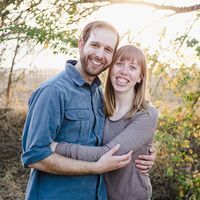
Beth Hoffman was living the good she had a successful career as a journalist and professor, a comfortable home in San Francisco, and plenty of close friends and family. Yet in her late 40s, she and her husband decided to leave the big city and move to his family ranch in Iowa—all for the dream of becoming a farmer, to put into practice everything she had learned over decades of reporting on food and agriculture. There was just one money.
Half of America's two million farms made less than $300 in 2019. Between rising land costs, ever-more expensive equipment, the growing uncertainty of the climate, and few options for health care, farming today is a risky business. For many, simply staying afloat is a constant struggle.
Bet the Farm chronicles this struggle through Beth’s eyes as a beginning farmer. She must contend with her father-in-law, who is reluctant to hand over control of the land. Growing oats is good for the environment but ends up being very bad for the wallet. And finding somewhere, in the midst of COVID-19, to slaughter grass-finished beef is a nightmare. The couple also must balance the books, hoping that farming isn’t a romantic fantasy that takes every cent of their savings.
Even with a decent nest egg and access to land, making ends meet at times seems impossible. And Beth knows full well that she is among the privileged. If Beth can’t make it, how can farmers who confront racism, lack access to land, or don’t have other jobs to fall back on? Bet the Farm is a first-hand account of the perils of farming today and a personal exploration of more just and sustainable ways of producing food.
The craftsmanship of Bet the Farm: The Dollars and Sense of Growing Food in America by Beth Hoffman is good, better than many books I read. For people unfamiliar with the challenges of Midwestern, sustainable agriculture, it is a good introduction, covering most issues.
Hoffman is a member of Practical Farmers of Iowa and so am I, so there are some connections. Even though we never met, I know people she mentions in the book and we would likely have friends and acquaintances in common. The PFI community is not that big.
For nine seasons, I worked with beginning and experienced farmers who operate community supported agriculture projects, large vegetable or fruit farms, and raise livestock, so I know some of the work and the challenges. In total, I worked on or did interviews for newspapers on a dozen or so of them.
As she mentions more than once in the narrative, she is from the coast and the land was owned outright by the Iowa family. The former is more typical of beginning farmers, the latter isn’t. It is a good book, yet I hoped there would be a connection to the author and her narrative. There wasn’t.
Bet the Farm was a quick read and if a person is interested in this topic, there are a number of other works by beginning farmers I’d read first.
I wish Beth and John good luck on their farm and would read another book about their progress after they have been farming five or ten more years.
There is nothing necessarily wrong with Hoffman's book; it just wasn't for me. Hoffman narrates the story of her and her husband's move from Bay Area city folk, to running a family farm in Iowa. She's a good writer and she's done her research, but, ultimately, I was...bored. I'll read almost anything about farming and homesteading, but this one left me unmoved.
As far as positives go, I'm right there with Hoffman politically. She and her husband were determined to turn the industrial farming wasteland into regenerative farming. She also honest and reflexive about their advantages being white, educated, and having a nest egg to fall back on. She discusses the real problems farmers of color face with institutionalized racism making a hard vocation so much harder. But the negative side, for me, were the pages and pages of statistics and acronyms that, while I'm sure they were important, made my eyes glaze over. I also feel like I would've gotten more from this book if Hoffman and her husband were a little further into this journey. The book was published only a few years into their plan to remake the farm, so the ending feels a bit unfinished.
For a hard look at the realities of contemporary farming, that is filled with passion and feels less like a report, I highly recommend James Rebanks' superb Pastoral Song. It's written like poetry but with a generational farmer's love of the land. I didn't hate Hoffman's project, it just didn't tick all the boxes for me.
This book takes place just 35 minutes from our home and gives a candid look at the complicated system of farming in America. The author does a good job at painting a picture much more nuanced than that which we are so often given about farming, farmers, commodity pricing, farm programs, and the vicious cycle many farmers are in.
Some of my favorite clips: In 2019, an average acre of farmland in California was worth $12,830. Even in Iowa, the flatland of the former prairies in the NW region of the state (land better for growing corn) can go for $9,300 an acre.
With this book, I want to talk frankly about the financial realities of farming, because farmers can make a difference only if they can make a living. They need to sustain themselves in order to sustain our land and food.
The whole experience also made clear for me why most farmers buy genetically modified seeds and the sprays that go with them - it takes a lot of the guesswork out of the process and in the end makes a farmer's life much easier.
Finding and accessing land is the #1 issue for most aspiring farmers today - a cost so exorbitant that most people can't even consider farming unless they were already born into a family already in the business. And while 55% of Iowa's land is rented out - most often by families who don't want to farm but want to keep the land - it is hard to justify all the time and money needed to farm sustainably when it is someone else's property.
Family farms can be of any size, with any type of production, owned by virtually anyone, making any amount of money.
Landownership in the US has been closely tied to monetary wealth in the game of White privilege.
After the first years of investment, farms continue to make very little money, often for generations. The median income for farms in 2019 in the US was a whopping $296, a positive number unlike those in the four previous years, as a result of $14.5 billion in market facilitation program payments by the Trump administration.
The simple truth is that the vast majority of farms do not make enough money to support their own activities, let alone the families who run them.
The biggest hurdle for farmers is their own mindset. Struggle is largely accepted as a way of life, part of the mythology of farming; hard work should be accompanied with personal sacrifice on a farm, the agrarian story goes, trade-offs endured for the simplicity and peace of living on the land.
Today, farms that consider sustainability or food justice a top priority often don't pass on the true costs to consumers. Instead, some farms supplement boxes with food grown elsewhere, perpetuating a romantic image of farming by never revealing info about pests and disease, crop disasters, or labor issues.
Values can drive you for only so long before the economic reality sets in that you can't afford the lifestyle you want to live.
History shows us that new ideas, no matter how important for society, cannot survive unless they become socially and economically viable for participants. If sustainable ag remains powered only by moral and ecological ideals - ideals accepted not only by consumers but also by farmers themselves - the change we are eager to see is not likely to stick.
It is likely that the low cost of food is in fact contributing to the lack of money in the wider community. Even for poor residents who don't work in the food system, the answer is not cheap groceries (sold at the expense of the farmer) but a living wage that allows everyone to afford prices that reflect the real cost of production.
10% of farms in the US received almost 60% of government payments.
Back when subsidies were first introduced during the Great Depression, fruits and veggies were not included because they were not mass marketed and therefore not impacted by the huge booms and busts of the international stage that had caused so much chaos for farmers. Much later, in the 90s, when decoupled payments were first introduced, fruit and veg growers fought to exclude specialty crops from the subsidy structure. They feared that if fruits and veg were part of the same system as corn, wheat, an cotton, farmers could get paid for their corn base acres but choose instead to grow cherries and kale. They could sell the produce for less than it cost to grow because it would, in effect, be subsidized. They could sell the produce for less than it cost to grow because it would, in effect, be subsidized. So the law specifies that the decoupled payments do not apply if farmers choose to grow specialty crops on their base acres- if they decide to grow blueberries or apricots, for example, they lose commodity payments for that acreage.
Checkoff programs are controversial in that, although 100% organic growers with certification are exempt, the programs don't really cater to smaller producers trying to sell products locally. A small scale avocado grower for example, would be charged the involuntary tax, but her farm arguably does not benefit from, and is potentially hurt by, money used for research on how to transport avocados over long distances.
There is also a practical problem with supporting farmers in growing large amounts of fruits and veggies: they are perishable, which makes the products difficult to transport and store. If a farm or a nation ends up with an excess of corn, it can be put away for later use. Not so with broccoli. And in a national emergency, with crops failing because of a huge drought, for example, reserves of wheat and peanuts can be used to fill bellies more readily than we might be able to distribute zucchini.
Even if the machinery they own could be used to grow greens and carrots instead of corn, to whom would a farmer in deep rural Iowa sell hundreds of acres of vegetables?
Despite the myth that independent farmers believe the government should stay out of their business, even farms with the largest yields are not self-sufficient enough to function on their own without government assistance.
Farm payments have in fact become entitlement programs - programs in which a vulnerable group - farmers - receives protection and support regardless of poor business decisions made.
The fact is that even if subsidies farmers disappeared tomorrow, farmers would still likely produce corn and soy in Iowa, although arguably not as much, simply because they don't currently have many other choices of what to do with the land. We are not a nation that consumes large amounts of barley or rye, for example, crops that could be integrated into the corn-soy rotation to help improve the soil, reduce pests and weeds, and lessen the need for fertilizer.
You need only one bull to impregnate up to 25 females.
In the 1960s, customers spent close to 20% of their income on food, and farmers received almost 1/3 of that. Today, although Americans incomes are much higher, they spend only 10% of it on food, and farmers received eight cents for every dollar spent.
In terms of environmental impact, our grass-finished beef was as good as agriculture gets. Southern Iowa is naturally green and lush from March to November, and, in contrast with Cali or Nebraska, no irrigation is used on farms in this area, ever. No chemicals, fertilizers, antibiotics, or clearing trees.
Yet to be clear, beef is still beef, and the rate at which Americans, and an increasing number of people around the world, eat it and other meats is not sustainable. Cattle emit impressive amounts of methane - and in order to raise large numbers of animals, ranchers move massive numbers of them through the system quickly by fattening them on grain, which requires valuable water and nutrients, chemical fertilizers and antibiotics.
Josh and I both feel that all meat - be it beef or chicken, pork or fish - should be consumed sparingly. The simple mathematical fact is that if humans raise livestock only on pasture, w/o irrigation or grain, there will not be enough for everyone to eat meat every day.
In this corner of the world, most hog facilities are built to house 2,490 pigs, staying below the 2,500 magic number that kicks in environmental regulations. A facility with 2,500 hogs for example must be more than 1,800 feet from a neighbor's house and 2,500 feet away from a park, but with fewer than that number of pigs, growers can put the buildings virtually anywhere.
With each hog generating 1.3 gallons of poop each day, keeping 2,400 pigs in a confinement facility will mean finding a place to dump almost 94,000 gallons of pig shit each month.
As I say to my students, you can't imagine someone doing a quilt of a gestation crate or a watercolor painting of a confinement facility.
So much of farming is out of your control. Even in the best of times, everything from the weather to world politics impacts your bottom line, not to mention your daily schedule. This, I believe is one of the reasons so many farmers have turned to genetic modification and company contracts, chemicals and government programs, "solutions" that give them a feeling of control over the elements and help create certainty in their lives.
The movie Biggest Little Farm covers for a grand total of zero minutes the enormous costs the farmers must have incurred in buying land outside of LA, building a state of the art worm composting facility, and putting hundreds of fully mature fruit trees with a fancy road winding up between them.
For us, putting ecological benefits and romantic visions of a fully diversified farm before our own financial stability and our sanity would be simply substituting one unsustainable system with another.
98% of farms in the US are considered family farms, yet almost 40% of all farmland around the country is rented out by nonfarming landlords to those who operate the farms. In Iowa, more than half of all farmland is farmed by renters, generating rental revenue of $3.7 billion for the landowners. This system creates very little incentive for the farmers renting to improve the soil or install infrastructure when they have only a yearlong lease. The vast majority of leases in Iowa are annual, even though most land has been rented to the same person for more than a decade. So most farm operators opt to grow annual crops that need little to no long-term nurturing of the ground and can thrive on trucked-in fertilizer, never tackling longer-term issues such as erosion and carbon sequestration.
LANDBACK is an Indigenous-led movement that encourages White owners to return land to local tribes around the world, putting more land back into Native control for long-term ag, forestry, or other projects.
The policy changes made in the bill are, w/o a doubt, critical. Yet I worry that when advocates rest all their hopes for reforming the food system on policy, they forget that these are government agencies we are talking about. Offices that are notoriously inefficient, clouded in layers of changing bureaucracy an administrative issues. There is a reason so few people attend city council and school board meetings - government procedure is bureaucratic and often tedious; democracy is messy.
But a whole messed-up system cannot be fixed with a single idea or even multiple ideas. The way food travels to our table - most often through a long, convoluted chain that yields the farmer little - has evolved over hundreds of years and will not be untangled w/o attention to the whole web of issues it has created. Yet, there is much we can do as individuals, as farms, as groups of farms, and as a nation to improve the system, all of which start with changing the stories we tell about farming. We need to move away from the romantic tales of farming to understand that while farmers feed people and take care of land, they also need to be able to take care of themselves and their families.
These solutions need to grow up from the grass roots - not come from top-down policies - from the farmers and want-to-be-farmers, the nonprofits and the academics, the customers and the processors (and even the government employees) who are passionate about food. We have power in our numbers, and although the issues are complicated, we can each work on one small part.
This entire review has been hidden because of spoilers.
(Audio) Book Category: A book written by a local author. I didn’t really enjoy this book. Some of it was a decent look into what lives of farmers can be like for some. However, it felt too much like it had an agenda. You can take information and skew it whatever way you want and it definitely felt like that’s what the author was doing. I felt she was overly critical of a community she claims to be a part of while oversimplifying some of the processes and systems she writes about. Glad I listened on audio so it didn’t feel like as much wasted time as it would’ve if I’d read it.
Not what I really thought it would be. Insightful to a point, especially since she writes from the perspective of an urban transplant to rural Iowa but ultimately it was a miss for me. Highlights just some of the key challenges all Farmers face, but does so in a way that almost demonizes conventional agriculture, and those that had/have the privilege of inheriting land.
Beth Hoffman is devoting both muscle and determination--her "all" you might say--to this venture called Whippoorwill Creek Farm. In true "hawkeye" fashion. And in her middle-age!
She is doing the good work and has an important story to tell. It's not just that she bravely gave up her city-life, which would be the envy of many, in exchange for an Iowa farm-life. That's impressive enough, especially since she's a born-and-bred city-girl. But to take on such a physically and psychologically demanding life--the kind that a ranch and farm requires--is a challenge that requires respect.
Good thing she already knew a lot about food and food production from her years working as a journalist and teacher. But "book-knowledge" can't hold a candle to actual physical work.
If you live in a city and know nothing about farms--read this book--because you eat food and should know how it is made. If you are a farmer--read this book--because you probably think you know the whole story and I bet you don't. Hoffman and her partner are learning and doing this the hard way: respecting the past and betting on a better future--for all of us, farmers, ranchers, and city-folk included.
There was a lot of interesting information in this book. I appreciated her perspective that "farmers can make a difference only if they can make a living. They need to sustain themselves in order to sustain our land and food." I grew up on a dairy farm and now live in a farming community so I can attest to the truth of her statement. It's frustrating that "farmers receive eight cents for every dollar spent. Even though a cow spends most of its life on the pasture, cared for by the farmer, it is the sale barn, feedlot, processor, and...brand under which it is sold that make the other ninety-two cents." That's not a sustainable business model for farmers, and the author is adamant something needs to change and gives some ideas about how to make it happen.
Overall, the author's experience and vision felt limited and somewhat condescending, but her conclusion is sound: "Farmers simply cannot function alone in the landscape and be successful...The village has to see the farm as part of its community, ensuring the land is well cared for and its farmers are mentally, socially, and culturally supported."
Beth interweaves her experience of starting a sustaining farming practice with her husband on his family farm. Along with the history of traditional farming practices, that most of us Iowan farmers practice. She describes their struggle to balance living life, rewarding work challenges and sharing her knowledge with others.
Audiobook. Maybe it was the tone of the narrator. It sounded sarcastic throughout most of the book. I started off hopeful but then it went down hill into a west coast elite, Midwest centric, agricultural stereotypes and environmental tropes.
Liked it. The sub title should "Idealism Meets Reality"
I enjoyed the first half to 2/3rd. The last 3rd seemed to be mostly complaining about the feds not doing enough to help her start the Organic Farm.
Imagine a 50 year old Iowa farmer moving to San Francisco with a vision to be a Professor of Journalism without any relevant education and complaining that it is hard and there aren't any government programs to assist him.
It would be interesting to know her husband and to know how much of the vision is really hers or his or theirs.
There is a place for boutique farms raising better food and selling it for a higher price but they aren't going to replace the Mega farms. There are just too many people to be fed. Just consider how much land it would take to raise free range Chickens and Eggs to the Chicago metropolitan area. The USA consumes 60 million chicken portions per day.
An interesting trend to watch are the indoor industrial farms in or near the metro areas. You can now buy year round local grown tomatoes and berries in MN. There are also shrimp and salmon farms coming to the midwest.
The book mentions using corn to make soda bottles. That is going to be big. I noticed the deli's here are now using compostable containers instead of recyclable. You can't tell the difference from plastic. It turns out plastic recycling doesn't really work and isn't really being done.
Beth Hoffman brings a self-awareness to her book that probably wouldn’t be possible for someone born and raised on a farm. What do I mean by that? She was raised in Jersey outside NYC and spent most of her adult life in San Francisco. She knew who she was and she understood she’d need to adapt and evolve to succeed as an Iowan farmer. I had to laugh a little at the idea of a SanFran academic heading out in America’s farmland to grow grass-fed beef and organic produce/grains. But, she knows it - she’s well aware of it. What makes this book special is how she connects the dots from the individual farmer, to their farm, their farming community, and to the national policies that determine how federal dollars are spent to support farmers. The system, for lack of a better term, is f***ed and we, the consumers of food, are better off because of her insights. Not only does she recognize that the current system has repeatedly wrecked its farmers, but also the land they harvest. Pesticides, over-farming, commoditization, the system was built for big Agro - not us, not our stomachs, not the land, not the environment, and not family farmers. We all know the destructive power of big corporations - Ms. Hoffman is surgical in her depiction of corporate farming. Her book and her stewardship of their family acreage are both morally and environmentally sound. I highly recommend this book. Farmers need advocates. Beth Hoffman is both. Well done.
I read this book as I am interviewing the author for a speaker series at my work place and wanted to understand more of her experiences. As an Iowan, I thought I knew quite a lot about farming. Boy, was I wrong. I typically do not read about agriculture or similar non-fiction but I found this book to be quite captivating and compelling. Working previously as a journalist, Beth has a way with words and this book is very well crafted.
This is part story of her life, part research and statistics, and part pulling back the curtain on modern day farming. A large part of her book busts myths surrounding agriculture and farmers and the pulls the wool off our eyes on just how hard physically, emotionally, and financially farming actually is. Readers will definitely question more about where their food comes from. After reading, I am far more motivated to purchase local meat and produce and as directly from farms as possible.
My only qualm is that I wish Beth has discussed a bit more of her daily life on the farm or perhaps her perceived notions of Iowa or its farmers more in the book. I know when the book was published she had been farming for around 3 years I believe, but I think more of her personal anecdotes mixed in with the stats and graphs would have helped tie everything together.
This book was really three stars for me, but I felt that would be an unfair rating since the complaints I have about it aren't entirely fair. The book is a memoir of a professor in San Francisco who moves to Iowa with her husband to take over their family farm. This sounds interesting. But in reality it's pretty boring because most of the book is about the economics of farming. As I mentioned, I should have expected this because it's in the title of the book. But still, I kept looking for more personal anecdotes and more about how the move affected her relationship with her husband and grown children. And I was especially interested to see how she fit in given the extremely politically conservative area she moved to. There's nothing about that. It feels like she's actively avoiding it because she knows that her neighbors would hate her if she ripped on their politics. But politics are at the heart of the central problem she describes in her book: even in the best of conditions, farming doesn't pay much. So to elide that issue is to miss out on a fully developed thesis about the economics of farming. And also, it's just too boring.
Bet the Farm, by Beth Hoffman, offers its readers an honest complex look at food production, farming, finances, and life. Through Hoffman’s willingness to learn and share, the reader gains knowledge about the struggles’ farmers face (and faced) while trying to feed a nation (and the world). We learn how to deconstruct the myths that hold the interest of those not living on the farm; we learn about finances (or frankly the lack thereof), about bureaucracies, humility, cooperation, co-ops, growth and healing. Hoffman describes food, farming and life as a mix of experiences and emotions as diverse as the very farm on which she works and of which she writes. While striving to heal the land and the anxiety that comes with an unknown future, financially and otherwise, Hoffman aptly describes the struggle to balance long term goals and dreams of making a difference with the day-to-day, short-term reality, of a never ending to do list - all while breathing in the joy that can accompany beautiful sunrises over Southwest Iowa’s green rolling hills.
For those unfamiliar with the current state of food production in the US, this book is a good primer. Beth Hoffman, a lifetime city dweller, and her husband pull up stakes on the West Coast to take over John's family's farm in southeast Iowa. Despite Hoffman's career writing and teaching about food and agriculture, she is unprepared psychologically and physically for the demands that farming requires. And in the Hoffman's case, attempting to undo decades of commodity-oriented agriculture in favor of regenerative ag.
Hoffman details the government policies and programs that have brought the US to the point where fewer families are able to make a living off the land and most subsidies benefit large corporate enterprises. Although the Hoffmans are only a few years into their mid-life career change, and Beth acknowledges the monumental challenge of making the kinds of systemic changes they imagine, the book is a quick and worthwhile read.
This was a really enjoyable book to read! An honest and often intimate telling of a story as a farm is passed down from one generation to the next. I almost felt like I was sitting in the room when John and his siblings hit an impasse as they were negotiating terms of the farms lease and handoff with their dad Leroy. Part text book part human interest story Hoffman perfectly interweaves the story of transformation of the farm and farmer with a deep dive and analysis into the economics of agriculture in America. A healthy dose of idealist and practical ideas for the future of agriculture in America are examined. I think this book is important for both agriculture insiders and also those on the outside who want to understand how the food they eat arrives on their table.
A retired San Francisco professor return to her husbands family land to take over the family farming business - this book has tones of the TV show "Clarkson's Farm" minus the production company and a lot of the humor. As Hoffman has only been farming for a few years, the book is few on funny anecdotes and more about the bureaucratic and financial hurdles involved in running a farm and in implementing anything seen as out of the ordinary (such as organic farming). Hoffman succeeds in tearing down the myths of farming in America, notably the idea that farming is a profitable business for small farmers. She also pursues the idea that farmers need to increase their yield to increase their profits, which inevitably leads to debt from new farm equipment and lower commodity prices.
Weird book by an agricultural journalist-turned farmer who well understands the economics and how federal policy undergirds farming in the U.S., but seems inexcusably ignorant of basic facts of life in and around Iowa farms and small town (or even relatively large town) Iowa life, at least for someone WHO MARRIED INTO AN IOWA FARM FAMILY. That, or all the side comments that to me came off as surprisingly tone-deaf for, again, an agricultural journalist (even one from the big city who never actually lived on a farm before) were actually just there for the audience, which is presumably ALSO largely people from the big city who have never lived on or near a farm but who nonetheless have strong opinions about how farmers should live, farm, etc.
This was a very different book that the o;ther books I've read by this author but it was very interesting. Having grown up on a farm, there were things in this book that I never really thought about as I helped my Dad. I helped in the fields and in the barn but had no idea about the financial side of things or the total uncertainty of selling the crops and the cows. Farmers are extremely hard working and smart. They have to know about mechanics, botany, meteorology, economics, animal care and medicine, and environmental issues. Even though sometimes you might disagree with programs to help farmers, remember that without them you wouldn't have your steak and eggs for breakfast.
Journalist Beth Hoffman writes candidly about the economics of running a farm. Unlike many memoirs of city folk running off to live the idyllic country life, Bet the Farm is a realistic look at the financial difficulties and the political policies that make such an endeavour challenging. A real eye opener for anyone who dreams of giving it all up to sell organic cabbages at the Farmers’ Market. (Me!)
The info in the book is from a US point of view, but there is enough here for it to be relatable to those in other countries. Some of it is rather dry- I’m glad I listened to the audiobook.
Author Beth Hoffman and her husband return to her husband's family farm in Iowa with plans to convert the traditional commodity farm into a sustainable, organic farm. This book is a discussion on farming in America including the reality of physical, mental, financial and emotional toll of being a farmer. It looks at the governmental policies that help with one hand and lead farmers to being on the endless treadmill of borrowing money, receiving subsidies, and trying to sell overproduced products to buyers, whose limited number allows them to set the price low.
I grew up on an Iowa farm, and my brother now farms the family land. Farming is completely different today from when I grew up. I learned a lot about modern farming from this book. It bothers me that farmers only grow corn and soybeans now rather than alfalfa, oats. I learned how the system is set up for corn and soybeans. It’s difficult to market anything else. It bothers me that farmers don’t make enough money farming and need to take off-farm jobs. Why is food so expensive but yet farmers can’t make a living? Why are large corporations making decisions about what farmers do?
This book is intimate, humble, fascinating, and written by someone who clearly cares about ethics in reporting.
The author has done a beautiful job using her personal experiences on her husband's family farm to explain the difficult circumstances that modern American farmers face. It's not easy bridging the gap between industrial realities and the pretty warped lens by which non-farming people see the agricultural world, and this is one of the few books I have ever read that does just that.
It's short, it's fact-filled, and it's interesting, and I highly recommend it.
I made a resolution last year to learn more about how the farm bill works. I finished “The Farm Bill” but found it more an opinion piece than I’d hoped. And it was outdated. This book was much more engaging and informative. I enjoyed the author’s personal experience intermingled with her research and data. I need to find an equivalent book about SNAP and I’ll be all set. If you are curious about how the U.S. food system works and how taxpayers actually pay for the food on our tables, this book is a great place to start.
As someone else who grew up in a city and then moved to Iowa I thoroughly enjoyed this heart felt and honest story about Beth's journey from the urban west coast to America's heartland. This book tells a story many of can benefit from as it tackles the challenging questions of what it means to farm in today's world and the challenges involved. Beth moves us along her journey with honestly painting a clear picture including history and data in very readable text.
I was very interested in the actual story of this book - an urban couple relocating to their family's farm, moving towards regenerative agriculture, etc. But good grief, I got so bored by all the data and research and history. Some of it was fine, but there was waaaay too much. The last chapter, what they were actually doing on the farm, was great! I wish we had more of that. I also got really tired of the White rhetoric. There's probably some truth to it, but again, way too much.
I thoroughly enjoyed this book and when I read a review and then picked it up I had no idea she is living the same area of Iowa as I do. I also grew up in town and ended up on my husband's family farm and I learned so much from her descriptions of the process to raise and sell cattle. I felt a real kinship with the author.
Really good account of a couple's effort to transition themselves from largely urban to largely rural and at the same time to transition a family farm from conventional to regenerative. Intelligently written and doesn't duck the on-the-ground realities of rural economics. An interesting co-read with Diane Wilson's The Seed-Keeper.
This 3 star is based on exactly what the book is supposed to be. Its part story part economics text book. It really does lack personal anecdotes, or emotion and there are books out there that are both. Books like Nickel and Dimed and Animal Vegetable Mineral are among favorites and this was just average.