Jump to ratings and reviews
Rate this book

Das Licht der Frauen

Rate this book
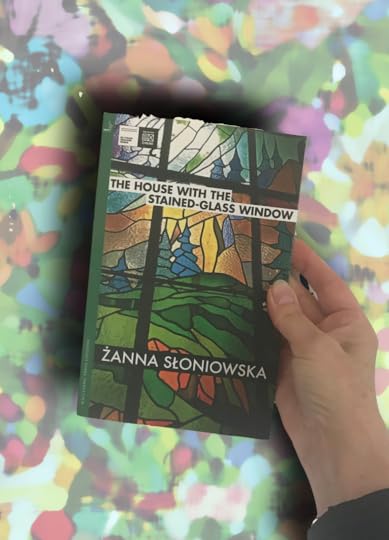
In einem Haus mitten in Lemberg leben vier Frauen, die einander ebenso lieben, wie sie sich hassen. Sie einen ihren Freiheitsdrang, ihre Aufsässigkeit – und ihre unglücklichen Lieben. Bis zu dem Tag, der alles verändert: Marianna wird auf offener Straße erschossen. Vom Fenster aus beobachtet ihre Tochter, wie sich der Trauerzug zu einer Demonstration auswächst. Marianna war nicht nur eine gefeierte Sängerin, sondern auch Aktivistin im Kampf für eine unabhängige Ukraine. Unter demselben Fenster steht Jahre später ein Mann, der Ma- riannas Tochter ihre Heimatstadt näherbringt – und die viel zu früh verstorbene Mutter. Vor dem Hintergrund der bewegten Geschichte Lembergs erzählt Żanna Słoniowska von Müttern und Töchtern, von privaten und gesellschaftlichen Revolten, dem unbedingten Glauben an Freiheit, Emanzipation und an die Liebe.

272 pages, Paperback

First published February 16, 2015

66 people are currently reading
854 people want to read

About the author

Żanna Słoniowska

5 books9 followers
born 1978

Ratings & Reviews

What do you think?
Rate this book

Friends & Following

Create a free account to discover what your friends think of this book!

Community Reviews

5 stars
74 (10%)
4 stars
183 (27%)
3 stars
281 (41%)
2 stars
113 (16%)
1 star
26 (3%)
Displaying 1 - 30 of 104 reviews
Profile Image for Brodolomi.
297 reviews200 followers
February 29, 2024
Zaplet na poleđini je zvučao kao nešto što bi moglo da mi se dopadne, i možda bi mi se i dopalo da je reč o klasičnom istorijskom romanu o četiri generacije žena u Lavovu, sa nabijenim etosom i patosom i rominjanjem o smislu/besmislu istorije. A nije. Već je jedan od onih debitanskih romana, oboleo od sličnih bolesti prisutne i kod nas, a njeni simptomi se ispoljavaju u tome što autori odmah krenu da umetničari, a da nisu savladali osnovne elemente strukture proznog dela i šta sa njima – fabulu, siže, junak, motiv, građu itd. U „Kući sa vitražem“ je sve ravnobledo i teralo me je da zevam, ali pretpostavljam da je tekst pogodan za književne nagrade. Možda bi bila i jedna zvezdica da se radnja ne odigrava u istočnoj Evropi, na čiju sam esetiku vazda bio slab, i autorka je donekle uhvatila tu tako slovensku porodičnu atmosferu gde niko ni sa kim ne priča a svi žive u istom domaćinstvu i svi obožavaju da drve o politici.
Profile Image for Hugh.
1,295 reviews49 followers
January 11, 2021
This was a book I picked up at Five Leaves in early December, mostly on the strength of the Maclehose spine and because the premise looked intriguing. In places it was, but overall I can't go higher than three stars because at times I got a little bored.

The unnamed young narrator talks about her life growing up in what is now the Ukrainian city of Lviv (formerly Lvov (U.S.S.R.), Lwów (Poland) and Lemberg (Galicia/Ruthenia/Austro-Hungarian empire). Her own identity reflects this confusion of nationalities which are reflected in the three generations of women in her family that she lives with. Her mother, now dead, was an opera singer and a martyr to the cause of Ukrainian nationalism, but her background also includes Polish and Russian elements, and the principal male character Mykola is from a Polish family. Mykola is a married man who was once the mother's lover, and the narrator turns to him initially as an expert on the history and architecture of the city, and particularly the large stained glass window that forms part of the structure of the house the family live in. The past often dominates the story, and there are elements which verge on magic realism that describe dreams.
Profile Image for Roman Clodia.
2,915 reviews4,692 followers
July 17, 2017
'History had been forcing its way through doors and windows into our lives for ever, Mama, but here I was, walking along without a helmet, I'd ceased to defend myself against it.

Sloniowska has pulled off something rather clever here: a personal coming-of-age story that is also the complicated history of a family, a city and, in miniature, a nation. Lviv, now in western Ukraine, has had a contested geographical and political status in the twentieth-century, and the four generations of women which make up the family at the heart of this book reflect that.

Opening with the 1988 assassination of Marianna, a Ukrainian nationalist and well-loved opera singer, the story spins out in multiple directions. It's not treated chronologically and Sloniowska handles the multiple tales deftly, as we move from characters' memories, the family stories that are passed through generations, photographs and the present. Art is important: not just music but also painting and the eponymous stained-glass window, artefacts which both contain history and travel through it.

This reminded me of those novels by women writers like Elizabeth Bowen, Rosamund Lehmann and Antonia White: there's a similar emotional delicacy here and a concern with female lives - though the politics are far more stark in this book than in theirs.

The translation feels fluent and engaging throughout, and though this is relatively short (237pp.) the story is more expansive than the page count. Lviv, especially, leaps off the page in all its incarnations - a vivid tapestry of life before, during and after the Soviet Union.
Profile Image for Vityska.
493 reviews87 followers
April 28, 2016
Ще одна книга про Львів. Але зовсім, зовсім інший – Львів радянський. Анонс книги обіцяв, що прочитаю щось таке, що про це місто ще ніхто не писав. І справді, таким книжний Львів для мене ще не поставав. Навіть якщо хтось із письменників згадував, заторкував радянський період, то йому йшлося радше про паралельний Львів, який мусив жити поруч із цим совком, - хіпі, шестидесятники, дисиденти, музиканти тощо. А в романі Слоньовської навіть великою мірою «інші» люди все одно досить чітко вписані в совєцький контекст і ще більше – в совєцьку топографію Львова.
Хоча видавці, певно, мали на увазі не це. Авторка спробувала в межах свого роману зв’язати представників дуже різних національно-культурних ідентичностей, які вважали в різний час місто «своїм» і подивитися, що з цього вийде. Тож перед нами – чотири жінки однієї родини. Прабабка оповідачки, яка приїхала у Львів з Ленінграда наприкінці війни, разом з «освободітєлями», і хоч вона насправді ні разу не росіянка і не зовсім совєцького штибу людина, та все своє львівське життя панічно боїться «місцевих» і щоночі зачиняє на всі можливі замки двоє дверей, щоб не увірвалися «бандерівці». Баба Аба, «чистокровна полька», яка мріяли стати художницею, а стала лікарем. Мама Маріанна, яка «вибрала бути українкою», оперна прима і революціонерка, яка загинула від пострілу снайпера, що цілився в Чорновола. І сама оповідачка, яку, здається, трохи нудить від цього переплетення ідентичностей, тому вона називає себе людиною «львівської національності» і вчиться в академії мистецтв. І всі вони живуть в домі з унікальним вітражем, зображення якого символізує Дерево Життя.
Враження від роману лишилися неоднозначні. В рейтингу Goodreads я присвоїла йому дві зірочки, що значить – це було ок. Деякі сюжетні лінії і мотиви мені дуже сподобалися – наприклад, інтерпретація однієї з моїх улюблених легенд про підземну річку Полтву. Є окремі сцени, поодинокі метафори – сильні і красиві. Але текст дуже неоднорідний. Оповідь місцями надто хаотична, хронологічно недисциплінована. Часом важко зрозуміти, що це, де це і з ким відбувається. І так трапляється по декілька разів навіть в межах одного розділу.
Останній розділ – «Майдан» - сам по собі красивий своєю метафоричністю, але, імхо, в цій книжці він не дуже доречний. Ну, тобто я десь розумію, що йдеться про тяглість поколінь – мама загинула, готуючи прихід Незалежності, а донька ризикує, відстоюючи її на Майдані, але, але… Не дуже вписаний він в загальний плин оповіді, таке враження, що авторка дописувала його похапцем, вже по тому, коли роман був закінчений.
Мені здається, Жанна Слоньовська хотіла створити роман-вітраж. В якому з окремих скелець-фрагментів складалось би цілісне і красиве зображення. Натомість скельця трохи переплуталися, і вийшло не так красиво, як було задумано. Хоча місцями справді дуже цікаво і оригінально.
Profile Image for Calzean.
2,770 reviews1 follower
January 15, 2019
Lvow/Lviv in today's Ukraine has had various owners as Empires, Reichs and Republics have come and gone. This books traces the history of the city through four generations of women who have progressively lived through WWII to today-ish.
There are parts of this book on the city's past and the lives of the women were quite fascinating. The structure of the story with it's various timelines was at time confusing but I guess this was in sympathy to the citizens of Lvow/Lviv who went from Polish to German to Russian to Ukraine in the space of a couple of generations.
Profile Image for B.P..
172 reviews3 followers
February 26, 2022
Such beautiful descriptions of a city (Lviv, Lwów, Lvov) and a woman's life journey within it. I especially loved the market scene, as described through the excited viewpoint of a young girl. This gave me some insight into the geopolitical history of Lviv. Reading the book at the time of the 2022 Russian invasion of Ukraine, put a very sad tinge on the experience.
Profile Image for Anna Catharina.
628 reviews63 followers
November 15, 2021
Vier Frauen, vier Schicksale und eine Stadt.

Die namenlose Ich-Erzählerin führt uns durch das Leben ihrer Familie, die eigentlich nur aus Frauen besteht. Da ist die Urgroßmutter Swatislawa, eine erfolglose Opernsängerin, die ihren Mann 1937 durch die stalinistische Säuberung verliert. Die Großmutter, genannt Aba, die eigentlich Malerin werden wollte, von ihrer Mutter aber zum Medizinstudium gedrängt wird. Mutter Marianne, erfolgreiche Opersängerin und ukrainische Freiheitskämpferin, die 1989 während einer Demonstration von Scharfschützen erschossen wird. Und unsere Erzählerin, die zwischen all diesen übermächtigen Frauen ihren Platz sucht und ihn am Ende bei den Massenprotesten auf dem Majdan-Platz findet. Und zu guter Letzt wäre da Lemberg, eine Stadt im Spannungsfeld der Nationen.

Gekonnt springt die Autorin durch die Zeit und durch das Leben der Frauen. Besonders interessant war für mich aber die Darstellung des Zerfalls der Sowjetunion und den Spannungen der Nationalitäten.
Profile Image for Kris McCracken.
1,899 reviews62 followers
September 18, 2019
A fantastic weaving of a tale across four generations of women in the Polish and Ukrainian borderlands (that also covers the Soviet period). Słoniowska explores questions of identity and belonging in times of both chaos and banality.

I particularly enjoyed and appreciated the way in which –despite the constant shifting of time – she explored and unpacked the subtle realities of each woman. There is real craft on display here, and it would seem to the author is one of immense talent. It's also worth giving credit to Antonia Lloyd-Jones, because the translation seems pitch-perfect, and as I understand that the original novel blended multiple languages, she has done a magnificent job.
Profile Image for Bethany.
22 reviews2 followers
October 19, 2017
The house with the stained-glass window tells the story of a woman who lives in Lviv, Ukraine. The novel is continuously changing time, giving us an understanding of the story of this woman's mother, grandmother and great grandmother.

The changing time is easy to follow, I was rarely confused. Antonia Lloyd-Jones has done and excellent job of the translation, as it doesn't feel like a translated work while reading. Overall I enjoyed the structure of the book and it gave me a much better understanding of the history of that area of the world.

My problem with this story is that I struggled to relate and connect to this woman. I found her to be a boring storyteller and I got sick of her relatively quickly. Her mother, grandmother and great grandmother are strong characters and to hear their story through their own voices would really appeal to me. However, their stories from this woman just didn't have the fire I required to love the book.

Thanks to the publisher for providing access to this title through Netgalley in exchange for an honest review.
Profile Image for micusiowo.
783 reviews32 followers
February 23, 2017
Zachęcający nawet początek z czasem przeradza się w wielkie rozczarowanie grafomanią.
Nie polecam.
Profile Image for 5rovsvet.
354 reviews54 followers
January 31, 2024
Sećam se da su me još same korice kada je Dokaz najavio roman Kuća s vitražem osvojile. Nebojša, koji stoji iza izdavačke kuće Dokaz, ali i dizajna svih njihovih korica, je još jednom uradio fantastičan posao. Ipak, desilo se nešto što mi nije baš drago – roman mi se baš i nije dopao.

Pisanje utisaka odlažem već tri dana u pokušajima da razmislim i odgovorim sebi na pitanje šta mi nije tu toliko prijalo. Zanimljiv je, ima neku svoju priču, a osim priče o ljudima provlači se i priča o građevinama u Lavovu. A čini se da se posebno priča o jedinstvenom vitražu u jednoj zgradi. Vitraž kom se zgrada prilagodila, a ne on zgradi, kako stoji u samom romanu.

I toliko se lepo priča o tim delovima da sam već video sebe kako ovu knjigu poklanjam dvema osobama u skorijoj budućnosti.

Sa druge strane, ovo je priča četiri generacije žena u Lavovu. Svaka sa svojim borbama i nekim ciljem u životu. Na momente su mi delovale toliko blisko, a onda na momente kao da su rogovi u vreći. Jedno je sigurno – u njihovoj porodici je uvek dinamično.

I uz to, ovo je roman o otkrivanju sebe. A pod otkrivanjem sebe mislim na emocionalnom i seksualnom smislu, mada kako ima dosta i nekih političkih pitanja, ne bih pogrešio ni da kažem da je ovo roman i o otkrivanju sebe u političkom smislu. Zaista, svi smo mi u životu imali (imamo ili ćemo tek imati) te faze spozajanja sebe na razne načine. I ti delovi su mi bili zanimljivi.

Autorka čak, za mene, dobro opisuje pojedine situacije i osećaje, umeo sam da se saosetim. Ili da se u sećanjima vratim na neke svoje slične događaje, pa da se podsetim. Ako bih ovu knjigu posmatrao kao vitraž, rekao bih da se sastoji od mnogo lepih staklića. Međutim, bilo je i tu nekog nejasnog stakla, mutne i čudne boje. Čini mi se da mi stil pisanja u globalu nije najbolje legao. Na momente sam se gubio dok sam čitao roman. Imao sam utisak kao da su pojedini pasusi flešbekovi na prošlost, a nisam mogao da ih predosetim da dolaze. Drugačije ne umem da opišem. A možda je moja životna situacija trenutno takva da je učinila da mi ova knjiga ne legne. Nema veze, čekaće na polici novu priliku.

★ Za izdvojene citate i više detalja posetite blog Petrov svet
★ Možete me pratiti i na Instagram stranici
Profile Image for Andrew.
1,296 reviews26 followers
February 26, 2018
The city of Lviv in Western Ukraine has a troubled and fractured history as it moved from The Austro Hungarian empire after WW1 to become part of Poland, then taken over by the Germans and subsequently soviet Russia . Like the country this book gives a picture of four generations of women in a fractured family whose experience echoes the history of Lviv.
The book is narrated by the daughter of Marianna , an opera singer who in 1989 is shot during uprisings for Ukrainian independence. Marianna becomes a martyr for the cause and her daughter grows up living in her shadow as she then narrates Marianna's tale and the of her grandmother Aba and her great grandmother . The shadow of Marianna is a long one as our narrator begins an affair with mother's ex lover Mykola who in one scene transports her around the city telling her its bloody history.
The great grandmother, a cantankerous old lady has seen her husband taken from their home during the Stalinist purges and during the war had had a abusive affair with a German pow, thus her later bitterness infects her daughter Aba. Aba a budding artist, is thwarted by her mother from a love affair with Chopin and becomes a doctor before being frustrated by arthritis in her hands, she tries to protect our narrator after her mothers death . Marianna in a family of talented and forceful women is the one who shines brightest as her career as a singer develops and she is a radical fighter for Ukrainian independence sometimes to the sacrifice of her family and child.
This book is a strong evocation of both place and character with the city itself of Lviv being as important as the four women as their fates intertwine. Whilst at times I did lose my way a little as the narrative time frame changes chapter by chapter overall I found it a powerful story of generational tensions in a city that over a century has been a political football.
Profile Image for Yaroslava Tymoshchuk.
122 reviews24 followers
July 10, 2016
Давно помітила, що книжки стають для мене такими собі джіпіес-навігаторами: от і цю читала у Польщі і в Львові. Львів там описаний так, що відразу хочеться туди - от зразу й потрапила на останніх сторінках, книжка сама наче привела. Опісля двоякі відчуття: з одного боку, це натхнення, аж самій хочеться писати, бо бачиш, як прекрасно це можна робити, з іншого боку, жаль, що ці чудові речення, досконалі образи не народилися в твоїй голові :). А остання сторінка кольнула в серце (як оповідачку кололо від заварної кави "Форд", до якої її привчав Микола), бо здалося, що я знаю хлопця, про якого вона пише: він втратив очі на Майдані у лютому і поїхав на операцію до Кракова. Із ним я познайомилася в одній компанії, яка зібралася за пивом і жартувала зі штучного ока свого друга. Не розуміла, як можна з такого сміятися, але все стало ясно, коли почула, де й коли це сталося. Звісно, то міг бути й не той хлопець, таких було немало, та все ж хочу думати, що то його знов зустріла, тепер у книжці.
Profile Image for Jessie.
209 reviews2 followers
July 30, 2018
I’m not sure how to review this as I could never actually follow what was happening! The timeline was all over the place with characters switching from alive to dead and back again every few chapters, everyone in the book was weak and/or nasty, and the sole interesting event and only part I can even remember was the great-grandmother’s affair with a German prisoner of war, which only lasted for 30 seconds of reading time.
Profile Image for Tamara.
66 reviews2 followers
March 16, 2025
2⭐️

Jedna zvezdica za samu priču, druga zvezdica za divne korice.
Profile Image for Electra.
636 reviews53 followers
March 30, 2021
Je voulais lire ce roman depuis sa parution en français. Je l’ai emprunté une fois mais je l’ai rendu sans l’avoir lu. La deuxième fut la bonne. Je l’ai lu en une fois. Quatre générations de l’arrière-grand-mère à l’arrière-petite-fille et une ville aux quatre noms, polonaise, soviétique et Ukrainienne Lviv. J’avoue que le début fut ardu. Le style et la froideur/dureté des personnages m’a rebuté mai l’histoire a pris le dessus. Et j’ai bien aimé cette lecture qui m’a permis de replonger dans la grande Histoire.
Profile Image for Tripfiction.
2,048 reviews216 followers
January 4, 2019
Novel set in LVIV, Ukraine


In Lviv, four generations of women inhabit an old house containing a gigantic stained-glass window which makes the building an architectural treasure. There is ancient Great-Granma, a failed opera singer, who spends most of her time hidden away in her filthy room, from where she launches fierce verbal attacks on all and sundry. Then there is her daughter, Aba, who has cause to hate her mother since she prevented her following her dream of becoming a painter. Aba has never learned to stand up to her mother and is now crippled with arthritis. Aba’s daughter, Marianna is a different character. Feisty and determined she has followed her dreams and has become a successful opera singer and also a committed and fearless political activist, fighting for Ukrainian independence. Finally, there is Marianna’s daughter, our narrator, a young woman on the cusp of adulthood. Tensions abound and arguments are fierce in the house for the women don’t share the same political views and have different loyalties.

At the beginning of the novel, Marianna is accidentally shot during a protest march and the narrator describes her coffin being carried through the streets, borne aloft by her admirers who regard her as a martyr for the cause. The narrator is left to try to bridge the gap between surviving women and, at the same time, try to establish her own identity and she finds herself drawn into an unsuitable relationship with Mykola, her mother’s lover. We learn, as the novel progresses, something of the history of these women, how they made their relationships and how their men were taken from them.

Sloniowska gives us strong and engaging characterisation, a wonderfully natural and memorable narrative voice and convincing dialogue. We come to know the four women well but the writer’s greatest achievement perhaps is in her portrayal of the city of Lviv itself, which is essentially the fifth central character and Lviv we come to know exceptionally well. It’s not a story I was familiar with and the translator has helpfully provided the reader with an introductory note on the history of the region, with its conflicting identities, traditions and languages. Our narrator takes us on a fairly comprehensive tour of the city and its buildings as she follows her mother to the opera house and Aba on her shopping excursions and, later, as she is escorted through the city by Mykola, intent on showing her some of the things that had been forgotten. There is a real sense of the city with its peeling and crumbling facades and wonderful architectural gems being lost to developers.

The House with the Stained-glass Window is a novel, rich in wonderful description and powerful imagery. There is a brilliant passage describing the experience of shopping with Aba for basic provisions when the narrator was a child and rationing was in force. Images evolve throughout the book. Like Lviv, whose facades, when unpeeled reveal its past history, the women are compared to a set of Russian dolls, all superficially very different but ultimately, when examined, each containing the same essential elements.

Sloniowska has been acclaimed as a great new talent on the international literary scene. This, her debut novel, has won the Znak Publishers’ Literary Prize and the Conrad prize for first novels. We’ll all be waiting keenly for what she produces next.
Profile Image for Ksenia (vaenn).
438 reviews269 followers
October 16, 2015
Посередня книжка із кількома напрочуд вдалими сторінками. А ще тут цікавий фактаж - включно із тим, що міфологізований на потребу сюжету та/або читачів. Хоча (творче) надзавдання спричинило до того, що внутрішньотекстова структура розповзається невиразними клаптями в різні боки. А деякі розділи самим фактом своєї наявності викликають ніяковіння: ага, ок, зрозуміло, але нащо це в оцій історії?

А історія проста: сім'я з чотирьох поколінь творчих жінок та невиразних чоловіків, що майорять на їхньому фоні, періодично повторюючись. Трохи пристрастей, прикольні побутові деталі, ненав'язливий присмак внутрішньої мізогінії. Багато про свідому чи задавлену конкуренцію й чимало - про Львів. І я нічого не скажу про "фальшиві ялинкові прикраси", нічого не скажу, нічо...
Profile Image for Kim.
1,125 reviews100 followers
March 11, 2019
Very pleased I read this, as part of my reading more books translated into English, but it had a strange structure. The first part was more like a novel then it became chapter after chapter of anecdotes. It was a fascinating read a completely new view on people living in a city like Liev that has switched countries almost by each generational change in a family, but it's a hard one to rate.
Profile Image for toolie.
161 reviews18 followers
February 25, 2019
Historia 4 pokoleń kobiet w formie literackiej impresji na tle przemian politycznych i wojen we Lwowie, opisana oczami najmłodszej z nich. Momentami zbyt enigmatycznie napisana, pozostawiająca lekki niedosyt, ale w ogólnym rozrachunku bardzo dobra książka.
Profile Image for Beatriz.
504 reviews214 followers
December 16, 2022
nunca me había parado a pensar como la luz solo se refleja en una única dirección en una vidriera o en un rosetón de una catedral. De como en el ojo la también se proyecta hacia el interior creando así el espectáculo de la luz y los colores. pues algo así sucede con la narración de #unavidrieraenleópolis. la luz, ausente en el exterior de la ciudad que aparece gris y apocada, estalla a través de los cristales coloreados del interior del edificio donde vive una generación de cuatro mujeres tempestuosas que han vivido las represalias de los conflictos bélicos por la independencia de Ucrania. como muñecas rusas la una encierra a la otra y será la más pequeña la que encuentre el haz de luz a seguir como un legado no escrito. Una bala errada que acaba con la vida de su madre sirve como punto de apoyo desde donde la narradora avanza y retrocede tanto en la historia de su ciudad y su país como en la historia familiar. Una bisabuela frustrada por no haber podido desarrollar artísticamente sus dotes obliga a su hija a cuidarla al más puro estilo Bernarda Alba, condenandola de nuevo a repetir un patrón que termina como el rosario de la aurora. Aba vivirá la muerte de Mariana, su hija, y verá como su nieta intenta recomponer la vocación artística y política de su madre a la vez que entabla una particular relación con un profesor universitario que descubrirá el valor inigualable de la vidriera del edificio.
#ZannaStoniowska es capaz de crear una lírica magistral en torno a situaciones bélicas y dotarlas de una belleza que alza al lector a una catarsis in crescendo ya que consigue que en las páginas de #unavidrieraenleópolis suene el piano de la bisabuela y de fondo se oiga aún a Mariana en la ópera y en la calle, cantando por la libertad hasta el silbido que produce la bala al romper la velocidad del sonido y atraviesa el cuerpo de la mujer creando un nuevo orificio por el que también es posible que se cuele un rayo de luz.
Profile Image for milica.
98 reviews3 followers
August 29, 2025
Delo me je privuklo svojom setnom, sentimentalnom, pomalo sablasnom atmosferom. Iako knjiga ima svega 180 stranica, čitanje mi se razvuklo, što je u kontrastu sa tim koliko mi se dopala autorkina proza. Zaista sam uživala u njenom načinu pisanja i u tome kako gradi specifičnu književnu atmosferu. S obzirom na to da je reč o autobiografskom delu, nisam očekivala brzu i napetu radnju, ipak, poglavlja su mi delovala jednolično, kao da se ništa ne dešava. Ako se ponovo osvrnem na prethodnu činjenicu, nije na meni da komentarišem sam tok dešavanja. Na kraju, mislim da sve proističe iz toga što mi ovo delo ipak nije odgovaralo na pravi način. Ovo nije žanr u kojem pronalazim posebno zadovoljstvo, iako mi je drago što sam ga pročitala. Sigurna sam da će se dopasti onima koji vole ovakvu vrstu književnosti.
Profile Image for Rob.
Author 6 books30 followers
October 28, 2021
I picked this up on a whim as the subject area – the Ukrainian city of Lviv and its Polish/Austrian/Soviet history makes it a pressure cooker of a locale at the heart of eastern Europe and it would never be a boring place for a book to be set. I did find it to be a little pedestrian however. The translation is good and there are flourishes of lyricism but it lacked the epic scope of a book such as Nino Haratischvili’s The Eighth Life , also set in the Soviet/post-Soviet space, albeit in Georgia and which also tells a story of four generations of women. That each of the protagonists seems to identify with a different one of the city’s overlords shows how nationalism and sense of belonging are artificial and fleeting and there are deep ideas – but it all felt a little short and dreamy.
Profile Image for Lucy Ponton.
122 reviews4 followers
February 22, 2018
I gave up reading this at about a quarter of the way into it. I couldn’t get into the story and found there was unnecessary descriptions of things e.g what someone was ironing and it was getting annoying!!
Profile Image for Gail Chilianis.
83 reviews3 followers
April 12, 2022
This book gave me some insight and understanding of life, politics and upheaval in the 20th century in Lviv or Lwow or Lvov as told through four generations of women . I found the descriptions beautiful , especially of the stained glass window in the apartment building in which the women are tenants over the generations. At the time of reading, atrocities continue to be unleashed on the people of the Ukraine since Russia began the invasion 24 February 2022
Profile Image for Wendy L.  Bell.
15 reviews3 followers
October 9, 2022
I thought this was brilliant, but it helps, I think, that I have already read a good amount of Soviet and post-Soviet Eastern European fiction, and am somewhat familiar with the history of the region.
Displaying 1 - 30 of 104 reviews

Join the discussion

Can't find what you're looking for?

Get help and learn more about the design.