

What do you think?

Gunjō
羣青 上
殺した女。殺させた女。“共犯者”となった二人の女が、逃避行の中で遭遇する出会いと別れ。
愛と憎しみ。喜びと悲しみ。無垢と汚辱。生と死。―2010年、すべての人間ドラマは
このひとつの物語に結晶する。
愛と憎しみ。喜びと悲しみ。無垢と汚辱。生と死。―2010年、すべての人間ドラマは
このひとつの物語に結晶する。
484 pages, Paperback
First published January 1, 2010
Ratings & Reviews
Friends & Following
Create a free account to discover what your friends think of this book!
Community Reviews
Displaying 1 - 30 of 38 reviews

December 21, 2022
cw: rape, incest, battering, suicide, secondary victimisation
This was an excruciating, complex read; touching on the intersection of class privilege, abuse, trauma-bonding, misogyny, homophobia, victim-blaming, unrequited desire, invalidating environments, and fragility.
It's about two women from different classes: Soko, who was raised in a lower-class family, abandoned by their mother, beaten and raped by their father; and Chiyomi, who was raised in an upper-class family, loved and cherished, and never lacking in money.
Unloved by her parents, Soko survives by closing herself off, becoming callous and distant, despite her awful loneliness. Trapped in an invalidating environment, she becomes alien to her own needs, incapable of vulnerability. And like her father, she ends up cruel.
Raised in a loving environment, Chiyomi pities Soko. This pity disgusts Soko, yet she yearns for the feeling behind it—the care that lies beyond the condescension—the dreadful invitation to be vulnerable in the arms of another, dissolving the guard that's kept her alive for her whole life.
Throughout this manga, I couldn't stop thinking about Fanon—about how the cycles of abuse in oppressed communities stem from a greater system of violence. About how, while we remain in such a system, violence will continue. The condescension of liberal moralisers is that they fail to grasp this material fact: your psyche is not determined by choice, but by the structures around you—and you will never moralise these structures away. Only through a greater violence, a violence capable of overturning this system of violence, will violence end.
Everywhere Soko goes, patriarchy follows. Men abuse and their abuse is hushed up or normalised; women defend themselves and they're punished. When Aileen Wuornos was interviewed by Nick Broomfield, her claims of self-defense were brushed aside. She was a sex worker who defended herself from her rapists by killing them, yet all Nick could reply with was "there must have been something in you that was getting you to do that." Rather than respond to her experiences of systemic misogyny, he traces her actions to a moral fuckup. We see the same thing in Gunjō, with Soko being challenged by liberal moralisers, even after they see the bruises left on her by her husband. Chiyomi's brother goes as far as to say, "I was beaten as a kid. I beat my kids. It's a form of love." completely failing to engage with the gendered aspect of violence in Soko's case, a violence whose purpose was to efface her being, and whose failure to be registered by others effaces her further.
There's a class element to such responses. Neoliberalism is an ideology of victim-blaming, of seeing the misery of others as self-made. An entrepreneurial subject chooses freedom, success, and happiness; therefore, an unfree, unsuccessful, and unhappy subject chooses unfreedom, unsuccess, and unhappiness. Under such an ideology, there are no systems that structure us, only individuals existing on a plane of pure potentiality, shackled by their drive alone. Visualise success, think positive, enjoy your symptom! I've read of people who say they were glad they were abused, because without that abuse they wouldn't have grown as individuals.
Gunjō depicts the misery of living under such a world. A world that blames the lower-class for their own circumstances, and that blames women for their own batterings. A world that believes all one needs is a mental readjustment to escape poverty and violence. A world callous to the shattered psyches of abuse victims, the lifelong struggle it takes to heal from distrust, self-hatred, and shame.
There's a scene near the end, where Soko relents and lets Chiyomi pity her. She lets herself fall into wretchedness, crumpling in Chiyomi's arms like a child, lost, alone, and in need of love—for pity isn't mere condescension, but also affirmation that what's been done to you should never have happened. It's a heartbreaking scene, because it's the beginning of a journey that will take years to complete—as many years as Soko was hurt by this world.
This was an excruciating, complex read; touching on the intersection of class privilege, abuse, trauma-bonding, misogyny, homophobia, victim-blaming, unrequited desire, invalidating environments, and fragility.
It's about two women from different classes: Soko, who was raised in a lower-class family, abandoned by their mother, beaten and raped by their father; and Chiyomi, who was raised in an upper-class family, loved and cherished, and never lacking in money.
Unloved by her parents, Soko survives by closing herself off, becoming callous and distant, despite her awful loneliness. Trapped in an invalidating environment, she becomes alien to her own needs, incapable of vulnerability. And like her father, she ends up cruel.
Raised in a loving environment, Chiyomi pities Soko. This pity disgusts Soko, yet she yearns for the feeling behind it—the care that lies beyond the condescension—the dreadful invitation to be vulnerable in the arms of another, dissolving the guard that's kept her alive for her whole life.
Throughout this manga, I couldn't stop thinking about Fanon—about how the cycles of abuse in oppressed communities stem from a greater system of violence. About how, while we remain in such a system, violence will continue. The condescension of liberal moralisers is that they fail to grasp this material fact: your psyche is not determined by choice, but by the structures around you—and you will never moralise these structures away. Only through a greater violence, a violence capable of overturning this system of violence, will violence end.
Everywhere Soko goes, patriarchy follows. Men abuse and their abuse is hushed up or normalised; women defend themselves and they're punished. When Aileen Wuornos was interviewed by Nick Broomfield, her claims of self-defense were brushed aside. She was a sex worker who defended herself from her rapists by killing them, yet all Nick could reply with was "there must have been something in you that was getting you to do that." Rather than respond to her experiences of systemic misogyny, he traces her actions to a moral fuckup. We see the same thing in Gunjō, with Soko being challenged by liberal moralisers, even after they see the bruises left on her by her husband. Chiyomi's brother goes as far as to say, "I was beaten as a kid. I beat my kids. It's a form of love." completely failing to engage with the gendered aspect of violence in Soko's case, a violence whose purpose was to efface her being, and whose failure to be registered by others effaces her further.
There's a class element to such responses. Neoliberalism is an ideology of victim-blaming, of seeing the misery of others as self-made. An entrepreneurial subject chooses freedom, success, and happiness; therefore, an unfree, unsuccessful, and unhappy subject chooses unfreedom, unsuccess, and unhappiness. Under such an ideology, there are no systems that structure us, only individuals existing on a plane of pure potentiality, shackled by their drive alone. Visualise success, think positive, enjoy your symptom! I've read of people who say they were glad they were abused, because without that abuse they wouldn't have grown as individuals.
Gunjō depicts the misery of living under such a world. A world that blames the lower-class for their own circumstances, and that blames women for their own batterings. A world that believes all one needs is a mental readjustment to escape poverty and violence. A world callous to the shattered psyches of abuse victims, the lifelong struggle it takes to heal from distrust, self-hatred, and shame.
There's a scene near the end, where Soko relents and lets Chiyomi pity her. She lets herself fall into wretchedness, crumpling in Chiyomi's arms like a child, lost, alone, and in need of love—for pity isn't mere condescension, but also affirmation that what's been done to you should never have happened. It's a heartbreaking scene, because it's the beginning of a journey that will take years to complete—as many years as Soko was hurt by this world.

December 30, 2018
Gunjo is ... It's hard to have words to describe Gunjo.

This is a difficult reading, not only because of the theme and the emotional weight it invokes in the reader, but because the reader needs not only to read the phrases but also the expressions of the characters, otherwise the interpretation of the story will not be all complete.
Throughout the manga you are introduced to the events that took place in the life of the characters, but at no time does the author tell you what their name are and you are so caught up in the affliction that it doesn't even matter!
Because the author did not tell you names, I will call the characters as blonde and brunette, so anyone who comes to read this review will be able to differentiate them.
Brunette was abused by her father throughout her life until she married a man and left his house. She thought she would finally be free, but eventually her husband also abused her.
On a night when she was done of receiving her husband's abuse and thinking about ending her own life, she gets a phone call.
On the other side of the phone comes the voice of a former school acquaintance. A woman who was in love with her throughout high school and who was known at school as a lesbian.
The two end up meeting the same night that the pivotal phone call occurs. After having sex with her, the brunette tells the lesbian that she loves her and wants her to kill her husband.
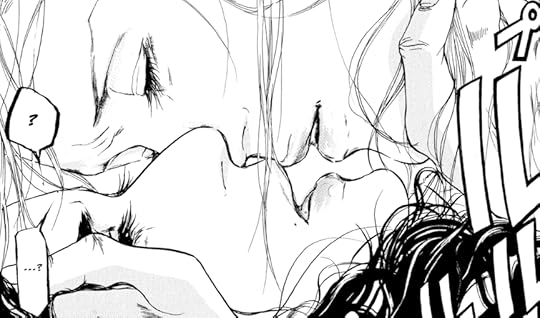
Now ... Let's go back a little in time. I feel obliged to explain that the blonde (lesbian) had always been rich and the brunette extremely poor. The two of them studied in a private and expensive school, but the brunette unlike the blonde was only part of this school because a scout saw her and gave her a scholarship to be part of the school's running club.
The story is not pretty, this is not a romance that was solved after the death of the abuser husband. No ... The brunette is an extremely complex and difficult person.
She, even in her head, never loved the lesbian. She had always been honest about it except when she asked the blonde to kill her husband. But to be fair, the blonde knew from the beginning that she was being used and that the brunette did not love her, but she still chose it.
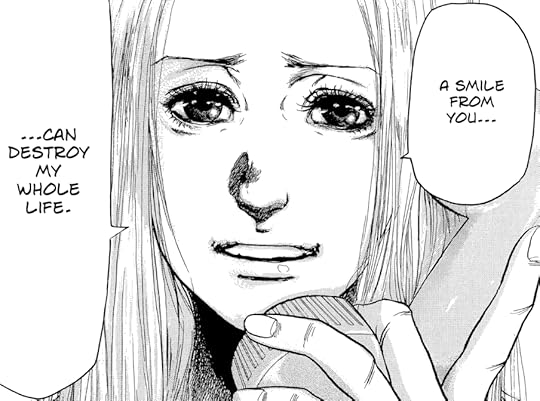
Take this complex woman with a past so full of scars and traumas that she had to survive all these events and bury her feelings (she thinks that crying is a weakness and doesn't admit to anyone that the tears that run down her face after being beaten is because her feelings was hurt and she feels betrayed) and coupled with a woman who had been privileged throughout her life (who had never had a traffic violation), but also suffered prejudice because of her sexual orientation in an extremely heteronormative society that had just killed a man after had seduced him and had sex with him (her first time having sexual contact with a man).
Can you sense the tumult of feelings that this junction causes? Besides all the trauma of having murdered a person and the guilt of realizing that you had asked a person to kill another...
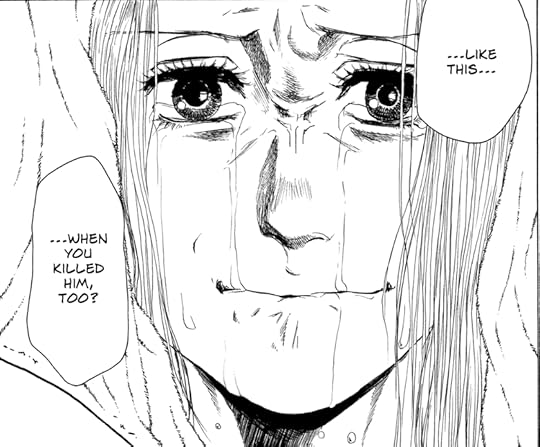
Anyway ... I extended myself too much. In summary, in the first volume there are a lot of conflicts between the two characters in their flight. Many moments of depression and anguish, as well as violence.
For those who wish to read this, please keep your mind open and think beyond what you read ... Remember this story deals with the psychological of two pretty shaken women.
5 stars and if I could I would give a prize to the author. Narrative and art are extremely wonderful. I've been crying for several moments in history.

This is a difficult reading, not only because of the theme and the emotional weight it invokes in the reader, but because the reader needs not only to read the phrases but also the expressions of the characters, otherwise the interpretation of the story will not be all complete.
Throughout the manga you are introduced to the events that took place in the life of the characters, but at no time does the author tell you what their name are and you are so caught up in the affliction that it doesn't even matter!
Because the author did not tell you names, I will call the characters as blonde and brunette, so anyone who comes to read this review will be able to differentiate them.
Brunette was abused by her father throughout her life until she married a man and left his house. She thought she would finally be free, but eventually her husband also abused her.
On a night when she was done of receiving her husband's abuse and thinking about ending her own life, she gets a phone call.
On the other side of the phone comes the voice of a former school acquaintance. A woman who was in love with her throughout high school and who was known at school as a lesbian.
The two end up meeting the same night that the pivotal phone call occurs. After having sex with her, the brunette tells the lesbian that she loves her and wants her to kill her husband.
Now ... Let's go back a little in time. I feel obliged to explain that the blonde (lesbian) had always been rich and the brunette extremely poor. The two of them studied in a private and expensive school, but the brunette unlike the blonde was only part of this school because a scout saw her and gave her a scholarship to be part of the school's running club.
The story is not pretty, this is not a romance that was solved after the death of the abuser husband. No ... The brunette is an extremely complex and difficult person.
She, even in her head, never loved the lesbian. She had always been honest about it except when she asked the blonde to kill her husband. But to be fair, the blonde knew from the beginning that she was being used and that the brunette did not love her, but she still chose it.
Take this complex woman with a past so full of scars and traumas that she had to survive all these events and bury her feelings (she thinks that crying is a weakness and doesn't admit to anyone that the tears that run down her face after being beaten is because her feelings was hurt and she feels betrayed) and coupled with a woman who had been privileged throughout her life (who had never had a traffic violation), but also suffered prejudice because of her sexual orientation in an extremely heteronormative society that had just killed a man after had seduced him and had sex with him (her first time having sexual contact with a man).
Can you sense the tumult of feelings that this junction causes? Besides all the trauma of having murdered a person and the guilt of realizing that you had asked a person to kill another...
Anyway ... I extended myself too much. In summary, in the first volume there are a lot of conflicts between the two characters in their flight. Many moments of depression and anguish, as well as violence.
For those who wish to read this, please keep your mind open and think beyond what you read ... Remember this story deals with the psychological of two pretty shaken women.
5 stars and if I could I would give a prize to the author. Narrative and art are extremely wonderful. I've been crying for several moments in history.

November 25, 2014
This is such a fucking emotional and psychological trainwreck. I'm hooked.
January 21, 2021
one late afternoon, when i was bored on mangago, i saw gunjō at the very end of the yuri section. i remembered that a movie adaptation is going to be made of this manga, so i decided to read it. it didn’t seem to be too long, and hey, it has lesbian representation in it.
the start was slow and mildly confusing, but before i knew it, i was hooked. several hours later, i had finished the entire thing with some dried tears on my cheeks and a dull ache that i know very well to be intentional and a sign of truly great writing. the art style is unique, it comes off as realistic but is still very stylised in it’s own, very fitting way. without any spoilers, the character work is relatable in all the worst ways. i think i was very afraid that the blonde woman (no characters are named) would come off as the perverted lesbian preying on the innocent heterosexual woman, especially as eastern works tend to not have the best reputation for queer representation, but i was very pleasantly surprised to get a rather accurate look into the struggle of being a lesbian in a world that’s extremely patriarchal, and extremely heteronormative. chin nakamura has been able to find in between of poetic yet realistic dialogue, and the illustrations make it every aesthetic tumblr blog’s wet dream. i say this jokingly, but i really do have too many pages from this manga saved on my phone. the relationship between the brunette and blonde is very complicated, and i’m a sucker for complicated female relationships. if you know you enjoy serious/dark dramas, i severely recommend this manga! do go read, but at your own risk. while i know i can handle dark material just fine, this manga handles extremely triggering subjects. from the top of my head, i’d say suicide and depression are the most prevalent— there’s also things like domestic abuse and the mention of incestuous sexual abuse. if you know that these such topics are triggering for you, please do not read this manga, even if i heavily recommend.
for those wondering more about the representation, all i can really say is that it depends on your preferences. if you prefer light hearted or slice of life LGBT+ rep, this manga isnt for you. i’ve seen some people straight up call this manga’s representation bad just because it’s much darker than, say, bloom into you or doukyuusei. while i enjoy and recommend those too, i believe that this fulfils the niché i needed in my cold, black, lesbian heart. it is a representation of lesbians without hinging of a romantic relationship (i would not call brunette and blonde’s relationship romantic in any sense), with all the messy feelings that come with things like comphet.
the start was slow and mildly confusing, but before i knew it, i was hooked. several hours later, i had finished the entire thing with some dried tears on my cheeks and a dull ache that i know very well to be intentional and a sign of truly great writing. the art style is unique, it comes off as realistic but is still very stylised in it’s own, very fitting way. without any spoilers, the character work is relatable in all the worst ways. i think i was very afraid that the blonde woman (no characters are named) would come off as the perverted lesbian preying on the innocent heterosexual woman, especially as eastern works tend to not have the best reputation for queer representation, but i was very pleasantly surprised to get a rather accurate look into the struggle of being a lesbian in a world that’s extremely patriarchal, and extremely heteronormative. chin nakamura has been able to find in between of poetic yet realistic dialogue, and the illustrations make it every aesthetic tumblr blog’s wet dream. i say this jokingly, but i really do have too many pages from this manga saved on my phone. the relationship between the brunette and blonde is very complicated, and i’m a sucker for complicated female relationships. if you know you enjoy serious/dark dramas, i severely recommend this manga! do go read, but at your own risk. while i know i can handle dark material just fine, this manga handles extremely triggering subjects. from the top of my head, i’d say suicide and depression are the most prevalent— there’s also things like domestic abuse and the mention of incestuous sexual abuse. if you know that these such topics are triggering for you, please do not read this manga, even if i heavily recommend.
for those wondering more about the representation, all i can really say is that it depends on your preferences. if you prefer light hearted or slice of life LGBT+ rep, this manga isnt for you. i’ve seen some people straight up call this manga’s representation bad just because it’s much darker than, say, bloom into you or doukyuusei. while i enjoy and recommend those too, i believe that this fulfils the niché i needed in my cold, black, lesbian heart. it is a representation of lesbians without hinging of a romantic relationship (i would not call brunette and blonde’s relationship romantic in any sense), with all the messy feelings that come with things like comphet.

March 19, 2021
群青(gunjou)
Is by far the best manga i have ever Read in my entire life.
never have i picked up a manga series where i just couldn't put it down, i actually finished it in 1 sitting the story is disgustingly beautifull!
never heard of Chin Nakamura before but her art style was haunting,beautiful, and detailed to the point where it just felt eerie.
the shock factors as you slowly turn the pages hits you straight in the gut to the point where i had to just take a small breather before actually continuing the story.
The dialogue used in gunjou(群青) is also incredibly raw and heavy.
I went into this thinking it should be a good read but it far out exceeded all my expectations and i ended up leaving as a complete train wreck.
Is by far the best manga i have ever Read in my entire life.
never have i picked up a manga series where i just couldn't put it down, i actually finished it in 1 sitting the story is disgustingly beautifull!
never heard of Chin Nakamura before but her art style was haunting,beautiful, and detailed to the point where it just felt eerie.
the shock factors as you slowly turn the pages hits you straight in the gut to the point where i had to just take a small breather before actually continuing the story.
The dialogue used in gunjou(群青) is also incredibly raw and heavy.
I went into this thinking it should be a good read but it far out exceeded all my expectations and i ended up leaving as a complete train wreck.

June 16, 2014
This manga is depressing as hell. The subject matter isn't quite disturbing, but the art is very intense, and made me feel unsettled.
The story would have been much more enjoyable if I had cared about the main characters more, but I didn't become as emotionally invested in them as in the side characters - three or four women who appear separately for a strange, brief time, probably for the purpose of making the reader uncomfortable. They were unsettling, but also so interesting.
The story would have been much more enjoyable if I had cared about the main characters more, but I didn't become as emotionally invested in them as in the side characters - three or four women who appear separately for a strange, brief time, probably for the purpose of making the reader uncomfortable. They were unsettling, but also so interesting.
February 28, 2026
Premise znany, typu "pozbądźmy się twojego męża i ucieknijmy" ale nic nie jest tak jakby się chciało.
Ciężkie, surowe, pełne przemocy.
Wisienką na torcie jest to że autorka słuchała "You're Beautiful" Jamesa Blunta w czasie tworzenia.
Ciężkie, surowe, pełne przemocy.
Wisienką na torcie jest to że autorka słuchała "You're Beautiful" Jamesa Blunta w czasie tworzenia.

January 31, 2022
so brutal, i havent read anything like this in a while. im gonna eat it all up si el sueño no me gana.
April 20, 2021
He tenido que dejar reposar la historia en mi cabeza un par de días porque- jfc. No sé por dónde empezar. La verdad es que no le tenía mucha fe, y quizás eso fue un buen inicio. La sinopsis, para empezar, a mí no me provoca demasiada curiosidad. Pero creo que fueron los detalles los que poco a poco me hicieron permanecer hasta el final.
(Ni siquiera la incertidumbre de saber qué pasaría con ellas al final era un factor de mucho peso para mí porque, de forma pesimista quizás, pensaba: ¿Qué más da si se matan la una a la otra, si alguna se suicida, si las mata la policía, si terminan presas? ¿Qué más da, si de seguir vivas, siguen atrapadas en un mundo tan miserable como éste? ¿Qué más da si mueren, luego de todo lo que han pasado y provocado?)
Los detalles, la sutil desenvoltura de los personajes que son mucho menos cuadrados de lo que pinta la sinopsis, los personajes secundarios, el constante preguntarse ¿por qué? Eso fue lo que me atrapó. Y la soledad implacable e inescapable de casi todas las personas en la historia pero, sobre todo, de las protagonistas. Un sentido de alienación tan intenso que traspasaba las páginas y dolía hasta los huesos.
Intentar comprender por qué la Rubia mandaría al diablo su vida de esa manera por alguien que claramente la desprecia. Por qué la Morena decide huir con ella, seguir con ella, a pesar de haberse podido lavar las manos de todo el asunto sin esforzarse siquiera. Cuáles son las razones que ligan sus vidas tan inexorablemente, cuando ambas están conscientes de lo mejor que estarían si sólo pudieran dejarse ir.
De forma más específica, me gustó mucho no saber qué esperar, por momentos. También el hecho de poder conocer a ambas mujeres más allá de «la lesbiana rica y sumisa obsesionada con su compañera heterosexual» y «la hetero manipuladora y fría que no tiene sentimientos por nadie». Aprecié muchísimo también que la historia no te forzara a verlo como un romance, pero que no negara el vínculo que había entre ellas. Que mostraran la forma en que el egoísmo de ambas trastornó más vidas de las que hubieran imaginado.
Quizás de las cosas que más me llegaron a desesperar fueron sus constantes malos entendidos y consecuentes peleas. Todos sus diálogos tenían, al menos, dos significados y ellas se las arreglaban para entender el peor. Era un poco cansado, pero también lo entiendo. Alguien una vez me dijo (cuando me quejé del mismo problema con Catra, en She-Ra) que a ella le parecía lógico, real, ver a alguien caer con la misma piedra una y otra y otra vez, porque es lo que suele pasarnos en la realidad. Nuestros procesos, aprendizajes, sanación no suelen ser lineales. No somos el personaje principal de una serie donde todo sale bien después de un discurso motivacional y un «ay, perdón». No funciona así, en la mayoría de los casos.
Así que con todo y que es cansado, ese ir y venir de ambas daba un significado muy distinto a cada pequeño cambio que presentaban. No salía de la nada, aún cuando así lo pareciera al momento. Todo tenía una razón.
He ahí otro punto que me gustó mucho: las razones. Algo que siento que la historia deja muy en claro es que las razones detrás de las acciones de cada personajes son tan válidas como cualquier otra. No es lo mismo a que sean justificables, pero si significa que por muy tontas que pudieran parecer, tenían un peso que no podríamos comprender a menos que fuéramos ellas. Eso es algo que, aún en la realidad, le cuesta mucho trabajo entender a la gente. Tratar de comprender, sin juzgar, las razones de alguien. Pero sin justificarle tampoco.
Con todo, creo que el final no me lo esperaba. Me pareció muy pacífico tomando en cuenta todo lo que venía viendo. Fue cómo tomar aire después de mucho tiempo conteniendo la respiración. Aún no sé muy bien cuál es mi opinión al respecto, pero si sospecho que cualquier otro final me habría parecido- fácil, creo. No lo sé aún.
Cómo sea (y cómo se repite cada vez que alguien habla de este manga), Gunjou no es una historia fácil, y no es para cualquiera. Tiene muchos triggers warnings, temas complicados, imágenes sensibles y situaciones en las que cuesta trabajo no odiar (un poco, un rato) a los personajes. Es la definición de manual de lo que podría considerarse «problemático», a primera vista. Aunque yo opino que eso cambia (en ciertas cosas, no estoy diciendo que todo sea wholesome y justo ahí dentro, al contrario, pero ése es el punto) conforme la historia avanza.
Y por supuesto, el arte es precioso, a mi parecer. Todos los escenarios parece estar permeados por una lluvia constante, las expresiones de los personajes te cuentan una historia a parte de la verbal, el ritmo me parece muy adecuado.
En fin. Creo que vale mucho la pena (nunca mejor dicho).
(Ni siquiera la incertidumbre de saber qué pasaría con ellas al final era un factor de mucho peso para mí porque, de forma pesimista quizás, pensaba: ¿Qué más da si se matan la una a la otra, si alguna se suicida, si las mata la policía, si terminan presas? ¿Qué más da, si de seguir vivas, siguen atrapadas en un mundo tan miserable como éste? ¿Qué más da si mueren, luego de todo lo que han pasado y provocado?)
Los detalles, la sutil desenvoltura de los personajes que son mucho menos cuadrados de lo que pinta la sinopsis, los personajes secundarios, el constante preguntarse ¿por qué? Eso fue lo que me atrapó. Y la soledad implacable e inescapable de casi todas las personas en la historia pero, sobre todo, de las protagonistas. Un sentido de alienación tan intenso que traspasaba las páginas y dolía hasta los huesos.
Intentar comprender por qué la Rubia mandaría al diablo su vida de esa manera por alguien que claramente la desprecia. Por qué la Morena decide huir con ella, seguir con ella, a pesar de haberse podido lavar las manos de todo el asunto sin esforzarse siquiera. Cuáles son las razones que ligan sus vidas tan inexorablemente, cuando ambas están conscientes de lo mejor que estarían si sólo pudieran dejarse ir.
De forma más específica, me gustó mucho no saber qué esperar, por momentos. También el hecho de poder conocer a ambas mujeres más allá de «la lesbiana rica y sumisa obsesionada con su compañera heterosexual» y «la hetero manipuladora y fría que no tiene sentimientos por nadie». Aprecié muchísimo también que la historia no te forzara a verlo como un romance, pero que no negara el vínculo que había entre ellas. Que mostraran la forma en que el egoísmo de ambas trastornó más vidas de las que hubieran imaginado.
Quizás de las cosas que más me llegaron a desesperar fueron sus constantes malos entendidos y consecuentes peleas. Todos sus diálogos tenían, al menos, dos significados y ellas se las arreglaban para entender el peor. Era un poco cansado, pero también lo entiendo. Alguien una vez me dijo (cuando me quejé del mismo problema con Catra, en She-Ra) que a ella le parecía lógico, real, ver a alguien caer con la misma piedra una y otra y otra vez, porque es lo que suele pasarnos en la realidad. Nuestros procesos, aprendizajes, sanación no suelen ser lineales. No somos el personaje principal de una serie donde todo sale bien después de un discurso motivacional y un «ay, perdón». No funciona así, en la mayoría de los casos.
Así que con todo y que es cansado, ese ir y venir de ambas daba un significado muy distinto a cada pequeño cambio que presentaban. No salía de la nada, aún cuando así lo pareciera al momento. Todo tenía una razón.
He ahí otro punto que me gustó mucho: las razones. Algo que siento que la historia deja muy en claro es que las razones detrás de las acciones de cada personajes son tan válidas como cualquier otra. No es lo mismo a que sean justificables, pero si significa que por muy tontas que pudieran parecer, tenían un peso que no podríamos comprender a menos que fuéramos ellas. Eso es algo que, aún en la realidad, le cuesta mucho trabajo entender a la gente. Tratar de comprender, sin juzgar, las razones de alguien. Pero sin justificarle tampoco.
Con todo, creo que el final no me lo esperaba. Me pareció muy pacífico tomando en cuenta todo lo que venía viendo. Fue cómo tomar aire después de mucho tiempo conteniendo la respiración. Aún no sé muy bien cuál es mi opinión al respecto, pero si sospecho que cualquier otro final me habría parecido- fácil, creo. No lo sé aún.
Cómo sea (y cómo se repite cada vez que alguien habla de este manga), Gunjou no es una historia fácil, y no es para cualquiera. Tiene muchos triggers warnings, temas complicados, imágenes sensibles y situaciones en las que cuesta trabajo no odiar (un poco, un rato) a los personajes. Es la definición de manual de lo que podría considerarse «problemático», a primera vista. Aunque yo opino que eso cambia (en ciertas cosas, no estoy diciendo que todo sea wholesome y justo ahí dentro, al contrario, pero ése es el punto) conforme la historia avanza.
Y por supuesto, el arte es precioso, a mi parecer. Todos los escenarios parece estar permeados por una lluvia constante, las expresiones de los personajes te cuentan una historia a parte de la verbal, el ritmo me parece muy adecuado.
En fin. Creo que vale mucho la pena (nunca mejor dicho).

September 17, 2021
People, I can't tell you how twisted this manga is. We watch two grown a** women quarrel and attack each other all the time, simply to show us how much heavy baggage they have to deal with! I mean guys… their relationship is pretty much toxic as hell, yet the author practically draws you into the story since it's so addictive that you can't put the manga down thanks to their unique reading style of luring you in...
I have to agree with some folks that the art isn't fantastic, but once you get into the tale, you forget about the weird faces drawn by the author. So, if you're expecting Picasso art, be warned that you won't get it with this one...
Also if you or someone you know are affected by the domestic abuse events happening in this manga, I suggest you call your own country’s national helpline by looking at https://en.wikipedia.org/wiki/List_of.... Regardless of gender, no individual has to go through this, please seek help if needed and never feel silenced ❤️
I have to agree with some folks that the art isn't fantastic, but once you get into the tale, you forget about the weird faces drawn by the author. So, if you're expecting Picasso art, be warned that you won't get it with this one...
Also if you or someone you know are affected by the domestic abuse events happening in this manga, I suggest you call your own country’s national helpline by looking at https://en.wikipedia.org/wiki/List_of.... Regardless of gender, no individual has to go through this, please seek help if needed and never feel silenced ❤️
June 17, 2012
I love this manga. It's heartfelt and raw and ugly and true. And the anguish, oh! Some of the best anguish I've ever seen. You know how in One Piece whenever there's an emotional moment everyone gets all ridiculously wonderfully over-the-top tearful, like gushing tears and snot? This is like a more realistic version of that. Everything's kind of horrible, but at the same time too real to disregard. You really really want to be all like "Oh, that's not how things go" except you can't because you know that actually, yes, that's exactly how things go.
In conclusion if you like anguish then boy is this the book for you.
In conclusion if you like anguish then boy is this the book for you.

July 4, 2017
I'm feeling so many things right now... Wow.
February 19, 2023
(would be 2.5 if this site had half stars)
feels a bit narratively all over the place to the point of confusion
feels a bit narratively all over the place to the point of confusion
March 1, 2026
Hard read, yikes

July 30, 2021
I have no clue how to rate this book. Everyone’s having a bad time.
This is the darkest manga I’ve ever read. The themes include domestic violence, dubious consent, homophobia, sex work, child abuse, suicide attempts, and murder. It also includes one of my least favorite themes in stories with sapphic characters: the lesbian character hopelessly in love with the straight character that uses her affection for favors. Worst of all, the lesbian character is treated horribly and just repeatedly keeps giving herself over to this straight character as if the poor treatment doesn’t bother her.
All this to say, this story is hard to read.
These are 2 women that met in high school and reunite when the brunette tells the blonde “I love you. Kill my husband for me.” She gives herself over for one night and this blonde woman goes to this woman’s house, seduces her husband and kills him. There is some outdated thinking here where the brunette refers to the blonde as no longer a virgin - meaning she doesn’t think the night she shared with the blonde counted as sex. Nor the 10 years the blonde spent with her former female partner.
They meet a teenage girl and I don’t really know what the point of that plot was. It seemed like a bit of a strange detour. I will say, I didn’t understand why they were sticking around, getting close to this teenager and letting her in on their occupations and things. Like, seemed as if they weren’t all that worried about being caught.
The spiral into depression and guilt in the last part of the book was hard to read. Overall, this is just a dark story. I definitely want to know what happens next, but I need a happy little break between this volume and the next.
This is the darkest manga I’ve ever read. The themes include domestic violence, dubious consent, homophobia, sex work, child abuse, suicide attempts, and murder. It also includes one of my least favorite themes in stories with sapphic characters: the lesbian character hopelessly in love with the straight character that uses her affection for favors. Worst of all, the lesbian character is treated horribly and just repeatedly keeps giving herself over to this straight character as if the poor treatment doesn’t bother her.
All this to say, this story is hard to read.
These are 2 women that met in high school and reunite when the brunette tells the blonde “I love you. Kill my husband for me.” She gives herself over for one night and this blonde woman goes to this woman’s house, seduces her husband and kills him. There is some outdated thinking here where the brunette refers to the blonde as no longer a virgin - meaning she doesn’t think the night she shared with the blonde counted as sex. Nor the 10 years the blonde spent with her former female partner.
They meet a teenage girl and I don’t really know what the point of that plot was. It seemed like a bit of a strange detour. I will say, I didn’t understand why they were sticking around, getting close to this teenager and letting her in on their occupations and things. Like, seemed as if they weren’t all that worried about being caught.
The spiral into depression and guilt in the last part of the book was hard to read. Overall, this is just a dark story. I definitely want to know what happens next, but I need a happy little break between this volume and the next.
This entire review has been hidden because of spoilers.
April 9, 2025
"A smile from you... can destroy my whole life."
Gunjou is a dramatic, emotionally charged story of romance between women—volatile, tender, and at times destructive. The relationship at its core is intense and evolves steadily across each chapter, supported by an art style that feels grounded and fitting for the emotional weight of the story.
Plot & Themes
The central plot, as you may know from the synopsis, begins with a woman asking her former lover to kill her abusive husband. From there, they go on the run, bound by a shared crime and a complicated past.
The story unfolds non-linearly, with flashbacks interwoven into the present timeline. This structure adds emotional tension and depth. Themes like queerness, trauma, mental instability, class division, broken households, and childhood scars are present—not as central talking points, but as layers that enrich the narrative.
Even without prior experience reading LGBTQ+ stories, the emotional beats land clearly and compellingly. It’s not hard to follow—it just moves at a slower pace, but it still makes for a satisfying read. The ending, especially, feels well-paced and conclusive.
Characters
The characters are one of the story’s biggest strengths, even if not all are equally fleshed out.
Given its relatively short length and limited cast, character development is impressively solid—especially between the two leads: the blonde and the one with glasses. Their psychological reactions to the murder, their guilt, their dynamic—everything evolves in a believable, emotionally tense way.
Their shifting emotions—from shock to denial to guilt—are drawn with nuance. The flashbacks give context to their relationship and add a rollercoaster of feelings to the present timeline. One protagonist’s traumatic childhood further grounds their emotional arcs.
Even the side characters, though few, serve a strong purpose in pushing the narrative forward. Some are frustrating—intentionally so—which makes their roles effective.
That said, the pacing can feel slow at times. Long stretches of dialogue and dips in tempo can make some parts feel slower than they need to be. But maybe that’s just part of reading a drama-focused story—it’s not unusual for this kind of emotional narrative to take its time, and those slowdowns feel like a natural fit.
Art
I haven’t read many josei titles, but I found myself drawn to the art here. The character design—especially for the main leads—feels expressive and emotionally resonant. The eyes, in particular, often remind me of My Broken Mariko in their depth. That said, the art isn’t without flaws. At times, characters are drawn from angles that look awkward or lack polish. Some expressions miss their mark, and panels that zoom out tend to lose detail. There’s a sense of inconsistency that can break immersion.
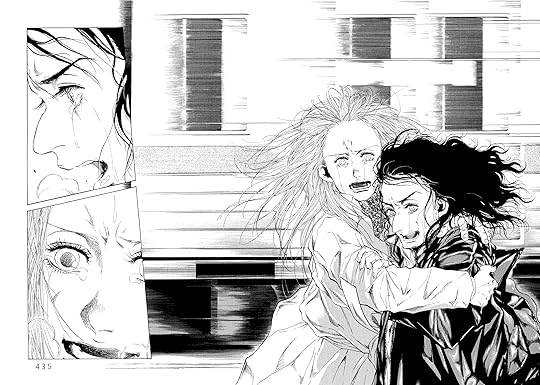
Still, there are emotionally powerful pages. Painful moments, tender scenes, dramatic shifts—they’re portrayed with striking clarity and flow. One standout appears within the first few pages: the line, “A smile from you... can destroy my whole life,” delivered in a quiet, piercing full-page moment. Another highlight for me is the sequence where they run across the train tracks—the background bursts with motion and detail, mirroring the characters’ emotional explosion. The dynamic composition and expressive close-ups make the moment feel raw and alive. It’s one of those rare instances where the visuals fully rise to meet the story’s emotional weight—though such moments are rare in an otherwise inconsistent visual flow.
The author also handles graphic violence with surprising effectiveness—those scenes are thrilling, sharp, and carry real impact without feeling excessive.
While occasional inconsistency might slow the reading experience, the emotional weight of the plot carries it forward. There’s a strange push-pull in how the visuals and story interact—it’s hard to tell sometimes whether the art elevates the narrative, or the narrative ends up carrying the art. It’s a bit of a love-hate relationship: the illustrations and opening pages of each chapter are eye-catching and full of promise. But at other times, the art falls short of that promise—like it’s teasing something more vivid than what it ultimately gives. Still, when the two elements do click, the result is striking.
Final Thoughts
Overall, I had a good time with Gunjou. I admired parts of the art, enjoyed the tension and flow of the plot, and felt emotionally invested in the protagonists’ rollercoaster relationship.
It’s not a series for everyone. But if the first few chapters resonate with you—through the tone, the themes, or the emotional texture—you might find yourself unexpectedly drawn in. The way the manga opens—visually and narratively—can feel almost like a promise. The covers, title pages, and opening spreads are evocative and full of emotional charge. Sometimes, that promise is fulfilled. Sometimes, it’s the story that ends up doing the heavy lifting. But once you’re in, the emotional pull takes over.
Give it a try. Let it lure you in. And see if it stays with you longer than you expected.
TL;DR:
Gunjou is a slow-burning, emotionally heavy manga about two women bound by love, guilt, and crime. While the pacing can lag and the art isn’t always consistent, the emotional tension, strong character work, and layered themes make it worth the read. If you’re drawn in by the first few chapters, chances are it’ll stick with you.
This review is also available on my MyAnimeList profile, while the Goodreads version has been adjusted slightly for formatting.
Gunjou is a dramatic, emotionally charged story of romance between women—volatile, tender, and at times destructive. The relationship at its core is intense and evolves steadily across each chapter, supported by an art style that feels grounded and fitting for the emotional weight of the story.
Plot & Themes
The central plot, as you may know from the synopsis, begins with a woman asking her former lover to kill her abusive husband. From there, they go on the run, bound by a shared crime and a complicated past.
The story unfolds non-linearly, with flashbacks interwoven into the present timeline. This structure adds emotional tension and depth. Themes like queerness, trauma, mental instability, class division, broken households, and childhood scars are present—not as central talking points, but as layers that enrich the narrative.
Even without prior experience reading LGBTQ+ stories, the emotional beats land clearly and compellingly. It’s not hard to follow—it just moves at a slower pace, but it still makes for a satisfying read. The ending, especially, feels well-paced and conclusive.
Characters
The characters are one of the story’s biggest strengths, even if not all are equally fleshed out.
Given its relatively short length and limited cast, character development is impressively solid—especially between the two leads: the blonde and the one with glasses. Their psychological reactions to the murder, their guilt, their dynamic—everything evolves in a believable, emotionally tense way.
Their shifting emotions—from shock to denial to guilt—are drawn with nuance. The flashbacks give context to their relationship and add a rollercoaster of feelings to the present timeline. One protagonist’s traumatic childhood further grounds their emotional arcs.
Even the side characters, though few, serve a strong purpose in pushing the narrative forward. Some are frustrating—intentionally so—which makes their roles effective.
That said, the pacing can feel slow at times. Long stretches of dialogue and dips in tempo can make some parts feel slower than they need to be. But maybe that’s just part of reading a drama-focused story—it’s not unusual for this kind of emotional narrative to take its time, and those slowdowns feel like a natural fit.
Art
I haven’t read many josei titles, but I found myself drawn to the art here. The character design—especially for the main leads—feels expressive and emotionally resonant. The eyes, in particular, often remind me of My Broken Mariko in their depth. That said, the art isn’t without flaws. At times, characters are drawn from angles that look awkward or lack polish. Some expressions miss their mark, and panels that zoom out tend to lose detail. There’s a sense of inconsistency that can break immersion.
Still, there are emotionally powerful pages. Painful moments, tender scenes, dramatic shifts—they’re portrayed with striking clarity and flow. One standout appears within the first few pages: the line, “A smile from you... can destroy my whole life,” delivered in a quiet, piercing full-page moment. Another highlight for me is the sequence where they run across the train tracks—the background bursts with motion and detail, mirroring the characters’ emotional explosion. The dynamic composition and expressive close-ups make the moment feel raw and alive. It’s one of those rare instances where the visuals fully rise to meet the story’s emotional weight—though such moments are rare in an otherwise inconsistent visual flow.
The author also handles graphic violence with surprising effectiveness—those scenes are thrilling, sharp, and carry real impact without feeling excessive.
While occasional inconsistency might slow the reading experience, the emotional weight of the plot carries it forward. There’s a strange push-pull in how the visuals and story interact—it’s hard to tell sometimes whether the art elevates the narrative, or the narrative ends up carrying the art. It’s a bit of a love-hate relationship: the illustrations and opening pages of each chapter are eye-catching and full of promise. But at other times, the art falls short of that promise—like it’s teasing something more vivid than what it ultimately gives. Still, when the two elements do click, the result is striking.
Final Thoughts
Overall, I had a good time with Gunjou. I admired parts of the art, enjoyed the tension and flow of the plot, and felt emotionally invested in the protagonists’ rollercoaster relationship.
It’s not a series for everyone. But if the first few chapters resonate with you—through the tone, the themes, or the emotional texture—you might find yourself unexpectedly drawn in. The way the manga opens—visually and narratively—can feel almost like a promise. The covers, title pages, and opening spreads are evocative and full of emotional charge. Sometimes, that promise is fulfilled. Sometimes, it’s the story that ends up doing the heavy lifting. But once you’re in, the emotional pull takes over.
Give it a try. Let it lure you in. And see if it stays with you longer than you expected.
TL;DR:
Gunjou is a slow-burning, emotionally heavy manga about two women bound by love, guilt, and crime. While the pacing can lag and the art isn’t always consistent, the emotional tension, strong character work, and layered themes make it worth the read. If you’re drawn in by the first few chapters, chances are it’ll stick with you.
This review is also available on my MyAnimeList profile, while the Goodreads version has been adjusted slightly for formatting.

April 14, 2021
Reading this will drain your tear ducts!
You've been warned.
Gunjō is NOT one's easy, average read—it's utterly far from it. It is highly recommended for readers who are up to some dark and heavily emotional ride. Nonetheless, it is one of the captivating and beautiful stories I have read in recent times 🖤
You've been warned.
Gunjō is NOT one's easy, average read—it's utterly far from it. It is highly recommended for readers who are up to some dark and heavily emotional ride. Nonetheless, it is one of the captivating and beautiful stories I have read in recent times 🖤

Read
April 15, 2021I read all three books and this was a wild ride. Definitely recommend it. Please checke the TWs before reading it though. Also some say the lesbian rep is not perfect so please dive into the book with caution.
Read
November 1, 2021The weird dynamics and relationships of the characters are depicted in the most human way, they felt like real people not just characters.
November 24, 2022
someone should have warned me before reading this
I mean I wouldn't have listened but a warning would have been nice
I mean I wouldn't have listened but a warning would have been nice

September 25, 2021
I really shouldn't have read this book, and it REALLY shouldn't have been my first manga (and only so far) that I have read. But once I started, I truly couldn't stop. I've seen complaints about the art style, but I love the grittiness and even sometimes borderline ugliness of the character's expressions. The kiss scene especially just struck me as an interesting one. It's so far from a perfect, romantic Hollywood style and is filled with anger and imperfection. Her (the author/artist's) willingness to go beyond the typical art style and expectations of a romance is amazing. I know it can be problematic to portray queerness only in murderers and psychopaths, especially in Japan, where there's limited positive representation... but I think the author was really trying to write an honest story about a complex relationship which happened to include two women. And maybe some negative tropes went along with that, but it is still a beautiful and fascinating story.
Sometimes the language and the scenes depicted were so disturbing, I just skipped over it or skimmed through, but the constant dark discussions made any relatively positive scene or line of dialogue so much more rewarding. The ending scene was like a breath of fresh mountain air after inhaling dirty cigarette smog for hundreds of pages. I seriously cannot believe THIS of all sapphic books ended up with the characters both alive, semi-in love, and not sad. It's no happily ever after, I mean they do both end up in jail, but they're better off than they were before.
The last panel is the most memorable to me and I honestly love it. It's the two women facing the police officer and turning themselves in, smiling ear-to-ear, exclaiming "we're murderers!"
Sometimes the language and the scenes depicted were so disturbing, I just skipped over it or skimmed through, but the constant dark discussions made any relatively positive scene or line of dialogue so much more rewarding. The ending scene was like a breath of fresh mountain air after inhaling dirty cigarette smog for hundreds of pages. I seriously cannot believe THIS of all sapphic books ended up with the characters both alive, semi-in love, and not sad. It's no happily ever after, I mean they do both end up in jail, but they're better off than they were before.
The last panel is the most memorable to me and I honestly love it. It's the two women facing the police officer and turning themselves in, smiling ear-to-ear, exclaiming "we're murderers!"
This entire review has been hidden because of spoilers.

July 1, 2024
Did you ever want to go on a roadtrip and have weird sexual tension with the murderer of your abusive husband? Then you are Rei and next to Nanae, one of the main characters of this Manga. This is not for everybody.
Essentially Nanae is obsessed with Rei, to a point she would do anything for even just a fraction of her attention. This includes having sex with her obsession's husband, so she can stab him, use her wealth to get Rei "indebted" to her for potential sex and straight-up pouring gasoline all over herself.
Rei goes along with this, because they are both running from the police together and essentially "each other" are the only people they have left in her opinion. Follow them on their adventure, in which they meet many more unfortunate women, including a mother who is convinced she killer her child or a high-school student obsessed with loosing her virginity to fit into society's "standard for women" of her age.
This is not a pretty lovestory between lesbians, but instead depicts abuse and co-dependency in A LOT of it's forms (not limited to the maincharacters, a lot of people are abusive to each other in this Manga). However, it was a refreshing read and does a great job at building suspense, giving the reader the same feeling of having to walk on eggshells as abuse does to the characters.
Essentially Nanae is obsessed with Rei, to a point she would do anything for even just a fraction of her attention. This includes having sex with her obsession's husband, so she can stab him, use her wealth to get Rei "indebted" to her for potential sex and straight-up pouring gasoline all over herself.
Rei goes along with this, because they are both running from the police together and essentially "each other" are the only people they have left in her opinion. Follow them on their adventure, in which they meet many more unfortunate women, including a mother who is convinced she killer her child or a high-school student obsessed with loosing her virginity to fit into society's "standard for women" of her age.
This is not a pretty lovestory between lesbians, but instead depicts abuse and co-dependency in A LOT of it's forms (not limited to the maincharacters, a lot of people are abusive to each other in this Manga). However, it was a refreshing read and does a great job at building suspense, giving the reader the same feeling of having to walk on eggshells as abuse does to the characters.
This entire review has been hidden because of spoilers.

May 3, 2026
how could I go wrong either woman killing the women’s she in love with abusive husband, what could go wrong? I thought id love this story, on paper I feel I should. It’s just… so boring idk? I kinda like plotless vibe books but not this one, you couldn’t have written more boring characters to be honest. The pacing was too fast, the dialogue was off, the beat to beat of each scene had no rhythm. A story is not just a collection of things that happen but has arcs, narrative, established journeys and I just didn’t really felt the craft of story telling come across in this manga for how much plot it really tries to have.
the problem with also writing tragic lesbian fiction is just when it’s badly written, it just kinda feeds into homophobia stereotypes about us and idk I don’t feel like this manga really escaped that. I get it’s meant to be fucked up but why would you keep trying to have sex with a woman that doesn’t want to have sex with u 😭 it’s not really the start for a relationship you know idk. I assume in the end the “straight” women and lesbian get together but girl I don’t feel their love at ALL, no chemistry between them.
Also the art is okay at times but also full of eyes that are way too close together and overly long noses.
the problem with also writing tragic lesbian fiction is just when it’s badly written, it just kinda feeds into homophobia stereotypes about us and idk I don’t feel like this manga really escaped that. I get it’s meant to be fucked up but why would you keep trying to have sex with a woman that doesn’t want to have sex with u 😭 it’s not really the start for a relationship you know idk. I assume in the end the “straight” women and lesbian get together but girl I don’t feel their love at ALL, no chemistry between them.
Also the art is okay at times but also full of eyes that are way too close together and overly long noses.
October 20, 2021
The art really took away from the overall story. Also, the story could have been told in a much shorter time which tells me that the author was trying to milk it for all it was worth. And it wasn't worth much. This really disappointed me. The two main characters are not only destructive towards each other but they are to themselves and those around themselves. I hated the brother and was surprised a woman like his wife ever married him in the first place. Finding out that a woman has been battered her entire life and saying for her to just deal with it and get over it...not ok. Also, I really didn't even care for the main character. It was like her over abuse was done just to make her seem more pathetic or to make her seem to be someone who needed others empathy. Also even though she said she would take that empathy she always did. This story was not something I will ever read again. Probably the worst yuri, if not one of the worst mangas I have ever read. As a victim of abuse and a lesbian, I find this manga rather appalling.
This entire review has been hidden because of spoilers.
December 11, 2020
I am not sure how to rate this... The story is intense and it's not bad per se. However, I can't really say that I liked it (it's really different from what i'm used to read).
Personally I will give it 2,5/5 stars, although I recognize it may deserve more stars if thinking in the general aspect.
The art style goes well with the theme but for me it was a bit difficult to get by. It's pretty unique to be honest.
Personally I will give it 2,5/5 stars, although I recognize it may deserve more stars if thinking in the general aspect.
The art style goes well with the theme but for me it was a bit difficult to get by. It's pretty unique to be honest.
August 31, 2026
This seems like an incredible ride... Although it's imperfect and a bit wonky, I am loving the non-moe artstyle. It has such a sorrowful and mature essence, it feels like every single stroke is burdened by emotions and you can feel the mangaka's force piercing their art. All characters are just so intense and real and already had me tearing up, having heartache and suffering with them many times.
I'm excited to become a complete wreck after completing the series !! :D
I'm excited to become a complete wreck after completing the series !! :D
March 1, 2026
fácil se hizo de mis mangas favoritos, te amo gunjou, amo lo complicado que eres y lo mucho que tienes contrastes en tus imbalances de poder y narrativas complicadas donde nadie está en lo correcto y ambas están equivocadas, TE AMO GUNJOU !!!!
August 16, 2021
son muy confusos todos los saltos en el tiempo, hacen que pierda el interés
December 17, 2021
it made me sad
April 14, 2024
This is literally made for me.
Displaying 1 - 30 of 38 reviews