

What do you think?

Die jüngste Tochter
Ich heiße Fatima. Ich trage den Namen einer heiligen Figur des Islam. Ich trage einen Namen, den ich ehren muss.
Fatima ist das Kind, auf das keiner mehr gewartet hat, die Nachzüglerin, die einzige Tochter, die in Frankreich und nicht in Algerien zur Welt gekommen ist. Sie wächst mit ihren Schwestern in der berüchtigten Banlieue Clichy auf. Liebe und Sexualität sind in ihrer Familie ein Tabu. In der Schule ist Fatima unangepasst, laut und voller Wissensdurst. Sie hängt am liebsten mit den Jungs herum und fühlt sich falsch in ihrer Haut. Bis sie Nina trifft und ihre eigenen Gefühle für sie erkennt. Doch eine Frau zu lieben, bringt sie nicht nur in Konflikt mit ihrer Familie, ihrem Glauben, sondern auch mit sich selbst.
Atemlos und ungeheuer sprachgewaltig zeigt Fatima Daas mit ihrem vielbeachteten Debüt, dass man sich nicht entscheiden muss und dass die Zerrissenheit der eigenen Identität kein Makel ist. Eine beeindruckende Geschichte weiblicher Selbstermächtigung – dieser Roman ist ein Befreiungsschlag!
Fatima ist das Kind, auf das keiner mehr gewartet hat, die Nachzüglerin, die einzige Tochter, die in Frankreich und nicht in Algerien zur Welt gekommen ist. Sie wächst mit ihren Schwestern in der berüchtigten Banlieue Clichy auf. Liebe und Sexualität sind in ihrer Familie ein Tabu. In der Schule ist Fatima unangepasst, laut und voller Wissensdurst. Sie hängt am liebsten mit den Jungs herum und fühlt sich falsch in ihrer Haut. Bis sie Nina trifft und ihre eigenen Gefühle für sie erkennt. Doch eine Frau zu lieben, bringt sie nicht nur in Konflikt mit ihrer Familie, ihrem Glauben, sondern auch mit sich selbst.
Atemlos und ungeheuer sprachgewaltig zeigt Fatima Daas mit ihrem vielbeachteten Debüt, dass man sich nicht entscheiden muss und dass die Zerrissenheit der eigenen Identität kein Makel ist. Eine beeindruckende Geschichte weiblicher Selbstermächtigung – dieser Roman ist ein Befreiungsschlag!
191 pages, Hardcover
First published August 20, 2020
About the author
Fatima Daas
5 books123 followersFatima Daas was born in 1995 and grew up in Clichy-sous-Bois, France, where her parents settled after arriving from Algeria. In high school Daas participated in writing workshops led by Tanguy Viel. Influenced by Marguerite Duras and Virginie Despentes, she defines herself as an intersectional feminist. Her debut novel, The Last One, has sold more than thirty-five thousand copies in France and will be translated into ten languages.
Ratings & Reviews
Friends & Following
Create a free account to discover what your friends think of this book!
Community Reviews
Displaying 1 - 30 of 879 reviews

August 16, 2020
Je m’appelle Michael. Avec un tréma, sur ma carte d’identité. Je le mets jamais. Je vois pas à quoi ça sert. Mon prénom vient de l’hébreu Mika’el, que l’on traduit par « qui est semblable à Dieu. » C’était pas le prénom que ma mère avait prévu. Mon père voulait une fille, lui il avait rien prévu du tout. C’est ma grand-mère qui a décidé. Paraît que j’avais tout d’un miracle à la naissance. Alors elle, la matriarche, avec ses bijoux et ses beaux habits, elle a tapé du pied et elle a dit ce sera ça, son prénom.
Je m’appelle Michael. Mon père biologique est Franco-japonais. Ma mère est tuniso-italienne. Mon enfance a été bercée par plusieurs langues et par la foi et la prière. Puis par l’absence.
Je m’appelle Michael. Mon nom est relié à un Dieu auquel je ne crois pas. Mon nom même est un blasphème, et ça me fait rire à chaque fois.
Je m’appelle Michael et je suis l’aîné d’une fratrie de cinq garçons.
Je m’appelle Michael et j’aime les hommes comme je devrais aimer les femmes.
Je commence cette chronique à chaud, en étant encore habité par le texte de Fatima Daas. C’est comme ça que commence chaque vignette. « Je m’appelle Fatima. » Il y a le nom et l’importance qui y est rattachée, le sens et la symbolique, le poids de tout ce qui est attendu de nous. Je ne sais pas comment définir « La petite dernière. » Je ne sais pas si c’est un roman. Je ne sais pas si c’est une autobiographie. Une réflexion sur soi. Un flux de pensées, un étalage de conscience, une mise à nu derrière des rideaux blancs, fins, qui laissent transparaître les silhouettes. On pourrait dire que c’est un monologue. On imagine bien le truc sur scène, avec juste un tabouret, la lumière qui va bien, le silence. Et pourtant, c’est pas totalement ça. Disons juste que c’est une suite de confessions, de remises en questions, de prières intimes. Il y a dans ces pages une impudeur étrange, on lit ce livre comme on assiste à un baiser que l’on aurait pas dû voir. On est le voyeur attendri, celui qui en veut encore. Fatima Daas a du bagou et une voix qui porte en elle une génération toute entière. Je ne crois pas qu’elle veuille être une porte-parole d’une quelconque communauté. Je crois qu’elle écrit pour ne pas que les gens viennent à lui manquer. Je crois qu’elle écrit pour dire aux gens qu’elle les aime sans avoir honte. Il y a certaines pages vertigineuses, des phrases qui m’ont pété la mâchoire. « La petite dernière » est une éblouissante mélodie, teintée d’angoisse, de rédemption, de foi et de gestes d’amour. C’est un texte sur les gens qui essaient, essaient, essaient encore, qui acceptent la casse et fabriquent de sublimes bijoux avec les restes.
C’est de toute beauté.
Je m’appelle Michael et je porte en mon cœur et mon ventre les trésors laissés par Fatima Daas, à qui voudra les lire.
Je m’appelle Michael. Mon père biologique est Franco-japonais. Ma mère est tuniso-italienne. Mon enfance a été bercée par plusieurs langues et par la foi et la prière. Puis par l’absence.
Je m’appelle Michael. Mon nom est relié à un Dieu auquel je ne crois pas. Mon nom même est un blasphème, et ça me fait rire à chaque fois.
Je m’appelle Michael et je suis l’aîné d’une fratrie de cinq garçons.
Je m’appelle Michael et j’aime les hommes comme je devrais aimer les femmes.
Je commence cette chronique à chaud, en étant encore habité par le texte de Fatima Daas. C’est comme ça que commence chaque vignette. « Je m’appelle Fatima. » Il y a le nom et l’importance qui y est rattachée, le sens et la symbolique, le poids de tout ce qui est attendu de nous. Je ne sais pas comment définir « La petite dernière. » Je ne sais pas si c’est un roman. Je ne sais pas si c’est une autobiographie. Une réflexion sur soi. Un flux de pensées, un étalage de conscience, une mise à nu derrière des rideaux blancs, fins, qui laissent transparaître les silhouettes. On pourrait dire que c’est un monologue. On imagine bien le truc sur scène, avec juste un tabouret, la lumière qui va bien, le silence. Et pourtant, c’est pas totalement ça. Disons juste que c’est une suite de confessions, de remises en questions, de prières intimes. Il y a dans ces pages une impudeur étrange, on lit ce livre comme on assiste à un baiser que l’on aurait pas dû voir. On est le voyeur attendri, celui qui en veut encore. Fatima Daas a du bagou et une voix qui porte en elle une génération toute entière. Je ne crois pas qu’elle veuille être une porte-parole d’une quelconque communauté. Je crois qu’elle écrit pour ne pas que les gens viennent à lui manquer. Je crois qu’elle écrit pour dire aux gens qu’elle les aime sans avoir honte. Il y a certaines pages vertigineuses, des phrases qui m’ont pété la mâchoire. « La petite dernière » est une éblouissante mélodie, teintée d’angoisse, de rédemption, de foi et de gestes d’amour. C’est un texte sur les gens qui essaient, essaient, essaient encore, qui acceptent la casse et fabriquent de sublimes bijoux avec les restes.
C’est de toute beauté.
Je m’appelle Michael et je porte en mon cœur et mon ventre les trésors laissés par Fatima Daas, à qui voudra les lire.

October 12, 2022
The Last One is a defiant work of autofiction, a proud affirmation of existence by French writer Fatima Daas. Daas is a French woman, the daughter of Algerian immigrants and raised in the majority-Muslim Clichy-sous-Bois, a banlieue in the eastern suburbs of Paris. Despite its proximity to central Paris, Clichy-sous-Bois is not served by a major highway or railway, leaving it isolated from the surrounding areas of the city. Daas is further marginalized by her sexuality. The combination of these aspects of her identity lead to erasure in a French culture that can be monolithic and exclusionary. Each chapter of the novel begins with a variation of the affirmation: I am Fatima Daas. The first-person singular affirmation is particularly noteworthy as a compliment, and perhaps contrast, to the work of Annie Ernaux. In The Years, Ernaux writes in the collective first person, with the result that Ernaux is celebrated for speaking for a generation of French women. The Last One may not have the elegance of some of the autofiction we tend to see translated into English, but as a bold statement of existence it should not be ignored. Translated from the original La Petite Dernière by Lara Vergnaud and published by the small press Hope Road Publishing.
December 30, 2021
J'crois qu'elle s'appelle Fatima Daas mais j'suis pas sûre

February 17, 2023
The Other Press edition of The Last One (2020) by Fatima Daas has a cover design which encapsulates the essence of this book ideally:
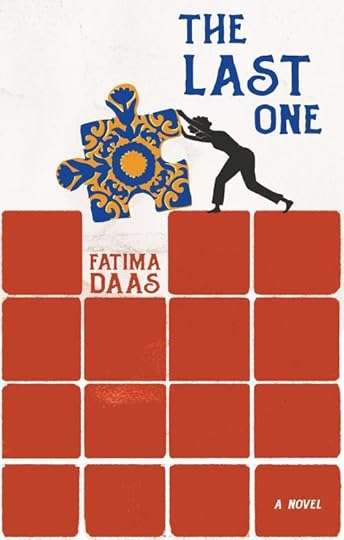
It is a moving autobiographical novel about trying to fit in. The differences between the unique puzzle piece and the unappealing rest of the composition are striking and it looks like the black silhouette's efforts are doomed to failure.
Speaking of cover design, I always thought its main aim is to attract the attention of potential readers. As it seems, people at HopeRoad publishing house have an extravagantly different approach:

This edition is on the 2023 Republic of Consciousness Prize longlist. Well, if the jury judged the contestants by their covers, I am afraid this book would be The Last One indeed.
Fatima, the novel protagonist and the author's porte-parole, is the last daughter of immigrants from Algeria who live in France. She is the exact opposite of what her parents want and expect. For starters, she is a girl, not the dream boy they hoped for. To make things even more complicated, she is a lesbian which according to Quran equals a sinner. Besides, she is an independent thinker and an aspiring writer. All in all, it looks like an assault on the traditional principles her parents uphold and worship.
The Last One is also a novel about making a choice. Fatima is like a tightrope dancer balancing over an abyss. The rope is stretched out between two edges and she cannot select both destinations at the same time. The first one is being true to herself and pursuing her dreams. The second one is her family's beliefs and values, her parents' love and support which are conditional: they will reject a queer daughter and her literary shenanigans.
Despite the complexity of Fatima’s moral dilemmas, the feature that struck me most in The Last One is its clarity and simplicity, and I mean simplicity on almost every level: form, vocabulary, syntax, style, structure. This novel in verse is divided into short chapters with every paragraph consisting of one sentence only. It is a collection of fragmental memories and Daas's writing style resembles a rhythmic chant or a prayer with incantatory repetitions. There are quotes from real prayers too.
The Last One resonated with me but I had a feeling that it is a sketch which was going to morph into something more powerful and engaging any minute but it never happened. Some characters were flat like the abusive archetypic father and I did not feel invested in them as much as they deserved. Notwithstanding, this debut novel by the twenty-seven-year-old author seems to be a promising prelude.
It is a moving autobiographical novel about trying to fit in. The differences between the unique puzzle piece and the unappealing rest of the composition are striking and it looks like the black silhouette's efforts are doomed to failure.
Speaking of cover design, I always thought its main aim is to attract the attention of potential readers. As it seems, people at HopeRoad publishing house have an extravagantly different approach:
This edition is on the 2023 Republic of Consciousness Prize longlist. Well, if the jury judged the contestants by their covers, I am afraid this book would be The Last One indeed.
Fatima, the novel protagonist and the author's porte-parole, is the last daughter of immigrants from Algeria who live in France. She is the exact opposite of what her parents want and expect. For starters, she is a girl, not the dream boy they hoped for. To make things even more complicated, she is a lesbian which according to Quran equals a sinner. Besides, she is an independent thinker and an aspiring writer. All in all, it looks like an assault on the traditional principles her parents uphold and worship.
The Last One is also a novel about making a choice. Fatima is like a tightrope dancer balancing over an abyss. The rope is stretched out between two edges and she cannot select both destinations at the same time. The first one is being true to herself and pursuing her dreams. The second one is her family's beliefs and values, her parents' love and support which are conditional: they will reject a queer daughter and her literary shenanigans.
Despite the complexity of Fatima’s moral dilemmas, the feature that struck me most in The Last One is its clarity and simplicity, and I mean simplicity on almost every level: form, vocabulary, syntax, style, structure. This novel in verse is divided into short chapters with every paragraph consisting of one sentence only. It is a collection of fragmental memories and Daas's writing style resembles a rhythmic chant or a prayer with incantatory repetitions. There are quotes from real prayers too.
The Last One resonated with me but I had a feeling that it is a sketch which was going to morph into something more powerful and engaging any minute but it never happened. Some characters were flat like the abusive archetypic father and I did not feel invested in them as much as they deserved. Notwithstanding, this debut novel by the twenty-seven-year-old author seems to be a promising prelude.
September 19, 2020
3,5/5
La voix de Fatima Daas est importante et mérite d’être entendue. Ce livre est un hybride entre une autobiographie, un roman et de la poésie, comme je n’en avais jamais lu avant. Ses phrases sont pudiques et tout en retenue. Elle nous offre des fragments de son identité par chapitres courts, abordant sa vie à Clichy-sous-Bois, ses longs trajets en RER pour aller à l’université, la religion musulmane, son homosexualité, ses voyages en Algérie où elle retrouve sa famille éloignée. Comme les pièces d’un puzzle.
J’ai été marqué par la prose forte et âpre de l’autrice, mais je ne suis pas rentrée complètement dans le livre. J’avais envie d’aller plus profond dans son histoire, de creuser davantage pour toucher du doigt les émotions. Son format m’a juste donné l’impression d’érafler la surface. Malgré tout, je n’ai pas pu rester indifférente face à ce morcellement entre deux mondes, la France et l’Algérie, la communauté LGBTQ+ et une famille traditionaliste. La Petite Dernière est une tentative de réconciliation puissante entre tous ces bouts d’elle-même. J'ai hâte de découvrir sur quel terrain elle s’aventurera la prochaine fois.
La voix de Fatima Daas est importante et mérite d’être entendue. Ce livre est un hybride entre une autobiographie, un roman et de la poésie, comme je n’en avais jamais lu avant. Ses phrases sont pudiques et tout en retenue. Elle nous offre des fragments de son identité par chapitres courts, abordant sa vie à Clichy-sous-Bois, ses longs trajets en RER pour aller à l’université, la religion musulmane, son homosexualité, ses voyages en Algérie où elle retrouve sa famille éloignée. Comme les pièces d’un puzzle.
J’ai été marqué par la prose forte et âpre de l’autrice, mais je ne suis pas rentrée complètement dans le livre. J’avais envie d’aller plus profond dans son histoire, de creuser davantage pour toucher du doigt les émotions. Son format m’a juste donné l’impression d’érafler la surface. Malgré tout, je n’ai pas pu rester indifférente face à ce morcellement entre deux mondes, la France et l’Algérie, la communauté LGBTQ+ et une famille traditionaliste. La Petite Dernière est une tentative de réconciliation puissante entre tous ces bouts d’elle-même. J'ai hâte de découvrir sur quel terrain elle s’aventurera la prochaine fois.
December 15, 2021
2,5 stars /// Picked this up on a whim because its translation is making its round here in Germany and I still needed to read some books in French to meet my goal of reading 12 books in French in 2021.
La Petite Dernière ("The Last One") is a piece of auto-fiction and Fatima Daas' debut novel. In it, we meet the character Fatima Daas who is struggling with making her family proud, making her God proud, and making herself proud.
Fatima, just like the author, is the only one in her family who was born in France, as her parents migrated with her two older sisters from Algeria to France before she was born. In France, they first live in Saint-Germain-en-Laye, and then move to Clichy-sous-Bois (a commune in the eastern suburbs of Paris).
At home, Fatima speaks Algerian Arabic. At school, she speaks French. At home, Fatima is initiated into the teachings of Islam. Her whole family are devout muslims. At school, Fatima struggles with her faith. Her faith is a double edged sword for her: Fatima believes in Allah, but she doesn't want to disappoint Him. At home, Fatima sees how her dad beats her sisters, only she, as the youngest one, is usually spared. At school, Fatima feels like she has to prove herself, which sometimes leads her to beat and bully other students. At home, Fatima is constantly reminded to get a man and start a family. At school, she realises that she's into girls. At uni, she starts dating them. A move that leads to a rupture with her family, especially her dad.
So, as you can already gather from this polarity, La Petite Dernière is a book about a young woman who struggles to fit in, who struggles with her identity and doesn't know what's "right" - right by her family, by Allah, and by herself.
I haven't read many books about/from religious characters/authors, especially not ones on the LGBTQIA+ spectrum, so there's lots for me to learn on that front. Add to that, the story of migration from an African country to Europe, and you have a book that – at least in theory – should be right up my sleeve.
And all in all, it was a nice change to read this "own voices" book (even though I would rather classify it as "auto-fiction") from a lesbian Muslim writer whose family had migrated from Algeria to France. However, as interesting as the subject matter was, I reeeeally struggled with the writing style and with the execution of the story. Here's a little breakdown of my problems:
1) Writing style
La Petite Dernière is written in the form of a repetitive monologue. Each chapter of this already slim book is hella short: around two to five pages. And each chapter begins with the same phrase: "My name if Fatima Daas." This is then followed by one or two direct and clear details about herself. The rest of the chapter then dives into one episode of Fatima's life – but only on the surface level.
Personally, I didn't enjoy the repetitive quality of this book. I can see that Fatima Daas used the repetitiveness in order to simulate the atmosphere and structure of a prayer or confession – but with the slimness of the book at hand (it's only 211 pages long) I felt like it was taking from the story, saying less than she could've.
My main issue with Fatima Daas' writing style though were her use of main clauses. The entire book is written exclusively in main clauses. Again, that simpleness should probably evoke a type of prayer of confession but I need me a good subclause, bitch. Mix it up.
2) Subject matter
Whilst I appreciated all the different topics that Fatima Daas touched upon in her debut novel – sexuality, religion, domestic abuse, racism, etc. – I couldn't feel like much of it remained on a surface level. There was nothing deep or raw about this book. Where was the introspection? Where were the parts that make me feel something at my core, that make me believe that these people are real?
Due to the simple writing style and her jumping from topic to topic every five pages, I had a really hard time getting immersed in this book. For some reason, I thought that this story would've fit better as a movie. I dunno.
Whilst reading La Petite Dernière I couldn't help thinking that this book would be the perfect book for a French (as a foreign language) class for students aged 16-17. The language is so simple, with very few words that one would have to look up, and the subject matter is relatable (=> coming-of-age, discovering one's sexuality, grappling with one's fate) – I really want to see this book on more curriculums.
However, for me, a 25-year-old woman who likes to be challenged when reading in French (...I'm currently fighting my way through La Migration des Coeurs by Maryse Condé, and loving every second of it), La Petite Dernière was a bit too empty, vacuous and surface-level to leave a lasting impression.
La Petite Dernière ("The Last One") is a piece of auto-fiction and Fatima Daas' debut novel. In it, we meet the character Fatima Daas who is struggling with making her family proud, making her God proud, and making herself proud.
Fatima, just like the author, is the only one in her family who was born in France, as her parents migrated with her two older sisters from Algeria to France before she was born. In France, they first live in Saint-Germain-en-Laye, and then move to Clichy-sous-Bois (a commune in the eastern suburbs of Paris).
At home, Fatima speaks Algerian Arabic. At school, she speaks French. At home, Fatima is initiated into the teachings of Islam. Her whole family are devout muslims. At school, Fatima struggles with her faith. Her faith is a double edged sword for her: Fatima believes in Allah, but she doesn't want to disappoint Him. At home, Fatima sees how her dad beats her sisters, only she, as the youngest one, is usually spared. At school, Fatima feels like she has to prove herself, which sometimes leads her to beat and bully other students. At home, Fatima is constantly reminded to get a man and start a family. At school, she realises that she's into girls. At uni, she starts dating them. A move that leads to a rupture with her family, especially her dad.
So, as you can already gather from this polarity, La Petite Dernière is a book about a young woman who struggles to fit in, who struggles with her identity and doesn't know what's "right" - right by her family, by Allah, and by herself.
I haven't read many books about/from religious characters/authors, especially not ones on the LGBTQIA+ spectrum, so there's lots for me to learn on that front. Add to that, the story of migration from an African country to Europe, and you have a book that – at least in theory – should be right up my sleeve.
And all in all, it was a nice change to read this "own voices" book (even though I would rather classify it as "auto-fiction") from a lesbian Muslim writer whose family had migrated from Algeria to France. However, as interesting as the subject matter was, I reeeeally struggled with the writing style and with the execution of the story. Here's a little breakdown of my problems:
1) Writing style
La Petite Dernière is written in the form of a repetitive monologue. Each chapter of this already slim book is hella short: around two to five pages. And each chapter begins with the same phrase: "My name if Fatima Daas." This is then followed by one or two direct and clear details about herself. The rest of the chapter then dives into one episode of Fatima's life – but only on the surface level.
Personally, I didn't enjoy the repetitive quality of this book. I can see that Fatima Daas used the repetitiveness in order to simulate the atmosphere and structure of a prayer or confession – but with the slimness of the book at hand (it's only 211 pages long) I felt like it was taking from the story, saying less than she could've.
My main issue with Fatima Daas' writing style though were her use of main clauses. The entire book is written exclusively in main clauses. Again, that simpleness should probably evoke a type of prayer of confession but I need me a good subclause, bitch. Mix it up.
2) Subject matter
Whilst I appreciated all the different topics that Fatima Daas touched upon in her debut novel – sexuality, religion, domestic abuse, racism, etc. – I couldn't feel like much of it remained on a surface level. There was nothing deep or raw about this book. Where was the introspection? Where were the parts that make me feel something at my core, that make me believe that these people are real?
Due to the simple writing style and her jumping from topic to topic every five pages, I had a really hard time getting immersed in this book. For some reason, I thought that this story would've fit better as a movie. I dunno.
Whilst reading La Petite Dernière I couldn't help thinking that this book would be the perfect book for a French (as a foreign language) class for students aged 16-17. The language is so simple, with very few words that one would have to look up, and the subject matter is relatable (=> coming-of-age, discovering one's sexuality, grappling with one's fate) – I really want to see this book on more curriculums.
However, for me, a 25-year-old woman who likes to be challenged when reading in French (...I'm currently fighting my way through La Migration des Coeurs by Maryse Condé, and loving every second of it), La Petite Dernière was a bit too empty, vacuous and surface-level to leave a lasting impression.

November 5, 2020
J'ai l'impression, en disant ne pas avoir aimé ce livre, de faire l'aveu d'un manque embarrassant de sophistication. Le style de Fatima Dans est indéniable, (trop?) recherché, jouant sur la fragmentation, la non-linéarité, la retenue et cette fameuse anaphore ("Je m'appelle Fatima Daas") qui aurait du ajouter à la puissance du texte et qui, personnellement, m'a agacée. Souvent la narratrice effleure un sujet intéressant pour l'abandonner aussitôt. Je crois être une lectrice capable d'apprécier le demi-mot, la pudeur, pourtant ici j'avais l'impression qu'on me laissait sur ma faim, ou alors que les fragments, peut-être plus ou moins bien amenés, n'avaient pas la force qu'ils auraient pu avoir. Je me sentais un peu coupable de m'ennuyer devant le sérieux des thèmes.
L'élément le plus réussi du texte selon moi (peut-être parce qu'il est revenu plusieurs fois, de manière entêtante, peut-être parce qu'il "montrait" le déchirement entre culture et orientation plus qu'il ne le "disait"), ce sont ces scènes où Fatima va demander conseil à des imams ou des fidèles à la mosquée, en leur parlant d'une prétendue amie musulmane et lesbienne qui a besoin d'aide. La dernière itération de ce motif est ma préférée, vers la fin du livre:
"L'imam, c'est aussi un docteur. [...] Sauf que là, j'ai la sensation que je vais passer au bloc pour qu'on m'opère, suite à quoi on m'annoncera qu'on ne peut plus rien faire pour moi.
- Wech raché der haja mal. [...] Ce qu'elle fait, c'est quelque chose de mal. Elle n'en souffrirait pas si c'était un bien pour elle."
Dans ce chapitre se réalise la pleine promesse de ce roman. "Comment tout concilier, comment danser dans une impasse jusqu’à ouvrir une porte là où se dressait un mur", comme le dit Virginie Despentes dans sa préface. Pour moi toutefois, c'était un peu maigre.
L'élément le plus réussi du texte selon moi (peut-être parce qu'il est revenu plusieurs fois, de manière entêtante, peut-être parce qu'il "montrait" le déchirement entre culture et orientation plus qu'il ne le "disait"), ce sont ces scènes où Fatima va demander conseil à des imams ou des fidèles à la mosquée, en leur parlant d'une prétendue amie musulmane et lesbienne qui a besoin d'aide. La dernière itération de ce motif est ma préférée, vers la fin du livre:
"L'imam, c'est aussi un docteur. [...] Sauf que là, j'ai la sensation que je vais passer au bloc pour qu'on m'opère, suite à quoi on m'annoncera qu'on ne peut plus rien faire pour moi.
- Wech raché der haja mal. [...] Ce qu'elle fait, c'est quelque chose de mal. Elle n'en souffrirait pas si c'était un bien pour elle."
Dans ce chapitre se réalise la pleine promesse de ce roman. "Comment tout concilier, comment danser dans une impasse jusqu’à ouvrir une porte là où se dressait un mur", comme le dit Virginie Despentes dans sa préface. Pour moi toutefois, c'était un peu maigre.
April 4, 2021
Certaines des réflexions de Fatima Daas me parlent beaucoup, et j'ai aimé le côté fragmenté de son identité. Elle a du mal à faire sens que tout ça, et semble en vain essayer de rassembler toutes les pièces d'un même puzzle. Mais j'ai eu du mal avec le côté un peu "journal" qui donne un rythme assez répétitif. J'aurais préféré lire ce livre d'une traite, je pense que j'aurais été plus plongée dans ma lecture.

February 17, 2023
Longlisted for the 2023 Republic of Consciousness Prize, UK & Ireland
My name is Fatima.
I’m a little weaned she-camel.
I’m the mazoziya, the youngest daughter.
The last one.
The Last One is Lara Vergnaud's translation of Fatima Daas's debut novel La Petite Dernière, published by the small independent HopeRoad Publishing under their Small Axes imprint:
La Petite Dernière is perhaps post-colonial, and certainly of immediate relevance, but it isn't out of print, but rather a contemporary novel, winning the Prix des Inrockuptibles, Premier roman in 2020.
The novel is auto-fictional and the first-person narrator shares the author's pen name - or perhaps the author shares the narrator's name, given it is a pseudonym - as well as biographical elements.HopeRoad's website gives the author's biography as follows:
Fatima Daas (the author’s pseudonym) was born in 1995 and grew up in the Parisian banlieue of Clichy-sous-Bois, where her parents settled after arriving from Algeria. In high school Daas participated in writing workshops led by Tanguy Viel. Well aware of the contradictions, she defines herself as Muslim, feminist and gay.
The Fatima of the novel begins each chapter with the words "I am Fatima Daas" for example in the first:
My name is Fatima.
The name of a symbolic figure in Islam.
A name that must be honoured.
A name that mustn’t be “soiled”, as we say in my house.
In my house, to soil means to dishonour. Wassekh, in Algerian Arabic.
Or darja, darija, our word for dialect.
The short-sentences and repetition give the novel a feel of music or prayer, and fit well with the character's literal breathlessness (she is an asthma sufferer) as well as the need to continually assert, define and defend her identity.
It's very tempting to label this novel as about the conflict between the narrator's active Islamic faith and her lesbianism, and this is a key strand:
My name is Fatima Daas.
I’m Muslim, therefore I’m afraid:
That God doesn’t love me.
That He doesn’t love me the way I love Him.
That He’ll abandon me.
Of not being the person I’m “supposed” to be.
Of questioning what God has commanded me to do.
Of being left to my own devices.
Of waking up in the middle of the night, terrified.
I speak to Allah, the All-Forgiving, when I do my five prayers.
But this would be too reductive of both the book and the author and narrator's identities, as there is much more in here, including:
- strong female relations: with her mother, her lovers, her friends, teachers, a therapist;
- class: the character lives in the banliues of Clichy-sous-Bois where the 2005 riots (Émeutes de 2005 dans les Banlieues Françaises) began;
- the socialogy of commuting, as she travels from there each day to central Paris;
- and her visits to her parents Algeria where she feels more like a tourist than at home:
A grey barrier separates me from my Algiers family.
There’s us: the tourists arriving from the country they know well.
And then, there’s “them”: my family.
Recommended,..
An aside on Annie Ernaux and Fatima Daas
I read this novel a month after Annie Ernaux was awarded a well-deserved Nobel Prize. Ernaux is perhaps best known for her novel Les Années, told in the collective 'on'. In my reaction to the Prize, and commenting on The Years, Alison Strayer's English translation (which uses 'we' for 'on')), I said, not so much about the novel itself but rather its reception:
Which makes this novel a fascinating contrast since Fatima, who asserts her individual rather than collective identity, is French but of Algerian descent, a lesbian (and seemingly unsure of her gender identity) and a practising Muslim.
And the author has made it very clear in interviews that she views that there are an infinite number of life experiences and her experience, or indeed anyone's, can not be taken as representative.
Fatima the character comments when attending a writing class, which she soons abandons, that Before I allowed myself to write, I satisfied others’ expectations. ... For several months, I imitate my classmates. I have to: ... Read and analyse texts written exclusively by white hetero cis men.
Fatima the author commented in an interview about intersectionality and her issues with conventional feminism:
But this novel is not intended as a rebuttal to Ernaux (who I note does not claim her 'on' is universal) but rather the author acknowledges her, in multiple interviews, as one of the key influences on her: "Ernaux’s writings on poverty, motherhood, family, shame, and violence spoke to me. Her writing is like a knife." And the narrator actually quotes Ernaux's 'Passion Simple' (in Tanya Leslie's translation in the English version):
During all this time, I felt I was living out my passion in the manner of a novel but now I’m not sure in which style I am writing about it: the style of a testimony, possibly even the sort of confidence one finds in women’s magazines, a manifesto or a statement, or maybe a critical commentary. I do not wish to explain my passion – that would imply that it was a mistake or some disorder I need to justify – I just want to describe it.
So this becomes a fascinating and complementary companion to Ernaux's work.
My name is Fatima.
I’m a little weaned she-camel.
I’m the mazoziya, the youngest daughter.
The last one.
The Last One is Lara Vergnaud's translation of Fatima Daas's debut novel La Petite Dernière, published by the small independent HopeRoad Publishing under their Small Axes imprint:
HopeRoad was founded in 2010 by Rosemarie Hudson who has always wanted to encourage exciting new talent, publish those authors herself and bring them to our attention. Her emphasis has been to promote the best writing from and about Africa, Asia and the Caribbean, with themes of identity, cultural stereotyping, disability and injustices are of particular interest.
Since the beginning of 2019, Rosemarie has been joined by Pete Ayrton, editor and publisher, who in 1986 founded Serpent’s Tail, the cutting-edge publisher he retired from in 2016. Pete Ayrton will be heading up Small Axes, a new imprint that will focus on republishing out of print post-colonial classics that helped to shape cultural shifts at the time and remain as relevant today as when they were first published.
La Petite Dernière is perhaps post-colonial, and certainly of immediate relevance, but it isn't out of print, but rather a contemporary novel, winning the Prix des Inrockuptibles, Premier roman in 2020.
The novel is auto-fictional and the first-person narrator shares the author's pen name - or perhaps the author shares the narrator's name, given it is a pseudonym - as well as biographical elements.HopeRoad's website gives the author's biography as follows:
Fatima Daas (the author’s pseudonym) was born in 1995 and grew up in the Parisian banlieue of Clichy-sous-Bois, where her parents settled after arriving from Algeria. In high school Daas participated in writing workshops led by Tanguy Viel. Well aware of the contradictions, she defines herself as Muslim, feminist and gay.
The Fatima of the novel begins each chapter with the words "I am Fatima Daas" for example in the first:
My name is Fatima.
The name of a symbolic figure in Islam.
A name that must be honoured.
A name that mustn’t be “soiled”, as we say in my house.
In my house, to soil means to dishonour. Wassekh, in Algerian Arabic.
Or darja, darija, our word for dialect.
The short-sentences and repetition give the novel a feel of music or prayer, and fit well with the character's literal breathlessness (she is an asthma sufferer) as well as the need to continually assert, define and defend her identity.
It's very tempting to label this novel as about the conflict between the narrator's active Islamic faith and her lesbianism, and this is a key strand:
My name is Fatima Daas.
I’m Muslim, therefore I’m afraid:
That God doesn’t love me.
That He doesn’t love me the way I love Him.
That He’ll abandon me.
Of not being the person I’m “supposed” to be.
Of questioning what God has commanded me to do.
Of being left to my own devices.
Of waking up in the middle of the night, terrified.
I speak to Allah, the All-Forgiving, when I do my five prayers.
But this would be too reductive of both the book and the author and narrator's identities, as there is much more in here, including:
- strong female relations: with her mother, her lovers, her friends, teachers, a therapist;
- class: the character lives in the banliues of Clichy-sous-Bois where the 2005 riots (Émeutes de 2005 dans les Banlieues Françaises) began;
- the socialogy of commuting, as she travels from there each day to central Paris;
- and her visits to her parents Algeria where she feels more like a tourist than at home:
A grey barrier separates me from my Algiers family.
There’s us: the tourists arriving from the country they know well.
And then, there’s “them”: my family.
Recommended,..
An aside on Annie Ernaux and Fatima Daas
I read this novel a month after Annie Ernaux was awarded a well-deserved Nobel Prize. Ernaux is perhaps best known for her novel Les Années, told in the collective 'on'. In my reaction to the Prize, and commenting on The Years, Alison Strayer's English translation (which uses 'we' for 'on')), I said, not so much about the novel itself but rather its reception:
The narrative is largely based on Ernaux's own life but she uses 'we' not 'I', or 'she' when specifically referring to herself: her personal memories (auto) are used to both tell her own life story and her evolution as a writer, but also to then describe the collective experience (biography) of her friends and indeed the generation of French women to which she belongs.
The issue is that it is only part of that generation, as it is also those from the same social class, ethnic group and even artistic inclination as the author as well.
To be fair the book doesn’t suggest otherwise but one knows full well that is this was by a black Muslim lesbian woman (say) people would label the book as about that specific experience. Whereas here by default this is treated as a history of French women (and white, heterosexual, atheist from a Catholic background etc don’t get added as qualifiers).
Which makes this novel a fascinating contrast since Fatima, who asserts her individual rather than collective identity, is French but of Algerian descent, a lesbian (and seemingly unsure of her gender identity) and a practising Muslim.
And the author has made it very clear in interviews that she views that there are an infinite number of life experiences and her experience, or indeed anyone's, can not be taken as representative.
Fatima the character comments when attending a writing class, which she soons abandons, that Before I allowed myself to write, I satisfied others’ expectations. ... For several months, I imitate my classmates. I have to: ... Read and analyse texts written exclusively by white hetero cis men.
Fatima the author commented in an interview about intersectionality and her issues with conventional feminism:
I realized that my problem was not only that I was a woman, but also that I was a French-born only child of Algerian immigrants. I was a lesbian Muslim woman. French feminist discourse couldn’t encompass my particularities or comprehend the quotidian layers of discrimination existing side by side. They weren’t talking about my life. That was a brutal realization. But there were alternatives: not one feminism, but varied feminisms. This was an intersectional feminism of the everyday. I can’t discuss feminism without considering social class, especially when faced with the current critiques of “wokeness” here in France.
But this novel is not intended as a rebuttal to Ernaux (who I note does not claim her 'on' is universal) but rather the author acknowledges her, in multiple interviews, as one of the key influences on her: "Ernaux’s writings on poverty, motherhood, family, shame, and violence spoke to me. Her writing is like a knife." And the narrator actually quotes Ernaux's 'Passion Simple' (in Tanya Leslie's translation in the English version):
During all this time, I felt I was living out my passion in the manner of a novel but now I’m not sure in which style I am writing about it: the style of a testimony, possibly even the sort of confidence one finds in women’s magazines, a manifesto or a statement, or maybe a critical commentary. I do not wish to explain my passion – that would imply that it was a mistake or some disorder I need to justify – I just want to describe it.
So this becomes a fascinating and complementary companion to Ernaux's work.
April 3, 2021
I largely agree with all the positive aspects people are bringing up about this book but I'd like to add another dimension I think is worthy to bring up.
The narrator lacks self-awareness, as can be seen in two ways. First, when she talks about her major life issues (specifically, her asthma, being the youngest (unplanned) child, and commuting) she doesn't really explain why they are so bad or how they affect her. She just uses her sparse poetry and dramatic paragraph cuts to imply that these things matter. It comes off as very 'I'm 14 and this is deep' prose. These issues aren't anything that would keep me up at night on their own, and when she neglects to give us context about why they're so terrible, I can't help but grow annoyed that she continuously brings them up as if she's crying 'woe is me' each chapter. Thing is, she does have a lot of good tragedy to talk about in her life, and if she contextualized this mediocre tragedy, it could also help her cause, but she writes about it so sparsely that I struggle to care as much as she expects the reader to.
Second, she's completely un-self aware when she talks about the harmful things she does (bullying, fighting, cheating on partners, etc). She really just focuses on how being a bad person affects her self-image, and than discusses how her sub-optimal family situation forced her to act as she does. She never once stops to consider how these actions affect those around her, and she barely takes blame on her part for her own behavior. It reads very teenager-y, even though Daas was in her mid-20s when she wrote it.
There's a lot of good in this book, but it would be severely over-indulgent to neglect to talk about the bad as well.
The narrator lacks self-awareness, as can be seen in two ways. First, when she talks about her major life issues (specifically, her asthma, being the youngest (unplanned) child, and commuting) she doesn't really explain why they are so bad or how they affect her. She just uses her sparse poetry and dramatic paragraph cuts to imply that these things matter. It comes off as very 'I'm 14 and this is deep' prose. These issues aren't anything that would keep me up at night on their own, and when she neglects to give us context about why they're so terrible, I can't help but grow annoyed that she continuously brings them up as if she's crying 'woe is me' each chapter. Thing is, she does have a lot of good tragedy to talk about in her life, and if she contextualized this mediocre tragedy, it could also help her cause, but she writes about it so sparsely that I struggle to care as much as she expects the reader to.
Second, she's completely un-self aware when she talks about the harmful things she does (bullying, fighting, cheating on partners, etc). She really just focuses on how being a bad person affects her self-image, and than discusses how her sub-optimal family situation forced her to act as she does. She never once stops to consider how these actions affect those around her, and she barely takes blame on her part for her own behavior. It reads very teenager-y, even though Daas was in her mid-20s when she wrote it.
There's a lot of good in this book, but it would be severely over-indulgent to neglect to talk about the bad as well.
May 8, 2026
Hätte ich das Buch nicht in der Bib beendet, dann hätte ich am Ende fett geheult
August 24, 2020
S'il faut du temps pour s'adapter au rythme répétitif et fragmenté imposé par Fatima Daas, il n'en reste pas moins que l'autrice dessine à gros traits un récit fort, et à vif. Elle se peint déchirée : déjà par sa double culture, mais aussi par son lesbianisme. Déchirée parce que son amour des femmes est incompatible avec sa religion, déchirée aussi parce qu'elle ne se sent, par conséquent, pas femme. Un récit beau mais terrible : comment s'ouvrir à l'autre quand on sait qu'on va nécessairement être rejetée pour ce qu'on est ? Comment s'ouvrir à soi-même, aussi, quand on a appris à détester tout ce qu'on est ?

September 1, 2020
"J'ai compris que partir ne signifie pas nécessairement rompre et abandonner."

January 30, 2021
Oui... Je crois que l'auto-fiction c'est définitivement pas pour moi.
J'admire beaucoup Fatima Daas et je suis fascinée par sa prestance et sa pertinence à chaque fois que je la vois en interview alors j'attendais beaucoup de ce livre, mais j'ai été assez déçue. Le style de Fatima Daas est fluide mais finalement assez simple, et l'anaphore "Je m'appelle Fatima Daas" m'a agacée plus qu'autre chose. Les sujets du livre sont importants et mon envie de le lire tenait surtout à eux, mais j'ai trouvé que dans la plupart des cas ils étaient trop survolés pour être touchants (comme les personnages, d'ailleurs). Je pense que choisir un seul de ces sujets (le lien entre la foi et le lesbianisme, la relation aux parents, le sentiment d'être entre deux pays et cultures et familles, les enjeux d'une relation stable quand on est lesbienne (et dans le placard?)) aurait été plus pertinent et aurait créé un roman plus marquant, plus profond et plus fort.
Je suis quand même impatiente de lire ce que Fatima Daas fera ensuite et je reste admirative de sa personne et de son parcours, mais ce livre me laisse un peu sur ma faim :(
(et mention spéciale à la couverture que je trouve plus que magnifique)
J'admire beaucoup Fatima Daas et je suis fascinée par sa prestance et sa pertinence à chaque fois que je la vois en interview alors j'attendais beaucoup de ce livre, mais j'ai été assez déçue. Le style de Fatima Daas est fluide mais finalement assez simple, et l'anaphore "Je m'appelle Fatima Daas" m'a agacée plus qu'autre chose. Les sujets du livre sont importants et mon envie de le lire tenait surtout à eux, mais j'ai trouvé que dans la plupart des cas ils étaient trop survolés pour être touchants (comme les personnages, d'ailleurs). Je pense que choisir un seul de ces sujets (le lien entre la foi et le lesbianisme, la relation aux parents, le sentiment d'être entre deux pays et cultures et familles, les enjeux d'une relation stable quand on est lesbienne (et dans le placard?)) aurait été plus pertinent et aurait créé un roman plus marquant, plus profond et plus fort.
Je suis quand même impatiente de lire ce que Fatima Daas fera ensuite et je reste admirative de sa personne et de son parcours, mais ce livre me laisse un peu sur ma faim :(
(et mention spéciale à la couverture que je trouve plus que magnifique)

February 8, 2021
Le style d'écriture de Fatima Daas ne correspond pas forcément au type d'écriture qui me plaît habituellement, et ayant de grandes attentes pour ce livre j'avais très peur d'être déçue. Jusqu'aux trois quart du livre je me suis sentie frustrée par la structuration fragmentaire du récit, j'avais l'impression de ne pas pouvoir entrer dans le livre, de ne pas pouvoir m'attacher vraiment à ce que racontait l'autrice. Puis j'ai tourné la dernière page et j'ai senti une vague d'émotion me submerger, un soupir m'a échappé. Ensuite il m'a fallu quelques minutes pour me remettre de cette lecture, le livre plaqué contre moi, j'avais l'impression d'avoir été transpercée, que l'émotion de l'autrice était entrée en moi sans que je ne m'en rende compte. Je dois ajouter que le livre est magnifique. Normalement je n'hésite pas à les abîmer, les annoter, mais là j'avais l'impression de tenir un objet sacré entre les mains, quelque chose qui ne m'appartenait pas totalement. La narratrice, dont le problème principal est l'incapacité de communiquer ses émotions, arrive petit à petit à raconter sa vie au lecteur de façon intimiste et nous transmet son rapport à sa famille, au père violent, aux femmes, à la religion, à Dieu, surtout le silence et sa solitude, qu'elle transcende grâce à l'écriture.

April 29, 2021
Kein Buch mit vielen Seiten und auch keiner ausdrucksvollen Sprache, aber ein Buch, dass eine tiefe Wirkung bei mir hinterlassen hat. Vielleicht liegt es daran, dass ich mit Fatima mitfühlen kann, vieles was sie erzählt hat, habe ich auch so erlebt. Beinahe gedichtartig schreibt sie über ihre Erfahrungen mit ihrer Familie, bei der sie nie Liebe und Geborgenheit erfahren hat, über die Religion, zu der sich nicht zugehörig fühlt und über Homosexualität, das sie nicht im Einklang mit Familie und Religion bringen kann.
Das liest man tatsächlich innerhalb einer oder zwei Stunden schnell weg. Ihre Erlebnisse der Zwiespältigkeit und des Nicht-Dazu-Gehörens haben mich sehr angesprochen. Hat mir gut gefallen, hätte mir aber mehr Struktur und Ordnung gewünscht.
Das liest man tatsächlich innerhalb einer oder zwei Stunden schnell weg. Ihre Erlebnisse der Zwiespältigkeit und des Nicht-Dazu-Gehörens haben mich sehr angesprochen. Hat mir gut gefallen, hätte mir aber mehr Struktur und Ordnung gewünscht.
July 14, 2025
Die jüngste Tochter ist ein Roman, der tiefgründige Themen wie Glaube, Homosexualität, Pubertät und Familie aufgreift – sie jedoch leider nur oberflächlich behandelt. Das liegt vor allem an der gewählten Erzählstruktur: Die Geschichte ist als eine lose Abfolge autobiografisch anmutender Tagebucheinträge erzählt.
Das wäre an sich kein Problem, wenn sich innerhalb dieser Passagen oder im Gesamtkontext des Buches eine erkennbare Struktur abzeichnen würde. Doch genau das fehlt. Die Einträge wirken oft zusammenhangslos, was den Lesefluss erschwert und den Zugang zur Hauptfigur erschwert.
Dabei bietet das Buch durchaus spannendes Potenzial: Es thematisiert nicht nur die Vereinbarkeit von Identität, Religion und Sexualität, sondern auch den problematischen Einfluss psychologischer „Hilfe“ durch religiöse Institutionen. All das hätte zu einem tiefen, bewegenden Einblick in das Leben einer lesbischen Muslima führen können – wenn die erzählerische Umsetzung stärker gewesen wäre.
So bleibt am Ende eine kurze, durchaus lesenswerte Geschichte, die sich leicht an ein bis zwei Nachmittagen bewältigen lässt und wichtige Fragen aufwirft. Trotz der thematischen Tiefe konnte ich jedoch keinen echten Zugang zur Hauptfigur finden – ihre Motivationen, Gefühle und auch ihre Sozialisierung - auf der eigentlich ein erheblicher Fokus liegt - blieben mir leider eher fremd. Das ist schade, denn (Schreib-)Stil und Thematik haben mich grundsätzlich angesprochen. Ich hoffe, dass mich künftige Werke der Autorin stärker abholen.
Das wäre an sich kein Problem, wenn sich innerhalb dieser Passagen oder im Gesamtkontext des Buches eine erkennbare Struktur abzeichnen würde. Doch genau das fehlt. Die Einträge wirken oft zusammenhangslos, was den Lesefluss erschwert und den Zugang zur Hauptfigur erschwert.
Dabei bietet das Buch durchaus spannendes Potenzial: Es thematisiert nicht nur die Vereinbarkeit von Identität, Religion und Sexualität, sondern auch den problematischen Einfluss psychologischer „Hilfe“ durch religiöse Institutionen. All das hätte zu einem tiefen, bewegenden Einblick in das Leben einer lesbischen Muslima führen können – wenn die erzählerische Umsetzung stärker gewesen wäre.
So bleibt am Ende eine kurze, durchaus lesenswerte Geschichte, die sich leicht an ein bis zwei Nachmittagen bewältigen lässt und wichtige Fragen aufwirft. Trotz der thematischen Tiefe konnte ich jedoch keinen echten Zugang zur Hauptfigur finden – ihre Motivationen, Gefühle und auch ihre Sozialisierung - auf der eigentlich ein erheblicher Fokus liegt - blieben mir leider eher fremd. Das ist schade, denn (Schreib-)Stil und Thematik haben mich grundsätzlich angesprochen. Ich hoffe, dass mich künftige Werke der Autorin stärker abholen.
July 10, 2025
Wow das war super intim. Es hat sich angefült, wie in ihrem Tagebuch zu lesen. Daas erzählt von sich selbst. In kurzen Sätzen, Versen, kurzen Kapitel. Jedes Kapitel beginnt mit ihrem Namen. Dann folgen kurze Erzählungen aus ihrem Leben. Daas ist Französin mit algerischen Wurzeln, Muslima und lesbisch. Sie gibt uns sehr persönliche Einblicke in ihr Inneres und ihre Beziehungen, lässt uns dabei aber viel zwischen den Zeilen lesen. Ich bin ganz verzaubert.

October 30, 2025
je ne sais pas trop quoi vous dire à part qu'il m'a complètement retourné, et que je suis heureuse de l'avoir lu d'une traite et en étant déjà un peu triste et fatiguée, ça n'en à qu'accentué la puissance

April 14, 2023
I even don’t know where to start.

November 22, 2021
An ARC of the English translation was provided by the U.S publisher via TeenInk in exchange for an honest review. All thoughts and opinions remain my own.
The Last One by Fatima Daas is a memoir about growing up Muslim and lesbian, detailing the author’s struggle with sexuality and faith. With intricate prose and brief chapters, as well as an important message, this book had all the makings of an excellent novel, and yet it fell flat. Before I get into the substance of this review, I must note that I am not the intended audience for this work. In fact, I stray away from reading memoirs and translations in general. For someone relatively unversed in this genre, I found the story difficult to follow, mainly due to the non-linear timeline.
The Last One jumped around almost every page, flashing forward and backward in time without fully informing the reader of these shifts. The entire book was anchored around the phrase “My name is Fatima”, which was not enough to connect the narrative. Despite the difficulty I had following the storyline, the brief flashes of the author’s life were powerful. Each scene was full of meaning and encapsulated the turmoil, confusion, dysphoria, and self-loathing the author faced.
A problem with this memoir was the format: The Last One would have worked significantly better as a collection of poems. As previously mentioned, the book lacked an overarching plot and was instead a collection of scenes tied loosely together with a theme. Such storytelling lends itself well to poetry but does not tend to work when chronicling a life. Some of the issues I had with The Last One may also be a sign of a poor translation. The writing style was choppy: some words did not fit in well with the context in which they were used. The negatives aside, I am the first to admit that this book was intended for a more literary audience and that it certainly had its merits.
The narrator's voice was prevalent throughout the work, and her emotional distress was made clear. The Last One also did not drag on and was effortless to finish in a single sitting. The perspective of a female, Muslim, LGBTQIA+ immigrant should never be disregarded, and for that reason, I am glad this book was published. My only hope is that it finds a more appreciative audience and that the author's story allows others in her position to come to terms with who they are.
The Last One by Fatima Daas is a memoir about growing up Muslim and lesbian, detailing the author’s struggle with sexuality and faith. With intricate prose and brief chapters, as well as an important message, this book had all the makings of an excellent novel, and yet it fell flat. Before I get into the substance of this review, I must note that I am not the intended audience for this work. In fact, I stray away from reading memoirs and translations in general. For someone relatively unversed in this genre, I found the story difficult to follow, mainly due to the non-linear timeline.
The Last One jumped around almost every page, flashing forward and backward in time without fully informing the reader of these shifts. The entire book was anchored around the phrase “My name is Fatima”, which was not enough to connect the narrative. Despite the difficulty I had following the storyline, the brief flashes of the author’s life were powerful. Each scene was full of meaning and encapsulated the turmoil, confusion, dysphoria, and self-loathing the author faced.
A problem with this memoir was the format: The Last One would have worked significantly better as a collection of poems. As previously mentioned, the book lacked an overarching plot and was instead a collection of scenes tied loosely together with a theme. Such storytelling lends itself well to poetry but does not tend to work when chronicling a life. Some of the issues I had with The Last One may also be a sign of a poor translation. The writing style was choppy: some words did not fit in well with the context in which they were used. The negatives aside, I am the first to admit that this book was intended for a more literary audience and that it certainly had its merits.
The narrator's voice was prevalent throughout the work, and her emotional distress was made clear. The Last One also did not drag on and was effortless to finish in a single sitting. The perspective of a female, Muslim, LGBTQIA+ immigrant should never be disregarded, and for that reason, I am glad this book was published. My only hope is that it finds a more appreciative audience and that the author's story allows others in her position to come to terms with who they are.

June 13, 2022
Il est difficile d’écrire un retour sur un texte aussi personnel.
Fatima Daas (se) raconte. Elle nous parle d’abord de son prénom, qu’elle porte et qu’elle estime ne pas mériter. Elle nous parle de sa famille, un peu, de son enfance et de son adolescence chaotiques, de l’âge adulte qui ne lui a pas apporté les réponses qu’elle espérait. Elle nous parle de sa religion, sa foi, sa famille, leurs relations rompues, et celles qu’elle maintient encore. Elle nous parle de ses amies, de ses amantes. Elle nous parle entre deux pages de la communauté queer, et revient bien vite sur la « contradiction » d’être musulmane et queer. Elle parle de culpabilité, de doutes, de thérapie, de maladie chronique.
Fatima (se) raconte. Se révèle à peine pour aussitôt nous ramener en arrière. Elle utilise des anaphores, toujours les mêmes. Elle nous rappelle ce qu’elle nous a enseigné, parfois elle change juste un maillon dans la chaîne, et ça déraille. À moins que ça ne se réenraille ?
Fatima (se) raconte. Par fragments. Des fragments qui la composent, qui composent son monde. Des fragments qu’elle choisit de partager, des fragments qui disparaissent ou qu’elle choisit de taire. Lire La petite dernière, c’est accepter de ne pas franchir certains seuils, dont les portes sont à peine entrouvertes, ou restent fermées.
Fatima (se) raconte. Elle prend sa « petite » histoire pour mettre en lumière toutes les histoires. Elle mélange tout, parce qu’elle est ce mélange, à l’intersectionnalité de plusieurs luttes, qui doit subir la violence de la société et de ses communautés et plus largement la violence des rapports humains quand on est soi-même perdue, tiraillée, honteuse.
Fatima (se) raconte. C’est court et c’est hypnotisant. Ça tire tout plein de ficelles, ça se lit d’une seule traite. Ça se réfléchit.
Fatima (se) raconte. Et c’est l’espoir qui revient. C’est l’âge adulte, l’âge des découvertes et des acceptations, c’est la trentaine qui approche, qu’on voit comme un couperet, mais qui est peut-être le couperet le plus important, celui qui nous libère enfin pour avancer dans nos vies, grandies par notre expérience, par notre connaissance de nous-mêmes.
Fatima (se) raconte. Et c’est rudement bien fait.
Fatima Daas (se) raconte. Elle nous parle d’abord de son prénom, qu’elle porte et qu’elle estime ne pas mériter. Elle nous parle de sa famille, un peu, de son enfance et de son adolescence chaotiques, de l’âge adulte qui ne lui a pas apporté les réponses qu’elle espérait. Elle nous parle de sa religion, sa foi, sa famille, leurs relations rompues, et celles qu’elle maintient encore. Elle nous parle de ses amies, de ses amantes. Elle nous parle entre deux pages de la communauté queer, et revient bien vite sur la « contradiction » d’être musulmane et queer. Elle parle de culpabilité, de doutes, de thérapie, de maladie chronique.
Fatima (se) raconte. Se révèle à peine pour aussitôt nous ramener en arrière. Elle utilise des anaphores, toujours les mêmes. Elle nous rappelle ce qu’elle nous a enseigné, parfois elle change juste un maillon dans la chaîne, et ça déraille. À moins que ça ne se réenraille ?
Fatima (se) raconte. Par fragments. Des fragments qui la composent, qui composent son monde. Des fragments qu’elle choisit de partager, des fragments qui disparaissent ou qu’elle choisit de taire. Lire La petite dernière, c’est accepter de ne pas franchir certains seuils, dont les portes sont à peine entrouvertes, ou restent fermées.
Fatima (se) raconte. Elle prend sa « petite » histoire pour mettre en lumière toutes les histoires. Elle mélange tout, parce qu’elle est ce mélange, à l’intersectionnalité de plusieurs luttes, qui doit subir la violence de la société et de ses communautés et plus largement la violence des rapports humains quand on est soi-même perdue, tiraillée, honteuse.
Fatima (se) raconte. C’est court et c’est hypnotisant. Ça tire tout plein de ficelles, ça se lit d’une seule traite. Ça se réfléchit.
Fatima (se) raconte. Et c’est l’espoir qui revient. C’est l’âge adulte, l’âge des découvertes et des acceptations, c’est la trentaine qui approche, qu’on voit comme un couperet, mais qui est peut-être le couperet le plus important, celui qui nous libère enfin pour avancer dans nos vies, grandies par notre expérience, par notre connaissance de nous-mêmes.
Fatima (se) raconte. Et c’est rudement bien fait.

October 20, 2020
Un premier roman touchant et intéressant sur l'identité, la recherche de soi... mais je n'ai pas été convaincue par le style, qui, à force de se vouloir poétique, accumule une forme de lourdeur (trop de redondances, d'automatismes dans la structure narrative également).
February 18, 2023
très bon livre !! l’autrice a un style d’écriture assez particulier, original, et en commençant ma lecture je pensais que ça ne me plairait pas. finalement si, j’ai beaucoup accroché !
Fatima Daas est algérienne, musulmane et lesbienne,
en difficulté car partagée entre son identité sexuelle et sa loyauté envers la religion. le fait que les chapitres soient courts, toujours introduits par cette anaphore « Je m’appelle Fatima » — ou sa variante « Je m’appelle Fatima Daas » — et que la chronologie soit fragmentée en ont vraiment fait un récit prenant et surtout très important à lire. je le recommande vivement, d’autant plus que l’écriture est fluide et la lecture rapide !
Fatima Daas est algérienne, musulmane et lesbienne,
en difficulté car partagée entre son identité sexuelle et sa loyauté envers la religion. le fait que les chapitres soient courts, toujours introduits par cette anaphore « Je m’appelle Fatima » — ou sa variante « Je m’appelle Fatima Daas » — et que la chronologie soit fragmentée en ont vraiment fait un récit prenant et surtout très important à lire. je le recommande vivement, d’autant plus que l’écriture est fluide et la lecture rapide !
May 13, 2026
3,5 bis 4 🌟

June 22, 2026
un peu la honte d’avoir mis autant de temps à le lire mais ça y est !!!
une lecture vraiment fantastique hyper prenante qui se lit hyper vite et qui prend vraiment à des endroits et des passages et y’a un courant hyper entraînant tout le long du livre qui garde une fluidité dans l’écriture jusqu’au bout
hâte de voir le film <3
une lecture vraiment fantastique hyper prenante qui se lit hyper vite et qui prend vraiment à des endroits et des passages et y’a un courant hyper entraînant tout le long du livre qui garde une fluidité dans l’écriture jusqu’au bout
hâte de voir le film <3
May 8, 2026
ich kann nicht so richtig sagen wie ich es fand, aber es hat mich schon berührt
January 13, 2022
De corte autobiográfico, la historia de Fatima, hija de inmigrantes, musulmana practicante y lesbiana, se presenta como un ramillete de confesiones que despliegan la vida de la protagonista desde la infancia hasta la edad adulta.
Habla de inadaptación, de feminismo, homosexualidad, religión, sentimiento de culpa, desasosiego. De todo lo duro de la adolescencia. De no encontrar tu sitio en el mundo. De lo que sucede de puertas para dentro en una familia. También de un proceso de autoconocimiento y autoaceptación, por parte de alguien con mucho trabajo interior.
Se lee prácticamente del tirón. El ritmo de micro-capítulos (una página, una confesión, un salto en el tiempo) es ágil, aunque a algunos les puede resultar algo pesada la manera en que está escrito, por el abuso de la repetición para enfatizar. Pero esto tiene un efecto muy potente de acerar la historia al lector, de tocarle las entrañas con un estilo incisivo y mordaz, que te hace reflexionar.
Personalmente me sentí muy identificada con la historia, aunque Fatima y yo no podemos venir de mundos y realidades más diferentes. El libro me atrapó totalmente, acompañando a Fátima por sus contradicciones, su sufrimiento, su manera de ver pasar la vida. Una lectura muy amena y deslumbrante.
Habla de inadaptación, de feminismo, homosexualidad, religión, sentimiento de culpa, desasosiego. De todo lo duro de la adolescencia. De no encontrar tu sitio en el mundo. De lo que sucede de puertas para dentro en una familia. También de un proceso de autoconocimiento y autoaceptación, por parte de alguien con mucho trabajo interior.
Se lee prácticamente del tirón. El ritmo de micro-capítulos (una página, una confesión, un salto en el tiempo) es ágil, aunque a algunos les puede resultar algo pesada la manera en que está escrito, por el abuso de la repetición para enfatizar. Pero esto tiene un efecto muy potente de acerar la historia al lector, de tocarle las entrañas con un estilo incisivo y mordaz, que te hace reflexionar.
Personalmente me sentí muy identificada con la historia, aunque Fatima y yo no podemos venir de mundos y realidades más diferentes. El libro me atrapó totalmente, acompañando a Fátima por sus contradicciones, su sufrimiento, su manera de ver pasar la vida. Una lectura muy amena y deslumbrante.

October 23, 2021
Si chiama Fatima Daas, è nata in Francia ed è musulmana, come tutta la sua famiglia.
Si chiama Fatima Daas , ama scrivere e anche le ragazze .
Seguiamo Fatima Daas che, attraverso brevi capitoli , si svela in modo delicato e al tempo stesso poetico: la sua infanzia , le sue passioni ,la sua famiglia e i viaggi in Algeria .
Ogni capitolo ha inizio con la ripetizione del suo nome , seguito da alcune sue caratteristiche .
Ho scoperto una (D)onna che lotta continuamente con se stessa, sentendo il peso del conflitto tra la rigidità della sua religione e il suo orientamento sessuale.
Ho trovato la narrazione coinvolgente e emozionante , anche grazie alla scrittura semplice e al tempo stesso evocativa .
Ho apprezzato tanto questa storia e ve la consiglio.. ho vissuto per due ore(il tempo di lettura) con Fatima arrivando a comprenderla e capirla e..mi ha fatto tanto emozionare e riflettere..
è proprio questo il bello dei libri no?
Antonio
Si chiama Fatima Daas , ama scrivere e anche le ragazze .
Seguiamo Fatima Daas che, attraverso brevi capitoli , si svela in modo delicato e al tempo stesso poetico: la sua infanzia , le sue passioni ,la sua famiglia e i viaggi in Algeria .
Ogni capitolo ha inizio con la ripetizione del suo nome , seguito da alcune sue caratteristiche .
Ho scoperto una (D)onna che lotta continuamente con se stessa, sentendo il peso del conflitto tra la rigidità della sua religione e il suo orientamento sessuale.
Ho trovato la narrazione coinvolgente e emozionante , anche grazie alla scrittura semplice e al tempo stesso evocativa .
Ho apprezzato tanto questa storia e ve la consiglio.. ho vissuto per due ore(il tempo di lettura) con Fatima arrivando a comprenderla e capirla e..mi ha fatto tanto emozionare e riflettere..
è proprio questo il bello dei libri no?
Antonio
Displaying 1 - 30 of 879 reviews