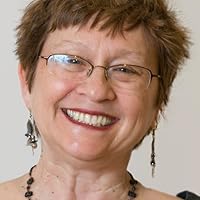
In her first book, which won the L. L. Winship/PEN New England Award, Jane Brox writes of going back to the farm where she grew up, to help her aging father and the troubled brother who works the land with him. She memorably captures the cadences of farm life and the people who sustain it, at a time when both are waning. Jane Brox is also the author of Clearing Land and Five Thousand Days Like This One , the latter of which was a finalist for the National Book Critics Circle Award. She lives in Maine. Winner of the L. L. Winship / PEN New England Award
After years living away, Jane Brox made the decision to return to the family farm of her birth, where her aging father still tended their crops, assisted by her troubled brother and other members of the community. In this striking, widely acclaimed memoir of her reintroduction to the land and its habits, Brox captures the cadences of farm life and those who sustain it, at a time when the viability of both are waning.
Upon winning the prestigious L. L. Winship / PEN New England Award, Here and Nowhere Else was cited for its "loving, precisely written evocation of a New England place and its people . . . [The book is] reminiscent of Thoreau in its exactness and breadth of implication." "A poignant account of return and recommitment, [which] Brox describes crisply yet with great feeling."— Maxine Kumin, The New York Times Book Review
"A strangely joyful book. [Brox] looks hard at what she sees . . . And implicit in the quality of her attention is a plea for patience, for the need to see the thing in the context of the time in which it lives."— Amy Godine, Orion
"Brox subordinates dramas of personal longing and disappointment to the longer, larger story of an ancient vocation playing itself out between the implacabilities of nature [and] the American present . . . [Her] quest suggests one part of Robert Frost—the effort to unite vocation and avocation, to make the fact the sweetest dream that labor knows."— Franklin Burrows, The Southern Review
"This is a book that quietly, insistently speaks to love of land . . . Through Brox's . . . sensitive and powerful language, the reader celebrates but also mourns what seems the inevitable passing of a way of life that [is] rooted in the knowledge of growing things and the secrets of the land."— Daphne Abeel, Harvard Review
JANE BROX is the author of Clearing Land, Five Thousand Days Like This One, a finalist for the National Book Critics Circle Award, and Here and Nowhere Else, which received the L. L. Winship/PEN New England Award. She lives in Maine"
This was such a fantastic palate cleanser after reading Mantel's Wolf Hall. Brox's portrait of her family farm in the Merrimack Valley of Massachusetts is slow and meditative and lovely. I suppose I am somewhat biased in my love for books about people who live close to the land, who observe it, hallow it, grow things in it. Part of what is compelling in this book, however, unlike similar works from the likes of Barbara Kingsolver, is that it reads more as an elegy to Brox's slowly dying family farm than a celebration of an organic lifestyle. Of course the fact that the book was published 15 years ago, before local food movements had become vogue, and when Farm Aid was still in its heyday, may also have something to do with it.
If I have any complaint, it is simply that I wanted more. Brox hints at things that I hope she will take up in her later essays/memoirs: her brother's troubled life, her own desire to write, her mixed feelings about her relationship to the family business. But I must say I was thrilled that I could read this little gem cover-to-cover in only a few hours.
Beautiful memoir! She’s a very poetic writer. I really enjoyed the writing style—she kind of hops from story to story in a not necessarily linear narrative. It’s like if you spent time looking through each window of a house, and by the end you come to a kind of understanding of the family who lives there.
This memoir of a family farm is poignantly beautiful and elegiac. Brox has left her family's farm for the wider world, but returns to help her aging parents and difficult brother. The writing is gorgeous, she has an astute eye for her surroundings. The reader can see, along with the author, that the farm cannot survive, so there's always a tinge of sorrow. Really beautiful.
A sweet story about a family and their generational farm. Reminded me of my family and the ever present talk of what the farm’s future will be. Thanks to the book I will be attempting to make a squash 🥧 this year for Thanksgiving!
First book of a lyrical, low-key trilogy by Jane Brox about her and her family’s life on an orchard/ farm in Massachusetts. 1996 Winner of Pen/ New England book award.
This is the poetically written story of a woman coming back to her family's produce farm (she doesn't call it a "truck farm", but that's what we call them in the midwest) near Lawrence, MA, to help with the farm work and the roadside stand, and how she deals with her aging parents and dysfunctional brother. She draws her portraits of the land, the work, the woods, their old houses, the changing town, and her family history together in a way that is just a pleasure to read.
Beautifully describes my hometown (Dracut, Mass.), which is the same as the author's. I see these farms, woods, streams, and cemeteries every day, so I can attest that her description of the locale is spot-on, giving a poetic touch to the natural glories I so often have taken for granted.
This was more poetic than a novel I suppose.. I wasn't quite in the mood to think, analyze or interpret, although on the surface level it was quite obvious. I was glad it was short.