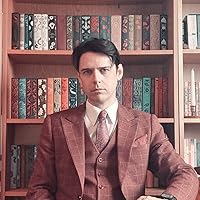
Koushun Takami (高見 広春 Takami Kōshun) is the author of the novel Battle Royale, originally published in Japanese, and later translated into English by Yuji Oniki and published by Viz Media and, later, in an expanded edition by Haika Soru, a division of Viz Media.
Takami was born in Amagasaki, Hyōgo Prefecture near Osaka and grew up in the Kagawa Prefecture of Shikoku. After graduating from Osaka University with a degree in literature, he dropped out of Nihon University's liberal arts correspondence course program. From 1991 to 1996, he worked for the news company Shikoku Shimbun, reporting on various fields including politics, police reports, and economics.
The novel Battle Royale was completed after Takami left the news company. It was rejected in the final round of the literary competition for which it was intended, owing to its controversial content. It went on to become a bestseller when finally released in 1999 and, a year later, was made into a manga and a feature film.
Two of the remaining girl students have catastrophic breaks in their sanities adding to the death and destruction. Very well crafted as the series continues to buzz, but on a side note, surely history has taught us that it is emotional fragile males that struggle more from societal breakdown than women? I look at the recent wars, and all I see are 100,000s of women trying to survive despite societal breakdown, looking to feed their families and support their communities. Just a side note :). This volume continues the better and more compelling final third of this series with a full Four Star, 8 out of 12 rating. At a stage with so few students remaining I have an emotional connection with them. 2026 read
This volume of Battle Royale is about Shuuya facing up to the fact that his ideals of "people won't play if you just reason with them" and that "everyone has a spark of goodness in them" are put to the test. Shuuya is not a strong character because of his fighting skills. He is strong because he chooses NOT to fight, NOT to kill. So it's going to be interesting to see if he can survive the Program and still remain true to himself. This installment is a more meditative tome that others, because Shuuya finally has time to think, and that's not necessarily a good thing.
What does it all mean? He'll have to think about his next move as he makes his way back to Shogo and Noriko, two people he hopes are still alive. The contestant pool is getting awfully small these days.
Este autor se ha empeñado mucho en hacerme sufrir... Shuuya lo encontró y lloramos los dos, la única diferencia es que él pudo abrazar a Shinji y yo no... que desgracia. A ver si Kiriyama no me arrebata mas cosas, en este punto tengo que decir que Kiriyama es un personaje que me gusta pero que odio, me gusta porque su papel como antagonista es impecable, pero lo odio porque pues me quito al Mimura je que contradictorio.
This manga started off really intriguing and with such an interesting concept. But it's getting really tiresome and gratuitous. Mostly the gratuitous part. I'm so tired of unnecessary nudes and panty shots. I'm not against titties, trust me. Far from it, but I have my limits. When action scenes are happening that are supposed to be tense and emotional and the artist feels the need for me to see a girl cowering on the ground or running away from death with her skirts hiked up and her camel toe right in the center of the shot (or sometimes just straight up naked) I'm gonna call it gratuitous.
Also, every time a character cracks under pressure they immediately start acting like an outlast character (or any other horror game that takes place in an insane asylum. Take your pick). That's not how people work, and even if I suspend my disbelief and forget that people have different reactions to things, it still gets really repetitive and boring. I'm sick of seeing people shambling around with drool and snot pouring out of their faces. What an absolute lack of creativity.
At this point the only reason I'm reading is because it's almost over, and I wanna know what happens to the 3 main characters.
This volume was really reflective and introspective, so it felt like there wasn't a lot of new stuff that really happened-- just a lot of discovery and thinking. Not a bad thing, just made it feel like this one wasn't super eventful. Definitely a case of the MC mentally preparing themselves for the final battle to come.
Spoiler text is here for me to remember how the story is split up between volumes:
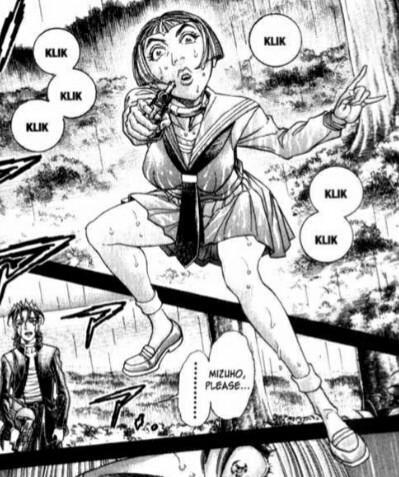
If not for the last chapter there, this would've been another 3.5 rounded down to 3. But with the entirely gratuitous scene of a young woman in the rain in her underwear hallucinating that she's a chosen Madonna or something... no. The best I can muster is 2.
I liked to see a bit more of Mim (even if he was dead). On the other side i didn't quite like to see how sexually or disgusting are graphed the female characters, all except Nori. I don't like her semi princess semi virgin condition.
This manga is not that different from the original Battle Royale novel except for a few minor differences.
It's not perfect but it was awesome.
My feelings for this manga are about the same as the original novel except there is more drama and the characters are fleshed out a bit more.
The story is about a class of 42 junior high students that are transported onto an island where they are placed in this program where the students have to fight to the death and there can only be one winner. Similar to the book, the program has no time limit, however a student has to die within a 24-hour time zone, or the collars explode on all the students and there are no winners. In both scenarios, it forces the students to kill each other and try to survive. The tension from that is still there and you can feel it.
The dystopian theme is strong in the manga as well as the book, but it's slightly overshadowed by the drama of the characters and their own self conflicts.
Now, unlike the novel where some characters don't have much of a backstory, the manga takes it's time to explore the characteristics and backstories of all the students. Granted, some more than others. And it gives a new perspective.
However, this manga is definitely for adults. You have sexual themes and more brutality of the gore and violence the students participate in. If you want a more visual storytelling of the original book and don't mind extra violence, the manga is not bad.
I liked that we got to see that our MC is not invincible in this one. He has been able to stay positive throughout so many traumatic events and now it is all really starting to catch up to him. That his naive plan is falling apart and it's mostly the hardcore players left.bwe are doen to seven after all!
What brings down the rating this one is the handling of the chosen one by god schizofrenia girlie. She's going trough a mental break and yet we have to keep at it with the panty shots and weird fan service. I don't like to see women going trough horrible mental times being sexualized in this way. It unnecessary and gross.
Interesting how every single main girl has been sexualized beyond belief, except for out main girl Noriko who is painted out to be a saint virgin in this regard. It's almost like the mangaka online can show respect of it's the main girlie. Says a lot about them and their views on women.
Not nearly as much death in this volume, but good lord is it emotionally draining. Shu wandering the battlefield, observing the corpses of all of his friends and loved ones and reminiscing over the time they spent together. The emotional toll it takes on him seeps through the pages, the scene where he was hugging Mimura’s dead body made a tear roll from my eye. Beautifully done. The finale is on its way, all of the characters except for the main three and the two sociopaths remain. It’s gonna get bloody.
Sólo quedan 7 personas vivas, y de momento el grupo de Shuuya son los únicos que no quieren jugar. No sé si van a llevar a cabo el plan de Mimura otra vez o tendrán que hacer otra cosa.
En este tomo se hace alusión a enfermedades mentales, y cómo afectan a las víctimas cuando están bajo la constante tensión del Programa, osea si ya de por sí sufren en su día a día imagínate en una situación que su vida corre peligro de verdad. Me gusta que se hable de estos temas, pero he sentido que no han profundizado mucho, nada más estaban repitiendo lo mismo una y otra vez.
This entire review has been hidden because of spoilers.
Aunque el volumen tarda en arrancar y se pierde mucho con la depresión de Shuuya, por suerte logra retomar y continuar siendo un personaje interesante.
Con tan pocos jugadores vivos y tantos capítulos por delante verdaderamente me genera intriga cómo continuará la historia y si la calidad logrará mantenerse como hasta ahora.
This volume was an interesting glimpse into the different ways (organized religion or otherwise) that people try to find meaning in tragedy and its futility. That being said, honoring life and the memory of others shapes us and matters. It was a good reminder that each character was a life. However, literally 0 reason for the fan service for that Christian Science character lol.
pero que buen volumen... definitivamente el manga hace muchísimo mas por los personajes que el libro...un gran capítulo que nos hace querer todavía más a Shuuya
I love the franchise and what the manga brings to the world of the story and how goddam BLOODY it is, like holy Jesus this bitch earns that parental advisory sticker.
El personaje principal acepta lo inevitable, evolucionando lo mínimo y sin renunciar a sus creencias. Aquí el drama no me molesta tanto y el arte es fantástico.
I wanted to read the Battle Royale manga 10 years ago but did not have the necessary employment to fund the expensive volumes. Flash forward to 2015, and the price had only increased as the series became rarer and out of print. I eventually managed to obtain a complete set in good condition on eBay, but was the long wait worth it? Not only is this is the first manga series I will review, but it is also the first I have read, and as such, the format took quite some getting used to. Despite being spread across 15 volumes, the self-contained story, cumulative chapters, and fast reading pace influenced me to review the series as one book. It was originally serialised from 2000 to 2005, based on the 1999 novel of the same name by Koushin Takami, which I haven't read yet. I was however, a fan of the film adaptation, which formed my introduction.
Set in a dystopian future, each year the Japanese government randomly selects a class of high school children and forces them to compete in a survival deathmatch for reality TV known as 'The Program.' The teenagers are equipped with explosive collars that detonate if more than one combatant is left alive at the end of the time limit, randomly assigned weapons, and a map of the area with designated danger zones that change periodically. After a brief prelude which introduces the main players, this year's crop of unlucky teens are kidnapped and sent to a deserted island where all but one will meet a grisly end. The manga does a good job of exploring each of the 42 students and providing them with varied back stories, although most fall under classic stereotypes. The main protagonists are Shuuya Nanahara, a pacifist would-be rock star and his dull love interest, Noriko Nakagawa. Other characters include previous program survivor and hardened combatant, Shogo Kawada, the sensitive kung fu artist, Hiroki Sigumuru, and basketball ace and computer hacker, Shinji Mimura. The two main antagonists are Kazuo Kiriyama, an emotionless killer with brain damage, and the deranged femme fatale, Mitsuko Souma, also a psychopath.
Without revealing too much of the story, which is mostly bouts of action scenes with gratuitous violence and sex, interspersed with melodramatic soul searching and flashbacks, I would like to say a few words on the English adaptation by Keith Giffen, which can be appalling at times. I understand the need to slightly alter things for a translation, but substituting Japanese figures with American equivalents was a step too far. For instance, why on earth would Japanese school children know who Donald Trump and Polyanna are? In a manga of over the top splatter violence, this criticism may appear rather trivial, but it was nonetheless jarring and very ill-advised. (I hope Giffen reads this one day so he can see how ridiculous it was.) My other complaint is that some of the characterisation is utterly bizarre. There is a cross-dressing homosexual, who looks and acts like a 40 year old sleaze queen, yet whom we're supposed to understand is the same age as his teenage classmates. Mitsuko and her constant nudity is also a problem, definitely overstepping the line into full blown hentai every time she makes an appearance. I noticed with suspicion that the perverted volume 8 was noticeably more worn than the other books.
I appreciate that I am no longer the target audience of this series, having arrived at it too late, but I retain a soft spot for the film I loved as a teenager and Taguchi is an astounding illustrator, if a little too disgusting at times. I cringed at the frequent eyeball gouging and finger nail tearing. To try and analyse the manga in terms of anything deeper would be nonsense, yet I'm sure many younger readers have done so. The broad stabs at authoritarian regimes and the cliched Lord of the Flies tropes are of course clumsily present, but the true purpose of the series is to sate the gore lust of teenage boys. I cannot really recommend the series to anybody due to the difficulty in getting hold of a complete set, but I hear the novel is good. As an introduction to manga, I couldn't have wished for anything better, and although I'm not sold on the genre in general, it was nice to vary my pattern of reading weighty classics. Battle Royale has had a huge influence on popular culture, spawning the inferior series of books, The Hunger Games, and inspiring many of Quentin Tarantino's action films. The story can be repetitive and angsty, but the absurdity of the plot and its dynamic illustrations earns it a space on my bookcase.
“Battle Royale” de Kōshun Takami y Masayuki Taguchi es una obra maestra del manga que presenta una historia intensa y provocadora en un entorno distópico. Publicado por primera vez en 1999, el manga es una adaptación del libro homónimo y ha dejado una marca duradera en la cultura pop.
La trama gira en torno a un oscuro y siniestro programa gubernamental llamado “Battle Royale”, que selecciona a una clase de estudiantes de secundaria para participar en un juego mortal. Los estudiantes son transportados a una isla desierta, se les proporciona armas y se les da una misión: luchar hasta la muerte hasta que solo quede un estudiante en pie.
El protagonista, Shuya Nanahara, y sus compañeros de clase se ven atrapados en este juego macabro sin entender completamente sus razones. La historia se sumerge en la psicología de los personajes mientras luchan con la moralidad, la lealtad y la desesperación. La lucha por la supervivencia lleva a relaciones complejas y a decisiones difíciles que desafían la ética y el sentido común.