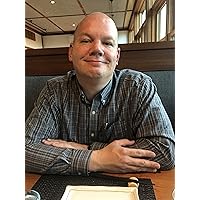
A mixture of memoir and biography, Chasing the Nobelist Fred Reines and the Neutrino tells a deeply human story that appeals both to scientists and non-scientists. Although the book relates to the important discovery of neutrinos, it is more intimately about Fred Reines than the technical details of neutrino physics. Narrated in a fashion to interest and excite the reader, the science presented here is accessible to a broad audience. Coursing through Reines' life, his various challenges and encounters, the book reveals constants of his persona. Reines displayed a sustained consistency as a respected leader, admired by students and colleagues as a fount of big ideas and ambition. A continuing source of inspiration and motivation to others, his most basic consistency was his passion for science. The quest for knowledge about the wondrous universe is a profoundly human endeavor. Fred Reines' life and his unremitting scientific curiosity are emblematic of that truth.
The ghost in question is that fascinating particle, the neutrino - almost undetectable particles that were predicted to exist in the 1930s but not discovered for over 20 years. And Leonard Cole is well placed to document the neutrino's discovery as he is the younger cousin of Fred Reines, one of the pair who delivered clear evidence of the neutrino's existence in 1956.
The particle itself has been well-documented in Frank Close's excellent book Neutrino, however Cole is able to give us far more detail on one of the lesser known of the twentieth century's great physicists. I hadn't realised the quite shocking reality that Reines was only awarded the Nobel Prize in 1995 (long after his coworker, Clyde Cowan had died). It's not just the near-40 year wait, but the real surprise is that other physicists were awarded a Nobel earlier for discovering a second type of neutrino. I don't therefore begrudge Cole's labelling Reines a Nobel Prize winner in his subtitle, though I wish he hadn't used the term Nobelist - if it is a word, it ought not to be.
There's always a danger that a biography by a relative will not stand up well to a critical read. To be honest, I expected getting through this book would be rewarding, but a slog. And on occasion Cole doesn't explain enough of the science or why something that's stated is true. So, for example, we are told that Reines' description of the neutrino was 'the most tiny quantity of reality ever imagined by a human being'. My immediate response to this was to wonder it what sense a neutrino is tinier than a photon - we need a bit more explanatory detail (or even an argument against). Even so, I was pleasantly surprised by the opening 'Beginnings' section, where Cole proved able to tell a good story and keep the reader engaged. For me, though, the best part of the book was the Discovery section. In the end, this is what it's all about. This is where it's important to go beyond an account that presents the scientist as hero, and Cole does well in providing us with a three part story.
Firstly there is now bizarre suggestion of using a nuclear bomb as a source of neutrinos. Cole puts this into the context of the time when bomb enthusiasts were proposing all sorts of applications for nuclear weapons, from propelling spacecraft to civil engineering. Thankfully, this idea was put to one side in place of siting detectors alongside nuclear reactors (or, later, down mines to capture natural neutrinos). These detectors do not pick up the neutrinos themselves, but rather the outcome of their (very infrequent) interaction with other particles. Perhaps most interesting was the second part of the story, when Reines and Cowan produced a 1953 result which they themselves were not really convinced by, yet which was talked up (partly by them) to the extent that it was largely reported in the media as an actual discovery. Finally, with detectors modified to cope with the potential false causes of the 1953 outcome, they would achieve convincing results in 1956.
We then hit the near-inevitable problem of structuring a scientific biography. Reines lived more than 40 years after the discovery and did interesting work, but nothing as significant as that 1956 detection - which in the end is the point of the book. The result can be something of an anticlimactic read, and the experienced scientific biographer will use various tricks to get over this problem. Unfortunately, that doesn't really happen here - so much of what comes in pages 115 to 253 feels a bit of a let down. It's not helped by a structure where Cole devotes whole sections to Cole's artistic interests and views on religion, and to giving detail to his later academic career, which was no doubt inspiring to those who attended his lectures, but not so interesting to the reader following the neutrino story.
One other issue here, which I often seen in books published by academic presses, is the tendency to treat each chapter as a separate document. As a result of this (or just poor editing), there is a lot of repetition. By page 20, for example, I’d already been told several times that the experiment in 1956 confirmed the neutrinos existence and that neutrinos were referred to as being ghostly. It's a bit like watching one of those cheap documentaries on a TV channel with adverts, where they insist on giving you a recap every few minutes. And although I generally enjoyed the opening section, it did try too hard to justify the importance of neutrino research. For example, there's a lot on why we wouldn't exist without neutrinos - but you could say the same thing about practically any common particle or other basic aspect of physics.
Overall, then, interesting insights into Reines' life and work, and particularly good on the discovery itself, but not at the top level of scientific biography writing.
A memoir on the search for and discovery of the Neutrino, a particle with no mass, invisible, and is everywhere, passing through everything. The search for the neutrino is important, as it might give us clues about the creation of the universe and life itself.
The story follows one of the leading scientists behind the neutrino, Fred Reines. This is a biography written by his nephew who interviewed family members and scientific colleagues as well as collected letters and pictures of the scientist and the projects he was involved in.
The story touches on the Manhattan Project and journeys down to a lab built in the deepest gold mine in South Africa and talks about the political interferences there and in general in regards to scientific communities around the world.
This book is written for people who are not physics savvy. I found it interesting to read, and even caught myself reading it late into the night.
I found it interesting how Fred Reines, as well as many scientists in history integrate art in their lives apart from their daily work.
Leonard Cole, Author Chasing The Ghost World Scientific, ISBN 978-123-105-6 Non-Fiction –atoms, subatomic particles, evolution, physics, neutrino physics, bombs, WWII, Nagasaki, Hiroshima 269 pages November 2021 Review Reviewer-Michelle Kaye Malsbury, BSBM, MM
Review
Leonard Cole, author of Chasing The Ghost, has written numerous books and articles, mostly on public policy or science. (2021, back cover) He is an adjunct professor at Rutgers Medical School in New Jersey and also in their Political Science department.
The book opens in the 1960’s in a gold mine in South Africa with Fred Reines representing the United States and Gus Hruschka from South Africa. Both men are brilliant physics professors. They worked together in the depths of this gold mine on subatomic particle research. Seven years prior they found that “On average, a speeding neutrino could pass through a light-year of lead ---- 6 trillion miles thick --- and not be slowed. The miniscule particle is commonly described as elusive.” (2021, p.3) Rather impressive if you ask me.
“Neutrinos come in different forms, sometimes referred to as flavors. Antineutrinos also exist, which are particles of antimatter that correspond to those in ordinary matter. The differences between matter and antimatter particles are based partly on their opposite electrical charges. An electron has a negative charge and its mirrored partner, the positron (an antielectron) has a positive charge. If two such particles collide, they annihilate each other and become photons --- particles of light. Photons carry energy despite having no mass and no charge.” (2021, p.15) Drs. Reines and Cowan had been working on an experiment that would either identify or dismiss the neutrino. In 1956 they detected it existed. This led to Reines getting the Nobel Prize in physics. Well, half the prize to be exact. Martin Perl from Stanford University got the other half of that prize for his discovery of the tau. (2021, p.20) Tau is another elementary particle in the same family as the `neutrino and electron.
Fred and his team of exceptional scientists worked on an atomic test that was code named Trinity (1948) in the desert outside of Alamogordo and Albuguerque, New Mexico where they could effectively monitor it from earth-covered bunkers twenty miles away. Fred worked for days prior to this test to install an instrument that could monitor the impact of the bomb from a variety of distances from ground zero outward. Fred recalls this as being “many times that of the noon-day sun ---a beautiful purple…. It rose to about 40,000 feet and mushroomed out forming a huge grey cloud.” (2021, p.59) It was their hope that this new knowledge would not be used as a destructive force, but instead as a source of energy. This became part of the Atoms for Peace and vis a vis the Atomic Energy Act (1954) that was spearheaded by President Eisenhower. (p.86)
Reines and Cowan parted ways in 1957. Cowan moved on to conduct research at Catholic University. (2021, p.107) Reines went to work for the Case Institute School of Applied Science. At Case Reines sought to identify “natural source” neutrinos. This prospect proved to be more of a challenge than he had expected. Two things needed to be mitigated before this research could effectively progress. He needed to block the unwanted radiation and background activity and devise a way to detect the neutrinos from further away than the closest reactor. Eventually, Reines found and got permission to use part of the Morton Salt mine in Cleveland, Ohio which was three miles deep. The explosions from Reines research loosened the salt faster and it was used to assist in snow removal on the roadways. This facility allowed them to positively identify the neutrino and the muon in its natural state. However, there were presumably trillions more passing through their detector. Could they find another location that would help them capture more neutrinos and get better data?
This book was extremely cerebral and incredibly fascinating for me to read, even as a non-physicist person. I was captivated by their projects and the results of their experiments. I loved it and if you enjoy learning you will too.