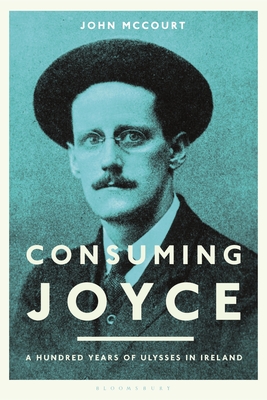
"This book was crying out to be written." The Irish Times "Scandalously readable." Literary Review
James Joyce's relationship with his homeland was a complicated and often vexed one. The publication of his masterwork Ulysses - referred to by The Quarterly Review as an "Odyssey of the sewer" - in 1922 was initially met with indifference and hostility within Ireland. This book tells the full story of the reception of Joyce and his best-known book in the country of his birth for the first time; a reception that evolved over the next hundred years, elevating Joyce from a writer reviled to one revered.
Part reception study, part social history, this book uses the changing interpretations of Ulysses to explore the concurrent religious, social and political changes sweeping Ireland. From initially being a threat to the status quo, Ulysses became a way to market Ireland abroad and a manifesto for a better, more modern, open and tolerant, multi-ethnic country.
Appropriately so, this book was published under an academic imprint; it's a heavily-footnoted look at how James Joyce and Ulysses were accepted (or more often not) in his homeland. I was shocked to learn that, even as I was being taught at college in the mid-1970s that Joyce's work was part of the canon of modern literature, many in Ireland's official circles viewed him (at best) as a nut case or (at worst) a pornographer. I do wish I was a little more well-versed in the nuances of Irish politics before reading this, but it was still eye-opening to me.
An excellent overview of the reception of Ulysses since first publication in book form in 1922 and especially the ways in which Joyce scholarship informed the more recent acceptance and then celebration and even commercialisation of Joyce and Ulysses since the early 2000s. Occasionally tje chapters seem to be stuffed with information about who did what adaptations but it also provides a useful overview of the shifting sands of Joyce scholarship with McCourt not being afraid on occasion to offer his own opinions of writers, academics, politicians and so on. A lively and engaging book.
This book offers an insightful look into how Ulysses was received in Ireland over a century, but at times it leans heavily into academic language that may distance casual readers. While the historical depth is undeniable, I found myself wishing for a more engaging narrative flow. Still, McCourt does a commendable job tracing Joyce’s transformation from a controversial figure to a cultural icon. Recommended for readers who enjoy literary history, though it may feel dense if you're expecting a lighter read.
This is a thoughtful exploration of how Ulysses shaped and reflected Irish society, but it demands patience from the reader. Some sections feel more like academic essays than narrative storytelling. McCourt’s argument about Joyce’s shifting reputation is compelling, yet the delivery can be uneven. I appreciated the ambition of the work, though I think it will resonate more with scholars than general readers.
This book succeeds in presenting Ulysses not just as a novel, but as a cultural force that evolved alongside Ireland itself. McCourt skillfully connects literature with religion, politics, and identity, showing how public opinion shifted over time. While some passages are dense, the overall narrative is engaging and rewarding. A solid recommendation for readers interested in the intersection of literature and national identity.
This is an outstanding work that brings new life to the story of Ulysses in Ireland. McCourt doesn’t just analyze a book he captures a century of cultural evolution. The transformation of Joyce from an outcast to a national treasure is told with clarity and depth. It’s both intellectually stimulating and surprisingly readable. A must-read for anyone interested in literature, history, or Irish culture.
This is one of the most compelling literary histories I’ve read. McCourt captures the tension, resistance, and eventual celebration surrounding Ulysses with precision and insight. The book feels both timely and timeless, offering lessons about art, censorship, and cultural identity. It’s an essential read that I would recommend without hesitation.
Fascinating, Engaging, and Surprisingly Accessible
Despite its scholarly foundation, this book is remarkably engaging. McCourt writes with clarity and purpose, making complex ideas feel approachable. The evolution of Joyce’s reputation is presented in a way that feels almost narrative-driven. It’s a fascinating journey through time, culture, and literature. I couldn’t put it down.
An in-depth look, decade by decade, of the last 100 years of James Joyce's influence in Ireland, and how the world's view of Joyce has changed in those times. This book makes a strong and even-handed case, though the presentation could use just a bit more narrative flair, given the topic.