

What do you think?

Louisiana #5
Lady Vixen
—English High Seas to New Orleans Pirate Havens, 1808—
Outwitting a ruthless plot against her life, Nicole Ashford flees her aristocratic England home on a privateer's ship bound for the luxurious pirate havens of New Orleans.
Yet Nicole’s daring escape has plunged her into even graver peril… as the captive mistress to the notorious high-seas outlaw, Captain Saber. In the night hours, his savage passion makes her a woman. But it is his tender kisses that are plundering her soul.
Nothing can seem to stop what has begun between them. Nothing will satiate the urgent fires of love they seem born to share.
Nothing except Nicole’s cunning and ruthless enemy who refuses to let her go.
Outwitting a ruthless plot against her life, Nicole Ashford flees her aristocratic England home on a privateer's ship bound for the luxurious pirate havens of New Orleans.
Yet Nicole’s daring escape has plunged her into even graver peril… as the captive mistress to the notorious high-seas outlaw, Captain Saber. In the night hours, his savage passion makes her a woman. But it is his tender kisses that are plundering her soul.
Nothing can seem to stop what has begun between them. Nothing will satiate the urgent fires of love they seem born to share.
Nothing except Nicole’s cunning and ruthless enemy who refuses to let her go.
654 pages, Kindle Edition
First published March 1, 1980
About the author
Shirlee Busbee
45 books278 followersShirlee Elaine was born 9 August 1941 in San Jose, California, USA. She was the first daughter of a career naval officer, later she had two sisters and three brothers, they raised traveling the world. She went to the institute in Kentri, Morocco, after which she returned to California and she went to Burbank Bussines College of Santa Rosa, where she received a certificate in 1962.
Shirlee married with Howard Busbee in June 22, 1963. Now, they live in hills of California, where they raise for pleasure Standard Schnauzers, Standardbred horses, and other many animals.
She has worked as a receptionist for the Marin County Title and Abstract Co., as plant supervisor for Fairfield Title Co., and as secretary and drafting technician for the County Parks Department of Fairfield, California, where she met her life-long friend and mentor Rosemary Rogers. Published since 1977, Shirlee Busbee is the proud author of over 18 novels, including seven New York Times bestsellers. With over nine million copies of her books in print, she is the recipient of numerous awards for excellence in writing, including the Romantic Times Reviewers' Choice Award and Affaire de Coeur's Silver and Bronze Pen Awards.
You may write to Shirlee Busbee care of C/O Warner Books, Inc., Time and Life Building, 1271 Avenue of the Americas, New York, NY 10020.
Shirlee married with Howard Busbee in June 22, 1963. Now, they live in hills of California, where they raise for pleasure Standard Schnauzers, Standardbred horses, and other many animals.
She has worked as a receptionist for the Marin County Title and Abstract Co., as plant supervisor for Fairfield Title Co., and as secretary and drafting technician for the County Parks Department of Fairfield, California, where she met her life-long friend and mentor Rosemary Rogers. Published since 1977, Shirlee Busbee is the proud author of over 18 novels, including seven New York Times bestsellers. With over nine million copies of her books in print, she is the recipient of numerous awards for excellence in writing, including the Romantic Times Reviewers' Choice Award and Affaire de Coeur's Silver and Bronze Pen Awards.
You may write to Shirlee Busbee care of C/O Warner Books, Inc., Time and Life Building, 1271 Avenue of the Americas, New York, NY 10020.
Ratings & Reviews
Friends & Following
Create a free account to discover what your friends think of this book!
Community Reviews
Displaying 1 - 30 of 93 reviews

September 14, 2021
Edit: The below review is of the original edition of this book published in the 80s. l recently purchased the republished Kindle edition on Amazon and there are major changes. This is an epic romance set in parts (prologue, part I, part II, etc) and it seems Shirlee edited her book by switching up parts and changing the order of the book. Putting Captain Saber's POV right after chapter 4, when it was originally later does not do the narrative any favors IMhO. I don't want to go into further detail because it would spoil readers. I didn't read further in the book since this change in structure was so disorienting to me, but the author has also admitted to editing her books to slightly cut back on the amount of violence they contain. While I have the utmost respect for the author, admire her, loved this book (the original edition), and understand the pressure to appease the masses who are easily offended, if you're a bodice ripper lover I would suggest reading the original copy. While not on retailers, it can be found online free at Open Library/Archive.org: https://archive.org/details/ladyvixen...
~~~~~
This book had everything. Above all adventure & love, which was what I was craving in a romance ♡ I want to try to write a proper, cohesive review later. This book feels special to me since it's the first book by Shirlee Busbee I've read, and I've recently had the lovely experience of communicating with her. One day I might come back to this review and share a little bit of what she had to say about writing historical romances as well as her peers, who were also her friends, such as Rosemary Rogers.
Favorite Excerpts:
~~~~~
This book had everything. Above all adventure & love, which was what I was craving in a romance ♡ I want to try to write a proper, cohesive review later. This book feels special to me since it's the first book by Shirlee Busbee I've read, and I've recently had the lovely experience of communicating with her. One day I might come back to this review and share a little bit of what she had to say about writing historical romances as well as her peers, who were also her friends, such as Rosemary Rogers.
Favorite Excerpts:

January 23, 2013
Oh, my friends, this is a good one. This is a meaty ole bodice ripper with history, espionage and love on the high seas! I normally don't LOVE the whole "woman disguised as a man" thing. It seems too unbelievable to me. But this works. Maybe because our heroine, Nicole, is prepubescent when she boards our hero, Captain Saber's, ship. I don't know, maybe it's still completely unbelievable that she could pull off that guise on a ship with 40 plus lonely men when she reaches 18...especially because she is a great beauty. I think I just loved Captain Saber (AKA Christopher Saxon) so much.
What is there to say that hasn't been said? This is clearly a well written novel full of historical intrigue! The locales are vivid, from bermuda, to New Orleans, to London. Ms Busbee can write a sexy (never smutty) romance. Nicole was cool, but Christopher Saxon will go down as one of my favorite heros. He was a jealous, controlling, horn-ball jerk. My kinda (fictional) guy.
What is there to say that hasn't been said? This is clearly a well written novel full of historical intrigue! The locales are vivid, from bermuda, to New Orleans, to London. Ms Busbee can write a sexy (never smutty) romance. Nicole was cool, but Christopher Saxon will go down as one of my favorite heros. He was a jealous, controlling, horn-ball jerk. My kinda (fictional) guy.

November 10, 2011
Me after reading Lady Vixen:

I'm really disappointed by this book. After wanting to read it for like 3 years it just I thought I'd like this more than I did.
I mean, it was recommended so many times that I believed it would be good but it really wasn't my cup of cup....

I'm all for a love/hate relationship but it's a 500 odd paged book and they basically fought til the bitter end. I became bored and had to force myself to finish it.
I mean it was good until you find out that Christopher had slept with Nick's mother before-obviously he was manipulated etc but still really put me off.

Christopher, though definitely brooding and totally alpha male spent most of his time hating Nick for her mother's actions. Honestly, he acted like a spoilt child. Another thing I didn't like is that he was obviously in love with Nick(and even though they weren't in any sort of steady relationship with him avoiding her all the time) but still went around sleeping with other woman and I absolutely HATE and I mean HATE when the hero/heroine sleeps with someone after they've been together. I mean, What's the point in that happening in a book where the main focus is the romance between the H/h? RIDDLE ME THAT, ROMANCE WRITERS?! Why? What's the point even? I avoid those sort of books like the plague and unfortunately there was no warning this time.
It annoys the living hell out of me.
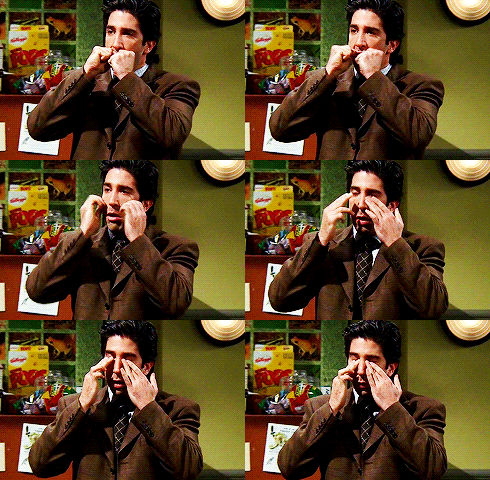
So, by the end of the book I was like:


I'm really disappointed by this book. After wanting to read it for like 3 years it just I thought I'd like this more than I did.
I mean, it was recommended so many times that I believed it would be good but it really wasn't my cup of cup....
I'm all for a love/hate relationship but it's a 500 odd paged book and they basically fought til the bitter end. I became bored and had to force myself to finish it.
I mean it was good until you find out that Christopher had slept with Nick's mother before-obviously he was manipulated etc but still really put me off.
Christopher, though definitely brooding and totally alpha male spent most of his time hating Nick for her mother's actions. Honestly, he acted like a spoilt child. Another thing I didn't like is that he was obviously in love with Nick(and even though they weren't in any sort of steady relationship with him avoiding her all the time) but still went around sleeping with other woman and I absolutely HATE and I mean HATE when the hero/heroine sleeps with someone after they've been together. I mean, What's the point in that happening in a book where the main focus is the romance between the H/h? RIDDLE ME THAT, ROMANCE WRITERS?! Why? What's the point even? I avoid those sort of books like the plague and unfortunately there was no warning this time.
It annoys the living hell out of me.
So, by the end of the book I was like:

June 29, 2014
Def one of her best books.

June 12, 2017
It was long time ago i read any book by Busbee,and i have planned to finish this "Louisiana" series.I read "Decesive not my Heart",The Tiger Lily",Gypsy lady" and "Each time we Love".
As all of this books,"Lady Vixen" were filled with a long journey filled with entartainment,lod of angsty and passionate romance,and a Hero and Heroine that stubbornly fought against each other like dangerous thunders.
. His mouth left her lips, traveling with a trail of fire down her neck to her breast, and breathlessly Nicole whispered, "Don't, please, Christopher, don't do this to me."
He stopped and stared up at her, beguiled and enchanted by the beautiful features so near him. "Stop?" he muttered thickly. "I cannot. You say you do not want me. But you lie, Nicole, you have always lied. If you did not want me, this would not happen."
And i love every bit of it...
The heroine in this story,the beautiful Nicole got through very hard and dark times,even losing her parents and beloved twins in such a young age.Her spirit and temperal character made me love her,and i desperately wanted her to find peace in her love to the Hero.
The Hero,Captain Saber are like all of the "Louisiana" Heroes.He is cold-blooded,arrogant,undeniably sexy and very cruel to those who will ever betray him.A great betrayal from past haunts him and have made him not to trust anyone.
When he at least admits to himself that he actually loves her! i really cried.Cuz his admission was so beautiful and he was so afraid of her mockery,of her laughing and taunting him about his love for her...but still,he never gave up for her.
It was really great to meet Jason Savage and Catherine Savage from "Gypsy Lady" in this book,i had missed them.
WARNING:There are rape-scene involved.!
January 2, 2013
Don't read! What a waste, I wish I got those 4 hours back. The couple constantly fought like two squabbling little children at every possible misunderstanding, even up til the very last, 500 something page. How I regret losing those hours. This had all the cons of the old school romances, such as annoying 'spunky' heroine who went off at the hero for everything little thing, rapist hero who also acts like a spoiled child, and tons of boring detail about the war of 1812 which I could give a rat's arse about. Save your time and money for better romances!

February 25, 2012
A Privateer Love Story I could not put down! A Keeper!
I could not put this one down and highly recommend it. It's going on my Best Pirate and Privateer Romances List and my Best American Patriotic Romances list. And it’s a keeper, too.
Set in England during the years 1808-1814, this is one of those rare and wonderful love stories that sweeps you away to another time and place where you are caught up in the lives of people whose actions will affect not only their own and others' lives but America and England during the War of 1812. Deception and treachery born years ago lead to revenge and then to heartache. Busbee uses real characters, such as the pirate Jean Lafitte, to bring realism to her story as she seamlessly weaves history into a compelling tale. It's what I call a "dense" historical: one where the writing is so complex and so tight you're getting double the story you'd expect in the 538 pages.
Young Nicole Ashford led an idyllic life in Surrey with her wealthy parents and her twin brother until a boating accident one summer took them from her. Made the ward of an uncaring and barely related aunt and uncle who only want her fortune, and learning of their plans to marry her off to their ne'er-do-well son, at 13 Nicole dons the disguise of a young boy and runs away to sea as the cabin boy for an American privateer, Captain Saber.
For 5 years, Nicole sails with him as a boy, Saber paying her little attention. Then, when she is 18, Saber observes her swimming naked on a tropical beach and decides he wants her for his mistress. He bides his time and when Nicole and a seaman (who is really a British spy) decide to destroy English code books Saber has captured, they are caught. Using the life of the English seaman as a bargaining chip, Saber forces Nicole to become his mistress, until the American on a mission to spy for his new country decides to sail home, resuming his identity as Christopher Saxon, grandson of a baron.
And so begins a complex, worthy tale of adventure, rich in history (both England's and America's) and a love that could not be denied.
I could not put this one down and highly recommend it. It's going on my Best Pirate and Privateer Romances List and my Best American Patriotic Romances list. And it’s a keeper, too.
Set in England during the years 1808-1814, this is one of those rare and wonderful love stories that sweeps you away to another time and place where you are caught up in the lives of people whose actions will affect not only their own and others' lives but America and England during the War of 1812. Deception and treachery born years ago lead to revenge and then to heartache. Busbee uses real characters, such as the pirate Jean Lafitte, to bring realism to her story as she seamlessly weaves history into a compelling tale. It's what I call a "dense" historical: one where the writing is so complex and so tight you're getting double the story you'd expect in the 538 pages.
Young Nicole Ashford led an idyllic life in Surrey with her wealthy parents and her twin brother until a boating accident one summer took them from her. Made the ward of an uncaring and barely related aunt and uncle who only want her fortune, and learning of their plans to marry her off to their ne'er-do-well son, at 13 Nicole dons the disguise of a young boy and runs away to sea as the cabin boy for an American privateer, Captain Saber.
For 5 years, Nicole sails with him as a boy, Saber paying her little attention. Then, when she is 18, Saber observes her swimming naked on a tropical beach and decides he wants her for his mistress. He bides his time and when Nicole and a seaman (who is really a British spy) decide to destroy English code books Saber has captured, they are caught. Using the life of the English seaman as a bargaining chip, Saber forces Nicole to become his mistress, until the American on a mission to spy for his new country decides to sail home, resuming his identity as Christopher Saxon, grandson of a baron.
And so begins a complex, worthy tale of adventure, rich in history (both England's and America's) and a love that could not be denied.

April 27, 2023
Este libro al principio me estaba gustando pero a mitad de libro me saturo tanto tira y afloja y la narración de los acontecimientos históricos que fue la guerra entre Norteamérica e Inglaterra me pareció excesiva es verdad que a mí me gusta la historia y que se aporten datos históricos, pero esta novela a veces tenía más política de la época que historia de amor y hacia la mitad del libro no pasa por mucho tiempo nada entre los protas y eso me aburrió soberanamente, luego las escenas de sexo están muy bien logradas pero son muy espaciadas y aunque al principio puede considerarse un bodice rippers, los dos protagonistas son tercos y temperamentales y en vez de decirse que se aman se pasan casi toda la novela insultandose, pensándo lo peor del otro y acostándose porque aunque la protagonista de boquilla diga que no en el fondo lo provoca adrede para que acaben en la cama porque ella tampoco es una perilla en dulce, así que por esa parte opino que son los dos unos tercos obstinados y que se merecían en uno al otro y bueno hasta supuestamente el epílogo se pasan a la brecha hasta casi la última hoja y el ni siquiera le promete que va a cambiar y la autora da entender que llegarán momentos tormentosos pero que la protagonista no cambiaría esa vida por un de tranquilidad.
De esta autora he leído la rosa de España que me encanto pero me gustó mucho más que está que me pareció eterna y con muchos datos históricos aunque no la considero una mala novela simplemente no estoy acostumbrada a novelas tan antiguas y tan lentas en su desarrollo pero está novela es del año 1980 y por lo tanto se entiende la forma de escribir más descriptiva y con personajes más temperamentales que no hablan las cosas entre ellos y se la pasan a la brecha muy propio de la época que está escrita en fin le doy 4 estrellas porque me parece una buena historia y un clásico de la novela romántica aunque por momentos se me hizo eterna por lo ya comentado.
Pd: perdonar las faltas de ortografía la tablet me va mal
De esta autora he leído la rosa de España que me encanto pero me gustó mucho más que está que me pareció eterna y con muchos datos históricos aunque no la considero una mala novela simplemente no estoy acostumbrada a novelas tan antiguas y tan lentas en su desarrollo pero está novela es del año 1980 y por lo tanto se entiende la forma de escribir más descriptiva y con personajes más temperamentales que no hablan las cosas entre ellos y se la pasan a la brecha muy propio de la época que está escrita en fin le doy 4 estrellas porque me parece una buena historia y un clásico de la novela romántica aunque por momentos se me hizo eterna por lo ya comentado.
Pd: perdonar las faltas de ortografía la tablet me va mal
This entire review has been hidden because of spoilers.

February 19, 2017
Another one I read bc it had my favorite cross-dressing trope, but I was left less than satisfied. I couldn't warm up to Nicole. First, she liked to lie around naked while she was still undercover as a boy, even in the presence of a male friend who, as far as I know, wasn't gay so I couldn't understand why she thought being nude around him was totally normal. Particularly as she witnessed another woman who was discovered on the ship being punished by becoming the ship's whore. Yet Nicole treated the risk of discovery like nothing.
Secondly, she was way too prone to violence. The day her uncle came by, he hit her in the face so she slugged him back, twice. I had no problem with this. However, when Christopher came around and annoyed her, she then proceed to slap the hell out of his face. He annoyed her again. She hit him again. It was like her first reaction to any provocation she couldn't answer was to smack Christopher in the face as hard as she could. She slapped him so many times throughout the book that I found her unlikable. Was the proclivity to violence supposed to prove she was a spitfire? He wasn't much better: he raped her, hit her once, cracked her wrist (she was trying to kill him at the time, so okay), but at least after a point he stopped treating her roughly and began to only be protective.
Moreover, I was bored by all the spying and war talk, to be honest. Sometimes historicals can be fascinating with their details and realistic elements, but in this book I found those parts incredibly dull and just detracted from the romance, as Christopher seemed to easily forget Nicole's existence for long periods of time as he focused on his missions.
Secondly, she was way too prone to violence. The day her uncle came by, he hit her in the face so she slugged him back, twice. I had no problem with this. However, when Christopher came around and annoyed her, she then proceed to slap the hell out of his face. He annoyed her again. She hit him again. It was like her first reaction to any provocation she couldn't answer was to smack Christopher in the face as hard as she could. She slapped him so many times throughout the book that I found her unlikable. Was the proclivity to violence supposed to prove she was a spitfire? He wasn't much better: he raped her, hit her once, cracked her wrist (she was trying to kill him at the time, so okay), but at least after a point he stopped treating her roughly and began to only be protective.
Moreover, I was bored by all the spying and war talk, to be honest. Sometimes historicals can be fascinating with their details and realistic elements, but in this book I found those parts incredibly dull and just detracted from the romance, as Christopher seemed to easily forget Nicole's existence for long periods of time as he focused on his missions.

November 27, 2012
Historical accuracy is always welcome in a bodice ripper but the way it is executed made reading the first hundred or so pages extremely dry. There is too much set-up and internal development and not enough of the promised passion, banter, and adventure. I hate having to give up on a book but it was getting to the point where I put off reading it.

July 11, 2021
After the death of her family, Nicole Ashford, left at the mercy of her greedy relatives, runs away to live as a boy aboard a privateering ship. But when Captain Sabre discovers her disguise, they are swept up in a whirlwind of adventure and romance.
This is a pretty standard fare bodice ripper, with a vivacious heroine and emotionally constipated hero. I enjoyed the back and forth between the leads and their various travails, and liked that the side characters were fleshed out. However, I tired fairly quickly of the misunderstandings and the spy B-plot.
This is a pretty standard fare bodice ripper, with a vivacious heroine and emotionally constipated hero. I enjoyed the back and forth between the leads and their various travails, and liked that the side characters were fleshed out. However, I tired fairly quickly of the misunderstandings and the spy B-plot.

August 8, 2015
2.5 stars
The book is overly long. And I didn't feel the main characters actually loved eachother. They fought like cat and dog from the beginning till the end and then boom, there is an insipid exchange of I Love Yous and that's that.
This book made me feel like the relationship between the protagonists was very much based on Lust, and only Lust.
The book is overly long. And I didn't feel the main characters actually loved eachother. They fought like cat and dog from the beginning till the end and then boom, there is an insipid exchange of I Love Yous and that's that.
This book made me feel like the relationship between the protagonists was very much based on Lust, and only Lust.

March 20, 2022
Ya lo resumí en mi blog, «Old skool, con eso lo digo todo».
La parte buena es que intenta reconstruir con algo de realismo un interesante episodio de principios del siglo XIX, la guerra anglo-estadounidense en plena época napoleónica (1812-1815). Y tiene una subtrama de espionaje que engancha.
Pero... Se nota que es de 1980, sobre todo, en Christopher, ese protagonista masculino impresentable y violento. Nicole es más tu prototípica muchacha pizpireta y aventurera, un poco atolondrada, a veces con violentos arrebatos de ira, pero de buen corazón.
Es una antigualla de la época en que la violación formaba parte del cortejo. No por casualidad se llamaban bodice rippers. Pero este se pasa tres pueblos. Consentimiento cero, agresión hasta el punto de romperla un hueso... En fin, allá tú. Solo recomendaría su lectura si te interesa hacer arqueología romántica.
La parte buena es que intenta reconstruir con algo de realismo un interesante episodio de principios del siglo XIX, la guerra anglo-estadounidense en plena época napoleónica (1812-1815). Y tiene una subtrama de espionaje que engancha.
Pero... Se nota que es de 1980, sobre todo, en Christopher, ese protagonista masculino impresentable y violento. Nicole es más tu prototípica muchacha pizpireta y aventurera, un poco atolondrada, a veces con violentos arrebatos de ira, pero de buen corazón.
Es una antigualla de la época en que la violación formaba parte del cortejo. No por casualidad se llamaban bodice rippers. Pero este se pasa tres pueblos. Consentimiento cero, agresión hasta el punto de romperla un hueso... En fin, allá tú. Solo recomendaría su lectura si te interesa hacer arqueología romántica.

September 8, 2015
Haré una reseña como dios manda diciendo lo que hay que decir sobre este libro, pero para que quede claro: este libro aprovecha una narración de "época" para justificar maltrato, violaciones, golpes, humillación y machismo a raudales. Por muy bonito que lo pongan y muy bien que termine, esto no hay por dónde cogerlo.
Y lo que es peor, es un libro reeditado mil veces, vendido otras tantas y encima está en un montón de listas de "mejores novelas románticas". O sea no. Hay que ser un poco más crítico cuando uno lee. Odio a Grey, pero Anastasia sabe dónde se mete y él nunca abusa de ella. Pero aquí, no hay BDSM ni nada por el estilo, es sencillamente un libro en que un hombre trata a una mujer como un trapo. Sin peros.
No le pongo un 0 porque no puedo.
Y lo que es peor, es un libro reeditado mil veces, vendido otras tantas y encima está en un montón de listas de "mejores novelas románticas". O sea no. Hay que ser un poco más crítico cuando uno lee. Odio a Grey, pero Anastasia sabe dónde se mete y él nunca abusa de ella. Pero aquí, no hay BDSM ni nada por el estilo, es sencillamente un libro en que un hombre trata a una mujer como un trapo. Sin peros.
No le pongo un 0 porque no puedo.

June 5, 2012
Overly frustrating and very disappointing. For as long as this book was, I am disappointed that Nicole and Christopher never reached a true understanding until the last damn page of the book. After all those pages it's sad for me to look back and realize that there was never a part where we got a break from all of the BS. Add to that all of the over desc narr re: War of 1812 and I'm mad at myself for not flouncing. I guess held on and would have liked the story more if we would have had a longer time with NxC happy. It was like hate hate hate times a thousand and then a little blip of love at the end with occasional dusting of like here and there.

June 28, 2009
Never re-read this (self note)
The H's first love was the heroines MOTHER. He’s awful to the h, because she reminds him of her mother, who broke his heart when he was a boy. Yes. He learnt all his sexy moves from HER MOTHER!
yuck!
I mustve been drunk when I read this to give it 4 stars.
The H's first love was the heroines MOTHER. He’s awful to the h, because she reminds him of her mother, who broke his heart when he was a boy. Yes. He learnt all his sexy moves from HER MOTHER!
yuck!
I mustve been drunk when I read this to give it 4 stars.

December 7, 2018
4.5 stars. Excellent story, with some really great and well developed characters and a good amount of history thrown in, exactly what I look for in a well done historical romance. A tale that crossed countries, had a lot of adventure, and of course a spicy romance. A book I would read again!

February 23, 2020
It was an interesting historical fiction enormously spoilt by 'bodice ripper' romance.
Starting with positive points, the tension between the USA and Britain in the beginning of XIX century was thrilling, New Orleans, privateers, Jean Lafitte.
And like Karla also pointed out the secondary characters (Lord Saxon, Letitia Eggleston, Lady Regina Darby, Jason Savage, Allen Ballard, Robert Saxon, Jean Lafitte, Higgins) were much more fascinating than the main two.
But there were, unfortunately, Nicole and Christopher and their awful romance. So-called 'bodice ripper' romance isn't my favourite genre, nonetheless, I could have forgiven it in a smaller dose and in a shorter book. Here it was simply horrible. All those: 'yearning bodies', 'stormy gazes', 'painful furies' and, let's face it, sexual harassment - I kept asking myself: why? Another example: at some points, Nicole hid her emotion, a few pages later it was said that she wasn't able to hide them, and there was no reason for such changes, in other words, sometimes she was an innocent girl, sometimes she was a strong, calculating woman - according to what in a scene was more convenient. Why was it necessary to create such a love story? Why Shirlee Busbee hadn't written it in a different way?
Reading other parts of the novel I saw she knew how to write interestingly, so: why?
I am a bit surprised that I did finish it. Nicole and Christopher did all they could to discourage me.
[1 star for a romance, 4 stars for the rest]
Starting with positive points, the tension between the USA and Britain in the beginning of XIX century was thrilling, New Orleans, privateers, Jean Lafitte.
And like Karla also pointed out the secondary characters (Lord Saxon, Letitia Eggleston, Lady Regina Darby, Jason Savage, Allen Ballard, Robert Saxon, Jean Lafitte, Higgins) were much more fascinating than the main two.
But there were, unfortunately, Nicole and Christopher and their awful romance. So-called 'bodice ripper' romance isn't my favourite genre, nonetheless, I could have forgiven it in a smaller dose and in a shorter book. Here it was simply horrible. All those: 'yearning bodies', 'stormy gazes', 'painful furies' and, let's face it, sexual harassment - I kept asking myself: why? Another example: at some points, Nicole hid her emotion, a few pages later it was said that she wasn't able to hide them, and there was no reason for such changes, in other words, sometimes she was an innocent girl, sometimes she was a strong, calculating woman - according to what in a scene was more convenient. Why was it necessary to create such a love story? Why Shirlee Busbee hadn't written it in a different way?
Reading other parts of the novel I saw she knew how to write interestingly, so: why?
I am a bit surprised that I did finish it. Nicole and Christopher did all they could to discourage me.
[1 star for a romance, 4 stars for the rest]

May 15, 2022
אל הספר הזה הגעתי כי הוא של שירלי באסבי שכתבה רומן רומנטי שמאד אהבתי כנערה ''הורד הספרדי".
הספר הזה נראה עם שטנץ דומה, כך שאמרתי לעצמי "ננסה" .
וכמו שחשבתי השטנץ אכן מאוד מאד דומה .
אני משתדלת לשים את הקריאה הביקורתית בצד, כי אין סיכוי שספר כזה וגיבור שמעוצב ככה היו מחליקים לקוראים היום בגרון, אבל כאמור זו נוסטלגיה והיא מהנה על אף שהגיבור הוא חתיכת דוש, ובתכלס אם אחת הנשים שהוא פגע בהם בסיפור היתה רוצחת אותו, זה בהחלט היה סיום הולם מבחינתי !
הספר הזה נראה עם שטנץ דומה, כך שאמרתי לעצמי "ננסה" .
וכמו שחשבתי השטנץ אכן מאוד מאד דומה .
אני משתדלת לשים את הקריאה הביקורתית בצד, כי אין סיכוי שספר כזה וגיבור שמעוצב ככה היו מחליקים לקוראים היום בגרון, אבל כאמור זו נוסטלגיה והיא מהנה על אף שהגיבור הוא חתיכת דוש, ובתכלס אם אחת הנשים שהוא פגע בהם בסיפור היתה רוצחת אותו, זה בהחלט היה סיום הולם מבחינתי !
December 8, 2020
It was a beginning between them. The beginning of something so fragile that the merest breath could destroy it, and only the coming months, and perhaps even years, would tell if what was between them now could grow and gain strength, flourish and take root, until not even death itself could destroy it.
This book was passionate and shined with glory.
Okay yeah maybe I am exaggerating.
But still.
The main characters felt real in their hate and denial of one another. You couldn’t help but feel for the both of them. Though the constant romance of hatred felt a little worn out after a while.
The story took place in 1813 between the war with the US and England. Our heroine Nicole battles with her fiery temper between her love for the hero Christopher.
Also, the past that Christopher has with Nicole’s mother prevents him for full out loving her.
Full of drama and tension, I felt for Nicole and her battle to trust her heart. By far, she is my favorite character I ever came across when it comes to female protagonists (asides from Anna in Evergreen .)
She was brave and strong, full of flaws. Unlike most whiny heroines, she was angry and always on the urge to fight back. I rooted for her, which you often always want to do for the main characters. And that’s a good thing.
This book was passionate and shined with glory.
Okay yeah maybe I am exaggerating.
But still.
The main characters felt real in their hate and denial of one another. You couldn’t help but feel for the both of them. Though the constant romance of hatred felt a little worn out after a while.
The story took place in 1813 between the war with the US and England. Our heroine Nicole battles with her fiery temper between her love for the hero Christopher.
Also, the past that Christopher has with Nicole’s mother prevents him for full out loving her.
Full of drama and tension, I felt for Nicole and her battle to trust her heart. By far, she is my favorite character I ever came across when it comes to female protagonists (asides from Anna in Evergreen .)
She was brave and strong, full of flaws. Unlike most whiny heroines, she was angry and always on the urge to fight back. I rooted for her, which you often always want to do for the main characters. And that’s a good thing.

January 14, 2012
Lo leí porque por ahi tenia críticas de 10, pero menudo chasco! Es largooo, aburrido con comentarios sobre la guerra...Mueren sus padres, ella queda con unos tios malos, el va a su pueblo buscando marineros, se viste de niño con 10 años y se va con el. Es su grumete durante 5 años y el no se da cuenta que es una chica. Luego un dia ella bañandose en una playa, uno de los marineros Allen que es un espia de Inglaterra la descubre y se hacen amigos. Luego el capitan Sable la descubre con el y piensa que son amantes y ellos intentan robarle unos codigos de la armada inglesa y el los atrapa. A el lo encarcela y a ella la toma de amante, luego se entera que ella es la hija de una ex amante y como necesita espiar a los ingleses, vuelve a Inglaterra con ella y la presenta en sociedad...Bueno, luego de mil vueltas sin sentido el se da cuenta que se enamoro de ella pero ni así es listo. Es un idiotaaa

May 31, 2018
He leído varias historia de Busbee y éste es el tipo de trama que más me molesta: Christopher pudo haber tenido todas las desgracias del universo pero se las hace pagar a la persona equivocada; y Nicole padece un síndrome de mujer golpeada galopante. Honestamente cansa un poco que estén peleados 499 páginas de las 500 que tiene la historia; que las únicas veces en que no pelean es porque están teniendo sexo y da un poco de asquito que él haya tenido que ver con la madre de ella. Pero cuando se están tirando de las greñas el uno con la otra, logran ser una pareja hermosa y su romance puede llegar incluso a convencer. Me gustaría decir que esta historia es pura ficción pero tiene mucha más realidad de las que nos querríamos dar cuenta. Y aunque molesta saber que se sigue imprimiendo, en lo personal molesta más la idea de que hubo alguna época en que este tipo de historias se consideraba "romántica".
May 15, 2011
This one is one of my all time favourites that I read when I was eighteen and have re-read many times over since. Christopher is just so your typical alpha male... but times 10! There were a few scenes at the beginning that involved him taking the heroine Nicole by force but but fot some reason this didn't seem to bother me all that much, and as the story carried on and they began to develop their feelings towards eachother it turned out to be one of the best romances I've read. It wasn't full of too many sappy scenes and when Christopher finally admittted his love for her, he didn't automatically change into her lap dog on a leash, he still had that sexy arrogance that we all love so much. Absolutely awesome.

April 14, 2012
Wow, this book was long! Over 500 pages of small print. But very good. Although sometimes Christopher and Nicole were ridiculously stubborn at times, there were lots of twists and turns to keep the story going. I always love an historical that has the interesting parts of the past in it, not the boring stuff (like books that go into detail about the mundane everyday tasks back then). The Battle of New Orleans was only glanced over, but there are other books that work it into the story better and make it interesting. I wonder what Jean Lafitte and other famous pirates would have thought had they known that they'd be depicted in numerous historical romances someday.

February 4, 2011
I really need to re-read this book as the ★★★★★ rating is based on a long-ago read. Alas, I don't know where my copy is. I
do
remember that the memory of this book kept me buying SB's books for years...even after her publishing lull...hoping to recapture the magic of this one. None ever did. Then, maybe I just like a good swashbuckler.
Warning: This book is a bodice-ripper and the hero is definitely a pretty strongbastard alpha male. But back in the day it made my eyebrows rise and my pulse pound.
Warning: This book is a bodice-ripper and the hero is definitely a pretty strong

November 2, 2024
По спомен отпреди доста време, тук беше бъкано с най-омразния ми мотив - несекващи недоразумения плюс несекващо тъпо и нелогично упорство на мацката, което през 80-те в любовните романи се е пласирало като “независимост”, и все още се пласира в тях и сега - но, уви, без симпатичния пиратски фон.

February 3, 2021
This is maybe the most retro romance I have ever read, and so kind of represents the positives and negatives of the era.
In the pre-internet age, many of the authors who wrote historical romance were kind of massive history nerds who clearly spent a lot of time doing research and wanted to share that with their readers (I don’t think this sensibility is entirely gone from modern historical romance-Sherry Thomas is one author who springs to mind-but in general modern authors seem less interested in the history), and Miss Busbee has clearly done a lot of research about the events leading up to the Battle of New Orleans, and more generally about the city during the period. And it’s super interesting and made me want to read some actual history books.
But part of the historical realities of New Orleans during that period is the brutal and evil practice of slavery. The hero is a plantation owner and in this period that invariably means slave owner. (Sidebar: I found this a really odd choice, since it basically has no impact on the story, except, I assume, to explain his fabulous wealth, except he’s a freaking pirate so isn’t fabulous wealth just part of the trope?) Miss Busbee tries to distract from this by telling a story about how the hero and his friend saw a slave who was going to be sold for disobedience and were so horrified that they pooled their ressources to buy the guy and immediately set him free, so now he works for the hero as his butler. Andrew Jackson also has a cameo, which is mostly about what a great and noble leader he was, which... sure. While this might be more indicative of the American condition than any particular authorial failing, Miss Busbee is never really able to reconcile the egalitarian and democratic ideals the hero purports to defend with the reality of America as a society based in violence, slavery, and the exploitation of black people, First Nations, and women.
One thing I love about retro romances is that they have a kind of intensity that isn’t really en vogue anymore; everything is very heightened and dramatic. Emotions move from one extreme to the other in the blink of an eye. Everyone is either supernaturally good looking or absurdly ugly; nobody’s eyes are green or brown, they’re emerald or molten chocolate. While this is entertaining and kind of part of the charm, the constant repetition of the physical perfection of the leads, especially the heroine, gets a bit irritating; her body is alway slender, ripe, or feminine; her hair is never hair, it’s ‘sable fire’; her eyes are topaz, and so on. Ditto for the hero.
The gender dynamics are very typical of this era of romance novels. They’re bad, and in the real world would probably be considered abusive, but they’re also very par for the course.
One thing that I really liked that I wasn’t expecting was the length. Lady Vixen is a little under 550 pages, making it easily one of the longest pure romance novels I’ve read. And while this does mean it’s not quite as fast a read, the plot and characters have a room to breathe that I’ve often found lacking in romance novels; plot lines felt fully fleshed-out and secondary characters who might only get a sub clause to introduce them got to become well-developed people rather than narrative appendages. I didn’t find that it dragged at any point, but if you don’t find Busbee’a historical digressions interesting you might find differently.
In the pre-internet age, many of the authors who wrote historical romance were kind of massive history nerds who clearly spent a lot of time doing research and wanted to share that with their readers (I don’t think this sensibility is entirely gone from modern historical romance-Sherry Thomas is one author who springs to mind-but in general modern authors seem less interested in the history), and Miss Busbee has clearly done a lot of research about the events leading up to the Battle of New Orleans, and more generally about the city during the period. And it’s super interesting and made me want to read some actual history books.
But part of the historical realities of New Orleans during that period is the brutal and evil practice of slavery. The hero is a plantation owner and in this period that invariably means slave owner. (Sidebar: I found this a really odd choice, since it basically has no impact on the story, except, I assume, to explain his fabulous wealth, except he’s a freaking pirate so isn’t fabulous wealth just part of the trope?) Miss Busbee tries to distract from this by telling a story about how the hero and his friend saw a slave who was going to be sold for disobedience and were so horrified that they pooled their ressources to buy the guy and immediately set him free, so now he works for the hero as his butler. Andrew Jackson also has a cameo, which is mostly about what a great and noble leader he was, which... sure. While this might be more indicative of the American condition than any particular authorial failing, Miss Busbee is never really able to reconcile the egalitarian and democratic ideals the hero purports to defend with the reality of America as a society based in violence, slavery, and the exploitation of black people, First Nations, and women.
One thing I love about retro romances is that they have a kind of intensity that isn’t really en vogue anymore; everything is very heightened and dramatic. Emotions move from one extreme to the other in the blink of an eye. Everyone is either supernaturally good looking or absurdly ugly; nobody’s eyes are green or brown, they’re emerald or molten chocolate. While this is entertaining and kind of part of the charm, the constant repetition of the physical perfection of the leads, especially the heroine, gets a bit irritating; her body is alway slender, ripe, or feminine; her hair is never hair, it’s ‘sable fire’; her eyes are topaz, and so on. Ditto for the hero.
The gender dynamics are very typical of this era of romance novels. They’re bad, and in the real world would probably be considered abusive, but they’re also very par for the course.
One thing that I really liked that I wasn’t expecting was the length. Lady Vixen is a little under 550 pages, making it easily one of the longest pure romance novels I’ve read. And while this does mean it’s not quite as fast a read, the plot and characters have a room to breathe that I’ve often found lacking in romance novels; plot lines felt fully fleshed-out and secondary characters who might only get a sub clause to introduce them got to become well-developed people rather than narrative appendages. I didn’t find that it dragged at any point, but if you don’t find Busbee’a historical digressions interesting you might find differently.

December 1, 2022
DNF again at page 309. I just couldn’t keep myself engaged with the story
September 27, 2011
Having first read L.V. as a mid-teen (and many times since), I felt compelled to comment, especially as it was the first and only historical romance novel I've read, with the dynamics of the tale and the characters leaving an indelible mark.
There are many things right about the book. The language is so well-written, right down to the jargon of the times and the "cool factor" regarding the hero/heroine's manner of speaking. The front cover art does justice to what I imagined the hero/heroine to look like...two absolute knockouts. The character sketches are thorough (with some exceptions)and there are a lot of personalities to love (and despise). The love scenes are steamy. The historical part of the story (no matter how unnecessarily long) was meticulously researched. As improbable as the hero/heroine dynamics are at times, Busbee's writing and plot devices manage to wire a part of our brains to believe that the actions/reactions and emotional roller coaster that the hero/heroine are on is plausible. Perhaps the book does especially well with virgin female adolescent readers who can get swept away by the story, as I did in the day? Probably as a by-product of reading it as an impressionable teen, I expected that kind of drama in my own romantic life, much to my retroactive chagrin as a mature adult. I certainly did wish for (and have) Christopher-act-alikes, but our endings were not happy!
Here are some problems that marred this book for me (as an adult reader really analyzing the book):
Supposedly nobody noticed that Nick was a girl -- hard to believe considering how gorgeous she was!
Age issues are not so believably dealt with. Supposedly the heroine was pre-pubescent when she fled England. Then the heroine conveniently becomes very feminine when she turns of age. She is seen as quite a bit younger than the hero but then later in the plot, the heroine/hero are considered to be "the youngsters" of the same generation.
Supposedly the heroine 'never cries.' However, there are many occasions when she is close to it. Each time she choked back tears, I was left feeling that her value was somehow being placed upon how strong she was (a.k.a. how much abuse she could handle without crying).
Supposedly the hero's "forced seduction" didn't physically (emotionally it did, we know) hurt the heroine, save a tiny bit at first. We readers may go along with it for the sake of enjoying the fantasy, but that's not how it is in real life! It reminds me of how often we are told to believe that captive life in a harem is exotic and consensual. Here, there is a real danger of misleading impressionable young women. In L.V., the heroine falls in love with her captor/abuser ... reason given that he is irresistibly attractive, virile and pleasingly arrogant. The narrative (and heroine) somehow make excuses for the hero's abusive qualities as if it is simply 'his way' and because of his "past"...and perhaps something that comes with the territory if a woman is to "capture" the affections of such a desirable, hard-to-get "winner."
Supposedly the hero was scarred by a woman in his past and thus only uses women for one thing and then discards them. I'm new to the term "alpha male." Is it the same thing as a male chauvinist pig or licentious narcissist ? The book's hero may not be all of these, but men in the real world with some of the hero's qualities sure can be. I guess hope springs eternal that the "right woman" will reform the "rake?"
Why is this particular heroine the one the hero wants? Because she is drop-dead gorgeous and desired by other men? A dead ringer for someone else and therapeutic for the hero's sanity? A fellow runaway? Wronged by history as he was? From the same social class and circle? Because she resists him? Is the lesson here that feigning disinterest can land a woman the man everyone wants? Is it a staple of bodice ripper novels -- the idea that wanting and bedding a woman who won't cotton to you emotionally is the only way an alpha male manages to feel such a sense of longing that he finally has his epiphany and realizes that this must be love?
The love story would have been more realistic if we were allowed to see how the heroine's genuine character traits made the hero fall for her. The hero seems most taken by her beauty and fighting spirit. Somehow her honorable actions are never tangibly remarked upon by the hero as praiseworthy. Either those qualities are secondary to what turns on an "alpha male," or the hero's appreciation for the heroine's goodness is a foregone conclusion.
There are many things right about the book. The language is so well-written, right down to the jargon of the times and the "cool factor" regarding the hero/heroine's manner of speaking. The front cover art does justice to what I imagined the hero/heroine to look like...two absolute knockouts. The character sketches are thorough (with some exceptions)and there are a lot of personalities to love (and despise). The love scenes are steamy. The historical part of the story (no matter how unnecessarily long) was meticulously researched. As improbable as the hero/heroine dynamics are at times, Busbee's writing and plot devices manage to wire a part of our brains to believe that the actions/reactions and emotional roller coaster that the hero/heroine are on is plausible. Perhaps the book does especially well with virgin female adolescent readers who can get swept away by the story, as I did in the day? Probably as a by-product of reading it as an impressionable teen, I expected that kind of drama in my own romantic life, much to my retroactive chagrin as a mature adult. I certainly did wish for (and have) Christopher-act-alikes, but our endings were not happy!
Here are some problems that marred this book for me (as an adult reader really analyzing the book):
Supposedly nobody noticed that Nick was a girl -- hard to believe considering how gorgeous she was!
Age issues are not so believably dealt with. Supposedly the heroine was pre-pubescent when she fled England. Then the heroine conveniently becomes very feminine when she turns of age. She is seen as quite a bit younger than the hero but then later in the plot, the heroine/hero are considered to be "the youngsters" of the same generation.
Supposedly the heroine 'never cries.' However, there are many occasions when she is close to it. Each time she choked back tears, I was left feeling that her value was somehow being placed upon how strong she was (a.k.a. how much abuse she could handle without crying).
Supposedly the hero's "forced seduction" didn't physically (emotionally it did, we know) hurt the heroine, save a tiny bit at first. We readers may go along with it for the sake of enjoying the fantasy, but that's not how it is in real life! It reminds me of how often we are told to believe that captive life in a harem is exotic and consensual. Here, there is a real danger of misleading impressionable young women. In L.V., the heroine falls in love with her captor/abuser ... reason given that he is irresistibly attractive, virile and pleasingly arrogant. The narrative (and heroine) somehow make excuses for the hero's abusive qualities as if it is simply 'his way' and because of his "past"...and perhaps something that comes with the territory if a woman is to "capture" the affections of such a desirable, hard-to-get "winner."
Supposedly the hero was scarred by a woman in his past and thus only uses women for one thing and then discards them. I'm new to the term "alpha male." Is it the same thing as a male chauvinist pig or licentious narcissist ? The book's hero may not be all of these, but men in the real world with some of the hero's qualities sure can be. I guess hope springs eternal that the "right woman" will reform the "rake?"
Why is this particular heroine the one the hero wants? Because she is drop-dead gorgeous and desired by other men? A dead ringer for someone else and therapeutic for the hero's sanity? A fellow runaway? Wronged by history as he was? From the same social class and circle? Because she resists him? Is the lesson here that feigning disinterest can land a woman the man everyone wants? Is it a staple of bodice ripper novels -- the idea that wanting and bedding a woman who won't cotton to you emotionally is the only way an alpha male manages to feel such a sense of longing that he finally has his epiphany and realizes that this must be love?
The love story would have been more realistic if we were allowed to see how the heroine's genuine character traits made the hero fall for her. The hero seems most taken by her beauty and fighting spirit. Somehow her honorable actions are never tangibly remarked upon by the hero as praiseworthy. Either those qualities are secondary to what turns on an "alpha male," or the hero's appreciation for the heroine's goodness is a foregone conclusion.
This entire review has been hidden because of spoilers.

July 19, 2010
I really gave this book a 3.5, but rounded up because I did enjoy it. I liked the spark between the two main characters, they really made the book and the two seemed believable if not a little stubborn when it comes to love. The hero, Christopher Saxon kept having these strange feelings he couldn't understand and had to be told the emotion was love. That's men for you! I also liked that once the two main characters (Christopher and Nicole) decided they were in love the future wasn't all peaches and cream; it wasn't always easy for them to get along or trust one another despite being madly in love. Isn't that so true of life! The downside of this book for me was the history. Usually I love when history plays into novels, but in this book history becomes its own character and begins to overpower the book. The historical setting should be a catalyst for the novel, a place where the romance takes place, in the background not the foreground. That said the characters are wonderfully 3 dimensional in this book. People have flaws, personalitites, opinions, etc. It makes me want to put on boys clothes, hop on the first boat sailing for America (forgetting I'm already there) and find my own Captain Saber!
Displaying 1 - 30 of 93 reviews