

What do you think?
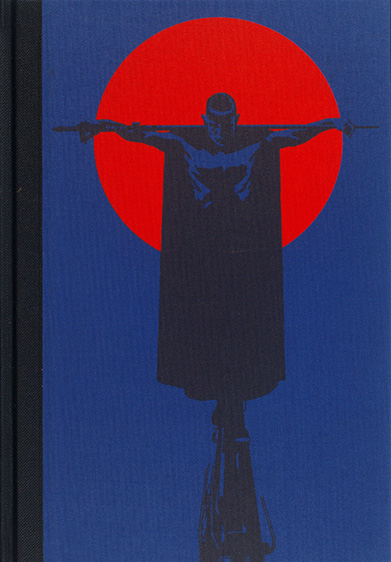
Shadow & Claw
Ratings & Reviews
Friends & Following
Create a free account to discover what your friends think of this book!
Community Reviews
Displaying 1 - 11 of 11 reviews

November 8, 2021
Among Gene Wolfe fans, it's commonplace to say that you only first read The Book of the New Sun (BotNS) on your second reading, largely because it's a paradigm example of a book that you need to learn how to read as you go along; so that only once you've finished it are you in a position to go back with anything like an adequate understanding of the text you've just read.
I've never come across a more skillful, layered and complex use of an unreliable narrator. (Yes, not even Nabokov, as much as I love him, comes close.) However, part of what you have to hash out as you read the book is the precise way (or really, the many ways) in which Severian is an unreliable narrator, which you can only understand once you learn his entire story. He tells us who he is at the beginning: an apprentice in a torturer's guild. However, while strictly speaking true, it's only a tiny sliver of the truth, so that your entire understanding of the text is inevitably incomplete or downright distorted until you come to grasp little by little just who and what Severian is.
Another challenge of the text is that Wolfe uses, as I heard the video essayist Liene's Library once describe it, a 'method writing' technique in BotNS. That is, Wolfe's framing conceit is that Severian, a man from an incredibly distant future Earth (called Urth in the text), has written the text we're reading for a contemporaneous audience. Thus, he doesn't explain anything about his world, which is extremely alien to us, that he wouldn't expect the readers of his world to already know. Many writers would fudge this by finding ways of including exposition in the text that would aid the reader, hoping and praying along the way that it won't seem clunky or unnatural. But Wolfe never wavers from his conceit. As a result, this is one of the densest but at the same time most virtuosic use of SF ostranenie (defamiliarization) I've ever come across. Yet, what this means is that a great deal of the work (and pleasure) in reading the text is trying to piece together exactly what its story world is like. Wolfe constantly drops tantalizing hints, but these hints are always polysemic, lending the text to seemingly endless (and endlessly intriguing) interpretations. No matter how hard you try, you will never be able to strip the text of the sublime, numinous otherness it conveys.
Lastly, Wolfe makes use of constant 'twists', except that his twists aren't quite plot twists. Instead, there are numerous moments when the story unfolds in such a way as to transform your sense of what kind of story it even is. I couldn't say more without spoiling the joy of discovery, but I can say this. When you begin, it seems like it will be a more or less standard fantasy Bildungsroman about a young man's maturation into manhood through rip-roaring adventures. If that sort of thing doesn't appeal to you, just know that this isn't remotely the kind of story that BotNS is telling. The beginning is a feint, an illusionist's trick: what you're in for isn't the standard sword & sorcery fantasy it seems to be, but instead one of the greatest works of 20th century literature - at least in my book.
On this re-read of BotNS, I've been reading along with the incredibly in-depth chapter-by-chapter analysis found in the ReReading Wolfe podcast, which has made the experience immensely enjoyable. Their commentary is only for re-readers, though: it assumes you've already read the five-book cycle all the way through, so all spoilers are fair game. If you want an analysis for first time readers, the podcast Alzabo Soup has a similar chapter-by-chapter format, but without any spoilers.
I've never come across a more skillful, layered and complex use of an unreliable narrator. (Yes, not even Nabokov, as much as I love him, comes close.) However, part of what you have to hash out as you read the book is the precise way (or really, the many ways) in which Severian is an unreliable narrator, which you can only understand once you learn his entire story. He tells us who he is at the beginning: an apprentice in a torturer's guild. However, while strictly speaking true, it's only a tiny sliver of the truth, so that your entire understanding of the text is inevitably incomplete or downright distorted until you come to grasp little by little just who and what Severian is.
Another challenge of the text is that Wolfe uses, as I heard the video essayist Liene's Library once describe it, a 'method writing' technique in BotNS. That is, Wolfe's framing conceit is that Severian, a man from an incredibly distant future Earth (called Urth in the text), has written the text we're reading for a contemporaneous audience. Thus, he doesn't explain anything about his world, which is extremely alien to us, that he wouldn't expect the readers of his world to already know. Many writers would fudge this by finding ways of including exposition in the text that would aid the reader, hoping and praying along the way that it won't seem clunky or unnatural. But Wolfe never wavers from his conceit. As a result, this is one of the densest but at the same time most virtuosic use of SF ostranenie (defamiliarization) I've ever come across. Yet, what this means is that a great deal of the work (and pleasure) in reading the text is trying to piece together exactly what its story world is like. Wolfe constantly drops tantalizing hints, but these hints are always polysemic, lending the text to seemingly endless (and endlessly intriguing) interpretations. No matter how hard you try, you will never be able to strip the text of the sublime, numinous otherness it conveys.
Lastly, Wolfe makes use of constant 'twists', except that his twists aren't quite plot twists. Instead, there are numerous moments when the story unfolds in such a way as to transform your sense of what kind of story it even is. I couldn't say more without spoiling the joy of discovery, but I can say this. When you begin, it seems like it will be a more or less standard fantasy Bildungsroman about a young man's maturation into manhood through rip-roaring adventures. If that sort of thing doesn't appeal to you, just know that this isn't remotely the kind of story that BotNS is telling. The beginning is a feint, an illusionist's trick: what you're in for isn't the standard sword & sorcery fantasy it seems to be, but instead one of the greatest works of 20th century literature - at least in my book.
On this re-read of BotNS, I've been reading along with the incredibly in-depth chapter-by-chapter analysis found in the ReReading Wolfe podcast, which has made the experience immensely enjoyable. Their commentary is only for re-readers, though: it assumes you've already read the five-book cycle all the way through, so all spoilers are fair game. If you want an analysis for first time readers, the podcast Alzabo Soup has a similar chapter-by-chapter format, but without any spoilers.

December 4, 2021
I almost bounced off the first book (Shadow of the Torturer) because it was such a challenging read. The word choices are archaic, but once I put the dictionary down and pushed through I suddenly couldn't stop.
This book raises just as many questions as it answers. You'll go from confused to having Ah-ha moments while still being confused, and I loved every minute of it.
Be warned, it is NOT a feminist work.
This book raises just as many questions as it answers. You'll go from confused to having Ah-ha moments while still being confused, and I loved every minute of it.
Be warned, it is NOT a feminist work.
December 29, 2022
Not sure what it was about this book that made it so gripping - in hindsight not a lot was resolved, not a lot actually happened, all the characters have a vague, dream-like development and the societies are interesteringly foreign but not really explored in any depth yet. But it was still impossible to put down and made the sequels an immediate buy for the variety of stories told along the way.
October 1, 2026
I had always heard Wolfe discussed as a grandmaster, and now I see why. It's a deeply bizarre, difficult read- though I do think the difficulty is slightly overblown, particularly if you avoid the purist impulse and permit yourself supplemental literature to investigate the endless allusions- but also extremely rewarding as a whole. I would encourage prospective readers to be patient with the first volume (Shadow); it is slow (I struggled at times), but picks up quickly near the end and has some amazing payoffs throughout subsequent volumes.
To anyone discouraged, as I was, by the insistence that multiple read throughs are necessary: I don't believe they strictly are, so long as you pay close attention and frequently refer back as you go (while keeping in mind that ambiguity and subjective interpretation is a primary part of the appeal). This approach will not appeal to everybody, but I found that it did not spoil my experience- far from it.
To anyone discouraged, as I was, by the insistence that multiple read throughs are necessary: I don't believe they strictly are, so long as you pay close attention and frequently refer back as you go (while keeping in mind that ambiguity and subjective interpretation is a primary part of the appeal). This approach will not appeal to everybody, but I found that it did not spoil my experience- far from it.

Read
November 24, 2025EDIT/WARNING: I thought it was odd this book had so few reviews and then I realized, the author's name is misspelled! That extra 'e' gets you every time. Anywho, you, dear review reader, are most likely looking for this one here: https://www.goodreads.com/book/show/5...
Have read this series a few times and appreciate returning now and again when the mood suites. Want to call out that this edition from the Folio Society is _incredible_, beautiful artwork, binding, type setting. As I was reading it, the section where Master Ultan of the Curators talks about appreciating books not for their content but simply as objects themselves seemed terribly apt.
Truly everything one could want from a luxury purchase, which this certainly is but sometimes it's nice to treat yourself
Have read this series a few times and appreciate returning now and again when the mood suites. Want to call out that this edition from the Folio Society is _incredible_, beautiful artwork, binding, type setting. As I was reading it, the section where Master Ultan of the Curators talks about appreciating books not for their content but simply as objects themselves seemed terribly apt.
Truly everything one could want from a luxury purchase, which this certainly is but sometimes it's nice to treat yourself
January 25, 2025
This was a landmark in sf in the 80s: hailed as a post-modern take on sf, mixing a high-level content with a fantasy setting and a high-brow literary style.
Has it aged? No, not really; the style feels to me less high-brow and more imitation of such, not really a criticism but just that sometimes it's a bit heavy-handed, and not that fluid. Although to be fair, it's in line with the world he creates, so ok.
The story is good, and he does try to get into the characters, so that they don't feel like simple vehicles for an adventure but the real point of the book, in a way.
I think I will read (re-read, in fact, after decades) the follow-up.
Has it aged? No, not really; the style feels to me less high-brow and more imitation of such, not really a criticism but just that sometimes it's a bit heavy-handed, and not that fluid. Although to be fair, it's in line with the world he creates, so ok.
The story is good, and he does try to get into the characters, so that they don't feel like simple vehicles for an adventure but the real point of the book, in a way.
I think I will read (re-read, in fact, after decades) the follow-up.

March 23, 2024
This first volume of The Book of the New Sun series, AKA Shadow & Claw, was mostly very good. There were places where I kind of lost interest. But overall, I really enjoyed these first two books. On to the 3rd & 4th books: Sword & Citadel.
March 23, 2025
Kind of hard to understand, I get the appeal but it isn't for everyone

December 10, 2025
Hands down the best writing in a century. Grab your dictionary, you will need it.
book-graveyard
January 26, 202651%

August 6, 2026
I really enjoyed the book and the description of the world it takes place in. I was surprised to confirm it was South America.
Never did bother to look up "those" words. Let the context do it.
Never did bother to look up "those" words. Let the context do it.
Displaying 1 - 11 of 11 reviews