

What do you think?

You Coach You: How to Overcome Challenges and Take Control of Your Career
A practical guide giving you the skills and confidence to overcome career challenges on your own.
Are you at a standstill in your career? Do you feel like you aren't where you thought you'd be by this point, or have you already got to where you wanted and realized it isn't bringing you joy?
The most successful people have always benefited from professional coaching and now, in You Coach You , the UK's leading career experts Sarah Ellis and Helen Tupper will give you the knowledge and tools to coach yourself. Inside you'll learn how to get unstuck and rediscover your love of work, build boundaries and productive relationships, cultivate resilience, and identify and achieve your career goals.
Packed with practical exercises, tools, and advice from inspiring people, this book will help you find motivation and achieve everything you've ever wanted in your career.
Are you at a standstill in your career? Do you feel like you aren't where you thought you'd be by this point, or have you already got to where you wanted and realized it isn't bringing you joy?
The most successful people have always benefited from professional coaching and now, in You Coach You , the UK's leading career experts Sarah Ellis and Helen Tupper will give you the knowledge and tools to coach yourself. Inside you'll learn how to get unstuck and rediscover your love of work, build boundaries and productive relationships, cultivate resilience, and identify and achieve your career goals.
Packed with practical exercises, tools, and advice from inspiring people, this book will help you find motivation and achieve everything you've ever wanted in your career.
320 pages, Paperback
Published June 1, 2022
Ratings & Reviews
Friends & Following
Create a free account to discover what your friends think of this book!
Community Reviews
Displaying 1 - 21 of 21 reviews

March 28, 2023
This book is a little too light on the science and very much part of the whole "influencer/ Instagram coaching" generation with quotes from Beyoncé, Meghan Markle & Lady Gaga... where would one be without these intellectual behemoths?
Some of it was massively repetitive. That said I really wish I had read this book when i first started out in my banking career. If you have a young person in your life struggling with their job, urge them to read this.
Introduction: You Coach You
How to get the most from this book.
How would you describe your career so far? "Change", "uncertainty", "overwhelmed" and "busy" --> if these apply to you then this book is perfect.
Tips:
- make notes in this book (the author encourages the more notes the better)
- as a big believer of journaling, to-do-lists etc., I agree with approach 100%
Chapter 1: How to Coach Yourself
Develop the mindset, skillset and toolkit you need to coach yourself.
1. Self-awareness & prompt positive action
2. Fixed mindset over growth mindset
- fixed mindset: i. control - I can't do anything in this situation/for this problem,ii. confidence (or rather lack of) in asking for help, conscious what others think, iii. competence self-doubt on abilities/ skills
-growth mindset: asking questions i. when were you in "control" at work? ii. confident in your job? iii. done something that stretched your competence and skills?
3. Thinkers versus doers
- thinkers reflect/deliberate too much, sometimes waiting till something is perfect before they begin a task which can lead to nothing being done
- doers find reflecting/deliberating difficult and may end up doing a task without giving much thought which either fails, doesn't good enough or stalls due to lack of thinking
- thinkers should i. ask where they see themselves in 1 month? ii. Display visible post-it notes as reminders, iii. how would a doer approach this task?
- doers should i. daily 10-min mind map (tracking thoughts), ii. consider the opposite opinion, iii. how would a thinker approach this task?
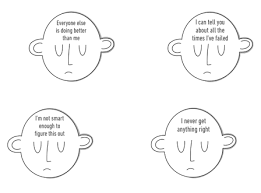
4. Critic creep - be aware of your inner critic
5. Write self-supporting statements/ press pause
6. Feedback from friends
7. Rate your listening skills/ practice listening & absorbing what you've heard so that youlisten to understand not listen to respond.
8. Question/ investigate where you're going wrong, what isn't working in your coaching
9. Clarity, Options, Actions, Confidence, Help = COACH
Chapter 2: Resilience
Assess your current levels of resilience and how you can build your reserves every day. Identify how you can move from adversity to action when things don’t go to plan.
1. Positive actions over negative - "I can" actions that you can take to overcome challenges, don't focus on the roadblocks.
2. Don't focus too much on your faults and where you went wrong
3. 1% better, make daily incremental changes to improve your situation
4. Don't limit who/ where you ask for help
5. Recognise our success irrespective of how small
6. Consider/improve your Support system
7. Active rest, more productive when we have a "real rest" e.g. hobbies that fully engage us. "If you get tired, learnt o rest not quit," Banksy.
8. Move from adversity to action by completing an audit, which is asking questions on the situation to gain clarity, be concise and a plan to overcome it, "there is no room for facts when our minds are occupied by fear", Hans Rosling.
9. Reactions to adversity will be influenced on whether you are a thinker versus doers, with the latter being more spontaneous/ reacting more, and the former dwelling on the negative thoughts.
10. Recalling previous challenges that you overcame and what you learnt from it, "The past should be our teacher, not our Master", Ed Catmull
Chapter 3: Time
Explore how you can take control of your time and improve the quality of your work. Move beyond busy and find the right work–life fit for you.
1. Boils down to - people waste their time, think of ways to reduce your workload by working smarter not harder, "It is not that we have a short time t live, but that we waste a lot of it", Seneca
2. How to spend your time well, envision how you would like your work/life balance to look like and aim for that
3. Think about what you would like to do at work, versus what you do, e.g. "more time presenting versus organising meetings"
4. Recognise your energy state with the ideal being "flow", which we are more likely to be in when we have a goal i. Autopilot (easy work, limited growth), ii. Flow (quality work), iii. Boredom (low engagement), iv. Effort (can be stressful)
5. Flow -> meaningful work, ask for feedback. accept challenging work will result in personal pride.
6. Avoid managing other people's monkey i.e. those who delegate non-flow work to us
7. Time tactics = i. monk mode: lose distractions me-time, ii. Pomodoro technique: break down big projects into doable chunks, iii. To-think lists: like to-do lists but focusing on what to reflect on, iv. golden hour: when are you most productive, v. Productivity partner: have someone who holds you to account, vi. Music mindset: create your own productivity playlist. vii. 2 minute rule, tasks that can be done and dusted should be done immediately and not put off. viii. swallow the frog: doing mentally taxing work first, ix. Time blocking/ task batching & day theming: allocate specific chunks of time to certain tasks
Chapter 4: Self-belief
Discover how to build your self-belief. Understand how to respond to setbacks and develop the confidence to move into your courage zone.
1. Sources of self-belief, i. Mastery: doing something well builds our belief, ii. Modeling: having examples of people similar to us succeeding helps us think we can do it too, iii. Encouragement people believing in you, iv. Difficulty: respond with optimism
2. Have the confidence to say "no"/decline when you want to. Say yes when you really do actually mean it, and think about i. when have you said yes when you wanted to say no? i.. when did i feel confident in saying no to someone? iii. What has helped me say "no" in the past?
3. Comfort zone versus Courage zone: creating & managing your comfort zone (a safe place), balance out how much time you spend in either. You'll feel out of your depth if you spend too much in the latter, and won't progress if in the former.
Chapter 5: Relationships
Identify the relationships you need at work and how to invest in your career community. Learn how to fix friction and repair relationships that have become difficult.
1. Build quality relationships
2. Don't have an eco chamber, have diverse range of people (cognitive diversity).
3. Donate generously but not selflessly i.e. don't become a doormat, know your limit. But don't walk over people too. "No acts of kindness, however small, is wasted," Aesop
4. Build a career community of: 1. Connections (largest group/50), ii. Counsel (medium/15), iii. Confidants (smallest/5). Career counsels are those who support you rather than use you for their own career goals
5. Courageous conversation with your manager
6. What Shape Are You? This is the most helpful part of the book
6. Activator or Avoider: the former wants to confront things immediately
Chapter 6: Progression
Understand what progression means to you. Explore different progression possibilities and how to make them happen.
1. "The reason that I don't have a plan is because if i have a plan, I'm limited to today's options", Sheryl Sandberg
2. Have positive prompts when you have a "thinking trap" e.g. "I need to be promoted in order to progress" changes to "What are three ways, other than being promoted, that I could progress at work?"
3. Progress by i. Creating a new role - do something that will make a new role four yourself at work, ii. Sideways move, iii. Work redesign - change your role to suit you e.g. fewer working hours, iv. Learning opportunities - take courses to improve your employability and progression, v. Volunteering
4. Prototype progression is how you test and learn along the way e.g. take on more responsibilities, taking leadership roles for tasks / projects at work,
Chapter 7: Purpose
Explore what gives you a sense of direction in your career. Understand how to maximize the meaning you get from the work that you do.
1. "To explore without always reaching a destination; to search without necessarily finding an answer; to get lost in the journey for the journey's sake." Clarissa Seabag-Montefiore
i. a direction, not a destination, ii. an ambition, not an answer, iii. a work-in-progress, not the pursuit of perfection.
2. Purpose is a direction you head towards not a destination you reach
3. Your purpose is an ambition, not something you need to be able to answer or achieve. You don't need to be limited by where you are today or what you've achieved in the past.
4. Your purpose will always feel more-work-in-progress than perfect, as we change directions as we grow older and our needs etc change.
5. Purpose anxiety - "Start by letting go of the idea of 'finding' your purpose. It is not in Lost Property somewhere, it is in your consciences, so the first step is to list to the moments that bring you the most joy, comfort and ease. That is where the core of your purpose resides. When you connect with these moments and feelings, ask yourself, Where am I? Who am I with? What am I doing/saying? Now write them down and look for the common parts. Your purpose will become clearer the more you listen and refine the list." Natalie Campbell.
6. Purpose mind-map: i. Who inspires you? ii. What are you passionate about at work? iii. What are you curious to learn? iv. If you were ninety today, what would you have liked to change about the world?
7. Ask questions on what you love, hate and are passionate about at work, including the people you work with.
8. Send time reading books/ watching films on the people who inspire you.
Chapter 8: Advice from All Areas
Feel inspired by words of wisdom from Olympians, campaigners, creators, teachers and many more who have shared their best piece of career advice with us for everyone to learn from.
Lots of quotes, some contradict the others, but they pretty say similar things in different voices. I liked the one from Poppy Jaman who said that early discrimination (in her career) had her change into a chameleon to "fit in" and hence she lost her identity along the way. That resonated.
The End is the Beginning
Put your energy and effort into what you can control: you
Only 1 page explaining this.
Some of it was massively repetitive. That said I really wish I had read this book when i first started out in my banking career. If you have a young person in your life struggling with their job, urge them to read this.
Introduction: You Coach You
How to get the most from this book.
How would you describe your career so far? "Change", "uncertainty", "overwhelmed" and "busy" --> if these apply to you then this book is perfect.
Tips:
- make notes in this book (the author encourages the more notes the better)
- as a big believer of journaling, to-do-lists etc., I agree with approach 100%
Chapter 1: How to Coach Yourself
Develop the mindset, skillset and toolkit you need to coach yourself.
1. Self-awareness & prompt positive action
2. Fixed mindset over growth mindset
- fixed mindset: i. control - I can't do anything in this situation/for this problem,ii. confidence (or rather lack of) in asking for help, conscious what others think, iii. competence self-doubt on abilities/ skills
-growth mindset: asking questions i. when were you in "control" at work? ii. confident in your job? iii. done something that stretched your competence and skills?
3. Thinkers versus doers
- thinkers reflect/deliberate too much, sometimes waiting till something is perfect before they begin a task which can lead to nothing being done
- doers find reflecting/deliberating difficult and may end up doing a task without giving much thought which either fails, doesn't good enough or stalls due to lack of thinking
- thinkers should i. ask where they see themselves in 1 month? ii. Display visible post-it notes as reminders, iii. how would a doer approach this task?
- doers should i. daily 10-min mind map (tracking thoughts), ii. consider the opposite opinion, iii. how would a thinker approach this task?
4. Critic creep - be aware of your inner critic
5. Write self-supporting statements/ press pause
6. Feedback from friends
7. Rate your listening skills/ practice listening & absorbing what you've heard so that youlisten to understand not listen to respond.
8. Question/ investigate where you're going wrong, what isn't working in your coaching
9. Clarity, Options, Actions, Confidence, Help = COACH
Chapter 2: Resilience
Assess your current levels of resilience and how you can build your reserves every day. Identify how you can move from adversity to action when things don’t go to plan.
1. Positive actions over negative - "I can" actions that you can take to overcome challenges, don't focus on the roadblocks.
2. Don't focus too much on your faults and where you went wrong
3. 1% better, make daily incremental changes to improve your situation
4. Don't limit who/ where you ask for help
5. Recognise our success irrespective of how small
6. Consider/improve your Support system
7. Active rest, more productive when we have a "real rest" e.g. hobbies that fully engage us. "If you get tired, learnt o rest not quit," Banksy.
8. Move from adversity to action by completing an audit, which is asking questions on the situation to gain clarity, be concise and a plan to overcome it, "there is no room for facts when our minds are occupied by fear", Hans Rosling.
9. Reactions to adversity will be influenced on whether you are a thinker versus doers, with the latter being more spontaneous/ reacting more, and the former dwelling on the negative thoughts.
10. Recalling previous challenges that you overcame and what you learnt from it, "The past should be our teacher, not our Master", Ed Catmull
Chapter 3: Time
Explore how you can take control of your time and improve the quality of your work. Move beyond busy and find the right work–life fit for you.
1. Boils down to - people waste their time, think of ways to reduce your workload by working smarter not harder, "It is not that we have a short time t live, but that we waste a lot of it", Seneca
2. How to spend your time well, envision how you would like your work/life balance to look like and aim for that
3. Think about what you would like to do at work, versus what you do, e.g. "more time presenting versus organising meetings"
4. Recognise your energy state with the ideal being "flow", which we are more likely to be in when we have a goal i. Autopilot (easy work, limited growth), ii. Flow (quality work), iii. Boredom (low engagement), iv. Effort (can be stressful)
5. Flow -> meaningful work, ask for feedback. accept challenging work will result in personal pride.
6. Avoid managing other people's monkey i.e. those who delegate non-flow work to us
7. Time tactics = i. monk mode: lose distractions me-time, ii. Pomodoro technique: break down big projects into doable chunks, iii. To-think lists: like to-do lists but focusing on what to reflect on, iv. golden hour: when are you most productive, v. Productivity partner: have someone who holds you to account, vi. Music mindset: create your own productivity playlist. vii. 2 minute rule, tasks that can be done and dusted should be done immediately and not put off. viii. swallow the frog: doing mentally taxing work first, ix. Time blocking/ task batching & day theming: allocate specific chunks of time to certain tasks
Chapter 4: Self-belief
Discover how to build your self-belief. Understand how to respond to setbacks and develop the confidence to move into your courage zone.
1. Sources of self-belief, i. Mastery: doing something well builds our belief, ii. Modeling: having examples of people similar to us succeeding helps us think we can do it too, iii. Encouragement people believing in you, iv. Difficulty: respond with optimism
2. Have the confidence to say "no"/decline when you want to. Say yes when you really do actually mean it, and think about i. when have you said yes when you wanted to say no? i.. when did i feel confident in saying no to someone? iii. What has helped me say "no" in the past?
3. Comfort zone versus Courage zone: creating & managing your comfort zone (a safe place), balance out how much time you spend in either. You'll feel out of your depth if you spend too much in the latter, and won't progress if in the former.
Chapter 5: Relationships
Identify the relationships you need at work and how to invest in your career community. Learn how to fix friction and repair relationships that have become difficult.
1. Build quality relationships
2. Don't have an eco chamber, have diverse range of people (cognitive diversity).
3. Donate generously but not selflessly i.e. don't become a doormat, know your limit. But don't walk over people too. "No acts of kindness, however small, is wasted," Aesop
4. Build a career community of: 1. Connections (largest group/50), ii. Counsel (medium/15), iii. Confidants (smallest/5). Career counsels are those who support you rather than use you for their own career goals
5. Courageous conversation with your manager
6. What Shape Are You? This is the most helpful part of the book
6. Activator or Avoider: the former wants to confront things immediately
Chapter 6: Progression
Understand what progression means to you. Explore different progression possibilities and how to make them happen.
1. "The reason that I don't have a plan is because if i have a plan, I'm limited to today's options", Sheryl Sandberg
2. Have positive prompts when you have a "thinking trap" e.g. "I need to be promoted in order to progress" changes to "What are three ways, other than being promoted, that I could progress at work?"
3. Progress by i. Creating a new role - do something that will make a new role four yourself at work, ii. Sideways move, iii. Work redesign - change your role to suit you e.g. fewer working hours, iv. Learning opportunities - take courses to improve your employability and progression, v. Volunteering
4. Prototype progression is how you test and learn along the way e.g. take on more responsibilities, taking leadership roles for tasks / projects at work,
Chapter 7: Purpose
Explore what gives you a sense of direction in your career. Understand how to maximize the meaning you get from the work that you do.
1. "To explore without always reaching a destination; to search without necessarily finding an answer; to get lost in the journey for the journey's sake." Clarissa Seabag-Montefiore
i. a direction, not a destination, ii. an ambition, not an answer, iii. a work-in-progress, not the pursuit of perfection.
2. Purpose is a direction you head towards not a destination you reach
3. Your purpose is an ambition, not something you need to be able to answer or achieve. You don't need to be limited by where you are today or what you've achieved in the past.
4. Your purpose will always feel more-work-in-progress than perfect, as we change directions as we grow older and our needs etc change.
5. Purpose anxiety - "Start by letting go of the idea of 'finding' your purpose. It is not in Lost Property somewhere, it is in your consciences, so the first step is to list to the moments that bring you the most joy, comfort and ease. That is where the core of your purpose resides. When you connect with these moments and feelings, ask yourself, Where am I? Who am I with? What am I doing/saying? Now write them down and look for the common parts. Your purpose will become clearer the more you listen and refine the list." Natalie Campbell.
6. Purpose mind-map: i. Who inspires you? ii. What are you passionate about at work? iii. What are you curious to learn? iv. If you were ninety today, what would you have liked to change about the world?
7. Ask questions on what you love, hate and are passionate about at work, including the people you work with.
8. Send time reading books/ watching films on the people who inspire you.
Chapter 8: Advice from All Areas
Feel inspired by words of wisdom from Olympians, campaigners, creators, teachers and many more who have shared their best piece of career advice with us for everyone to learn from.
Lots of quotes, some contradict the others, but they pretty say similar things in different voices. I liked the one from Poppy Jaman who said that early discrimination (in her career) had her change into a chameleon to "fit in" and hence she lost her identity along the way. That resonated.
The End is the Beginning
Put your energy and effort into what you can control: you
Only 1 page explaining this.

Read
June 27, 2022Coaching doesn’t have to be an expensive, out-of-reach thing that you wish you could have. Self-coaching using specific steps within certain actionable areas can help guide you with purpose. Keeping an open mind about the meaning of progression and success will help you discover better ways to a fully realized career.
Here’s one more thing you can do, too:
Start having Switch-off Sundays.
Working around the clock doesn’t lead to career progression – it just burns you out. And with your smart devices keeping you plugged in all week long, it can be hard to truly unplug. These days, the only way to do that might be to literally turn off your phone on Sundays. It might sound radical, but doing this, even just for a few hours to start with, can result in a dramatically more energized and productive Monday morning.
---
Self-coaching helps you find satisfaction and make progress along a curvy career path.
How does this sound: “Corner office.”
What about “promotion?” Or – last one – “climbing up the corporate ladder?”
Not bad, huh? If you’re like most people, chances are they’re music to your ears. Especially if, like most people, you grew up thinking that all three were career goals that would guide you through a long and happy work life. There was a predictability to the way you were supposed to do things; network with the right people, strategize your way into the next pay scale – that’s just how things have always been done.
Well, I’m here to tell you something: take a great big eraser and wipe that slate clean, because the career ladder? It’s a thing of the past. According to Helen Tupper and Sara Ellis’s bestselling book, You Coach You, these days, the road to your career happy place is less of a single, perfectly straight freeway and…well, more of a squiggly country road, one that can be long, winding and, ideally, interesting.
Sound a little confusing? That’s natural. After all, a ladder is a simple thing to climb; there’s one way up and one way down. A squiggly line comes with freedom, but it isn’t necessarily as straightforward.
That’s where self-coaching comes in. Helen Tupper and Sara Ellis describe coaching as “the skill of asking yourselves questions to improve self-awareness and prompt positive action.” But how do you do this?
One of the first things to do is to think about your mindset. Researcher Carol Dweck introduced the notion of a growth mindset versus a fixed mindset. Here’s one way to make the leap between the two . Instead of saying you can’t do something, say you can’t do it yet. That one word can open the door to limitless potential. Approaching the exercises and ideas with a growth mindset can go a long way in helping you coach yourself to your maximum potential.
That raises a question – just what is your maximum potential? Well, to figure that out, you first need to know exactly who you are now. Not quite there yet? That’s normal – a lot of people aren’t. So let’s figure it out.
To begin with, are you a doer or a thinker? Just for fun, “try on” the other side once in a while. Pause often. Evaluate and analyze your work. Listen to your own thoughts. Are they jumpy, or are they focused? Do they shy away from difficult situations?
Next, expand that thoughtfulness outward. It’s not just about having a clear understanding of who you are, but also about knowing how others see you.
You’ll learn more about the six areas of self-coaching: resilience, time, self-belief, relationships, progression, and purpose.
Along the way, you’re likely to encounter an old foe: your inner critic, the one who says you’re not smart enough or good enough. When this happens, try to be your own best friend – what would you tell your best friend if they were doubting themselves? Remember to give yourself that same encouragement. And with that in mind, let’s dive in!
---
Make time your friend and it will reward you well.
Think of pretty much any conversation you’ve had with anyone in your life lately. It probably went something like this: “How’s it going?”
Eyeroll. Deep sigh. “Busy. Just so busy. Kids, work, school. Just busy all the time.”
Society has reached a point where the busier you are, the more valid your life seems. Technology that allows for hybrid and work-from-home situations only further blurred the boundaries of work and home. Learning to manage time is a crucial aspect of self-coaching; here are several super-helpful exercises to help you do just that:
To begin with, think of your time as a person. Describe that person. Harried and flustered? Efficient? Disorganized? How would you like that person to be? Now think about how you spent your day. Think about how you’d have liked to have spent it. Write down your answers. Reading them back, is there a big disconnect? If so, how can you bridge the gap?
Here’s another exercise. You’ve heard athletes and artists talk about “flow,” that almost effortless state when you’re so into what you’re doing that the rest of the world almost ceases to exist. Monitor your “flow” chart. Do you feel flow at work, or are you stuck on autopilot or mired in boredom? Make lists of meaningful and challenging things you can do to get into the flow zone.
You can also learn to “manage your monkeys.” Imagine your boss swings by your office and says, “Hey can you take on this project and have it done by Friday?” Though your instinct might be to say, “Of course,” stop yourself. Try something along these lines: “I’d love to help, but I have my hands full with a campaign. Can you help me reprioritize what I’m doing now so I can take that additional project on?”
When it comes to managing your precious minutes and seconds, it’s incredibly important to learn to focus and make the best use of the time you have, and there are several tested techniques that can help you do that. The monk tactic calls for a block of time (say, two hours) where you focus completely on only the task at hand. Then there’s the popular Pomodoro technique, where you work for a 25-minute block and then take a 5-minute break. Maybe, rather than making a to-do list, you can make a to-think list, focusing more on your big ideas than on small tasks that clutter your day.
Study your day: When are you most alert and active? Let’s call that the “goal-den hour.” Use that time wisely and you’ll find yourself more productive than ever. Try chunking or batching your time – blocking out bundles of hours to focus on specific tasks or a particular theme. For example, Monday could be set aside for meetings and Wednesday for quiet, creative work. Or Monday mornings from 9:00 a.m. to noon could be when you respond to emails and plan meetings. Find ways to become efficient within your existing structure. Let’s say you’re often asked for specific sets of information – if so, it’d be helpful to create templates that you can hand out within seconds, right?
If you do better when you have a friend walking the path with you, find a productivity partner who will keep you accountable to your goals. If you can’t think of someone specific for this, you can find apps that pair you up with someone.
Here’s one more thing you can do, too:
Start having Switch-off Sundays.
Working around the clock doesn’t lead to career progression – it just burns you out. And with your smart devices keeping you plugged in all week long, it can be hard to truly unplug. These days, the only way to do that might be to literally turn off your phone on Sundays. It might sound radical, but doing this, even just for a few hours to start with, can result in a dramatically more energized and productive Monday morning.
---
Self-coaching helps you find satisfaction and make progress along a curvy career path.
How does this sound: “Corner office.”
What about “promotion?” Or – last one – “climbing up the corporate ladder?”
Not bad, huh? If you’re like most people, chances are they’re music to your ears. Especially if, like most people, you grew up thinking that all three were career goals that would guide you through a long and happy work life. There was a predictability to the way you were supposed to do things; network with the right people, strategize your way into the next pay scale – that’s just how things have always been done.
Well, I’m here to tell you something: take a great big eraser and wipe that slate clean, because the career ladder? It’s a thing of the past. According to Helen Tupper and Sara Ellis’s bestselling book, You Coach You, these days, the road to your career happy place is less of a single, perfectly straight freeway and…well, more of a squiggly country road, one that can be long, winding and, ideally, interesting.
Sound a little confusing? That’s natural. After all, a ladder is a simple thing to climb; there’s one way up and one way down. A squiggly line comes with freedom, but it isn’t necessarily as straightforward.
That’s where self-coaching comes in. Helen Tupper and Sara Ellis describe coaching as “the skill of asking yourselves questions to improve self-awareness and prompt positive action.” But how do you do this?
One of the first things to do is to think about your mindset. Researcher Carol Dweck introduced the notion of a growth mindset versus a fixed mindset. Here’s one way to make the leap between the two . Instead of saying you can’t do something, say you can’t do it yet. That one word can open the door to limitless potential. Approaching the exercises and ideas with a growth mindset can go a long way in helping you coach yourself to your maximum potential.
That raises a question – just what is your maximum potential? Well, to figure that out, you first need to know exactly who you are now. Not quite there yet? That’s normal – a lot of people aren’t. So let’s figure it out.
To begin with, are you a doer or a thinker? Just for fun, “try on” the other side once in a while. Pause often. Evaluate and analyze your work. Listen to your own thoughts. Are they jumpy, or are they focused? Do they shy away from difficult situations?
Next, expand that thoughtfulness outward. It’s not just about having a clear understanding of who you are, but also about knowing how others see you.
You’ll learn more about the six areas of self-coaching: resilience, time, self-belief, relationships, progression, and purpose.
Along the way, you’re likely to encounter an old foe: your inner critic, the one who says you’re not smart enough or good enough. When this happens, try to be your own best friend – what would you tell your best friend if they were doubting themselves? Remember to give yourself that same encouragement. And with that in mind, let’s dive in!
---
Make time your friend and it will reward you well.
Think of pretty much any conversation you’ve had with anyone in your life lately. It probably went something like this: “How’s it going?”
Eyeroll. Deep sigh. “Busy. Just so busy. Kids, work, school. Just busy all the time.”
Society has reached a point where the busier you are, the more valid your life seems. Technology that allows for hybrid and work-from-home situations only further blurred the boundaries of work and home. Learning to manage time is a crucial aspect of self-coaching; here are several super-helpful exercises to help you do just that:
To begin with, think of your time as a person. Describe that person. Harried and flustered? Efficient? Disorganized? How would you like that person to be? Now think about how you spent your day. Think about how you’d have liked to have spent it. Write down your answers. Reading them back, is there a big disconnect? If so, how can you bridge the gap?
Here’s another exercise. You’ve heard athletes and artists talk about “flow,” that almost effortless state when you’re so into what you’re doing that the rest of the world almost ceases to exist. Monitor your “flow” chart. Do you feel flow at work, or are you stuck on autopilot or mired in boredom? Make lists of meaningful and challenging things you can do to get into the flow zone.
You can also learn to “manage your monkeys.” Imagine your boss swings by your office and says, “Hey can you take on this project and have it done by Friday?” Though your instinct might be to say, “Of course,” stop yourself. Try something along these lines: “I’d love to help, but I have my hands full with a campaign. Can you help me reprioritize what I’m doing now so I can take that additional project on?”
When it comes to managing your precious minutes and seconds, it’s incredibly important to learn to focus and make the best use of the time you have, and there are several tested techniques that can help you do that. The monk tactic calls for a block of time (say, two hours) where you focus completely on only the task at hand. Then there’s the popular Pomodoro technique, where you work for a 25-minute block and then take a 5-minute break. Maybe, rather than making a to-do list, you can make a to-think list, focusing more on your big ideas than on small tasks that clutter your day.
Study your day: When are you most alert and active? Let’s call that the “goal-den hour.” Use that time wisely and you’ll find yourself more productive than ever. Try chunking or batching your time – blocking out bundles of hours to focus on specific tasks or a particular theme. For example, Monday could be set aside for meetings and Wednesday for quiet, creative work. Or Monday mornings from 9:00 a.m. to noon could be when you respond to emails and plan meetings. Find ways to become efficient within your existing structure. Let’s say you’re often asked for specific sets of information – if so, it’d be helpful to create templates that you can hand out within seconds, right?
If you do better when you have a friend walking the path with you, find a productivity partner who will keep you accountable to your goals. If you can’t think of someone specific for this, you can find apps that pair you up with someone.

May 21, 2023
Some great advice & helpful exercises to try. I’ve dipped into this book before for advice on a career issue, this time I’ve read it cover to cover & it’s given me some useful pointers on how to move forward in a new chapter of my career.

July 18, 2022
Takeaways
Things required
1) think of yourself as limitless. Always progress. Don't be a pessimist
2) be resilient. Bounce back. Hardship shouldn't make u drag down the hill.
3) Think of pretty much any conversation you’ve had with anyone in your life lately. It probably went something like this: “How’s it going?”
Eyeroll. Deep sigh. “Busy. Just so busy. Kids, work, school. Just busy all the time.”
Society has reached a point where the busier you are, the more valid your life seems.
Your time should be efficient and organized. Draw how u want to spend ur life. how u want to spend ur day
Be active at work. Instead of bored and just going through it.
Imagine your boss swings by your office and says, “Hey can you take on this project and have it done by Friday?” Though your instinct might be to say, “Of course,” stop yourself. Try something along these lines: “I’d love to help, but I have my hands full with a campaign. Can you help me reprioritize what I’m doing now so I can take that additional project on?
4)Progression used to mean working long hours and sacrificing family time for a series of promotions until you found yourself in an important corner office with an assistant outside. But now, progression can come in many ways. Status isn’t as important as finding the unique fit that works for you. It’s important to set your own pace and not be trapped by traditional ways of thinking.
Sarah Ellis went the volunteer route. She started a group called Inspire, which raised money to help young employees at the company who were starting out from disadvantaged backgrounds. Helen Tupper took the education route. While working at Capital One, she researched and pitched additional learning to her managers. Not only did she earn additional qualifications, she passed along what she learned through the courses to her team, adding value to the whole enterprise
6) These types of sideways moves can lead to great progression through that squiggly career path we talked about at the beginning of this Blink. As well as volunteering and education, consider doing projects in other departments, mentoring others, doing a job swap, or shadowing someone in another position, or even creating a new role.
Because here’s what drives progression: purpose. Maybe you worry that you’re just putting in days at work without a real purpose or direction; that kind of anxiety is totally normal! But you should understand that purpose in itself isn’t an achievable goal because the finish line is always moving. It’s more of a direction.
To get at your purpose, ask yourself questions. For example, who inspires you? What are your passions? What do you want to learn? How do you want to change the world? The answers to these questions can help guide you towards your purpose.
Now observe your workday and pick out meaningful moments. Why are those moments meaningful? How can you create more like them? And where do you have an impact on others?
Now look for overlap between your answers to the first and second sets of questions and you can start to get an idea of how you’re achieving your purpose and where you can grow. Ask yourself what the purpose of your organization is. Does your purpose fit that of your employer?
Perhaps most importantly, ask how much of yourself you bring to work every day. Do you bring the person who’s ready to learn and grow and bring all aspects of themself to the table?
5) have an inner circle and keep check on them.
6) Switch-off Sundays.
Working around the clock doesn’t lead to career progression – it just burns you out. And with your smart devices keeping you plugged in all week long, it can be hard to truly unplug. These days, the only way to do that might be to literally turn off your phone on Sundays. It might sound radical, but doing this, even just for a few hours to start with, can result in a dramatically more energized and productive Monday morning.
Things required
1) think of yourself as limitless. Always progress. Don't be a pessimist
2) be resilient. Bounce back. Hardship shouldn't make u drag down the hill.
3) Think of pretty much any conversation you’ve had with anyone in your life lately. It probably went something like this: “How’s it going?”
Eyeroll. Deep sigh. “Busy. Just so busy. Kids, work, school. Just busy all the time.”
Society has reached a point where the busier you are, the more valid your life seems.
Your time should be efficient and organized. Draw how u want to spend ur life. how u want to spend ur day
Be active at work. Instead of bored and just going through it.
Imagine your boss swings by your office and says, “Hey can you take on this project and have it done by Friday?” Though your instinct might be to say, “Of course,” stop yourself. Try something along these lines: “I’d love to help, but I have my hands full with a campaign. Can you help me reprioritize what I’m doing now so I can take that additional project on?
4)Progression used to mean working long hours and sacrificing family time for a series of promotions until you found yourself in an important corner office with an assistant outside. But now, progression can come in many ways. Status isn’t as important as finding the unique fit that works for you. It’s important to set your own pace and not be trapped by traditional ways of thinking.
Sarah Ellis went the volunteer route. She started a group called Inspire, which raised money to help young employees at the company who were starting out from disadvantaged backgrounds. Helen Tupper took the education route. While working at Capital One, she researched and pitched additional learning to her managers. Not only did she earn additional qualifications, she passed along what she learned through the courses to her team, adding value to the whole enterprise
6) These types of sideways moves can lead to great progression through that squiggly career path we talked about at the beginning of this Blink. As well as volunteering and education, consider doing projects in other departments, mentoring others, doing a job swap, or shadowing someone in another position, or even creating a new role.
Because here’s what drives progression: purpose. Maybe you worry that you’re just putting in days at work without a real purpose or direction; that kind of anxiety is totally normal! But you should understand that purpose in itself isn’t an achievable goal because the finish line is always moving. It’s more of a direction.
To get at your purpose, ask yourself questions. For example, who inspires you? What are your passions? What do you want to learn? How do you want to change the world? The answers to these questions can help guide you towards your purpose.
Now observe your workday and pick out meaningful moments. Why are those moments meaningful? How can you create more like them? And where do you have an impact on others?
Now look for overlap between your answers to the first and second sets of questions and you can start to get an idea of how you’re achieving your purpose and where you can grow. Ask yourself what the purpose of your organization is. Does your purpose fit that of your employer?
Perhaps most importantly, ask how much of yourself you bring to work every day. Do you bring the person who’s ready to learn and grow and bring all aspects of themself to the table?
5) have an inner circle and keep check on them.
6) Switch-off Sundays.
Working around the clock doesn’t lead to career progression – it just burns you out. And with your smart devices keeping you plugged in all week long, it can be hard to truly unplug. These days, the only way to do that might be to literally turn off your phone on Sundays. It might sound radical, but doing this, even just for a few hours to start with, can result in a dramatically more energized and productive Monday morning.

December 2, 2022
An inspiring and actionable framework to take control of your career.
I'm glad I stumbled upon this book as part of my coaching journey. There are a couple of things that are unique about it: 1) it provides a solid framework to coach yourself, to focus on the things you can control and; 2) it's part book, part textbook, meaning there's a lot of space for reflection, a lot of open spaces to jot down thoughts and a lot of exercises. I recommend having a notebook by your side if you want to make the most out of it.
I’m quite sceptical of books filled with places to jot down your thoughts since, in my own experience, authors use that as a ‘filler’ technique but that’s not the case in “You Coach You”. I also like the fact that after the first chapter you assess what you need the most and you can use that to read the chapters in a different order, one that is more convenient to you.
Verdict: A thoughtful and actionable text to take control of your career.
Watch out for: You need a pen and a notebook, analogue or digital.
Format: Paperback
Favourite quote: “Taking ownership of your career gives you control over how you grow and where you go. You don't have to wait for other people to come to you with a new role or project to get involved in, instead, you create your own opportunities.”
I'm glad I stumbled upon this book as part of my coaching journey. There are a couple of things that are unique about it: 1) it provides a solid framework to coach yourself, to focus on the things you can control and; 2) it's part book, part textbook, meaning there's a lot of space for reflection, a lot of open spaces to jot down thoughts and a lot of exercises. I recommend having a notebook by your side if you want to make the most out of it.
I’m quite sceptical of books filled with places to jot down your thoughts since, in my own experience, authors use that as a ‘filler’ technique but that’s not the case in “You Coach You”. I also like the fact that after the first chapter you assess what you need the most and you can use that to read the chapters in a different order, one that is more convenient to you.
Verdict: A thoughtful and actionable text to take control of your career.
Watch out for: You need a pen and a notebook, analogue or digital.
Format: Paperback
Favourite quote: “Taking ownership of your career gives you control over how you grow and where you go. You don't have to wait for other people to come to you with a new role or project to get involved in, instead, you create your own opportunities.”

April 30, 2026
Dopo aver letto 'The Squiggly Career' non potevo non leggere anche 'You coach you', un libro pensato per tutti coloro che si ritrovano in un momento confuso e critico nella loro vita professionale (ma secondo me può essere utilizzato anche nella vita personale) e avrebbe bisogno del supporto di un coach, ma non può permettersi il costo o l'impegno temporale e psicologico di affrontare un percorso con un professionista.
Anche qui c'è una parte che include concetti chiave, risultati di studi scientifici ed esercizi pratici, concluse con una parte di consigli da parte di professionisti in vari ambiti.
Per quanto non sia possibile condividere i risultati di questa lettura in modo immediato, dato che questi esercizi danno spunti per un processo di cambiamento e miglioramento che deve essere ben valutato e soprattutto messo in pratica, personalmente lo ho trovato interessante e ricco di spunti per valutare la propria situazione e attivare dei piccoli meccanismi di cambiamento.
Anche qui c'è una parte che include concetti chiave, risultati di studi scientifici ed esercizi pratici, concluse con una parte di consigli da parte di professionisti in vari ambiti.
Per quanto non sia possibile condividere i risultati di questa lettura in modo immediato, dato che questi esercizi danno spunti per un processo di cambiamento e miglioramento che deve essere ben valutato e soprattutto messo in pratica, personalmente lo ho trovato interessante e ricco di spunti per valutare la propria situazione e attivare dei piccoli meccanismi di cambiamento.

February 20, 2022
‘You Coach You’ by Helen Tupper & Sarah Ellis gets 4.5 stars ⭐️ Inspiring and practical, well worth a read if you’re a coach who wants to refresh/deepen your skills or if you need a coach but haven’t managed to find one yet. Maybe you didn’t even realise how great having a coach can be. Pretty much anyone and everyone will take something away from reading this book and using the tools it provides.
A great coach asks powerful and insightful questions and you get a shed load in this book. Some of the areas it covers are resilience, relationships, time and purpose all really important areas to develop in whatever we do to fill our days.
The only reason I didn’t give it 5 stars was chapter 8 was just a little bit too long for me;although it gave good advice, for me it could have been just a little shorter - (maybe they could have been spaced out more through the whole book)
A great coach asks powerful and insightful questions and you get a shed load in this book. Some of the areas it covers are resilience, relationships, time and purpose all really important areas to develop in whatever we do to fill our days.
The only reason I didn’t give it 5 stars was chapter 8 was just a little bit too long for me;although it gave good advice, for me it could have been just a little shorter - (maybe they could have been spaced out more through the whole book)

June 27, 2022
A good, practical book full of great actionable information for self-coaching and career development.
I wouldn't necessarily recommend it as an audiobook. Not because of any deficiency in the delivery - as Helen and Sarah are fantastic, as expected - it's just that it's very much the kind of book you read with a pen or pencil in hand to annotate and think about and I found it harder to think on the topics in audio format. The Squiggly Careers podcast is fantastic in audio though.
I wouldn't necessarily recommend it as an audiobook. Not because of any deficiency in the delivery - as Helen and Sarah are fantastic, as expected - it's just that it's very much the kind of book you read with a pen or pencil in hand to annotate and think about and I found it harder to think on the topics in audio format. The Squiggly Careers podcast is fantastic in audio though.

December 31, 2022
Great starter for ten for those who are considering coaching. It’s also a good supplementary tool for those (like myself) who’ve undergone coaching in the past, and need reminders or revisions when tackling new challenges. Helen and Sarah did a brilliant job with this book, would recommend. I particularly like how there’s signposting right from the start, pointing you to the relevant chapter/tool/exercise for particular challenges.

October 19, 2023
Massive fan of Helen and Sarah so when this book came out I preordered to ensure I got a copy, I love squiggly career and have read several times, completed the exercises this has changed my perspective and mindset. This book is very similar I’ve taken my time to get through this and thank you to transparent post it notes (I just can’t write on a book). My book is wrote in but not marked a page. This is definitely a book that I will in different points of life revisit chapters and exercises.

August 2, 2026
4.5
The questions along the book are very helpful, when you are objective enough to have a better picture of the whole story you can solve any problem. I loved the summaries at the end of each chapter, and how they presented questions as a way of understanding challenges.
Mindset shifting, instead of complaining, think about what you can ask yourself to change the situation.
The questions along the book are very helpful, when you are objective enough to have a better picture of the whole story you can solve any problem. I loved the summaries at the end of each chapter, and how they presented questions as a way of understanding challenges.
Mindset shifting, instead of complaining, think about what you can ask yourself to change the situation.

April 12, 2022
I don't normally write reviews but feel like this book needs one! If you're looking for a book filled with practical suggestions of ways how to improve yourself this book is for you. I bought it as an audiobook first and then had to get a physical copy to do some highlighting/ re reading!

January 16, 2023
Loved You Coach You - really brilliant takeaways for anyone who is in a bit of a career pickle, and great insights from a number of celebrities, sports people and influential figures. Makes coaching accessible for everyone.

March 23, 2025
I really enjoyed this book, it’s full of practical advice and the coach yourself questions where you write things down are really helpful when it comes to taking in a bit more and thinking about how the ideas could be applied in my career.
Read
April 5, 2022Good work freebie 👍🏻
June 27, 2022
Really enjoyed the perspective of this book. Everyone should read it.
January 26, 2024
Ottimo libro, ricco di consigli su come approcciare diversi aspetti della propria carriera professionale

February 25, 2024
Some good questions caused a bit of realization.
March 2, 2025
Actionable career advices, but might come off as too obvious for those who are looking for more contextual advices

July 31, 2025
Really helpful. Especially if you reflect on all the questions and tasks, and listen to the podcast episodes linked to the chapters. The more actively you “read” it, the more you’ll get from it.

October 2, 2025
有很多不错的建议,比如维护职场人际网络。初入职场的人应该好好读读,大学从来不教这些。
Displaying 1 - 21 of 21 reviews