Why do people hate? A world-leading criminologist explores the tipping point between prejudice and hate crime, analysing human behaviour across the globe and throughout history in this vital book.' This should be on the curriculum. A must read.' DR JULIE SMITH'A key text for how we live now.' DAVID BADDIEL'Wildly engrossing.' DARREN MCGARVEY'This is a world-changing book.' ALICE ROBERTS'Fascinating and moving.' PRAGYA AGARWALAre our brains wired to hate? Is social media to blame for an increase in hateful abuse? With hate on the rise, what can we do to turn the tide? Drawing on twenty years of pioneering research - as well as his own experience as a hate-crime victim - world-renowned criminologist Matthew Williams explores one of the pressing issues of our age.Surveying human behaviour across the globe and reaching back through time, from our tribal ancestors in prehistory to artificial intelligence in the twenty-first century, The Science of Hate is a groundbreaking and surprising examination of the elusive 'tipping point' between prejudice and hate.'Hate speech online has escalated to unprecedented levels. Matthew Williams, a professor of criminology, is shining a scientific light on who is behind it and why . . . a rallying cry.'OBSERVER'Fascinating and beautifully written. I heartily recommend it.'HUGO RIFKIND, TIMES RADIO'Fascinating . . . A harrowing but illuminating work.'EVENING STANDARD' An indispensable guide to what's gone wrong both here at home and in much of the Western world.'THE HERALD
The Science of Hate is a fascinating and extensively researched book that attempts to answer one seemingly simple question: why do people commit hate crimes? A world-leading criminologist explores the tipping point between prejudice and hate crime, analysing human behaviour across the globe and throughout history in this vital book. As a Professor of Criminology with over 20 years of experience, and widely regarded as one of the world’s foremost experts in hate crime, Williams is uniquely qualified to address this issue and looks at it from multiple angles: from how evolution and biology predispose humans to favour the ingroup, right through to how financial meltdowns, global pandemics, AI and sporting events can create the conditions for hateful behaviour. In the book, Williams talks to perpetrators and victims, brain scientists and psychologists and makes use of the most cutting-edge scientific tools, to help reveal the science behind hate. The book addresses the pressing questions of our times: Are our brains wired to hate? Why are parents more prone to hateful thoughts? Do divisive political leaders polarise communities and cause more hate crimes? Why has the COVID-19 pandemic increased hate against Chinese, Jews, Muslims and gays?
Why do police murders of Black men, like George Floyd, make the hate crime problem worse? What part have tech giants like Facebook played in modern genocide? How do we use cutting-edge science to stop the rising tide of hate? This is a captivating, eye-opening and thought-provoking read full of research, statistics, facts and figures, but Williams also discusses his own experiences with hate crime. It was in his early 20s he initially became a target and he explains how it affected him both physically and mentally; these attacks were what drove him to find out why they chose him to abuse. The last 20 years of his career has involved looking into some of the darkest parts of the human mind to work out what makes a prejudiced thought turn into hateful and sometimes violent action. Left unchallenged, the expression of hate in our modern connected society has the potential to become more widespread than at any other point in history. A revelatory book from a world-renowned expert, The Science of Hate is truly timely, engrossing and eminently readable and gets to the heart of why this human behaviour is becoming increasingly ubiquitous. Highly recommended.
I would warn anyone before picking up this book that there are graphic descriptions of hate crimes, on e in particular the attack on Frank Jude Jr. I have listened to a lot of crime podcasts in my time and the attack on Frank is brutal. If you are not comfortable reading descriptions of hate crimes I would say this book maybe isn't ideal. However, I would urge you to find a similar book on the topic as it is very important.
Overall, this book is excellent. It takes a chapter by chapter approach to breaking down hate crime and the aspects that lead up to it. He looks in depth at the ingrained responses in our brain, how our learned behaviour impacts this, how our life experiences impact this and much more.
I think the single biggest advantage this book currently has over similar titles, is how up to date it is. While it draws on knowledge from historical events like the Nazi party, it doesn't dwell too much. Instead every example is up to date and informed by modern society. The role of the internet being a prominent part of this analysis.
While this book makes many extremely important points, I feel a very important one is how consistent we have to be at reigning in our prejudice. That being unprejudiced, regardless of who you are isn't something you can achieve and tick off the list. It is a constant struggle with your brain and society as a whole.
I strongly urge people to pick this up. Although I don't recommend you try to read this in 1 or 2 sittings as I did. It was quite the overload and it made some aspects more of a struggle to get through. However, the way this book is set up is perfect for reading one chapter at a time and when I re-read it I will 100% be taking this route.
Typically hate is thought of as a single emotion. There are reasons to believe that hate has multiple components that manifest themselves in different ways on different occasions. At such times, feelings may or may not translate themselves in to actions and people may interpret them as different emotions.
Is Hate Hardwired?
When I began to read Mathew Williams’ book I thought, Oh No! this book is about the hate against the LGBTQ+ community, which wasn’t what I wanted nor expected. I was getting a little fatigued about the whole LGBTQ+ debate in recent months, not because I was opposed to the concept but because I wanted to delve a little deeper into what causes ‘hate’.
However, by the time I reached page 23 in the book, it started to open up beyond the horizons of one community and started to capture the meaning and value of hate and the impact hate has on society at large.
Williams espouses several theories that challenges the impression, perception and conception of hate and its relationship with the way it is measured through various left wing and right wing political descriptions.
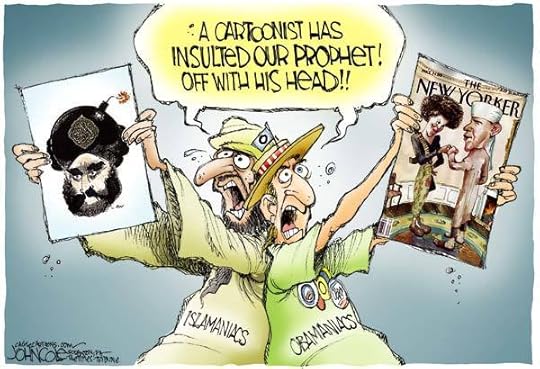
The key paradigm for this book was to illustrate theories with actual and notable hate events that have taken place and this was followed with an explanation of the reasons and purpose for such behaviours. The book is littered with interesting analogies where Williams describes hate in the context of a number of categories whilst, also arguing that hate can display itself in various patterns, with the one common one being the promotion of God verses Gay or cartoon verses Islam. And it is at this juncture that the hypothesis of free speech, particularly in western society, protects the right to hate speech.
A Clash of Cultures
The West once again has been forced to confront the clash of cultures wrote Edward Hudgins. Muslims worldwide rage and riot over the Charlie Hebdo and the Danish newspaper cartoons that, in their eyes, commit the double sin of depicting Mohammad and satirizing him disrespectfully.
Whilst he acknowledges that the entire Muslim world consider such an illustration of their Prophet to be an insult to their religious belief. And yet, Hudgins then wrote, “those of us who value freedom must not succumb to fear and intimidation”. It was the printing of such cartoons that ultimately provoked some Muslims to resort to violence and, as is often customary, it was their backlash that became the focus of the cartoon controversy.
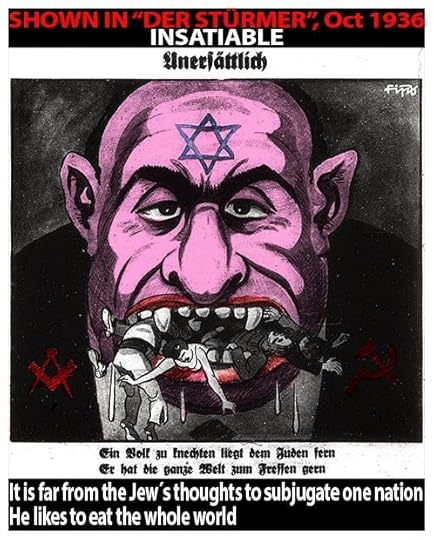
This form of hate-cartoons deliberately challenges individual freedoms and liberty. For example, if a similar stereotypical racist depiction of Jews was published alongside a depiction of Muhamad as a terrorist, the roar would be deafening from the pro-Jewish lobby.
It may not be easy to understand why some Muslims respond violently to derogatory tropes about Islam, the Prophet and the Quran, what does this say about those who compulsively keep recycling these images of Muhammad? However, Williams theory suggests that within the debate on how hate illustrates itself, it is difficult to see how anyone could find a cartoon of the Prophet as a terrorist/suicide bomber amusing without also treating terrorism itself lightly. After all, how many of us can laugh at a cartoon of a suicide bomber, or a Jew portrayed as greedy and all-consuming of societal culture, wealth and power?
Free Speech Protects the Right to Hate Speech
The original affront to Muslim religious sensibilities was swallowed up by assertions of the cartoonists’ right to free speech and to engage in what they consider to be humour. In fact, in most critics’ views, it was not just the cartoonists who were victimised by ‘Islamic rage’ but also the principle of free speech itself.
The case studies that Williams sets out offer an array of emotions from complete disgust to thoughts of horror. Often the focus of this book appears to be on the case study material rather than the science of hate. This does however, help to lighten the discussion and to look at how the science relates to actual events that have happened around the world.
The various chapters of the book offer different reading experiences. For example, in Chapter 3, the idea of unconscious bias looks at how our deeply stored prejudices accumulate towards hate and can lead to serious criminal behaviour against a target group. The part of our brain function, Williams argues, leads us to trigger fear, aggression, violence. In many ways the book helps us understand how our brain has helped us to evolve towards perceiving, judging and reacting to threats and to thus, respond towards safeguarding and protecting ourselves from harmful threats.
Overall a very good book, certainly worth a read but be warned there are some very challenging theories that question our own prejudices and help us to think how our own unconscious thoughts may become a protagonist for hate.
As a psychology major, this read more like a psychology textbook rather than a non-fiction book, which is understandable since the author is a renowned criminology professor.
There were some aspects specifically regarding the Israeli colonization of Palestine that didn't age well in 2024 - the author citing a social psychology research on "racist attitudes towards Arab Israelis" (you mean Palestinians???) and the author unfairly and inaccurately condensing the Israeli colonization of Palestine as a "dilemma from the perspective of God."
While I could tell that the author attempted to approach the topic of hate from a neutral stance as much as possible, I also felt that some of the commentary on racial integration between white communities and POC communities and how "poor integration...is due to failings on both sides" lacked nuance and considerations of the huge historical power dynamics between white folk and POC.
Overall an educational read if you're rather new to anti-racist rhetoric (no shame in that), but I'll be honest it doesn't provide much beyond what POC activists have been saying for years.
A fascinating insight into the prejudices people hold.
I would recommend this book to anyone who is interested in the darker side of human behaviour and the science behind it. It also includes largely unknown cases of hate and discrimination across the globe that will truly shock. A must read!
Not quite sure what I was expecting from this to be honest, but I expected the call to action at the end to be more than "lol just don't be a bigot". Like yeah, obviously.
There's some discussion of studies that I enjoyed reading about, but also a lot of it is just recounting pop culture "hate events" in excruciating detail.
I also find it fascinating that the author seems to place Antifa (at least at first glance) as equivalent to far right groups like the Klu Klan lmao.
Really a 3.5. Not sure I really learned anything new but the case studies and discussions were compelling enough to keep me engaged. An important book for understanding the modern era.
A fascinating examination of the biological and social factors that produce and reproduce hatred of others. There are some horrific real world hate crimes described in quite a lot of detail - this may be off-putting for some readers
I’m still waiting for the science part. Stories and statistics about hate. I thought there would be some psychology or sociology or anything with substance or depth.
Don't miss this game changer! An enthralling blend of true crime and popular science.
This truly remarkable book couldn't be more topical. The author has an ability to make the science of bias, prejudice and hate easily digestible, helped along by sometimes shocking true hate crime cases from across the globe, including the UK, US, South Africa, Russia and Japan. These real-life cases, and the fact that the author himself was a victim of a hate crime (which he details and refers back to regularly) really separate this book from other popular science titles. That said, the science really does take centre stage, and the author weaves many disciplines together with ease and aplomb - from neuroscience to psychology, to sociology and economics, to political science and computer science - to develop his 'formula' for hate. The book concludes with a breathtaking 'Seven steps to stop hate', that reveals that scientists have known for decades what works in fostering tolerance and peace in our communities. It turns out the politicians and tech giants have been ill-equipped, or/or unwilling, to institute them (I guess there is much to gain from a divided and hateful public/customer base). If there is one book you read this year, make it this one. A rollercoaster of a read (at times you forget you are reading popular science) and a true eyeopener.
An interesting read but heavily tries to justify reasoning behind criminal activity. Maybe not the intention of the author, but comes across quite biased especially from a criminologist.
This book is necessary, enlightening, and in my opinion, extremely important.
The ability to convey complex psychological, neurological, and sociological phenomena into simple words that are digestible for many audiences is a special skill and one Williams possesses. It is an imperative read for these polarized times. The global political climate is filled with prejudiced rhetoric and is becoming a dangerous place, so I would consider this book as a guide to understanding the inner workings of the minds that create that rhetoric. It would even help you understand your own behaviors and those of your neighbors.
I now have a better understanding that we are all naturally equipped to be prejudiced, a precursor to scientific hate, but not all of us are thrust into the environment that would bring a hate crime to fruition. Our rational dACC, and it's counterpart the DLPFC have a delicate balance when it comes to judging and making decisions based on those around us. Our amygdalas, what could be referred to as our primal brain, responsible for fight-or-flight responses, can amplify our fear and reactions to groups seen as "not us." But it is not only these functions that influence our behavior, but our SES, education, neighborhoods, and personal values that can catapult our dangerous impulses. Furthermore, it has been proven (the author is careful to point out that scientific findings lead to a sort of most-likely conclusion, not a 100% guarantee) that outside events, our salience toward media, political pundits and their behavior we witness, and terrorist attacks that can illicit moral outrage can bring us to a tipping point of violence.
We bare a responsibility to keep our own cognition and higher functions in check. To challenge our preconceived notions, our underlying biases so that we may become better people, and work towards diminishing the amount of hatred in the world. We also have a responsibility to call out hateful speech where we see it, and make sure those who spew it take accountability. However, responsibility also lies on governments, tech organizations, and the media to mitigate the amount of hateful content they produce.
Overall, greatly informing, and wonderfully written.
Excellent book, well written, though those stories (that the author uses to explain the science behind hate) taken from criminal records are very dark and have a potential to make one really angry and in the worse case really feeling heavy and down. I literally had to remind myself that there is still more love out there than hate... or at least that is what I want to believe. Any data on that? :)
The book is very detailed on the science underpinning hate and so can be a bit heavy weather to start with but is well worth persistence. It is a very comprehensive review of the causes of hate, the role of social media in spreading hate, and makes suggestions for how we can tackle it. Strongly recommended.
Oddly pertinent reading this book this week, when news of another hate related crime in the US breaks. Insightful and interesting book, anyone who's spent any time on twitter will be uncomfortably familiar with some of the chapters of this book.
This book gives a holistic view of the problems of polarisation and hate. Despite his personal scar tissue of a hate crime, Williams keeps a level perspective throughout and delivers a comprehensive work. Bravo!
I think this book is really personal. It is not just curiosity, it is the hope that a victim has of not being like the agressors. I did had a good time reading it and I learned a lot. Although I also think it is to big for this topic.
Very heavy read in terms of writing style. Definitely some interesting information in here, but I felt the author was cherry picking some stats/data/findings to an extent. Worth reading if you really like non-fiction sciencey books.
This was a really engaging read. Tonnes of insight and research presented in an easily digestible format. Very interesting stuff about an important topic with some real-world solutions.
A very interesting book that looks at the research into hate and where the line comes between being prejudiced and taking action on that, as well as the role of social media in spreading hate.