

What do you think?

Das Jahresbankett der Totengräber
Für eine Dissertation über das Leben auf dem Land im 21. Jahrhundert zieht der Pariser Anthropologe David aufs Dorf, um Sitten und Bräuche der Landbevölkerung zu beobachten. Die Stille, die ständige Anwesenheit von Tieren aller Art, vor allem aber die überraschende Unangepasstheit sämtlicher Dorfcharaktere ziehen ihn in ihren Bann, und bald ist er viel involvierter in das Landleben, als er es sich je hätte träumen lassen. Doch nie wird er all die weitverzweigten Vorgeschichten kennen, die Mathias Enard in kühner Fahrt durch Raum und Zeit mit komödiantischer Lust erzählt. Das neue Buch von Mathias Enard ist mehr als ein Roman, es ist ein atemberaubendes literarisches Erlebnis.
Nach seinen, mit dem Prix Goncourt ausgezeichneten, Buch „Kompass“, schreibt Mathias Enard in seinem neuen Roman über die Herausforderungen des Landlebens und die Beharrlichkeit der menschlichen Existenz.
Nach seinen, mit dem Prix Goncourt ausgezeichneten, Buch „Kompass“, schreibt Mathias Enard in seinem neuen Roman über die Herausforderungen des Landlebens und die Beharrlichkeit der menschlichen Existenz.
480 pages, Hardcover
First published October 7, 2020
About the author
Mathias Énard
48 books534 followersMathias Énard studied Persian and Arabic and spent long periods in the Middle East. A professor of Arabic at the University of Barcelona, he won the Prix des Cinq Continents de la Francophonie and the Prix Edmée-de-La-Rochefoucauld for his first novel, La perfection du tir. He has been awarded many prizes for Zone, including the Prix du Livre Inter and the Prix Décembre.
Compass, which garnered Énard the renowned Prix Goncourt in 2015, traces the intimate connection between Western humanities and art history, and Islamic philosophy and culture. In one sentence that's over 500 pages long, Zone tells of the recent European past as a cascade of consequences of wars and conflicts.
Énard lives and works in Barcelona, where he teaches Arabic at the Universitat Autònoma. His latest publications include a poetry collection titled Dernière communication à la société proustienne de Barcelone (Final message to the Proust Society of Barcelona) and Le Banquet annuel de la confrérie des fossoyeurs, a long novel published in 2020.
Compass, which garnered Énard the renowned Prix Goncourt in 2015, traces the intimate connection between Western humanities and art history, and Islamic philosophy and culture. In one sentence that's over 500 pages long, Zone tells of the recent European past as a cascade of consequences of wars and conflicts.
Énard lives and works in Barcelona, where he teaches Arabic at the Universitat Autònoma. His latest publications include a poetry collection titled Dernière communication à la société proustienne de Barcelone (Final message to the Proust Society of Barcelona) and Le Banquet annuel de la confrérie des fossoyeurs, a long novel published in 2020.
Ratings & Reviews
Friends & Following
Create a free account to discover what your friends think of this book!
Community Reviews
Displaying 1 - 30 of 287 reviews

January 26, 2024
A young, rather inexperienced and a bit vainglorious ethnologist comes into the village to write a thesis on the habitual behaviour of the modern rural dwellers… And he starts writing his personal ethnographer’s diary describing his daily encounters, interviews, notions and his own behaviour…
In the novel Mathias Énard depicts the life of the contemporary countryside… However The Annual Banquet of the Gravedigger’s Guild isn’t a pastoral…
Adopting the Buddhist concept of the karmic wheel the author ironically portrays the present incarnations of migrating souls as well as their past journeys trough time and space… So in the tale there are enough picturesque vignettes stolen from the past…
The story is a kaleidoscope of destinies… There are thousands of vocations and occupations in the world… And everyone follows one’s own walk of life…
The culmination of the tale is a gravediggers’ feast… It’s a Rabelaisian anthem to gluttony, imbibing and other earthly delights… Including the fable of Gargantua’s sexual fantasy…
Obstetricians and midwives welcome us into the world while undertakers and gravediggers wait to see us off.
Boredom and curiosity are the twin breasts that suckle science.
In the novel Mathias Énard depicts the life of the contemporary countryside… However The Annual Banquet of the Gravedigger’s Guild isn’t a pastoral…
Adopting the Buddhist concept of the karmic wheel the author ironically portrays the present incarnations of migrating souls as well as their past journeys trough time and space… So in the tale there are enough picturesque vignettes stolen from the past…
…Théodore Agrippa d’Aubigné will make work for the gravediggers, he will revel in battle, kill with pleasure, loot and plunder, besiege fortresses, villages and farms, blindly following the dark path of his previous incarnation, despite the schooling and his books; he and his henchmen will raze the hamlet where Jérémie will later hang himself in a violent fury, without realizing that all things are connected and that evil perdures, that it settles in the soul with each transmigration like silt upon a riverbed…
The story is a kaleidoscope of destinies… There are thousands of vocations and occupations in the world… And everyone follows one’s own walk of life…
The culmination of the tale is a gravediggers’ feast… It’s a Rabelaisian anthem to gluttony, imbibing and other earthly delights… Including the fable of Gargantua’s sexual fantasy…
“Gravediggers and friends, to return to the matter of women which so nettles you, for there can be no good Banquet without talk of love, and of prick, as it is the practice of this Guild to say outrageous things, and corporeal pleasures have their rightful place (while you scoff, dig the wax from your ears! Swill the juice of the vine!), there will be mention made (with no vulgarity) of a form of gigantism of the cunt, of disproportion in the gash and of vim in the quim.”
Obstetricians and midwives welcome us into the world while undertakers and gravediggers wait to see us off.

June 13, 2024
LUNGA VITA ALLA MORTE
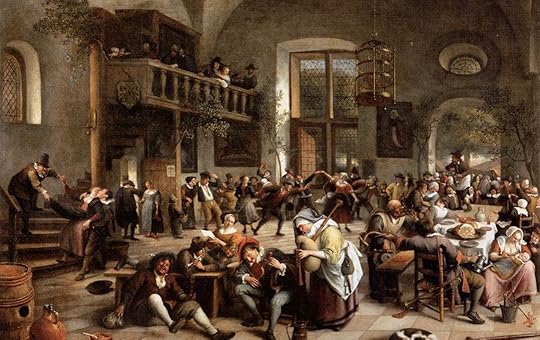
In copertina
Racchiuso tra due lunghe sezioni - che sono il diario di un giovanissimo dottorando in etnologia approdato nella regione per uno studio sul campo – la regione è nella Francia del nord ovest, a qualche decina di chilometri dall’oceano Atlantico e non lontano dalla celebre Vandea – lo studio, a base di interviste ai locali, è dedicato a raccontare lo stato della vita e le condizioni della campagna di quella parte del paese – Enard circoscrive sia il lungo racconto del banchetto annuale della confraternita dei becchini – in pratica gli addetti alle pompe funebri – sia l’ancor più lungo excursus, avanti e indietro nel tempo per vari secoli, della reincarnazione e trasmigrazione di anime che segnano la vita e la storia di quella regione.
Cinghiali che sono stati il parroco del villaggio, minuscoli vermi che sono stati contadini, uomini e donne che diventano insetti, uccelli, quadrupedi, ma anche altri esseri umani. Una specie di metempsicosi universale senza accezione religiosa.
Ma, più che la vita, a vincere si direbbe sia sempre la morte, inevitabile Ruota del Tempo. Che, alla sua maniera, regala l’immortalità.
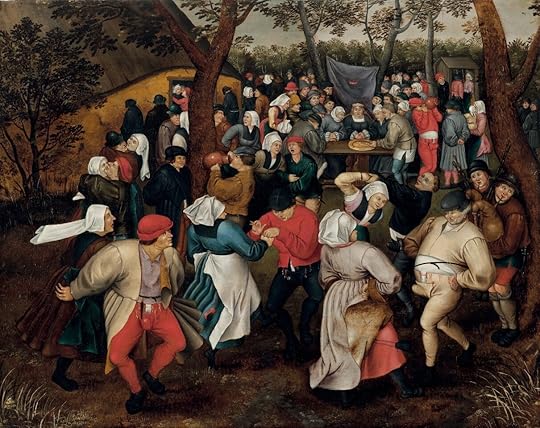
Le due sezioni all’inizio e in fondo sono in un linguaggio semplice e piano, come si addice agli appunti diaristici di un ventenne che non vuole fare lo scrittore ma l’etnologo. Anche queste due parti hanno numerosi momenti divertenti e buffi: la popolazione locale è piuttosto sorpresa da questo estraneo piombato in mezzo a loro per restare un periodo lungo.
[image error]
Sono però le trecento pagine centrali la parte più succosa del romanzo. È qui che Enard dispiega davvero il suo talento, la sua unicità. Con lingua ricca, sontuosa, fastosa, perfino sensuale, regala al lettore:
il giro perfetto della frase, la metafora azzeccata, il sapore della lingua restituito attraverso la descrizione della squisitezza dei cibi e dei vini, il congiungersi impeccabile di storie lasciate e poi riprese, per tenere desta l'attenzione del lettore, in uno sfoggio barocco di erudizione e di intelligenza impressionante.
Con la stessa lingua trasforma storie di vite insignificanti, storie minime, in momenti indimenticabili scolpiti nel tempo; coniuga il pensiero profondo a un momento comico; incide come un miniaturista le nature morte descrittive degli arrosti e dei pesci, delle lepri e della selvaggina, delle carpe, rane e anguille, dei trionfi di lumache, dei maialini da latte grondanti olio e burro, dei novantanove formaggi e dei vini, fino alla comica finale delle torte in faccia
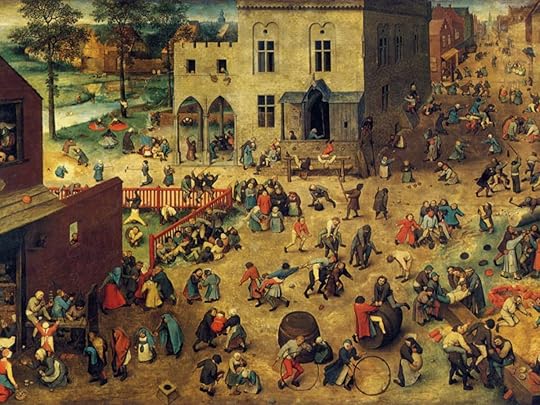
Senza dimenticare le invettive green, e il messaggio ecologista che rimane tra le mani e nel cuore quando si chiude il libro, è alla pittura fiamminga – sapientemente riportata in copertina -che questo Enard mi ha rimandato, quei dipinti con dentro mille storie e un milione di dettagli, che da pischello mi satollavano senza soddisfazione e che ora invece ammiro senza stancarmi.
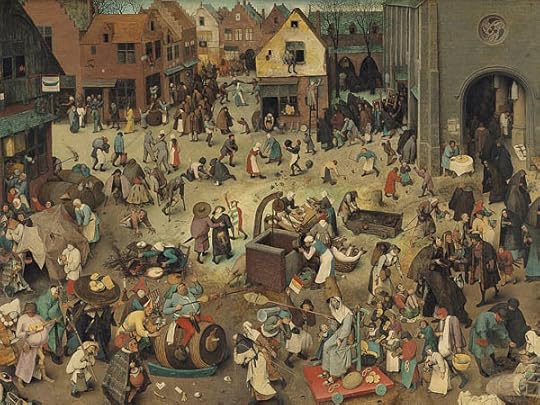
In copertina
Racchiuso tra due lunghe sezioni - che sono il diario di un giovanissimo dottorando in etnologia approdato nella regione per uno studio sul campo – la regione è nella Francia del nord ovest, a qualche decina di chilometri dall’oceano Atlantico e non lontano dalla celebre Vandea – lo studio, a base di interviste ai locali, è dedicato a raccontare lo stato della vita e le condizioni della campagna di quella parte del paese – Enard circoscrive sia il lungo racconto del banchetto annuale della confraternita dei becchini – in pratica gli addetti alle pompe funebri – sia l’ancor più lungo excursus, avanti e indietro nel tempo per vari secoli, della reincarnazione e trasmigrazione di anime che segnano la vita e la storia di quella regione.
Cinghiali che sono stati il parroco del villaggio, minuscoli vermi che sono stati contadini, uomini e donne che diventano insetti, uccelli, quadrupedi, ma anche altri esseri umani. Una specie di metempsicosi universale senza accezione religiosa.
Ma, più che la vita, a vincere si direbbe sia sempre la morte, inevitabile Ruota del Tempo. Che, alla sua maniera, regala l’immortalità.
Le due sezioni all’inizio e in fondo sono in un linguaggio semplice e piano, come si addice agli appunti diaristici di un ventenne che non vuole fare lo scrittore ma l’etnologo. Anche queste due parti hanno numerosi momenti divertenti e buffi: la popolazione locale è piuttosto sorpresa da questo estraneo piombato in mezzo a loro per restare un periodo lungo.
[image error]
Sono però le trecento pagine centrali la parte più succosa del romanzo. È qui che Enard dispiega davvero il suo talento, la sua unicità. Con lingua ricca, sontuosa, fastosa, perfino sensuale, regala al lettore:
il giro perfetto della frase, la metafora azzeccata, il sapore della lingua restituito attraverso la descrizione della squisitezza dei cibi e dei vini, il congiungersi impeccabile di storie lasciate e poi riprese, per tenere desta l'attenzione del lettore, in uno sfoggio barocco di erudizione e di intelligenza impressionante.
Con la stessa lingua trasforma storie di vite insignificanti, storie minime, in momenti indimenticabili scolpiti nel tempo; coniuga il pensiero profondo a un momento comico; incide come un miniaturista le nature morte descrittive degli arrosti e dei pesci, delle lepri e della selvaggina, delle carpe, rane e anguille, dei trionfi di lumache, dei maialini da latte grondanti olio e burro, dei novantanove formaggi e dei vini, fino alla comica finale delle torte in faccia
Senza dimenticare le invettive green, e il messaggio ecologista che rimane tra le mani e nel cuore quando si chiude il libro, è alla pittura fiamminga – sapientemente riportata in copertina -che questo Enard mi ha rimandato, quei dipinti con dentro mille storie e un milione di dettagli, che da pischello mi satollavano senza soddisfazione e che ora invece ammiro senza stancarmi.

May 8, 2021
English: The Annual Banquet of the Gravedigger's Guild
While globetrotter Énard usually presents stories with wide, international themes, he now aims to find the whole world in his French home region: Our protagonist, anthropologist David Mazon, is nearing his 3ost birthday and intends to write a doctoral thesis about a village near Niort in the départment Deux-Sèvres - author Mathias Énard was born in Niort. Structured in seven chapters, we first read excperts from David's diary that detail how he first arrives in his area of study, how he perceives the people and what kind of person he is (no spoiler: a neurotic, slightly arrogant Parisian). Then, the voice shifts: A third person narrator proceeds to tell us the story of the region and its people over the generations, sometimes incorporating different text forms as songs, poems, speeches, a theater script, at two instances even typographic experiments et al. The text concludes with a chapter once again created as a diary, but including flashbacks and footnotes.
The clue: The way Énard tells his story revolves around the ideas of the pensée sauvage ("wild thinking" as defined by anthropologist Claude Lévi-Strauss in, you guessed it, La pensée sauvage), as well as the Buddhist Bhavacakra, the wheel of life. This means that the characters re-incarnate through the centuries and as different species, which allows Énard to employ an intricate montage and to jump through centuries. To convey insights, he uses the technique of bricolage as part of his wild thinking, a flexible process using improvisation to create meaning from available resources. This partly results in mythical logic: The book becomes an epos about the region. On top of that, Énard points to the importance of folk art, in this case (it's France!) well-known chanson. He turns them into small stories, vignettes that separate the chapters.
One might assume now that this means that Énard turns away from international storytelling, but that's not true: He talks about how European history has affected one small village on our continent. As a person from La Sarre, I can certainly relate. His main character is called David Mazon - Albin Mazon was a French micro-historian, researching local history. This field of research states that big historical events must be broken down to small communities, because only focusing on singular events and the powerful does not provide us with sufficient knowledge about the past. The story of the small village does indeed inform us about the world as a whole and the course of history.
The characters Énard presents are so memorable, captivating and distinct that it is easy to follow them through this almost 500-page-long book, and the present, the familial relationships between the characters and the connections between the timelines are clearly defined and spelt out, so the text doesn't become confusing. The small tragedies are often directly connected to big historical events (like men being drafted as soldiers), and the way people interact are heavily influenced by moral and societal standards of the time.
Sure, one might argue that this novel is way too long, that it tries to do way too much, but then again, that's the whole concept: That this, from an international point of view, rather insignificant community carries the whole world in the lifelines of its citizens. The exurberance is the point. Also, it's often playful and wickedly funny, reminiscent of François Rabelais.
And btw: The title-giving undertakers do not only feature again and again (talking about the wheel of life), the mayor of the village is (tellingly!) the mortician. In the middle of the novel, we witness the title-giving banquet, and it's a blast.
You can learn more about the novel in our new podcast episode (in German).
While globetrotter Énard usually presents stories with wide, international themes, he now aims to find the whole world in his French home region: Our protagonist, anthropologist David Mazon, is nearing his 3ost birthday and intends to write a doctoral thesis about a village near Niort in the départment Deux-Sèvres - author Mathias Énard was born in Niort. Structured in seven chapters, we first read excperts from David's diary that detail how he first arrives in his area of study, how he perceives the people and what kind of person he is (no spoiler: a neurotic, slightly arrogant Parisian). Then, the voice shifts: A third person narrator proceeds to tell us the story of the region and its people over the generations, sometimes incorporating different text forms as songs, poems, speeches, a theater script, at two instances even typographic experiments et al. The text concludes with a chapter once again created as a diary, but including flashbacks and footnotes.
The clue: The way Énard tells his story revolves around the ideas of the pensée sauvage ("wild thinking" as defined by anthropologist Claude Lévi-Strauss in, you guessed it, La pensée sauvage), as well as the Buddhist Bhavacakra, the wheel of life. This means that the characters re-incarnate through the centuries and as different species, which allows Énard to employ an intricate montage and to jump through centuries. To convey insights, he uses the technique of bricolage as part of his wild thinking, a flexible process using improvisation to create meaning from available resources. This partly results in mythical logic: The book becomes an epos about the region. On top of that, Énard points to the importance of folk art, in this case (it's France!) well-known chanson. He turns them into small stories, vignettes that separate the chapters.
One might assume now that this means that Énard turns away from international storytelling, but that's not true: He talks about how European history has affected one small village on our continent. As a person from La Sarre, I can certainly relate. His main character is called David Mazon - Albin Mazon was a French micro-historian, researching local history. This field of research states that big historical events must be broken down to small communities, because only focusing on singular events and the powerful does not provide us with sufficient knowledge about the past. The story of the small village does indeed inform us about the world as a whole and the course of history.
The characters Énard presents are so memorable, captivating and distinct that it is easy to follow them through this almost 500-page-long book, and the present, the familial relationships between the characters and the connections between the timelines are clearly defined and spelt out, so the text doesn't become confusing. The small tragedies are often directly connected to big historical events (like men being drafted as soldiers), and the way people interact are heavily influenced by moral and societal standards of the time.
Sure, one might argue that this novel is way too long, that it tries to do way too much, but then again, that's the whole concept: That this, from an international point of view, rather insignificant community carries the whole world in the lifelines of its citizens. The exurberance is the point. Also, it's often playful and wickedly funny, reminiscent of François Rabelais.
And btw: The title-giving undertakers do not only feature again and again (talking about the wheel of life), the mayor of the village is (tellingly!) the mortician. In the middle of the novel, we witness the title-giving banquet, and it's a blast.
You can learn more about the novel in our new podcast episode (in German).

October 7, 2023
Shortlisted for the 2024 National Translation Awards (NTA) in Prose.
Martial Pouvreau locked the door of the funeral parlour where, in a air of modest Parisian coffins, lay the young couple who had deceased the day before, quietly suffocated by the carbon monoxide fumes of a poorly installed stove, died without realizing, in the midst of a dream that ended with a permanent fade to black; they had been unaware of passing through heat and cold, of the shifting colours that preceded the Bright Light that they did not see, of their subtle bodies being propelled — after a brief sojourn in the Bardo, the world between worlds — towards immediate reincarnation in the bodies of twins, boy and girl, born in a Niort clinic, caught by a skilled obstetrician and handed to a father who was at once spellbound and repulsed and who could not tear his astonished eyes from his wife's parted labia, unable to believe that such an orifice could allow the passage of two whole bodies, albeit frail and bloody: his wife's brow streamed with sweat, her eyes with tears, she held out her arms to the babes she had just delivered in terrible pain, and whom the eternal gravediggers would one day carry to their graves, just as that same afternoon they were preparing to bury the young dead couple who now lay in the adjoining room, so they quietly drank in the work-shop, perched on marble headstones yet to be engraved, while they waited for the appointed hour; they swigged hooch from the bottle which they passed bottle back and forth — if one of the three kept it longer than he should, the other two grunted impatiently, since time was short, time is always short despite the unvarying task or burying mortal remains or consigning them to the flames; the long-faced gravediggers chatted as they got drunk, they talked about the Banquet, which would take place soon, in three months, in the spring, as it had been every year since the creation of the world, where they would have a few laughs, drink dry and eat hard, and for three days there would be no corpses, because, as is well known, no-one ever dies during the Banquet of the Gravediggers' Guild, for this is the Grim Reaper's gift to the Guild, these three days' repose, these revelries far from death are the Christmas of the baleful, the feast of Saint Nicholas for the men with long faces. Three months may seem like a long time but, for the gravediggers, winter was a season of impatience, when they drank more than usual, because of the cold, because the coffins' handles were frozen, the marble icier than usual, and the earth difficult to dig even with the little bulldozer that was their only plaything, so they warmed themselves with the thought that the Banquet was approaching and everyone would come -the gravediggers, the cemetery keepers, the undertakers in their black ties, the drivers of luxury hearses - that the ritual words would be spoken and they would fall to feasting and drinking, telling tales and philosophizing, and for two nights they would forget that the Wheel was turning and that every human would one day end up on their shoulders, since none escapes it: whatever becomes of the subtle body, the body is always delivered into the hands of the gravediggers.
The Annual Banquet of the Gravedigger's Guild (2023) is Frank Wynne's translation of Mathias Énard's Le Banquet annuel de la confrérie des fossoyeurs (2020) and published by Fitzcarraldo Editions whose authors-in-translation, while I was reading the book, won their 4th Nobel Prize.
This is a far from linear novel but can be characterised as having three embedded layers.
The outer, which book ends the novel, is the diary of late-20s Parisian anthropologist, David Mazon, who moves to a village near to Niort, initially treating the locals as subjects of academic curiosity (he names the house he rents La Pensée Sauvage after Claude Lévi-Strauss’s book) before gradually abandoning his studiesm and his Parisian partner, for a bucolic eco-friendly existence.
The middle layer revolves around the concept of the Wheel, around which life itself revolves, and is a Rabelisian exploration of the family histories of those Mazon encounters, and of the region more generally, via different life stories, many linked by reincarnation.
The novel's central bulb comes from the titular Annual Banquet of the Gravedigger's Guild, a three day bacchanalian feast for the (male) members of the profession during which Death, toasted as that big-hearted strumpet, sets aside its scythe and the Wheel ceases to turn.
This is both a book that impresses me - particularly Wynne's brilliant translation - he credits Enard's previous "peerless" translator Charlotte Mandell who suggested him for "entrusting me with one of the hardest and most exhilirating texts it has been my pleasure to translate", as well as Enard's literary and historical scholarship and riotous imagination - but was too maximalist for my personal literary tastes. 3.5 stars for personal taste, but recommended to others and a strong International Booker contender depending on the judges' taste.
Martial Pouvreau locked the door of the funeral parlour where, in a air of modest Parisian coffins, lay the young couple who had deceased the day before, quietly suffocated by the carbon monoxide fumes of a poorly installed stove, died without realizing, in the midst of a dream that ended with a permanent fade to black; they had been unaware of passing through heat and cold, of the shifting colours that preceded the Bright Light that they did not see, of their subtle bodies being propelled — after a brief sojourn in the Bardo, the world between worlds — towards immediate reincarnation in the bodies of twins, boy and girl, born in a Niort clinic, caught by a skilled obstetrician and handed to a father who was at once spellbound and repulsed and who could not tear his astonished eyes from his wife's parted labia, unable to believe that such an orifice could allow the passage of two whole bodies, albeit frail and bloody: his wife's brow streamed with sweat, her eyes with tears, she held out her arms to the babes she had just delivered in terrible pain, and whom the eternal gravediggers would one day carry to their graves, just as that same afternoon they were preparing to bury the young dead couple who now lay in the adjoining room, so they quietly drank in the work-shop, perched on marble headstones yet to be engraved, while they waited for the appointed hour; they swigged hooch from the bottle which they passed bottle back and forth — if one of the three kept it longer than he should, the other two grunted impatiently, since time was short, time is always short despite the unvarying task or burying mortal remains or consigning them to the flames; the long-faced gravediggers chatted as they got drunk, they talked about the Banquet, which would take place soon, in three months, in the spring, as it had been every year since the creation of the world, where they would have a few laughs, drink dry and eat hard, and for three days there would be no corpses, because, as is well known, no-one ever dies during the Banquet of the Gravediggers' Guild, for this is the Grim Reaper's gift to the Guild, these three days' repose, these revelries far from death are the Christmas of the baleful, the feast of Saint Nicholas for the men with long faces. Three months may seem like a long time but, for the gravediggers, winter was a season of impatience, when they drank more than usual, because of the cold, because the coffins' handles were frozen, the marble icier than usual, and the earth difficult to dig even with the little bulldozer that was their only plaything, so they warmed themselves with the thought that the Banquet was approaching and everyone would come -the gravediggers, the cemetery keepers, the undertakers in their black ties, the drivers of luxury hearses - that the ritual words would be spoken and they would fall to feasting and drinking, telling tales and philosophizing, and for two nights they would forget that the Wheel was turning and that every human would one day end up on their shoulders, since none escapes it: whatever becomes of the subtle body, the body is always delivered into the hands of the gravediggers.
The Annual Banquet of the Gravedigger's Guild (2023) is Frank Wynne's translation of Mathias Énard's Le Banquet annuel de la confrérie des fossoyeurs (2020) and published by Fitzcarraldo Editions whose authors-in-translation, while I was reading the book, won their 4th Nobel Prize.
This is a far from linear novel but can be characterised as having three embedded layers.
The outer, which book ends the novel, is the diary of late-20s Parisian anthropologist, David Mazon, who moves to a village near to Niort, initially treating the locals as subjects of academic curiosity (he names the house he rents La Pensée Sauvage after Claude Lévi-Strauss’s book) before gradually abandoning his studiesm and his Parisian partner, for a bucolic eco-friendly existence.
The middle layer revolves around the concept of the Wheel, around which life itself revolves, and is a Rabelisian exploration of the family histories of those Mazon encounters, and of the region more generally, via different life stories, many linked by reincarnation.
The novel's central bulb comes from the titular Annual Banquet of the Gravedigger's Guild, a three day bacchanalian feast for the (male) members of the profession during which Death, toasted as that big-hearted strumpet, sets aside its scythe and the Wheel ceases to turn.
This is both a book that impresses me - particularly Wynne's brilliant translation - he credits Enard's previous "peerless" translator Charlotte Mandell who suggested him for "entrusting me with one of the hardest and most exhilirating texts it has been my pleasure to translate", as well as Enard's literary and historical scholarship and riotous imagination - but was too maximalist for my personal literary tastes. 3.5 stars for personal taste, but recommended to others and a strong International Booker contender depending on the judges' taste.

November 21, 2021
Cerchi nell'acqua
Scrittura piana e scorrevole, registro colloquiale, trama sottile (un etnologo in trasferta nella campagna francese per una tesi di dottorato)… tutto farebbe pensare di trovarsi davanti a un romanzetto come mille altri, una storiellina che strizza l'occhio all'ecologismo e alla vita bucolica, l'ennesimo libretto che ci parla del "logorio della vita moderna" (cit. Cynar), magari condendo il tutto con una spruzzata di citazioni colte che di questi tempi non fa mai male.
Errore: queste considerazioni posso essere applicate al massimo al primo capitolo del libro, e rappresentano la superficie, la strategia adottata da Énard per attirare il lettore nella sua ragnatela. Quel primo capitolo, e le storie che abbozza, sono solo il sasso che cade nell'acqua e cadendo crea una serie di cerchi concentrici che dilatandosi finiscono per portare la trama in mille direzioni diverse, soprattutto temporali.
D'altra parte lo scrittore ci aveva già avvertito nell'esergo: qui si parlerà di vite che si rincorrono nella ruota del tempo, di morte intesa come passaggio dell'anima da un corpo all'altro, da un'epoca all'altra, in modo da far diventare – miracolo della scrittura – il Marais Poitevin, una piccola zona nel sud della Vandea, il centro di un mondo immaginifico.
I cerchi si allargano e le acque si increspano: la scrittura prende a scorrere in maniera impetuosa a da lieve si fa rabelaisiana, la trama diventa un fiume in piena che si ramifica in mille rivi: sono i racconti dei componenti della confraternita dei becchini che si succedono con un procedimento simile alle novelle delle Mille e una notte. La scrittura si impenna e noi siamo costretti a rincorrere Énard che si infila lesto in un vagabondaggio letterario che non può non far pensare a Sebald: Gargantua e Lucrezio, Clodoveo e Alarico, Enrico di Navarra e Severino Boezio diventano non più i protagonisti della Storia ma gli interpreti di piccole storie che interessano la regione della Francia al centro del racconto.
Occhio lettore a Mathias Énard, è un nome da tenere d'occhio perché una delle direzioni della narrativa contemporanea passa da qui.
Scrittura piana e scorrevole, registro colloquiale, trama sottile (un etnologo in trasferta nella campagna francese per una tesi di dottorato)… tutto farebbe pensare di trovarsi davanti a un romanzetto come mille altri, una storiellina che strizza l'occhio all'ecologismo e alla vita bucolica, l'ennesimo libretto che ci parla del "logorio della vita moderna" (cit. Cynar), magari condendo il tutto con una spruzzata di citazioni colte che di questi tempi non fa mai male.
Errore: queste considerazioni posso essere applicate al massimo al primo capitolo del libro, e rappresentano la superficie, la strategia adottata da Énard per attirare il lettore nella sua ragnatela. Quel primo capitolo, e le storie che abbozza, sono solo il sasso che cade nell'acqua e cadendo crea una serie di cerchi concentrici che dilatandosi finiscono per portare la trama in mille direzioni diverse, soprattutto temporali.
D'altra parte lo scrittore ci aveva già avvertito nell'esergo: qui si parlerà di vite che si rincorrono nella ruota del tempo, di morte intesa come passaggio dell'anima da un corpo all'altro, da un'epoca all'altra, in modo da far diventare – miracolo della scrittura – il Marais Poitevin, una piccola zona nel sud della Vandea, il centro di un mondo immaginifico.
I cerchi si allargano e le acque si increspano: la scrittura prende a scorrere in maniera impetuosa a da lieve si fa rabelaisiana, la trama diventa un fiume in piena che si ramifica in mille rivi: sono i racconti dei componenti della confraternita dei becchini che si succedono con un procedimento simile alle novelle delle Mille e una notte. La scrittura si impenna e noi siamo costretti a rincorrere Énard che si infila lesto in un vagabondaggio letterario che non può non far pensare a Sebald: Gargantua e Lucrezio, Clodoveo e Alarico, Enrico di Navarra e Severino Boezio diventano non più i protagonisti della Storia ma gli interpreti di piccole storie che interessano la regione della Francia al centro del racconto.
Occhio lettore a Mathias Énard, è un nome da tenere d'occhio perché una delle direzioni della narrativa contemporanea passa da qui.

May 25, 2022
"... das ist kein Roman … ohne Form … eine poliphone Orgie … dieser neobarocke, durchgeknallte Drogenrausch … ein Krater des Wahnsinns …" sagt eine aufgebrachte Eva Menasse im literarischen Quartett, das ich mir soeben angeschaut habe. Und Thea Dorn, zwar weniger emotional, aber ratlos: "... was will der Mann mir erzählen, das ist, was ich nicht verstehe …". Einzig Vea Kaiser ist begeistert, sie spricht vom "Epos einer Region" und vom "humanistischen Ideal Europas", Vea und ihr Anagram Eva geraten sich dabei fast in die Haare - kalt liess das Buch jedenfalls keine.
Tatsächlich ist es die Region, die dieses wilde Fabulieren zusammenhält, nämlich das Departement Deux-Sèvres im Westen Frankreichs, wo auch der Autor selbst aufgewachsen ist. Um das Lebensgefühl dieses provinziellen Landstrichs herauszuarbeiten, greift Énard weit in die bewegte Geschichte zurück, gräbt Legenden aus, Mythen und Aberglauben, thematisiert aber genauso die ökosozialen Probleme, die solche landwirtschaftlich geprägten Regionen im 21. Jahrhundert haben. Und was wäre das ohne die archetypischen Figuren, die Menschen, die den Charakter einer Gegend prägen, und die Mathias Énard literarisch zum Leben erweckt, oft liebenswert und unerträglich zugleich, einschließlich ihrer Liebe zum Pastis und ihrer Obsession für Jagd und Anglerei.
Die sieben Kapitel bilden eine Form wie eine Zwiebel oder eine Frucht mit Hülle, Fleisch und Kern und dazwischen sind wie trennende Häutchen ganz kurze Geschichten gesetzt, nacherzählt aus den tragischen Stoffen alter Chansons, die den Bewohnern wohl in die DNA geschrieben sind und die Énard sicher alle in seiner Kindheit gehört hat.
Die äußerste Schicht, also erstes und letztes Kapitel, ist das Feldtagebuch des Studenten der Anthropologie David Mazon. Er kommt aus Paris in das winzige Kaff La-Pierre-Saint-Christophe, um seine Doktorarbeit zu schreiben und wie einst Bronisław Malinowski das Leben der Eingeborenen in der Wildnis zu erforschen. Köstlich, wie der von sich eingenommene Großstädter, der sich schon als Nachfolger von Claude Lévi-Strauss sieht, auf die Unwägbarkeiten des einfachen Lebens stößt, die am Ende sein eigenes Leben völlig auf den Kopf stellen.
Im Kern des Romans, dem vierten und mittleren Kapitel, sind wir Zaungäste des titelgebenden Banketts. Neunundneunzig Totengräber aus allen Teilen des Landes treffen sich zu einem wahrlich gargantuesken Fress- und Saufgelage, einem Fest des Lebens und Exzess des Überflusses. Einmal im Jahr findet dieser Event statt, da lässt sogar Gevatterin Tod ihr Tagewerk ruhen, um die Bestatter nicht zu stören. Eine fulminante Reminiszenz an den großen Rabelais.
Die übrigen Kapitel erzählen von den weniger heiteren Aspekten des Lebens, vom teils grausamen Schicksal einiger Dorfbewohner und wie alles - und zwar wirklich alles - zusammenhängt. Paticcasamuppada heisst in der buddhistischen Lehre soviel wie bedingtes Entstehen, Enard hat sich da in ironischer Weise und zu meinem größten Amusement beim tibetischen Buddhismus bedient. [Spoilerallergiker sollten jetzt zum nächsten Absatz springen.] So wird etwa Dorfpfarrer Largeau nach seinem Ableben als Wildschwein wiedergeboren, das bald vom Bürgermeister und Bestattungsunternehmer des kleinen Orts überfahren wird. Der dicke Thomas, Inhaber des Angler-Cafés, schickt es mit zwei Ladungen Schrot endgültig ins Bardo, was wiederum seine Wiedergeburt als Bettwanze verursacht. Der Blutsauger wird von Napoleon, der sich 1813 in der Gegend aufhielt, im Schlaf zerquetscht - denn die Richtung der Zeit spielt bei der bedingten Entstehung keine Rolle. Auch die ekligen roten Würmer in der Dusche, die David Mazon mit Salmiakgeist aus diesem Dasein befördert, haben ihre karmische Vergangenheit in Mord, Vergewaltigung und Grausamkeit. Was das alles mit dem Großvater und den Ahnen der rebellischen Biobäuerin Lucy zu tun hat, auf die der Anthropologe ein Auge geworfen hat und wer die Trafostation wirklich in die Luft gejagt hat, kommt in dem Flechtwerk aus Ursache und Wirkung Stück für Stück und oft überraschend zu Tage.
Die verquere Logik der Provinz und ihrer Bewohner wird durch die formale Widersprüchlichkeit, die manchen Leserinnen und Lesern so aufstößt, eigentlich perfekt abgebildet. Wer offenen Auges am Land lebt, sieht Wachstum und Zerstörung, Schönheit und Wahnsinn, Anmut und Abgrund, Altes und Neues wild vermischt. Das Landleben ist nicht nur im Deux-Sèvres gleichzeitig zum Lachen und zum Heulen. Damit wird Énards Provinzroman in seiner Bedeutung universal, denn er handelt vom Leben und vom Tod, vom Entstehen und vom Vergehen, von der Natur und von der Kunst, und am Ende mit Augenzwinkern auch noch von der Rettung der Welt. Das Zusammenführen von Komödie und Tragödie ist die große Kunst, die jede kluge Interpretation hinfällig macht. Was kann ein Buch mehr können, als mich mit Witz und Traurigkeit, Scharfzüngigkeit und Schrecken, Schönheit und Geschmacklosigkeit zu unterhalten! War ich schon von Kompass begeistert, bekommt Mathias Énard mit seinem jüngsten Roman jetzt einen Platz in jenem Regal meiner Lieblingsautoren, in der auch Lászlo Krasznahorkai und Thomas Pynchon stehen.
Tatsächlich ist es die Region, die dieses wilde Fabulieren zusammenhält, nämlich das Departement Deux-Sèvres im Westen Frankreichs, wo auch der Autor selbst aufgewachsen ist. Um das Lebensgefühl dieses provinziellen Landstrichs herauszuarbeiten, greift Énard weit in die bewegte Geschichte zurück, gräbt Legenden aus, Mythen und Aberglauben, thematisiert aber genauso die ökosozialen Probleme, die solche landwirtschaftlich geprägten Regionen im 21. Jahrhundert haben. Und was wäre das ohne die archetypischen Figuren, die Menschen, die den Charakter einer Gegend prägen, und die Mathias Énard literarisch zum Leben erweckt, oft liebenswert und unerträglich zugleich, einschließlich ihrer Liebe zum Pastis und ihrer Obsession für Jagd und Anglerei.
Die sieben Kapitel bilden eine Form wie eine Zwiebel oder eine Frucht mit Hülle, Fleisch und Kern und dazwischen sind wie trennende Häutchen ganz kurze Geschichten gesetzt, nacherzählt aus den tragischen Stoffen alter Chansons, die den Bewohnern wohl in die DNA geschrieben sind und die Énard sicher alle in seiner Kindheit gehört hat.
Die äußerste Schicht, also erstes und letztes Kapitel, ist das Feldtagebuch des Studenten der Anthropologie David Mazon. Er kommt aus Paris in das winzige Kaff La-Pierre-Saint-Christophe, um seine Doktorarbeit zu schreiben und wie einst Bronisław Malinowski das Leben der Eingeborenen in der Wildnis zu erforschen. Köstlich, wie der von sich eingenommene Großstädter, der sich schon als Nachfolger von Claude Lévi-Strauss sieht, auf die Unwägbarkeiten des einfachen Lebens stößt, die am Ende sein eigenes Leben völlig auf den Kopf stellen.
Im Kern des Romans, dem vierten und mittleren Kapitel, sind wir Zaungäste des titelgebenden Banketts. Neunundneunzig Totengräber aus allen Teilen des Landes treffen sich zu einem wahrlich gargantuesken Fress- und Saufgelage, einem Fest des Lebens und Exzess des Überflusses. Einmal im Jahr findet dieser Event statt, da lässt sogar Gevatterin Tod ihr Tagewerk ruhen, um die Bestatter nicht zu stören. Eine fulminante Reminiszenz an den großen Rabelais.
Die übrigen Kapitel erzählen von den weniger heiteren Aspekten des Lebens, vom teils grausamen Schicksal einiger Dorfbewohner und wie alles - und zwar wirklich alles - zusammenhängt. Paticcasamuppada heisst in der buddhistischen Lehre soviel wie bedingtes Entstehen, Enard hat sich da in ironischer Weise und zu meinem größten Amusement beim tibetischen Buddhismus bedient. [Spoilerallergiker sollten jetzt zum nächsten Absatz springen.] So wird etwa Dorfpfarrer Largeau nach seinem Ableben als Wildschwein wiedergeboren, das bald vom Bürgermeister und Bestattungsunternehmer des kleinen Orts überfahren wird. Der dicke Thomas, Inhaber des Angler-Cafés, schickt es mit zwei Ladungen Schrot endgültig ins Bardo, was wiederum seine Wiedergeburt als Bettwanze verursacht. Der Blutsauger wird von Napoleon, der sich 1813 in der Gegend aufhielt, im Schlaf zerquetscht - denn die Richtung der Zeit spielt bei der bedingten Entstehung keine Rolle. Auch die ekligen roten Würmer in der Dusche, die David Mazon mit Salmiakgeist aus diesem Dasein befördert, haben ihre karmische Vergangenheit in Mord, Vergewaltigung und Grausamkeit. Was das alles mit dem Großvater und den Ahnen der rebellischen Biobäuerin Lucy zu tun hat, auf die der Anthropologe ein Auge geworfen hat und wer die Trafostation wirklich in die Luft gejagt hat, kommt in dem Flechtwerk aus Ursache und Wirkung Stück für Stück und oft überraschend zu Tage.
Die verquere Logik der Provinz und ihrer Bewohner wird durch die formale Widersprüchlichkeit, die manchen Leserinnen und Lesern so aufstößt, eigentlich perfekt abgebildet. Wer offenen Auges am Land lebt, sieht Wachstum und Zerstörung, Schönheit und Wahnsinn, Anmut und Abgrund, Altes und Neues wild vermischt. Das Landleben ist nicht nur im Deux-Sèvres gleichzeitig zum Lachen und zum Heulen. Damit wird Énards Provinzroman in seiner Bedeutung universal, denn er handelt vom Leben und vom Tod, vom Entstehen und vom Vergehen, von der Natur und von der Kunst, und am Ende mit Augenzwinkern auch noch von der Rettung der Welt. Das Zusammenführen von Komödie und Tragödie ist die große Kunst, die jede kluge Interpretation hinfällig macht. Was kann ein Buch mehr können, als mich mit Witz und Traurigkeit, Scharfzüngigkeit und Schrecken, Schönheit und Geschmacklosigkeit zu unterhalten! War ich schon von Kompass begeistert, bekommt Mathias Énard mit seinem jüngsten Roman jetzt einen Platz in jenem Regal meiner Lieblingsautoren, in der auch Lászlo Krasznahorkai und Thomas Pynchon stehen.

May 5, 2023
Mathias Enard:
I was born in Niort, it’s a small town in the west of France, on the Atlantic coast, and my parents were middle-class, very French people. I had a great childhood, but Niort you know is a really small town and I was always fascinated by distant lands and foreign countries, languages. So I read lots of books – travel books, reportage, novels. And very soon I knew I wanted to be a writer, but I had to find something in between to get to know the world before I started to write. And so I decided to learn Arabic and Persian at university, which had two advantages for me. It was the way to get to Paris and to skip the normal university near my place, which was Poitiers, only forty miles away from home. That was too close.
source
https://granta.com/mathias-enard-and-...
Με κάποιον τρόπο, για όλους, κάποια στιγμή, ερχεται η ώρα που είτε από επιλογή είτε από ανάγκη (είτε από έναν συνδυασμό των δύο) επιστρέφουμε στο σπίτι, ο,τι κι αν σημαίνει η λέξη "σπίτι" ή η θλιβερή απουσία του, η νοερή διεργασία της μνήμης που σχετίζεται με το παρελθόν κι όλες τις ανθρώπινες ιστορίες που το απαρτίζουν. Κι ο Enard γράφει έναν μυθιστόρημα για τη Niort, τόσο συρταρωτό κι εγκυκλοπαιδικό όσο χρειάζεται για να χωρέσει μέσα του την ιστορία της Γαλλίας κι ίσως κι ολάκερου του κόσμου, με το δυναμικό του παρελθόν, το άβολο παρόν και το ζοφερό του μέλλον.
Κι επειδή όλα αυτά είναι πολύ σοβαρά θέματα κι η ανθρώπινη ζωή είναι πολύ μικρή, σε αντίθεση με την απαυτή του Γαργαντούα, τον επικό προπάππο κάθε Γάλλου λογοτέχνη που συναισθάνεται προφανώς το δυσβάσταχτο βάρος μιας τέτοιας μακριάς και βαριάς συγγένειας, ο Enard δεν αποφεύγει να αποτίσει τον απαιτούμενο φόρο τιμής σε αυτό το Ραμπελαισιανό τέρας... με ξεκαρδιστικά αποτελέσματα ομολογουμένως.
Το μυθιστόρημα αρχίζει και τελειώνει με το ημερολόγιο ενός νεαρού Παριζιάνου, τρόπον τινά, εθνολόγου που επισκέπτεται την επαρχία της Niort προκειμένου να περάσει ένα χρόνο στο χωριό για να γράψει τη διατριβή του, της οποίας το θεμα είναι, τρόπον τινά, το τι σημαίνει να ζεις στην επαρχία σήμερα. Σχεδιάζει να πάρει συνεντεύξεις από τους ντόπιους, να καταγράψει την εμπειρία τους από τη ζωή της επαρχίας, κάτι που πρακτικά καταλήγει να είναι τόσο γενικό και αόριστο όσο το νόημα της ζωής επάνω σε αυτόν τον ταλαίπωρο πλανήτη, αλλά εντάξει, καλά περνάει το παλικάρι, να 'ναι καλά η επιχορήγηση από το νομαρχιακό συμβούλιο του Ντε Σεβρ. Την ουσία της ζωής στον συγκεκριμένο τόπο μπορεί να μην καταφέρει να την προσεγγίσει με ιδιαίτερη επιστημονική επιτυχία, τις χαρές ωστόσο της επαρχίας θα τις γευτεί με το παραπάνω, φιλίες και έρωτες και λευκό κασίς στο καφέ των ψαράδων του Τομά, ο καθένας με την πετριά που κουβαλάει και τα ελαττώματά του και πρώτος όλων ο δήμαρχος και νεκροθάφτης του χωριού, του οποίου το ετήσιο συμπόσιο δίνει τον τίτλο αυτού του μυθιστορήματος.
Γιατί σύμφωνα με την κοσμοθεωρία του συγγραφέα ζωή και θάνατος είναι αλληλένδετα και διέπονται από αέναες μετενσαρκώσεις, μέσα από τις οποίες γνωρίζουμε όσα συνέβησαν στο παρελθόν και όσα (δυσοίωνα) επιφυλάσσει το μέλλον. Αυτές οι εξιστορήσεις των μετενσαρκώσεων αποτελούν τον πυρήνα του συγκεκριμένου βιβλίου και δεν πρόκειται για αστεία πράγματα, εδώ δεν χωράνε εξιδανικεύσεις ούτε ηθικολογίες, ούτε εθνολογίες αλλά υπάρχει μια μορφή κοσμικής δικαιοσύνης σε αυτό το ιδιόρρυθμο σύμπαν κάτι που τελικά να δικαιώνει την ύπαρξή μας και να κάνει τη ματαιότητα της ύπαρξης μας λιγότερο δυσβάσταχτη.
Το συγκεκριμένο μυθιστόρημα είναι τόσο πολύπλοκο όσο και η προσπάθεια να βρει κάποιος έναν ικανοποιητικό ορισμό για τη ζωή- γιατί, ας μου επιτραπεί να συμπεράνω πως, τρόπον τινά, με έναν βόγκο ερχόμαστε κι με έναν βόγκο φεύγουμε, τα υπόλοιπα είναι ιστορίες και σκέψεις γι' αγρίους. Η μετάφραση της Σοφίας Διονυσοπούλου είναι εξαίσια θα ήθελα να την ψηφίσω στις επικείμενες εκλογές αλλά δυστυχώς δεν κατεβαίνει με κάποιο κόμμα, οπότε θα αρκεστώ στα 5 αστέρια.
I was born in Niort, it’s a small town in the west of France, on the Atlantic coast, and my parents were middle-class, very French people. I had a great childhood, but Niort you know is a really small town and I was always fascinated by distant lands and foreign countries, languages. So I read lots of books – travel books, reportage, novels. And very soon I knew I wanted to be a writer, but I had to find something in between to get to know the world before I started to write. And so I decided to learn Arabic and Persian at university, which had two advantages for me. It was the way to get to Paris and to skip the normal university near my place, which was Poitiers, only forty miles away from home. That was too close.
source
https://granta.com/mathias-enard-and-...
Με κάποιον τρόπο, για όλους, κάποια στιγμή, ερχεται η ώρα που είτε από επιλογή είτε από ανάγκη (είτε από έναν συνδυασμό των δύο) επιστρέφουμε στο σπίτι, ο,τι κι αν σημαίνει η λέξη "σπίτι" ή η θλιβερή απουσία του, η νοερή διεργασία της μνήμης που σχετίζεται με το παρελθόν κι όλες τις ανθρώπινες ιστορίες που το απαρτίζουν. Κι ο Enard γράφει έναν μυθιστόρημα για τη Niort, τόσο συρταρωτό κι εγκυκλοπαιδικό όσο χρειάζεται για να χωρέσει μέσα του την ιστορία της Γαλλίας κι ίσως κι ολάκερου του κόσμου, με το δυναμικό του παρελθόν, το άβολο παρόν και το ζοφερό του μέλλον.
Κι επειδή όλα αυτά είναι πολύ σοβαρά θέματα κι η ανθρώπινη ζωή είναι πολύ μικρή, σε αντίθεση με την απαυτή του Γαργαντούα, τον επικό προπάππο κάθε Γάλλου λογοτέχνη που συναισθάνεται προφανώς το δυσβάσταχτο βάρος μιας τέτοιας μακριάς και βαριάς συγγένειας, ο Enard δεν αποφεύγει να αποτίσει τον απαιτούμενο φόρο τιμής σε αυτό το Ραμπελαισιανό τέρας... με ξεκαρδιστικά αποτελέσματα ομολογουμένως.
Το μυθιστόρημα αρχίζει και τελειώνει με το ημερολόγιο ενός νεαρού Παριζιάνου, τρόπον τινά, εθνολόγου που επισκέπτεται την επαρχία της Niort προκειμένου να περάσει ένα χρόνο στο χωριό για να γράψει τη διατριβή του, της οποίας το θεμα είναι, τρόπον τινά, το τι σημαίνει να ζεις στην επαρχία σήμερα. Σχεδιάζει να πάρει συνεντεύξεις από τους ντόπιους, να καταγράψει την εμπειρία τους από τη ζωή της επαρχίας, κάτι που πρακτικά καταλήγει να είναι τόσο γενικό και αόριστο όσο το νόημα της ζωής επάνω σε αυτόν τον ταλαίπωρο πλανήτη, αλλά εντάξει, καλά περνάει το παλικάρι, να 'ναι καλά η επιχορήγηση από το νομαρχιακό συμβούλιο του Ντε Σεβρ. Την ουσία της ζωής στον συγκεκριμένο τόπο μπορεί να μην καταφέρει να την προσεγγίσει με ιδιαίτερη επιστημονική επιτυχία, τις χαρές ωστόσο της επαρχίας θα τις γευτεί με το παραπάνω, φιλίες και έρωτες και λευκό κασίς στο καφέ των ψαράδων του Τομά, ο καθένας με την πετριά που κουβαλάει και τα ελαττώματά του και πρώτος όλων ο δήμαρχος και νεκροθάφτης του χωριού, του οποίου το ετήσιο συμπόσιο δίνει τον τίτλο αυτού του μυθιστορήματος.
Γιατί σύμφωνα με την κοσμοθεωρία του συγγραφέα ζωή και θάνατος είναι αλληλένδετα και διέπονται από αέναες μετενσαρκώσεις, μέσα από τις οποίες γνωρίζουμε όσα συνέβησαν στο παρελθόν και όσα (δυσοίωνα) επιφυλάσσει το μέλλον. Αυτές οι εξιστορήσεις των μετενσαρκώσεων αποτελούν τον πυρήνα του συγκεκριμένου βιβλίου και δεν πρόκειται για αστεία πράγματα, εδώ δεν χωράνε εξιδανικεύσεις ούτε ηθικολογίες, ούτε εθνολογίες αλλά υπάρχει μια μορφή κοσμικής δικαιοσύνης σε αυτό το ιδιόρρυθμο σύμπαν κάτι που τελικά να δικαιώνει την ύπαρξή μας και να κάνει τη ματαιότητα της ύπαρξης μας λιγότερο δυσβάσταχτη.
Το συγκεκριμένο μυθιστόρημα είναι τόσο πολύπλοκο όσο και η προσπάθεια να βρει κάποιος έναν ικανοποιητικό ορισμό για τη ζωή- γιατί, ας μου επιτραπεί να συμπεράνω πως, τρόπον τινά, με έναν βόγκο ερχόμαστε κι με έναν βόγκο φεύγουμε, τα υπόλοιπα είναι ιστορίες και σκέψεις γι' αγρίους. Η μετάφραση της Σοφίας Διονυσοπούλου είναι εξαίσια θα ήθελα να την ψηφίσω στις επικείμενες εκλογές αλλά δυστυχώς δεν κατεβαίνει με κάποιο κόμμα, οπότε θα αρκεστώ στα 5 αστέρια.

July 14, 2021
Die sogenannten „schwierigen“, weil anspruchsvollen Bücher verführen ja dazu, ihnen gute bis sehr gute Rezensionen zukommen zu lassen, allein weil man es geschafft hat, sie zu lesen und – zumindest rudimentär – zu verstehen. Man sollte widerstehen und trotz aller Begeisterung über sich selbst sehr genau darüber nachdenken, was ein solches Buch einem gegeben hat, was daran denn nun eigentlich „gut“ war und ob man in den allgemeinen Chor der Begeisterten einstimmen will – und soll.
Nun haben es die „schwierigen“ Bücher natürlich auch so an sich, daß sie selten einfach nur „gut“ oder nur „schlecht“ sind, sondern meist in Grauzonen fallen, wo Vieles zusammenkommen muß – das Thema, der Stil, die eigene Verfasstheit während der Lektüre, innere Zustimmung oder gar Abneigung. Und so muß man vielleicht umso genauer überlegen, wie man ein „schwieriges“ Buch denn nun bewerten will.
Also sei dieser Einstieg in eine Besprechung von Mathias Énards jüngstem Roman DAS JAHRESBANKETT DER TOTENGRÄBER (LE BANQUET ANNUEL DE LA CONFRÉRIE DES FOSSOYEURS; Original erschienen 2020; Dt. 2021) gewählt: Wie meist beim französischen Autor Mathias Énard, hat man es auch hier mit einem schwierigen, weil außerordentlich gelehrten Buch zu tun. Einem Roman, der inhaltlich wie formal und stilistisch – wie eigentlich ebenfalls immer bei diesem Autor – fordernd ist, den Leser anstrengt, ihm viel abverlangt.
Der Weltbürger Énard, Kenner der arabischen Welt und ihrer Sprachen, der sich in seinen Werken häufig mit dem Zusammentreffen – und auch dem Zusammenprall – der muslimischen und der jüdisch-christlich geprägten Kultur beschäftigt hat, kehrt nach Frankreich zurück. Genauer gesagt kehrt Énard in die französische Provinz zurück. Und untersucht eine Entwicklung, die in der (west)europäischen Kultur und auch in der (west)europäischen Literatur seit geraumer Zeit festzustellen ist: Den Trend zum Landleben, respektive den Gegensatz von Land, ländlicher Region, und urbaner Prägung.
Da Énard selbst in Niort, im Département Deux-Sèvres, geboren wurde und aufwuchs, liegt es also nahe, daß er den Protagonisten seines Romans, den angehenden Anthropologen David Mazon, nicht weit von Niort in einem kleinen Dorf einkehren lässt, um hier seine Dissertation zu schreiben – eine Art Feldstudie des ländlichen Lebens zu Beginn des 21. Jahrhunderts. Dank der Beziehung zum Bürgermeister der Gemeinde La-Pierre-Saint-Christophe, der zugleich das Amt des lokalen Leichenbestatters und Totengräbers bekleidet, und auch zu seiner Vermieterin, gelingt es Mazon schnell, an die benötigten Interviews zu kommen, die er mit den Einheimischen führen will, um durch ihre Auswertung an die geforderten Daten zu gelangen, die er für seine Studie braucht. Ebenso schnell ist er allerdings auch in die Runde der Pichler und Kartenspieler im Café eingemeindet, bändelt mit der jungen Lucie an, die verzweifelt versucht, eine biologische Landwirtschaft aufzubauen, und er freundet sich auch schnell mit dem Künstler Max an, der wie Mazon selbst aus Paris stammt, sich dort aber verkannt fühlte und sich nun im selbstgewählten Exil in der Provinz aufhält. Zudem erliegt Mazon schnell den Reizen dieser scheinbar unscheinbaren Landschaft, ihren verträumten Weilern, dem Moor, der Abgeschiedenheit.
Zunächst lernen wir David Mazon anhand des von ihm verfassten Tagebuchs kennen, das er parallel zu seiner Doktorarbeit zu schreiben beschlossen hat. So erleben wir sein Staunen ob der Freundlichkeit der Einwohner, erleben aber auch – ungeschminkt – seine Eitelkeit hinsichtlich seines zukünftigen wissenschaftlichen Status´, spüren sein Fremdeln mit einem Leben, bei dem die Natur immer sehr nah ist; manchmal zu nah, wenn er bspw. sein Badezimmer mit einem Gewimmel unidentifizierbarer roter Würmer teilen muß, in seiner Behausung zudem einige Schnecken leben und er diese außerdem mit zwei Katzen teilen muß, die ihn adoptiert zu haben scheinen. Ohne dies zu wollen, offenbart Mazon all die kleinen Neurosen des verwöhnten Städters. Denn sein Ekel ist nicht auf seine Mitbewohner begrenzt, sondern erstreckt sich durchaus auch auf einige der lokalen Leckereien, die man ihm kredenzt. Um die Contenance zu wahren, erinnert er sich gern an die Größen seiner Zunft – allen voran Claude Lévi-Strauss, nach dessen Buch DAS WILDE DENKEN er seine Wohnung benennt – , die unter ganz anderen Bedingungen in Dschungeln und Wüsten, auf fernen Kontinenten abgelegene Archipel erforscht haben.
Énard lässt es sich nicht nehmen, uns diesen David Mazon durchaus als eine etwas lächerliche Figur zu zeigen, als einen Mann, der in seiner Selbstbezogenheit, in seiner Egozentrik, zunächst keinen wirklichen Zugang zu seinen Forschungsobjekten findet. Das allerdings soll sich im Laufe der Zeit, also des Romans, ändern. Allerdings ändert sich auch Mazons Verhältnis zu sich selbst und seiner Arbeit. Ganz nebenbei berichtet Énard hier auch vom Scheitern an den Bedingungen und Ansprüchen der akademischen Welt. Denn zusehends gibt Mazon sein Forschungsunternehmen auf und beginnt, Teil seiner Umgebung zu werden, er engagiert sich, er ist kein Beobachter mehr.
Doch Énard wäre so oder so nicht Énard, wenn er es dabei bewenden ließe. Sobald wir uns also an diesen David Mazon gewöhnt, ihn ein wenig kennengelernt und auch ein wenig verstanden haben, emanzipieren sich Autor und Roman von der einmal eingeschlagenen Richtung, lassen die Tagebuchform hinter sich, und brechen in ein wildes Durcheinander aus Erzählung, Einsprengseln und Allegorien auf. Wahrlich „wildes Denken“ – und wildes Schreiben. Zwischen die einzelnen Abschnitte (oder Kapitel, wenn man so will) des Buchs, werden „Chansons“ eingeschoben, deren Originaltexte im Anhang nachgeliefert werden, die Énard jedoch umschreibt, bearbeitet, sich zu eigen macht, um mit ihnen und durch sie Geschichte, Historie, und die Formen ihrer Vermittlung zu vermitteln. Er scheut sich dabei nicht, sie massiv umzuschreiben, ihnen Bedeutungen einzuschreiben, die die Originaltexte nicht zwingend ergeben und die teilweise schwer zu ertragen sind. Denn die Geschichte Frankreichs ist eben auch eine blutige und nicht immer leicht zu verdauende.
Der Roman DAS JAHRESBANKETT DER TOTENGRÄBER selbst jedoch ist nicht einzuhegen, er bricht auf, dem Leser das Universum einer/der Provinz zu eröffnen und es zu ergründen. Kultur ist überall und selbst die scheinbar ödeste Gegend bietet sie, wenn man sie sucht. Und alles hängt mit allem zusammen. Genau diese (im Grunde postmoderne) Annahme macht sich Énard zunutze, indem er den Leser in ein schier unendliches Labyrinth von Bezügen, über Generationen sich fortsetzende Geschichten und Zusammenhänge führt, aus dem es kein Entrinnen mehr zu geben scheint und das, daran lässt dieser Roman keinen Zweifel, sich auch weit über diesen Text hinaus fortsetzen könnte. Denn in der Provinz findet Énard den Mythos, der eine Gesellschaft grundiert, ihr Selbstgewißheit gibt. Und er findet und begreift den Mythos des Lebens als ewiger Kreislauf, den Mythos der Wiedergeburt, wodurch die Seele einer Gegend, eines Landstrichs, durch etliche Seelen, die wieder und wieder – in anderen Menschen, durch alle Zeiten, in Steinen, Wildschweinen, roten Würmern oder Bettwanzen (und etlichen anderen Möglichkeiten) – das Licht der Welt erblicken, weitergegeben wird.
Énard, der in seinem Roman KOMPASS (BOUSSOLE; 2015) ungeheuer empathisch, gelehrt und vor allem sehr, sehr hintersinnig davon zu erzählen wusste, wie sich Orient und Okzident spiegeln, ja, wie sehr das eine auch eine Erfindung des andern ist, eine Projektion, nutzt auch hier, im JAHRESBANKETT DER TOTENGRÄBER, ein religiöses Motiv, den Buddhismus und seine Lehre der Reinkarnation im ewigen Rad des Lebens, bis die einzelne Seele sich schließlich nach getaner Karma-Arbeit ins Nirwana zurückziehen darf. Anders, als dies in KOMPASS der Fall war, erschließt sich dem Leser der tiefere Sinn dieses Manövers hier allerdings nicht. Zumindest nicht im literarischen Sinne. Vielmehr – und damit beginnt dann auch die Kritik an Énards Roman – scheint dies ein rein technischer Kniff zu sein. Denn er erlaubt dem Autor, bei nahezu jeder Figur, die im Roman auftritt, eine ellenlange Genealogie der Reinkarnationen zu liefern, womit es ihm eben auch erlaubt ist, Geschehnisse und Figuren zueinander in Bezug zu setzen, über Zeiten und Grenzen hinweg. Das ist reizvoll, keine Frage, wirkt aber häufig allzu willkürlich und auch nicht immer ganz ernsthaft. Allerdings, auch das sei natürlich erwähnt und betont, ist dieser Roman durch den Humor geprägt, sehr viel stärker, als es frühere Werke Énards waren. Eine gewisse distanzierende Ironie gegenüber seinem Sujet kann sich Énard offenbar nicht verkneifen. Eher unangenehmer Nebeneffekt dieses literarischen Konstrukts ist die Tatsache, daß die einzelnen Charaktere keine wirkliche Tiefe erreichen, eher oberflächlich, fast funktional, bleiben.
Es mag sein, daß Émard zunächst an einem ähnlichen Punkt gestartet ist, wie eine Dörte Hansen in ALTES LAND (2015) oder auch Juli Zeh in UNTERLEUTEN (2016), um die beiden wesentlichen deutschen Beiträge zur Literatur des Gegensatzes Stadt/Land der letzten Jahre zu nennen, vielleicht hatte er sogar gehofft, auf Vergleichbares zu stoßen, doch definitiv findet er anderes, gräbt tiefer, durchdringt vor allem die Geschichte des Landes sehr viel stärker und genauer. So findet Énard Legenden, Sagen, Mythen – er kann anhand dieser die Struktur offenlegen, die die Grundbasis einer Gesellschaft ausmacht. Wie einst ein Lévi-Strauss, bewegt sich Énard in der erweiterten Methodik des Strukturalismus. Und bedient sich dafür, genau, um diese Struktur zu greifen und literarisch erfahrbar zu machen, eben des buddhistischen Konzepts der Reinkarnationslehre. Vielleicht schreibt er seiner Geschichte, seinem Roman, damit eine noch weiterreichende strukturelle Erkenntnis ein, eine Ebene, die sich dann nur noch jenen erschließt, die sich in den vergleichenden Religionswissenschaften wirklich auskennen – dem gemeinen Leser erschließt sich dieser Kniff nicht wirklich, er wirkt allzu gefällig und nicht immanent.
Das führt zu einem Kritikpunkt, der vielleicht schwerer wiegt: Man wird das Gefühl nicht los, daß Énard hier zunächst eine Theorie hatte, ein theoretisches Gerüst, um das er dann eine Story herumbaut. Das erinnert gelegentlich an postmoderne Autoren wie Thomas Pynchon, Don DeLillo, Howard Jacobson oder auch Dietmar Dath. Die Meta-Konstruktion erscheint wichtiger, als die (nicht immer stimmige) Psychologie der Figuren. Eine spannende, auch dramaturgisch packende Geschichte gibt es nicht, eher reihen sich passend eingefügte Anekdoten und Ereignisse aneinander. Einiges, was die Handlung vorantreiben würde, wird ausgelassen, anderes betont, wodurch der Erzählfluß eher beeinträchtigt wird oder gar zum Erliegen kommt. Die Assoziationen – gerade jene, die durch die Beschreibungen der Reinkarnationsketten entstehen – lassen Erzählstränge abreißen, die manchmal gar nicht mehr, manchmal sehr viel später wieder aufgegriffen werden.
Énard ist allerdings ein Meister der Konstruktion und der Komposition, wie es vor allem sein interpunktionsbefreiter Roman ZONE (2008) bewiesen hat. Und er hat ein Grundthema, das sich sowohl im Titel des Romans, als auch in der Idee, Reinkarnation und das „Rad des Lebens“ als starkes Motiv einzuführen, bemerkbar macht. Es ist schlicht der Tod. Die Jahreszeiten als Vergehen und Auferstehen. Der Kreislauf des Lebens. Es ist der Mythos des ewigen Lebens, das sich immer und immerzu selbst befruchtet und durch sich selbst genährt wird. Denn selbst, wer das Zeitliche segnet, kehrt als Staub und zuvor als Nahrung für all die kleinen und kleinsten Lebewesen, die so wesentlich sind für den Kreislauf der Natur, in diese Kette, diesen Kreislauf, zurück. Und eine solche Einstellung zum Tode findet man sicherlich sehr viel eher auf dem Land, in der Provinz, wo auch das alltägliche Leben noch sehr viel stärker an den Kreislauf der Jahreszeiten gebunden ist und von diesem bestimmt wird, als dies in den Städten und Zentren der Fall ist. Énard schreibt dem Tod allerdings auch etwas Mystisches ein. Er umarmt ihn, nimmt ihm den Schrecken und setzt ihn unter die Lebenden.
Der Mittelteil des Romans, der den Titel des Buchs aufgreift, erzählt von jenem Jahresbankett der Totengräber. Es ist eine Feier des Lebens. Allein die Aufzählung der Speisen, die an diesem Abend verzehrt werden, ist die Lektüre wert. Wenn man Essen – als Substantiv oder Verb – als etwas Vitales betrachtet, als symbolischen Akt der Lebensbejahung, dann wird hier das Leben auf eine Weise bejaht, wie es selten vorkommt in der Literatur. Man denkt automatisch an Marco Ferreris Kultfilm DAS GROSSE FRESSEN (LA GRANDE BOUFFE/1973) aus den 70er Jahren und erkennt dann doch ebenso schnell den Unterschied. Denn wurde das Essen bei Ferreri zu einem Symbol der Dekadenz, ist es hier, bei Énard, genau das Gegenteil: Ein Akt der Einverleibung, die immer auch ein Mehr an Leben verspricht. „Unsterblich“ seien die Totengräber und ihre erste, wenn nicht einzige Geliebte die „Gevatterin Tod“. Und diese Gevatterin ist eben auch die Verbündete dieser Männer, deren erster Tagesordnungspunkt, den es auf ihrem Jahrestreffen zu besprechen gilt, die zukünftige Aufnahme von Frauen in ihren erhabenen Zirkel ist. Nachdem dieser Punkt geklärt scheint, wendet man sich dem Essen zu, das von Geschichten begleitet wird. Geschichten, die den Tod wieder und wieder in den schönsten Farben malt, als etwas Märchenhaftes. Es sind Geschichten voller verstohlener Erotik, womit die Nähe des Essens zu Sexualität markiert ist, es sind aber auch Geschichten vom Kreislauf des Lebens, von der Erhabenheit des Vergehens und der Wiederkunft, die, wie so Vieles in diesem Roman (und in den Romanen von Énard eigentlich immer) einen religiösen (oder theologischen?) Grund haben.
Man muß wissen, ob man sich auf solch einen Roman wirklich einlassen will. Es ist ein wilder Roman, ein Buch, das fordert, das aber auch ungeheuren Bildungswillen und Wissensdurst vermittelt und spiegelt. Énard gibt den konventionellen Erzählstil preis und verführt den Leser seinen Episoden und Entdeckungen zu folgen. Daß dafür dann die Figurenzeichnung, ihre Psychologie, leidet, daß die Protagonisten hinter der Idee zurückstecken müssen, daß hier das Konzept über Inhalt und Story steht, all das muß man in Kauf nehmen. Und auch, daß es Énard auch schon besser gelungen ist, diese Konstruktion, diese Hierarchie, zu kaschieren, bzw. in einem Konzept aufgehen zu lassen.
DAS JAHRESBANKETT DER TOTENGRÄBER sticht sicher immer noch aus der Masse jener Romane heraus, die den Gegensatz, den Widerspruch zwischen der Stadt (die hier als Symbol der Moderne eigentlich nur als Erinnerung und in Form regelmäßiger Videochats mit der Freundin vorkommt) und dem Land thematisieren. Eben weil Énard so viel genauer hinschaut, sich so viel eindringlicher darauf einlässt, was in der Geschichte des Landes zutage tritt, wenn man nur tief genug gräbt, kann er überzeugen. Aber er erwartet viel von seinen Lesern. Sehr viel. Andererseits: Warum nicht?
Nun haben es die „schwierigen“ Bücher natürlich auch so an sich, daß sie selten einfach nur „gut“ oder nur „schlecht“ sind, sondern meist in Grauzonen fallen, wo Vieles zusammenkommen muß – das Thema, der Stil, die eigene Verfasstheit während der Lektüre, innere Zustimmung oder gar Abneigung. Und so muß man vielleicht umso genauer überlegen, wie man ein „schwieriges“ Buch denn nun bewerten will.
Also sei dieser Einstieg in eine Besprechung von Mathias Énards jüngstem Roman DAS JAHRESBANKETT DER TOTENGRÄBER (LE BANQUET ANNUEL DE LA CONFRÉRIE DES FOSSOYEURS; Original erschienen 2020; Dt. 2021) gewählt: Wie meist beim französischen Autor Mathias Énard, hat man es auch hier mit einem schwierigen, weil außerordentlich gelehrten Buch zu tun. Einem Roman, der inhaltlich wie formal und stilistisch – wie eigentlich ebenfalls immer bei diesem Autor – fordernd ist, den Leser anstrengt, ihm viel abverlangt.
Der Weltbürger Énard, Kenner der arabischen Welt und ihrer Sprachen, der sich in seinen Werken häufig mit dem Zusammentreffen – und auch dem Zusammenprall – der muslimischen und der jüdisch-christlich geprägten Kultur beschäftigt hat, kehrt nach Frankreich zurück. Genauer gesagt kehrt Énard in die französische Provinz zurück. Und untersucht eine Entwicklung, die in der (west)europäischen Kultur und auch in der (west)europäischen Literatur seit geraumer Zeit festzustellen ist: Den Trend zum Landleben, respektive den Gegensatz von Land, ländlicher Region, und urbaner Prägung.
Da Énard selbst in Niort, im Département Deux-Sèvres, geboren wurde und aufwuchs, liegt es also nahe, daß er den Protagonisten seines Romans, den angehenden Anthropologen David Mazon, nicht weit von Niort in einem kleinen Dorf einkehren lässt, um hier seine Dissertation zu schreiben – eine Art Feldstudie des ländlichen Lebens zu Beginn des 21. Jahrhunderts. Dank der Beziehung zum Bürgermeister der Gemeinde La-Pierre-Saint-Christophe, der zugleich das Amt des lokalen Leichenbestatters und Totengräbers bekleidet, und auch zu seiner Vermieterin, gelingt es Mazon schnell, an die benötigten Interviews zu kommen, die er mit den Einheimischen führen will, um durch ihre Auswertung an die geforderten Daten zu gelangen, die er für seine Studie braucht. Ebenso schnell ist er allerdings auch in die Runde der Pichler und Kartenspieler im Café eingemeindet, bändelt mit der jungen Lucie an, die verzweifelt versucht, eine biologische Landwirtschaft aufzubauen, und er freundet sich auch schnell mit dem Künstler Max an, der wie Mazon selbst aus Paris stammt, sich dort aber verkannt fühlte und sich nun im selbstgewählten Exil in der Provinz aufhält. Zudem erliegt Mazon schnell den Reizen dieser scheinbar unscheinbaren Landschaft, ihren verträumten Weilern, dem Moor, der Abgeschiedenheit.
Zunächst lernen wir David Mazon anhand des von ihm verfassten Tagebuchs kennen, das er parallel zu seiner Doktorarbeit zu schreiben beschlossen hat. So erleben wir sein Staunen ob der Freundlichkeit der Einwohner, erleben aber auch – ungeschminkt – seine Eitelkeit hinsichtlich seines zukünftigen wissenschaftlichen Status´, spüren sein Fremdeln mit einem Leben, bei dem die Natur immer sehr nah ist; manchmal zu nah, wenn er bspw. sein Badezimmer mit einem Gewimmel unidentifizierbarer roter Würmer teilen muß, in seiner Behausung zudem einige Schnecken leben und er diese außerdem mit zwei Katzen teilen muß, die ihn adoptiert zu haben scheinen. Ohne dies zu wollen, offenbart Mazon all die kleinen Neurosen des verwöhnten Städters. Denn sein Ekel ist nicht auf seine Mitbewohner begrenzt, sondern erstreckt sich durchaus auch auf einige der lokalen Leckereien, die man ihm kredenzt. Um die Contenance zu wahren, erinnert er sich gern an die Größen seiner Zunft – allen voran Claude Lévi-Strauss, nach dessen Buch DAS WILDE DENKEN er seine Wohnung benennt – , die unter ganz anderen Bedingungen in Dschungeln und Wüsten, auf fernen Kontinenten abgelegene Archipel erforscht haben.
Énard lässt es sich nicht nehmen, uns diesen David Mazon durchaus als eine etwas lächerliche Figur zu zeigen, als einen Mann, der in seiner Selbstbezogenheit, in seiner Egozentrik, zunächst keinen wirklichen Zugang zu seinen Forschungsobjekten findet. Das allerdings soll sich im Laufe der Zeit, also des Romans, ändern. Allerdings ändert sich auch Mazons Verhältnis zu sich selbst und seiner Arbeit. Ganz nebenbei berichtet Énard hier auch vom Scheitern an den Bedingungen und Ansprüchen der akademischen Welt. Denn zusehends gibt Mazon sein Forschungsunternehmen auf und beginnt, Teil seiner Umgebung zu werden, er engagiert sich, er ist kein Beobachter mehr.
Doch Énard wäre so oder so nicht Énard, wenn er es dabei bewenden ließe. Sobald wir uns also an diesen David Mazon gewöhnt, ihn ein wenig kennengelernt und auch ein wenig verstanden haben, emanzipieren sich Autor und Roman von der einmal eingeschlagenen Richtung, lassen die Tagebuchform hinter sich, und brechen in ein wildes Durcheinander aus Erzählung, Einsprengseln und Allegorien auf. Wahrlich „wildes Denken“ – und wildes Schreiben. Zwischen die einzelnen Abschnitte (oder Kapitel, wenn man so will) des Buchs, werden „Chansons“ eingeschoben, deren Originaltexte im Anhang nachgeliefert werden, die Énard jedoch umschreibt, bearbeitet, sich zu eigen macht, um mit ihnen und durch sie Geschichte, Historie, und die Formen ihrer Vermittlung zu vermitteln. Er scheut sich dabei nicht, sie massiv umzuschreiben, ihnen Bedeutungen einzuschreiben, die die Originaltexte nicht zwingend ergeben und die teilweise schwer zu ertragen sind. Denn die Geschichte Frankreichs ist eben auch eine blutige und nicht immer leicht zu verdauende.
Der Roman DAS JAHRESBANKETT DER TOTENGRÄBER selbst jedoch ist nicht einzuhegen, er bricht auf, dem Leser das Universum einer/der Provinz zu eröffnen und es zu ergründen. Kultur ist überall und selbst die scheinbar ödeste Gegend bietet sie, wenn man sie sucht. Und alles hängt mit allem zusammen. Genau diese (im Grunde postmoderne) Annahme macht sich Énard zunutze, indem er den Leser in ein schier unendliches Labyrinth von Bezügen, über Generationen sich fortsetzende Geschichten und Zusammenhänge führt, aus dem es kein Entrinnen mehr zu geben scheint und das, daran lässt dieser Roman keinen Zweifel, sich auch weit über diesen Text hinaus fortsetzen könnte. Denn in der Provinz findet Énard den Mythos, der eine Gesellschaft grundiert, ihr Selbstgewißheit gibt. Und er findet und begreift den Mythos des Lebens als ewiger Kreislauf, den Mythos der Wiedergeburt, wodurch die Seele einer Gegend, eines Landstrichs, durch etliche Seelen, die wieder und wieder – in anderen Menschen, durch alle Zeiten, in Steinen, Wildschweinen, roten Würmern oder Bettwanzen (und etlichen anderen Möglichkeiten) – das Licht der Welt erblicken, weitergegeben wird.
Énard, der in seinem Roman KOMPASS (BOUSSOLE; 2015) ungeheuer empathisch, gelehrt und vor allem sehr, sehr hintersinnig davon zu erzählen wusste, wie sich Orient und Okzident spiegeln, ja, wie sehr das eine auch eine Erfindung des andern ist, eine Projektion, nutzt auch hier, im JAHRESBANKETT DER TOTENGRÄBER, ein religiöses Motiv, den Buddhismus und seine Lehre der Reinkarnation im ewigen Rad des Lebens, bis die einzelne Seele sich schließlich nach getaner Karma-Arbeit ins Nirwana zurückziehen darf. Anders, als dies in KOMPASS der Fall war, erschließt sich dem Leser der tiefere Sinn dieses Manövers hier allerdings nicht. Zumindest nicht im literarischen Sinne. Vielmehr – und damit beginnt dann auch die Kritik an Énards Roman – scheint dies ein rein technischer Kniff zu sein. Denn er erlaubt dem Autor, bei nahezu jeder Figur, die im Roman auftritt, eine ellenlange Genealogie der Reinkarnationen zu liefern, womit es ihm eben auch erlaubt ist, Geschehnisse und Figuren zueinander in Bezug zu setzen, über Zeiten und Grenzen hinweg. Das ist reizvoll, keine Frage, wirkt aber häufig allzu willkürlich und auch nicht immer ganz ernsthaft. Allerdings, auch das sei natürlich erwähnt und betont, ist dieser Roman durch den Humor geprägt, sehr viel stärker, als es frühere Werke Énards waren. Eine gewisse distanzierende Ironie gegenüber seinem Sujet kann sich Énard offenbar nicht verkneifen. Eher unangenehmer Nebeneffekt dieses literarischen Konstrukts ist die Tatsache, daß die einzelnen Charaktere keine wirkliche Tiefe erreichen, eher oberflächlich, fast funktional, bleiben.
Es mag sein, daß Émard zunächst an einem ähnlichen Punkt gestartet ist, wie eine Dörte Hansen in ALTES LAND (2015) oder auch Juli Zeh in UNTERLEUTEN (2016), um die beiden wesentlichen deutschen Beiträge zur Literatur des Gegensatzes Stadt/Land der letzten Jahre zu nennen, vielleicht hatte er sogar gehofft, auf Vergleichbares zu stoßen, doch definitiv findet er anderes, gräbt tiefer, durchdringt vor allem die Geschichte des Landes sehr viel stärker und genauer. So findet Énard Legenden, Sagen, Mythen – er kann anhand dieser die Struktur offenlegen, die die Grundbasis einer Gesellschaft ausmacht. Wie einst ein Lévi-Strauss, bewegt sich Énard in der erweiterten Methodik des Strukturalismus. Und bedient sich dafür, genau, um diese Struktur zu greifen und literarisch erfahrbar zu machen, eben des buddhistischen Konzepts der Reinkarnationslehre. Vielleicht schreibt er seiner Geschichte, seinem Roman, damit eine noch weiterreichende strukturelle Erkenntnis ein, eine Ebene, die sich dann nur noch jenen erschließt, die sich in den vergleichenden Religionswissenschaften wirklich auskennen – dem gemeinen Leser erschließt sich dieser Kniff nicht wirklich, er wirkt allzu gefällig und nicht immanent.
Das führt zu einem Kritikpunkt, der vielleicht schwerer wiegt: Man wird das Gefühl nicht los, daß Énard hier zunächst eine Theorie hatte, ein theoretisches Gerüst, um das er dann eine Story herumbaut. Das erinnert gelegentlich an postmoderne Autoren wie Thomas Pynchon, Don DeLillo, Howard Jacobson oder auch Dietmar Dath. Die Meta-Konstruktion erscheint wichtiger, als die (nicht immer stimmige) Psychologie der Figuren. Eine spannende, auch dramaturgisch packende Geschichte gibt es nicht, eher reihen sich passend eingefügte Anekdoten und Ereignisse aneinander. Einiges, was die Handlung vorantreiben würde, wird ausgelassen, anderes betont, wodurch der Erzählfluß eher beeinträchtigt wird oder gar zum Erliegen kommt. Die Assoziationen – gerade jene, die durch die Beschreibungen der Reinkarnationsketten entstehen – lassen Erzählstränge abreißen, die manchmal gar nicht mehr, manchmal sehr viel später wieder aufgegriffen werden.
Énard ist allerdings ein Meister der Konstruktion und der Komposition, wie es vor allem sein interpunktionsbefreiter Roman ZONE (2008) bewiesen hat. Und er hat ein Grundthema, das sich sowohl im Titel des Romans, als auch in der Idee, Reinkarnation und das „Rad des Lebens“ als starkes Motiv einzuführen, bemerkbar macht. Es ist schlicht der Tod. Die Jahreszeiten als Vergehen und Auferstehen. Der Kreislauf des Lebens. Es ist der Mythos des ewigen Lebens, das sich immer und immerzu selbst befruchtet und durch sich selbst genährt wird. Denn selbst, wer das Zeitliche segnet, kehrt als Staub und zuvor als Nahrung für all die kleinen und kleinsten Lebewesen, die so wesentlich sind für den Kreislauf der Natur, in diese Kette, diesen Kreislauf, zurück. Und eine solche Einstellung zum Tode findet man sicherlich sehr viel eher auf dem Land, in der Provinz, wo auch das alltägliche Leben noch sehr viel stärker an den Kreislauf der Jahreszeiten gebunden ist und von diesem bestimmt wird, als dies in den Städten und Zentren der Fall ist. Énard schreibt dem Tod allerdings auch etwas Mystisches ein. Er umarmt ihn, nimmt ihm den Schrecken und setzt ihn unter die Lebenden.
Der Mittelteil des Romans, der den Titel des Buchs aufgreift, erzählt von jenem Jahresbankett der Totengräber. Es ist eine Feier des Lebens. Allein die Aufzählung der Speisen, die an diesem Abend verzehrt werden, ist die Lektüre wert. Wenn man Essen – als Substantiv oder Verb – als etwas Vitales betrachtet, als symbolischen Akt der Lebensbejahung, dann wird hier das Leben auf eine Weise bejaht, wie es selten vorkommt in der Literatur. Man denkt automatisch an Marco Ferreris Kultfilm DAS GROSSE FRESSEN (LA GRANDE BOUFFE/1973) aus den 70er Jahren und erkennt dann doch ebenso schnell den Unterschied. Denn wurde das Essen bei Ferreri zu einem Symbol der Dekadenz, ist es hier, bei Énard, genau das Gegenteil: Ein Akt der Einverleibung, die immer auch ein Mehr an Leben verspricht. „Unsterblich“ seien die Totengräber und ihre erste, wenn nicht einzige Geliebte die „Gevatterin Tod“. Und diese Gevatterin ist eben auch die Verbündete dieser Männer, deren erster Tagesordnungspunkt, den es auf ihrem Jahrestreffen zu besprechen gilt, die zukünftige Aufnahme von Frauen in ihren erhabenen Zirkel ist. Nachdem dieser Punkt geklärt scheint, wendet man sich dem Essen zu, das von Geschichten begleitet wird. Geschichten, die den Tod wieder und wieder in den schönsten Farben malt, als etwas Märchenhaftes. Es sind Geschichten voller verstohlener Erotik, womit die Nähe des Essens zu Sexualität markiert ist, es sind aber auch Geschichten vom Kreislauf des Lebens, von der Erhabenheit des Vergehens und der Wiederkunft, die, wie so Vieles in diesem Roman (und in den Romanen von Énard eigentlich immer) einen religiösen (oder theologischen?) Grund haben.
Man muß wissen, ob man sich auf solch einen Roman wirklich einlassen will. Es ist ein wilder Roman, ein Buch, das fordert, das aber auch ungeheuren Bildungswillen und Wissensdurst vermittelt und spiegelt. Énard gibt den konventionellen Erzählstil preis und verführt den Leser seinen Episoden und Entdeckungen zu folgen. Daß dafür dann die Figurenzeichnung, ihre Psychologie, leidet, daß die Protagonisten hinter der Idee zurückstecken müssen, daß hier das Konzept über Inhalt und Story steht, all das muß man in Kauf nehmen. Und auch, daß es Énard auch schon besser gelungen ist, diese Konstruktion, diese Hierarchie, zu kaschieren, bzw. in einem Konzept aufgehen zu lassen.
DAS JAHRESBANKETT DER TOTENGRÄBER sticht sicher immer noch aus der Masse jener Romane heraus, die den Gegensatz, den Widerspruch zwischen der Stadt (die hier als Symbol der Moderne eigentlich nur als Erinnerung und in Form regelmäßiger Videochats mit der Freundin vorkommt) und dem Land thematisieren. Eben weil Énard so viel genauer hinschaut, sich so viel eindringlicher darauf einlässt, was in der Geschichte des Landes zutage tritt, wenn man nur tief genug gräbt, kann er überzeugen. Aber er erwartet viel von seinen Lesern. Sehr viel. Andererseits: Warum nicht?

December 22, 2023
Three months may seem like a long time but, for the gravediggers, winter was a season of impatience, when they drank more than usual, because of the cold, because the coffins' handles were frozen, the marble icier than usual, and the earth difficult to dig even with the little bulldozer that was their only plaything, so they warmed themselves with the thought that the Banquet was approaching and everyone would come -the gravediggers, the cemetery keepers, the undertakers in their black ties, the drivers of luxury hearses - that the ritual words would be spoken and they would fall to feasting and drinking, telling tales and philosophizing, and for two nights they would forget that the Wheel was turning and that every human would one day end up on their shoulders, since none escapes it: whatever becomes of the subtle body, the body is always delivered into the hands of the gravediggers.
Speaking of a long time, I crafted robust expectations for this upon hearing it was to be translated. Subsequently Bezos delayed the shipping of it twice. I was nearly crestfallen and then was elated when it was out for delivery. Were the shipping delays a karmic measure of my time on earth? Reincarnation and Rabelais feature heavily in this novel
A Parisian anthropologist moves to Western France to study rural populations in the 21C. He's arrogant and hapless. What ensues is relative hilarity compared to the rest of the Énard oeuvre. The reader and the scientist survey the landscape and then matters become alternated with historic episodes and even further a Buddhist bacchanal of sorts. My interest waned and perhaps anticipating that, the narrative shifts back to the framing efforts of the anthropologist.
There is considerable foreshadowing in the novel where Rabelais and Villon are referenced amidst a geographic inventory. These are repeated as if the reader wouldn't notice. There's a David Mitchell vibe of continuity and impending collapse. I suppose that could help with sales and possible adaptations. Likely closer to three stars (I should add that it was a very hectic and stressful week away from these pages) than four.
Speaking of a long time, I crafted robust expectations for this upon hearing it was to be translated. Subsequently Bezos delayed the shipping of it twice. I was nearly crestfallen and then was elated when it was out for delivery. Were the shipping delays a karmic measure of my time on earth? Reincarnation and Rabelais feature heavily in this novel
A Parisian anthropologist moves to Western France to study rural populations in the 21C. He's arrogant and hapless. What ensues is relative hilarity compared to the rest of the Énard oeuvre. The reader and the scientist survey the landscape and then matters become alternated with historic episodes and even further a Buddhist bacchanal of sorts. My interest waned and perhaps anticipating that, the narrative shifts back to the framing efforts of the anthropologist.
There is considerable foreshadowing in the novel where Rabelais and Villon are referenced amidst a geographic inventory. These are repeated as if the reader wouldn't notice. There's a David Mitchell vibe of continuity and impending collapse. I suppose that could help with sales and possible adaptations. Likely closer to three stars (I should add that it was a very hectic and stressful week away from these pages) than four.

March 24, 2022
Del nuovo libro di Enard si potrebbe dire che grosso modo comincia con una parodia di Lévi-Strauss e termina come il Candide di Voltaire passando in mezzo a moltissima letteratura: soprattutto Rabelais. Sebbene mi piaccia l’enigmistica, non vorrei sembrare uno che parte con gl’indovinelli o si diverte a fare la Pizia; ma è assai difficile scrivere di questo romanzo. Ad ogni modo, comincia con uno studente di antropologia parigino che si stabilisce nel luogo la cui popolazione deve studiare, per condurre la ricerca sul campo: solo che il campo non è l’Amazzonia, bensì la provincia francese, e in ispecie il dipartimento delle Deux Sévres, che poi è la terra d’origine di Enard, che infatti sembra conoscerla come le sue tasche dal punto di vista sia geografico sia storico. L’aspirante antropologo è imbranato, alquanto presuntuoso ma anche, al contempo, piuttosto ignorante, tant’è che nemmeno sa che cosa sia un’egloga: il che, a dir il vero, mi pare poco verosimile, dato che prima di studiare antropologia costui un liceo l’avrà pur frequentato: ma Enard adora i protagonisti che siano ben lungi dalla perfezione; anche quello di Bussola mischiava erudizione, ottusaggine e vaga antipatia. Solo che dopo un centinaio di pagine quello che il lettore si figura come il diario di lavoro dell’antropologo muta bruscamente direzione; il diario s’interrompe e il romanzo diventa un giustappunto un romanzo, un romanzo pieno di voci, di digressioni, di bizzarrie, di osservazioni tra il faceto e il serio su società ed economia, di storie comiche o tragiche, recenti e antiche, dove anzi, dopo avere scritto una parodia del diario etnologico, l’autore introduce addirittura la parodia, o l’esagerazione rabelaisiana, del classico narratore onnipotente: così onnipotente, infatti, che non solo conosce a menadito particolari delle vicissitudini di certi personaggi che gli altri personaggi coevi bellamente ignorano, ma per giunta ne conosce le vite passate, dal momento che i personaggi si reincarnano in altri esseri umani o in animali selvatici, o perfino, certi biechi assassini, in vermiciattoli dall’aspetto repellente. In tutto ciò s’intrecciano reminiscenze delle guerre di religione che insanguinarono quella regione della Francia nel secolo XVI, dello sterminio del popolo vandeano da parte dei giacobini, delle guerre contro i saraceni (dove salta fuori la passione dell’orientalista qual è il Nostro), ma anche di storie come quella di Jaufré Rudel innamorato di Melisenda contessa di Tripoli (a noi italiani ben nota grazie alla poesia del Carducci che studiamo a scuola), e d’innumerevoli vicende oscure di miserie materiali e morali contadine o paesane, frammezzo, però, anche a pagine divertenti ed estrose. Davvero c’è di tutto qui dentro: e ne viene a galla in tutta evidenza l’affetto enorme di Enard per la sua terra e per la storia e la letteratura francese, si cui certamente il lettore suo compatriota coglierà molto più numerosi echi di quelli che vi possa percepire il forestiero che legge un testo tradotto. A tratti sembra in realtà che lo scrittore insista fin troppo sui difetti della vita rurale: oggi, dopotutto, la visione arcadica della campagna è decisamente in crisi nella letteratura, diciamo così, impegnata, e gli unici a tesserne le lodi sembrano, qui da noi, gli autori di certi programmi televisivi (non so se altrettanto accada in Francia); sicché a rappresentare villici abbrutiti e infelici si rischia si sfondare un uscio aperto: ma Enard è intelligente, perché mischia di continuo le carte, alternando all’evocazione di miserie rusticane il ritratto affettuosamente ironico di molti personaggi della provincia, e un piacevole balletto d’empatia e distacco alternati, che crea un continuo effetto d’iridescenza, di movimento, di vita. In ogni caso, egli non è mai un autore timido: la descrizione del banchetto che dà il titolo al libro è tutta impostata sull’esagerazione, è un vero pezzo di bravura dove il giuoco allusivo a Rabelais diviene scoperto eppure mai goffamente pedissequo; ma eccessivo, grandioso e coraggioso Enard è spesso in queste pagine. Finita la lettura, m’è venuto in mente un episodio narrato dall’Artusi, quando riferisce d’un suo antico viaggio attraverso l’Appennino tosco-emiliano in compagnia d’un gruppetto di persone, fra le quali un vecchietto sdentato, che si recavano (mi pare) a Modigliana per acquisire l’eredità d’un loro congiunto: capitati dentro una povera locanda, dove l’oste poteva servir loro soltanto un antipasto di coppa e un piatto di tagliatelle, faceva meraviglia vedere quel vecchiettino arzillo ma senza denti che cercava, tutto vispo e giulivo, pieno d’appetito, di rodere le fette di coppa, per quanto dura; e ogni tanto esclamava “Oh, avessimo anche noi di quest’aria a Firenze!”, tanto gli stimolava la fame. Insomma, io invece ho detto “Avessimo anche noi di questi scrittori in Italia!” – ma chissà che prima o poi non ispunti anche qualche Enard nostrano: ci sarebbe di che andare contenti.
December 28, 2023
Mathias Énard dives deep into the Deux-Sèvres - a rural region in Western France, that Parisians may see as dull or provincial or maybe idyllic, but that despite its tranquil appearance has a spectacular past full of battles, kings and drama. Énard cleverly and eruditely shows this using the Buddhist 'Wheel of Life' as a narrative device to describe the past lives of the novel's main characters.
Central character is the young and ambitious (but terribly superficial) anthropologist David Mazon, who has come from Paris to study the life and people of the region. He starts keeping a diary and integrates in the community.
This is not a quick read and at almost 500 pages the novel is probably too long. I also would have wished the past and present lives contained some commonalities or at least had a role in an overarching plot or narrative (à la Cloud Atlas), but I have not been able to discern much logic, which gave the novel a somewhat haphazard feel, but which probably fits with the randomness of the Wheel. Still, there is much to love and ultimately it was a fun read.
Central character is the young and ambitious (but terribly superficial) anthropologist David Mazon, who has come from Paris to study the life and people of the region. He starts keeping a diary and integrates in the community.
This is not a quick read and at almost 500 pages the novel is probably too long. I also would have wished the past and present lives contained some commonalities or at least had a role in an overarching plot or narrative (à la Cloud Atlas), but I have not been able to discern much logic, which gave the novel a somewhat haphazard feel, but which probably fits with the randomness of the Wheel. Still, there is much to love and ultimately it was a fun read.

December 24, 2025
Proprio alla fine dell'anno mi va a capitare la lettura migliore del 2025.
Il romanzo comincia con il diario di un giovane studente parigino di etnologia che si trasferisce nel Marais potevin (una regione della Francia centro-occidentale) per il dottorato di ricerca. E' una sorta di cretinetti che pensa di sapere tutto perché "l'ha studiato", senza in realtà sapere niente, nemmeno che non è il caso di andare in motorino a dicembre senza guanti.
Ma i capitoli successivi sorprendono il lettore con una narrazione onnisciente, una ruota della vita che racconta le vite precedenti dei personaggi (che sono stati nel passato animali, umani, insetti e financo piante) e che trasporta come un tappeto volante avanti e indietro nei secoli e nei luoghi di quella regione dove si è svolta la Storia, dalle conquiste di Clodoveo al passaggio di Napoleone dopo la sconfitta di Waterloo. I capitoli sono inframmezzati da "canzoni": storie popolari tragiche della regione.
Al centro: il banchetto di cui al titolo, un trionfo del cibo, un abbuffarsi per sospendere la morte, almeno in quelle ore, per poi tornare alla morte, con un rituale magnifico.
Perché morire si muore tutti, ma in realtà si torna nella ruota e si vive di nuovo (ma attenzione: ci si potrebbe incarnare in orribili vermiciattoli con una vita molto breve...).
Ci ho visto lo Zola di "Il ventre di Parigi" in questo capitolo, ma Zola non credeva nel genere umano, invece Enard qui è bonario, è come se volesse bene a tutti i suoi personaggi, perfino quelli più meschini e detestabili.
Il capitolo finale è nuovamente il diario dell'antropologo, che forse ha un po' capito meglio dove è capitato: la sua ricerca l'ha trasformato e anche se in certi momenti resta un cretinetti (l'incontro con la morosa parigina), sicuramente il soggiorno in campagna l'ha aiutato a maturare.
A una scrittura affabulatoria questo romanzo unisce una struttura originale e ben pensata, che riproduce il ciclo della vita, della morte e di tutto ciò che ci sta in mezzo.
Il romanzo comincia con il diario di un giovane studente parigino di etnologia che si trasferisce nel Marais potevin (una regione della Francia centro-occidentale) per il dottorato di ricerca. E' una sorta di cretinetti che pensa di sapere tutto perché "l'ha studiato", senza in realtà sapere niente, nemmeno che non è il caso di andare in motorino a dicembre senza guanti.
Ma i capitoli successivi sorprendono il lettore con una narrazione onnisciente, una ruota della vita che racconta le vite precedenti dei personaggi (che sono stati nel passato animali, umani, insetti e financo piante) e che trasporta come un tappeto volante avanti e indietro nei secoli e nei luoghi di quella regione dove si è svolta la Storia, dalle conquiste di Clodoveo al passaggio di Napoleone dopo la sconfitta di Waterloo. I capitoli sono inframmezzati da "canzoni": storie popolari tragiche della regione.
Al centro: il banchetto di cui al titolo, un trionfo del cibo, un abbuffarsi per sospendere la morte, almeno in quelle ore, per poi tornare alla morte, con un rituale magnifico.
Perché morire si muore tutti, ma in realtà si torna nella ruota e si vive di nuovo (ma attenzione: ci si potrebbe incarnare in orribili vermiciattoli con una vita molto breve...).
Ci ho visto lo Zola di "Il ventre di Parigi" in questo capitolo, ma Zola non credeva nel genere umano, invece Enard qui è bonario, è come se volesse bene a tutti i suoi personaggi, perfino quelli più meschini e detestabili.
Il capitolo finale è nuovamente il diario dell'antropologo, che forse ha un po' capito meglio dove è capitato: la sua ricerca l'ha trasformato e anche se in certi momenti resta un cretinetti (l'incontro con la morosa parigina), sicuramente il soggiorno in campagna l'ha aiutato a maturare.
A una scrittura affabulatoria questo romanzo unisce una struttura originale e ben pensata, che riproduce il ciclo della vita, della morte e di tutto ciò che ci sta in mezzo.

July 28, 2024
Desde que en 2012 leí la deslumbrante Habladles de batallas, de reyes y de elefantes que me adherí a la manada de lectores de Mathias Enard. Zona también me proporcionó otra gran experiencia lectora, no obstante de los otros cinco libros suyos que he leído desde entonces no puedo decir lo mismo. Brújula en mi opinión es buen libro, tiene la cualidad de conjuntar en un flujo narrativo muy navegable una galería considerable de personajes que relacionan occidente y oriente, algunos muy conocidos, otros no tanto, pero se nota en la novela una voluntad didáctica demasiado evidente, casi parece un libro patrocinado por una ONG pacifista, a pesar de su notorio éxito no le encontré la pulsión artística y la chispa de esas dos grandes lecturas.
Otro problema de Brújula, y que también lo encontré en Calle de los ladrones o en este El banquete anual de la Cofradía de los Sepultureros, es que emplea a modo de hilo conductor un narrador muy bonachón, un temperamento apacible al que Enard, para practicar los diferentes estilos retóricos, le añade fragmentos más biliosos y agresivos que sin embargo no consiguen hacerlo interesante.
Y así con las primeras cien páginas de El banquete anual de la Cofradía de los Sepultureros, que son el diario de David Mazon, un etnólogo parisino que está escribiendo su tesis y se ha trasladado a una pequeña villa entre Poitiers y el Niort natal de Mathias Enard para recopilar información de campo sobre la vida rural en la época actual, que es el tema de su tesis. A Mazon todo le resulta embarazoso, está lleno de puñetas y reservas, es tibio en todo, incluso para dirigirse de forma lujuriosa a su esposa se muestra avergonzado, y no es que yo tenga nada en contra de los tímidos pero como personaje literario desde luego no es lo más interesante.
Pensé que ese primer tramo iba a ser representativo y que tenía entre las manos una lectura tibia e intrascendente. Por fortuna no ha sido así, ésa no es más que la pieza de un puzzle mucho más amplio que Enard ha armado dentro de la novela y que incluye diversos personajes, un diario, poemas, crónica histórica, relato fantástico, disertaciones y etcétera. Así, tras el diario, se continua con pequeños relatos, titulados Canciones, de historias autónomas de la región de la Vendée, con personajes que después no aparecerán ni serán nombrados pero que dan más amplitud y más riqueza al gran fresco que Enard realiza de la región, encontrando por ejemplo historias de marinos de La Rochelle u otras relacionadas con la Historia.
Entonces llega el acto central de al novela, el El banquete anual de la Cofradía de los Sepultureros en sí. Ahí Enard se desata, la prosa se vuelve tumultuosa, rabelesiana, para contarnos la celebración de un gran banquete de los enterradores de todo el país, novena y nueve comensales se reúnen en un gran salón por el que desfilan una cantidad vertiginosa de manjares que Enard plasma con todo lujo de detalles, un huracán gastronómico que además de sazona con relatos e historias que se cuentan los comensales, se sueltan discursos que parafrasean a los grandes pensadores latinos tales como Boecio, Séneca o Catón entre otros, la prosa discurre arrolladora y festiva, ideada como una bulliciosa exaltación de la vida y que contrasta con la presencia de la muerte de otros segmentos de la novela. Una vez me vi atrapado por esa parte, sólo me tuve que dejar llevar, maravillado.
Vale señalar que esas primeras e insípidas cien páginas cumplen una función importante, presentan el microcosmos de personajes y lugares que luego van apareciendo y reapareciendo en diversos capítulos posteriores, trazando de forma arborescente un pequeño mundo que se siente universal. Una vez superado ese primer tramo anodino, y una vez catadas algunas de las Canciones el libro cobra vida cuando se se salta a un narrador omnisciente y se relatan vivencias de ese ecosistema antes descrito. Y más porque utiliza uno de los artificios más vistosos de esta novela: el empleo de la reencarnación budista como herramienta para desplegar conexiones de los personajes con sus vidas pasadas, en las que por ejemplo un jugador de cartas resulta que más de mil años atrás fue el caballo de Clovis, el rey franco que derrotó a Alarico II en una batalla ocurrida en un lugar cercano a la región dónde se enmarca la novela, y Enard además explica y esboza detalles acerca de esa histórica batalla. La novela así va saltando hacia diferentes épocas según las reencarnaciones de los personajes, mediante lo cual nos ilustra con vivacidad la vertiginosa riqueza de esa región particular de Francia, que bajo su apacible apariencia late un mundo inabarcable y también se esfuerza por establecer la cercanía entre el mundo humano y el del resto de la naturaleza. Historias situadas en la revolución francesa, un retrato del novelista Pierre Loti, relatos luminosos y otros verdaderamente atroces, de repugnantes crímenes de sangre detallados con sus espeluznantes detalles, porque hemos de saber que se trata de una propuesta maximalista, mediante la cual quiere mostrar las amplias potencias de la novela, como puede viajar en el tiempo y el espacio y expresar tanto lo más luminoso cómo lo más siniestro con la misma magnitud y precisión. Incluso el mítico François Villon, favorito de Rimbaud, también tiene una fugaz aparición por estas páginas debido a un capítulo biográfico que el poeta francés vivió en esa región del occidente de Francia.
Si bien anteriormente Enard ha destacado por elaborar una literatura surtida de temáticas exóticas, sobre todo relacionadas con el oriente y el mundo árabe, que él conoció debido a sus estudios, aquí Enard cambia de rasante y regresa a su región natal para componer una gran elegía a su lugar de origen, introduciendo todo tipo de anécdotas y personajes de una riqueza muy amplia, una gran escala de colores que da buena cuenta de la riqueza que puede contener el páramo de apariencia anodina. Un viaje que por la amplitud de sus temas y personajes puede resultar empachoso, también enriquecedor y con no pocos momentos para la sorpresa. Es en líneas generales un artefacto brillante, en la que su autor demuestra un gran momento artístico. Por lo que a mí respecta, éste es su tercer mejor libro, muy recomendable y sorprendente.
Otro problema de Brújula, y que también lo encontré en Calle de los ladrones o en este El banquete anual de la Cofradía de los Sepultureros, es que emplea a modo de hilo conductor un narrador muy bonachón, un temperamento apacible al que Enard, para practicar los diferentes estilos retóricos, le añade fragmentos más biliosos y agresivos que sin embargo no consiguen hacerlo interesante.
Y así con las primeras cien páginas de El banquete anual de la Cofradía de los Sepultureros, que son el diario de David Mazon, un etnólogo parisino que está escribiendo su tesis y se ha trasladado a una pequeña villa entre Poitiers y el Niort natal de Mathias Enard para recopilar información de campo sobre la vida rural en la época actual, que es el tema de su tesis. A Mazon todo le resulta embarazoso, está lleno de puñetas y reservas, es tibio en todo, incluso para dirigirse de forma lujuriosa a su esposa se muestra avergonzado, y no es que yo tenga nada en contra de los tímidos pero como personaje literario desde luego no es lo más interesante.
Pensé que ese primer tramo iba a ser representativo y que tenía entre las manos una lectura tibia e intrascendente. Por fortuna no ha sido así, ésa no es más que la pieza de un puzzle mucho más amplio que Enard ha armado dentro de la novela y que incluye diversos personajes, un diario, poemas, crónica histórica, relato fantástico, disertaciones y etcétera. Así, tras el diario, se continua con pequeños relatos, titulados Canciones, de historias autónomas de la región de la Vendée, con personajes que después no aparecerán ni serán nombrados pero que dan más amplitud y más riqueza al gran fresco que Enard realiza de la región, encontrando por ejemplo historias de marinos de La Rochelle u otras relacionadas con la Historia.
Entonces llega el acto central de al novela, el El banquete anual de la Cofradía de los Sepultureros en sí. Ahí Enard se desata, la prosa se vuelve tumultuosa, rabelesiana, para contarnos la celebración de un gran banquete de los enterradores de todo el país, novena y nueve comensales se reúnen en un gran salón por el que desfilan una cantidad vertiginosa de manjares que Enard plasma con todo lujo de detalles, un huracán gastronómico que además de sazona con relatos e historias que se cuentan los comensales, se sueltan discursos que parafrasean a los grandes pensadores latinos tales como Boecio, Séneca o Catón entre otros, la prosa discurre arrolladora y festiva, ideada como una bulliciosa exaltación de la vida y que contrasta con la presencia de la muerte de otros segmentos de la novela. Una vez me vi atrapado por esa parte, sólo me tuve que dejar llevar, maravillado.
Vale señalar que esas primeras e insípidas cien páginas cumplen una función importante, presentan el microcosmos de personajes y lugares que luego van apareciendo y reapareciendo en diversos capítulos posteriores, trazando de forma arborescente un pequeño mundo que se siente universal. Una vez superado ese primer tramo anodino, y una vez catadas algunas de las Canciones el libro cobra vida cuando se se salta a un narrador omnisciente y se relatan vivencias de ese ecosistema antes descrito. Y más porque utiliza uno de los artificios más vistosos de esta novela: el empleo de la reencarnación budista como herramienta para desplegar conexiones de los personajes con sus vidas pasadas, en las que por ejemplo un jugador de cartas resulta que más de mil años atrás fue el caballo de Clovis, el rey franco que derrotó a Alarico II en una batalla ocurrida en un lugar cercano a la región dónde se enmarca la novela, y Enard además explica y esboza detalles acerca de esa histórica batalla. La novela así va saltando hacia diferentes épocas según las reencarnaciones de los personajes, mediante lo cual nos ilustra con vivacidad la vertiginosa riqueza de esa región particular de Francia, que bajo su apacible apariencia late un mundo inabarcable y también se esfuerza por establecer la cercanía entre el mundo humano y el del resto de la naturaleza. Historias situadas en la revolución francesa, un retrato del novelista Pierre Loti, relatos luminosos y otros verdaderamente atroces, de repugnantes crímenes de sangre detallados con sus espeluznantes detalles, porque hemos de saber que se trata de una propuesta maximalista, mediante la cual quiere mostrar las amplias potencias de la novela, como puede viajar en el tiempo y el espacio y expresar tanto lo más luminoso cómo lo más siniestro con la misma magnitud y precisión. Incluso el mítico François Villon, favorito de Rimbaud, también tiene una fugaz aparición por estas páginas debido a un capítulo biográfico que el poeta francés vivió en esa región del occidente de Francia.
Si bien anteriormente Enard ha destacado por elaborar una literatura surtida de temáticas exóticas, sobre todo relacionadas con el oriente y el mundo árabe, que él conoció debido a sus estudios, aquí Enard cambia de rasante y regresa a su región natal para componer una gran elegía a su lugar de origen, introduciendo todo tipo de anécdotas y personajes de una riqueza muy amplia, una gran escala de colores que da buena cuenta de la riqueza que puede contener el páramo de apariencia anodina. Un viaje que por la amplitud de sus temas y personajes puede resultar empachoso, también enriquecedor y con no pocos momentos para la sorpresa. Es en líneas generales un artefacto brillante, en la que su autor demuestra un gran momento artístico. Por lo que a mí respecta, éste es su tercer mejor libro, muy recomendable y sorprendente.
August 19, 2026
Nijesam baš uvidjela poentu nekih djelova knjige, tj. nijesam mogla da nađem poveznicu s ostatkom knjige (mislim na dio Pjesme, koji mi je bez obzira na ubačenost bio dobar) i malo mi je ova gozba grobarskog bratstva bila dosadna, ali sve ostalo mi je bilo super od Davidovog dnevnika na početku i kraju do karmičkih reinkarnacija i priča o precima junaka iz knjige! Čudna knjiga, ali mi se svidjela, 5⭐️, jer na kraju krajeva Smrti niko nije pobjegao, samo je pitanje kako se sa njom i sa svojom sudbinom nosio!


November 8, 2023
Where do I even start with this review. I’ve got so many baffled feelings that the rating is subject to change but I’m not even sure if it’s going to go up or down. I’ve never had a book take such a nose dive after the first 20% ever in my life.
This novel started off brilliant. I’d come close to saying I was thinking of giving it five stars already. It was the diary of a hopeless and tragic PhD student who has moved to a small village in France. It was absolutely hilarious and I absolutely loved it. The humour was spot on and the writing from the main character just perfect. Was literally recommending it to everyone and their dog because I loved it so much.
Then it switched to another “part” of the book if you can call it that and it moved to kind of talking omnisciently about the people who lived in the village but it did like a big back story of everyone’s families and it got really boring and I didn’t understand why it was going on about all these people. Forced myself through it and then it got to a section about the titular “banquet”. Genuinely had no idea what was going on. It was like a bunch of gravediggers all meeting up to have this big meal but it was like they were talking in code I literally was so confused the whole time. Parts of it where they were talking about women and sex were very Marquis de Sade which I just did not expect. I ended up skipping through this entire section because I didn’t have a fucking clue what I was reading. Got no idea what it was to do with the main characters diary at the start.
I skipped to a section which talked a bit about people in the village again but it got a bit boring as well and by this point I felt like I’d been reading it for about 10 years and had already skipped about 200 pages. So I got to the end part which went back to the guys diary entries and it got really good again. So I really enjoyed the start and really enjoyed the end but the middle? Not got a clue. Like even getting to the end couldn’t tell you what the point of it was or what any of it meant.
Don’t know if it’s something to do with the translation or if I’m being dumb as I can’t find many English reviews of it but it was sooo so good at the beginning with the diary and then nose dived so hard I actually just didn’t want to finish it. I haven’t even got a clue what to say because I’m just baffled by this book. It’s taken me on a rollercoaster but I don’t even know where I’ve been. I would consider reading more from the author just for the beginning bit but had so high hopes for this and sad it had to let me down so much!
This novel started off brilliant. I’d come close to saying I was thinking of giving it five stars already. It was the diary of a hopeless and tragic PhD student who has moved to a small village in France. It was absolutely hilarious and I absolutely loved it. The humour was spot on and the writing from the main character just perfect. Was literally recommending it to everyone and their dog because I loved it so much.
Then it switched to another “part” of the book if you can call it that and it moved to kind of talking omnisciently about the people who lived in the village but it did like a big back story of everyone’s families and it got really boring and I didn’t understand why it was going on about all these people. Forced myself through it and then it got to a section about the titular “banquet”. Genuinely had no idea what was going on. It was like a bunch of gravediggers all meeting up to have this big meal but it was like they were talking in code I literally was so confused the whole time. Parts of it where they were talking about women and sex were very Marquis de Sade which I just did not expect. I ended up skipping through this entire section because I didn’t have a fucking clue what I was reading. Got no idea what it was to do with the main characters diary at the start.
I skipped to a section which talked a bit about people in the village again but it got a bit boring as well and by this point I felt like I’d been reading it for about 10 years and had already skipped about 200 pages. So I got to the end part which went back to the guys diary entries and it got really good again. So I really enjoyed the start and really enjoyed the end but the middle? Not got a clue. Like even getting to the end couldn’t tell you what the point of it was or what any of it meant.
Don’t know if it’s something to do with the translation or if I’m being dumb as I can’t find many English reviews of it but it was sooo so good at the beginning with the diary and then nose dived so hard I actually just didn’t want to finish it. I haven’t even got a clue what to say because I’m just baffled by this book. It’s taken me on a rollercoaster but I don’t even know where I’ve been. I would consider reading more from the author just for the beginning bit but had so high hopes for this and sad it had to let me down so much!

January 2, 2024
DNF at page 123. I was enchanted by the title and the 'Wheel' concept, and loved the other Enard book I read, Tell Them of Battles, Kings, and Elephants, so I impulsively bought this to read with a GR group. Oops. The first short section was an amusing novella, but the rest of it quickly became a dense, uninteresting mess to me - I felt like I was reading an author who loves the sound of his own voice too much and an editor who didn't rein him in. I was looking forward to some Rabelaisian fun, but not willing to wade through the bog to find it.

December 17, 2023
Enard has written a Buddhist-influenced tale of the intertwined lives of several generations of inhabitants in a small village in France. Initially seen through from the perspective of a self-centred ethnologist PhD student the story broadens out to encompass not only earlier generations but also other species as death overtakes various characters and the Wheel of Life sends them of to be reincarnated in another form.
Told with a light touch of humour this is another interesting and enjoyable novel from M. Enard
Told with a light touch of humour this is another interesting and enjoyable novel from M. Enard
April 4, 2026
Que no os engañe ni puntuación timorata. La realidad es que se fundamenta en dos razones:
1. Una primera parte infame, que a ratos me ha producido sonrojo, que casi me hace abandonar, donde un etnólogo "sinsustancia" (en La Mancha lo empleamos así, todo junto) escribe un diario simplón y risible como si fuera un aparte de un cuaderno de campo antropológico y va presentando diversos personajes y situaciones de la región protagonista de la novela.
2. Un sentido del humor con el que no me he encontrado cómodo en toda la obra. Esto es algo muy personal. Yo he visto gente mojar los pantalones de pis al escuchar a Joaquín y que no menean una mueca con Faemino y Cansado, y viceversa.
Dicho esto, si no se tratara de Enard me hubiera arrojado por la borda sin remordimientos. Pero los amores literarios son como son y el fanatismo me pudo. Y gracias a eso he podido disfrutar del gran narrador que es, de una ambición y dominio únicos en las letras europeas, capaz de convertir una apartada región francesa en un fresco pobladisimo y barroco, al estilo de las pinturas de Brueghel el Viejo, donde lo mundano da paso a los temas más universales, con pasajes hermosos y rotundos. Incluso el punto mágico y los juegos de las reencarnaciones le permiten extender más y más un óleo literario de dimensiones colosales.
Con el tiempo miraré esta novela con otros ojos. Quizá más benévolos y menos contaminados por el desengaño.
1. Una primera parte infame, que a ratos me ha producido sonrojo, que casi me hace abandonar, donde un etnólogo "sinsustancia" (en La Mancha lo empleamos así, todo junto) escribe un diario simplón y risible como si fuera un aparte de un cuaderno de campo antropológico y va presentando diversos personajes y situaciones de la región protagonista de la novela.
2. Un sentido del humor con el que no me he encontrado cómodo en toda la obra. Esto es algo muy personal. Yo he visto gente mojar los pantalones de pis al escuchar a Joaquín y que no menean una mueca con Faemino y Cansado, y viceversa.
Dicho esto, si no se tratara de Enard me hubiera arrojado por la borda sin remordimientos. Pero los amores literarios son como son y el fanatismo me pudo. Y gracias a eso he podido disfrutar del gran narrador que es, de una ambición y dominio únicos en las letras europeas, capaz de convertir una apartada región francesa en un fresco pobladisimo y barroco, al estilo de las pinturas de Brueghel el Viejo, donde lo mundano da paso a los temas más universales, con pasajes hermosos y rotundos. Incluso el punto mágico y los juegos de las reencarnaciones le permiten extender más y más un óleo literario de dimensiones colosales.
Con el tiempo miraré esta novela con otros ojos. Quizá más benévolos y menos contaminados por el desengaño.

December 20, 2023
'Paco was one of the few villagers of foreign origin, along with Manuel the Portuguese painter and Yacine the harki: his father had moved to the area in the late 1930s, when republican Catalonia fell into the hands of the nationalists and the republican soldiers had been forced to flee across the Pyrenees: France, ever magnanimous, locked them up in a series of rather ghastly concentration camps scattered between Roussillon and the Atlantic and later pressed them into forced labour—he considered France a beautiful country, one that he loved deeply, but when a round leather ball was in play, it was a different matter. Spanish teams were vastly superior, an opinion that earned him many beatings and ripped trousers in the school playground; he still remembered a drubbing after Nantes lost 4-0 to Valencia in the semi-finals of the Cup Winners' Cup: heading home, his hair glistening with spittle, his trousers slashed, his eyes filled with tears, he had a broad smile on his face because 'the Canaries' had been humiliated at least as much as he had not once but four times in a row - and all the Maxime Bossis and Baronchellis could do nothing about it.'
(starts off with a few brilliant introductory chunks, but falters into a not-hot-at-all mess quite quickly; too self-indulgent in many parts, and literally/literarily all over the place in many parts not having enough writer-ly control - messy, but not the attractive sort, which is disappointing because I really enjoyed the earlier pages) rtc later .
'Back home, I considered cancelling my dinner with Martial the mayor, I just wanted to stay in the warm with my cats and read (and, I admit, stuff my face with microwaved baked beans) but I didn't have time: there was a knock on the window; for a second I thought I was going to die of fright, but then I recognized the face of the may-or-cum-undertaker, who had had the brilliant idea (the bastard) of coming to pick me up. So, I had no choice but to go to his place for dinner (he even drove me back). It was an experience. Small ignominious detail: I couldn't bring myself to eat the main course. Fricasséed chicken's blood, Jesus wept, if Maman had seen it, she'd have fainted on the spot. A smooth, dense, purplish crêpe, I had one mouthful, it tasted very metallic. (I couldn't stop thinking about my host's line of work and the things he kept in his fridges) Eating blood - just the thought makes me shudder. Long story short, this primitive ancestor of the modern black pudding is known locally as sanquette, and made me miss Ariège. It's very easy, Monique explained, you slit the chicken's throat, you collect the blood and then you cook it. Voilà voilà.'

December 31, 2021
Immaginate un romanzo a forma d’imbuto.
Il primo e l’ultimo capitolo si svolgono nel presente, sotto forma di diario, e hanno come voce narrante David Mazon, un dottorando in antropologia che si sposta da Parigi a un paesino delle Deux-Sèvres per completare la sua tesi.
Sarcastico e piuttosto arrogante, crede di aver capito già tutto della vita di campagna perché ha studiato, ha letto dei paper, ha dato degli esami universitari. Ovviamente il mondo, in particolare la campagna e i suoi abitanti, sono felicissimi di smentirlo.
Il primo capitolo scorre che è una meraviglia.
Man mano che procediamo con la lettura però, iniziamo a scendere le pareti dell’imbuto: abbandoniamo il diario per un narratore onnisciente che ci mette di fronte le storie del passato.
Dapprima le vite dei vecchi, nomi che abbiamo già letto e le cui vicende sicuramente ci trovano attenti e interessati. Poi sempre più a ritroso, verso il collo dell’imbuto: i genitori dei genitori dei genitori, e ancora più indietro tra guerre, pandemie, sciagure, Napoleone, Enrico IV, il poeta Theodore nel 1511 e Clodoveo I nel 507.
Con la storia di quest’ultimo siamo proprio sul fondo dell’imbuto, e quando pensiamo di star per cadere di sotto, iniziamo a risalire.
A un certo punto, dopo il 507 se non sbaglio, finiamo anche dentro il famoso banchetto. Ero abbastanza frastornata, non ricordo benissimo, ma sono sicura che alla fin fine non fosse quello il punto del romanzo.
Sul finale ritroviamo anche il nostro David, e lo abbracciamo come faremmo con un amico dopo un viaggio molto lungo e impervio.
Probabilmente se scrivessero un libro del genere sulle mie zone andrei fuori di testa.
Ma il punto, e la ragione delle quattro stelle nonostante tutto (il tutto: volume della ricerca che sta dietro a un libro del genere, capacità di raccontare tempi e luoghi reconditi in modo che anche chi non ne sa nulla possa godersi la storia, costruzione dei personaggi e delle vicende, temi e sotto temi e sotto sotto temi) è che io non sono francese. Né sono particolarmente interessata ad approfondire così nel dettaglio la Storia Francese.
Dunque, mentre leggevo i capitoli centrali, ero vicina a compiere l’insano gesto. E mi piace pensare che la mia vita valga almeno una stellina su goodreads.
Il primo e l’ultimo capitolo si svolgono nel presente, sotto forma di diario, e hanno come voce narrante David Mazon, un dottorando in antropologia che si sposta da Parigi a un paesino delle Deux-Sèvres per completare la sua tesi.
Sarcastico e piuttosto arrogante, crede di aver capito già tutto della vita di campagna perché ha studiato, ha letto dei paper, ha dato degli esami universitari. Ovviamente il mondo, in particolare la campagna e i suoi abitanti, sono felicissimi di smentirlo.
Il primo capitolo scorre che è una meraviglia.
Man mano che procediamo con la lettura però, iniziamo a scendere le pareti dell’imbuto: abbandoniamo il diario per un narratore onnisciente che ci mette di fronte le storie del passato.
Dapprima le vite dei vecchi, nomi che abbiamo già letto e le cui vicende sicuramente ci trovano attenti e interessati. Poi sempre più a ritroso, verso il collo dell’imbuto: i genitori dei genitori dei genitori, e ancora più indietro tra guerre, pandemie, sciagure, Napoleone, Enrico IV, il poeta Theodore nel 1511 e Clodoveo I nel 507.
Con la storia di quest’ultimo siamo proprio sul fondo dell’imbuto, e quando pensiamo di star per cadere di sotto, iniziamo a risalire.
A un certo punto, dopo il 507 se non sbaglio, finiamo anche dentro il famoso banchetto. Ero abbastanza frastornata, non ricordo benissimo, ma sono sicura che alla fin fine non fosse quello il punto del romanzo.
Sul finale ritroviamo anche il nostro David, e lo abbracciamo come faremmo con un amico dopo un viaggio molto lungo e impervio.
Probabilmente se scrivessero un libro del genere sulle mie zone andrei fuori di testa.
Ma il punto, e la ragione delle quattro stelle nonostante tutto (il tutto: volume della ricerca che sta dietro a un libro del genere, capacità di raccontare tempi e luoghi reconditi in modo che anche chi non ne sa nulla possa godersi la storia, costruzione dei personaggi e delle vicende, temi e sotto temi e sotto sotto temi) è che io non sono francese. Né sono particolarmente interessata ad approfondire così nel dettaglio la Storia Francese.
Dunque, mentre leggevo i capitoli centrali, ero vicina a compiere l’insano gesto. E mi piace pensare che la mia vita valga almeno una stellina su goodreads.

March 7, 2021
He llegado hasta algo más de la mitad del libro, pero lo abandono sin saber si lo retomaré más adelante para al menos leer el final, retornando a las aventuras y desventuras de nuestro joven antropólogo.
El comienzo del libro es genial, con las aventuras cotidianas de un futuro Lévi-Strauss narradas con humor e inteligencia. Me atrapó desde el primer momento, entre mi gusto personal por la antropología y lo bien narrado que está. De pronto pasamos a una suerte de recortes de vidas de francesas y franceses en diversas épocas. Aparentemente sin ton ni son, pero que de cuando en cuando dejan entrever relaciones entre esas personas, que son ancestros de nuestros personajes de la primera parte del libro, o reencarnaciones de otras que toman forma animal. Hasta ahí, se puede salvar.
Pero llega un momento en el que es tal la enumeración de sucesos y de personajes que el libro comienza a cansar. Que conste que me divirtieron mucho más locuras de Eco, por ejemplo, en La isla del día de antes, que me ha venido a la memoria en varias ocasiones leyendo este libro. Pero aquí me ha llegado a cansar hasta el hartazgo. Empacha y quita las ganas de seguir.
Abandono, ya digo, lo que estaba dejado de lado desde finales de 2020, y me apena porque el libro comenzó pareciéndome una maravilla. Tal vez vuelva, como digo, a recuperar la historia inicial y a cerrarla, haciendo uso de mis derechos de lector de saltarme lo que me parezca. O puede ser que lo abandone para siempre, es otro de nuestros derechos.
---
Finalmente, como decía en otro comentario, me decidí a saltarme parte del libro y proseguir con las andanzas de David. No fue tanta la pérdida y mereció la pena acabarlo. No obstante sigo pensando que le sobra mucha paja, que demostrar erudición está muy bien pero que aporte algo a la historia
El comienzo del libro es genial, con las aventuras cotidianas de un futuro Lévi-Strauss narradas con humor e inteligencia. Me atrapó desde el primer momento, entre mi gusto personal por la antropología y lo bien narrado que está. De pronto pasamos a una suerte de recortes de vidas de francesas y franceses en diversas épocas. Aparentemente sin ton ni son, pero que de cuando en cuando dejan entrever relaciones entre esas personas, que son ancestros de nuestros personajes de la primera parte del libro, o reencarnaciones de otras que toman forma animal. Hasta ahí, se puede salvar.
Pero llega un momento en el que es tal la enumeración de sucesos y de personajes que el libro comienza a cansar. Que conste que me divirtieron mucho más locuras de Eco, por ejemplo, en La isla del día de antes, que me ha venido a la memoria en varias ocasiones leyendo este libro. Pero aquí me ha llegado a cansar hasta el hartazgo. Empacha y quita las ganas de seguir.
Abandono, ya digo, lo que estaba dejado de lado desde finales de 2020, y me apena porque el libro comenzó pareciéndome una maravilla. Tal vez vuelva, como digo, a recuperar la historia inicial y a cerrarla, haciendo uso de mis derechos de lector de saltarme lo que me parezca. O puede ser que lo abandone para siempre, es otro de nuestros derechos.
---
Finalmente, como decía en otro comentario, me decidí a saltarme parte del libro y proseguir con las andanzas de David. No fue tanta la pérdida y mereció la pena acabarlo. No obstante sigo pensando que le sobra mucha paja, que demostrar erudición está muy bien pero que aporte algo a la historia

abandoned-by-stacia
December 31, 2023I wanted to love it. And I did, at the beginning. Then, it became convoluted (still ok) & bloated (eh, not as ok). After a 200-page digression, I found I didn't really care. I had lost part of the main story thread by then. I did skim the ending (something I very rarely do), so I did learn of the resolution for certain characters.
Some of the concepts were neat, there was a smattering of fun humor, & various intellectual breadcrumbs were strewn about. But, it was also like being cornered at a party by some old guy who's in love with his own intellect to the point that you feel trapped while he drones on.
Some of the concepts were neat, there was a smattering of fun humor, & various intellectual breadcrumbs were strewn about. But, it was also like being cornered at a party by some old guy who's in love with his own intellect to the point that you feel trapped while he drones on.

September 27, 2025
Eternally reoccurring, spiraling, grand, local, rhizomatic.
The Wheel of the Apocalypse turns. Be a straw in the spokes.
Drink to Death, the madonna and the whore.
The drink is ferment is death is life.
(All French literature expects you to read all French literature.)
Part IV: Not to be read while hungry, or on a full stomach.
Part I: Initially grated on me. By far the weakest part of the book, but worth it. I wish there was a way to scramble causality and memory, and always have read the rest when reading the beginning. Thankfully the me-in-reading is dead and memory which survives abolishes sequence.
I am not French or an anthropologist, but, there again, the narrator seems an implausible portrayal of a doctorant; what, with a flippant attitude to journal editors, and with Malinowski seeming like less of a read David Mason, the esteemed anthropologist born in Paris, May 10, 1990, and more like something Mathias Énard, the orientalist born in Niort, 1972, and the generation previous of academics, with which we may have interacted, might find good bedside literature.
The Wheel of the Apocalypse turns. Be a straw in the spokes.
Drink to Death, the madonna and the whore.
The drink is ferment is death is life.
(All French literature expects you to read all French literature.)
Part IV: Not to be read while hungry, or on a full stomach.
Part I: Initially grated on me. By far the weakest part of the book, but worth it. I wish there was a way to scramble causality and memory, and always have read the rest when reading the beginning. Thankfully the me-in-reading is dead and memory which survives abolishes sequence.
I am not French or an anthropologist, but, there again, the narrator seems an implausible portrayal of a doctorant; what, with a flippant attitude to journal editors, and with Malinowski seeming like less of a read David Mason, the esteemed anthropologist born in Paris, May 10, 1990, and more like something Mathias Énard, the orientalist born in Niort, 1972, and the generation previous of academics, with which we may have interacted, might find good bedside literature.

September 16, 2023
La Pierre-Saint-Christophe is a backwater caught in the spokes of Bhavacakra, The Wheel of Life. Here, death is an intermission between existences. One might be reborn human, horse, or wild hog. There’s little chance of changing your karma, as you won’t recall the sins that influenced your current form. In this way the cycle of suffering perpetuates itself. We lack the knowledge that might be used to change our fate. Nirvana is nowhere in sight.
...Théodore Agrippa d’Aubigné will make work for the gravediggers, he will revel in battle, kill with pleasure, loot and plunder, besiege fortresses, villages and farms, blindly following the dark path of his previous incarnation, despite the schooling and his books; he and his henchmen will raze the hamlet where Jérémie will later hang himself in a violent fury, without realizing that all things are connected and evil perdures, that it settles in the soul with each transmigration like silt upon a riverbed…
Enter David Mazon, eyes outweighing stomach, intent on writing the definitive monograph on country life sorely lacking in contemporary ethnology. He has plenty of time and a room of his own in which to complete his thesis, but instead he scribbles in a “field notebook” which he deludes himself into thinking is a journal on par with his idol Malinowski’s. He putters around town on a borrowed moped in the hopes of wrangling up an interview or two, pines after his girlfriend back home and later local girl Lucie, and discharges his sexual constipation with the help of his dominant hand and the world wide web.
The Annual Banquet of the Gravedigger’s Guild (New Directions, 2023) is broken up into seven “books,” possibly taking a page from the aforementioned d’Aubigné, a real-life poet who fought in the French Wars of Religion, and whose epic Le Tragiques is similarly structured (and sadly, it seems, never translated into English). In addition to d’Aubigné and Malinowski, the reader will note several allusions to Rabelais, a major influence on the novel’s style and content. The first and final books contain Mazon’s journal entries, while the middle sections are taken up in the third person. Each book is separated by a “song.” These are tender stand-alone vignettes whose effect, when combined with the narratives of reincarnation, often had me wondering if The Banquet might be my new favorite book...
Read the full review at Blathering Struldbrugs
...Théodore Agrippa d’Aubigné will make work for the gravediggers, he will revel in battle, kill with pleasure, loot and plunder, besiege fortresses, villages and farms, blindly following the dark path of his previous incarnation, despite the schooling and his books; he and his henchmen will raze the hamlet where Jérémie will later hang himself in a violent fury, without realizing that all things are connected and evil perdures, that it settles in the soul with each transmigration like silt upon a riverbed…
Enter David Mazon, eyes outweighing stomach, intent on writing the definitive monograph on country life sorely lacking in contemporary ethnology. He has plenty of time and a room of his own in which to complete his thesis, but instead he scribbles in a “field notebook” which he deludes himself into thinking is a journal on par with his idol Malinowski’s. He putters around town on a borrowed moped in the hopes of wrangling up an interview or two, pines after his girlfriend back home and later local girl Lucie, and discharges his sexual constipation with the help of his dominant hand and the world wide web.
The Annual Banquet of the Gravedigger’s Guild (New Directions, 2023) is broken up into seven “books,” possibly taking a page from the aforementioned d’Aubigné, a real-life poet who fought in the French Wars of Religion, and whose epic Le Tragiques is similarly structured (and sadly, it seems, never translated into English). In addition to d’Aubigné and Malinowski, the reader will note several allusions to Rabelais, a major influence on the novel’s style and content. The first and final books contain Mazon’s journal entries, while the middle sections are taken up in the third person. Each book is separated by a “song.” These are tender stand-alone vignettes whose effect, when combined with the narratives of reincarnation, often had me wondering if The Banquet might be my new favorite book...
Read the full review at Blathering Struldbrugs

November 30, 2020
Me ha decepcionado un montón.
Me ha encantado el principio y el final porque está escrito a modo de diario por un joven que se va a pasar un año a un pueblecito francés para escribir su tesis.
El resto de la novela es un ir y venir por diferentes épocas históricas de Francia en las que se relata una historia, un poema, una curiosidad... no es un libro con un hilo argumental salvo el caso del joven que está escribiendo su tesis.
Se me ha hecho aburrido y carente de interés así que no creo que repita con Énard.
Me ha encantado el principio y el final porque está escrito a modo de diario por un joven que se va a pasar un año a un pueblecito francés para escribir su tesis.
El resto de la novela es un ir y venir por diferentes épocas históricas de Francia en las que se relata una historia, un poema, una curiosidad... no es un libro con un hilo argumental salvo el caso del joven que está escribiendo su tesis.
Se me ha hecho aburrido y carente de interés así que no creo que repita con Énard.

March 13, 2025
This is an extraordinary work of literary erudition, and I'm not confident I could recognize all the allusions and texturing: Homeric quotations, pastoral odes, a phallic rendition of Rabelais' Gargantua, a loutish parody of Petronius' Cena Trimalchionis. It's a prosimetric work hosting many genres: diary, dialogue, rhyming invectives, small ditties in the style of the medieval enfent terrible, François Villon. Bookending the novel is the journal of a David Mazon, a PhD candidate in the department of anthropology who has arrived at this small provincial village of La Pierre-Saint-Christophe to write his dissertation examining the lives of its small community, a hollowed-out town with only a church and a cafe. He has rented a room—he calls it, pretentiously and aspirationally, Savage Minds, hoping to become the next Levi-Strauss. He is reading Victor Hugo's Ninety Three (a novel concerning counter-revolution of the neighboring region, the Vendée, in 1793, a timely read because many of the farmers in the area are protesting the plan to install artificial lakes which will drain their supply of irrigation.) He meets a woman Lucie, begins an affair, records her grandfather's life story as part of his research, and the novel segues into a series of interlacing histories of the town: the grandfather's mother and father, a story of rape, abuse, madness; the life of a local schoolmaster who self-published a salacious novel about it; a libidinous priest who has been reincarnated into a wild boar; the Moorish invasion of 732AD; the Edict of Fontainebleau and the expulsion of Huguenots from France in 1698. The novel quickly spirals out into grander narratives of history, with tales of metempsychosis and individual souls and events recurring under the ineluctable logic of cyclical destiny—all subject to the Buddhist Wheel of Time. At the center of the novel is the banquet of the gravedigger's guild, a conference of all the gravediggers in the area who meet to taste culinary delicacies, share entertaining stories, debate the future of their organization, and half-worship, half-mock Death.
It's a protean novel. In parts, it reminded me of Krasznahorkai with its dark-humored prosopography of the inhabitants of a country village. There are lechers and bumpkins, paranoid conspiratorial thinking, and church women hallucinating the apocalypse. It reminded me also of Bolaño with its obscene moments of capricious violence. And with its temporal wandering, unlayering the deep chronologies of provincial France, Charlemagne and the Moors, Henry IV and the Huguenots, Napoleon, the Nazis, unthreading and then interweaving temporal periods, it called to mind Sebald. But most of all, the chief literary architecture of the novel is the ancient genre of Menippean satire, the philosophical farce in which bloviating characters voice their extreme worldviews in a burlesque imitation of a Socratic dialogue. There are disquisitions on death, puerile songs of giant penises, tales of witches, all with uproarious disagreement. But in the end, the novel finishes as a kind of happy Bildungsroman. David Mazon learns to appreciate the beauty of the countryside. He leaves the city, the trappings of modernity and his dissertation behind to cultivate aromatic herbs and, perhaps, find true love. It's an unexpectedly sentimental finish to such a cerebral book, a Rousseau-inspired vision of man at peace with nature.
A giddyingly intertextual labyrinth.
It's a protean novel. In parts, it reminded me of Krasznahorkai with its dark-humored prosopography of the inhabitants of a country village. There are lechers and bumpkins, paranoid conspiratorial thinking, and church women hallucinating the apocalypse. It reminded me also of Bolaño with its obscene moments of capricious violence. And with its temporal wandering, unlayering the deep chronologies of provincial France, Charlemagne and the Moors, Henry IV and the Huguenots, Napoleon, the Nazis, unthreading and then interweaving temporal periods, it called to mind Sebald. But most of all, the chief literary architecture of the novel is the ancient genre of Menippean satire, the philosophical farce in which bloviating characters voice their extreme worldviews in a burlesque imitation of a Socratic dialogue. There are disquisitions on death, puerile songs of giant penises, tales of witches, all with uproarious disagreement. But in the end, the novel finishes as a kind of happy Bildungsroman. David Mazon learns to appreciate the beauty of the countryside. He leaves the city, the trappings of modernity and his dissertation behind to cultivate aromatic herbs and, perhaps, find true love. It's an unexpectedly sentimental finish to such a cerebral book, a Rousseau-inspired vision of man at peace with nature.
A giddyingly intertextual labyrinth.
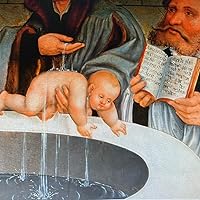
January 24, 2025
The most entertaining piece of vegetarian propaganda you ever will read. Things to do before reading this work: read a book by Rabelais and acquire an atlas of French wine.
SPOILER BELOW THIS LINE———————————————
The book’s cleverness derives from opening with David M. the proto-ethnographer there to do his thesis — an ethnography of a small town near the Vendee — where he does almost anything but actually write his thesis and constantly dicks around on various procrastinating side quests. Then the real meat of the story happens: the omniscient narrator begins on a perfect cosmic ethnography that explores the past and future lives of all the townspeople introduced in the first section and how their past and current decisions and circumstances landed them where they are, will be, and have been. After this, the account returns to David M. who, as if he had been privy to the omniscient ethnography that eclipsed any effort he might be able to create, gives up on academia and ethnography and decides to settle in the area and work the land. Really funny story mechanic. I hope you enjoy the book as much as I did!
SPOILER BELOW THIS LINE———————————————
The book’s cleverness derives from opening with David M. the proto-ethnographer there to do his thesis — an ethnography of a small town near the Vendee — where he does almost anything but actually write his thesis and constantly dicks around on various procrastinating side quests. Then the real meat of the story happens: the omniscient narrator begins on a perfect cosmic ethnography that explores the past and future lives of all the townspeople introduced in the first section and how their past and current decisions and circumstances landed them where they are, will be, and have been. After this, the account returns to David M. who, as if he had been privy to the omniscient ethnography that eclipsed any effort he might be able to create, gives up on academia and ethnography and decides to settle in the area and work the land. Really funny story mechanic. I hope you enjoy the book as much as I did!

November 19, 2023
….they talked about the Banquet, which would take place soon, in three months, in the spring, as it had been every year since the creation of the world, where they would have a few laughs, drink dry and eat hard, and for three days there would be no corpses, because, as is well known, no-one ever dies during the Banquet of the Gravediggers’ Guild, for this is the Grim Reaper’s gift to the Guild, these three days’ repose, these revelries far from death are the Christmas of the baleful, the feast of Saint Nicholas for the men with long faces.
The riotous midsection of the novel kills it, and scores a paen to all that is exciting or intriguing about literary works dedicated to the hyperbole. It is this occasion, this feast, taking place only once a year in these bucolic marshlands, when Death and living observe a temporary truce; this novel is set around the time when 'during a gargantuan three-day feast where gravediggers gorge themselves on food, libations and language, presided over by the village mayor.'
'Valorous gravediggers and sorry toilers, Grand Master Gnarlcock, treasurer Squatchoad, chamberlain Pizzlebeer, friends and fellow members, another year has rolled around and again we are gathered to celebrate, for the space of three days, the hiatus of our sorrowful travails, the pause accorded to us since the dawn of Time by Fate, three days in which we deliver no bodies to the earth, when Death herself gives us leave to rejoice, to forget that which all men know, that we will end up in her arms, a last lover, the same for one and all. This, then is the Annual Banquet of our Guild, as it has been every year since the beginning of the world, where we shall feast, slake our bellies and our throats. Let us rejoice, brothers in sorrow, and leave off our long faces for roars of laughter! But above all, like our forebears, let us be temperate in drink; let it not be said that a gravedigger can be found ’neath the table before the appointed hour – already, I can see your eyes caress the flagons. So we shall quaff in chorus, in the honourable tradition of the Guild, and before and after drinking, we shall converse, at least on this, the first day; thenceforth we shall place our trust in the bottle divine, the sacred vessel that illumines us with its wisdom; we shall drink until we drop, still struggling to make our gastral gurglings intelligible while in drink, then finally, on the second day, we will scarce speak, but contemplate the nectar in silence and await the miracle of sleep, and when we shall be drowsy, Death will reclaim her rights over life and we, our sorrowful toil, as is written in the Scriptures. This is the Truce! O Death, suspend thy scythe! Take pity on our suffering! Let the Wheel cease from turning!’
The thing that initially turns out as a daily diary kept by David Mazon, an anthropology student researching his thesis on contemporary agrarian life, takes a turn to the linguistic richness and gastronomic excesses of this three day feast in these nondescript lands where, unbeknownst to him, Death leads the dance. To quote from the title description: 'When an existence ends, the Wheel of Life recycles its soul and hurls it back into the world as microbe, human or wild animal, sometimes in the past, sometimes in the future.'
As Gary headed home through the worsening storm after seeing the wild boar frolicking in the snow, he was completely unaware that, in the course of early rebirths, he had been the strong-minded landlady of a bar in Lezay; a leatherworker in a factory in Niort who died in childbirth; a bombardier from La Chapelle-Bâton who died in 1918 of Spanish flu in a Reims field hospital; a one-eyed well-digger from Rouvre who died in 1896 aged one hundred; and a grey she-wolf from the forests of Hermitain between Aigonnay and La Mothe-Saint-Héray, where wolves can be heard howling in the winter twilight as they approach villages of dry-stone houses on the edge of groves of chestnut trees or oaks…
It is in these marshy backdrops that their inhabitants go from death to a cycle of rebirths that takes place way back in the past and also carries itself to the future. It is in these sequence of rebirths that the soul leads innumerable lives ranging from the most disgusting of microbes to that of a human.
The diary entries of David Mazon comprise the beginning and ending sections of this book, while the middle section is mostly comprised of the 'annual banquet' and the innumerable cycle of lives endured by the various inhabitants of La Pierre-Saint-Christophe. David has his own concerns beside being involved in interviewing the inhabitants of these marshes. He is involved with two women- Lara, his lover before coming here, and Lucie, his newly found girlfriend. The novel ends with a spat with his former love and then with the setting up of a farm and finally leaving the place on a positive note with Lucie. So, in a sense, when you consider the title of this novel, the real action is only confined to the linguistic and gastronomical excesses of the banquet in the middle part of the novel- it is there where we get to see Énard in his encyclopedic and erudite best when he goes on an extensive trip through the gastronomical delights and excesses of the French etiquette.
Final verdict: this is a winner of a novel from a modern master, one that is meant to be reread and savoured in bits and parts!
The riotous midsection of the novel kills it, and scores a paen to all that is exciting or intriguing about literary works dedicated to the hyperbole. It is this occasion, this feast, taking place only once a year in these bucolic marshlands, when Death and living observe a temporary truce; this novel is set around the time when 'during a gargantuan three-day feast where gravediggers gorge themselves on food, libations and language, presided over by the village mayor.'
'Valorous gravediggers and sorry toilers, Grand Master Gnarlcock, treasurer Squatchoad, chamberlain Pizzlebeer, friends and fellow members, another year has rolled around and again we are gathered to celebrate, for the space of three days, the hiatus of our sorrowful travails, the pause accorded to us since the dawn of Time by Fate, three days in which we deliver no bodies to the earth, when Death herself gives us leave to rejoice, to forget that which all men know, that we will end up in her arms, a last lover, the same for one and all. This, then is the Annual Banquet of our Guild, as it has been every year since the beginning of the world, where we shall feast, slake our bellies and our throats. Let us rejoice, brothers in sorrow, and leave off our long faces for roars of laughter! But above all, like our forebears, let us be temperate in drink; let it not be said that a gravedigger can be found ’neath the table before the appointed hour – already, I can see your eyes caress the flagons. So we shall quaff in chorus, in the honourable tradition of the Guild, and before and after drinking, we shall converse, at least on this, the first day; thenceforth we shall place our trust in the bottle divine, the sacred vessel that illumines us with its wisdom; we shall drink until we drop, still struggling to make our gastral gurglings intelligible while in drink, then finally, on the second day, we will scarce speak, but contemplate the nectar in silence and await the miracle of sleep, and when we shall be drowsy, Death will reclaim her rights over life and we, our sorrowful toil, as is written in the Scriptures. This is the Truce! O Death, suspend thy scythe! Take pity on our suffering! Let the Wheel cease from turning!’
The thing that initially turns out as a daily diary kept by David Mazon, an anthropology student researching his thesis on contemporary agrarian life, takes a turn to the linguistic richness and gastronomic excesses of this three day feast in these nondescript lands where, unbeknownst to him, Death leads the dance. To quote from the title description: 'When an existence ends, the Wheel of Life recycles its soul and hurls it back into the world as microbe, human or wild animal, sometimes in the past, sometimes in the future.'
As Gary headed home through the worsening storm after seeing the wild boar frolicking in the snow, he was completely unaware that, in the course of early rebirths, he had been the strong-minded landlady of a bar in Lezay; a leatherworker in a factory in Niort who died in childbirth; a bombardier from La Chapelle-Bâton who died in 1918 of Spanish flu in a Reims field hospital; a one-eyed well-digger from Rouvre who died in 1896 aged one hundred; and a grey she-wolf from the forests of Hermitain between Aigonnay and La Mothe-Saint-Héray, where wolves can be heard howling in the winter twilight as they approach villages of dry-stone houses on the edge of groves of chestnut trees or oaks…
It is in these marshy backdrops that their inhabitants go from death to a cycle of rebirths that takes place way back in the past and also carries itself to the future. It is in these sequence of rebirths that the soul leads innumerable lives ranging from the most disgusting of microbes to that of a human.
The diary entries of David Mazon comprise the beginning and ending sections of this book, while the middle section is mostly comprised of the 'annual banquet' and the innumerable cycle of lives endured by the various inhabitants of La Pierre-Saint-Christophe. David has his own concerns beside being involved in interviewing the inhabitants of these marshes. He is involved with two women- Lara, his lover before coming here, and Lucie, his newly found girlfriend. The novel ends with a spat with his former love and then with the setting up of a farm and finally leaving the place on a positive note with Lucie. So, in a sense, when you consider the title of this novel, the real action is only confined to the linguistic and gastronomical excesses of the banquet in the middle part of the novel- it is there where we get to see Énard in his encyclopedic and erudite best when he goes on an extensive trip through the gastronomical delights and excesses of the French etiquette.
Final verdict: this is a winner of a novel from a modern master, one that is meant to be reread and savoured in bits and parts!

October 8, 2023
I gotta be honest, the title was the main reason I picked this book because how can your interest not be piqued with a title like "The Annual Banquet of the Gravediggers' Guild"? Ironically though, the actual banquet and gravediggers' guild talks only made up perhaps 20% of the book, so consider yourself warned in not putting too high an expectation based on the title alone (I was expecting a focus on the gravediggers' guild but this was not so, lol). That said, this was as good as I'd hoped it would be and more! Irreverent and witty, this novel focuses on the quirky characters who populate the French village of La Pierre-Saint-Christophe; with farmers who moonlight as mayors or gravediggers, artists, retirees, layabouts, etc., what could go wrong?
It starts off strong with a journal-like narrative from the POV of David Mazon, a Parisian student who has come to reside in a French countryside village in the hopes of studying the people's lives as it was. His narration is probably my favorite of all, infused as they were with self-deprecating dry humor you'd normally attribute to the Brits instead of the French.
The book does shift from the journal format later on as it is separated into several 'chapters' where each chapter gives us different perspectives, most of them unique unto themselves. For instance, you will get descriptions of the villagers and their backgrounds and lifestyle which were interspersed with commentaries of these villagers' past lives, where these villagers have gone through the figurative Wheel of Time as they were reincarnated to play several roles within their lifetimes. It all reads like madcap portraits of the people populating this novel, which may be entertaining for some but will take some getting used to for others. I personally love the concept of the whole Wheel thing, since it's a refreshing way to look into various histories of the village and France's countryside. The section about the gravediggers' guild banquet with the back-and-forth dramatic parries of insults and hecklings which were amusing to imagine and was definitely one of the highlights of this book. (The food description had me salivating throughout, so an additional 10/10 for that.)
While I felt like there were several lull moments throughout the book (especially when the narrative changes and you have to get used to a different format altogether), overall I really enjoyed this unique read! Read this if you enjoy a book with character studies as a form of entertainment, as this will give you plenty to chew on and more.
With thanks to the publisher for sending me a copy of the book in exchange for an honest review. This gorgeous edition will be released on 21 November 2023.
It starts off strong with a journal-like narrative from the POV of David Mazon, a Parisian student who has come to reside in a French countryside village in the hopes of studying the people's lives as it was. His narration is probably my favorite of all, infused as they were with self-deprecating dry humor you'd normally attribute to the Brits instead of the French.
The book does shift from the journal format later on as it is separated into several 'chapters' where each chapter gives us different perspectives, most of them unique unto themselves. For instance, you will get descriptions of the villagers and their backgrounds and lifestyle which were interspersed with commentaries of these villagers' past lives, where these villagers have gone through the figurative Wheel of Time as they were reincarnated to play several roles within their lifetimes. It all reads like madcap portraits of the people populating this novel, which may be entertaining for some but will take some getting used to for others. I personally love the concept of the whole Wheel thing, since it's a refreshing way to look into various histories of the village and France's countryside. The section about the gravediggers' guild banquet with the back-and-forth dramatic parries of insults and hecklings which were amusing to imagine and was definitely one of the highlights of this book. (The food description had me salivating throughout, so an additional 10/10 for that.)
While I felt like there were several lull moments throughout the book (especially when the narrative changes and you have to get used to a different format altogether), overall I really enjoyed this unique read! Read this if you enjoy a book with character studies as a form of entertainment, as this will give you plenty to chew on and more.
With thanks to the publisher for sending me a copy of the book in exchange for an honest review. This gorgeous edition will be released on 21 November 2023.
Displaying 1 - 30 of 287 reviews