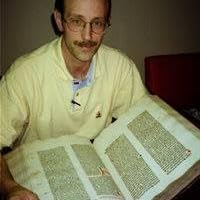
Martin John Spencer Rudwick is a British geologist, historian, and academic. He is an emeritus professor of History at the University of California, San Diego and an affiliated research scholar at Cambridge University's Department of History and Philosophy of Science.
His principal field of study is the history of the earth sciences; his work has been described as the "definitive histories of the pre-Darwinian earth sciences".
Rudwick was awarded the Sue Tyler Friedman Medal in 1988. In 2008, he was elected a Fellow of the British Academy (FBA). He was the recipient of the 2007 George Sarton Medal from the History of Science Society.
Excellent rollerskate tour of the history of geology, by its pre-eminent historian. Particularly good at showing how the idea of a big, ongoing conflict between (geological) Science and Religion is mostly American and all bullshit.
Bishop Ussher, for instance, was trying to produce a timeline of history at a time (mid-17th C) when the Hebrew Bible was by far the oldest document available. His time was canonized as authoritative because for centuries it was printed in the margins of popular editions of the Bible. But "savants" ("scientists" hadn't been invented yet) were soon convinced, and stayed convinced, that there was a pre-Adamite time of great extent. No-one educated had a problem with it, because "a thousand ages in your sight are like a morning gone": there was no reason to assume that the "days" of Genesis 1 were 24 hours long.
Naive, simplistic biblical literalism was really a 19th-century American invention.
Rudwick also knocks down the US-centric view where plate tectonics was a radical "paradigm shift" in the 1960s. It was a shift in the US, but that's because USan scientists dogmatically rejected the "mobilist" theories of Gondwanan scientists (in S. America & Africa).
This book was not exactly what I thought. Rather than a history of the earth, it was a history of the development of scientific thought and understanding about the earth. Intellectual rather than geological history. A bit of slog, but quite interesting, and an excellent refutation of the silliness of "Creationism."
Bu kitap beni kısmen hayal kırıklığına uğrattı çünkü sandığım gibi yeyüzünün tarihini anlatmıyor da temelde bilim tarihini anlatıyor. İnsanlığın yeryüzüne dair bilgilerinin ve kavrayışının yaratılış teorisinden öte olmadığı zamanlardan başlayıp süreç içerisinde bilimsel düşünceye adım adım nasıl ulaşıldığını anlatan bir kitap.
When the Bible was assumed to be literally true, the actual verbatim word of god, there were those occasional awkward questions about the accuracy of the translations, but since few people could read at all, much less read Latin, Greek, or Hebrew, this was not an issue of great concern. Martin Luther famously mocked Copernicus by reminding his readers that in Joshua 10:13 it was the sun that was commanded to stand still, not the earth (Luther, Works, vol. 22). He was a theologian, not a scientist, but at that time almost everyone would have agreed with him.
Within two hundred years of Luther, however, it was recognized by educated people that examination of rocks and fossils clearly showed that the world was ancient, far older than a literal interpretation of Genesis could account for. And so, very much to their credit, they simply adjusted their beliefs. If the facts disproved earlier theories, then it was the theories that needed to be changed, not the facts. In a similar vein the modern Catholic church, which at one time burned people at the stake to resolve theological questions, changed their position when the evidence for evolution became incontrovertible; they simply said that god directs evolutionary changes, thus incorporating it within church doctrine with no need for more bloodshed.
It is a sorry statement about modern society that biblical literalism still holds sway with so many people, especially in the United States. According to a 2007 Gallup Poll, one-third of Americans believe the Bible is the actual word of god and is literally, word for word true. As H.L. Menken said, “No one ever went broke underestimating the intelligence of the American public.”
This book shows how the science of geology came about, and how new discoveries were investigated, interpreted, and contextualized into ever evolving theories about the earth’s history and the monumental changes it has undergone. Geology admirably follows the model of scientific progress as a whole, where tentative hypotheses are developed based on the existing facts, modified as new discoveries are made, and discarded when newer theories emerge that better account for the experimental and observational data. As William Irvine beautifully expressed it in Apes, Angels, and Victorians, “Hypotheses were constantly reaching out into the darkness – slowly, almost inevitably refining and rectifying themselves through empirical contact with reality.”
The author is himself religious, and while he does not allow his beliefs to color the history he reports, he does take time to examine the findings from a metaphysical standpoint. He quickly dismisses the Young Earthers, clinging to their ignorance like children, afraid they might actually learn something. He is much more sympathetic to liberal believers who do not insist on Biblical literalism and whose theology is broad enough to incorporate new discoveries. As he points out, many of the early geologists were clergymen, because at that time the clergy formed the intellectual elite of society. Although their new interpretations of the age of the earth may have dismayed some of their more conservative superiors, they were not punished for their positions nor prohibited from publishing their findings.
The science here is excellent, and the history is interesting and informative. Although my view is that when you apply Occam’s Razor to metaphysical questions they dissolve like smoke on the wind, the author never lets his religion affect the facts. He is dismissive of the views of atheists, but they are most assuredly equally dismissive of his beliefs. So long as we can keep the fundamentalists out of the room, we can all agree to disagree, and nobody needs to be burned at that stake.
This book annoyed me mostly for its religious content. For example, the author affirms that the Judeo Christian tradition predisposed Europeans to think in terms of historical chronology, implying that without Christianity people could not have been able to conceptualise Earth's prehistory. I found this difficult to accept, and the author did not bother to argue this out coherently. Also, anyone who refers to atheistic fundamentalism, as if atheism were a form of religion, loses me immediately. The author's own Christian prejudice was clearly on view throughout this book.
At Carlsbad Caverns I asked my 11 year old science-loving son, "Do you like the finished product or the science God used to make the finished product more?" I agreed with his answer: the science!
I love love love this book. This is the fascinating story of how thousands of people curious about creation (which is what science is) over hundreds of years banded together to help us understand how the planet came to be in its current and ever-changing form. A sub-theme is how Christian religion has been in dialogue with the science, sometimes obscuring it, often times illuminating it.
This is not a geology textbook. It's so much more! It is the centuries old story of "the imaginative but also scrupulously careful work of those who have called themselves savants, naturalists, or scientists - many of whom, to repeat the point, have been devoutly religious people - has transformed our view of our human place in the natural world, by reconstructing the amazingly eventful deep history of the Earth and its life with ever more robust and reliable evidence." p 308
It's not the most accessible and can get bogged down in some decades through time.
This is a great little book, written by a friend and colleague of the towering and omniscient Stephen Jay Gould, whose ghostly hand I think I can detect in the author's style. It is only marred a little by containing faint echoes of Gould's dispute with the New Atheists, and the name Dawkins, while never spelled out, hangs in the air towards the end.
The text probably falls most comfortably into the genre "History of Science", as it is resolutely non-technical and tracks the development of the concept of a historicity of the Earth from the emergence of what is now known in English as "science". On the way, the novice will learn rather a lot about how the ages of rocks were determined, but the author is almost more concerned about showing that no deep conflict exists with the Rock of Ages. The seeker after deep technical knowledge of dating techniques should perhaps look elsewhere, therefore.
I cannot fault him here, as I agree with his position that literalist creationism is a modern and mainly political aberration, and early scientific greats were often clergymen or otherwise religious, as could hardly have been otherwise. It is interesting for a modern infantryman of the Darwin Wars to learn that for 18th Century theologians, the threat to faith was perceived not as an older Earth, easily accommdated with a metaphorical reading of the term "Day", but as uniformitarianism. The threat of a Day of creation lasting a few million years was trivially easy to rationalise away; the prospect that no point in time of creation ever existed would have kicked an important prop out from under Christian faith, as was perceived. So the Church, far from waging war on an ancient Earth, was rather relaxed about the notion.
What is fascinating for students of the philosophy of science is that in acquiring a history, and a historicity (but not, pace Popper, a historicism) the Earth sciences borrowed heavily from concepts of what are now known as the humanities, incuding biblical criticism. This kind of syncretism will not surprise followers of Gould, but may offer some offence to adherents of scientism! Another interesting detail in this respect is that the empirical repeatedly triumphs over the theoretical: That the Earth was truly ancient, and that meteor impacts, glaciations and atmospheric changes coincided with step-changes in the history of life, turned out to be true, as the rocks attested. Where physicists' theorisations and the philosophical bent of conservatives contradicted the rocks, the rocks generally prevailed. Scientists learned to trust the evidence, even when the mechanism was mystery.
The author is a Christian, and perhaps too concerned with sweeping away a conflict between science and faith which I think a little more real than he admits. He seems to regard Darwin and his legacy with barely-disguised distaste. Here I find him to be unambiguously mistaken: Darwin most certainly does provide support for atheism, just as the success of science provides support for naturalism, and I think that only a fool could deny it. It is possible to find rationalisations for those who wish to keep their faith, but an ancient Earth leaves young-Earth literalism perfectly bankrupt, and in the wake of Darwin it is the plain truth that we simply no longer need gods for the purposes of causal explanation.
I have only one further quibble, and that relates to a short passage where the author dismisses a monistic view of "the" scientific method by appeal to the German language. The doctrine of falsificationism can be directly traced to Karl Popper, a German philosopher writing in German and much concerned with the demarcation problem separating science from non-science. Popper's resolution was decisively monistic, and the broader meaning of "Wissenschaft" in German was no hindrance.
Otherwise, a thumping good and mind-broadening read.
Interesting history of geology, and I like his attitude, but he endlessly repeats his insight about understanding the earth as a history and where that approach came from (a good insight, though, but I won't repeat it as that would be an unforgivable spoiler). His writing is boring.
There are three main themes that run through this interesting and informative book. Firstly, there is the importance of the discovery of Earth's deep history. Rudwick begins his story in the seventeenth century. At that time people generally believed that our world was only a few thousand years old and that humans had lived in that world throughout its history, except for the very brief period of the first few days before God created humans on the sixth day of Creation.
As Rudwick writes, "A world without human beings would have struck them as utterly pointless, except as a brief setting of the scene for the human drama to come."
The book shows how geologists eventually came to understand not only that the Earth is billions of years old but also that for most of that time humans did not exist. Rudwick traces the development of the understanding of Earth's history by looking at the work and ideas of scientists such as Steno, Hooke, Buffon, Hutton, Deluc, Scrope, Cuvier, Buckland, Lyell, and many others.
Rudwick quotes Scrope, writing in 1827: "The leading idea which is present in all our researches, and which accompanies every fresh observation, the sound of which to the student of Nature seems continually echoed from every part of her works, is - Time! - Time! - Time!"
The second theme of the book is the importance of understanding that geology is a HISTORICAL science, with much in common with the study of human history. "The Earth's deep history turned out to have shared the messy unpredictable contingency of human history, rather than the astonishingly precise predictability of, say, the motions of the Moon and planets in relation to the Sun."
Even the methods adopted by geologists and historians have parallels. Rudwick uses a nice quotation from Buffon from 1778: "As in civil history title deeds are consulted, coins are studied, and ancient inscriptions are deciphered in order to determine the epochs of human revolutions and to fix the dates of human events, so also in natural history it is necessary to excavate the world's archives, to extract ancient monuments from the Earth's entrails, to collect their remains, and to assemble in a body of evidence all the marks of physical changes that are able to take us back to the different ages of nature."
The third theme of the book involves the relationship between science and religion. Rudwick has no time at all for present-day Creationists, and he demolishes their views in an appendix. But on the other hand he asserts that the view that there is, and always has been, an ongoing conflict between science and religion is a "discredited stereotype". This reminds me of the view held by Rudwick's friend and colleague, the late Stephen Jay Gould, that there is no necessary conflict between the two, as long as each keeps to its own sphere. I can only go part of the way with Rudwick on this issue. Indeed, although I am a great fan of Gould, I think that he too was rather soft on religion at times.
It is true that the stories told of the conflict between religion and science are often over-stated and over-simplified. For example, Galileo continued to be a Christian throughout his life, as did many of the geologists discussed in this book. But on the other hand, Galileo WAS prosecuted by the Church and forced to recant, and his book WAS placed on the Index of Prohibited Books. Over-simplified it may often be, but the conflict between science and religion does exist.
Rudwick even shows sympathy for Archbishop Ussher, who in the 1600s calculated that God had created the Earth in the year 4004 BC. Rudwick says that Ussher does not deserve to be ridiculed, because although he was wildly wrong he was at least trying to establish a chronology of the Earth, using the only sources available to him at the time. (Though the fact that Ussher claimed to have tied Creation down not just to a particular year but precisely to the 23rd October (the Jewish New Year) of that year seems to me to be inviting ridicule.)
Rudwick also equates "modern atheistic fundamentalists" with religious fundamentalists, implying that they are both as bad as each other. I presume that his target here is people like the vocal atheist Richard Dawkins. Although I am an atheist myself, I do think that Dawkins's atheism is a very crude one. He has no real understanding of the social roots of religion. But you cannot equate the atheistic refusal to believe in things that there is no evidence for with the Creationists' refusal to face up to a massive amount of evidence.
The reason for Rudwick's uncritical approach to religion becomes clear in his conclusion, where he explicitly mentions his adherence to a "theistic tradition". (I also noticed the words "Deo gratias" on his dedication page.) Whether you are a believer, an agnostic or an atheist, if you are interested in how scientists have come to an understanding of the Earth's history, you will enjoy this book. But you do need to keep in mind that the book has a slant which reflects Rudwick's (non-Creationist) religious views.
Finally, I would like to recommend something else on this subject, and that is Mark Twain's brilliant and amusing essay, "Was the World Made for Man?", in which he demolishes the idea that the whole of Earth's history was just paving the way for us humans. (Twain's essay is available in The Faber Book of Science.)
Intellectual history of geology, from chronology to the present day. The story gets so large and complex that in the last couple of chapters on recent history the narrative falls off a bit.
Read this in snippets over a long stretch, but the work is solid enough that reading in this fashion can be done.
It may be easy to be “deceived” thinking a book with a name like Earth's Deep History: How It Was Discovered and Why It Matters is ‘just another book about the geological history of earth’. I almost made that mistake and others did as well if some of the reviews I read are accurate. This is not a book on the earth’s history per say. Rather, it does something considerably more unique: it is a book on the history of the earth’s history. In other words, it’s not a geological textbook in book form, but a book about how we ended up knowing what we know about the “deep” (ie, before we were around) history of the earth. Consider this a well-written sketch that can nail in the coffin on the modern Young Earth creationism trend (something the author notes in the intro he had in mind when writing it) and also just an awesome read for fans of knowing more about just about everything.
On paper, pretty much everything covered here probably should not be that interesting to your average general reader. After all, who among us is that into geology textbooks? Honestly, not me. But the angle Martin J. S. Rudwick as noted in the book’s subtitle and as noted above, really makes this not only a great read on knowing about our earth’s history, but he ingeniously explains step-by-step how we arrived at the stage we are now. Yes, there is a lot of trial and error. Yes, the biggest names in 17th century and beyond were actually not atheists out to disprove the Bible, but like other science giants, simply wanted to know more about the world—God-given or otherwise. Thus, this book serves as a great refutation to those blindly taking a literalist view of key parts of early Genesis; the data is presented over time not just as separated inhuman facts, but the blood, sweat, and maybe even tears of centuries of research—and bickering, boy is there a lot of bickering. Scientists—or savants as they are called here--have feelings too, we find out.
What’s more, this is a beautiful book. There are dozens of illustrations and sketches from the past from rock formations showing the different types and time periods to fossils, cave diagrams (what the cover artist surely had in mind!), and even some mildly comedic pictures such as a torch-wielding Briton entering a den of ancient of hyenas. We learn, are at times entertained, and learn again. Nor is this a difficult book either. For the lay person and only at times getting technical, it’s definitely a “gateway” book for the curious mind who doesn’t mind rolling up their sleeves from time to time.
In fact, on the subject of the den of ancient hyenas (or is it an ancient den of hyenas—and I don’t mean this as a joke, because the evolution of species along with the search for the age of our earth are key points in this wonderful book!), we who brave this not too difficult book till its very end discover two things: while there’s nary a footnote in site, it turns out that Martin J. S. Rudwick most likely is someone who knows what he is talking about. His knowledge can be akin to David Attenborough and if one of England’s most renown natural historians wanted to write a book without notes on the wonders of our planet, FBA Rudwick also gets a pass. In fact, he does come with proof in tow: going back to the above-mentioned hyena cover, it turns out that our book here is in some ways a more accessible version of past material by him, notably Worlds Before Adam: The Reconstruction of Geohistory in the Age of Reform (which features said hyena sketch as its cover) and its prequel, Bursting the Limits of Time: The Reconstruction of Geohistory in the Age of Revolution that both I now must read because the little bit we got here has vastly piqued my interest in knowing more about why we are here and (borrowing the book’s subtitle) “why it matters.”
This is a deep dive into the history of Earth's chronology, which according to the book's glossary is "the branch of historical work that uses sources of all kinds [i.e. not just scientific ones] to fix precise dates for past events in human history.." But as the book progresses, the authors discusses how "savants" (the term used by the author for proto-scientists) and others slowly realized that human history occupies only a tiny fraction of earth's history.
I was surprised to learn that estimates of Earth's age had already been extended by geologists and others from a few thousand years to several millennia long before radiometric dating had established the planet's actual age. The discovery by Clair Patterson that the Earth is 4.5 billion years old takes up only a small part of this book.
Martin Rudwick brings us through Earth’s history by bringing us through a succinct narrative of how we came to know what we know about this place. I’ve recently read a few books on the topic of science—I wasn’t a science major. I found I didn’t have to be a science major to get into every page of this book. Rudwick also has a refreshing take on the religion vs science discussion that so often clutters other books with boring distractions. He asks, “how reliable is our knowledge of deep past?” He shows how in the past few centuries our knowledge of natural history has changed and evolved like Earth itself in the past 4600 ma. Remember to not get cocky. If we’re around in 100 years, the theories you hold dearest might be proven wrong. LOL. Enjoy!
A milkshake of a book - sweet and went down easy, but with just enough thickness to count as a meal. Overall directional updates to my thinking based on reading:
1) I should know more geology. (I am limiting my budget for new Anki cards for the time being, but this will have to compete for space there.) 2) The complain that I've heard about "big history" is that "it isn't history" and I think this shows this is wrong; geological and biological history is *historical* in all the ways that matter. 3) (speculatively, this is just a vibe, but it is the direction my thinking is moving in) All mysteries end up having either a logical explanation or an historical explanation. Call this the Weak Principle of Sufficient Reason.
A very engaging history of Earth’s geology and biology! I read this in bitesize bits so it never felt like an information overload. The Author writes in a really accessible way that also keeps the content interesting. This book also has some fantastic illustrations from a range of scientific sources. Some misguided drawings of dinosaurs and early man are included.
This book includes all the things humans got right about Earth’s deep history over the centuries whilst also including all the parts we got wrong. This makes it a really well rounded read. It’s a popular science book that you can’t go wrong with if you enjoy biology and geology. The Author keeps it entertaining! Really enjoyed it.
Some worthwhile stuff here, but it sort of exists in an uncanny valley scholarship-level wise — too specialized for true amateurs, but far too basic for anyone with a passing familiarity with the subject. Also Rudwick makes a big to-do knocking down the old canard that religion stood in the way of geological truth. Educated people would be well aware of the continued prominence of men of the cloth well into 19th century science.
An excellent guide to the thought processes involved in the development of he modern understanding of geology from its early religious concepts of the six days of Genesis through the contributions of the sciences. The book is heavy going but thorough, one of five very similar books written by Rudwick.
A very informative history of geological science, which avoids the pitfall of presenting the development of the sciences as a triumphant journey away from religious ignorance. Rudwick pays attention to the way in which concepts within theology might have inspired an outlook on nature that could suddenly think on a scale of billions of years.
Interesting history of the history of deep time discovery
Very useful deep dive into the discovery of deep time and the characters who discovered it. Sightly marred by religious "preaching" (how dare atheists "preach" like religionists"), it does give a great view of how biblical views of the past gave way to actually scientific views of it.
An extraordinary look within an extraordinary book that looks at the extraordinary idea we humans have created that we call time, and the role of curious and inquiring geologists for centuries before us who begin to flesh that out.
Really enjoyed this book. I have read numerous books on the subject, non were this well written or covered the topic this thoroughly. This is, as usual, the western version of the story (maybe one day someone will write what the rest of the world went through).
A very interesting book. It explains the progress in scientific history and human attitudes throughout history. The world and its history slowly are revealed by the author. Good book, worth the read.
Good and readable overview of geology/paleontology/cosmology and its history in Europe; mix of history and science and a touch of religion and/v science
Not so much a deep history per say but a history of geology. When we threw out myth and started using observations data and experimentation for our information. Good read.