Earth is the latest science fiction novel from multiple Hugo Award winner Ben Bova, author of Apes and Angels and Survival
A wave of lethal gamma radiation is expanding from the core of the Milky Way galaxy at the speed of light, killing everything in its path. The countdown to when the death wave will reach Earth and the rest of the solar system is at two thousand years.
Humans were helped by the Predecessors, who provided shielding generators that can protect the solar system. In return, the Predecessors asked humankind's help to save other intelligent species that are in danger of being annihilated.
But what of Earth? With the Death Wave no longer a threat to humanity, humans have spread out and colonized all the worlds of the solar system. The technology of the Predecessors has made Earth a paradise, at least on the surface. But a policy of exiling discontented young people to the outer planets and asteroid mines has led to a deep divide between the new worlds and the homeworld, and those tensions are about to explode into open war.
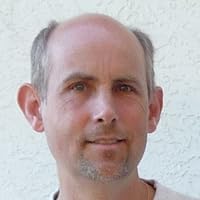
Ben Bova was born on November 8, 1932 in Philadelphia, Pennsylvania. In 1953, while attending Temple University, he married Rosa Cucinotta, they had a son and a daughter. He would later divorce Rosa in 1974. In that same year he married Barbara Berson Rose.
Bova was an avid fencer and organized Avco Everett's fencing club. He was an environmentalist, but rejected Luddism.
Bova was a technical writer for Project Vanguard and later for Avco Everett in the 1960s when they did research in lasers and fluid dynamics. It was there that he met Arthur R. Kantrowitz later of the Foresight Institute.
In 1971 he became editor of Analog Science Fiction after John W. Campbell's death. After leaving Analog, he went on to edit Omni during 1978-1982.
In 1974 he wrote the screenplay for an episode of the children's science fiction television series Land of the Lost entitled "The Search".
Bova was the science advisor for the failed television series The Starlost, leaving in disgust after the airing of the first episode. His novel The Starcrossed was loosely based on his experiences and featured a thinly veiled characterization of his friend and colleague Harlan Ellison. He dedicated the novel to "Cordwainer Bird", the pen name Harlan Ellison uses when he does not want to be associated with a television or film project.
Bova was the President Emeritus of the National Space Society and a past President of Science-fiction and Fantasy Writers of America (SFWA).
Bova went back to school in the 1980s, earning an M.A. in communications in 1987 and a Ph.D. in 1996.
Bova has drawn on these meetings and experiences to create fact and fiction writings rich with references to spaceflight, lasers, artificial hearts, nanotechnology, environmentalism, fencing and martial arts, photography and artists.
Bova was the author of over a hundred and fifteen books, non-fiction as well as science fiction. In 2000, he was the Author Guest of Honor at the 58th World Science Fiction Convention (Chicon 2000).
Hollywood has started to take an interest in Bova's works once again, in addition to his wealth of knowledge about science and what the future may look like. In 2007, he was hired as a consultant by both Stuber/Parent Productions to provide insight into what the world is to look like in the near future for their upcoming film "Repossession Mambo" (released as "Repo Men") starring Jude Law and Forest Whitaker and by Silver Pictures in which he provided consulting services on the feature adaptation of Richard Morgan's "Altered Carbon".
The interesting thing about Earth (The Grand Tour) is not so much that its protagonist, Tray, is a man out of time, having been in cryo-sleep for hundreds of years after the starship he was with was destroyed with all hands, leaving him stranded in a scout ship with a deadly wave of radiation heading his way. No, the interesting thing is that the author is man out of time, writing in the future he doesn't quite get. That sounds harsh, and I feel bad saying it, but if Earth had been published in the 1950s it wouldn't have raised a single eyebrow.
Tray, now back on Earth and with an android companion, which he insists on treating like a human against all social conventions of the time, falls in with a political faction opposing the colonization of the non-humans discovered in various star systems. His mentor from that faction is killed in an accident in Jupiter's ocean, and Tray, certain that it was murder, stirs things up to seek justice.
If you miss the SF of the 50s, this book's for you. The characters are simple and unconvincing, the plot expectable, the resolution convenient, and for all the author's efforts to sound current, his social sense of the future is deeply dated. Maybe that's all not actually a bad thing. If you're a fan of Bova's and actually, I count myself in those numbers, it's not as though he's forgotten how to write, just that he doesn't have anything new to add to the conversation.
DNF. The old master needs to retire. His recent works are uninterestingly formulaic; his lady characters lack character, merely there as a prop for the penis set. It was choppy, nails-on-chalkboard repetitive. I’d stuck it out for 68% of the book merely out of loyalty.
Bova's Earth feels grounded in recognizable concerns even as it leans into near-future speculation. This isn’t a distant, abstract science fiction setting—it’s a version of Earth that feels uncomfortably close, shaped by environmental strain, political tension, and technological attempts to manage problems that are already slipping out of control.
What stands out most is how many threads the novel juggles without losing its footing. Climate instability, rising sea levels, orbital habitats, political maneuvering, personal rivalries—it all unfolds at once, but not in a chaotic way. There’s a steady sense that these systems are interconnected, that no single problem exists in isolation. That interconnectedness gives the book its weight.
The environmental angle is where the story feels strongest. Bova doesn’t treat ecological collapse as a backdrop; it’s central to everything. The melting ice, the shifting coastlines, the pressure on infrastructure—it all feels tangible. There’s a kind of quiet urgency in how these elements are presented, not exaggerated, just steadily worsening.
Scientists, politicians, corporate figures, all kinds of people try to navigate the consequences on the ground—they all see the same crisis from different angles. That variety helps the world feel lived in rather than staged. The technological side is also handled in a way that feels practical rather than speculative for its own sake. Orbital stations, engineering solutions, attempts at large-scale intervention—they’re presented as extensions of current thinking rather than leaps into the unknown. That realism makes the stakes more immediate.
There are moments where the narrative feels stretched, especially with so many characters in play. Some threads are more engaging than others, and not every arc carries the same emotional weight. But the broader picture holds together well enough to keep the story moving. Earth doesn’t rely on distant futures or alien settings to make its point—it looks at familiar systems under pressure and asks how long they can hold. That approach gives the novel a quiet persistence that’s hard to ignore.
It' s a book. Ben Bova wrote it. I read it (as I have read many of his books over a very long career, many of which I thoroughly enjoyed.) This book was just barely okay. The title makes no sense. The characters are hackneyed. Unless you are on a quest to read all of Bova's books, no compelling reason to read this one.
This is one of the very few books I could not bring myself to finish. Two stars out of respect for the author. Admittedly, I have not read any other books in the series. I did not see anything on the dustcover to indicate that it is part of a series, and don't believe the lack of background affected my reading, as pertinent details are interwoven. I got through page 86 of 350.
My first stumbling block was the female character: although introduced as an academic on page 31, the only descriptions of her have dealt with her appearance. On page 86, I still don't know what the nature of her work is, only that she has "Midnight dark hair tumbling to her bare shoulders. Eyes the color of sapphires." This approach is so shallow and outdated that it is jarring.
The final blow, for me, was when a multi-page discussion between two of the characters was repeated 30 pages later, between the same two characters, as though it were the first time the topic had been discussed. Nearly, if not quite, verbatim.
About six years ago, I casually picked up a Ben Bova book at my library and begin my introduction to this master of science fiction. I didn’t realize that the book was one in the middle of a twenty-three book series! It took over a year but I eventually worked my way through the entire series and became a fan of Ben Bova and the stories and characters in the Grand Tour.
Bova is turning eighty-seven in a few months so I imagined he was sitting on a beach somewhere with an umbrella drink, reminiscing about the one hundred and twenty-four books he has written. Apparently I was wrong. Ben Bova has just added book number twenty-four to the Grand Tour series.
In Earth, Bova picks up after the death wave annihilation of our planet has been averted. Humans, feeling pretty pleased with themselves, are settling in with the belief that all has been discovered and dealt with and that humans are the masters of the universe. Let me correct that, the human male ego has once again sprung up and they have decided that they are the top of the food chain.
While Bova has had some very good, strong, important, and intelligent female characters in his books he, like so many male writers of his generation, has too often left the big stuff to the male leads. Women are nearly absent from this latest novel. This is such a major departure from other books in the series I’m hoping there was a method to this madness. My thought is that this male only book was purposeful in order to put the blame for the excessive human ego, power grab, and empire building on the XY chromosome carriers. I’m giving him the benefit of the doubt that he made the main battle between good and evil exclusively between the male characters in order to focus on the need for a new male perspective and role model. Using that lens, I found the characters all too close to our current political and big business reality. The future Bova sees for humans seems to be built on our continuing to repeat the mistakes of the past.
Earth is not an example of Bova’s best work; there is less hard science than usual, his characters are more one dimensional than in the past, as mentioned there is a lack of strong female characters, and the plot is not as complex as in past writing. All that said, I did drive to a neighboring town to get a copy and I sat down and read it all in one day. Even one of Bova’s lesser works is still an entertaining and enjoyable read. If you are new to Ben Bova, please start your acquaintance with Powersat or another earlier book. If you are an old fan, you may agree with me that Bova’s thinking, like that of many of us, has been negatively tainted by the current political situation.
FYI - to the best of my research, the twenty-four books in The Grand Tour series are: Powersat, Empire Builders, Mars, Moonrise, Moonwar, Return to Mars, The Precipice, The Rock Rats, The Asteroid Wars, The Silent War, The Aftermath, Saturn, Leviathans of Jupiter, Titan, Mercury, Mars Life, Venus, The Return, Farside, New Earth, Death Wave, Apes and Angels, Survival, and Earth.
Over the years, Ben Bova has earned his spot in the pantheon of great science fiction writers. This book, however, misses the mark. The writing is compelling, but I had since problems that destroyed my enjoyment of the book. To start with, the main character, Tray, is developed in only the most minimal way. He has a compelling back story, having survived a mission in space that killed the rest of his crew and stranded him for hundreds of years. But, other than a few flashbacks and giving a reason for him to be under supervision, this matters not at all. But, this still makes him by far the most developed character in the book. The reasons for the behaviors of other characters is mostly straight forward with almost no nuance to their personalities. To continue with Trayvon though, his age is also a problem for me... and seemed to be for Bova as well. Having spent almost 1500 years away from Earth, would imply that Tray would be a very different person linguistically and culturally from the people he returned to. This is hinted at once as a minor plot point, but in general, they all speak the dance language and speak using 21st century idiom and historical references. The year that this book takes place is not specifically given, but Tray is only half as old as the oldest character in the book so you have to figure at least 3200 years in the future (could be an alternate timeline compared to our Earth... see my full disclosure). However, it has been only several hundred years since the origins of the English language, if I went back a thousand years I would not only be impossible to understand, but would be hopelessly lost culturally. It seems a cop out to create a large historical gap and yet have no one refer to anything that happened during it. Lastly, the story arc. It seemed like it started as an man against the powers-that-be adventure. Then, it morphed into an take of exploration that hinted at 20,000 Leagues style tech adventure. It then changed to take of intrigue and who-done-it. And finished up as a light political tale. I turned to the last page and stated, "that's it?" loud enough to surprise my wife. Full disclosure, when I stated reading this, I did not realize that it was part of the Grand Tour saga by Bova. I am not familiar with that saga, so that may have colored my opinions. All-in-all, chances are if you have read the other 22 books in the Grand Tour, you will be reading this one regardless of anything I say. You will enjoy the authorial style and understand the limits and history of this universe Bova had created in a way I don't. But, if this is your first venture into Ben Bova's works, I suggest starting elsewhere.
I received a copy of this work from the publisher through Netgalley in exchange for an honest review. Thank you to both for the opportunity.
Not the story expected from Ben Bova. The timeline for the protagonist, Tray, makes no sense. Was he away from Earth for 400 years or 1000? When he returns to Earth it seems that the only changes he needs to understand are the different sexual mores. of a different century. If there are other differences Bova does a dis-service by not explaining better the new universe.
I believe EARTH is my first reading from the work of acclaimed SF Master Ben Bova, and I was agreeably delighted, especially in light of my recent focus on "classic" Science Fiction and subsequent frequent discovery of unacceptable sexism and bigotry even in critically applauded authors. I found one point of contention in EARTH, actually a couple, one being reference to "Negroid," in terms of genetics. another being a height slur by the "evil mastermind" character.
But I found EARTH to be refreshingly clear-thinking throughout, with the main (almost the only) human female proving to be not the flighty wealthy socialite I first expected, but remarkably strong-minded, determined, an individual of integrity, assertive, not cowed by the man who stalks her, unafraid to choose the right ethical decisions. The male protagonist also is strong-minded, self-aware, highly ethical, very compassionate, emotionally vulnerable but dealing with the tragedies in his past and working to ensure an improved future for non-Earth interstellar civilizations and also in support of android artificial intelligence. His friendship with android Para is heartwarming and heartwrenching but gratifying and inspiring. This is very much a novel about overcoming the "us/not-us" mentality and learning to practice inclusiveness, not rejection, species supremacy, or corruption in the service of overweening greed.
It had glaringly dated characters for a book published in 2019 and set several thousand years in the future.
For example, the introduction of an Australian Aboriginal character would have been great had the character not been described as a kind of nodding nitwit. This and the constant referral to him by his race reduced him to a caricature. Also the term "Abo", used through out the book, is a racial slur in Australia.
Likewise, the main female character was simply a beautiful prize. Beyond grating unless you are a 14 year old boy.
The writing style probably should have been classified as young adult. The very short chapters were particularly irritating and it lacked the depth and complexity of an adult book
On the plus side, it explored some interesting ideas and had a plot. I read it all the way through. Which is the only reason it gets 2 stars.
It was interesting, but not what I expected. I kept checking the publication date because it seemed much older than 2019 based on the style of writing.
It’s not very deep. I would suggest it would be good for young adults.
Over the years, Ben Bova has earned his spot in the pantheon of great science fiction writers. This book, however, misses the mark. The writing is compelling, but I had since problems that destroyed my enjoyment of the book. To start with, the main character, Tray, is developed in only the most minimal way. He has a compelling back story, having survived a mission in space that killed the rest of his crew and stranded him for hundreds of years. But, other than a few flashbacks and giving a reason for him to be under supervision, this matters not at all. But, this still makes him by far the most developed character in the book. The reasons for the behaviors of other characters is mostly straight forward with almost no nuance to their personalities. To continue with Trayvon though, his age is also a problem for me... and seemed to be for Bova as well. Having spent almost 1500 years away from Earth, would imply that Tray would be a very different person linguistically and culturally from the people he returned to. This is hinted at once as a minor plot point, but in general, they all speak the dance language and speak using 21st century idiom and historical references. The year that this book takes place is not specifically given, but Tray is only half as old as the oldest character in the book so you have to figure at least 3200 years in the future (could be an alternate timeline compared to our Earth... see my full disclosure). However, it has been only several hundred years since the origins of the English language, if I went back a thousand years I would not only be impossible to understand, but would be hopelessly lost culturally. It seems a cop out to create a large historical gap and yet have no one refer to anything that happened during it. Lastly, the story arc. It seemed like it started as an man against the powers-that-be adventure. Then, it morphed into an take of exploration that hinted at 20,000 Leagues style tech adventure. It then changed to take of intrigue and who-done-it. And finished up as a light political tale. I turned to the last page and stated, "that's it?" loud enough to surprise my wife. Full disclosure, when I stated reading this, I did not realize that it was part of the Grand Tour saga by Bova. I am not familiar with that saga, so that may have colored my opinions. All-in-all, chances are if you have read the other 22 books in the Grand Tour, you will be reading this one regardless of anything I say. You will enjoy the authorial style and understand the limits and history of this universe Bova had created in a way I don't. But, if this is your first venture into Ben Bova's works, I suggest starting elsewhere.
I received a copy of this work from the publisher through Netgalley in exchange for an honest review. Thank you to both for the opportunity.
Whoever wrote the blurb for this book needs the proverbial "twenty lashes with a wet noodle." I don't think you could make a case that it's a bait-and-switch, but the novel I read was not what the blurb led me to expect. The protagonist is not a disaffected youth being exiled to the outer Solar System, but an accomplished astronomer with a metric butt-ton of survivor guilt, who's trying to get away from psychologists who want to erase significant memories on the grounds that they're impeding his recovery.
I think the biggest problem is this character being named Trayvon, which immediately brings to mind the young man who was shot in a fight with security officer, supposedly over "a can of pop and a bag of Skittles," conveniently ignoring that he was in that community because he'd been sent to live with a family member there in order to get him away from bad companions who'd led him into trouble with the juvenile justice system. I really have to wonder about the choice of name for the fictional character, since it comes across awkwardly, raising the question of pandering to a certain segment of the literary landscape.
And that's unfortunate, because it is actually a very powerful story about a wounded man finding a mentor in an older man who's also gone through battles with survivor guilt, and the lengths a man can go to when that mentorship is ripped away in an incident that is made to look like an accident. I was so happy to see Jordan Kell, protagonist of New Earth and Death Wave, returning after two books in which he was barely mentioned -- and then shocked to see him killed off hardly halfway through the the book. I honestly thought it would turn out to be some kind of mistake to declare him dead, that he would actually turn out to have survived by some techno-wizardry.
But no, he was really and truly dead. There would be no surprise happy ending to reveal that he'd escaped his doom after the protagonist had battled through a sea of troubles to reveal the plotting of a cabal of political opponents. So perhaps the death of a beloved character was intended to show that no character, no matter how beloved, was going to enjoy Plot Armor.
Unfortunately, there are a number of threads left dangling at the end. We never learn exactly how the sabotage was accomplished, so I never was able to discover whether my own pet theory was correct. And the villains got off far too easily, in my opinion, although given the oh-so-convenient loss of key evidence, thanks to the suborning of witnesses, it's probably the only way it could've turned out in a society ruled by law.
And now that we've lost Mr. Bova, it looks like those threads may well be left dangling forever, unless there's definite answers among his notes and any volumes that may be published posthumously.
I've never read any Ben Bova books before, though obviously I know his name well. There was no indication on this advance reading copy from Netgalley that this was one of a long-running series (Grand Tour) dating from the 1980s. Despite this being a new addition it actually reads like something from the 1980s. Small things irked me. The main character (Trayvon) is supposed to have been in cryo for almost 400 years following a horrible accident which wiped out all his crewmates (and his fiancee) on a space mission to help less developed galactic inhabitants survive a death wave that threatens all life. But that's in the past. He's been back on Earth for about a year and is still in therapy, accompanied everywhere he goes by a human-seeming android, Para, whom he regards as his only friend, contrary to everyone else's treatment of androids as machines. The medical authorities want to wipe his (unpleasant) memories to help him recover, so he skips town on a joyride to Jupiter with a couple of politicians and a woman that he fancies.
I'm not going to delve any further into the plot, but there were so many inconsistencies in the first 25% that I had a few book-meets-wall moments. a) There's no indication of the year, or even the century. b) I'm not sure how interstellar travel works. They seem to get around very quickly when it suits the story, and when it doesn't we are reminded that nothing moves faster than light except their (alien enhanced) communications system. c) Has Tray been away from Earth for 400 years or 1000? Both are mentioned and I don't get the timeline. (If it's time dilation, say so.) d) Also, anyone who has been away for so long should have a lot more difficulty fitting back into society. What about tech developments and language changes, for instance? All that seems to shock Tray is a more liberal attitude to sex. He doesn't feel like a man completely out of his time, in fact he integrates surprisingly well.
Writing-wise, there were some repeated explanations that felt weird, and the characters were flat. Tray's trauma didn't seem to have much of an impact. He's thinking of his dead fiancee (remember it's only been a year for him) but already fancying someone else without the trauma of the past affecting the present. Ben Bova's writing credentials are excellent, so I didn't expect that.
I gather that there are 22 previous books in the Grand Tour series, and maybe the others addressed some of the questions I have about this one. All I can say is that this is not a good entry point for reading that series. NOTE: Having read some reviews of the earlier books it sounds as though they have not aged wellwith regard to the cold war, sexual and racial politics. Even though it's new it feels strictly 1980s.
During most of the book, I thought the story was fairly decent, although a little trite. Our principle character was trying to get over the loss of his fiancee. The medical system was getting ready to force him to have an unwanted treatment which amounted to an erasure of his memories. Now that was rich territory for further elaboration, but Mr Bova didn't go further essentially dropping the issue all together. Instead, the story turns to relationships such as a well known hero, a gorgeous daughter of a French baron, an android, a suitor of the daughter, and a few unscrupulous politicians. We touch briefly on Mr Bova's theory of what interstellar politics should look like. A prejudice is displayed but poorly supported with a brief reference to the British east India company without any substantial argument. We introduce levian like jovians that float in the oceans of Jupiter, with poorly investigated means of communication that our principle disrupts by making a great discovery. We're told a story about the leviathons that is totally irrelevant although one keeps waiting for it to come back as a solution for trouble experienced while visiting Jupiter. No luck. So many situations that could be amplified to make this story have depth are just lightly skipped over. It's very disappointing. In the end, the author decides upon a resolution addressing what amounts to racial prejudice of androids, and resolution of political bad acts without vengeance by shipping the actors off to start a colony where they can work on their bad acts without supervision or interference. As I said, the book was trite but interesting until it became downright stupid.
The Grand Tour used to be full of mystery and wonder. We explored Mars. We found ancient civilizations. We discovered a deadly natural disaster that would consume all life in the galaxy.
This was a story about a (minor) political intrigue and a murder investigation with a foregone conclusion.
The series has become a victim of its own success. This is a story about what happens after you more or less conquer the galaxy. The short answer is committee meetings. The long answer is that people do what people always do: look at a situation and try to exploit it for personal gain with little to no regard for decency.
That may be a realistic story, but it's not exactly what I'm hoping for when I'm reading a master of science fiction.
There's very little here that couldn't have been told with a different coat of paint in another genre. A young lad befriends a man of power. The man of power is killed under (semi) mysterious circumstances. The young man seeks justice and ascends as a result. It's not so much that it's predictable, it's just not fun.
In Mars Life, Ben asked us to explore an ancient alien city on a barren world. In Venus, he asked us to brave a planet of toxic gas for a billion-dollar prize.
In Earth, he's asking us to get a World Council subcommittee to seriously consider corruption charges.
I love this series (clearly, or I'd never have gotten this far). But, the things I loved most about it have faded into the past. I hope that the next one studies the numinous rather than settles for the merely human.
It's disheartening to be disappointed in a Ben Bova novel, but such is the case here. After the life-and-death philosophical combat of the previous "death wave" novels, this reads like a particularly simplistic follow up. The book is easy enough to read, but the characters are lacking the depth found in previous Bova novels -- sketched in is about as good as it gets. As for the scenario it's trying to establish, it feels like it's advocating against the creation of an Asimov/Huxley future mash-up...which is fine on the surface, but once again hasn't been anywhere near developed enough to feel worthwhile. Frankly, everything Ben Bova is trying to do here deserves a novel twice the length of what we got...and Trayvon Williamson deserves a set-up novel just for himself.
The sole survivor of a spaceship catastrophe becomes involved in a political squabble on Earth. One faction wants to colonize newly discovered worlds, the other thinks it's best to take a less exploitative stance with the natives. There is murder, bribery, deception, some romance, and a loyal android...all fine things to include in a story like this, but somehow it just doesn't seem to come together well. The characters aren't intriguing, or witty, or...well, interesting. The setting is all right, but that didn't gel for me, either. Perhaps if I'd read more of this series, it would have. Just a question, though, if there is a single government for all of Earth (and presumably beyond), why are there customs agents in Equador? That kind of had me scratching my head.
It was my first Ben Bova book and wow ... quite a let down. Repeated dialogue between main characters, heavy repetition of simple things that seem to be just filler, flat and one-dimensional characters, slow in some spots and overly fast in others. The discussion about sex was just odd and off-putting considering how many other "stranger in a strange land" aspects were completely ignored.
I'm going to go back and read some of his older works and give him another shot.
Mad props to him for continuing to write after such a long, illustrious career. Sometimes, it's best to walk off the stage though.
This book was just fine but I did not enjoy it as much as previous installments of the series or his other work in general. His work is most interesting to me when depicting life on different worlds and there is some of that in the Jupiter section but the book then turns into a murder mystery. The book is trying to say something about humanity but it wasn’t compelling for me. Still, it was a quick and comfortable read and had good moments. Worth it if a Fan but don’t go out of your way for it.
I finished this book out of respect for Bova’s storied career but it was painful and I had to hold my nose at just how awful this book actually was. The story itself is promising, a young man returns to earth after 1000 years in crypto suspension and is doing his best to adjust BUT the characters are one dimensional, the story has no flow and often time repeats itself. Compare this to the new wave of emerging Sci Fi authors and my intital reaction was that Earth was written as a collaborative effort by a Group of kids in Highschool. Yes it’s that bad and it kills me typing this.
I was a big fan of Bova when i was young, but on reading this, I felt he has lost touch with the world and his audience. Much as his protagonist was out of touch with the Earth he returned to after 1000 years of space travel, Bova does not seem to realize that touching on space travel and moon settlements is not enough any more to give one the gee whiz feeling that we used to get from SF. In addition, the characters were a bit thin, and the story line had some gaps in it, especially toward the end. Oh well.
This novel is several thousand years ahead of the rest of the Grand Tour series. It has excellent. characterization, and a good plot. Earth has now saved numerous planets with extraterrestrial life. The question now is should Earth build a commercial empire to control the other intelligent species and harvest their wealth for the profit of a few earthlings. The one off-putting note in this novel is it is filled with historical references, but all from the 20th and 21st centuries. Nothing about what happened in between. I must say, I love Ben Bova's writing.
I honestly don't know how this book got published, other than the publisher cashing in on the author's name and reputation.
One-dimensional characters with attitudes largely stuck in the 1950s, arbitrary plot points that made no sense, contradictions and discontinuities, and worldbuilding that threw known science out the window. The writing itself was ... let's say lazy, as the most charitable adjective ... with childish prose and endless narrative repetition.
For a recent (2019) book, this was an embarrasment to the genre.
I read the description on the slip cover and then I read the book "Earth" by Ben Bova. Perhaps the book was sold to the publishers with the outline in the slip cover, but that outline was somehow lost as the book was fleshed out. Much time is spent with Para a robot that is companion of Travon Williamson. Both Tray and Para seem disconnected from the world. Perhaps I am disconnected from the world written about by Bova as well.
I picked up another book recently and couldn't put it down till I was done. This book I put down easily. Some chapters felt like they were repeating themselves, other times we get a repeating comment that the "robot is recording everything", but nothing comes of it. The whole setup at the beginning over his mental well being is completely dropped. I kept hoping for a twist ending, like "the game", but no such luck.
Bodies are lithe and eyes smolder and blaze on the first fucking page. I should be grateful that it took only one page to know what I would be in for. I gave it a chance to improve, then did a few random spot checks, and maybe it's the greatest story ever told, but I'll never know because it's unreadable, and I'll read just about anything.
This is a junior high kid's idea of good writing. A junior high kid who has never read anything before.
Total drivel. Almost no plot twists. The publisher failed to let prospective readers know that this was the 23rd book in the series. Probably 20 past where he should have ended it. The science is ropy. (Alkaline oceans on Jupiter?). "You are going to fast for an orbit around Earth.. so you land on the moon instead?" I was also shocked that he used a derogatory term for Australian aboriginals.
I liked the premise, but started getting annoyed when it turned more into a whodunit. Also thought the constant descriptions of how great looking the main female character was, was unnecessary. Seemed a bit sexist to me, since there were no similar descriptions of the main male character. If the point was to show the two falling in love, it should have been reciprocal.
The latest book on the Grand Tour series was quite a disappointment -- a mix of Science Fiction with love story and a detective "whodunit", it failed to inspire wonder despite having all the trappings for it (post-scarcity society, alien contacts, advanced AI, etc). At least it was a fast, relatively enjoyable read.