This book can be broken up into three different storylines that jumps between each other during the book. Firstly, there is the role of private military companies in the war that was being fought in Iraq and how they came to be such a big entity in that conflict. It focuses mostly on the men (private security contractors a.k.a. mercenaries) who manned these companies that did everything from guarding bases, VIP's and convoys to free up American troops to fight the war. Most of these men were veterans themselves with combat experiences, but with such huge numbers needed, some of them were just chancers and should never have been allowed to carry a gun in a warzone. The author also focuses on how little legislation there was to control these private contractors and the companies they worked for and how they operated outside of the military laws that governed the troops. This part was really eye-opening for me, and although all this is a bit dated it still has a place in the military history in the War on Terror.
Secondly is the story of the kidnapped contractors of Crescent Security Group in southern Iraq, just weeks after the author were embedded with them in the region. He focuses on the 4 men from America and the effects the months of the kidnappings had on their families, and how these men were pretty much left out to dry by their company and their country. In the end all the men's bodies were recovered and we do not know any details of their captivity or their captors.
Thirdly is the authors personal struggles during this time with the death of his dad, his divorce and legal problems of his brother. He tries to intertwine all this with the struggles of the families of the kidnapped men, and so make it more personal for himself through all this. Personally this is not to my liking as I believe that everyone has their own struggles and that others should not try to make those peoples struggles their own, especially when it comes to reporters.
The remarkable thing about this book is that the author, Steve Fainaru, is able to move the focus off of the larger issues of the military's use of so-called mercenaries in the gulf war and get you interested in the actual people who spent time under these circumstances trying to make a living there in these roles as well as the hazards that they faced. While it is easy to paint the picture with a broad brush that says, Blackwater is bad and should be vilified and all contractors are just as bad as Blackwater, Fainaru shows that it isn't such an easy thing to make sense of if you look past the surface.
By focusing on the minor players in the conflict, The Crescent Group, he is able to highlight the fact that many of these companies were understaffed, under-supported, under-manned, under-prepared, etc. with very disastrous results. The rules of the party were laid out on a contract by contract basis and the entire substructure of the military contract business was allowed to run amok because there simply was no desire for anything resembling oversight by the military or the state departments. In fact, the exact opposite proved to be true, that the these entities were often given carte blanche in certain situations to behave with absolute impunity, and without any American dignitary, VIP or lawmaker ever wanting to accept a hint of responsibility.
But Fainaru doesn't let you forget that mostly, these are Americans in these roles. And as that, we cannot see them solely as the bad guys and bogeymen. There are some whose actions probably proved unstable at best and criminal at worst, but given the circumstances it is easier to see them in context and understand what they were up against. When you see a group of mercs from Crescent get kidnapped, you cannot help but feel that these are still American men who although they put themselves in harm's way, probably did not deserve anything near the fate that they got. When you understand that many of these men went to Iraq as contractors because it was going to allow them to more easily meet their financial obligations, when you see that many of these men had children getting ready to go to college, or to get their families out of debt, or whatever the reasons for needed financial support back home, you get a much better picture of who these soldiers of fortune really are which is not that different from you or I.
I recommend the book to anyone trying to understand what has happened in Iraq over the past years. Mostly I recommend it to anyone who is trying to understand why the war cost so much money. It becomes clear in these circumstances that not only was their absolutely a bit a financial discipline in the way that the Iraq war was run, but that the the outcomes of the money spent were almost wholly disastrous, corrupt, and fraudulent. In other words, we did not get what we paid for.
In a funny way, this book reminded me A LOT of Jon Krakauer's Into Thin Air. The set up is the same, professional men of adventure coming together to test their mettle in the ultimate conflict. The money is right. Rival companies spring up to get these jobs done in the face of improbable odds. The teams are a mix of savvy vets and johnny-come-latelys. The teams are probably not outfitted properly in the event of a real disaster. There are unforeseen elements that occur again and again. Ultimately, tragedy rears its ugly head and only a few of the original cast limp home to tell the tale. Overconfidence reigns supreme until it doesn't and the results are terrible.
This 2 Star war story of Private Military Company/Corporation (PMC), Private Security Company, or his preferred term, “mercs”, is a confused mix of the author’s personal family story, sympathetic treatment of some individual “mercs” and standard liberal media hate on the “Big Boys” of the PMC world, especially Blackwater.
The author, a Washington Post reporter, is similar to the “mercs” he writes about in that he wants to go back to the excitement of the war, his personal life back in the States is a mess. He spent nearly a year in Iraq and is assigned to go explore the little-known PMC story. He links up with a small company, Crescent Security, which is providing escort security (and other jobs) for the Italian Military-which is pulling out of Iraq. Much of the book is about the few members of Crescent Security who are captured and kidnapped by Iraqis (terrorists, insurgents, disgruntled former workers, criminals, who knows???). The reporter spent a little time with them just before the kidnapping and paints a sympathetic picture of these men who are doing the job for money, excitement, danger, unknown motivations.
The rest of the book bounces between giving background on the kidnapped “mercs”; his dad’s fight with cancer; his brother’s legal problems (his brother is also in the media); ongoing efforts to recover the kidnapped; other bad examples of major PMCs with special emphasis on the evil Blackwater. He mainly dwells on alleged bad behavior intermixed with a few specific confirmed incidents. This is where he lost me, he could have illuminated the system along with good and bad examples and some background investigation on why the PMCs were needed. Mostly he advocates a negative view. If you’re looking for a hit piece on the private security phenomenon, there are probably better books out there. If you’re looking for a more comprehensive story, look elsewhere.
A portrayal of the so-called private security companies operating in Iraq - mostly somber, occasionally grimly funny, sometimes scathing. The author spends most of his time in this memoir at the micro level, with some individual American soldiers-for-hire he got to know pretty well and with some of the encounters between them and the people of Iraq that undermined, and are still undermining, the work of the American military in terms of establishing and maintaining relations with those Iraqi people.
As Fainaru explains, there has been a kind of surreal role reversal between the U.S. State Department and the American military there. Especially under General David Petraeus, the military has been trying to get on better terms with the people of Iraq by protecting the non-insurgent populace from the depredations of the many insurgent groups and treating them with respect and humanity, and by showing support and respect for the local political leadership. But while the military's been trying to use a diplomatic strategy, the State Department has hired Blackwater, Triple Canopy, and other mercenary companies, fielding tens of thousands of armed men at a time, and given them immunity from accountability. They are not subject to Iraqi law or to the American military's Uniform Code of Military Justice. No one has authority over them except their own corporate management and the State Department, and those entities have shown no interest in reining in the mercenaries, even when they kill civilians who are simply unlucky enough to be nearby when the mercs come blasting through town shooting at any person or vehicle they consider suspicious. Of course, the Iraqis affected simply see Americans, and the resulting hatred generalizes to a loathing not of Blackwater or Triple Canopy but of all Americans.
As a retired Marine, I think this is a despicable state of affairs that should never have been allowed to develop and needs to be ended immediately.
This book is more complex than that, though - the author tells the stories of a number of those mercenaries that he spent considerable time with and with whom he formed deep friendships despite his distaste for their jobs; several of those stories are tragic, and at the end, the author is still unable to resolve the ambivalence between his affection for these men as individuals and his conviction that what they are doing is deeply wrong. As he quotes one soldier - not a mercenary - as saying, "You can get away with taking life if your country sends you; you can eventually forgive yourself. But when you do it because you want to buy a house, that's when you really begin to have existential questions."
Anyone who wants to understand the history and present status of the war in Iraq should include this book on their reading list.
This entire review has been hidden because of spoilers.
This is a powerful, well-written book about how private companies like Blackwater operated in a lawless environment during the Iraq War, violating all rules of engagement and engaging in every form of crime short of outright piracy.
The only problem is, author Steve Fainaru can't make up his mind whether he's writing a political manifesto, a left-wing antiwar novel, or an elegy to the actual mercenaries involved in a tragic case of kidnapping and murder. He gives an enormous amount of detail on how private contractors evade the law and answer to no-one, but almost no information on who captured the doomed mercenaries and why. The opening chapters are gripping, yet the book's ending is rushed and anticlimactic.
I'm giving it four stars, however, just because it's superb reporting about issues the mainstream media refused to address while the war was on.
A wandering prose that lacks focus detracts from the incredible information given in this book. Very worthwhile read on the subject. In its better moments, the book is gripping, shocking and tragic. I do recommend it.
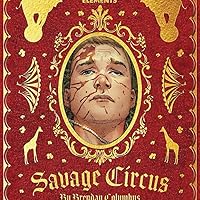
Despite having written one novel (partially) about a mercenary who served in Iraq, and despite having an abiding interest in PMCs, in the Middle East, and in the Iraq war, I put off reading this book ever since it came out (about 8 years) because of its goofy cover, stupendously stupid title, and ridiculous subtitle. The subtitle, specifically, made me think it was going to be a jingoistic pro-American, pro-merc pile of shit. It wasn't. If anything, it was a hit piece on Crescent, who richly deserves it, and on Blackwater, who deserves it even more but (mostly) got away with their heinous misbehavior in Iraq. (Nobody ever died of bad press, so cry me a river, Academi.)
Ultimately, the targets should be those in the Bush Administration who promulgated this war and have, for years, been pushing hard for military privatization. They're still out there, still in the government, and still running (hard) for President. Neoliberal economics is nothing but an irresponsible scheme to loot government for private gain. The privatization of military and security operations is one of the most egregious examples of this, but it's only one example. This book manages to more or less skip all of that, and get right to the "Boy, we fucked up in Iraq part." Having just finished The Endgame: The Inside Story of the Struggle for Iraq, from George W. Bush to Barack Obama, I'm more ashamed than ever at my country's dipshitted fumbling in the Middle East. I don't begrudge the individual soldiers, sailors, airmen and Marines, who may or may not have supported the war; hell, I don't even begrudge the participants portrayed in Big Boy Rules; hell, they were just lured by great gobs of money and were too ill-informed to distrust the overall structure. Why should they? The US Government had signed off on it; it has to be kinda safe, right? It wasn't, and THAT'S WHY THE GOVERNMENT IS SUPPOSED TO ENFORCE LAW AND ORDER, not subvert and curtail it. When the government blatantly falsifies cassus belli in a war conceived strictly for profit and imperialism, WTF does anyone expect us boneheaded debt slaves to do but seek their own piece of the pie? If everyone jumped off a cliff for $108,000 a year and free Pixie Stix, wouldn't you do it, too?
Now that several members of Blackwater were indicted last week for the fatal shootings of Iraqis in a popular Baghdad square, I highly recommend, for the broader context of understanding U.S. mercenaries -- because that's what they are, hired high-paying guns -- to read Big Boy Rules. This isn't some wonky dissection of the private security contractor industry, nor is it a 200-page polemic against their increasing presence in warfare. Big Boy Rules reads like an engrossing novel. Fainaru happened to pick out a young college student-turned-mercenary to follow around in Iraq and it turned out this main character became the center of an international news crisis -- an ambush, and later, something much worse. The other intriguing aspect of the book is Fainaru's use of first-person: He weaves in passages about his own visits home, to see his brother, a reporter who broke the Barry Bonds case deal with a criminal indictment for refusing to reveal his sources; and their father, dying of cancer. I rarely read books in one sitting, but I spent several hours on a Sunday paging quickly through this one. Fainaru is a reporter at The Washington Post and this book is based off a series of stories he wrote for the newspaper that won the 2008 Pulitzer Prize for international reporting.
This entire review has been hidden because of spoilers.
A bleak account of the sad, occasionally well intentioned but so often corruptly, negligently, and criminally handled business of private military contractors -in Iraq especially. It puts a human face on some who gave their lives to a cut rate PMC. A bit too much religious claptrap for me, and it’s dated, but still relevant and a worthy read.
I wanted to give this book 4 stars for providing a look into a facet of modern warfare that is often ignored, especially as it pertained to the US in the Iraq War. However, the author devolved from a statistically and personally informative narrative, to a rambling soliloquy that eventually ended with a poorly cobbled together attempt at closure for a merc team he had been with in Iraq.
As with most journalists who write books, Mr. Fainaru lacked a coherent theme and hence a coherent narrative. However, unlike a lot of journalists he was very good at identifying when he had gathered conflicting information or when he was simply passing on hearsay. I appreciated that and it allowed me to piece together what I thought might be plausible.
Bottom line, there were about 50,000 non-uniformed mercenaries running around in Iraq at their height. Contractors of all stripes outnumbered US troops on the ground and accounted for a sizeable portion of the war budget. Many of the larger Merc companies were publicly traded businesses with arsenals to match some poor third world countries. No UCMJ bound the mercs, nor did Iraqi law. They had absolute freedom to do whatever they wanted, to include killing civilians in cold blood.
I think one quote sums up the book quite nicely: "I felt like I had seen 'a hidden part of the war,' as Cote had put it, one with its own rules, its own language and subculture, its own secret battles. To me, in many ways, it summed up what Iraq was about: War without pretext. War without ideology. War without planning. War as a paycheck."
If you know little about mercenary companies in the Iraq War, then I would highly suggest this book. It isn't the greatest work, but it is eye opening. Solid 3 stars.
I learned a lot about the war that I have never know before. Despite my being a military spouse there is a lot I don't know. You just get used to the way things are, we've lived with this war for nine years and it's just apart us now that we don't ask question and don't really care any more because we don't see an end in sight. This book opens up a side to the war I would have never of seen or been a part of .
Please read this book, even if you never read non-fiction, or treat reading strictly as pure escapism. It is an incredible document of the unrepentant sadness brought about by the war in Iraq. One of the few books I've ever read that has moved me to tears.
Not sure what I expected from this book, but it was more than what was delivered. I felt it ragged on the lack of operational guidelines instead of describing the action.
Reading this, I came away with the distinct impression that unregulated usage of hired guns is one of the worst aspects of this era's American military efforts.
RICK “SHAQ” GOLDSTEIN SAYS: “THE UNWANTED, DOING THE UNFORGIVABLE, FOR THE UNGRATEFUL.” ---------------------------------------------------------------------------- As an honorably discharged Viet Nam era veteran I try to keep an insightful eye on the transformations that seem to inevitably take place in every war… as assuredly as night follows day. From the battle field strategies maneuvering battalions… to the increasing use of sniper teams… to the current… almost unbelievable use of large… larger… and largest… *PRIVATE ARMIES*. Call them mercenaries (merc’s) if you desire… but in today’s reality it has almost become a militarized-privatized-Fortune-500 Army. There’s an old expression that says “art imitates life”… well I am a witness to “life imitating art”! About a year ago I read a military novel that was built around a Bill Gates type character… who instead of owning Microsoft… he owned a gigantic private military company that would fight America’s wars. I thought that was a ridiculous premise… until I read this book. One of the many deceitful things that the author pulls out from behind a very thick government curtain, is how a large company gets a contract from the state department for security forces… then that large company… sub-contracts the contract to a smaller company… who sub-contracts to another smaller contractor… Ad Nauseam. Embedded in the heretofore unexplored upsurge in “merc’s” in Iraq, is the fact that the Government doesn’t include the number of “sub-contracted” private army personnel, when they divulge to the public how large a fighting force they’re using. The government also hasn’t been including the “merc’s” in their casualty counts.
Once the reader feels indoctrinated into the daily brutality of the war in Iraq… and is shocked as to the almost “lawlessness” of the military contractor’s… just when you feel you can’t be taken aback any further… you’re hit with the legal order that governs “merc’s”: “COALITION PROVISIONAL AUTHORITY ORDER NUMBER 17 (CPA-ORDER 17) GRANTED MERCENARIES AND OTHER CONTRACTORS IMMUNITY FROM IRAQI LAW. THE IMMUNITY WAS TO REMAIN IN EFFECT UNTIL THE DEPARTURE OF THE FINAL ELEMENT OF THE MNF (MULTINATIONAL FORCES) FROM IRAQ, OR UNTIL THE NEW IRAQI GOVERNMENT OVERTURNED IT. THAT, EVERYONE KNEW, WAS UNLIKELY AT LEAST IN THE FORESEEABLE FUTURE.” The “merc’s” were basically given a license to kill… and their utter disdain for treating the local people with respect… defeats the entire concept of winning the Iraqi’s hearts. As the author Steve Fainaru (whose brother Mark, is the co-author of the book “Game Of Shadows” that unleashed documented evidence against Barry Bonds and his steroid use.) travels with one military contractor and becomes close with some of their employees, he gets a call from home that his elderly cancer ridden Father is close to dying. This is a beautifully written pivotal point in the story. The entire direction of the story changes… and the author handles it like the beauty of a metamorphosis of a caterpillar to a beautiful butterfly. Though there was death all around him in Iraq… this is more than the dying of a man’s Father… it is the utter loving compassion of a son to a Father… and it is the strength and dignity of a Father facing death… with an energy for life… even though cancer… has taken his natural energy.
What happens next would not be believed if created in a movie script. Right after Steve leaves Iraq the “merc” that he had personally gotten closest to, was part of a group of “merc’s” that were taken hostage. The ensuing part of the story leads the reader through the sad… yet beautiful ending of a Father’s life… and the untold horrors of the hostage situation… through the eyes of the author and the hostage’s poor anguished families. This story will open your eyes to a “new” part of today’s war that has not been scrutinized near enough… and it will open your heart… on more than one front. This is simply an exquisite reporting job by the author.
A sobering and surprising (to me) account of private security forces that operated in Iraq (and probably still do) specifically in the time period of 2006-08. Estimates at that time placed the number of private security personnel operating in Iraq in excess of 50,000. I was totally clueless but it makes perfect sense in thinking through the policies of the Iraqi war. Congress was bringing intense pressure on the defense department to cut the troop size which occurred - the responsibility of securing convoys of supplies fell to Blackwater and other independent security forces. The author was embedded with Crescent Security (an Italian private security firm) to escort convoys and provide security to VIP's. The author's original purpose was to pen a series of articles for the Washington Post and this book is the culmination of that effort. The kidnapping of 5 crescent soldiers (4 Americans) in 2007 is the centerpiece of this book. Incredibly sad and gut wrenching for the families at home in America. This book certainly educated me in an area in which I had no knowledge. Highly recommend to anyone interested in private wartime security or the Iraqi War in general.
Good overview of the contractors involved in outside the wire security/escort (basically combat...) operations in Iraq. I worked as a tech contractor in the same environment (outside the wire, armed, but not doing the same kind of static or escort security, just moving around to do other work), and it is interesting to see how these people thought about their jobs.
this book was pretty good. i don't usually read things of this genre, but i enjoyed it and i thought it gave a wonderful narrative of a widely untold part of war. it felt very real and like the narration was lifting the curtain on a whole other world. that being said, even though i don't typically read nonfiction or memoir-type books, i would read something like this in the future
One of the best books I’ve read on the Iraq war. Told at a very personal level, it’s brutally hard to read. The PMC angle made this impossible to put down and I was dying by the end. Got a few weird looks on the plane.
One of the contractors in the book was from my town. As a reporter I covered his disappearance and actually gained a great relationship with his family. This book is excellent.
What a look into the paradigm shift in warfare. Iraqi Freedom was the first war to truly utilize security contractors in the fray. This might be because of the inherent shift in the style of war fighting of this campaign vs others. Security contractors sprung up almost overnight due to a need for security while soldiers actually did the fighting. Contractors performed security on convoys, structures, and VIP's. Although the oversight of the contractors fell to the DOD or DOS, many were left to their own rules aka big boy rules. This caused them to be almost like cowboys in the wasted streets of Baghdad or the supply lines of the rural Iraq. At one point there were as many as 170 different security companies performing duties in the war zone sometimes reeking havoc in the place where we were trying to instill peace. Most of them tried to provide their services with honor, but some did not. Some of the companies hired within hours of receiving emails from applicants without the slightest background check.
Well I haven't yet read "Blackwater" so I don't have much to compare Big Boy Rules to, but I have to say this book does pull back the curtain on mercs in Iraq.
Mercenaries as a business, the hidden costs of the war and the oral histories of Mercs themselves comprise the lionshare of the book; all framed around six contractors taken hostage and eventually found dead.
The frank discussion of how much of the logistical support is contracted out was really the most shocking for me. It appears that just about every convoy of sundry goods, political leaders and even Military personnel are being watched over by an industry that varies in competency from expert to "cowboys" with diplomatic immunity (see Blackwater).
Fainaru is a journalist, and so the text reads like a really long Vanity Fair or New Yorker article, lots of great interviews, and insights into the lives and routines of Mercenaries.
Despite the writing, which made the story a little confusing, this book was pretty good. It was especially disturbing to read about the free reign the private security companies had (have?) over in Iraq and to realize that in all likelihood they harmed efforts to improve relations between the Iraqi people and the American military. The story of the kidnapped Crescent employees was sad (and extremely graphic in parts), and the risks they took were definitely increased by a company who cared more about their bottom line than ensuring their employees' safety. I wish the author had written this book in a more logical thought pattern, but in the end I think he was able to make all the points he'd intended.
The content and reporting within this book revolutionized my understanding of the Iraq and Afghanistan conflicts. I have gained a sympathetic comprehension of the hatred of Americans that characterizes pockets of the Middle East (marked by awareness, not blanket justification, of course), of the impotence of our armed forces in much of the conflict(s), and of the complicated for-profit battles waged out of the eye of most public media. This at times graphic account lacks spectacular writing, and the manuscript contains errors, but Steve Fainaru's reporting of a cataclysmic cycle of non-sanctioned violence is presented here in a manner that makes obvious the justification for his Pulitzer Prize.
Part memoir and investigative journalism, Fainaru provides an insight, often infuriating, into mercenary activities in Iraq. It is hard to understand how Bush and his cohorts bamboozled the American public, while opeing the doors to rampant profiteering. How many Americans (and others) died? We just don't know. No one seemed to care about it. Grab the money and run, and just pray an rpg didn't nail you. And if anyone doesn't understand a little of why average Iraqis have no love for Americans, just ride along with Fainaru. Overall, a good and interesting book, but much more is going to have to be done to peel off the truth about what happened over there.