

What do you think?

The River #1
La Rivière
Deux copains de fac s’offrent la virée en canoé de leur rêve sur le fleuve Maskwa, au nord du Canada. Bientôt la balade contemplative tourne à la course contre la montre quand l’horizon s’obscurcit du plus dévorant des feux de forêt. Mais dans les bras et sous le règne de dame nature, une menace peut toujours en cacher une autre.
Peter Heller met sa pratique intime de l’aventure, son sens irrésistible du suspense et sa connexion unique aux paysages au service d’une folle et sauvage équipée qui éprouve autant l’amitié sincère de ses personnages que les nerfs du lecteur.
Peter Heller met sa pratique intime de l’aventure, son sens irrésistible du suspense et sa connexion unique aux paysages au service d’une folle et sauvage équipée qui éprouve autant l’amitié sincère de ses personnages que les nerfs du lecteur.
240 pages, Kindle Edition
First published March 5, 2019
About the author
Peter Heller
35 books3,951 followersThere is more than one author in the Goodreads database with this name.
Peter Heller holds an MFA from the Iowa Writers’ Workshop in both fiction and poetry. An award-winning adventure writer and longtime contributor to NPR, Heller is a contributing editor at Outside magazine, Men’s Journal, and National Geographic Adventure, and a regular contributor to Bloomberg Businessweek. He is also the author of several nonfiction books, including Kook, The Whale Warriors, and Hell or High Water: Surviving Tibet’s Tsangpo River. He lives in Denver, Colorado.
Peter Heller holds an MFA from the Iowa Writers’ Workshop in both fiction and poetry. An award-winning adventure writer and longtime contributor to NPR, Heller is a contributing editor at Outside magazine, Men’s Journal, and National Geographic Adventure, and a regular contributor to Bloomberg Businessweek. He is also the author of several nonfiction books, including Kook, The Whale Warriors, and Hell or High Water: Surviving Tibet’s Tsangpo River. He lives in Denver, Colorado.
Ratings & Reviews
Friends & Following
Create a free account to discover what your friends think of this book!
Community Reviews
Displaying 1 - 30 of 6,517 reviews

March 20, 2020
An amazing book. This one is going into the top five for the year. Absolutely beautiful writing craft. Evocative. Vivid. But most of all emotional. The author makes good use of the first sixty pages developing the two main characters Wynn and Jack who are friends on canoeing trip. This is a man vs man and man vs nature odyssey story. The conflict is foreshadowed and starts in earnest after page sixty. Nature and setting carry an equal weight as a main character and is wonderfully depicted. The book is stylistic in its structure and the story moves very quickly. It’s an easy read but I didn’t want it to end. I am a big fan of Dogstar by this author, but this book is better by a factor of five. I like all readers read for the emotion of the story and this one has a punch to the heart at the end. The kind of wrap up that I will be thinking about for a long time to come. And you can’t ask for more out of a book.
I highly recommend this book.
David Putnam author of The Bruno Johnson series.
I highly recommend this book.
David Putnam author of The Bruno Johnson series.

April 27, 2019
A little too slow-building and descriptive for me. There is some intense, suspenseful moments, but the detailed and somewhat repetitiveness stalled the flow of the story. He even describes how fast they paddled the canoe (3mph) , the various species of birds singing and the brand of sleeping bag they slept in. I know this would be a plus for many, but I was ready for something to happen.
This one was a favorite of many of my GR friends. I like to try new to me authors and I have been hearing great things about Peter Heller.
I did finish it and wanted to see how the mystery resolved, but I felt like I'd been on a very long river ride. Lots of five star reviews for this one, so probably a case of "its me".
This was a library check out for 2019.
This one was a favorite of many of my GR friends. I like to try new to me authors and I have been hearing great things about Peter Heller.
I did finish it and wanted to see how the mystery resolved, but I felt like I'd been on a very long river ride. Lots of five star reviews for this one, so probably a case of "its me".
This was a library check out for 2019.

March 26, 2019
Holy F***ity *f*ck. 2 days and I couldn’t put this one down.
This story moves as fast as the white water rapids these 2 pals are portaging through. Intense.
Jack and Wynn are trekking through the Maskwa river in Northern Canada an enjoyable journey that turns into one of survival. They encounter a forest fire, in which they are pacing themselves to the village they need to get to, Which is a 10 day trek at best and the flames are only 20 miles away. Then they encounter a man who claims his wife has gone missing who Jack & Wynn turn back to look for. Two other chaps are loaded to the gills and prove to be untrustworthy along this river.
Heller does a masterful job at painting a picture of a Wilderness landscape and fishing; and draws out an ultimate deep friendship.
5⭐️⭐️⭐️⭐️⭐️
Heller, I read The Painter back in 2014. Please do not take another 5 years to get your next one published!
This story moves as fast as the white water rapids these 2 pals are portaging through. Intense.
Jack and Wynn are trekking through the Maskwa river in Northern Canada an enjoyable journey that turns into one of survival. They encounter a forest fire, in which they are pacing themselves to the village they need to get to, Which is a 10 day trek at best and the flames are only 20 miles away. Then they encounter a man who claims his wife has gone missing who Jack & Wynn turn back to look for. Two other chaps are loaded to the gills and prove to be untrustworthy along this river.
Heller does a masterful job at painting a picture of a Wilderness landscape and fishing; and draws out an ultimate deep friendship.
5⭐️⭐️⭐️⭐️⭐️
Heller, I read The Painter back in 2014. Please do not take another 5 years to get your next one published!

April 9, 2022
The River by Peter Heller, Mark Deakins (Narrator)
Jack and Wynn met their first days of college and have been best friends and constant companions since then. They are taking a semester off college so they can take their time enjoying the Canadian wilderness. The guys are different in many ways, size, background, ways of seeing life, ways of approaching situations, but those differences seem to work. Their interests are what brought them together, love of fishing, hiking, camping, canoeing, and reading. They know each other so well and the most important thing is that they trust the other completely.
But now their leisurely trip has changed. Early frost was already going to make them consider picking up their pace but when they become aware of a huge wildfire coming their way, they need to make some serious decisions. Their minimalist, old school choices when they started the trip look dangerous now. They didn't bring a satellite phone or any other way to reach out for help, they even left out little things that weren't important before but are much needed in such a rush for safety. And they've come across some weird, rude, crude, drunk men who don't appreciate their warning of a fire. To top things off, they hear the voices of a man and woman fighting in this remote wilderness. Do they stop their fast trip downriver to warn them, too?
This becomes a trip of trying to survive fire, starvation, and the violence of man and nature. Wynn is the gentle giant who seems true to his ways even in emergencies. Jack has always been harder, more cynical, expecting the worst and it's now that he shocks Wynn with his choices and his actions. It's the relationship between these two young men that is the most interesting to me. They have been shaped by their pasts but also by their attitudes to life, death, and in Jack's case, his sense of guilt for a past tragedy. Nature is cruel to man and animal and then add in the cruelty of man and Jack and Wynn may not survive this trip.
Pub March 5th 2019 by Random House Audio
Jack and Wynn met their first days of college and have been best friends and constant companions since then. They are taking a semester off college so they can take their time enjoying the Canadian wilderness. The guys are different in many ways, size, background, ways of seeing life, ways of approaching situations, but those differences seem to work. Their interests are what brought them together, love of fishing, hiking, camping, canoeing, and reading. They know each other so well and the most important thing is that they trust the other completely.
But now their leisurely trip has changed. Early frost was already going to make them consider picking up their pace but when they become aware of a huge wildfire coming their way, they need to make some serious decisions. Their minimalist, old school choices when they started the trip look dangerous now. They didn't bring a satellite phone or any other way to reach out for help, they even left out little things that weren't important before but are much needed in such a rush for safety. And they've come across some weird, rude, crude, drunk men who don't appreciate their warning of a fire. To top things off, they hear the voices of a man and woman fighting in this remote wilderness. Do they stop their fast trip downriver to warn them, too?
This becomes a trip of trying to survive fire, starvation, and the violence of man and nature. Wynn is the gentle giant who seems true to his ways even in emergencies. Jack has always been harder, more cynical, expecting the worst and it's now that he shocks Wynn with his choices and his actions. It's the relationship between these two young men that is the most interesting to me. They have been shaped by their pasts but also by their attitudes to life, death, and in Jack's case, his sense of guilt for a past tragedy. Nature is cruel to man and animal and then add in the cruelty of man and Jack and Wynn may not survive this trip.
Pub March 5th 2019 by Random House Audio

March 21, 2020
The River by Peter Heller is a 2019 Knopf Publishing Group publication.
An intense adventure between man and nature amidst a battle between good and evil…
Two close friends, Wynn and Jack, one from Vermont and the other from Colorado, each with different temperaments, decide to canoe the Maskwa River in northern Canada. They have dreams of taking it slow and easy, kicking back and enjoying nature at its finest.
However, a wildfire changes the tone of their trip, adding a sense of unease that intensifies when, after hearing a couple arguing, they attempt to warn them of the fire, but can’t seem to locate them in the fog. The next day they encounter a man paddling alone on the river, who claims his wife has gone missing.
From there Wynn and Jack find themselves in a taut, dangerous situation as they search for the missing woman, while the wildfire builds to a crescendo.
Wow! Talk about white knuckle suspense! This book is less than three hundred pages long, but sometimes the best things come in small packages.
The story is packed with exceptional and stunning scenery one can truly envision, and the characterizations are just incredible. I understood fully the different personalities Wynn and Jack possessed, how they each had definite and strong opinions about how to approach their unexpected dilemma. The precision timing carries the story from a relaxed excursion to a nightmarish race against time with exceptional pacing that kept me on the edge of seat.
I would agree the story could and should be labeled as a thriller, but it’s much more than that. So much happens in such a short span of time, it isn’t until the final chapter that one has the chance to really stop an reflect on all events leading up to that moment, and how quickly one’s life can drastically change.
The deep emotional impact remains long after the final page is turned. This thought- provoking story was released in 2019 and the message was clear and profound enough at that time. Everyday life poses at least some risk and can turn on a dime, as we have witnessed in the past few weeks, making an already disquieting story about coping with random, unforeseen events feel even more timely than usual.
I’m pushing the ‘recommend’ button on this one.
All the stars for this one!
An intense adventure between man and nature amidst a battle between good and evil…
Two close friends, Wynn and Jack, one from Vermont and the other from Colorado, each with different temperaments, decide to canoe the Maskwa River in northern Canada. They have dreams of taking it slow and easy, kicking back and enjoying nature at its finest.
However, a wildfire changes the tone of their trip, adding a sense of unease that intensifies when, after hearing a couple arguing, they attempt to warn them of the fire, but can’t seem to locate them in the fog. The next day they encounter a man paddling alone on the river, who claims his wife has gone missing.
From there Wynn and Jack find themselves in a taut, dangerous situation as they search for the missing woman, while the wildfire builds to a crescendo.
Wow! Talk about white knuckle suspense! This book is less than three hundred pages long, but sometimes the best things come in small packages.
The story is packed with exceptional and stunning scenery one can truly envision, and the characterizations are just incredible. I understood fully the different personalities Wynn and Jack possessed, how they each had definite and strong opinions about how to approach their unexpected dilemma. The precision timing carries the story from a relaxed excursion to a nightmarish race against time with exceptional pacing that kept me on the edge of seat.
I would agree the story could and should be labeled as a thriller, but it’s much more than that. So much happens in such a short span of time, it isn’t until the final chapter that one has the chance to really stop an reflect on all events leading up to that moment, and how quickly one’s life can drastically change.
The deep emotional impact remains long after the final page is turned. This thought- provoking story was released in 2019 and the message was clear and profound enough at that time. Everyday life poses at least some risk and can turn on a dime, as we have witnessed in the past few weeks, making an already disquieting story about coping with random, unforeseen events feel even more timely than usual.
I’m pushing the ‘recommend’ button on this one.
All the stars for this one!

January 31, 2019
Wynn and Jack meet at orientation, both sharing a love of literature, they become fast friends. Wynn comes from Vermont, loves the water, Jack, raised on a ranch in Colorado. Both boys have a keen sense of adventure and in the summer they decide to take a leisurely canoe trip down the Maskwa River in Canada. They are more than well provisioned, and the first part of their trip goes smoothly indeed.
In this first part of the book the reader is treated to superb descriptions of scenery. The descriptions are so visceral that I felt as if I was canoeing along, the book and the trip just flowing seamlessly along. The pacing slow. But then Jack smells smoke and the book takes a more urgent turn. Then something unexpected happens that puts the boys in even more danger. Now they are many days away from any village, and they haven't a sat phone. As the boys urgency increases do does the book. The pace picks up, and I just didn't want to put this down. During our journey down the river I had come to know these boys, their strengths snd weaknesses very well. I wanted them to survive the danger, survive the trip. Yet, things keep getting in the way, and by then though these boys will be heroes, their will also be s great sadness.
I admire Heller, his range of subject matter, his tightness send believability of plot. This book about friendship, starvation and survival has been done before, but not as well, and not with these two very special characters. I can't wait to see what he does next. But, whatever he does I'm in for the next adventure.
ARC from Edelweiss and Knopf publishing.
In this first part of the book the reader is treated to superb descriptions of scenery. The descriptions are so visceral that I felt as if I was canoeing along, the book and the trip just flowing seamlessly along. The pacing slow. But then Jack smells smoke and the book takes a more urgent turn. Then something unexpected happens that puts the boys in even more danger. Now they are many days away from any village, and they haven't a sat phone. As the boys urgency increases do does the book. The pace picks up, and I just didn't want to put this down. During our journey down the river I had come to know these boys, their strengths snd weaknesses very well. I wanted them to survive the danger, survive the trip. Yet, things keep getting in the way, and by then though these boys will be heroes, their will also be s great sadness.
I admire Heller, his range of subject matter, his tightness send believability of plot. This book about friendship, starvation and survival has been done before, but not as well, and not with these two very special characters. I can't wait to see what he does next. But, whatever he does I'm in for the next adventure.
ARC from Edelweiss and Knopf publishing.

April 6, 2019
What a gripping, intense story!
Wynn and Jack are best friends, they met freshman year of college and bonded over their love of the outdoors and books.
They are on a wilderness canoe trip in Canada anticipating a grand time of fishing, paddling, stargazing, reading.... but things go awry when they become aware of a wildfire making its way across the forest.
This wildfire is just the start of occurrences that add an urgency to this heart-pounding tale.
Loved it!!
Wynn and Jack are best friends, they met freshman year of college and bonded over their love of the outdoors and books.
They are on a wilderness canoe trip in Canada anticipating a grand time of fishing, paddling, stargazing, reading.... but things go awry when they become aware of a wildfire making its way across the forest.
This wildfire is just the start of occurrences that add an urgency to this heart-pounding tale.
Loved it!!

June 21, 2021
“Tonight there was no loon and almost no wind and they went up through tamarack and hemlock and a few large birch trees whose pale bark fluoresced. At the top of the knoll they followed a game trail to a ledge of broken rock as if they weren’t the first who had sought the view. And they saw it. They looked northwest. At first they thought it was the sun, but it was far too late for any lingering sunset and there were no cities in that direction for a thousand miles. In the farthest distance, over the trees, was an orange glow. It lay on the horizon like the light from banked embers and it fluttered barely so they wondered if it was their eyes and they knew it was a fire…”
- Peter Heller, The River
Peter Heller’s The River belongs firmly in the rather robust subgenre of people in the wilderness getting in way over their heads. Indeed, in following two young men using a canoe to prove their masculinity, Heller calls to mind James Dickey’s Deliverance, which he helpfully name-checks to assure us he’s in on the joke. Even though the setup is familiar, the execution nearly takes this to another level. While The River ultimately fails to transcend its boundaries, it is still a near-great novel.
When I picked this up, I expected a gradual buildup, a slow accumulation of mistakes leading to disaster. Heller, though, has other ideas. When The River opens, we are already well into Jack and Wynn’s paddle-a-thon in northern Canada, near the remote Maskwa River. Almost immediately – with the efficiency of a screenwriter – Heller sets up the drama to come. First, Jack and Wynn – who met in college – discover a forest fire in the distance, heading their way. Next, they have an off-putting encounter with two drunk, foul-mouthed men who seem curiously unconcerned about the onrushing inferno. A short time later, they hear a man and woman arguing in the forest. Later, they will meet the man on the trail, but not the woman.
Those are the ingredients. Fire. Weirdos. Missing woman.
It would be impossible to say much more without disclosing key plot points.
Much more can be said in terms of structure and writing.
To begin, Heller's use of the forest fire is a brilliantly simple engine for this story. No matter what else is going on, there is always that creeping danger from behind. Like Jason in the original Friday the 13th, unseen but ever-present, the ominous scent of smoke in the air infuses everything with dread.
I also liked the pace. Despite a blistering start, with a whole bunch of things happening at once, Heller does not keep the pedal to the metal the entire way. Rather, he does a really good job of modulating narrative velocity by the judicious use of flashbacks into Jack and Wynn’s lives. The flashbacks act as a release valve for the tension, allowing Heller to draw things out gradually.
The flashbacks also do a good job of developing Jack and Wynn as characters. In the early going, the two men seem interchangeable. Both are competent and confident and I couldn’t really tell them apart. As The River unfolds, however, their pasts are slowly teased out, and they become distinct.
Writing in the third-person, and switching between Jack and Wynn, Heller allows us to see how both men operate. They view the world in vastly different ways, and because of that, they make different choices that have immeasurably different consequences. I was really impressed by the way that Heller connected the men’s decision-making with their personalities.
In a book like this, the plot often dictates how people act. Heller does not completely avoid this pitfall. To the contrary, one of The River’s fundamental weaknesses is that it rests on the premise that Jack and Wynn are super-skilled outdoorsmen who nevertheless start their long, dangerous journey without a satellite phone or personal locator beacon, an act of stupidity that no one with actual wilderness experience should make. That aside, much of what happens stems organically from the characters Heller has created.
For me, the best part of The River is its lyrical depiction of nature. Heller’s prose is at its finest when detailing the trees, the rocks, the lakes, and the river. The setting is a major character, and Heller gives it its due. At times, it was like a vicarious vacation, reminding me of past visits to the Boundary Waters (except, of course, for the concatenation of potentially lethal conditions). Heller paints his scenes with realism and precision, a Winslow Homer of words. There is a low-key genius to the way he is able to convey what a paddle sounds like when it dips into the water.
With all that said, The River is not a perfect novel. There were times when the philosophizing of Wynn and Jack – both went to Dartmouth – becomes a bit too pretentious and on the nose. Furthermore, certain sections pointedly remind you that Heller was a former contributing editor to Outside. He fetishizes gear, providing loving descriptions – complete with name-brands – of their canoe, their fly rods, their knives, and their guns. The result is that The River sometimes comes across as a species of REI or Cabela’s porn, more a catalogue than a story. I was almost surprised when he did not provide the prices.
Then there is the ending. Unlike a lot of thrillers with literary aspirations – which this book certainly has – there is no ambiguity or confusion regarding the outcome. Heller lays it out plainly, tying all his threads together. Unfortunately, the finale is too abrupt and far too implausible for my tastes, and fails to give The River the staying power in my mind that it might otherwise have earned.
Though it concludes on a down note, that does not overshadow what came before. Up until the final pages, Heller does an excellent job of putting you into the middle of a trip from hell. This is a furious and engrossing tale of adventure, pitting man against nature, man against man, and man against himself, all while finding the occasional moment to study the beautiful natural stage on which these conflicts play out.
- Peter Heller, The River
Peter Heller’s The River belongs firmly in the rather robust subgenre of people in the wilderness getting in way over their heads. Indeed, in following two young men using a canoe to prove their masculinity, Heller calls to mind James Dickey’s Deliverance, which he helpfully name-checks to assure us he’s in on the joke. Even though the setup is familiar, the execution nearly takes this to another level. While The River ultimately fails to transcend its boundaries, it is still a near-great novel.
When I picked this up, I expected a gradual buildup, a slow accumulation of mistakes leading to disaster. Heller, though, has other ideas. When The River opens, we are already well into Jack and Wynn’s paddle-a-thon in northern Canada, near the remote Maskwa River. Almost immediately – with the efficiency of a screenwriter – Heller sets up the drama to come. First, Jack and Wynn – who met in college – discover a forest fire in the distance, heading their way. Next, they have an off-putting encounter with two drunk, foul-mouthed men who seem curiously unconcerned about the onrushing inferno. A short time later, they hear a man and woman arguing in the forest. Later, they will meet the man on the trail, but not the woman.
Those are the ingredients. Fire. Weirdos. Missing woman.
It would be impossible to say much more without disclosing key plot points.
Much more can be said in terms of structure and writing.
To begin, Heller's use of the forest fire is a brilliantly simple engine for this story. No matter what else is going on, there is always that creeping danger from behind. Like Jason in the original Friday the 13th, unseen but ever-present, the ominous scent of smoke in the air infuses everything with dread.
I also liked the pace. Despite a blistering start, with a whole bunch of things happening at once, Heller does not keep the pedal to the metal the entire way. Rather, he does a really good job of modulating narrative velocity by the judicious use of flashbacks into Jack and Wynn’s lives. The flashbacks act as a release valve for the tension, allowing Heller to draw things out gradually.
The flashbacks also do a good job of developing Jack and Wynn as characters. In the early going, the two men seem interchangeable. Both are competent and confident and I couldn’t really tell them apart. As The River unfolds, however, their pasts are slowly teased out, and they become distinct.
Writing in the third-person, and switching between Jack and Wynn, Heller allows us to see how both men operate. They view the world in vastly different ways, and because of that, they make different choices that have immeasurably different consequences. I was really impressed by the way that Heller connected the men’s decision-making with their personalities.
In a book like this, the plot often dictates how people act. Heller does not completely avoid this pitfall. To the contrary, one of The River’s fundamental weaknesses is that it rests on the premise that Jack and Wynn are super-skilled outdoorsmen who nevertheless start their long, dangerous journey without a satellite phone or personal locator beacon, an act of stupidity that no one with actual wilderness experience should make. That aside, much of what happens stems organically from the characters Heller has created.
For me, the best part of The River is its lyrical depiction of nature. Heller’s prose is at its finest when detailing the trees, the rocks, the lakes, and the river. The setting is a major character, and Heller gives it its due. At times, it was like a vicarious vacation, reminding me of past visits to the Boundary Waters (except, of course, for the concatenation of potentially lethal conditions). Heller paints his scenes with realism and precision, a Winslow Homer of words. There is a low-key genius to the way he is able to convey what a paddle sounds like when it dips into the water.
With all that said, The River is not a perfect novel. There were times when the philosophizing of Wynn and Jack – both went to Dartmouth – becomes a bit too pretentious and on the nose. Furthermore, certain sections pointedly remind you that Heller was a former contributing editor to Outside. He fetishizes gear, providing loving descriptions – complete with name-brands – of their canoe, their fly rods, their knives, and their guns. The result is that The River sometimes comes across as a species of REI or Cabela’s porn, more a catalogue than a story. I was almost surprised when he did not provide the prices.
Then there is the ending. Unlike a lot of thrillers with literary aspirations – which this book certainly has – there is no ambiguity or confusion regarding the outcome. Heller lays it out plainly, tying all his threads together. Unfortunately, the finale is too abrupt and far too implausible for my tastes, and fails to give The River the staying power in my mind that it might otherwise have earned.
Though it concludes on a down note, that does not overshadow what came before. Up until the final pages, Heller does an excellent job of putting you into the middle of a trip from hell. This is a furious and engrossing tale of adventure, pitting man against nature, man against man, and man against himself, all while finding the occasional moment to study the beautiful natural stage on which these conflicts play out.

June 22, 2019
FOUR STARS AUDIO
The River is for you, IF:
You are the outdoorsy/backpacking/hiking type. Or live vicariously through books!
You love a modern adventure story with an old-timey feel.
You adore descriptions of nature.
You go gaga over detailed lists of camping supplies😂NOT kidding!
You love a very literary writing style in above mentioned subjects!
So, I kinda meet the above requirements (hello🙏I live in Oregon by choice!!). I plunged into this lovely, little, short book and was pleasantly hooked right away. I had to take a star off, because the ending was so abrupt and I just didn't like it!!!
Also, I have to admit, if I had been reading instead of listening, I might have skimmed a few of those supply lists. ☹️. BUT, The audio was thrilling!! LOVED it! This is a real he-man book for men and women who appreciate such things. Maybe that doesn't make sense. Whatever, you get what I mean...
The River is for you, IF:
You are the outdoorsy/backpacking/hiking type. Or live vicariously through books!
You love a modern adventure story with an old-timey feel.
You adore descriptions of nature.
You go gaga over detailed lists of camping supplies😂NOT kidding!
You love a very literary writing style in above mentioned subjects!
So, I kinda meet the above requirements (hello🙏I live in Oregon by choice!!). I plunged into this lovely, little, short book and was pleasantly hooked right away. I had to take a star off, because the ending was so abrupt and I just didn't like it!!!
Also, I have to admit, if I had been reading instead of listening, I might have skimmed a few of those supply lists. ☹️. BUT, The audio was thrilling!! LOVED it! This is a real he-man book for men and women who appreciate such things. Maybe that doesn't make sense. Whatever, you get what I mean...

March 19, 2019
“The River” is a very engrossing and beautifully written outdoor adventure/friendship tale that knocked my socks off. Heller is an absolute master at capturing the fierce beauty and terrible majesty of the natural world. His powerful descriptions of nature often took my breath away. Here’s a passage where he brings a monstrous beast of a forest fire to life:
”Over the trees – they could still see the wall of trees through smoke like fog – the glow was a fierce and general radiance that pulsed with a redder breathing. It was loud. Whatever turbines roared were just beyond the trees and now and then they were cut by a sudden whoosh and pop, and then the terrible hissing squeal that Jack knew was a tree’s sap, its lifeblood boiling and pressurized and squeezed through the very pores of the wood.”
Jack and Wynn are best friends. They have taken summer and fall terms off from Dartmouth University to enjoy some time in the outdoors. Jack is the tough and pragmatic son of a Colorado rancher. Wynn is big, gentle and kind-hearted, a Vermont boy who loves waterways and fishing. The young men have bonded over their love of books, poetry and all things outdoors, and have taken many camping trips together. They are looking forward to a leisurely canoeing trip on the isolated Maskwa River in northern Canada – camping, fishing, living off the land and riding the rapids.
Their trip goes sideways almost from the start when Jack and Wynn have a couple of sinister encounters with other campers in the remote north. To make matters more unsettling, they smell woodsmoke and soon come to realize they are in the direct path of a quickly moving firestorm. Will they be able to survive it?
What a thrill ride of a book, but so much more than just a thriller! Gripping, powerful and moving, it’s the unfolding of Jack and Wynn’s friendship that is the beating heart of the story. And Heller’s writing…..that exquisite writing…..all of your senses will come to life as you travel the secluded northern river and lakes with Jack and Wynn.
I’ve said it before and I’ll say it again – I don’t know what magic the Iowa Writer’s Workshop has harnessed, but their graduates are some of the most pure and brilliant writers working today. Heller is one of those gems.
I absolutely loved this book and can’t imagine anyone not feeling the same. Read it!
”Over the trees – they could still see the wall of trees through smoke like fog – the glow was a fierce and general radiance that pulsed with a redder breathing. It was loud. Whatever turbines roared were just beyond the trees and now and then they were cut by a sudden whoosh and pop, and then the terrible hissing squeal that Jack knew was a tree’s sap, its lifeblood boiling and pressurized and squeezed through the very pores of the wood.”
Jack and Wynn are best friends. They have taken summer and fall terms off from Dartmouth University to enjoy some time in the outdoors. Jack is the tough and pragmatic son of a Colorado rancher. Wynn is big, gentle and kind-hearted, a Vermont boy who loves waterways and fishing. The young men have bonded over their love of books, poetry and all things outdoors, and have taken many camping trips together. They are looking forward to a leisurely canoeing trip on the isolated Maskwa River in northern Canada – camping, fishing, living off the land and riding the rapids.
Their trip goes sideways almost from the start when Jack and Wynn have a couple of sinister encounters with other campers in the remote north. To make matters more unsettling, they smell woodsmoke and soon come to realize they are in the direct path of a quickly moving firestorm. Will they be able to survive it?
What a thrill ride of a book, but so much more than just a thriller! Gripping, powerful and moving, it’s the unfolding of Jack and Wynn’s friendship that is the beating heart of the story. And Heller’s writing…..that exquisite writing…..all of your senses will come to life as you travel the secluded northern river and lakes with Jack and Wynn.
I’ve said it before and I’ll say it again – I don’t know what magic the Iowa Writer’s Workshop has harnessed, but their graduates are some of the most pure and brilliant writers working today. Heller is one of those gems.
I absolutely loved this book and can’t imagine anyone not feeling the same. Read it!

March 21, 2019
"The turning of a card that sent a life in one direction or another. The slip of a single hoof on stone, the sound of two voices in the midst. He believed in it as much as he believed in any other thing, like loyalty or hard work. And sometimes the places that happenstance sent you weren't as vague as a direction, sometimes they were as steel-cast and unforgiving as a set of rails."
Life is like that. It nudges you down unexpected corridors and sets your feet upon the rocky surfaces of shifting circumstances. Wynn and Jack felt the calling that day as they readied their gear for an adventure down rivers and past lakes in northern Canada. Best friends since their freshman days at Dartmouth, they built an unshakeable bond even as polar opposites. Wynn held fast to family as a Vermonter and saw goodness in spite of it all. Jack, the son of a Colorado rancher, knew first hand the cruelty of Nature and focused on the reality of an unfair world.
Peter Heller creates this wilderness journey with broad strokes of the lay of the land. He surrounds us with full, lush views of the dense trees and wildlife along the Maskwa River. His finite descriptors have us, as readers, crouched low within the canoe ourselves. We listen to the waves lapping the shore. There is a peacefulness about this as we are lulled by the beauty of it all.
But then Heller redefines his approach. From a widened scope of a panoramic view, he brings the storyline inward and we are privy to the inner workings of both of these young men. Their experiential backgrounds will give us pause. What visited upon us in the long ago still lurks in the crevices of our soul no matter how we fight to dismiss it. It has a pulse and it takes shelter in the dark recesses. We'll all nod with the sudden realization of this.
The River is not a mystery/thriller. It is a deepened study of human nature under trying circumstances. Wynn and Jack will come upon an intense situation in those woods that will force them to engage completely or turn and run. It will give way to "the dark night of the soul". Does life ever prepare you fully for the split-second decisions that hijack your inner peace?
I will leave you with one thought. There is a paragraph on Page 234 that begins: "Hey, girl. Hey." It will rip you as it ripped me. I had to read it multiple times. Sometimes we just have to lean into it all and force ourselves to be embraced by both the good and the bad in life.
Life is like that. It nudges you down unexpected corridors and sets your feet upon the rocky surfaces of shifting circumstances. Wynn and Jack felt the calling that day as they readied their gear for an adventure down rivers and past lakes in northern Canada. Best friends since their freshman days at Dartmouth, they built an unshakeable bond even as polar opposites. Wynn held fast to family as a Vermonter and saw goodness in spite of it all. Jack, the son of a Colorado rancher, knew first hand the cruelty of Nature and focused on the reality of an unfair world.
Peter Heller creates this wilderness journey with broad strokes of the lay of the land. He surrounds us with full, lush views of the dense trees and wildlife along the Maskwa River. His finite descriptors have us, as readers, crouched low within the canoe ourselves. We listen to the waves lapping the shore. There is a peacefulness about this as we are lulled by the beauty of it all.
But then Heller redefines his approach. From a widened scope of a panoramic view, he brings the storyline inward and we are privy to the inner workings of both of these young men. Their experiential backgrounds will give us pause. What visited upon us in the long ago still lurks in the crevices of our soul no matter how we fight to dismiss it. It has a pulse and it takes shelter in the dark recesses. We'll all nod with the sudden realization of this.
The River is not a mystery/thriller. It is a deepened study of human nature under trying circumstances. Wynn and Jack will come upon an intense situation in those woods that will force them to engage completely or turn and run. It will give way to "the dark night of the soul". Does life ever prepare you fully for the split-second decisions that hijack your inner peace?
I will leave you with one thought. There is a paragraph on Page 234 that begins: "Hey, girl. Hey." It will rip you as it ripped me. I had to read it multiple times. Sometimes we just have to lean into it all and force ourselves to be embraced by both the good and the bad in life.

April 29, 2019
Find all of my reviews at: http://52bookminimum.blogspot.com/
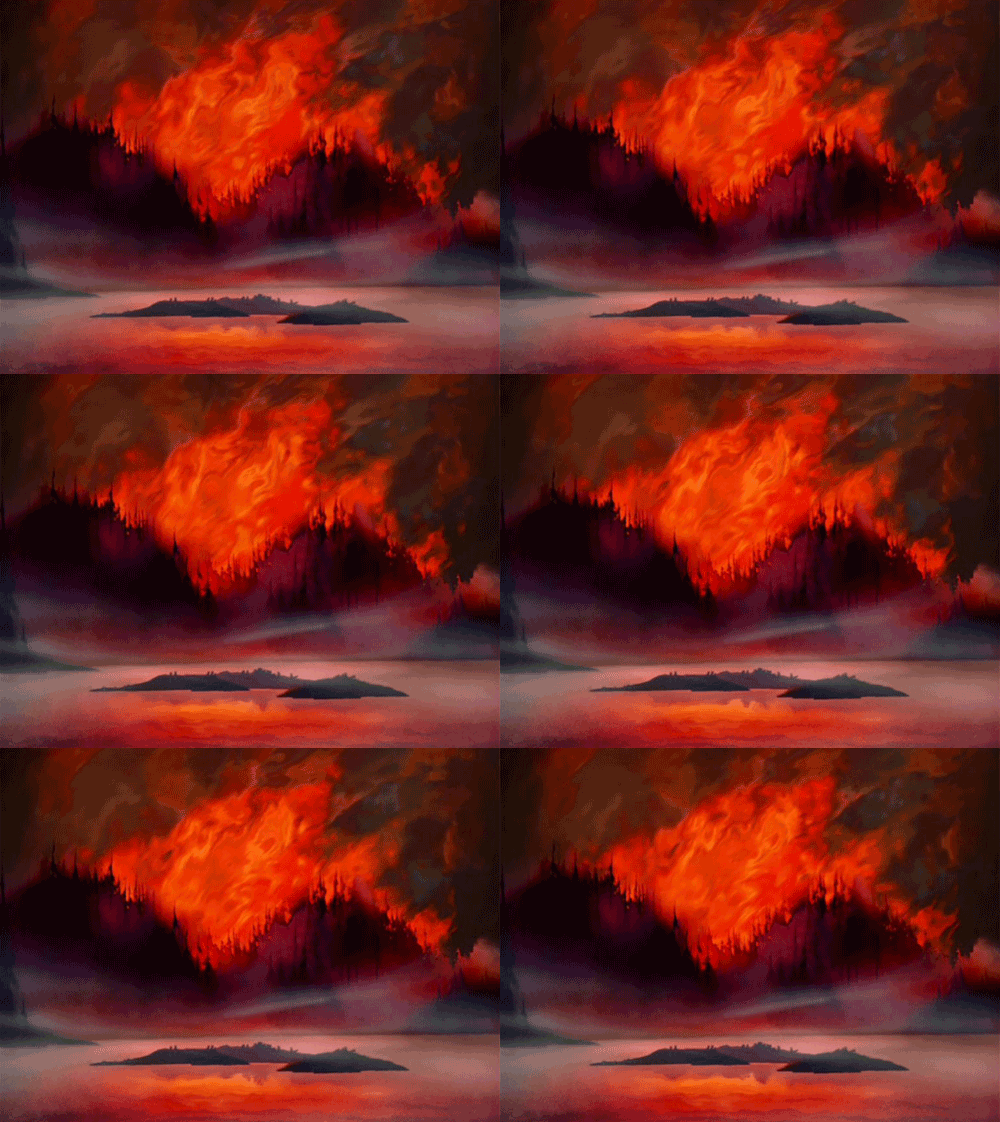
To say I was not the correct audience for this book is a serious understatement. Don’t even call me a wrongreader either because the blurb was responsible for making me think it was going to go all . . . .

With a story about a dude who maybe killed his wife on the river and the two young fellas who happen to stumble upon him both with and without his better half accounted for that also included a side dish of . . . . .
To amp up the adrenaline.
What I didn’t expect was for nothing – and I mean NOTHING AT ALL – to happen for the first 25% of the thing aside from descriptions of flora and fauna, both surrounding the lakes/rivers where the story is currently taking place or about the ranch and maple tree farm (okay not really a farm, but only serious tree tappers are boiling freaking syrup all night) where the two main characters grew up. Oh, the berry picking and fishing and the list of what they had packed and how to pack it in a canoe and how to sit in a canoe and the name of the type of paddling they are doing in the canoe and also the name of the person who designed the paddles for their canoe and on and on and on . . . .

If you read and enjoyed Bearskin or think . . . . .

Is a great movie, this might be another winner for you.
To say I was not the correct audience for this book is a serious understatement. Don’t even call me a wrongreader either because the blurb was responsible for making me think it was going to go all . . . .
With a story about a dude who maybe killed his wife on the river and the two young fellas who happen to stumble upon him both with and without his better half accounted for that also included a side dish of . . . . .
To amp up the adrenaline.
What I didn’t expect was for nothing – and I mean NOTHING AT ALL – to happen for the first 25% of the thing aside from descriptions of flora and fauna, both surrounding the lakes/rivers where the story is currently taking place or about the ranch and maple tree farm (okay not really a farm, but only serious tree tappers are boiling freaking syrup all night) where the two main characters grew up. Oh, the berry picking and fishing and the list of what they had packed and how to pack it in a canoe and how to sit in a canoe and the name of the type of paddling they are doing in the canoe and also the name of the person who designed the paddles for their canoe and on and on and on . . . .
If you read and enjoyed Bearskin or think . . . . .
Is a great movie, this might be another winner for you.

May 19, 2019
I saw this audiobook on the shelf of my local library and decided to pick it up knowing that many GR friends had recently rated The River very highly.
Adventure and survival stories are always of interest to me. Unfortunately, The River did not live up to the others I have read. The book is not intense or a thriller, but a slow burn. It is more of a character study of the 2 young men that are taking a journey down a river in northern Canada. The book describes well the challenges they face and the testing of their friendship. Heller’s portrayal of nature and the wild is enjoyable, but a little overdone.
Sometimes an audiobook doesn’t work and it’s better to read rather than listen. This wasn’t the case with The River. The narrator’s voice fit this type of book.
If you are interested in reading this book I would read all the other reviews. Many Peter Heller fans loved this novel.
3 out of 5 stars
Adventure and survival stories are always of interest to me. Unfortunately, The River did not live up to the others I have read. The book is not intense or a thriller, but a slow burn. It is more of a character study of the 2 young men that are taking a journey down a river in northern Canada. The book describes well the challenges they face and the testing of their friendship. Heller’s portrayal of nature and the wild is enjoyable, but a little overdone.
Sometimes an audiobook doesn’t work and it’s better to read rather than listen. This wasn’t the case with The River. The narrator’s voice fit this type of book.
If you are interested in reading this book I would read all the other reviews. Many Peter Heller fans loved this novel.
3 out of 5 stars

March 3, 2022
I must be in a lull with books at present this was a very slow, descriptive,repetitive
novel I have read. The author describes out of everything from how fast the canoe is going to what flowers are in the distance the pace was slow then it would pick up then go down again I was bored 😑 to 😭 it’s annoying as I read so many 5 ⭐️ reviews on this one, oh well at least I got this one out of the way.
novel I have read. The author describes out of everything from how fast the canoe is going to what flowers are in the distance the pace was slow then it would pick up then go down again I was bored 😑 to 😭 it’s annoying as I read so many 5 ⭐️ reviews on this one, oh well at least I got this one out of the way.

Read
March 13, 2019The Hook Most readers have a list of favorite authors. Peter Heller is one of mine. I've heard him speak a few times, the man and the writer a clash of thought for me. I don't quite know how to explain this but if I had only met the man, I'm not certain I would have read his books. He down plays his core, a man who can cite poetry, appreciate fine art and describe nature with the best, often relying on humor rather than the revealing the attributes I mention. In this recent
BookPage Interview by Lauren Bufferd you will meet the man that intrigues me.
The Line - ”In the saying nothing and in the hushed tones of the fire that was a hum of something persistent and barely registered, the twang of a bass guitar string long seconds after the last note was struck.”
The Sinker - In the interview above, Peter Heller describes The River as a story about two best friends in a canoe, a fire upwind, two shady dudes, leaving out an arguing couple, possibly husband and wife. How do you get from this, an apt description, to the exquisite, taut, tense raging power and beauty that Heller brings to life in The River?
At its center, The River is a book about survival, but there are many other underlying themes which might be more prominent. Key to me was the unfolding development of the two main characters, Jack and Wynn, not life-long friends, but with a relationship with the strength of a friendship seldom written about men. Wynn, the gentle giant, Jack, the slighter of the two in stature, but with great stature, can and do surprise us with their changing roles; two men, sometimes boys, who I will not soon forget.
If you haven't realized it yet, let me say it, loud and clear, “I loved The River”. Thank you Peter Heller.
Let me leave you with a poem by W.S Merwin that Wynn loved so much...
Dusk in Winter
The sun sets in the cold without friends
Without reproaches after all it has done for us
It goes down believing in nothing
When it has gone I hear the stream running after it
It has brought its flute it is a long way
BookPage Interview by Lauren Bufferd you will meet the man that intrigues me.
The Line - ”In the saying nothing and in the hushed tones of the fire that was a hum of something persistent and barely registered, the twang of a bass guitar string long seconds after the last note was struck.”
The Sinker - In the interview above, Peter Heller describes The River as a story about two best friends in a canoe, a fire upwind, two shady dudes, leaving out an arguing couple, possibly husband and wife. How do you get from this, an apt description, to the exquisite, taut, tense raging power and beauty that Heller brings to life in The River?
At its center, The River is a book about survival, but there are many other underlying themes which might be more prominent. Key to me was the unfolding development of the two main characters, Jack and Wynn, not life-long friends, but with a relationship with the strength of a friendship seldom written about men. Wynn, the gentle giant, Jack, the slighter of the two in stature, but with great stature, can and do surprise us with their changing roles; two men, sometimes boys, who I will not soon forget.
If you haven't realized it yet, let me say it, loud and clear, “I loved The River”. Thank you Peter Heller.
Let me leave you with a poem by W.S Merwin that Wynn loved so much...
Dusk in Winter
The sun sets in the cold without friends
Without reproaches after all it has done for us
It goes down believing in nothing
When it has gone I hear the stream running after it
It has brought its flute it is a long way

April 18, 2019
”They loved how the darkness amplified the sounds – the gulp of the dipping paddles, the knock of the wood shaft against the gunwale. The long desolate cry of a loon. The loons especially. How they hollowed out the night with longing.”
These two young men who meet during the first days of college on the Dartmouth campus, Jack and Wynn, share a love of nature, fishing, water and the outdoors, camping as well as a shared love of poetry, and books. A bond has been formed through these shared loves, but in other ways life has formed them into different people, so that their bond is even stronger. Jack is a bit guarded, having experienced a traumatic event as a child, and less trusting and tends to err on the side of caution, whereas Wynn sees people as good, wanting to give them the benefit of the doubt until proven otherwise. They have begun a relaxing journey, canoeing on Canada’s Maskwa River, with plans of camping, fishing and enjoying the outdoors.
”They had been smelling smoke for two days.”
They climb to the top of a knoll, knowing that the view would allow them to see into the distance.
“At first they thought it was the sun, but it was far too late for any lingering sunset and there were no cities in that direction for a thousand miles. In the farthest distance, over the trees, was an orange glow.”
…they didn’t say a word but the silence of it and the way it seemed to breathe scared them to the bone. The prevailing wind would push the blaze right to them.”
They make a decision to head back the way they came and warn a couple they’d passed on their journey. They’d avoiding acknowledging them on the way as the couple were involved a heated argument. It is the right thing to do – they feel – to let them know about the danger of the fire. It is a decision that will turn out to be one that will haunt them the rest of their days.
I loved how Heller delivers the pace of this story, alternating between gripping, tension-filled moments and lulling us back to calmer, soothing moments filled with Nature’s beauty; moments of compassion and the goodness of man juxtaposed against the horrors inherent in Nature in this wilderness, as well as the evils man can commit. Regardless of whether he is writing about the nature of Nature, or the nature of people, Heller’s prose manages to be both powerful and lovely.
I couldn’t put this book down. And, after I was done, I immediately started re-reading parts and savoring them, wandering back through these pages.
Many thanks, once again, to the Public Library system, and the many Librarians that manage, organize and keep it running, for the loan of this book!
These two young men who meet during the first days of college on the Dartmouth campus, Jack and Wynn, share a love of nature, fishing, water and the outdoors, camping as well as a shared love of poetry, and books. A bond has been formed through these shared loves, but in other ways life has formed them into different people, so that their bond is even stronger. Jack is a bit guarded, having experienced a traumatic event as a child, and less trusting and tends to err on the side of caution, whereas Wynn sees people as good, wanting to give them the benefit of the doubt until proven otherwise. They have begun a relaxing journey, canoeing on Canada’s Maskwa River, with plans of camping, fishing and enjoying the outdoors.
”They had been smelling smoke for two days.”
They climb to the top of a knoll, knowing that the view would allow them to see into the distance.
“At first they thought it was the sun, but it was far too late for any lingering sunset and there were no cities in that direction for a thousand miles. In the farthest distance, over the trees, was an orange glow.”
…they didn’t say a word but the silence of it and the way it seemed to breathe scared them to the bone. The prevailing wind would push the blaze right to them.”
They make a decision to head back the way they came and warn a couple they’d passed on their journey. They’d avoiding acknowledging them on the way as the couple were involved a heated argument. It is the right thing to do – they feel – to let them know about the danger of the fire. It is a decision that will turn out to be one that will haunt them the rest of their days.
I loved how Heller delivers the pace of this story, alternating between gripping, tension-filled moments and lulling us back to calmer, soothing moments filled with Nature’s beauty; moments of compassion and the goodness of man juxtaposed against the horrors inherent in Nature in this wilderness, as well as the evils man can commit. Regardless of whether he is writing about the nature of Nature, or the nature of people, Heller’s prose manages to be both powerful and lovely.
I couldn’t put this book down. And, after I was done, I immediately started re-reading parts and savoring them, wandering back through these pages.
Many thanks, once again, to the Public Library system, and the many Librarians that manage, organize and keep it running, for the loan of this book!
March 9, 2019
A novel that started off well, and then the writing became progressively lazier. If you want to read a book chock-full of camping and fishing minutiae, this might be for you. Stylistically, about 90% of it reads something like this:
They got up. They were cold. They made a fire. They took the pot to the river and filled it with water. They boiled the water. They added sugar. They drank it. They decided to do some fishing [insert page after page after page of description of fishing techniques]
At some point, the author feels the burning need to give us a few pages worth of lists of camping gear, brand names and all. How exciting. Next time I go camping, I'll definitely use this checklist.
To top it off, the thriller-y elements were an unsuccessful addition to the adventure story: the strongest part of the book was the description of the wildfire & the protagonists' quest to outrun it and survive, the weakest - the whole subplot concerning the injured man/woman etc etc. I did not care one bit about how that was handled, all those people were little more than hollow plot devices. Add to that a pretty weak ending, and you've got yourself a perfectly mediocre book.
They got up. They were cold. They made a fire. They took the pot to the river and filled it with water. They boiled the water. They added sugar. They drank it. They decided to do some fishing [insert page after page after page of description of fishing techniques]
At some point, the author feels the burning need to give us a few pages worth of lists of camping gear, brand names and all. How exciting. Next time I go camping, I'll definitely use this checklist.
To top it off, the thriller-y elements were an unsuccessful addition to the adventure story: the strongest part of the book was the description of the wildfire & the protagonists' quest to outrun it and survive, the weakest - the whole subplot concerning the injured man/woman etc etc. I did not care one bit about how that was handled, all those people were little more than hollow plot devices. Add to that a pretty weak ending, and you've got yourself a perfectly mediocre book.

December 5, 2019
Action, adventure, and a gorgeous setting, The River was hard for me to put down. Jack and Wynn are best friends on a college break making a canoeing trip. They are also something that is very unusual and little described in literature, decent, kind and smart. Their love of books is what brought them together; they are voracious readers. They also love nature and all its beauties as well. Both boys are good to their families and love them and both feel like they should take care of others that they find in trouble. No good deed goes unpunished and the boys learn that hard lesson, before the trip.is over.
March 10, 2019
5 ⚠️ ⚠️ ⚠️ ⚠️ ⚠️
If you go out in the woods today,
You'd better not go alone.
It's lovely out in the woods today,
But safer to stay at home. . .
But it’s not a picnic you should worry about.
Best friends Wynn and Jack are on a Canadian canoeing adventure minimalist style, no phone because “What would be the point? They didn’t have much first aid. They traveled light in that regard—they were boys” — Oh the confidence of youth. They do have bear spray but bears are not their biggest problem.
At 250 pages this one packs a punch from the get go with beautiful descriptive prose that puts the reader right on the water and into the forest, then with foreboding and menace, one hundred fifty-two miles of river with obstacles named Godawful Falls and Last Chance, a spreading wildfire gaining ground, two creeps camping out with booze and guns, and another man’s wife gone missing after a heated argument.
The faster Wynn and Jack paddled the faster my heart raced and pages turned, almost all in one sitting.
Initially I thought Haven’t we been here—done this before? Yes, but not quite like this. A fabulous, entertaining, intelligent, and soulful read.
If you go out in the woods today,
You'd better not go alone.
It's lovely out in the woods today,
But safer to stay at home. . .
But it’s not a picnic you should worry about.
Best friends Wynn and Jack are on a Canadian canoeing adventure minimalist style, no phone because “What would be the point? They didn’t have much first aid. They traveled light in that regard—they were boys” — Oh the confidence of youth. They do have bear spray but bears are not their biggest problem.
At 250 pages this one packs a punch from the get go with beautiful descriptive prose that puts the reader right on the water and into the forest, then with foreboding and menace, one hundred fifty-two miles of river with obstacles named Godawful Falls and Last Chance, a spreading wildfire gaining ground, two creeps camping out with booze and guns, and another man’s wife gone missing after a heated argument.
The faster Wynn and Jack paddled the faster my heart raced and pages turned, almost all in one sitting.
Initially I thought Haven’t we been here—done this before? Yes, but not quite like this. A fabulous, entertaining, intelligent, and soulful read.

May 16, 2020
Here's how I'd describe my symptoms to the librarian after reading The River, Peter Heller's man vs. nature/ man vs. man follow-up to The Dog Stars published in 2019: I compulsively finished the novel to the end. I also skipped over 15-20% of it. I appreciated its eerie splendor and moral conflicts. I tired of reading about the canoe trip and its minutiae. I found the two main characters well drawn. I recognized the skill with which Heller introduced backstory into the piece. Heller is a fantastic writer but I could've done with more storytelling and less writing.
Here's how the librarian would respond: You seem to be exhibiting symptoms of both reader's block and writer's block. Don't hang up on Heller, especially if you loved The Dog Stars. The author might have overstayed his trip in the wilderness several chapters longer than you were comfortable with. That's not your fault or his fault. The book is titled The River. I recommend getting back to the city immediately with a novel that has female characters and a sense of humor through it. That seems to be your comfort zone, not these men's adventures.
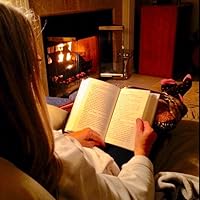
Here's a photo of my session with the librarian.

Here's how the librarian would respond: You seem to be exhibiting symptoms of both reader's block and writer's block. Don't hang up on Heller, especially if you loved The Dog Stars. The author might have overstayed his trip in the wilderness several chapters longer than you were comfortable with. That's not your fault or his fault. The book is titled The River. I recommend getting back to the city immediately with a novel that has female characters and a sense of humor through it. That seems to be your comfort zone, not these men's adventures.
Here's a photo of my session with the librarian.

June 14, 2019
THIS BOOK IS WHY I READ.
It had me at hello and didn't let go.
Literary perfection.
A beautiful tribute to nature.
The ultimate buddy read.
I will read more Peter Heller.
It had me at hello and didn't let go.
Literary perfection.
A beautiful tribute to nature.
The ultimate buddy read.
I will read more Peter Heller.

March 24, 2019
4.5 stars rounded up. Peter Heller’s elegant prose enthralled me, along with a couple of engaging characters in an intense backcountry adventure. Wynn, a big athletic guy from Vermont, who loves poetry and making impromptu sculptures from natural objects identifies with the ephemeral beauty he sees around him. Jack is a rough and tumble cowboy from Colorado who is still struggling with his mother’s tragic death when Jack was only eleven. They’re both nice guys; capable college buddies from Dartmouth. They decided to take off summer and fall semester for a canoe trip and at the point the story takes up, they’re two weeks away from their destination, the Cree village of Wapahk and Hudson Bay in northern Canada. The weather is changing quicker than they thought it would. Are they really prepared for any emergency? They’re cut off from the outside world with no means of communication, no sat phone.
What I enjoyed most was the relationship between Wynn and Jack. It rings true of how young men who are nature lovers might talk and act. They are a well oiled machine when it comes to rowing with each complementing the other perfectly. Avid outdoor people will love Heller’s descriptions of their fishing styles, and their fishing experiences as well as details about the canoe and the equipment they packed and how they secured everything. If you’re not a canoe and fishing expert (I’m not), you won’t find these details boring; Heller weaves them into the tale effortlessly, making note of differences in the style and temperament of Wynn and Jack, which is what I enjoyed because it gives character. After a day’s canoeing and then fishing for their supper, the two of them kick back and relax with a pipe. At least that’s what they did before everything starting going wrong. Before Jack got the heebie jeebies and a bad feeling.
It’s been a long time since I’ve read a man against nature novel that I enjoyed this much. A far off fire adds impetus to their journey. And if nature were not enough of a conflict, a man and woman heard arguing in the distance will add more tension as will two older men they meet along the way. Conflict will erupt between Wynn and Jack and readers will have to decide for themselves whether the young men make the right decisions. The ending is a bit abrupt, but I think it’s meant to be that way, perhaps to create a more emotional impact. It does. The ending is very emotional. I would have liked a little more follow up with the lone female character, Maia. These are unforgettable characters. Heller consistently writes solid fiction which I thoroughly enjoy.
What I enjoyed most was the relationship between Wynn and Jack. It rings true of how young men who are nature lovers might talk and act. They are a well oiled machine when it comes to rowing with each complementing the other perfectly. Avid outdoor people will love Heller’s descriptions of their fishing styles, and their fishing experiences as well as details about the canoe and the equipment they packed and how they secured everything. If you’re not a canoe and fishing expert (I’m not), you won’t find these details boring; Heller weaves them into the tale effortlessly, making note of differences in the style and temperament of Wynn and Jack, which is what I enjoyed because it gives character. After a day’s canoeing and then fishing for their supper, the two of them kick back and relax with a pipe. At least that’s what they did before everything starting going wrong. Before Jack got the heebie jeebies and a bad feeling.
It’s been a long time since I’ve read a man against nature novel that I enjoyed this much. A far off fire adds impetus to their journey. And if nature were not enough of a conflict, a man and woman heard arguing in the distance will add more tension as will two older men they meet along the way. Conflict will erupt between Wynn and Jack and readers will have to decide for themselves whether the young men make the right decisions. The ending is a bit abrupt, but I think it’s meant to be that way, perhaps to create a more emotional impact. It does. The ending is very emotional. I would have liked a little more follow up with the lone female character, Maia. These are unforgettable characters. Heller consistently writes solid fiction which I thoroughly enjoy.

September 9, 2020
Two college friends take a canoe trip through the Canadian wilderness. It’s a trip they’ve been looking forward to, but it quickly goes wrong. First, there’s a wildfire coming toward them. Then, they hear a couple fighting along the shore. Later that day, the man is seen, alone. He claims his wife has gone missing and the boys return to look for her.
What starts off slowly quickly picks up speed. Jack and Wynn may be best friends, but they definitely have different personalities and react differently to a crisis. Heller does a great job developing these characters and showing us how their backgrounds have shaped them.
Heller also shines in his descriptions of the scenery, not just the lake and river, but the wildlife. This is one of those books where you feel like you’re there. There were scenes when I was literally twisting in my seat. The climax took my breath away.
This isn’t a long book, but it’s packed full. I recommend this to fans of Nevada Barr.
What starts off slowly quickly picks up speed. Jack and Wynn may be best friends, but they definitely have different personalities and react differently to a crisis. Heller does a great job developing these characters and showing us how their backgrounds have shaped them.
Heller also shines in his descriptions of the scenery, not just the lake and river, but the wildlife. This is one of those books where you feel like you’re there. There were scenes when I was literally twisting in my seat. The climax took my breath away.
This isn’t a long book, but it’s packed full. I recommend this to fans of Nevada Barr.

April 22, 2019
Ugh! Here is another book that everyone loves...seriously, everyone, but, ummm...do I even have to say it?! Ugh! I would rather not. This just wasn’t the book for me. If I hadn’t skimmed parts of it, I’m not sure I would’ve finished it and I really don’t know why. I was bored. Forgive me, friends and fans.
2.5 stars
2.5 stars

June 1, 2019
The River is an exquisite adventure. Here is my reading experience: I am hurtling down a river, filled with adrenaline, desperate to flip the page when I am stopped in my tracks by a sentence, describing perfectly the sky or forest or the feelings of Wynn or Jack. I have to read it twice. Slowly. My pulse is racing, I charge forward and AGAIN am stopped by Heller's language. Meanwhile, I am becoming seriously attached to Wynn and Jack so every action they take is weighted. I am devouring and savoring this novel at the same time. My emotions are everywhere. Brilliant.

December 20, 2019
Wynn and Jack couldn’t be more different but because of their shared love of the outdoors and reading they become fast friends as freshmen in college. They decide to take a relaxing leisurely canoe trip down a river in Canada.
The first part of this slim book meanders along at a leisurely pace. The author is a travel and adventure writer and it shows. Normally I’ll put down a book with descriptive writing, but in this book it works. As with the other two books I’ve read by this author the audio version works particularly well with his writing style.
At the halfway mark, the boys smell smoke and along with the danger from the fire, they come across a woman in need and some unsavory campers. The tension ramps up and this turns into a tension-filled adventure survival story that tests their skills and their friendship in unexpected ways. It kept me riveted.
I came to know and care about these boys and wanted the story to end well, despite the odds. I loved that the book focused on a healthy male friendship, something we don’t often see in books.
Recommended as an audiobook
The first part of this slim book meanders along at a leisurely pace. The author is a travel and adventure writer and it shows. Normally I’ll put down a book with descriptive writing, but in this book it works. As with the other two books I’ve read by this author the audio version works particularly well with his writing style.
At the halfway mark, the boys smell smoke and along with the danger from the fire, they come across a woman in need and some unsavory campers. The tension ramps up and this turns into a tension-filled adventure survival story that tests their skills and their friendship in unexpected ways. It kept me riveted.
I came to know and care about these boys and wanted the story to end well, despite the odds. I loved that the book focused on a healthy male friendship, something we don’t often see in books.
Recommended as an audiobook

June 25, 2019

While “everybody” talks about not being able to put it down, I struggled repeatedly to keep picking it up!
At first, NOTHING HAPPENS for such a long time, even though they are made aware of a GIANT forest fire heading their way and they have about a 10-day paddle to do to get to safety. If that does not create tension what does?
It's exhaustingly descriptive (scenery, gear, flora, fauna, how to sit in the canoe, fly fishing techniques, and the smell of all kinds of things ) it borders on a textbook. The potential to establish an atmospheric setting (which is brilliantly done in Where the Crawdads Sing and The Great Alone) fails completely.
"Jack rummaged in the day bag and pulled out a brick of sharp cheddar, a dry summer sausage, and a Ziploc full of half-broken Triscuits. He sat up on the cane seat. There was a small cutting board in the bag, too, and Jack flipped open his clip knife and set the board on his knees and sliced the cheese and sausage."
The plotline felt secondary, and that’s just ridiculous when you have a potential murderer, two crazy characters who could star in the film Deliverance, and a forest fire of epic proportions on your tail.
Every now and then it swings close to interesting and some action, but you can skim the pages and you will get the full story.
Lots of potential, but it was simply boring, and the ending (about 85 % when it actually gets interesting) is so abrupt I almost threw my kindle in the nearest river.

1.5 - 2 stars

January 28, 2020
I struggle with words that will do this wonderful book justice, especially when Peter Heller writes so word perfectly and poetically. I am in awe and speechless at just how good this is. My only regret is that I waited so long, hoping my library would take my recommendation and purchase the audiobook, because Mark Deakins and Peter Heller were such an outstanding combo previously in The Painter.
Proof of Heller's perfect descriptions: The ebook had a map of the river and lakes, which I didn't view until after finishing the read, and I thought -- There it is... exactly as I pictured it... yep there's Blueberries Lake, there's Godawful Falls. It took me back to the key dramatic moments in the story as well as the lighter ones.
A deeply touching story about friends, tragedy, survival, and the goodness that can be found in most--not all--of us.
Proof of Heller's perfect descriptions: The ebook had a map of the river and lakes, which I didn't view until after finishing the read, and I thought -- There it is... exactly as I pictured it... yep there's Blueberries Lake, there's Godawful Falls. It took me back to the key dramatic moments in the story as well as the lighter ones.
A deeply touching story about friends, tragedy, survival, and the goodness that can be found in most--not all--of us.

September 13, 2022
A much anticipated canoe trip to northern Canada by two young college friends goes awry. Wynn and Jack, avid outdoorsmen, have planned well, have the needed skills, know dangers may be encountered, or do they? Nature, so awe-inspiring, so beautiful, can be your friend or can turn on you. People can too.
Peter Heller’s novel of wilderness perils and survival is a fast-paced thriller. His detailed descriptions of the flora and fauna are exquisite. This author has obviously lived and experienced many events in this novel. The friendship and skills tested were heartrending. I’m sure many would enjoy this fine story, but it it is definitely more relatable for those who love outdoor adventures or those who appreciate nature with its wildness, beauty, and unpredictability.
Peter Heller’s novel of wilderness perils and survival is a fast-paced thriller. His detailed descriptions of the flora and fauna are exquisite. This author has obviously lived and experienced many events in this novel. The friendship and skills tested were heartrending. I’m sure many would enjoy this fine story, but it it is definitely more relatable for those who love outdoor adventures or those who appreciate nature with its wildness, beauty, and unpredictability.
Displaying 1 - 30 of 6,517 reviews