Discover how the happiest people on earth survive—and thrive—through tough times using inner strength and courage.
Sisu is a powerful mindset that makes Finland one of the happiest countries in the world, despite long winters, social isolation, and a history of challenging times.
In Everyday Sisu , journalist Katja Pantzar explores the simple practices that make Finnish life so stable, sustainable, and healthy for body and mind, even when life doesn’t go as planned. You’ll discover ways to boost your mental and physical resilience to face life’s challenges head-on,
• connecting with nature • strengthening community • using what you have • reframing what you can’t control • adopting a solutions mindset • finding strength in the struggle
Featuring insights from Finnish experts in mental health, wellness, sustainability, social justice, and more, this practical and empowering guide presents a road map for overcoming what you thought you couldn’t—and finding hope and tools to create a brighter way forward.
I learned about the benefits of cold water swimming and how awesome Finland is compared to the most of the world. There is some actionable advice such as taking walks in parks and nature. But for the average person in North America, I don’t think alot of the advice is practical due to the way our cities are designed and the way infrastructure and zoning is set up. It is a nice ideal to see a country actively bettering their peoples lives through collective ‘Sisu’ (meaning grit or perseverance in English). I didn’t come away from this book with as much actionable advice or a-ha insights as I had hoped. I did come away from the book knowing more about Finland though.
My Grandma exemplified the actual Finnish concept embodying extraordinary determination, resilience, and courage in the face of adversity, grit, tenacity, stoic will to keep going even when it seemed impossible. She lost 3 small children in the space of three days in 1908 from diphtheria. Was widowed when my grandpa died in 1919 from the flu epidemic, leaving her with 7 children, all girls, to raise on her own, back when there were no assistance programs, on a homestead with no running water or electricity. She then taught those 7 girls everything, and one of them was my mom, an OG example of Sisu and a true badass in the bargain.
This particular woo woo form, rinse your face in ice water, eat a vegan diet, bike or hike everywhere and name drop at every single opportunity? Nah. No thanks. I’ll follow the bad asses.
An intriguing book that provides an insightful look into Finnish culture and the many health benefits of practices like cold water immersion, sauna, and spending time in nature. It's clear that the author has a deep appreciation for these aspects of Finnish life, and their enthusiasm shines through.
However, the consistent push for veganism as a health choice can be a bit overwhelming for some readers. While it's valuable to explore different dietary options, the relentless promotion of veganism might not resonate with everyone, and it can feel a bit too heavy-handed.
Sisu is a Finnish mindset about sustainability and resilience. The gist of the book is mentioned in the description. Everything else in the book is more of an autobiography of her life while she was writing this book. I would say it’s a very underwhelming writing.
While I loved the premise- I wouldn't say there was anything huge and new-- but, it's full of good tips to be more "SISU".
"Sisu- that unique form of stoicism, determination, resilience, and can-do attitude."
"Core elements of sisu- The only viable way forward is to care not only for one another but also for society's most vulnerable, and for the natural world."
"I gained strength and better mental and physical healthy by embracing simple and sensible activities such as spending more time outdoors in nature with friends no matter what the weather, and taking up popular activities such as winter swimming and year-round cycling."
"We all struggle and the only way forward is to help one another."
"Positive, healthy sisu doesn't come from what you can do, it comes from overcoming what you thought you couldn't."
"Embodied fortitude: Take care of the physical self through movement and activities that nurture a connection to nature, as well as other strength-building exercises such as what we eat and consume, the people we spend time with, how we care for one another, and even the thoughts we think."
"What is it that keeps our lights burning and hearts hoping during the dark night of the soul, and how might we best use this knowledge to alleviate the pain of those who are currently suffering?"
"Winter swimming, is one of the activities directly linked to Finnish happiness, as the popular pastime offers an amazing mental and physical reset and energizer that relieves stress, anxiety, depression, fatigue, and even pain. A short, thirty-second to one-minute session of natures cryotherapy can dramatically alter how you feel physically and mentally...a dip of thirty seconds to one minute in water that's 50 degrees fahrenheit or colder sets off the happy hormones such as endorphins, serotonin, dopamine, and oxytocin."
"The act of dipping in the sea also provides a much-needed connection to nature, which soothes the soul, allowing us to go offline and take a break. A great many things that ail us in our always-on, 24-7 digital life are compounded by our lack of contact with the natural world, with the outdoors. Too many of us spend too much time going from one artificially air-conditioned or heated environment to another..."
"Connection to nature is part of the sisu toolkit that can boost our well-being by helping us to deal with and reduce stress, better manage our energy levels, and find mental and physical peace."
"One of the best places to release stress and even deal with trauma is in nature...Your resilience grows as nature accepts you just as you are, and you can develop self-regulation skills and improve your parasympathetic system by spending time in nature. The cycle of nature also teaches you about renewal and appreciation. When it's a dark November day, it's like hibernation and then the different seasons break renewal and you have a totally different appreciation for the spring and summer after winter."
"MY MOTTO IS TO GO TOWARD THE LIGHT- TOWARD THE EMPATHETIC, SUPPORTIVE, AND CARING PEOPLE- WHENEVER POSSIBLE."
"Finding your tribe- that is, people who value and cherish the same things that you do- is vital... even if there are people around you such as a spouse, a family, or coworkers in a busy workplace, if you can't share with others the things that matter to you, you'll stil feel lonely."
"While there can be a lot of life inside the so-called comfort zone, growth, however, tends to begin at the end of your comfort zone."
"My meaning of life quest..It's to help others, to listen to them, to help them feel less alone, to encourage them, and to motivate them, especially when they're feeling low."
I was recommended this book by a mentor who for years has taken great interest in Finnish culture and even put up a big vinyl “sisu” on the wall of his workspace. I was excited to learn about it and maybe get excited about it like he is.
While the book isn’t the most wonderfully written, I thought the actual content was interesting and enlightening. However I found myself putting the book down and having a hard time picking it back up. It took a bit of willpower whenever I started reading again (not the best or most engaging writing) but it was almost like catching a wave.. once I was in it.. I was intrigued. The concept of Sisu is actually quite beautiful. I think the whole concept is exactly what I’d hope to find in a self help book. I loved some of the things it talked about regarding climate anxiety, nature exposure, ice swimming, up-cycling, general lifestyle sustainability, etc.
That being said, it was by no means perfect. I wish it gave a more basic understanding of what Sisu is and I wish it was related back to the authors thesis a bit more throughout the book.
Overall however, I really did find it very interesting and it was a pretty quick read!! If you are even a little bit interested in the topic or studies about happiness as a whole, I would definitely recommend it!!
Honestly that was one of the most poorly written books I’ve read in a while. For those of us less familiar with Sisu, it didn’t build a foundation or structure to easily follow. It jumped all over sharing insights of important conversations the author had with others and mashed them together loosely by topic (kind of). The headings didn’t always make sense, topics were repeated, and it wasn’t clear who the audience was. Finnish? Americans? The only helpful chapter was the last one, which read more like an insightful article sharing some tips to practice Sisu. I wouldn’t recommend.
Easy, light intriguing read with a few cub ideas but all very surface level- the feminism chapter in particular was so vague I wasn’t even sure what I was supposed to be taking away.
Let me begin with the disclaimer that writing any book is very difficult, especially a follow up to a best seller and especially, especially if you had a bit of a mental breakdown and dehabilitating depression before writing it.
I got this book because I'm focusing on "sisu" this year: courage, fortitude and literally "guts"--a Finnish national attribute and point of pride. Sisu in this book is translated through a lens that may be North American self-help book or maybe is just 21st-century. There's a lot of talk of authenticity, "toxic people," unresolved issues, "digital hygiene" and a lot of assumptions about our body issues. This is not going to a broad view of Nordic traditions. Some sisu-adjacent traditions, like forging and cold-water swims, make it in, but through the personal perspective of the author instead of in an objective way.
The book itself is full of "me-search" and breathless biographies of inspiring women, usually expats in Finland or at least cosmopolitans. There are mind-body coaches and "keynote speakers" (usually I let the conference organizer decide that), but you will not hear from, say, a middle-aged male mechanic. In fact, men's voices are very sparse, mostly just popping up in the detours into environmental science in the last chapter. Note: There is a weird unacknowledged tension between the authenticity of a wood-powered sauna she praises and the carbon neutral little town in the north of Finland she also lauds.
But there are little glimpses in what I would term sisu--the high school kid who puts on a sweater and turns off the lights to protect the early, a book promoting sisu in dealing with bullies that I would love to read in translation. It's hard to see cutting people out of your life and carrying a snack around as sisu. Sisu, ultimately, is like hard work and courage in an atmosphere of optimism.
For a book that I picked up on a whim (based only on me recognizing the word 'sisu' from my Finnish lessons, hehe), this was surprisingly good. The author was balanced and well-researched in her takes, and the book was paced well, starting with a simple concept but using the remaining pages to elaborate and give useful examples. I appreciate when a wellness book is more than just what you read in the introduction.
Sisu, the Finnish word for a type of resilience, is explained here in everyday practices that span the physical, mental, and community health in a person's life. Each practice felt approachable and intentional, which got me thinking about the ways in which I can insert better self-care on my own. She shows how building up small habits over time is what leads to a unified whole, which makes perfect sense. With the exception of the sustainability chapter (which I think falls under the "community" section but simply wasn't introduced as well, though I don't mind anything introducing people to sustainability), everything was cohesive and easy to understand. Overall, it was a good book that I will probably remember!
Some of my favorite sisu principles included: - using intense and immersive positive experiences (specifically cold-water swimming) to reset an anxious or busy mind - spending time in nature as a form of body acceptance, since nothing about your size nor form matters when the earth is your focus - bettering yourself as an extension of taking care of your community (because if anyone struggles, we all struggle) - lowering risk of trauma by actively participating to help when an event occurs - acknowledging that anyone can build good habits, but the likelihood increases when that mindset is all around you
Content warnings for mental health, bullying, domestic violence, and suicidal ideation.
You know I'm into hygge, so when I heard about the concept of sisu, I was interested in learning more about what our Nordic neighbors can teach us. Sisu is "the unique Finnish concept of resilience, courage, and grit in the face of all manner of challenges." In her book, "Everyday Sisu: Tapping into Finnish Fortitude for a Happier, More Resilient Life," Katja Pantzar @katjapantzar illustrates sisu in different areas of life through her personal story and others she's interviewed. I love reading about other cultures and love the international perspective this author brings and all the beautiful things she highlights about Finnish culture. This is the second book I've read recently that involves cold water swimming and I'm thinking I gotta try it out now?! Have any of you tried it?
"Sisu shares overlapping features with psychological qualities such as courage, perseverance, and grit, "but its most pronounced aspect is about tapping into previously unknown energy reserves that seem partially embodied rather than purely mental."
"As I've embraced a new set of Nordic values to replace some of the consumerist ones that I grew up with, I've also realized how important it is to take care of ourselves, one another, and Mother Earth."
''We find sisu, our 'second wind' and the extent of our mental and bodily strength, not despite adversities and discomfort, but because of them. Akin to photosynthesis in nature, which is the complex process of transforming light energy into chemical energy, there seems to exist an equally puzzling process through which humans unearth and trans- form their latent energy into movement, momentum and action during moments which at first seem but dead ends.”
Katja Pantzar continues her journey exploring the Finnish practice of sisu, which one practitioner described as "embodied fortitude." Sisu is about transcending limitations, about developing grit and determination, and it is a way of marshaling one's mental and physical resources to lead a happier life. Remember the Finns have been found to be the happiest people on earth. Sisu is part of the reason why.
Particularly interesting in the book are the author's discussions of the Finn's connection to nature as part of building sisu. Time in nature, forest bathing, ice bathing, build good health and a sense of well-being. Pantzar also connects sisu to Finland's world-renowned education system. And she explores the way Finnish society builds a sense of community and stewardship for the earth. Having a largely plant-based diet, up cycling clothing, and walking or bicycling rather than driving are highly valued practices in Finland. Throughout she introduces Finnish practitioners, researchers, and authors who demonstrate aspects of sisu.
A final chapter gives ten practices for everyday sisu, including ways to manage your energy, become a more conscious consumer, and build compassion for self and others.
Light reading filled with interesting snippets of Finnish life.
‘Sisu is a skill that can be practiced and learned, something that grows through action and practice.’
🦌🌲✨🏊♀️❄️
I’ve always been drawn to hygge, so when I first heard about the concept of sisu, I was keen to learn more. Sisu is a uniquely Finnish idea centred on resilience, courage and grit in the face of life’s challenges. The author illustrates sisu through her own personal story, as well as through the lives of others she has interviewed.
She also explores how time spent in nature — forest bathing, ice bathing and outdoor living — helps build healthy habits and a strong sense of wellbeing. Pantzar connects sisu to Finland’s world-renowned education system and examines how Finnish society fosters a deep sense of community and environmental stewardship. A largely plant-based diet, alongside walking and cycling rather than driving, are shown to be highly valued practices in Finland.
The final chapter offers ten practical ways to bring sisu into everyday life.
Finland has always been very dear to me. I had the chance to visit as a teenager, staying with a Finnish friend and her family who welcomed me and my own family as though we had known each other forever. I’ll always appreciate it! They showed us around, and I remember being completely in awe. The landscapes were breathtaking, and the people incredibly kind.
Last year, my partner and I travelled through Finland by Interrail and enjoyed so many of the experiences mentioned in this lovely book. Oodi Library and Allas Pools are now two of our absolute favourite places in Helsinki.
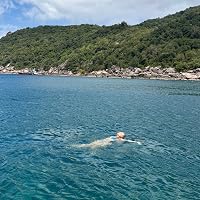
As someone who loves outdoor cold-water swimming — and with a partner who is slowly persuading me to enjoy saunas more — I believe this is an excellent read to begin a new year with a fresh mindset. It’s a book everyone can take inspiration from, and one I certainly will.
I found this book to be incredibly interesting, inspiring and it completely made me want to move to Finland! There are parts of the US I have thought about moving to for a better lifestyle with more like minded people, but then I would be away from my family and I don’t want that.
The idyllic lifestyle of the Finnish people, as described in this book sounds absoutely lovely. I seriously want to visit and experience it for myself! I know a colleague in our school district wanted to incorporate Finnish styles into our school, but I am not sure it was all that successful, especially when the views and opinions of the clients are the complete opposite of the Finnish. You need to adapt the entire lifestyle and mood. And it is really, really interesting. It is tempting too…….
QOTD: Do you feel more at peace with green therapy (nature) or blue therapy (water)?
Thanks so much to @tarcherperigee for the #gifted copy of this book that was released in March 2022. It is definitely an intriguing read!
I picked this up because of my love for all things Scandinavian. "Everyday Sisu" is a book that explores the Finnish idea of Sisu. This ideal helps you to lead a happier and more fulfilled life and helps you to have resilience in the face of adversity. This was a very fast read and I think it is perfectly written. It dives into the different facets of Sisu without becoming too long winded in its delivery. The author does an excellent job of pulling in real world examples of Sisu as well as their own personal experiences and observations. The mindset of Sisu is one that I am perpetually trying to work towards. I desire to be more resilient and this was definitely a case of the right book finding me at the right time. One small element that really resonated and stuck with me was the idea that if someone is not serving you and your Sisu then you should walk away from them. People's negativity can have a cascading effect and you are allowed to have a say in the energy you allow around you. I highly recommend this book if you are looking to improve your mindset.
Entah mengapa saya tidak begitu suka buku yang kedua ini. Apa karena saya membacanya dalam e-book, sehingga jujur saja banyak skip halaman yang saya lakukan. Saya membaca halaman per halaman secara skimming bisa dibilang. Namun, bisa dibilang buku ini membuka mata saya lebih luas mengenai konsep SISU. Ternyata, SISU bukan hanya tentang berenang di air dingin atau berjalan-jalan di dalam hutan. Ternyata, SISU bisa kita terapkan pada beragam aspek dalam kehidupan kita. SISU dalam berdamai dengan konflik dan bertoleransi terhadap ornag lain. Intinya, SISU merupakan satu pendekatan untuk menjalani kehidupan yang lebih tangguh terhadap tantangan. Manusia yang menyatu dengan alam dan masyarakat adalah masyarakat yang resilien dan semoga lebih dekat dengan kebahagiaan.
I loved this book because it really expands the notion of Sisu. I also learned that one of the advantages of cold water plunges is that it “offers an amazing mental and physical reset that relieves stress, anxiety, depression,fatigue, and even pain” (p. 33). To get the health benefits, the water should be 50 degrees or colder and the dip should last 30 seconds to a minute. This releases the happy hormones of serotonin, endorphins, dopamine, and oxytocin. The way that cold water dipping connects with Sisu is through the idea of cross-adaptation, the act of stressing the body prepares one on a cellular level to adjust to other stressors. So developing your Sisu, or inner fortitude, can be done—you don’t just have it because you’re born Finnish!
The ideas in the book were fresh and inspiring, but the book itself was all over the place. The content of the book didn’t really build off of itself besides being called part of the sisu fortitude. When mentioning sisu experts, too many details of their personal like was given that didn’t add to the story. Overall, it was an interesting read though, but I think it would’ve been better with less self-insert from the author if it was going to be entirely cited from interviews. I think that would’ve worked for a book entirely about how Katja Pantzar has used sisu in her own life and her journey in using it.
I enjoyed learning about how the Finnish culture approaches everyday life and how mindfulness is a big part of their experience. Even though as an Midwest American who doesn’t have access to open water or saunas or quick commute community centers (which are big building blocks to “Sisu”) there are aspects that I believe are applicable to my life. Spending more time in nature is completely accessible with local parks. Going on walks is easily doable, thanks to my safe neighborhood. Besides the nature & cold weather aspects to “Sisu”, there are things that are applicable to the average joes life. Interesting read but not mind blowing, learning more about Finland was fun though!
Sisu is a life principle amongst Finnish. It encourages everyone (Finnish) to be strong and agile from era to era. It’s rooted in everyone’ lives everyday and it becomes national-wide values. Sisu is also equipped to define their public policies by the authorities. Derived from empathy and equality, the high-level leaders in the country enacts many policies (e.g. the first country implements nutritious free meals for kids at schools in 1940s), which make Finland the happiest country on earth. Sisu is also about how to live your life to the fullest without neglecting your community and nature. It is an eye-opening book for those looking for a new perspective while reflecting on ourselves’s lifes; whether we have done enough for ourselves, others, and the nature.
Este livro representa as bases do estilo de vida do povo finlandês. Destaco, dentro dos principios e hábitos deste povo, a sauna e mergulho gelado, a prioridade na educação de qualidade, o exercício físico acidental e intencional que está presente diariamente, a vida minimalista e proximidade com a natureza. Acima de tudo, a visão da importância de todos estes fatores na melhoria da saúde das pessoas e do quão simples podem ser esses mudanças fascinou-me. Recomendo vivamente!
Enjoyed this book, though I was familiar with most of the things discussed. I can ascribe to everything recommended except the cold-water swimming. As much as I love Finnish culture, I don't think I would fare very well with the winter darkness, no matter how much diligent exercise, diet, time in nature, and community service I pursued. I do envy the status of women and children there. In comparison, America should be ashamed.
Excellent book - reminds me of why I loved her first book. Statistics shared about the amount of women employed in Finland and the strength of the policies that help women to be employed - like affordable childcare and substantial maturity leave. I love that cycling and walking are such an integral part of their community. Not sure I could ever embrace naked saunas or swimming outdoors year round, but I admire their culture and traditions.
This book in a nutshell, all things Finland and Finnish are amazing! Ice bathe. Get naked in the sauna. I could not relate and I do not like it when an author uses a lot of writing in another language without always translating the sentiment being conveyed. In all fairness, this appears to be a follow-up book from a previously published book that I have not read. Maybe with that frame of reference I would have liked it more. I'll never know.
As I have been exploring my Finnish heritage, my family gifted me this book. I was very interested to read it, having grown up hearing all about sisu from my Finnish mother. However, I was very disappointed in this book. Having read the author’s first book, I found this one lacking. Some of the material was repetitive. This book was more autobiographical, which is OK but not what I was expecting. Many of the examples of sisu seemed stretched and not particularly unique to the Finnish culture. And while the author did connect with many experts, the discussions seemed very superficial.