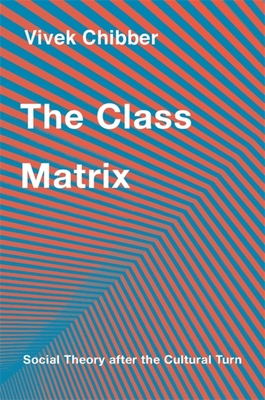
A small, powerful work. Perhaps the most eye-opening work of theory I've read since the first volume of Capital.
A lot of what's laid out in this work seems obvious in hindsight. Most working people can feel or perceive a lot of what Chibber's outlining in this book, but most of us couldn't articulate it as clearly and concisely as he does.
Big takeaways:
...
When capitalism did not produce it's own demise as predicted by Marx and classical Marxists — i.e., a working class revolution — theorists had to find an explanation for why. The popular theoretical turn was to culture: cultural differences and decisions were the explanation for why class warfare ultimately did not develop. Subsequently, many theorists began to question the validity of the class structure and the antagonisms therein. How valid could the antagonisms between classes really be if the final showdown never occurred, especially when working class strength was at its peak?
Chibber argues that the class structure and its antagonisms are very real and very valid, but the predicted outcome of these things was drastically under theorized by classical Marxists. Chibber acknowledges that Marx and classical Marxists were correct in thinking that class structure generates antagonism. However, the power balance within the class structure is so lopsided in favor of capitalists that it ensures capitalism's stability despite these antagonisms.
The stability and durability of capitalism is not held in place by material or ideological consent nor overt coercion. It is held in place, Chibber argues, by mass resignation of the working class. The precarity, economic pressures, and power differential inherent to the class structure leave workers with the perception that there is no viable alternative save selling their labor. Workers, through various means, are pressured to resign themselves to their class role and capitalism itself.
To me, this tracks with a lot of what I've seen in day-to-day life. Many folks I know are savvy enough to know, or at least feel, that the whole system is bullshit and immoral, and that the jobs they work are ultimately sending them in circles. But they have no union to join. Many of them work remote, so they don't even have coworkers in a traditional sense. Collective action, therefore, is more-or-less a pipedream. And every month they have rent to pay. They have groceries to buy. They have spouses and kids to support. Capitalism is eroding our world and crushing the collective spirit of Americans, and most Americans can feel this, but there is seemingly no viable way to stave off destitution, homelessness, or grave bodily harm without being an active participant in the system itself.
...
The class structure is not the sole determiner of culture in society. Individuals have agency and intelligence, and they can and often do act rationally. However, the class structure does exhibit strong coercive forces that shape certain parts of culture, specifically any parts of culture that may impede or prevent the productive dynamism of capitalism. No matter what your distinct cultural beliefs and practices may be, if you're a wage laborer, you'll be compelled to comport yourself in a certain way to keep your job. This means you may have to alter, retire, or compromise certain parts of your culture. This doesn't mean you're robbed of your agency wholesale — it means you're being coerced, and are making (rational) cultural decisions as a result to ensure the continuation of your well-being.
The same goes for capitalists as well. No matter what your distinct religious or moral beliefs, if you do not extract value from the labor of your employees, you will not survive. You must alter any cultural beliefs you have that will impede that action.
Individuals also have agency to choose different methods and variations of how they operate culturally within the class structure, but the class structure sets guardrails and hard limits to what is tolerated. There are many ways to keep your job if you're a wage laborer. There are many ways to maximize profits and minimize costs if you're a capitalist. However, the structure will not tolerate wage laborers who refuse to hold a job nor capitalists who refuse to pursue growth. Actors have agency to make every type of decision except those ones.
...
Some banger quotes I wanted to pull out:
"But a theory that relies on attributing a systematic failure in judgement to large groups is indulging in a spectacular bit of special pleading."
...
"But [the precariousness of employment] also destabilizes much of his life outside the workplace in that the rest of his life choices have to be subordinated to ensuring that he prioritizes his attractiveness to a current or future employer. The loss of power at work is complemented by a general anxiety at home."
...
"Culturalists are in the embarrassing position of claiming implicitly that while they can discern the exploitative — and hence unjust — character of the employment relation, the actors who are, in fact, being exploited, who are experiencing its brute facts, are not capable of doing so."
...
"But the remorseless burden of economic pressures, the enormous disparity in power between [laborers] and their employer, and the prohibitive costs of collective action — all these factors combine to give the [class] structures an appearance of immutability."