Jump to ratings and reviews
Rate this book

The Great Nowitzki: Basketball and the Meaning of Life

Rate this book
The seven-foot Dirk Nowitzki is one of the greatest players in basketball history. The Dallas Maverick’s legend revolutionized the sport, redefining the role of the big man in the modern game. Dirk moved differently: flexible and fast, confident and in control. He thought differently, too. On the court, his shots were masterful—none more venerated than his signature one-legged flamingo fadeaway, a move that lives on in the repertoire of today’s most skilled NBA players.


How did this lanky kid from the German suburbs become an all-time top ten scorer and NBA champion? How can a superstar stay so humble? Award-winning novelist and sportswriter Thomas Pletzinger spent over seven years traveling with Nowitzki. He witnessed Dirk’s summer workouts, involving fingertip pushups and the study of the physics, and spent days discussing literature and philosophy with Holger Geschwindner, Dirk’s enigmatic mentor and coach. Watching Nowitzki in empty gyms and in packed arenas with 30,000 fans, Pletzinger began to understand how Dirk and Holger’s philosophical insights on performance, creativity, and freedom enabled his success and longevity.


The Great Nowitzki tells Dirk’s dramatic story like never before. Pletzinger describes Dirk’s youth in small-town Germany, follows the steep learning curve of Dirk’s early seasons, the devastating Finals loss to the Miami Heat, and the triumphant championship five years later. Traveling with Dirk in his final seasons, Pletzinger immerses himself in the community of people impacted by Nowitzki’s game, interviewing everyone from average fans in Dallas and security guards at the arena to front office executives and Hall of Fame teammates, who reflect on what Dirk’s career means to the next generation of ballplayers. And to the game itself.


A masterpiece of sports writing that reads like a novel, The Great Nowitzki brims with a fan’s passion. Pletzinger shows how strongly basketball influences our imagination and the extraordinary journey an icon like Dirk Nowitzki must take to reach the pinnacle of the game.

448 pages, Hardcover

Published March 15, 2022

98 people are currently reading
2275 people want to read

About the author

Thomas Pletzinger

13 books20 followers
Born in 1975, Thomas Pletzinger has won several awards for his writing, including fellowships and teaching positions at the University of Iowa, New York University, and Grinnell College. He lives in Berlin.

Ratings & Reviews

What do you think?
Rate this book

Friends & Following

Create a free account to discover what your friends think of this book!

Community Reviews

5 stars
506 (51%)
4 stars
344 (34%)
3 stars
109 (11%)
2 stars
25 (2%)
1 star
6 (<1%)
Displaying 1 - 30 of 95 reviews
Profile Image for Julie .
4,248 reviews38k followers
December 22, 2021
The Great Nowitzki by Thomas Pletzinger is a 2022 W.W. Norton & Company publication.


After the Jordan era of basketball ended, I didn’t like the direction the league was headed and lost interest in the sport. After some time passed, my son started telling me about Steve Nash and Dirk Nowitzki, who played for our own Dallas Mavericks.

I declined his invitation to watch the games for a while, but he kept the pressure up until I finally succumbed, just to get him off my back.😁

Before I knew it, I got caught up on the excitement, and the game was fun again. We never missed a game on television, if we could help it. Watching Dirk was a thing of beauty. For someone seven feet tall, his agility, mobility and grace were unbelievable.

Every year, despite not having a bulked-up team full of superstars, Dirk got better and harder to beat.

While one never really knows what famous athletes are like in their private lives, sometimes we can get a vibe from them, just from the way they conduct an interview, their body language, remarks they make off the court, or what kind mischief they get up to that makes headlines.

But Dirk has always been so quiet, never made derogatory comments, never showed un-sportsman like conduct, or made waves of any kind… at least not on purpose or publicly.

He made his share of headlines now and then that was unfortunate, and embarrassing for him, but it was never a negative reflection on his character.

After reading this book, I feel even more confident that for the most part, the guy the fans perceived him to be, was pretty much the way he really is.

No one can go through those types of changes in life- fame, money and pressure- praise and criticism without becoming a little wary, a little jaded. Some people can’t handle it- but Dirk handled himself- at least publicly- representing his team and city as well as his home country of Germany, and his family and fans with great class.

This biography chronicles Dirk’s professional rise to one of the most elite players in the NBA and gives the reader a glimpse, albeit from a distance, of the man behind the professional veneer. The author followed Dirk’s career for a long time- traveled with him for seven years, with a tunnel-like vision centered on Dirk. He studied his subject closely, observing Dirk’s developments, both physically and mentally, as well as the toll on his body and mind over the years.

Dirk’s story is one of endurance, tenacity, will, and drive. He was fortunate enough to have some solid people in his orbit that helped keep him grounded, focused and balanced, making sure he understood his responsibilities and priorities.


The author sticks mainly to Dirk’s career, only deviating to give us a glimpse into his upbringing, but he did feel compelled to briefly examine some personal relationships. He speaks highly of Dirk’s wife, briefly profiling her artistic career, and included a fun interview with Steve Nash, who remains friends with Dirk.

I would have liked the author to expound on some of Dirk’s community and charity work, his foundations, etc., and I would have liked to know Dirk’s opinions about the league, what was going on when he played and how he views the future of the sport, but this is a biography and not a memoir- and the difference is that we don’t hear from Dirk in the first-person, instead we get the author’s perspective based on his interviews and observations- which is something I had to come to terms with.

Overall, though, the author did a good job with this book. The material is organized, insightful, and he did justice to Dirk and his legacy. I enjoyed tripping down memory lane, reliving the intensity of the playoffs, the emotional championship win, and the fun we had watching Dirk perform.


I miss those days. Today, as my family has grown up and started families of their own, we occasionally bring up those days. There’s a bittersweet, wistfulness to those memories, though. Not even one of us watches sports anymore- not on any level- professional, collegiate, or high school. We all have our reasons- how the teams are stacked, the attitudes, social media, sports blogs, constant talk and analysis, cheating, whining, and a plethora of other negatives that took all the fun out of it.

Now that I think about it…

Maybe Dirk was the last of dying breed… in fact, I know he was.

4 stars
Profile Image for Dennis.
663 reviews328 followers
June 15, 2020
"The Great Nowitzki? Dein Ernst?"
– Dirk Nowitzki


Ich hatte etwas Sorge, bevor ich dieses Buch begann. Gerade hatte ich die Michael Jordan Doku „The Last Dance“ beendet. Eine außergewöhnlich hochwertige Dokumentation über den größten Basketballer der Geschichte. Würde dieses Buch dagegen verblassen? Würde Dirk Nowitzkis Karriere im Vergleich fast unbedeutend wirken?

Zu Beginn kamen schnell andere Sorgen hinzu. Das Vorhaben des Autors war es zunächst eine Reportage über Dirk Nowitzki für DIE ZEIT zu verfassen. Hierfür reiste er während der NBA Playoffs der Saison 2011/12 für zwei Wochen nach Dallas. Dirk Nowitzki freilich hatte zu dieser Zeit anderes zu tun. Dem Autor blieb der Zugang zu seinem Protagonisten zunächst verwehrt. Er blieb ein Beobachter. Thomas Pletzinger hat einige Zeit gebraucht, um den Kontakt mit Dirk Nowitzki herzustellen. Am Ende allerdings wurden aus den zwei Wochen dann sieben Jahre. Sieben Jahre, die der Autor im zumindest engeren Kreis des Sportlers verbrachte. Bis zu Dirks Abschied aus der NBA. Aus einer 10-seitigen Reportage wurde letztlich ein über 500 Seiten starkes Buch. The Great Nowitzki.

Dieses Buch ist völlig anders, als ich es erwartet hatte. Es ist keine chronologische Abarbeitung von Dirks Karriere. Wegbegleiter und andere Stars des Spiels kommen recht wenig zu Wort. Hier ein kurzer Plausch mit Steve Nash, dort ein paar Worte mit Donnie Nelson. Das war es dann auch schon fast. Gesprochen hat der Autor vor allem mit Dirk Nowitzki selbst, mit Dirks Ehefrau Jessica und mit seinem persönlichem Trainer Holger Geschwindner. Geschwindner, der einer von Deutschlands besten Basketballern war, zu einer Zeit als Basketball hierzulande nahezu bedeutungslos gewesen ist. Ein Freigeist und Querdenker, ein Individualist, der das Spiel anders sah und anders dachte, als seine Mitspieler und Trainer, der Mathematik und Physik studiert hat und später für Dirk Nowitzki am perfekten Wurf arbeitete. An seinem Institut für angewandten Unfug. Als Geschwindner den damals 15-jährigen Nowitzki sah, erkannte er sofort, dass da ein Spieler ist, der das Spiel revolutionieren könnte. Sofern er denn das richtige Training erhält. Als Leser begleitet man die beiden auf ihrem langen Weg. Holger Geschwindner wird dabei zur zweiten Hauptfigur dieses Buches. Sein wissenschaftlicher und philosophischer Ansatz zum Thema Basketball ist dabei ungemein faszinierend.

Ich habe dieses Buch sehr genossen und eigentlich nur ein oder zwei Dinge zu bemängeln. Der Sprecher des Hörbuchs, der insgesamt zwar ordentliche Arbeit abliefert, scheint von der NBA leider wenig Ahnung zu haben. Anders kann ich es mir nicht erklären, dass er mehrere Namen, unter anderem sogar den eines der größten Stars des Spiels wie Stephen Curry nicht korrekt ausspricht. Das ist etwas ärgerlich, aber nichts, was am eigentlichen Text zu kritisieren wäre. Jedoch hatte ich auch teilweise das Gefühl, dass der Autor Dirk Nowitzkis Standing unter historischen Gesichtspunkten womöglich ein wenig überschätzt. Nowitzki ist sicherlich der beste deutsche Basketballer der Geschichte. Und er ist ganz sicher auch jemand der die Art wie das Spiel gespielt wird maßgeblich beeinflusst hat. Als Europäer in einer amerikanischen Sportart. Das ist schon bemerkenswert. Manchmal klang es aber so als würde der Autor Dirk Nowitzki auf dem Level von Spielern wie Michael Jordan, Wilt Chamberlain oder LeBron James sehen. Dieses Level hat Dirk aber nicht ganz erreicht. Da es im Kern bei diesem Buch aber gar nicht darum geht ob Nowitzki nun einer der zehn oder zwanzig besten Spieler der Geschichte ist, sondern viel mehr darum wie der Spieler Dirk Nowitzki durch harte Arbeit und den Input von Holger Geschwindner geformt wurde, kann ich es dem Autor verzeihen hier vielleicht ein wenig zu sehr die Fanbrille aufgehabt zu haben. Überhaupt kann man als deutscher Basketball Fan so oder so ungemein stolz auf das sein, was Dirk Nowitzki erreicht hat. Nicht nur ist dies sicherlich viel mehr, als jeder von uns jemals zu träumen gewagt hätte. Dirk Nowitzki ist ganz gewiss auch ein hervorragender Botschafter für unser Land. Dies ist auch die Geschichte eines Jungen aus Würzburg, der als Teenager in die USA auswanderte und dort nicht nur in einer für ihn zunächst fremden Welt erwachsen wurde, sondern sich auch zur populärsten Persönlichkeit der Stadt Dallas entwickelte und dem der Respekt und die Anerkennung einer Basketballnation zuteilwurde. Und das nicht nur aufgrund seiner sportlichen Leistungen.

Dirk Nowitzki selbst kommt in dem Buch genau so rüber wie man es als Basketballinteressierter erwartet. Ein unglaublich hart arbeitender, sich geradezu aufopfernder Sportler mit großem Talent und dem unbedingten Willen erfolgreich zu sein. Gleichzeitig aber jemand, der trotz allen Erfolges und der großen Aufmerksamkeit die ihm zuteilwurde, immer mit beiden Beinen fest auf dem Boden geblieben ist. Ein Mensch mit einem entwaffnendem Humor und einem großen Herzen, der sich selbst nicht zu wichtig nimmt. Jemand, dem der Sport zwar ungemein viel bedeutet. Der sich darüber hinaus aber auch seiner besonderen Rolle in der Community bewusst ist und dieser gerecht zu werden weiß, ohne sich dabei zu verbiegen. Dirk Nowitzki ist ein Typ, den man einfach gern haben muss. Mit dem man sich ehrlich freut, wenn er Erfolg hat. Jemand, zu dem man aufschauen kann.

Natürlich ist dies auch die Geschichte von vielen Niederlagen und dem immensen Druck, der auf Dirk Nowitzkis Schultern lastete. Nicht nur war Dirk ein Franchise Player in Dallas, der große Star einer Mannschaft und einer gesamten Stadt, er hat auch den deutschen Basketball auf seinen Schultern getragen. Und das für zwei Jahrzehnte. Am Ende des Buches wird einem klar wie lang und hart der Weg des Dirk Nowitzki war. Und man fühlt sich ein wenig so, als wäre man dabei gewesen. Insbesondere deshalb, weil das Buch sich eben nicht nur auf die große NBA Karriere Dirk Nowitzkis konzentriert. Seine Wurzeln in Deutschland und im deutschen Spiel nehmen eine ganz maßgebliche Rolle ein. Wer in seinem Leben Jugendsport in einem Verein betrieben hat, der wird sich hier zu Beginn womöglich in diese Zeit zurückversetzt fühlen. Mir jedenfalls ging es so. Nur dass Dirk Nowitzkis Karriere eben bis in die absolute Spitze der größten Liga der Welt führte und mit einer NBA Meisterschaft und einem Finals MVP gekrönt wurde. Bevor er sich dann anschließend in den Kampf mit Gevatter Zeit begab, den kein Sportler gewinnen kann. Dirk Nowitzki allerdings tat all dies mit einer bemerkenswerten Würde. Der Respekt und die Liebe, die ihm bei seinem Abschied entgegengebracht wurden, die hatte er sich ohne Frage verdient. Auch wenn er sich selbst lieber auf ruhige und unauffällige Art verabschiedet hätte.

“Einfach spielen und dann sagen, das wars. Dankeschön. Keine Lust mehr. Der Körper kann nicht mehr. Habe alles gegeben. War ein riesen Spaß.“


Danke Dirk! Auch ich habe es genossen.

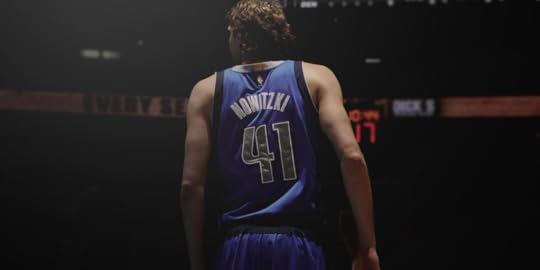
It's something unpredictable,
but in the end it's right
I hope you had the time of your life

description
Profile Image for Antje.
689 reviews59 followers
January 12, 2020
Im Gegensatz zu meinen Vorrezensenten gelang es mir nicht, diesem Buch etwas abzugewinnen. Ja, hätte ich über die Lebensgeschichte und dem Menschen Thomas Pletzinger mehr erfahren wollen, wäre ich damit zufrieden und glücklich gewesen. Doch meine Motivation ist es gewesen, von Dirk Nowitzki zu lesen. - Mir missfällt der Schreibstil, der mich glauben lässt, der Autor selbst würde sich gern ein schriftstellerisches Denkmal mit seinem Buch setzen, wie er gleichzeitig bemüht ist, diesem erfolgreichen Sportler gerecht zu werden, den er bewundert. Viel zu viele subjektive und persönliche Einflechtungen, die mich nicht interessieren und für das Thema überhaupt nicht relevant sind. Für mich ist diese Art der literarischen Auseinandersetzung nichts....deshalb Abbruch nach 169 Seiten.
Profile Image for Daniel Ray.
570 reviews14 followers
January 11, 2025
All time basketball great, Dirk Nowitzki, willed his 2011 Dallas Mavericks to the NBA Championship. After being down in the first round, he showed up for game 3 with a competitive game face that no one had ever seen before. In one game, he drove to the basket over and over getting fouled and sank 24 of 24 free throws. That game face did not waiver and inspired his teammates to raise their level of play. That state of mind and play had to survive many best of seven series because the NBA playoffs are so long. This biography shows his humble personality, strong work ethic, love for the game, and much more.
Profile Image for Lance.
1,664 reviews163 followers
December 26, 2021
Dirk Nowitzki will go down as one of the greatest players in professional basketball history. He played 21 seasons in the NBA, all with the Dallas Mavericks with the highlight of his career coming when he led his Mavericks to the NBA championship and was named the MVP of the NBA Finals against the Miami Heat. His story of his development as a player in Germany, and his career with Dallas is captured in this excellent book by Thomas Pletzinger.
Originally published in German in 2019, the English version is one that American fans should be sure to pick up whether or not they were Novitizki or Mavericks fans. Pletzinger spent six years working on this project while spending many days during that time frame talking to Dirk, to his longtime personal coach in both Germany and Dallas, Holger Gerschwinder and key people in Dirk’s professional life in Dallas. However, that statement doesn’t do justice to the connections Pletzinger made to give the reader a complete picture of not only Dirk the basketball player but Dirk the person. THis makes the book a very different read than the typical sports biography or memoir in that it delves into other areas of the subject’s life because the author was part of it.
Beyond the season and game recap, Pletzinger brings the reader inside other areas of Nowitzki’s life, starting with his relationship with Gerschwinder. The conversations between them that are shared in the book are very interesting since they are more than just the drills and unusual training methods used by Gerschwinder. There are paragraphs how music, specifically jazz music, gets tied in with Dirk’s life and this is made even better with quotes from Ernest Butler. There are interviews and information from Dirk’s family in both Germany and America, teammates on both teams and so many others.
One of those “others” is a poignant moment that I felt set the tone for not only the quality of the book but captures how nearly everyone who has met Nowitzki has felt about him. Before Nowitizki, Drazen Petrovic was considered to be the best European player to play in the NBA before he tragically died at 28. In the book, Dirk is called to meet a woman after the 2005 European tournament in which he led Germany to the title and has already made his mark in the NBA. Dirk opens his hotel room door and meets Petrovic’s mother who tells him that he reminds her of her son and plays the game the right way. It remains one of the most memorable moments of Nowitzki’s life.
That is just one small example of the many great moments and passages in this book that pays a proper tribute to one of the truly great players in basketball history.
I wish to thank W.W. Norton for providing a copy of the book via NetGalley in exchange for an honest review.
Profile Image for Ginni.
439 reviews36 followers
May 6, 2022
I don't care much about sports, and this is a very sports-heavy book. There's no getting around the "basketball" part of the subtitle "Basketball and the Meaning of Life." Chapter-long game play by plays that only sort of make sense to me, who's never watched a basketball game. Lengthy descriptions of different players' techniques and training regimens. We go two generations back in Nowitzki's basketball "lineage" in this exploration.

But something kept pulling me back in, and I think that's author Thomas Pletzinger's complete wonder and enthusiasm. I rolled my eyes a little when he explained how basketball is like jazz and compared Dirk Nowitzki playing a good game to Alex Honnold free solo-ing El Capitan, but he believes it so sincerely that it kind of made me believe it, too. Passion is contagious and Pletzinger and his titular subject both have it in spades. It made me proud to be a Dallasite and even made me wish I had paid more attention to the Mavericks during the Dirk years. Maybe that's a sign that I should start looking into this Luka guy.

(I received this book through a Goodreads giveaway.)
Profile Image for Lori.
610 reviews5 followers
January 14, 2025
4.5 stars. I've been a big fan of Dirk since going to my first Mavs game in the early 2000s. This was back in the Dirty (Dirk) Nasty (Nash) Filthy (Finley) era, which remains my favorite version of the Mavs to this day. The author is German and played basketball in Germany around the same time as Dirk. He became a journalist, scored an interview with Dirk for a story. They sorta became friends and he wrote this book (long story short). Pletzinger is an excellent sports writer and you can tell he really has a passion for basketball. It's worth reading the book just for his play by play descriptions of key moments in the games. I saw all of those games, but felt like I was on the edge of my seat as I read his depictions of them. Other highlights are the one-on-one interviews Pletzinger had with Dirk's family members, friends, coaches, teammates, etc. I especially liked the interview and anecdotes involving Steve Nash. I only took off a half star from my rating because I wasn't very interested in the level of detail and number of pages he dedicated to Geschwindner's background. However, I do think it was relevant to the story and others might enjoy it, so I still gave it 5 stars. This is a must-read if you are a fan of Dirk and/or the Mavs. I would also recommend it to anyone who likes a good sports bio and entertaining sports journalism with heart.

Noteworthy quotes:

"Empty gyms are cathedrals of possibility."

"What could be said about someone who had realized their dreams, who seemed to really love what they were doing. And who was so damn good at it. You don't often meet people who are so ardently and fundamentally devoted to one thing. Who master their craft. Maybe that's what fascinated me about Dirk Nowtizki."

"The Mavericks of these early years have fun playing... three guys who become real friends off the court and who, as a consequence, want to spend more time together in the arena. They're the most talented and interesting team of the early 2000s; their enthusiasm is contagious and awakens a whole city from basketball fatalism."

"It's easier to talk about obstacles and difficulties if you've overcome them."

"It doesn't matter how you imagine the end... It will probably be different."

"I observe Kevin Durant doing warm-ups. It's almost like he is dancing.... Durant's one-legged fadeaway is a perfect copy of Dirk's shot. Durant has never made it a secret that he is fascinated by Dirk's game, and now Steve Nash is his personal trainer. This is the legacy of Dirk Nowitzki: other superstars are copying his signature moves.
466 reviews1 follower
July 10, 2022
Dirk is indeed our Dallas hero so how could I not read this book?? The author met Dirk years ago. He begin following him in an effort to eventually write this book. He had access to Dirk, his friends, family, trainers and Holger, his main coach for Dirk’s entire career. It has long been known that Dirk had a unique training regiment; the book goes into interesting details, providing a confirmation of what professional athletes need to do to keep in NBA shape. Overall, I really enjoyed it, especially when the year of the championship was relived! The book covered so much more; the bad years as well as the good years. It provided great insight to Holger’s life and the bond he has with Dirk It jumped around the various years a lot, which I found a bit distracting. I also felt let down with the photography. There were some photos in which I thought Why? Or What the heck?
Dirk will forever be, not only one of the greatest NBA players of all time but even more importantly, one of the most humble and genuine people/athletes of all time.
Profile Image for Edgar.
41 reviews1 follower
January 24, 2020
Das Buch ist meiner Meinung nach nur empfehlenswert für Menschen mit persönlichem Basketball- oder Nowitzki-Bezug, da es aufgrund der Gesamtlänge schnell ermüdend wirken kann, wenn man sich nicht für die Sportart oder im Speziellen für Dirk Nowitzki begeistert.

Einige unterhaltende Anekdoten zu Dirk oder seinem Mentor Holger Geschwindner rechtfertigen nicht über 500 Seiten auf denen eben auch weniger wichtige oder interessante Unterhaltungen oder Geschichten unnötig in die Länge gezogen werden. Oft stehen diese in Verbindung mit direkten Treffen zwischen Dirk und dem Autor, der zwar eine Nähe zu Nowitzki und seinem Umfeld kreiert (oft gut gemacht), aber in vielen Situationen einfach aufdringlich wirkt. Auch fand ich Pletzingers Schilderungen seines eigenen Lebens uninteressant.

3 Sterne gebe ich dennoch, da ich Basketballfan Gefallen gefunden habe an den Beschreibungen einzelner wichtiger Spiele in Nowitzkis Karriere, die dem Autor sehr gelungen sind. 200 Seiten weniger hätten meiner Meinung nach gereicht, um die großartige Sportlerkarriere im gleichen Maße zu würdigen und darzustellen.
Profile Image for Joe.
161 reviews42 followers
March 13, 2022
I received a free copy of this book from NetGalley in exchange for a fair review.

Dirk Nowitzki was one of my favorite basketball players of all time (and remains so after his retirement). I knew that his training and background were considered funky, and that his press interviews were entertaining (he'd pick up the mike, lean way back in his chair, and gave the air of someone just hanging out and shooting bull with his friends), but other than that, I knew nothing of him off the basketball court. I was looking forward to this book because of my fanhood, but also because I wanted to learn more about Nowitzki's training and background. One of the best parts of this book is the high level of access that Pletzinger had to Nowitzki. He was able to hang out with him, ride in cars with him, go to Nowitzki's house, talk extensively with family members, friends, anyone who'd ever interacted with him. Due to this access, you get a very full picture of who Nowitzki is... to the point that he allowed it to be seen. Throughout the book, I would get the idea that as open as Nowitzki was being, he was still guarded with the things he said and did. It was a delicate balancing act that the author never fully penetrated. Then again, we could be looking at a cultural difference, in which Nowitzki's German heritage makes him more private. I don't really know how Germans are in that regard, but I was still left wondering who Nowitzki really was by the end of the book.

I also wonder if some of that comes from his single-minded pursuit of basketball greatness. Nowitzki and his coach/trainer/parter/teacher/everything man Holger Geschwinder spent the majority of the book (which means the majority of the day to day of Nowitzki's career) training to get better. Geschwinder does his best to broaden Nowitzki's horizons, but the only details we get from that is that Dirk is in a book club with a few teammates, and they read "East of Eden" and "Stamped from the Beginning". There's some discussion of art, as Nowitzki's wife Jessica works in art, but other than that, it's basketball all the time. It's interesting; in a lot of ways, Nowitzki reminded me of Michael Jordan. Single minded focus on getting better and winning, but the difference is that everyone who interacted with Nowitzki seems to love him, while the same couldn't be said of Jordan. In fact, the love for Nowitzki almost made the book boring at points. There's only so many times you can read what a game changing, talented, hard working, nice guy he is. While all that is true, it does make for some repetitive reading.

All that being said, the book was extremely enjoyable. It gives great detail into Nowitzki's entire career, and brings a lot of Geschwinder's training methods and ideas to the forefront. It was interesting to read as a teacher, as there were many things that Geschwinder was ahead of the game on. While the subtitle "The Meaning of Life" doesn't feel quite accurate, the book does a good job of outlining the meaning of Nowitzki, particularly in European basketball. I think that there could have been more focus on what he meant to NBA basketball (there was a little of this analysis, but not a lot), but I think that the author's intent was to look at what it means to dedicate your life to one job, and to doing that job exceptionally well. Using Nowitzki as his lens, I believe he was mostly successful at getting this point across.
Profile Image for Grant Gunn.
3 reviews1 follower
May 17, 2025
Must read for all major basketball fans and especially Mavs fans
Profile Image for KennytheKat.
46 reviews
May 7, 2022
This book started off kinda slow, was very dragging but I knew this book had so much potential, after the first 120 pages this book told an incredible story of a reporter who loved Dirk that got to experience the game of basketball from his perspective along with Dirk’s perspective. I throughly enjoyed this book and if you’re a sports lover this is book for you.
Profile Image for Michael.
1,303 reviews2 followers
April 8, 2022
Outstanding book on the life andcareer of Dirk Nowitzki. You get a great behind the scenes look at what it took for him to play for the Dallas Mavericks for 21 years. The training and nutrition plans he followed. You also learn what a modest unassuming man he has always been. This is much more than a book about basketball its about life and how Dirk did it in a great manner. Very informative and insightful. I won this book in a GoodReads Giveaway.
Profile Image for Remi.
53 reviews5 followers
February 5, 2020
Vorweg: Pletzingers Annäherung an Dirk Nowitzki ist definitiv lesenswert! Es ist das größte Kompliment, dass man einem Biographen machen, wenn man sagt, dass man nach der Lektüre eine Ahnung von dem Wesen des Portraitierten gewonnen hat – dies ist hier der Fall.

Die Kritik, die ich dennoch an dieser Stelle äußern möchte, ist daher Jammern auf hohem Niveau und reicht gleichzeitig über dieses eine Buch hinaus. Pletzingers gewählter, höchst subjektiver Zugang bietet durchaus Vorteile: Er ist authentischer und vermutlich wahrhaftiger als all die vermeintlich objektiv verfassten Biographien, in denen suggeriert wird, die Wahrheit über einen Menschen zu erfahren. Der Nachteil ist, dass die häufigen metanarrativen Passagen, also die Textteile, in denen sich Pletzinger über seine Aufgabe, einen brauchbaren Text über Nowitzki zu schreiben, äußert, ich mal als irrelevant, dann als redundant und im schlimmsten Fall sogar als etwas enervierend wahrgenommen habe. Allerdings ist diese "Schreibe" (leider) derzeit state of the art (was auch die lobpreisenden Rezensionen in der Presse zu erklären vermag) und der eine oder andere lesende Mitmensch wird es womöglich durchaus wertschätzen, durch einen derart nahbaren Erzähler an die Hand genommen zu werden. Mich ermüdet dieser journalistische Schreibstil jedoch mittlerweile zunehmend: ein schnörkelloseres, dafür signifikant kürzeres Buch, welches mir als Leser mehr über den dargestellten Menschen erzählt als über den Erzähler, hätte mir mehr Freude bereitet. Vielleicht erklärt dieser Umstand auch auf postmodern-ironische Weise noch die Wahl des Buchtitels (F. Scott Fitzgeralds great American novel The Great Gatsby als Referenz): Schließlich ist in diesem Roman vielleicht gar nicht Gatsby die Hauptfigur, sondern der Erzähler Nick Carraway.

PS: Ebenfalls etwas ärgerlich: Ich mag es nicht, wenn bereits veröffentliche kürzere Texte aus Zeitungen und Magazinen wiederverwurstet werden, ohne diese gründlich redigierend im Sinne der Gesamterzählung zu bearbeiten. Wie oft musste ich den gleichen Sachverhalt lesen, dass Steve Nash und Dirk Nowitzki eng befreundet seien, ehe Pletzinger dieser eigens aufgestellten These auf S. 391 widerspricht, wenn er schreibt, dass Nash "der gute Freund der ersten Jahre [sei], eher ein Bruder im Geiste als ein Freund", ehe freilich später abermals die noch immer bestehende und gute Freundschaft zwischen den beiden herausgehoben wird. Na was denn nun?
Profile Image for Timo.
31 reviews1 follower
June 3, 2020
What a story.... Storytelling at its best. The Author takes you on a >20 years journey through the life of one of greatest German Sportstars who made it in the big league. Probably the fastest read for me since I started reading after all. I 100% recommend this book! What a ride, how beautiful and yet realistically written. I had it as a audible book as I am more into biographies while hearing them.
1 review
January 2, 2021
Ein Muss für alle Sportfans! 21 Jahre Höchstleistung in der Besten Liga der Welt ist einfach einzigartig. Dies erfordert soviel Liebe, Leidenschaft und Disziplin, um diese körperliche Strapazen zu überstehen. Das Buch ist Romanform geschrieben und erweckt das Gefühl mit dabei zu sein.
Profile Image for Cameron Hogan.
53 reviews1 follower
July 19, 2024
Believe it or not, this didn’t talk about Dirk enough. 3/4 of it is about the author’s personal connection to basketball and the odd pedagogy of Holger Geschwindner. Less engaging than I’d hoped it would be.
Profile Image for Hots Hartley.
361 reviews13 followers
April 30, 2022
Fantastic, in-depth, European view of Dirk Nowitzki's basketball life & career.

This 2019 book The Great Nowitzki, by Thomas Pletzinger, was only recently translated into English by the indomitable Shane Anderson (Masterful translation!) of After the Oracle fame. The writing and anecdotes are memorable, containing so many gems from his offseason practices and adventures. It's funny how much of his time in Europe was spent in Slovenia, Luka's home country, just by coincidence.

Since the author is a German who grew up with basketball in Europe, the perspective is more international, cosmopolitan, different from the common tropes from USA mass media.
It covers his time from youth through his final years, like the preseason when his 2018 Mavericks -- with Luka -- are visiting Shanghai for the China Games. The Pearl Tower in Pudong features Dirk, Harrison Barnes, and DSJ in Dallas uniforms, with Ben Simmons in a 76ers uniform. The book contains lots of photos from this trip, and other artsy photos that showcase his significance in Dallas and around the world.

Some of my favorite quotes:

I knew my words would always be a step behind Dirk Nowitzki's presence of mind, his absolute mastery of craft. Just like his helpless defenders, my sentences would always be a tenth of second too late.


Dirk losing the 2006 Finals -- how he disappeared into the catacombs, hands over his head, as if he had been punched in the gut, as if he were struggling for air.


On Holger: He opened his laptop from time to time. A stick figure with Dirk Nowitzki's exact body proportions moved on the screen. The angles and calculations of curves demonstrated what an ideal shot looked like. The goal was to find the exact angle at which Nowitzki would have to shoot the ball for him to make the shot despite making mistakes."

He drew an ellipse and explained that two points could always be connected with this shape regardless of what's standing in their way.


"Words without experience are insufficient," [Holger] said and pointed at my notebook. "And those who have the words don't have the experience."


"Dirk Nowitzki couldn't express his innermost self, he said, because this stable core would be lost if he did... And the ability to focus on what really matters would be lost as a consequence."


Donnie Nelson: "My brain doesn't work backwards. I think ahead... We knew we'd have to be patient," Nelson said, leaning back, "but we didn't know whether we would get the time to be patient."


[Holger] knows that the kid has to have ambition, that it has to come from the kid alone and no one else. The only rules he adheres to are the laws of nature, physics, mathematical formulas, and the official rules of basketball.

Geschwindner writes page after page in those days, he formulates his plans and ideas, puts them in envelopes, and then seals them. He inscribes the dates on the front, as well as when they are to be opened. They're secret messages, time capsules, letters to his future self. He wants to examine what will become of his ideas and he doesn't want to fool himself. His ideas should remain incorruptible."

Dirk and Holger "talk about things that have nothing to do with practice... They read novels and ask themselves moral questions whenever problems arise... What do you do when your ship approaches a storm? What do you do when the girl of your dreams is promised to someone else? How do you react when you're down by four and there are only seven seconds on the clock, but you've got the ball? They think up scenarios and practice reacting to them in these imaginary worlds.

The simple truth about Dirk Nowitzki was in the trunk of his car: that ancient basketball, dribbled and shot millions of times, almost black from sweat and gym dust. If you held that ball in your hands, it became clear why Dirk Nowitzki was such an unbelievably good basketball player. The boys in the gym wanted to become like him, and he wanted to stay like them.


Nowitzki was friendly and attentive, but he came off as cautious whenever he talked about himself. He retreated to formulaic sentences and stories, well-trodden realms of language.


He shot a number of commercials in Lljubljana, and practiced in legendary gyms during breaks in between. "The contract stipulates that Dirk Nowitzki must be available for four days a year for shoots. The contract also stipulates that a decent basketball gym needs to be made available during breaks. He can't afford to take four days off before the season."


One of those gyms was Hala Tivoli: "Slovenia is a basketball nation--Olimpia Llubljana played big games in this arena [Hala Tivoli]; the great Yugoslavian teams too. The European Championships were played here only a year ago."


Dirk starts the practice off cranky and off, stressed out from the busy photo shoots. "After a couple of minutes of struggling and cursing, of tirades and dozens of missed shots, fuck this, fuck that, what a bunch of bullshit, what a load of crap, Dirk stops talking." The classical music from figure skating practice next door -- and Holger quizzing Dirk, "Do you recognize it?" -- gets Dirk to refocus, until he's dripping with sweat and draining every shot.


On the set in Slovenia, people talk to him as if he really were the character he's playing.

Despite all the pressure, despite all the noise. He works on his ability to focus on what’s essential.

It’s the joy of knowing: I’ll make it if I shoot. It will sound good if I sing. What my fingers do is music. If you have this certainty, you can start working on the nuances, the intricacies, the details. ou learn to play music by playing music. You learn to play basketball by playing it all the time. Certainty gives you the ability to improvise. A unique musical or athletic individuality will evolve.
Great athletes and musicians are able to let go. They can stop monitoring their own bodies, they can free themselves from the incessant rational considerations about what could or should come—what note, what movement. They’re obedient to whatever needs to be done. They act and react. They play.
Musicians and athletes work toward reaching that rare and joyful unconscious state called “flow.”

“The world is your oyster if you graduate.” The fact that Holger never finished university is something he keeps quiet for the time being.

His parents hire tutors for every subject except physics and math; Geschwindner will take over these duties himself.

He graduates with a GPA of 2.5.

They practice every day now, and Dirk is busy with Geschwindner’s conceptual world even off the court. He starts reading the books Holger gives him: As Far as My Feet Will Carry Me by Josef Martin Bauer. And Conrad’s Typhoon again. All these books are about dealing with particular situations: How do you behave when a storm hits with headwinds? You act like the captain in Typhoon. You don’t try to go around the storm, you go straight through it. What do you do when the road seems like it will never end? You go step by step.

The only one who keeps a diary is Geschwindner.

The boss, Phil Knight, and the legendary coach and mentor George Raveling like the story of a boy from the basketball diaspora becoming one of the greatest players in the world. That’s how they picture it, and that’s What Nike is looking for: stories. That’s why they try to sign athletes at an early age.

“We weren’t trying to educate them, we wanted to let them grow. We wanted to see what plants needed more water to grow.”

[Geschwindner] relishes the role of the lateral thinker and court jester.

Geschwindner wants his boys to want to play and win on their own accord. They should go to practice because they want to go to practice. Because they understand what needs to be done. Geschwindner views the usual rules and hierarchies as being counterproductive. Disciplinary measures are foreign to him; everything needs to make sense in a playful manner. Geschwindner wants a “system that’s there for the kids,” not the other way around.

He doesn’t want to explain the world to them, he leaves that to books and films. He renounces educational traditions and pedagogical doohickeys; he only gives “tips” and “assistance” (his words, not mine).

Life poses questions, and sometimes Holger has an answer. Or an idea. Even if it’s a crazy one.

He doesn’t want anything to be off-limits; he wants them to experience everything and make their own decisions.

The boys don’t feel bad when they miss a shot, they don’t lament their mistakes, they just quickly iron them out.

In his mind, they should follow the right path because they’ve discovered it on their own. They shouldn’t chicken out. There are no excuses. There’s no giving up. … The path of least resistance leads nowhere.

But Dirk doesn’t relax, never makes exceptions.

You have to learn to deal with boredom and hierarchies, constraints and rules, physical challenges and strict procedures coming from others. You have to be able to deal with irrationality and stupidity.

Geschwindner isn’t a militarist by any means. For him, it’s about something else (even if it sounds absurd): it’s about freedom.

“Sense of freedom,” Hodge always said. “Always try to maintain your sense of freedom.”

Daily life on the barracks is regimented and totally joyless. Dirk isn’t a beer drinker, but everyone else is.

What matters are friendship and family, self-confidence and visions.

Dirk never cooked; the guys always ate out or ordered in. Sometimes, their neighbor, the Chinese forward Wang Zhizhi, invited them over.

“We grew up against Utah,” says Michael Finley, “especially Dirk.”

“I always had two dreams,” Dirk will later tell me. “The Olympic Games and the NBA championship.”

Diamonds are created under pressure, the saying goes, but pressure shatters dreams more often than not.

They have always worked on his confidence, which is created through constant repetition, the freedom of improvisation, and trust in one’s own body—all of these are tools to deal with tight game situations, with resistance and unruly defenders.

“Above everything else, it’s his attitude and his ability to concentrate that differentiate him from others. This ‘I’ll keep working on myself and then do it again and again’ mentality. Learning things and being able to implement them—that in itself is a huge talent.”

The summer after the Miami series, he’s the best player in the World Championships in Japan, but his team only reaches seventh place. Nowitzki returns to Dallas and decides to change his diet and train even more intensely. His aspirations infiltrate every aspect of his life; his concentration and his desire are the parents of all his thoughts. When he returns to Dallas from [the Beijing Olympics], Dirk Nowitzki is a different athlete: he’s more knowledgeable and confident.
And he still has unfinished business.

Dirk’s inner drive, his wishes, his dreams, what he’s working toward. What’s expected of him. For many, Dirk is larger than life, a screen on which many others project their dreams and wishes. You could crack from this pressure that has so many faces—but you can also accept it and try to overcome it.

On Aging:

While I watch Dirk Nowitzki train in Randersacker, while I keep his time and pass him the ball, I witness once more what I’ve understood for a while now: how thorough and rigid his discipline is, how insanely strict and rigorous. That his body has only been able to keep up for so long because he works without compromise and because he has the perfect infrastructure to do it.

To really sleep as much as necessary, not just as much as circumstances allow. To persistently turn the phone off. To cancel everything that isn’t important. To stick with water when everyone else is drinking red wine. The ability to stop the passage of time.

Dirk doesn’t want to talk, he wants to act.

Nowitzki sweats through one T-shirt after another, and when all of them have been used up, he wrings them out and starts from the beginning.

The chaperone in Warsaw is called Karol, and he’s sent out to buy towels.

Careers end, players change teams, season goals go unrealized, but the city’s love of Dirk will never diminish. It will grow. Why is that?
“Twenty eleven,” he says. “It’s 2011.”

Dirk and Holger work through their routines and do nothing but concentrate. Day in and day out. Being alone doesn’t mean being lonely; it means being undisturbed. The important things are ones you have to deal with on your own. Just focus on your craft. Don’t categorize things all the time, don’t make predictions, don’t draw conclusions. Don’t chatter or gossip. Don’t explain yourself. Don’t verbalize what you’re doing to no end. Make the small practical steps, over and over: sleep, eat, shoot, tak tadamm, play basketball. Win a championship.

“Dirk’s always had the tendency to train in secret,” Geschwindner will tell me years later, “so he can perform ‘miracles’ in the game.” Geschwindner has to appease him. “There’s no reason to be secretive,” he says.

They’ve been working on it for years and they know it’s less about the exercises than about the precision and confidence in the execution. “You also have to translate it to the court.”

This is why every day, every hour of sleep, every minute of inner peace matters after a long season.

During these summer workouts, he always works his way through three or four shirts and drinks a couple of liters of water.

“You want to make the next shot,” Geschwindner says. “Only the next one.”

A teacher should never prevent students from having fun, should never force them through preparatory exercises and repetitions so that the students will be able to play “the good stuff” one day. Students need to have access to the good stuff right from the beginning, otherwise they might give up, disillusioned, before even reaching that stage. “If we want the students to learn to become historians, mathematicians, and pianists, we need to let them do the things that historians, mathematicians, and pianists do right from the beginning.”
That’s Geschwindner 101. Don’t talk about the game, play the game. “Don’t cluck, lay eggs” is written on the wall of his training gym in Bamberg.

Peja Stojakovic: “Dirk always had enough discipline to control himself off the court. Eating right, doing yoga. Dirk’s a good example of how to be a real professional.”

“Being an athlete is very tiring. Your mind gets tired because you do the same things over and over.”

He only realized that Holger Geschwindner was the one who kept Dirk on the right track when he came to Dallas.

“As a young person, it’s easy to forget that there’s more to life than sports,” Stojakovic says. “Things that make your life fuller. And Holger never let Dirk forget these things. He gave him books, music, whatever.”

Steve Nash: Nash keeps trying to get Dirk to talk about his extraordinary talent and his recipes for success; he is trying to coax him into giving plausible reasons for such an extraordinary career, but Dirk is hesitant. He is often asked about the secrets to his success, but he never knows what to answer. He isn’t even sure if there is a secret.

Dirk and Nash talk about the rare flashes when they have complete control over what is happening. When nothing can stop them. When they are totally present. When they know what will happen (the past of the future).
Nash describes the feeling of having a different perception of time in these in-game situations; it’s as if all the other players are bogged down and only he can move and think quickly. It’s as if he’s invulnerable.
Dirk talks about those moments of absolute self-confidence, those moments when you are totally free of doubt. “I know what I need to do,” he says, “and I know that I’m going to do it. No one can do anything about it. Those are the moments when I decide.”

on tanking:
This strategy feels wrong to Europeans, who maintain a romantic notion of sports’ purity.

For athletes who deliver their physical and mental peak performance every day, the idea of deliberately losing is absurd.

Players want to play “meaningful basketball.”

“You need to play the best you can in this league. Always.” When a slack attitude sets in, it changes the spirit of the team and organization. It kills the focus. “You need a winning culture,” Dirk says. “And if you accept that giving half your energy and losing are somehow OK, then you’ll never get that out of your head.”

Dirk is reading East of Eden by John Steinbeck for the book club he has with Harrison Barnes, Maxi Kleber, and Dwight Powell. “Our book club,” he says.

It’s unusual for NBA players to have a book club. Most of them are in tehir early to mid 20s and prefer to spend their free time with PlayStation, Fortnite, Twitter, and Instagram. Dirk thinks he’s too old for all of that, and you have to do something worthwhile with the downtime. Right now, their club consists of four people: one American, one Canadian, and two Germans. They read novels (Steinbeck was Dirk’s idea), Barnes brings in the political nonfiction, and Kleber is next.

“It doesn’t matter how you imagine the end,” he says and gets up. He’s talked about these things enough for now. “It probably will be different.”

This is the legacy of Dirk Nowitzki: other superstars are copying his signature moves.

on trip to China:

The Chinese love basketball, and there’s a strictly organized obsession that surrounds it, and orchestrated fervor that you won’t even find in the homeland of basketball.

It’s a peculiar mixture of structured rigor and deregulated commerce. Merchandise and streaming subscriptions sell better in China than anywhere else in the world.

A total of 1.3 billion people live in China, and 300 million of them follow basketball.

Welcome to Jade Buddha! Two monks greet Dirk, customarily hospitable, presents are exchanged—a prayer chain for a Mavericks jersey—and then we are led through the empty temple.

The monks explain that they sometimes roll out basketball hoops at night and play three-on-three in the courtyard. Dirk can hardly believe it.

At the tea ceremony toward the end of the tour, photographers are present once again and they take pictures of the visibly nervous master of ceremonies. They photograph her warming and rinsing her cups and pots, washing the tea with trembling fingers, Dirk trying to calm her, and the two of them then calmly drinking the tea from minuscule cups. “Best tea I’ve ever had!” Dirk will later say. When we leave, he is given a year’s worth of green tea.

There is nothing left to prove; he does it all for the team. High fives with Luka Dončić, father and son, both smiling.

“Dirk Nowitzki is like us,” I wrote back then. “Only much, much better.”

Enjoyable for basketball fans, Dirk followers, students of competition.
Profile Image for Graydon Jones.
458 reviews8 followers
January 17, 2023
I love Dirk Nowitzki so much. This was so much fun to read! I can’t quite put into words what Dirk means to me, but Pletzinger has captured his character and nature in a unique way. It’s a biography, but it’s more than a timeline and it doesn’t fixate on basketball. He gets to the person. And, for a Dirk fan, it’s captivating.
Profile Image for Klay Kuban.
1 review
May 5, 2025
Dirk, Maxi, Dwight, and Harrison Barnes had a book club.
Profile Image for Kaleb.
319 reviews1 follower
April 8, 2022
Basketball dorks like myself will love this. Book is filled with stories about how hard Dirk worked to become the player he was. The book also relives some memories of his career such as his final game and other memorable moments.
36 reviews1 follower
May 25, 2022
The Great Nowitzki is a great biography of one of the greatest basketball players of all time. Fantastic insight behind the scenes of a notoriously private figure. While the title is reminiscent of Hemingway (and his Great Dimaggio of The Old Man and the Sea), its apt. Nowitzki was his sport’s and generation’s Dimaggio to a vast number of fans. Was Nowitzki the best of his generation? Arguably, but then also obviously arguably not. But Dimaggio wasn’t the best of his generation, he was just the best Yankee of his generation, and therefore iconic to the global diaspora of Yankee fans.

Some grammatical mistakes throughout, some of which likely come from the fact that the author isn’t a native english speaker (and writer) and this is a translation from German.

I wish there was more in the book about Nowitzki’s great rivals. His friendship with Nash is heavily focused on, and its briefly mentioned that they played against each other. The Lakers are mentioned, I guess because how can you not mention the Lakers, especially as they were the three time defending conference champs when Dirk’s Mavs finally won the title. The Thunder are mentioned, contrasted with the aging Mavs due to their youth and status as the next great team full of the stars of tomorrow. But its almost criminal that the Spurs aren’t featured more. The Mavs longtime foil, and built around Tim Duncan, the greatest power forward of all time. Nowitzki, despite undeniably innovating the game at the same position, is merely ONE OF the greatest pf’s, among a group of perhaps 6-10, but Duncan sits atop the group generally by acclaim. Another of those power forwards, Kevin Garnett, was also contemporaneous with Dirk, and all three played much of their careers in the same division. But the rivalries between them and Dirk aren’t even mentioned. The Spurs are noted a couple times, including at the very end, but the lack of coverage feels like an omission.

Not going deeper with Duncan and the Spurs is particularly egregious considering their pivotal role in Dirk’s career narrative. Dirk is great. Going into detail on his main career antagonists doesn’t threaten or tarnish that greatness. It would be like describing Michael Jordan’s career arc without mentioning the Detroit Pistons Bad Boys teams and their Jordan Rules. In fact, the central theme of this biography - Dirk’s discipline and striving, and overcoming deep disappointments in losing for many years before finally breaking through for himself, but also for the Mavericks and the city of Dallas - would have been more effectively emphasized if counterpointed with Duncan’s career. Dirk played 21 seasons, all in Dallas, scored over 30k points, grabbed over 10k rebounds, made countless allstar and allNBA teams, won the league MVP award, and won a championship. Its tough to imagine a better career. But then you have Duncan.

Duncan entered the league the year before Dirk, and played 19 seasons, all in San Antonio, just down the highway from Dallas. That means the two players played against each other for 18 years, for two in-state division rivals, playing essentially the same position but in vastly different ways, and they’re both alltime greats. You’d think there would be narrative gold to mine here, and there is, but Pletzinger ignores it for the most part.

Duncan, like Nowitzki, was an international player, from the US Virgin Islands. Like Nowitzki, he didn’t grow up focused solely on basketball, but was a swimmer until a storm destroyed the pool he trained at, just as Nowitzki played tennis and handball intensively. Unlike Nowitzki, Duncan played high level US college basketball, four years in all, and yet was only a couple years older than Nowitzki. While Dirk took his lumps as a 20 year old rookie, and took a few years to round into allstar form, Duncan won rookie of the year and was immediately named to the allNBA first team (reserved for the top 5 players in the league). His team also saw immediate success, making it to the second round of the playoffs that first year. Duncan’s early Spurs teams were veteran laden, resembling the 2011 Mavericks team that Dirk led to the title. As such, it wasn’t necessarily surprising that they were so competitive, while Dirk’s early Mavs squads took time to get to that level. In Dirk’s rookie year, when he barely played until it was clear the Mavs were eliminated from qualifying for the playoffs, Duncan in his second season was a top runner up for MVP and led the Spurs to their first championship (so a full dozen years before Dirk would eventually win). Contrasted with the success starved and hungry Nowitzki and his Mavs, the Spurs could be looked at as a team well fed on victories. The Spurs would go on to win the title again in 2003 and 2005, years when the Mavs were still trying to find themselves in a crowded western conference. Duncan won 2 MVP’s to Dirk’s 1, and would finish with 5 titles to Dirk’s 1, and its in his team’s accolades that the differences are most stark.

In fact, running through the regular season finishes and post season fortunes of both teams further underscores the pain that Nowitzki had to have felt by 2011, maybe as much as the 2006 Finals loss and 2007 upset loss to Golden State. In 1999, the Spurs finished 1st in the division, while Dallas was only 5th and missed the playoffs. In 2000 San Antonio finished 2nd and Dallas was 4th and missed the playoffs again. In 2001, the Spurs were 1st again and the Mavs were 3rd and finally made the playoffs, but lost to the Spurs in the 2nd rd 4-1. In 2002 the Spurs won the division again and the Mavs rose to 2nd, and while both lost in the 2nd rd, the Spurs loss was to the eventual champion Lakers. In 2003 the teams had identical regular season records, but the Spurs won the division again on a tiebreaker, and while the teams met in the conference finals, the Spurs prevailed again, 4-2 (and also knocked off the 3x defending champ Lakers, and also as mentioned above would go on to win the title). In 2004, the last year of the Filthy Dirty Nasty era, the Spurs finished 2nd and the Mavs 3rd, both teams leapfrogged by Garnett’s Timberwolves, and the Mavs were knocked out in the 1st rd, the Spurs in the 2nd (in an epic series with the Lakers, the team the Spurs saw as more of a rival to them as the Mavs). In 2005 the Spurs edged the Mavs for the division title by a single game once again, and while the Mavs were eliminated by Nash’s Suns in the 2nd rd, it was the Spurs who then beat the Suns in the conference finals and went on to win another title. In 2006 the Spurs won the division again, the Mavs finished 2nd again, but this was the year that Dirk and Dallas finally pushed past San Antonio, a 2nd rd 4-3 win, only to eventually lose to the Heat in the Finals. What probably contributed to Dirk’s 2007 frustration was that that was the first year Dallas finished ahead of San Antonio in the regular season during his career, by a whopping 9 games, though the Spurs were still 2nd. While the series win the previous year got the monkey off their backs, the advantage of a regular season lead and home court advantage in the rematch would have been hard to quantify. Instead, Dirk’s team saw their season end early in upset fashion in the 1st rd, and to make things worse, their rival would go on to win the title, the 4th of Duncan’s career, hoisting a trophy that Dirk probably thought should have been his. In 2008, Dallas finished 4th while San Antonio lost the division title on a tie breaker. Dirk lost out in the first to a New Orleans team that San Antonio would subsequently knock out in the next round, losing eventually in the conference finals. In 2009, San Antonio finished 1st again and Dallas finished 3rd, but Dirk got his 2nd win over San Antonio, knocking them out in the 1st rd, only to bow out in the next round. Pletzinger paints the pain of losing that series, referring to Denver’s tough D, but it wasn’t tougher than San Antonio’s. The deeper pain was losing to a random team like Denver after getting by the big bad of the Spurs. In 2010, the roles were reversed: the Mavs finally won another division title, San Antonio finishing 2nd, and they were again matches up in the 1st rd, as the 2-7 matchup, but San Antonio scored the upset this time, then losing in the 2nd rd.

So for those still scoring at home, in the 12 seasons leading up to Dirk’s title - the focal point of this book - the Mavs won 2 division titles to 7 for San Antonio, finished behind the Spurs in the standings 10x while only finishing ahead of them twice, and faced the Spurs in the playoffs 5x, with the Spurs coming out on top in three of those. While a 3-2 head to head series record certainly isn’t much of an edge overall, a fuller picture is provided by looking at the teams’ overall playoff series wins during this period: 24 for San Antonio, to only 9 for Dallas. This was indeed a team and fanbase relatively hungry for success.

In that cherished 2011 season, the reason the Mavs and their fans likely weren’t expecting the glory that was to come is that once again they finished 2nd to the Spurs in the division. But in a reversal of 2007, this time the Spurs got knocked out in the 1st while the Mavs had the run that they had. Its probably good taste to just accept the good times that is an NBA championship, but as a fan I’ve always wondered if it didn’t feel just a little empty that they didn’t get to go through their arch rivals to get there. I was hoping Pletzinger would pull at this string, but to no avail.

Adding to the frustration that Dirk must have felt in the down years after that title, especially the rebuilding ones, is the fact that San Antonio put themselves back atop the league during this same time. While Pletzinger’s hinting that OKC was the team of the future was partly correct - the Thunder would win the western conference in 2012, the year after the Mavs title and the year they won the four game sweep over Dallas detailed in the book - it is an incomplete story. San Antonio would win the west again in 2013, and then the championship in 2014, the 5th during Duncan and Nowitzki’s careers. Two years later Duncan would retire, and three years after that, Nowitzki.

Is it the clean redemption story of Jordan vanquishing the Pistons and winning happily ever after for the next few years? No, but then that’s the stuff of fairy tales, and the story of Dirk Nowitzki is real life. Gritty and realistic, a peak that is fought and scraped for, and much easier lost than gained. This is the story far more of us can identify with, and its likely why Dirk won’t soon be forgotten, at least not by those to whom he is the Great Nowitzki.
Profile Image for Daniel Spino.
17 reviews
August 1, 2025
Most comprehensive biography of Dirk Nowitzki’s playing career we have and will probably ever get. It truly captures Dirk’s personality, work ethic, and outlook on life. Good read even for non basketball fans
11 reviews
April 20, 2022
I received this copy as a part of a giveaway and was lucky to begin reading this amid March Madness. Being primarily a college basketball fan — I grew up in North Carolina — I knew very little about Dirk Nowitzki and his legacy. Nowitzki is a German player who played for the Dallas Mavericks for over two decades and led the team to a championship in 2011 before eventually retiring in 2019.

I thoroughly enjoyed Pletzinger’s writing style and story telling ability. This is not another mundane biography. The Great Nowitzki tells the story of both Dirk and his long-time coach, Holger Geschwindner, by weaving in and out through time. The ending is also beautiful and perhaps a larger metaphor for life itself.

I must also note that Thomas Pletzinger is himself German, bringing a very unique perspective to basketball, which I have always thought of as an American game. I would absolutely recommend this book to any basketball fan, from fervent fans to causal ones.
13 reviews
June 26, 2022
Obviously, a must read for Dirk fans, Mavericks fans, and basketball fans.
Holger and the various influences on he and Dirk’s life make it a must read for everyone else, too.
Profile Image for Stefan K.
1 review2 followers
February 29, 2020
Ein Muss für jeden Basketball-Liebhaber und Nowitzki-Witnesser
9 reviews
February 11, 2021
Durch Dirk bin ich Basketball Fan geworden. Durch dieses Buch bin ich ein noch größerer Dirk Fan geworden.
Profile Image for Helene.
26 reviews
December 2, 2022
Absolutely fucking amazing. For every dirk or basketball fan. 🤩🤩🤩
Profile Image for David.
163 reviews1 follower
November 26, 2023
Pretty good book. Written like a movie.
If you're down for the author injecting himself into the story, it didn't detract, but it didn't really add much to the story. Like guy is German so I guess, and I guy played basketball as well so he's onboard, but it didn't really do much for me. Sorry Tom. This is regards to the author's portion of the story. About himself. Or how he feels about Dirk. Pass on that part.
All the Nowitski stuff was cool, but he definitely glosses over any sort of negativity or criticism.
He's a Dirk fan and stan and sees him in a golden light, which I guess he should, but there is no other angle of Dirk in this. He's the messiah. He's the Euro king, and he did no wrong. Ever.
Which maybe he didn't, but it seems apparent the author is a but too close to the fire for an accurate heat check. temperature check. He's biased is what I'm saying.
Well written though. Almost too well written. Bordering on too long. Too much scenery and descriptors of useless background and third parties that if this were a story story, it'd be used to paint some sort of picture, being that it's more of a biography it just comes across as more words on the page. I get that buddy spent 100 years of his life writing this, but it could have been condensed 100 pages if it wasn't going to add anything other than "Tom Pletz was impressed"

Happy to have read it and if someone is a diehard Dirk fan read it for sure, for the rest of us there are more user accessible bio's about big time athletes that are a bit more engaging. I'd go 3.5 but I'm a nice guy and can't do half stars on good reads so 4 it is!

On a side note I'm just crushing books lately. Trying to read all these stock piled junkers I've got before I buy another 10 books. thinking about cutting out youtube and just reading everyday a bunch. Professional life in the dumps! Personal life is in the line to leave the dumps! Too much dumps in my life.
Displaying 1 - 30 of 95 reviews

Can't find what you're looking for?

Get help and learn more about the design.