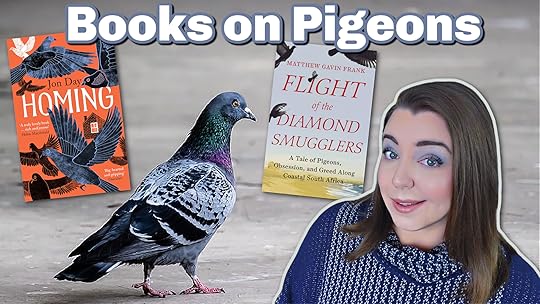
“Unforgettable. . . . An outstanding adventure in its lyrical, utterly compelling, and heartbreaking investigations of the world of diamond smuggling.” ―Aimee Nezhukumatathil For nearly eighty years, a huge portion of coastal South Africa was closed off to the public. With many of its pits now deemed “overmined” and abandoned, American journalist Matthew Gavin Frank sets out across the infamous Diamond Coast to investigate an illicit trade that supplies a global market. Immediately, he became intrigued by the ingenious methods used in facilitating smuggling particularly, the illegal act of sneaking carrier pigeons onto mine property, affixing diamonds to their feet, and sending them into the air. Entering Die Sperrgebiet (“The Forbidden Zone”) is like entering an eerie ghost town, but Frank is surprised by the number of people willing―even eager―to talk with him. Soon he meets Msizi, a young diamond digger, and his pigeon, Bartholomew, who helps him steal diamonds. It’s a deadly game: pigeons are shot on sight by mine security, and Msizi knows of smugglers who have disappeared because of their crimes. For this, Msizi blames “Mr. Lester,” an evil tall-tale figure of mythic proportions. From the mining towns of Alexander Bay and Port Nolloth, through the “halfway” desert, to Kleinzee’s shores littered with shipwrecks, Frank investigates a long overlooked story. Weaving interviews with local diamond miners who raise pigeons in secret with harrowing anecdotes from former heads of security, environmental managers, and vigilante pigeon hunters, Frank reveals how these feathered bandits became outlaws in every mining town. Interwoven throughout this obsessive quest are epic legends in which pigeons and diamonds intersect, such as that of Krishna’s famed diamond Koh-i-Noor, the Mountain of Light, and that of the Cherokee serpent Uktena. In these strange connections, where truth forever tangles with the lore of centuries past, Frank is able to contextualize the personal grief that sent him, with his wife Louisa in the passenger seat, on this enlightening journey across parched lands. Blending elements of reportage, memoir, and incantation, Flight of the Diamond Smugglers is a rare and remarkable portrait of exploitation and greed in one of the most dangerous areas of coastal South Africa. With his sovereign prose and insatiable curiosity, Matthew Gavin Frank “reminds us that the world is a place of wonder if only we look” (Toby Muse). 1 map
Matthew Gavin Frank is the author of the nonfiction books, Flight of the Diamond Smugglers, The Mad Feast: An Ecstatic Tour Through America’s Food, Preparing the Ghost: An Essay Concerning the Giant Squid and Its First Photographer, Pot Farm, and Barolo; the poetry books, The Morrow Plots, Warranty in Zulu, and Sagittarius Agitprop, and 2 chapbooks. “Preparing the Ghost” was a New York Times Editors' Choice, an NPR Notable Book, and a New Yorker Book to Watch Out For. “The Mad Feast” was selected as a Staff Pick by The Paris Review, a Best Book of 2015 by Ploughshares, The Millions, and Paste Magazine, and featured in The Wall Street Journal, Saveur, and Entertainment Weekly. His work appears widely in journals and magazines, including The Kenyon Review, The Paris Review, Guernica, The New Republic, Iowa Review, Salon, Conjunctions, and The Normal School. After spending 17 years in the restaurant industry, he now teaches at Northern Michigan University, where he is the Nonfiction/Hybrids Editor of Passages North.
While reading this book I kept thinking of the 1971 James Bond film, Diamonds Are Forever, specifically the scene where Bond, played by Sean Connery, is briefed on diamond smuggling in South Africa. Miners are shown hiding diamonds in their teeth and then having them extracted by a dentist who is in on the heist. Flight of the Diamond Smugglers tells the real-life version of the same issue—diamond mining and smuggling in South Africa. However, the intricacies of the stylized Hollywood plot of the Bond film seemed heavily complicated as I thought of the boy that author Matthew Gavin Frank meets and of the homing pigeon the barely teenaged miner keeps in his lunchbox. When watchful eyes are elsewhere, he ties little bags of purloined diamonds to the bird’s legs and body before sending it to fly home to the waiting hands of the boy’s mother.
One of the cover endorsements for this book called it “…smartly researched by someone with a big heart and a beautiful mind.” The author’s heart is what makes this book deeper than the usual exposé. There’s an undercurrent of vulnerability running throughout the narrative, springing from a tremendous personal loss that opens the book. By the end you learn Frank’s connection and sympathy is not only authentic, it is deeply ingrained within his being from a time when he was about the same age as the boy miner.
The prose is lyrical, the research tight, the arc of suspense masterfully constructed. Frank examines the history of diamond mining and its horrific effects both for the people and the landscape of coastal South Africa. Unexpected moments of beauty rise from the garbage and fossil-strewn sand of the beaches as the author turns his sympathetic heart to the ghost towns that once teemed with life and the bloody cough of the boy miner that he knows will never heal. Frank especially soars, literally, when writing from the point of view of a smuggling pigeon whose flight home may or may not be completed. This is an absorbing and, at times, sad and painful read. But Frank’s heartfelt investment makes it an unexpected treasure.
Most people probably know the De Beers Corporation's long-running tagline, "A diamond is forever," coined in 1947 and named by Advertising Age as the best ad slogan of the 20th century. Fewer people know that De Beers owned a large section of South Africa's West Coast called Die Sperrgebiet, or the Forbidden Zone, and officially closed it off "to the public for the better part of eighty years (the heyday of diamond exploration and mining in the area), plunging the local communities into a mysterious isolation."
Most people probably know, too, that pigeons are a familiar or even a nuisance bird in cities around the globe. But few people are aware, as Matthew Gavin Frank illuminates in his slim but ambitious "Flight of the Diamond Smugglers," that one of the chief methods of smuggling is to sneak "trained carrier pigeons onto the mine property, affixing diamonds to the birds, and sending them into the air to fly from the mines to the workers' homes."
Such unexpected connections abound in Frank's lyrical work, wherein — through visits to portions of this land, declared by De Beers in 2007 to be "overmined" — he excavates the troubling history of this little-known landscape and the illicit industry of trafficking the precious stones.
The author of four previous books of nonfiction, including "Preparing the Ghost: An Essay Concerning the Giant Squid and its First Photographer," as well as three books of poetry, Frank blends investigative journalism, historical research and rhapsodically written memoir to examine mankind's relentless exploitation of the Earth and all its creatures, including the humans themselves.
The sweeping narrative begins with a personal loss when Frank and his partner Louisa, after their sixth miscarriage, travel to her home country "to conduct a funeral ceremony of sorts" at the Big Hole in Kimberley. A former open-pit and underground diamond mine active from 1871 to 1914, the property has since been rebranded as a tourist attraction, a veritable "manmade Grand Canyon." In attempting to contextualize his grief, Frank becomes obsessed with the history of the site.
From there, Frank is able to explore the story of the bigger network of black market forces by homing (pigeon pun intended) in on one particular diamond digger, 13-year-old Msizi, and his bird Bartholomew, both of them risking life and limb to spirit the cargo out of the mines. The real villain of the tale is extractive capitalism, but that force finds a face in the story's biggest antagonist, the nefarious Mr. Lester, a security agent known as "the executioner who controls all the other executioners."
Frank seeds his story with surprising but interrelated facts and anecdotes ranging from Isaac Newton (a pigeon aficionado) to the Voyager probes, from the Venetian painter Canaletto to the colonizer and robber baron Cecil Rhodes.
In refusing to romanticize the landscape or the piracy that takes place upon it, Frank's book suggests that perhaps what diamonds are forever really means is that so is avarice. But maybe so, too, is "the magic of the pigeons."
This book does not know what it wants to be. Nonfiction about the diamond business and the use of pigeons in smuggling? Deeply personal memoir about the grief of repeated miscarriages? Legend and folklore about pigeons and diamonds? Perhaps this book would have been a very different experience if I had read it instead of listened to it. I found it hard to follow and it was just a strange mix of stories that never gelled for me. The biggest takeaway is that the diamond trade is absolutely awful and corrupt, which I already knew, but it is still horrifying to read about in more depth.
For reasons that don't need exploring at this juncture, one time I was at a dinner party in Paris. I'm seated next to a South African diamond merchant. The party's being thrown by an Irish philanthropist; the diamond guy is his neighbor. Already weird. I try to make chitchat. I ask the diamond guy for his thoughts on lab-grown diamonds -- would he consider expanding his business into that market? His lip curls.
"Tell me something," he says, "if your boyfriend proposed to you with a fake diamond, would you still think he loved you? Would you still love him?"
Okay, lot of assumptions there, guy.
"I wouldn't care," I say.
I am wearing big acrylic earrings in the shape of oranges, by the way. I have on one big turquoise ring that belonged to my grandmother.
Diamond guy scoffs, rolls his eyes, dismisses me, and then interrupts my father to comment that the political parties in America, both are exactly the same.
Strange, beautiful book, weaving together a deeply personal memoir, notes on natural history, and devastating reporting on the diamond business. It can be pretty dark and even a little disturbing, but it should not come as a surprise regarding the topic. The writing is very poetic and sometimes dense, but it is hard to put down. After reading this, the diamonds will never look the same for me. All of them are bloody, apparently.
Thanks to the publisher, W. W. Norton & Company, and NetGalley for an advanced copy of this book.
Didn't finish. I really wanted to like this, but it's yet another in a long series of narrative nonfiction books that should have been a long magazine article (particularly because the story is padded by the author's own personal struggles).
DNF. I cannot remember a book that I did not finish, but this one defeated me. Bloody hard work! Knock out at Page 150. Lost me in the segues and disparate threads. A linguistic ego trip?
Trigger warning: infant loss. The author and his wife, who he refers to as his "partner" rather than wife for some reason have gone to her native South Africa to scatter the ashes of their six child lost to miscarriage. Loss and bareness underlie much of the book, really about the savaged and desert land and the inhumanity of the Diamond trade.
This is a hard read. Pigeons aren't birds but conduits for smuggling diamonds. De Beers has created an artificial scarcity in diamonds by throttling the market. This then makes them more valuable and creates a black market, one where slavery, child slavery, and murder are common and used to finance terrorism.
So De Beers has crazy security measures to one, stop leakage that would drive down prices and two, not leak into the black market that is even more ruthless than De Beers itself.
They randomly xray employees and do full body searches. They run whole towns where nothing goes in or out. Houses come fully furnished and you can't take in your own furniture or car because they could be used to smuggle diamonds out.
You get an episodic history of the diamond trade in South Africa, and issues of colonialism and post colonialism all with the constant fear of death hanging in the air.
It is amazing to think that diamonds are made from the same stuff that you use on a barbeque. One is a black crumbly material that is utterly opaque, the other is a sparkling clear gemstone that allows rays of light to pass through while the internal structure reflects, refracts and disperses that light helping them shine brilliantly. Not only are they both forms of carbon, but they do both burn…
The majority of diamonds in the world have come out of Southern Africa and since 1888 it has been controlled by the global monopoly that is De Beers. They have controlled the market by limiting the availability of diamonds, buying up excess stock, flooding the market to reduce prices and damaging competitors as well as other methods of price-fixing.
They are not particularly great to their employees either, not only do they work in some pretty tough conditions and the company takes vast personal liberties to ensure that they are not stealing any of the product, but they only pay them the minuscule amount of 0.00019% of the final sale value of the precious stone that they have found. No wonder the methods of smuggling rough diamonds from the areas and novel and original, from sockets at the rear of false eyes, inserting them in various parts of the anatomy and by using homing pigeons.
It is the pigeons that are the lead-in story that is threaded about the book, he first meets with someone who he calls Msizi and his bird called Bartholomew. This pigeon is Msizi’s opportunity to smuggle diamonds from the mines to his home and bring a little hope to him and his family. Like with all of the methods that the smugglers use, the company comes down very hard of those that seek to steal from them and the policy is to shoot any birds they see.
This lead is the beginning to, Frank finding out more about just how the company operates, and he speaks to oppressed workers to some of the armed heavies that patrols the company lands. What he really wants to do though is meet the almost mythical Mr Lester, the all-seeing and all-knowing De Beers executive whose reputation is legendary among smugglers and company men alike.
I have mixed feelings about this book. I thought that parts of it were really well written, atmospheric and occasionally terrifying. I didn’t think that his personal story should have been in there. It felt like it was added to add the ‘personal interest’ element that editors feel should be there. There was enough in the stories that he did pick up on though to have a still made it a decent book. To begin with, it feels like the criminals are the smugglers who are trying to make a little more money for themselves and their families. But it ends up with the company looking like the real criminals in the end.
A fantastic fantasia about jewels, environmental devastation, personal loss, and ornithology set in South Africa. ALSO a creative retelling of "Heart of Darkness" for the 21st Century. ALSO an homage to W.G. Sebald. In my humble opinion, Matt Frank's darkest book, and his best.
I had expected a book combining nature and crime like the Feather Thief. However what I read was a rambling and verbose odd mixture of memoir, travel book, and a corporate history of De Beers - with the occasional interspersed discussion of pigeons. This honestly felt like a magazine article with a puffed up word count to get it to a book length (it's only 180 pages).
The only takeaway from this book is the obvious - the diamond industry is morally corrupt and that the only difference between a legal diamond and a blood diamond is paperwork - A lesson already ubiquitous.
I can't recommend it to people who like true crime, I can't recommend it to people who like nature stories, and I can't even recommend it to people who like travel.
A heart-wrenching, immensely personal, beautifully written story. I highly recommend this book. It sheds light on a dark portion of a trade of which many are unaware. Frank’s highly descriptive, emotive writing style pulls the reader in and makes you really feel for each person and bird involved.
Reading about how miners at the diamond mines used pigeons to steal diamonds was interesting, but what this book highlights is how these companies exploit their workers. They are paid a pittance for each diamond and are forced to jump all sorts of hoops that are supposed to defer the theft.
I was really excited to read this because the idea of using homing pigeons to smuggle diamonds out of mines? INCREDIBLE. Especially when you also have to smuggle the pigeons *INTO* the mine in the first place. And then I read the first sentence and was like "..............................this is not going to be what I thought it was going to be."
Don't get me wrong, I have a lot of sympathy for the author and the grief he and his partner must have experienced over their numerous miscarriages. But to open a true crime book about diamond smuggling using pigeons with a prologue that starts with "After our sixth miscarriage, my partner, Louisa, and I decided we could no longer endure another attempt at conceiving a child."? Eesh.
The stuff that discussed the conditions the workers experience and the greed of the diamond corporations was fascinating. But at the end of the day, the author centred himself in the story far too much for my liking. There were also times when the book ended up being more of a history of pigeons and centred the pigeons themselves more than the desperation of the workers. And basically, it felt a little disjointed and a little confusing and like the book didn't quite know whether it was natural history or true crime or a deeply personal memoir about grief after miscarriage.
I went into this book after only reading the title and thought I was in for something fast-paced that kept me on the edge of my seat and gave me Blood Diamond vibes. It was not that. It was lackluster and the author weaves his own personal story through the narrative (which has absolutely NOTHING to do with pigeons and diamonds). In addition, while I know this goes on, I just hated the sheer amount of page space dedicated to the ill treatment of pigeons. I love animals and treating them as something so expendable for personal gain really bothered me. I know it happens, but don’t tell me the gory, sad details. I felt sad the entire time I was reading this :(
Matt Frank is personally responsible for reshaping the way I think about writing, about nonfiction, and the definition of an essay, so I regret being two years late to read this one.
This book is a desperate and obsessive attempt to fuse together what appear to be unlike things -- and I mean it in the best possible way. In fact, I'm paraphrasing the author's advice to me, and he's a master of his own craft. I feel the pain in these pages, not just from his personal struggles, but the task of putting the connections to paper.
On the surface, it's a book about pigeons smuggling diamonds and the brutal methods to stop them, using research and memoir to weave it all together. At the same time, it's a mine with more riches revealed at every level.
A beautifully written book on diamond smuggling, the universe, life and much of what lies in between. Frank wanders South Africa meeting memorable characters inhabiting tough landscapes of resources and violence. He’s an enthusiastic traveler, his curiosity infectious. Reading this book is to watch a writer’s train of thought unfold in real time: his mind jumps lightly from pigeons to stars to grief to the cursed Mountain of Light diamond. Throughout it all, this book reminds us that the world is a place of wonder if only we look.
Overall, I liked this book. This is something I knew nothing about, yet it's happening daily in our world. It's a story that needs to be told and I'm glad Frank told it.
However, I was not prepared for the graphic descriptions of pigeons dying. I suppose it's to be expected, but I would've appreciated a warning about the abuse these poor animals experience.
A couple nights ago, I finished reading "Flight of the Diamond Smugglers: A Tale of Pigeons, Obsession, and Greed Along Coastal South Africa" by Matthew Gavin Frank, a book that is part Homeric odyssey/part memoir/part contemplation on loss and grief. It's the sort of story that defies categorization, refuses to be pinned down. Like its titular diamond-smuggling avians, the pages fly off in wild pursuit of mysterious destinations, guided only by a kind of inner mytho-magnetic GPS system.
On the surface, "Flight of the Diamond Smugglers" is a historical and contemporary exploration of the ruthless De Beers diamond industry in South Africa, from infancy to violent conglomerate monstrosity. Yet, the book begins with Frank and his wife, Louisa, huddled on the edge of the Big Hole, "a gaping open-pit and underground diamond mine that was active from 1871 to 1914 . . . a man-made Grand Canyon." It is into this abyss that they empty a thermos containing the ashes of a lost child. Their sixth miscarriage. Frank recites Kaddish, and his wife whispers "Amen," as this tiny ghost swirls to the bottom of the hole.
From this ceremony, Frank launches into a narrative that spans the wasted coasts of South Africa, to Orpheus and the Underworld, to Krishna's cursed Koh-i-Noor diamond. It's a ride that takes wild turns. Isaac Newton and a wooden pigeon. Middle school Champagne Snowball dance and midnight meeting with a security demigod. Just when you think you see the destination ahead, "Flight of the Diamond Smugglers" finds an updraft or trade wind, and you go sailing into another gleaming facet or bottomless mine.
Stitching the book together, like a recurring motif in a symphony, are lyrical "Bartholomew Variations," Frank meditating on a particular diamond smuggling pigeon (Bartholomew) owned by a young mine worker (Msizi). The veins of these small sections carry the blood of the book to its heart. Through Msizi and his bird, Frank is able to humanize a story that, most of the time, seems inhuman, even otherworldly. And, by doing this, he transforms the book into something personal, alive, heartbreaking.
Matthew Gavin Frank is a master of juxtaposition, throwing all of these disparate elements--grief and greed, desperation and diamonds--into a tale that, ultimately, ends the way all stories about carrier pigeons end. With another long flight, another winding journey, through a dung-beetle night, toward a distant, waiting home.
Book passage on this trip. You won't be disappointed.
Many parts of this nonfiction book were 5-star for me--the writing is gorgeous-- but overall, I found it difficult to read. This is a hybrid of reporting about diamond smuggling, fascinating facts about pigeons (used in diamond smuggling) and the scarred earth and lives left behind when a mine closes on the South African coast. This is combined with a metaphor of the scarred, scorched, barren earth and the despair of he and his wife and their inability to bring a child to term. So, part memoir, part reporting, and definitely part literary essay. The language often utilizes archaic words and poetic metaphors, and often relating to myth, that changed the pace and left me wanting to get back to the main story. Still, the beautiful parts were...beautiful!!!
"Soon after liftoff, a pigeon wants only to land, roost, soothe her giant breast--which constitutes one-third of her body. She doesn't wait for home to present itself, but senses home--days and nights away--someplace beyond sun, Andromeda, the rank marshes and fragrance factories of our own expansive ant farm. She wants to calm her 600-heartbeats per minute down to her resting rate--a reasonable 200. She needs no sleep, or we think she needs no sleep. On an ounce of birdseed--the caloric equivalent of a single Cheeto--she has the capacity to fly 2,640 miles a day. That's New York to Los Angeles...As pigeons are not anatomically designed for gliding on thermals and must flap constantly in order to remain airborne, they propel themselves forward at approximately four feet per flap....driven by her innate need to return home, she must flap her wings 3,484,800 times--in a sleepless single day, on a single Cheeto."
I have a very complicated view of this book and decided to settle on 5 stars because it was engaging, gave me a lot to think about and provided a lot of discussion topics with my family.
What I loved: learning about the diamond trade, messenger pigeons and South Africa.
What I hated: the author’s use of metaphors, flowery language (way over the top) and personal memoir in a book that I thought was supposed to be non-fiction about the diamond trade.
My takeaways: # 1– I am a huge animal advocate but pigeons make me CRAZY. I hate their cooing, the mourning dove songs and the poop. I can’t count the number of times that I chastise myself for not wanting to smash a bug but will yell at pigeons that dare to come near my house (and maybe some pebble throwing and broom waving). WELL- thanks to this book I have a lot of guilt and a new respect for pigeons (I still hope they stay away from my house, but I will be nicer to them when I shoo them away.)
#2- I will continue wearing my wedding ring but I will never ever ever wish for another diamond. This industry sickens me.
#3- humans and their greed are awful (this is nothing new) but how do humans in charge of diamond mines keep the stealing and corruption away? If there was ever an industry that needed to be taken over by robots— this is the one. There are no simple solutions to this nightmare.
Content: descriptions of animal cruelty to the point I was physically sick. Descriptions of human cruelty to the point that I was physically sick.
This is a look into the various life's and companies or really company that mine diamonds in South Africa. Now you may assume that the main focus would be the individuals who work in the mines and use carrier pigeons to smuggle diamonds out of mines to supplement their meager living. This goes into history on Cecil Rhodes, the Oppenheimer's and the Debeer's diamond company which if you have read any diamonds you should be familiar with. The compounds that they put up around these mines and the extent they go to try and prevent smuggling is amazing and over the top. They have towns built in the middle of nowhere and roads declared private which allows guards to shoot first and ask questions later. The labor laws are virtually non-existent and major use of child labor. Can you imagine a compound so secure that if you died you were buried in the compound so that no one could stash diamonds in the body to smuggle them out. Interwoven in this story are the author and his wife's struggle with coming over from the United States to South Africa to research this book along with their struggles and effects of a few miscarriages in their attempts to start a family.
I really wanted to read this book when i read about the subject matter but at best I could only rate this at three and half stars as in my opinion the author went off into the weeds away from the main focus of the book.
This is beautiful work of non-fiction that reads like poetry. I first heard about this book through a bird-watching blog, but it is about far more than pigeons. It is almost part memoir. I was fascinated by the author's travels and exceptionally thorough research. He wove a tale of pigeons that extended through Native legends, European mythology and through the beginning of diamond mining in South Africa . I learned so much reading this book, but I have to admit how difficult and painful it was to read, too. I was grateful that the author chose not to write gratuitous accounts of child labor and punishments for diamond smugglings because just the gist of the horror was more than enough for me.
I would have loved photos to be included - I found myself googling the Big Hole Mine, Port Nolloth and other places just to get an idea of what they looked like. The author's descriptions were so vivid but I wanted to see for myself!
Finally, I think it needs to be mentioned that a fair amount of this book deals with pregnancy loss. I did not see that mentioned anywhere in the descriptions of the book but if you are sensitive to that type of material, this might not be the book for you.
It's interesting that there are boycotts of many products that are grown, harvested, pumped, mined, extracted, etc., under working conditions that are unregulatedly dangerous, unethical, etc. But diamond mining is not one of those industries. Perhaps one reason is the De Beers monopoly's "diamond are forever" campaign. Whatever-- diamonds are a valuable commodity and the vast majority of the world supply comes from southwestern Africa.
Matthew Gavin Frank conducted an independent on-site investigation of that territory. Working conditions are still terrible despite labor laws and safety regulations that are routinely ignored. As long as diamonds have been mined they have been smuggled. And homing pigeons are very effective carriers. They are secreted in lunchboxes or the folds of clothing. They are bred and trained to go back to their roosts (Frank explains pigeon biology). What happens after the diamonds are gone? Frank travels to ghost towns that were thriving company towns just a couple of decades ago.
Frank takes the story beyond just reporting to include personal reflections, not about diamonds but somewhat about pigeons. It's somewhat distracting but it intensifies the narrative.
This books was strongest when describing the people and landscapes left behind by diamond mines in clear and vivid prose full of unexpected imagery: “The parking lot, littered with sun-dried eggshells, runs uphill to the building and the structure appears askew, bearing the angle of some giant utility knife surfacing for air from its plastic holster.”
However, the book had two weaknesses. First, the author only spent a week or so in the region. While he was able to describe his impressions vividly, he isn’t able to give much real insight into neither the lives of the people of the Diamond Coast nor the systems that drive people to diamond smuggling.
Second, the writing gets very convoluted. The author often strives to turn coincidences into metaphors. Furthermore, sometimes the words in the book were so obscure that I had to stop and consult a dictionary. For example, do you know what phenakistoscope means? I sure didn’t. Such unnecessarily complex language alienates the reader.
I expected more reporting, less personal memoir and mythology / anthropology, and my eyes glazed over a bit in the mythology parts. But accepting that Frank's reporting was going to be extremely limited by mine security and the unwillingness of sources to talk was folded smoothly into the narrative, and the personal became part of the larger story. I think I mostly ended up loving it as a travelogue, a portrait of some of these extremely isolated, locked down, declining communities in the diamond zone and what the diamond companies have done to the land and the people. So I would say heads up that this comes across like an investigative journalism book from the description, but definitely don't expect that to be more than like 30% of the text, and lean into it as a storytelling experience.
I feel bad giving this 3 stars because this was obviously a passion project for the Author. At the very beginning of the book, you find out that the whole reason for this book is because he needs an outlet after he and his wife suffered 6 miscarriages. It seems obvious to me that this book is well researched, but it really drags in places. I think that because of his passion he included everything he thought was interesting but did not consider the reader's perspective and what we wanted to read. I think writing this book was more about therapy for the author than for us. I think this book could probably have been half as long and still covered a lot of interesting topics. I hope writing this book helped him find healing.
Thank you Matthew Gavin Frank, the publisher, and Goodreads for the copy of Flight of the Diamond Smugglers!
Wow, Frank is an incredible writer. He managed to weave his personal story with the current state of diamond smuggling, the overlaps in history between pigeons and diamonds, the history of the diamond industry, the history of the diamond industry's exploitation of its workers, and more. I was intrigued the entire book by the build up of the omnipresent Mr. Lester. Frank did a great job of keeping me on the edge of my seat as we learned more about Mr. Lester through Frank's interactions with various people.
This was an excellent book. It was informative, captivating, and the prose was beautiful. I would definitely recommend a read!