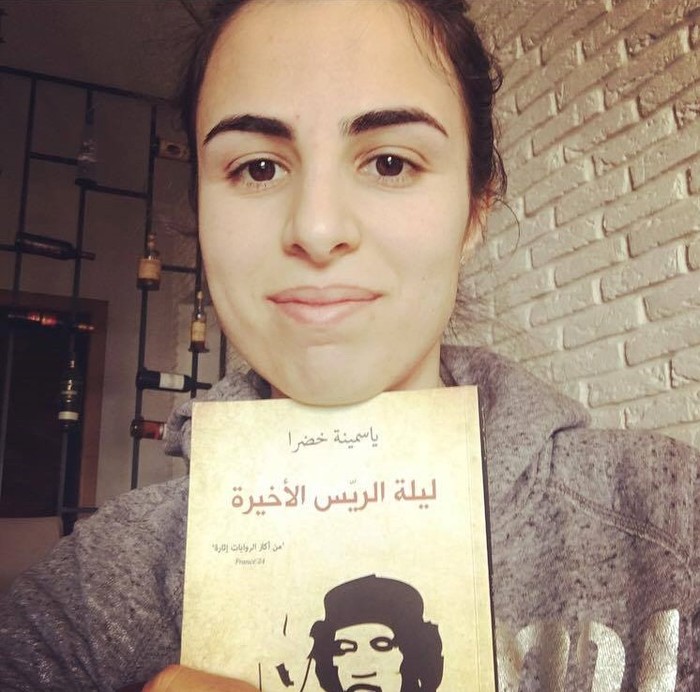
This novel takes as its subject matter the controversial figure of Muammar Gaddafi, seen through the last night of his life. Gaddafi has retreated to Sirte after the fall of Tripoli in the Libyan Civil War; where the former dictator is holed up in a disused school, waiting for the arrival of his son, Mutassim, and hoping to break out and find refuge in another part of the country. While he waits, Gaddafi reflects on the Arab Spring, his life and those around him.
It is difficult to create a moving and sympathetic portrait of a man who divided opinion so strongly – both in his lifetime and since his death. Portrayed in the West as a vaguely comic figure, he was obviously feared by many in his own country, and, indeed, his own entourage, and the author manages to create a realistic portrayal of a man who is cornered and yet defiant. Reflecting on his Bedouin childhood, insults and slights – remembered and pored over – revenge, power and success; Gaddafi turns from feelings of despondency over his perceived situation, anger at the astounding ingratitude of his people and ministers and an inability to accept any dissent or criticism, even while asking those around him what went wrong…
Through Gaddafi’s fictional memories, the author manages to give us the essential history of a man who rose from poverty to change his destiny; heading a coup d’etat in 1969 to depose King Idris and having extraordinary power. By containing the book within this short, but incredibly stressful, time period, the novel feels extremely tense and gripping. Although we know the outcome, I did find the whole book simply riveting and was unable to put it down at the end. This would be an incredible choice for reading groups, with so much to discuss. Lastly, I received a copy of this book from the publisher, via NetGalley, for review. Highly recommended.