A Full and True Account of the Wonderful Mission of Earl Lavender, which Lasted One Night and One Day; with a History of the Pursuit of Earl Lavender and Lord Brumm by Mrs. Scamler and Maud Emblem
Following in the tradition of "Don Quixote," "Earl Lavender" is the story of two impecunious gentlemen who run away from their conventional lives, style themselves 'Earl Lavender' and 'Lord Brumm', and set out to preach the new creed of Evolution. Their hilarious romp across London leads them to all sorts of strange adventures, such as a wild hansom cab chase, a sojourn among a subterranean society of flagellants, and the discovery of the evolutionary 'Missing Link'.
A key Decadent text, "Earl Lavender" (1895) is also Davidson's response to what he saw as some of the more ridiculous ideas and behaviours of the age. This new edition features a new introduction by Mark Valentine and a reproduction of the original frontispiece by Aubrey Beardsley.
John Davidson (1857-1909) was a Scottish poet, playwright, and novelist. Although during his lifetime he was compared favourably with Hardy, Housman, and Yeats, and admired by Shaw and T. S. Eliot, Davidson's reputation has languished since his tragic suicide. Long out of print, "Earl Lavender" is now restored to modern audiences, who will find that Davidson's humour and satire are as fresh today as in 1895.
John Davidson was a Scottish poet, playwright and novelist, best known for his ballads.
He also made translations from French and German. In 1909, financial difficulties, as well as physical and mental health problems, led to his suicide.
Davidson's first published work was Bruce, a chronicle play in the Elizabethan manner, which appeared with a Glasgow imprint in 1886. Four other plays, Smith, a Tragic Farce (1888), An Unhistorical Pastoral (1889), A Romantic Farce (1889), and the brilliant pantomimic Scaramouch in Naxos (1889) followed.
Two strangers, who have both fled their women, spend a week getting throughly soused in London. Now out of funds, the younger of the two, Earl Lavender, speaks of his Messianic plan to start a new world order under his personal 'religion of evolution', declaring himself 'the fittest man breathing' and that his bewildered companion, Lord Brumm, is his first disciple. And thus they begin a decadent night in London with nothing in their pockets to pay for it. Meanwhile, a garralous widow and a frustrated younger woman travel to London in search of their runaway men.
Half way through this wonderful farce, I wondered why the book wasn't more famous, especially when it has all the hallmarks of stupid genius. We have Lavender, a dashing and barmy fellow, who mistakingly thinks evolution means 'lucky fate' and assumes it will save him no matter what silly pranks or pisstaking he attempts. He's basically Bertie Wooster with the mouth of Jeeves, who's loved by the RNG God. Lord Brumm is a hapless straight man to Lavender's wordy weirdness, and a self-proclaimed women hater. What I found most odd is that he hates women for being particular, abandoning their hobbies and learning when they marry and he has a fetish for the 'unkempt'. So basically we have a bloke who is so misogynistic, that his ideal woman is probably a suffragette mud wrestling a policeman while screaming 'Cochon fasciste!'. Than we have their abandoned lovers: Mrs Scamler, Lord Brumm's fiance, takes up a great deal of the text with her long, excited monologues, and I absolutely adored the silly darling. She's that mad aunt who sneaks you a bottle of wine, talks good naturedly and at length about concepts she misunderstands in the most amusing way and she's the first to help you film some ridiculous, leg breaking stunt for your choice of video sharing site. The only normal person is Maud Emblem, Earl Lavender's wife. While nice and sweet and sensitive, she isn't exactly interesting. Other characters tend to be stereotypes. We have stuffy and condescending philospher writers, abrasive cockneys, a bungling and haughty foreign waiter (whose nationality seems to be the entirity of Europe in a blender and given a 'stran-ge ac-sount of zee seeliest and unreedble kund') and a Scotsman, complete with kilt, bagpipes and a justifiable hatred for the English. Oh yes, and there's a random orangutan for no bloody reason, and I wouldn't have it any other way.
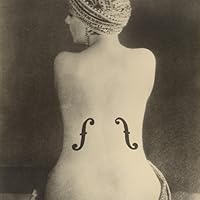
So why the hell have I never seen this Decadent comedy before, the only book I've ever encountered of this sub-genre (that isn't Wilde, anyway)? Well... You may have noticed the bookcover, something that would have likely buried this book in the literary establishment, if not in a brown paper bag.
You see, there's an underground whipping cult in this novel. It's not presented as erotic, but neither is it a silly joke which has our characters fleeing in horror. Davidson depicts it as a wholely positive experience, almost transcendent, therapuetic and enlightening, with the cult ruled by benevolent, gently guiding figures. Despite every opportunity to do so, it's never presented as pornographic and this novel shouldn't be placed beside Fanny Hill or de Sade. It's just very strange to find it here, though I have no doubt what Davidson enjoyed doing on the weekends.
Nowadays, this book is quite quaint, and we'd be more bothered by the xenophobic and racist jokes than the scenes in candle lit cellars perfumed with human bodies, where strips of leather, tipped in the cutting teeth of stinging knots, crack mercilessly into smooth, supple, virgin skin bared between shreds of impatiently torn shirts, as sweat dribbles from trembling- What was I talking about?
The book's funny as all hell, and a brilliant send up of philosphers, women haters and decadents. Give it a read and help raise it from its relative obscurity.
A very strange book. I was led to believe this was a satire of the Decadent movement, but it is not. Decadence, as a movement, seemed to attract three kinds of writers - those who lived as decadents and wrote about their experience, those who did not live as decadents but attempted to write "in the mode" as it were, and those who wrote about decadence as a style or fad, usually critically.
This book is a comic farce which features some aspects and some minor characters influenced by the fin de siècle, and attempts to contend with the influence Decadence had on popular thought, while broadly satirizing any number of things in a humorous trifle of a plot. As the opening poem goes:
Though our eyes turn ever waveward, Where our sun is well-nigh set; Though our Century totters graveward, We may laugh a little yet.
We are introduced to two men, whose past we will only learn as the book progresses, reduced to poverty. Under the enthusiastic direction of the younger, they adopt new identities: Earl Lavender and Lord Brume, the better by which to live their lives by chance and "Evolution", which Lavender has near-manically come to embrace as a new religion and conceives as a force that challenges men to rise to any occasion that chance creates. As they wander through a day spent mooching meals at restaurants and making grandiose plans (Lavender's plan to walk naked through London to promulgate his new system of thought to the public made me laugh. Brume, middle-aged, is a bit more reticent and wary of Lavender's schemes and endless optimism), they are closely pursued by two women (Mrs. Scamler and Maude Emblem) and a host of characters who have been put out by their brash, presumptive actions. Eventually, after many broad misadventures, stability is restored.
Now, that plot synopsis does not lend the flavor of the book - which is something like a Victorian Hope & Crosby Road movie, or perhaps The Marx Brothers with lashings of silent comedies added in as well. For example, there is a frantic chase through London between two hansom cabs, a comic French "vaiter" voiced in broad dialect, a boisterous Scotsman, a fist-fight with an orangutan (!! yes, just like a Clint Eastwood comedy!) which is later given a solemn funeral march, and Lavender continually, benignly insulting everyone he meets as he proclaims himself "the most fit man alive" and searches for "the most fit woman alive" with whom to mate - in his misunderstanding of "survival of the fittest" (Lavender's deluded misunderstanding of what "evolution" means is nicely indicative of how the contemporary public may have received and incorporated Darwin's ideas). So, in that sense, this is a comic novel of the time, and not without some funny bits I might add (if you are a reader who can appreciate comic intent from bygone eras), not just including the scenarios mentioned but with some smatterings of language play ("misogynist" repeatedly becomes "mahoganist", Mrs. Scamler continually over-pronounces "fang-de-seeaycle"), comic philosophical discussions of Misogyny and Evolution and some nice details (I liked a bit at the start where the two men, seated at the back of a dark tavern, look out upon the passing bustle of the day-lit Strand through the far off doorway as if through a peephole.). Then again, it becomes oddly contemplative and philosophical at the end as everything must be set to right.
That "fang-de-seeaycle" is where the "decadent" aspect of the story comes in. In minor details (such as Mrs. Scamler being ostracized in her town for daring to learn model drawing and studying French - which the community believes is an inherently immoral and corrupting language) but also in an odd detour the text takes at one point, and then returns to at the end, and which I will discuss in the Spoiler Zone below. Suffice it to say, if you'd like to read some wacky light comedy of the time period, or have an interest in how the Decadent movement was processed and tamed by the popular culture of the time, you might enjoy this book.
John Davidson was one of the lessor known “decadent” poets of the 1890’s, but this novel is a classic of the period, skewering the New Woman, scientific faith, late century cults, Nietzsche, and other fads of the fin-de-siècle. While some of the jokes are lost on us today, the satire comes through clearly. An entertaining and essential read for anyone interested in this period.