

What do you think?

Terra Alta #1
Terra Alta
Barcelona. 23 cm. Encuadernación en tapa dura de editorial con sobrecubierta. Colección 'Autores Españoles e Iberoamericanos'. Cercas, Javier 1962-. Terra Alta. Ficción moderna y contemporánea .. Este libro es de segunda mano y tiene o puede tener marcas y señales de su anterior propietario. 6123194968, 8408217844, 8408218883, 9504969267, 95
Paperback
First published November 5, 2019
Ratings & Reviews
Friends & Following
Create a free account to discover what your friends think of this book!
Community Reviews
Displaying 1 - 30 of 1,185 reviews

November 21, 2019
No seré yo el mayor defensor de los Premios Planeta. De los que he leído, pocos me han gustado. El Planeta, en especial, desprende un tufillo a premio concedido de antemano, ya sea por méritos propios del autor por su carrera, o por un brillante porvenir que quieren impulsar a través de este galardón.
En cualquier caso, y viendo el poco entusiasmo que despierta esta obra entre sus lectores, me veo obligado a romper una lanza en favor de la novela, pues a mí sí que me ha gustado. Creo que Javier Cercas (un gran autor, nada que no supiésemos ya) construye un thriller muy correcto, alejado de la corriente de moda de famosas trilogías vascas o navarras que tanto están triunfando estos días. Creo que perfila un personaje (Melchor) muy sólido, y los capítulos dedicados a explicarnos su pasado me parecen soberbios. No tanto los dedicados a la resolución del crimen, que, sin ser anodinos, no dejan de ser simplemente correctos. Además, la novela, en general, está muy bien escrita, con un lenguaje y unas descripciones que demuestran que Cercas no es ningún primerizo. Y aunque el thriller no parezca ser lo suyo, tampoco lo descartaría si decide escribir más entregas con este protagonista.
Lo que me ha sobrado, por redundante, es su homenaje a “Los Miserables”. Ya nos ha quedado claro que para Melchor es la novela que lo define como persona. Pero tanta matraca y tanta cita de la misma se me han hecho excesivas. Por lo demás, como queda dicho, creo que “Terra Alta” es una obra muy a tener en cuenta. Y para mí en absoluto ha supuesto una decepción.
En cualquier caso, y viendo el poco entusiasmo que despierta esta obra entre sus lectores, me veo obligado a romper una lanza en favor de la novela, pues a mí sí que me ha gustado. Creo que Javier Cercas (un gran autor, nada que no supiésemos ya) construye un thriller muy correcto, alejado de la corriente de moda de famosas trilogías vascas o navarras que tanto están triunfando estos días. Creo que perfila un personaje (Melchor) muy sólido, y los capítulos dedicados a explicarnos su pasado me parecen soberbios. No tanto los dedicados a la resolución del crimen, que, sin ser anodinos, no dejan de ser simplemente correctos. Además, la novela, en general, está muy bien escrita, con un lenguaje y unas descripciones que demuestran que Cercas no es ningún primerizo. Y aunque el thriller no parezca ser lo suyo, tampoco lo descartaría si decide escribir más entregas con este protagonista.
Lo que me ha sobrado, por redundante, es su homenaje a “Los Miserables”. Ya nos ha quedado claro que para Melchor es la novela que lo define como persona. Pero tanta matraca y tanta cita de la misma se me han hecho excesivas. Por lo demás, como queda dicho, creo que “Terra Alta” es una obra muy a tener en cuenta. Y para mí en absoluto ha supuesto una decepción.

July 4, 2021
IO SONO VENDETTA
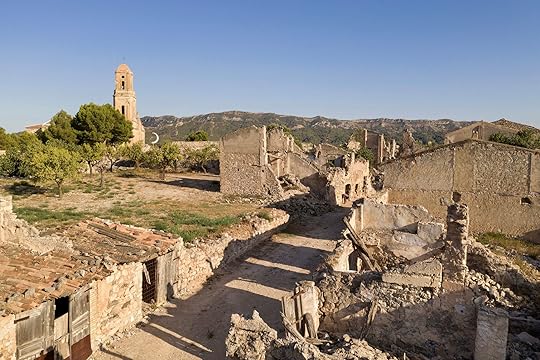
Rovine che risalgono alla battaglia sull’Ebro.
Secondo incontro con Javier Cercas dopo Soldati di Salamina, che credo appartenga al genere di narrativa che lo ha reso famoso: il romanzo che innesta finzione in una solida base storica.
Qui, invece, Cercas si cimenta col genere poliziesco, e secondo me è un tentativo riuscito così così. Se non che, poi, sul finale, sembra ricondurre la soluzione del caso giallo a un preciso periodo storico, quello che sembra non voler dar pace alla Spagna, la guerra civile, con franchisti e repubblicani a combattersi ferocemente in un accumulo di morti che non hanno mai trovato giustizia, attirando verso la Spagna volontari e alleati da tutta Europa. Cercas cerca di risolvere il suo intrigo facendo risalire tutto a quegli anni feroci e dolorosi: forse ci riesce, e forse regala le pagine migliori del romanzo.
Ma certo, dal punto di vista di un romanzo poliziesco, un lungo spiegone finale tra due personaggi seduti, pagine e pagine di dialogo, non lo si può certo definire un colpo da maestro.
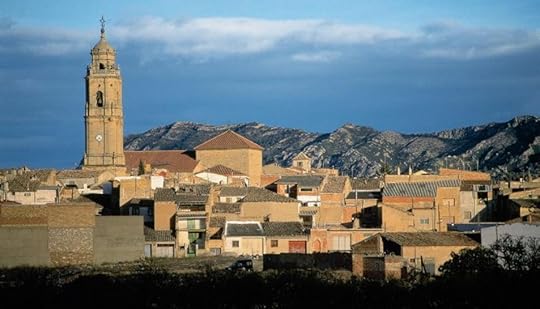
Gandesa, capoluogo della Terra Alta.
Per me, che di gialli e polizieschi e noir e thriller e crime ne ho letti un buon numero, manca prima di tutto l’atmosfera: Cercas non mi pare si sforzi mai di costruirla, come se non lo interessasse, come se non fosse un suo obiettivo.
Difettano anche le psicologie: mi pare che i personaggi siano tutti tra il mono e bi-dimensionale.
Atmosfera e psicologie, analisi della personalità e del carattere, sono gli aspetti che più mi piacciono in questo genere di letteratura. La trama, per me, viene in seconda battuta.
E invece, Cercas sembra tutto proteso a costruire fatti, accadimenti, intreccio: che però vengono portati avanti da personaggi senza spessore in assenza di mood e atmosfera.
Tra l’altro, ho trovato sfiancante e appiattito il martellante tempo presente sul quale si svolge il racconto contemporaneo. Mentre i cosiddetti flashback si arricchiscono di qualche sfumatura temporale in più.
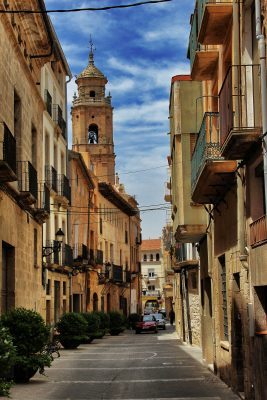
Un’altra veduta di Gandesa.
Bello è il titolo, Terra Alta, zona della Catalogna molto meridionale e interna, distante dal mare. Bello è che l’ambientazione catalana spinga a parlare delle differenze linguistiche, con gente che addirittura chiede la traduzione di una frase dal catalano al castigliano, porti a parlare dell’indipendentismo e del referendum.
Bello è tornare a quella ferita ancora aperta, a quella lunga zona di ombra che è stata la guerra civile spagnola: e in Terra Alta, sulle rive del fiume Ebro, ci fu la battaglia più cruenta di tutto il triennio di guerra civile, uno scontro sanguinoso che si protrasse per quattro mesi.
Bello è che tanta parte di questo romanzo poggi su altra letteratura: il protagonista, Melchor, nome derivato da uno dei tre re magi, si redime e imbocca la sua strada scoprendo in carcere la letteratura dell’Ottocento (in particolare, il suo libro-bibbia diventa I miserabili), e nella Terra Alta si innamora della bibliotecaria del paese che lo introduce alla letteratura del Novecento.
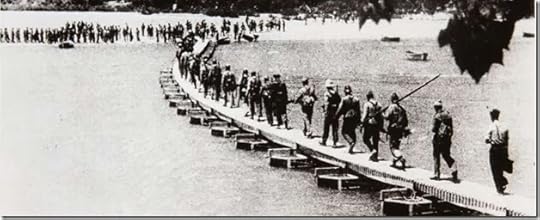
Immagine della battaglia sull’Ebro (25 luglio – 13 novembre 1938).
Rovine che risalgono alla battaglia sull’Ebro.
Secondo incontro con Javier Cercas dopo Soldati di Salamina, che credo appartenga al genere di narrativa che lo ha reso famoso: il romanzo che innesta finzione in una solida base storica.
Qui, invece, Cercas si cimenta col genere poliziesco, e secondo me è un tentativo riuscito così così. Se non che, poi, sul finale, sembra ricondurre la soluzione del caso giallo a un preciso periodo storico, quello che sembra non voler dar pace alla Spagna, la guerra civile, con franchisti e repubblicani a combattersi ferocemente in un accumulo di morti che non hanno mai trovato giustizia, attirando verso la Spagna volontari e alleati da tutta Europa. Cercas cerca di risolvere il suo intrigo facendo risalire tutto a quegli anni feroci e dolorosi: forse ci riesce, e forse regala le pagine migliori del romanzo.
Ma certo, dal punto di vista di un romanzo poliziesco, un lungo spiegone finale tra due personaggi seduti, pagine e pagine di dialogo, non lo si può certo definire un colpo da maestro.
Gandesa, capoluogo della Terra Alta.
Per me, che di gialli e polizieschi e noir e thriller e crime ne ho letti un buon numero, manca prima di tutto l’atmosfera: Cercas non mi pare si sforzi mai di costruirla, come se non lo interessasse, come se non fosse un suo obiettivo.
Difettano anche le psicologie: mi pare che i personaggi siano tutti tra il mono e bi-dimensionale.
Atmosfera e psicologie, analisi della personalità e del carattere, sono gli aspetti che più mi piacciono in questo genere di letteratura. La trama, per me, viene in seconda battuta.
E invece, Cercas sembra tutto proteso a costruire fatti, accadimenti, intreccio: che però vengono portati avanti da personaggi senza spessore in assenza di mood e atmosfera.
Tra l’altro, ho trovato sfiancante e appiattito il martellante tempo presente sul quale si svolge il racconto contemporaneo. Mentre i cosiddetti flashback si arricchiscono di qualche sfumatura temporale in più.
Un’altra veduta di Gandesa.
Bello è il titolo, Terra Alta, zona della Catalogna molto meridionale e interna, distante dal mare. Bello è che l’ambientazione catalana spinga a parlare delle differenze linguistiche, con gente che addirittura chiede la traduzione di una frase dal catalano al castigliano, porti a parlare dell’indipendentismo e del referendum.
Bello è tornare a quella ferita ancora aperta, a quella lunga zona di ombra che è stata la guerra civile spagnola: e in Terra Alta, sulle rive del fiume Ebro, ci fu la battaglia più cruenta di tutto il triennio di guerra civile, uno scontro sanguinoso che si protrasse per quattro mesi.
Bello è che tanta parte di questo romanzo poggi su altra letteratura: il protagonista, Melchor, nome derivato da uno dei tre re magi, si redime e imbocca la sua strada scoprendo in carcere la letteratura dell’Ottocento (in particolare, il suo libro-bibbia diventa I miserabili), e nella Terra Alta si innamora della bibliotecaria del paese che lo introduce alla letteratura del Novecento.
Immagine della battaglia sull’Ebro (25 luglio – 13 novembre 1938).

November 8, 2019
Novela anodina y sin sustancia que pretende homenajear de forma bastante burda a los clásicos decimonónicos, en especial a Los Miserables de Victor Hugo. En lugar de ser un homenaje sutil cada dos por tres nos mete la novela de Vic y nos cuenta, para que no nos perdamos, lo que quiere decir con las referencias a Javert (sobre todo al final, en las escenas climáticas, que no, que no quiere que no lo pillemos). El caso policial es una mera excusa o macguffin bastante mal resuelto: sí, no hay investigación apenas, los "malos" confiesan todo sin pestañear y por si no fuera poco, el autor se saca de la manga una explicación final de manos de un personaje deus ex machina que ayuda al policía protagonista desde las sombras. Con estos asesinos y cómplices da gusto, cuánto trabajo le ahorran a la poli. Y al autor... ¡no digamos!
La trama personal del protagonista es ligeramente más interesante, aunque da la impresión de que queda sin rematar (lo de la madre). En esta trama, desde que aparecen la mujer e hija del prota sabemos más o menos lo que va a pasar... Los flashbacks en exceso largos y centrados en la pasión literaria del policía y su mujer. Otro problema es que esta trama parece otro libro intercalado en el primero. En resumen, intento fallido de hacer género de un autor cuyo estilo y temas son otros. Ni siquiera me ha resultado destacable la prosa.
Ah, se me olvidaba: "maravillosa" caracterización del poli independentista catalán, que cada vez que interviene dice "¡españolazo!". Todo lo de Cataluña, incluidos atentados de Barcelona y Cambrils, metido con calzador.
La trama personal del protagonista es ligeramente más interesante, aunque da la impresión de que queda sin rematar (lo de la madre). En esta trama, desde que aparecen la mujer e hija del prota sabemos más o menos lo que va a pasar... Los flashbacks en exceso largos y centrados en la pasión literaria del policía y su mujer. Otro problema es que esta trama parece otro libro intercalado en el primero. En resumen, intento fallido de hacer género de un autor cuyo estilo y temas son otros. Ni siquiera me ha resultado destacable la prosa.
Ah, se me olvidaba: "maravillosa" caracterización del poli independentista catalán, que cada vez que interviene dice "¡españolazo!". Todo lo de Cataluña, incluidos atentados de Barcelona y Cambrils, metido con calzador.

November 10, 2019
Tiene un principio que engancha y te lleva a querer leer sin parar, una narrativa interesante, con algunas referencias a Los Miserables que te hacen memorar la genial obra. Un asesinato bastante intrigante y la vida de un poli que despierta bastante Interés, pero a medida que pasas las páginas y avanzas en los eternos capítulos pues se va desinflando cual globo que no pudiste anudar y ves que se le escapa el contenido, el interés, el argumento, todo, tanto que estuve a punto de odiar Los Miserables de tanto que lo mienta!!! Repetitiva, anodina y aburrida del 50% en adelante.


August 20, 2021
Fiquei muito bem impressionada com este livro de Javier Cercas, autor que desconhecia, mas que se tornou uma agradável surpresa. Não é o policial/thriller típico, cheio de ação e de coisas a acontecer. Foca-se muito na vida de Melchior e, por incrível que pareça, isso agradou-me bastante. Há um intercalar de capítulos entre o caso que está a investigar e a sua vida pessoal e como foi parar à Terra Alta. A certa altura acho que o crime até deixa de ter relevância, ou eu deixei de lhe dar tanta atenção e preferi as partes em que nos é relatada a forma como Melchior ingressou na polícia, após ter sido ele próprio um criminoso, como se encantou com a obra Os Miseráveis e como sentiu que a sua vida era como que um paralelo com a obra de Victor Hugo, identificando-se até uma certa altura com a personagem de Javert, para depois concluir que afinal não o é nem vai ser. Quase me deixou com vontade de ler a obra máxima do escritor francês, digo quase porque não tenho especial apelo por obras em que o sofrimento é o protagonista e a extensão da mesma também é considerável. Um dia, quando estiver no lar. :)

February 16, 2022
Spanish author Javier Cercas begins his new Terra Alta series with the publication of Even the Darkest Night. Detective Melchor Marín is sent to a murder scene where a wealthy elderly couple was brutally murdered. Set in a small town in Catalonia , the murder investigation goes nowhere and is shelved despite Melchor’s protests. There are a number of chapters revealing Melchor’s life as a son of a prostitute, jailed for driving for a Colombian drug cartel and relocating to Terra Alta due to his anti-terrorist actions. If you like stylish police procedurals with rich characters and European flavoured noir, then this four-star rating is a delight. With thanks to Quercus Books and the author, for an uncorrected advanced review copy for review purposes. As always, the opinions herein are totally my own and freely given, without influence.

March 12, 2020
terrible.....reseña en mi canal: Terra Alta de Javier Cercas: hablemos del PREMIO PLANETA 🌍

November 14, 2019
3 estrellas en plan generoso. Ni chicha ni limoná, se lee muy fácil pero tiene muy poca enjundia. Se nota que el thriller no es lo suyo. Por momentos me ha parecido la primera novela escrita por un escritor cualquiera. Y no me parece que sea para darle el Planeta ni por asomo.

January 20, 2020
No tenía muchas esperanzas con este libro. Primero por que me defraudó mucho el finalista el Planeta (cosa rara) y segundo porque el autor no me entusiasma.
Me equivoqué.
Es un thriller sobre un brutal asesinato ocurrido el la Terra Alta (zona de Tarragona, lindando con Aragón). La historia (¡cómo no!) enlaza con episodios de la guerra civil.
Dije en su día, sobre el autor, que parecía tener algún tipo de complejo a raíz de descubrir que sus ancestros, en el momento del comienzo de la Guerra Civil se inclinaron más por el lado nacional que por el republicano y que, en sus escritos, intentaba de alguna forma justificarse.
Hay que reconocer que, en este libro, deja claro que la brutalidad de la guerra es eso, brutalidad, y que venía de ambos lados... incluso no necesariamente primero del lado sublevado, hasta incluso deja ver 'brutalidad' desde el lado 'legal' antes de la sublevación...
Por otra parte el thriller está bien construido aún habiendo cosas poco creíbles. Es un libro que engancha. Recomendable.
Me equivoqué.
Es un thriller sobre un brutal asesinato ocurrido el la Terra Alta (zona de Tarragona, lindando con Aragón). La historia (¡cómo no!) enlaza con episodios de la guerra civil.
Dije en su día, sobre el autor, que parecía tener algún tipo de complejo a raíz de descubrir que sus ancestros, en el momento del comienzo de la Guerra Civil se inclinaron más por el lado nacional que por el republicano y que, en sus escritos, intentaba de alguna forma justificarse.
Hay que reconocer que, en este libro, deja claro que la brutalidad de la guerra es eso, brutalidad, y que venía de ambos lados... incluso no necesariamente primero del lado sublevado, hasta incluso deja ver 'brutalidad' desde el lado 'legal' antes de la sublevación...
Por otra parte el thriller está bien construido aún habiendo cosas poco creíbles. Es un libro que engancha. Recomendable.

January 23, 2020
Como dice el protagonista, la mitad de un libro la pone el autor, y la otra mitad el lector. Y la mitad que tengo que poner yo no ha sintonizado con la trama de novela negra que vertebra toda la historia. Demasiado forzada y "peliculera". Ese final no me ha convencido.
Sin embargo, los flashbacks en los que se muestra el origen del protagonista me han parecido soberbios. Javier Cercas demuestra el oficio que tiene y es lo que me ha salvado de abandonarlo.
Como siempre, el Planeta premia más otras cosas que las estrictamente literarias.
Sin embargo, los flashbacks en los que se muestra el origen del protagonista me han parecido soberbios. Javier Cercas demuestra el oficio que tiene y es lo que me ha salvado de abandonarlo.
Como siempre, el Planeta premia más otras cosas que las estrictamente literarias.

January 27, 2022
This is a surprising departure for Cercas who moves away from his more literary writing to give us a lurid police procedural - there's a gory torture scene, lots of police who are more names than personality, a protagonist with a crowded backstory who has gone from prison to the police because he was inspired by reading Les Miserables... and a climactic long confession at the end built on one of those long-held revenge plots that has been simmering for years. It's fine as an effortless tube read (though that opening scene is too bloody for a morning commute!) but it's not what I expected from Cercas.
Thanks to the publisher for an ARC via NetGalley
Thanks to the publisher for an ARC via NetGalley

Read
April 29, 2020Un asesinato repleto de torturas, un policía con un oscuro pasado y una investigación donde nada es lo que parece.
Melchor Marín se enfrenta al encarnizado asesinato de los propietarios de Gráficas Adell, la mayor empresa de la comarca catalana de Terra Alta. El joven policía, aterrizado cuatro años atrás en la zona, arrastra un oscuro pasado que, junto a la investigación del crimen, le obligará a reiniciar su vida de nuevo.
Premio Planeta 2019, "Terra Alta" es una historia sobre la justicia, la ley, la venganza y el resentimiento. Javier Cercas profundiza sobre temas como el odio, el amor, la familia, la lealtad y esas cicatrices que no se ven y que son las que más duelen e invita de manera indirecta al lector a reflexionar sobre esos mismos aspectos.
✔️ Puntos fuertes: el estilo ágil y personal del autor, la acción, la intriga, la evolución del personaje de Melchor.
❤ Te gustará si: buscas una lectura trepidante y que enganche desde el principio, si te gustan los thrillers y las historias protagonizadas por un personaje carismático.
Melchor Marín se enfrenta al encarnizado asesinato de los propietarios de Gráficas Adell, la mayor empresa de la comarca catalana de Terra Alta. El joven policía, aterrizado cuatro años atrás en la zona, arrastra un oscuro pasado que, junto a la investigación del crimen, le obligará a reiniciar su vida de nuevo.
Premio Planeta 2019, "Terra Alta" es una historia sobre la justicia, la ley, la venganza y el resentimiento. Javier Cercas profundiza sobre temas como el odio, el amor, la familia, la lealtad y esas cicatrices que no se ven y que son las que más duelen e invita de manera indirecta al lector a reflexionar sobre esos mismos aspectos.
✔️ Puntos fuertes: el estilo ágil y personal del autor, la acción, la intriga, la evolución del personaje de Melchor.
❤ Te gustará si: buscas una lectura trepidante y que enganche desde el principio, si te gustan los thrillers y las historias protagonizadas por un personaje carismático.
December 7, 2019
Empezaba bien, pero poco a poco pierde fuelle y termina de forma ridícula. No me ha gustado. Lo mejor son los capítulos que habla del pasado del personaje principal, el cual parece sacado de un libro llamado El hombre de la gasolinera, que leí hace poco, y la descripción de la vida en la comisaría. Pero las citas de los miserables se hacen muy pesadas, la trama no transcurre de forma natural y al final llega el despropósito: todo lo construido se derrumba, los personajes se disuelven y aparece un presunto giro que me resulta inverosímil y con el que pretende justificar la legitimidad de la violencia... si se trata de ajustar cuentas políticas. Toma castaña. Te quedas pensando que podría haberle salido algo interesante pero se queda en nada. Un churro.

January 22, 2022
“What doesn’t convince me is the theory that they were merely burglars.”
“Why not?” Deputy Inspector Gomà asks.
“Because it seems implausible that thieves would spend so much time torturing an elderly couple that way.”
“I agree,” Pires says. “The problem is that reality is full of implausibilities. It’s a bit different from novels that way, isn’t it?”
Melchor is accustomed to his commanding officers and colleagues making ironic comments about his reading habits. He’s not bothered by sarcasm and doesn’t rise to it often.
“Not good ones, no,” he says. “But bad ones are, yes.”
“Then you should read bad novels, Marín,” Deputy Inspector Gomà says. “You’d learn more. You’d learn for example that reality is a place where you find all sorts, including a whole bunch of nuts and psychopaths who don’t follow any rules. Much less the ones in novels.”
“Novels don’t have rules,” Melchor says gently. “That’s their charm.
But it doesn’t matter. Not even in a terrible novel would mere burglars have tortured the Adells. It makes no sense.
Javier Cercas has been to date one of a handful of authors in my pantheon, authors where I have read and will read all their books (translated into English). So I awaited the translation of his book Terra Alta with some anticipation. The original won the Premio Planeta de Novela, Spain's richest literary prize, albeit one awarded by a publisher and which tends to favour their own novels. The English translation Even The Darkest Hour is from Anne McLean.
Cercas is perhaps best known in the Anglosphere for his breakthrough novel, translated into English by Anne McLean as Soldiers of Salamis. But he followed this with a collection of fascinating “novels without fiction”, books where he explored a real moment in history or a real person, and asked questions, in a way only a novel can do, that have no definitive answers. His literary philosophy was explained in a brilliant series of essays translated by Anne McLean as The Blind Spot:
However, rather disappointingly given this manifesto, Cercas here has essentially written a standard detective novel. As the TLS review put it "he has won Spain's most prestigious literary prize with what is certainly his least representative book".
Cercas does, to be fair, give his hero Melchor Marín a literary foundation. Son of a prostitute, father unknown, and a teenage delinquent who soon finds himself sucked into the drug trade, and imprisoned. His mother hires a close friend, a lawyer to defend him, who success in reducing his sentence and becomes something of a father figure to Melchor, particularly after his mother is murdered.
His life is transformed when, in prison, he reads Hugo’s Les Miserables, identifying not so much with Valjean as with Javert, the relentless detective and something of an anti-hero to most readers. He vows to train to become a police detective when he leaves prison, in part to be able to track down his mother’s murderers.
He manages (with the lawyer's help) to join the police force but although he finds someone who knew his mother well, and saw her get in the car from which she didn't return, he reaches a dead end. But travelling back to Barcelona he is caught up in a (fictionalised version of the real-life) terrorist attack in Cambrils in 2017 (https://en.wikipedia.org/wiki/2017_Ba...). In the novel it is Melchor who single-handedly kills all four terrorists.
For his own safety he is transferred to a quiet town in the Tarragona region of Terra Alta.
He understood that this time away from Barcelona could be more than the conventional holiday he’d imagined, more of a holiday from himself, and he believed he understood Jean Valjean’s fleeting happiness when, at the beginning of Les Misérables , he changed his place of residence, left behind his ignominious convict past and began a new life as a new man, endowed with a new identity: Monsieur Madeleine.
As the novel opens he has lived there a few years, and is coming up to age 30. Now settled down in a relationship with the town's librarian (the two bond over her recommendations of various classic 19th and 20th century novels) he has a slightly troubled reputation as a maverick policeman, who takes extra-judicial action against those who are violent to women. He is called to the scene of a shocking crime, the brutal, almost ritualistic, torture and murder of an elderly couple, Terra Alta's richest business people.
There is also a political undercurrent with both the legacy of the Civil War, Cercas’s favourite topic, very much still dominating the region (the scene of the bloody and decisive Battle of the Elbo) as well as the modern day divides caused by Catalonian nationalism.
But it is hard to get away from the fact that a lot of the book is standard police procedural, with most of the cliches of that genre (including indeed the troubled detective hero)
They say goodbye on the stairs and, while Salom goes down to the underground car park to get his car, Melchor heads for the office he shares with the corporal and the nine other members of the Terra Alta Investigations Unit (Sergeant Blai has an office of his own), a vast room with five desks, five computers and a bank of filing cabinets. He finds Corominas and Feliu there, two colleagues from forensics who are chatting and drinking coffee, who ask him if there is any news. Melchor tells them no, and since he knows that they should be at the Adells’ house, collecting clues, he asks them the same thing. Corominas, a big man with a round head and a boxer’s nose who’s on the heavy side, tells him there’s no news from there either and adds that they’ve come to the station to deposit the evidence they’ve collected so far.
A find it hard to judge how this would appeal to crime novel fans, although it didn't particularly seem to work as a mystery, the whodunnit solved, rather suddenly, about 2/3rds of the way through the novel and not in a particularly interesting way.
One I'm afraid that disappointed my expectations for one of my favourite authors, and disappointingly this seems to be the first in a series, the second Terra Alta mystery already published in Spanish.
Thanks to the publisher via Netgalley for the ARC.
Selected bibliography
Novels:
1987, El móvil
1989, El inquilino
(published together as The Tenant and The Motive) (English translation by Anne McLean, 2005)
1994, La obra literaria de Gonzalo Suárez
1997, El vientre de la ballena
1998, Una buena temporada
2000, Relatos reales
2001, Soldados de Salamina (Soldiers of Salamis) (English translation by Anne McLean, 2004)
2005, La velocidad de la luz (The Speed of Light) (English translation by Anne McLean, 2006)
2009, Anatomía de un instante (The Anatomy of a Moment) (English translation by Anne McLean, 2011)
2012, Las leyes de la frontera (Outlaws) (English translation by Anne McLean, 2014)
https://www.goodreads.com/review/show...
2014, El Impostor (The Impostor) (English translation by Frank Wynne, 2017)
My review: https://www.goodreads.com/review/show...
2017, El monarca de las sombras (Lord of All the Dead)
My review: https://www.goodreads.com/review/show...
2019 - Terra Alta (Even the Darkest Night) (English translation by Anne McLean, 2022)
2021 - Independencia: Terra Alta 2
and the essay:
2016, El punto ciego (The Blind Spot) (English translation by Anne McLean, 2018)
My review: https://www.goodreads.com/review/show...
“Why not?” Deputy Inspector Gomà asks.
“Because it seems implausible that thieves would spend so much time torturing an elderly couple that way.”
“I agree,” Pires says. “The problem is that reality is full of implausibilities. It’s a bit different from novels that way, isn’t it?”
Melchor is accustomed to his commanding officers and colleagues making ironic comments about his reading habits. He’s not bothered by sarcasm and doesn’t rise to it often.
“Not good ones, no,” he says. “But bad ones are, yes.”
“Then you should read bad novels, Marín,” Deputy Inspector Gomà says. “You’d learn more. You’d learn for example that reality is a place where you find all sorts, including a whole bunch of nuts and psychopaths who don’t follow any rules. Much less the ones in novels.”
“Novels don’t have rules,” Melchor says gently. “That’s their charm.
But it doesn’t matter. Not even in a terrible novel would mere burglars have tortured the Adells. It makes no sense.
Javier Cercas has been to date one of a handful of authors in my pantheon, authors where I have read and will read all their books (translated into English). So I awaited the translation of his book Terra Alta with some anticipation. The original won the Premio Planeta de Novela, Spain's richest literary prize, albeit one awarded by a publisher and which tends to favour their own novels. The English translation Even The Darkest Hour is from Anne McLean.
Cercas is perhaps best known in the Anglosphere for his breakthrough novel, translated into English by Anne McLean as Soldiers of Salamis. But he followed this with a collection of fascinating “novels without fiction”, books where he explored a real moment in history or a real person, and asked questions, in a way only a novel can do, that have no definitive answers. His literary philosophy was explained in a brilliant series of essays translated by Anne McLean as The Blind Spot:
The novel is not the genre of answers, but that of questions: writing a novel consists of posing a complex question in order to formulate it in the most complex way possible, not to answer it, or not to answer it in a clear and unequivocal way; it consists of immersing oneself in an enigma to render it insoluble, not to decipher it (unless rendering it insoluble is, precisely, the only way to decipher it). That enigma is the blind spot, and the best things these novels have to say they say by way of it: by way of that silence bursting with meaning, that visionary blindness, that radiant darkness, that ambiguity without solution. That blind spot is what we are.
In other words: in the end there is no clear, unequivocal, emphatic answer; only an ambiguous, equivocal, contradictory, essentially ironic answer, which doesn’t even resemble an answer and that only the reader can give.
However, rather disappointingly given this manifesto, Cercas here has essentially written a standard detective novel. As the TLS review put it "he has won Spain's most prestigious literary prize with what is certainly his least representative book".
Cercas does, to be fair, give his hero Melchor Marín a literary foundation. Son of a prostitute, father unknown, and a teenage delinquent who soon finds himself sucked into the drug trade, and imprisoned. His mother hires a close friend, a lawyer to defend him, who success in reducing his sentence and becomes something of a father figure to Melchor, particularly after his mother is murdered.
His life is transformed when, in prison, he reads Hugo’s Les Miserables, identifying not so much with Valjean as with Javert, the relentless detective and something of an anti-hero to most readers. He vows to train to become a police detective when he leaves prison, in part to be able to track down his mother’s murderers.
He manages (with the lawyer's help) to join the police force but although he finds someone who knew his mother well, and saw her get in the car from which she didn't return, he reaches a dead end. But travelling back to Barcelona he is caught up in a (fictionalised version of the real-life) terrorist attack in Cambrils in 2017 (https://en.wikipedia.org/wiki/2017_Ba...). In the novel it is Melchor who single-handedly kills all four terrorists.
For his own safety he is transferred to a quiet town in the Tarragona region of Terra Alta.
He understood that this time away from Barcelona could be more than the conventional holiday he’d imagined, more of a holiday from himself, and he believed he understood Jean Valjean’s fleeting happiness when, at the beginning of Les Misérables , he changed his place of residence, left behind his ignominious convict past and began a new life as a new man, endowed with a new identity: Monsieur Madeleine.
As the novel opens he has lived there a few years, and is coming up to age 30. Now settled down in a relationship with the town's librarian (the two bond over her recommendations of various classic 19th and 20th century novels) he has a slightly troubled reputation as a maverick policeman, who takes extra-judicial action against those who are violent to women. He is called to the scene of a shocking crime, the brutal, almost ritualistic, torture and murder of an elderly couple, Terra Alta's richest business people.
There is also a political undercurrent with both the legacy of the Civil War, Cercas’s favourite topic, very much still dominating the region (the scene of the bloody and decisive Battle of the Elbo) as well as the modern day divides caused by Catalonian nationalism.
But it is hard to get away from the fact that a lot of the book is standard police procedural, with most of the cliches of that genre (including indeed the troubled detective hero)
They say goodbye on the stairs and, while Salom goes down to the underground car park to get his car, Melchor heads for the office he shares with the corporal and the nine other members of the Terra Alta Investigations Unit (Sergeant Blai has an office of his own), a vast room with five desks, five computers and a bank of filing cabinets. He finds Corominas and Feliu there, two colleagues from forensics who are chatting and drinking coffee, who ask him if there is any news. Melchor tells them no, and since he knows that they should be at the Adells’ house, collecting clues, he asks them the same thing. Corominas, a big man with a round head and a boxer’s nose who’s on the heavy side, tells him there’s no news from there either and adds that they’ve come to the station to deposit the evidence they’ve collected so far.
A find it hard to judge how this would appeal to crime novel fans, although it didn't particularly seem to work as a mystery, the whodunnit solved, rather suddenly, about 2/3rds of the way through the novel and not in a particularly interesting way.
One I'm afraid that disappointed my expectations for one of my favourite authors, and disappointingly this seems to be the first in a series, the second Terra Alta mystery already published in Spanish.
Thanks to the publisher via Netgalley for the ARC.
Selected bibliography
Novels:
1987, El móvil
1989, El inquilino
(published together as The Tenant and The Motive) (English translation by Anne McLean, 2005)
1994, La obra literaria de Gonzalo Suárez
1997, El vientre de la ballena
1998, Una buena temporada
2000, Relatos reales
2001, Soldados de Salamina (Soldiers of Salamis) (English translation by Anne McLean, 2004)
2005, La velocidad de la luz (The Speed of Light) (English translation by Anne McLean, 2006)
2009, Anatomía de un instante (The Anatomy of a Moment) (English translation by Anne McLean, 2011)
2012, Las leyes de la frontera (Outlaws) (English translation by Anne McLean, 2014)
https://www.goodreads.com/review/show...
2014, El Impostor (The Impostor) (English translation by Frank Wynne, 2017)
My review: https://www.goodreads.com/review/show...
2017, El monarca de las sombras (Lord of All the Dead)
My review: https://www.goodreads.com/review/show...
2019 - Terra Alta (Even the Darkest Night) (English translation by Anne McLean, 2022)
2021 - Independencia: Terra Alta 2
and the essay:
2016, El punto ciego (The Blind Spot) (English translation by Anne McLean, 2018)
My review: https://www.goodreads.com/review/show...

January 13, 2023
Hatred is like a poison that eats away your soul. One demands justice but is it just vengeance? Do two wrongs make it right? Who can end the circle of violence?
These are the questions at the heart of Javier Cercas’ 2019 book Terra Alta (and he has turned this into a trilogy). The book starts with a shocking double murder of the Adells. The aging victims were tortured to death. Francesc Adell ran a successful printing house based in the fictional land of “High Country,” inland from Tortosa, north of Valencia. This land is a tough, poor land where the Adells were the major employer in the region. He made his money; he made a lot of enemies too.
Melchor Marín is a young detective assigned to the murder investigation. He has a checkered past and wants to start a new life in this land far away from his home of Barcelona. He meets Olga, a librarian and they have books in common. His favourite book is Les Miserables by Víctor Hugo. Melchor can identify with the characters, especially with Inspector Javert. Melchor is so entranced with the book that they name their child Cosette.
Will this investigation with turn his life around? Of course, being Javier Cercas, there is more than meets the eye, and the more Melchor digs, the more he uncovers. Hatred is buried in history and there is lots of history in this part of Spain.
So hang on for the ride. Cercas delivers and I can see why it won El premio Planeta 2019. And now for those other two books…and of course, I must read Les Mis…
These are the questions at the heart of Javier Cercas’ 2019 book Terra Alta (and he has turned this into a trilogy). The book starts with a shocking double murder of the Adells. The aging victims were tortured to death. Francesc Adell ran a successful printing house based in the fictional land of “High Country,” inland from Tortosa, north of Valencia. This land is a tough, poor land where the Adells were the major employer in the region. He made his money; he made a lot of enemies too.
Melchor Marín is a young detective assigned to the murder investigation. He has a checkered past and wants to start a new life in this land far away from his home of Barcelona. He meets Olga, a librarian and they have books in common. His favourite book is Les Miserables by Víctor Hugo. Melchor can identify with the characters, especially with Inspector Javert. Melchor is so entranced with the book that they name their child Cosette.
Will this investigation with turn his life around? Of course, being Javier Cercas, there is more than meets the eye, and the more Melchor digs, the more he uncovers. Hatred is buried in history and there is lots of history in this part of Spain.
So hang on for the ride. Cercas delivers and I can see why it won El premio Planeta 2019. And now for those other two books…and of course, I must read Les Mis…

February 11, 2020
Empecé el libro con algunas reticencias, al ser el premio Planeta, pero me ha gustado mucho.
Aunque parezca que el motivo principal de la historia es la investigación de un cruel asesinato en una pequeña población del interior de Cataluña, la historia va mucho más allá.
Tenemos un único protagonista, muy potente y carismático, Melchor, inspector de la investigación, alrededor del cual gira toda la historia.
El libro está dividido en capítulos muy largos, que se van alternando en líneas temporales distintas. Por una parte, el momento actual y la investigación del asesinato de un matrimonio mayor, dueño de media comarca, en su casa. Por otra parte, la historia de Melchor, desde su infancia hasta su ingreso en los Mossos d’Esquadra y sus primeros años en el cuerpo.
La narración es muy ágil, con diálogos interesantes y manteniendo la intriga; ya que pese a que mis sospechas fueron acertadas, no lo adiviné todo!!
Aunque parezca que el motivo principal de la historia es la investigación de un cruel asesinato en una pequeña población del interior de Cataluña, la historia va mucho más allá.
Tenemos un único protagonista, muy potente y carismático, Melchor, inspector de la investigación, alrededor del cual gira toda la historia.
El libro está dividido en capítulos muy largos, que se van alternando en líneas temporales distintas. Por una parte, el momento actual y la investigación del asesinato de un matrimonio mayor, dueño de media comarca, en su casa. Por otra parte, la historia de Melchor, desde su infancia hasta su ingreso en los Mossos d’Esquadra y sus primeros años en el cuerpo.
La narración es muy ágil, con diálogos interesantes y manteniendo la intriga; ya que pese a que mis sospechas fueron acertadas, no lo adiviné todo!!

May 12, 2022
Εγκλήματα αποτρόπαια, οικογένειες προβληματικές, άνθρωποι βασανισμένοι,με ή χωρίς ηθικές αναστολές, δικαιοσύνη αμφίδρομη,απωθημένα, ελπίδα που πεισματικά αρνείται να πεθάνει,ο εμφύλιος και οι Άθλιοι του Ουγκώ.
Στο αστυνομικό κομμάτι δεν επιφύλαξε εκπλήξεις,μιας και η λύση της υπόθεσης είχε ανάψει βελάκια neon και έδειχνε τ@ δολοφόν@ κραυγάζοντας "να εδώ είναι!"😂
Θεωρώ ότι η εξιχνίαση απλά αποτέλεσε τη βάση στην οποία πάτησε ο συγγραφέας για να παρουσιάσει τους πολύ καλά δουλεμένους χαρακτήρες του και να δημιουργήσει ερωτηματικά στον αναγνώστη ως προς την υποκειμενικότητα της απόδοσης δικαιοσύνης.
4/5
Στο αστυνομικό κομμάτι δεν επιφύλαξε εκπλήξεις,μιας και η λύση της υπόθεσης είχε ανάψει βελάκια neon και έδειχνε τ@ δολοφόν@ κραυγάζοντας "να εδώ είναι!"😂
Θεωρώ ότι η εξιχνίαση απλά αποτέλεσε τη βάση στην οποία πάτησε ο συγγραφέας για να παρουσιάσει τους πολύ καλά δουλεμένους χαρακτήρες του και να δημιουργήσει ερωτηματικά στον αναγνώστη ως προς την υποκειμενικότητα της απόδοσης δικαιοσύνης.
4/5

January 3, 2023
Ha egy könyv úgy kezdődik, hogy az elején van a gyilkosság, utána meg a nyomozás, akkor az krimi, az álmoskönyv szerint. Mégpedig a kontrasztos fajtából: adott ugyanis egy bénítóan unalmas kisváros, Terra Alta („Katalónia segglyuka” - nem én mondom, hanem akik ott laknak), ahol elkövetnek egy olyan dermesztően kegyetlen hármas gyilkosságot, hogy attól még Nesbo-re is ráhűl a norvég mintás pulóver. Van továbbá egy nyomozónk is, Melchior, aki börtönviselt drogdílerből lett zsernyák, mégpedig „A nyomorultak” hatására, szóval szívembe is fogadtam. Mert jó abban hinni, hogy az irodalom a drogdílerekből nyomozót csinál. A fentieken kívül Melchiornak egyéb különcségei is vannak (mert a nyomozó különcség nélkül olyan, mint a hering pikkely nélkül): egyfelől hallgatag, száját szó csak sátoros ünnepeken hagyja el, másfelől pedig szívós, akár a grönlandi cápa. Szóval nagyon úgy fest, hogy igen, Cercas, a spanyol irodalom üdvöskéje némi meglepetésre krimiírásra adta a fejét.
Aztán persze jobban megkapargatva kiderül, hogy azért ez nem annyira krimi, vagy legalábbis nem úgy, ahogy a krimik krimik szoktak lenni. Itt van például az a sajátosság, hogy Cercas a zsáner íratlan szabályait szembeköpve képes 30-40 oldalas blokkokban kibontani Melchior előéletét és motivációit, mindezt úgy, hogy azok magához a nyomozáshoz kevéssé kapcsolódnak. Ilyen egy krimiben nincs – ez az epikus prózák sajátja. Mert Cercas valójában azt ír, nagyepikát. Nem az ügy fontos neki, hanem Melchior – maga a gyilkosság csak katalizátor, ami súlyt ad az őt foglalkoztató kérdéseknek: hogy ki is ő, honnan jött és mit veszíthet.
Ha kriminek tekintem, kicsit karcsú. Nincsenek benne nagy revelációk, a fordulatok kissé előkészítetlenek, Melchiort pedig nehéz az eszéért szeretni – a már említett szívósságáért viszont igen. Igazából nem is tesz mást, csak akkor is kapaszkodik az ügybe, amikor már mindenki más elengedné, a rossz fiúk bukását pedig az okozza, hogy ez a szívósság előbb-utóbb felidegeli őket, és hibát követnek el. Ugyanakkor én mégis nagy kedvvel és lendülettel olvastam, mert epikus prózának viszont egyáltalán nem rossz, sőt. Jól épít a katalán közegből fakadó sajátosságokra, finoman ábrázolja az emberi viszonyokat, képes érzékeltetni a szereplők örömét vagy válságait. Határterületi próza, szeretem, amikor ilyeneket szül az irodalom.
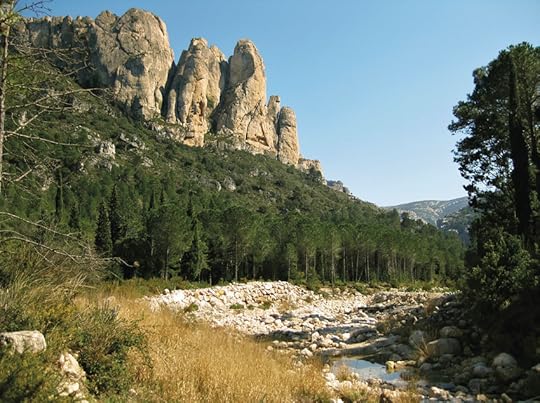
(Megjegyz.: mondjuk az lassan esett le, hogy mi ez a borító. Először egy fakéreg makrofotójának hittem, amíg el nem fordítottam 90 fokkal.)

March 19, 2026
Javier Cercas’a zaten bayılırım ama son iki gündür odaklanamadığım bir dönemde, Terra Alta adeta kurtarıcım oldu. Kendi tarzının biraz dışında, daha polisiye bir hikaye anlatıyor ama dili yine aynı şekilde harika. Hem sürükleyici hem de zihnimi oyalayan, tam ihtiyacım olan bir kitaptı.
Terra Alta, polisiye ile edebiyatı birleştiren ama aslında çok daha derin temalar barındıran bir roman. Geçmişi travmalarla dolu polis Melchor Marín’in, sakin görünen Terra Alta’da işlenen vahşi bir cinayetle yeniden geçmişiyle yüzleşmesini anlatıyor. Ama bu sadece bir suç hikayesi değil; adalet ve intikam arasındaki ince çizgiyi, bir insanın gerçekten değişip değişemeyeceğini sorguluyor. Melchor’un hayatında önemli bir yer tutan “Sefiller” ise onun adalet anlayışını şekillendiren temel unsur olarak öne çıkıyor. Sırada Melchor Marin serisinin diğer iki kitabı var.
Ve defalarca kitabı elimden bırakıp Victor Hugo’nun Sefiller’ine başlamak için kendimi zor tuttum… en kısa zamanda okuyacağım.
Terra Alta, polisiye ile edebiyatı birleştiren ama aslında çok daha derin temalar barındıran bir roman. Geçmişi travmalarla dolu polis Melchor Marín’in, sakin görünen Terra Alta’da işlenen vahşi bir cinayetle yeniden geçmişiyle yüzleşmesini anlatıyor. Ama bu sadece bir suç hikayesi değil; adalet ve intikam arasındaki ince çizgiyi, bir insanın gerçekten değişip değişemeyeceğini sorguluyor. Melchor’un hayatında önemli bir yer tutan “Sefiller” ise onun adalet anlayışını şekillendiren temel unsur olarak öne çıkıyor. Sırada Melchor Marin serisinin diğer iki kitabı var.
Ve defalarca kitabı elimden bırakıp Victor Hugo’nun Sefiller’ine başlamak için kendimi zor tuttum… en kısa zamanda okuyacağım.

November 6, 2019
Dos estrellas.
No he leído otras obras del autor, pero da la impresión de que "Terra Alta" es el intento de escribir novela de misterio por parte de alguien que no ha abordado nunca antes el género. Y, en esta ocasión, como en tantas otras, el intento resulta fallido.
La novela se divide en dos tramas, la del crimen de los Adell y la que relata, en capítulos alternos, el pasado del protagonista. Ambas historias se caracterizan por la falta de originalidad, por un tono explicativo que alarga la obra mucho más allá de lo necesario, y por su previsibilidad.
Resulta casi increíble leer cómo los policías se explican entre sí los pasos a seguir durante la investigación (algo que tanto ellos como cualquiera que haya leído un par de novelas del género se sabe de memoria) o cómo especulan sobre lo que puede haber sucedido por medio de una interminable lista de preguntas... La resolución de esta trama, con ayuda y "confesión" incluidas es tan torpe como decepcionante.
La parte dedicada a la vida de Melchor, además de las referencias continuas a "Los miserables" y cómo cambia la comprensión e interpretación que hace el protagonista de la novela, recuerda a otras novelas del XIX, y su evolución, aunque ligeramente más interesante que la trama de misterio, es igualmente previsible.
Redacción convencional, a vece torpe y cutre, exceso de texto y explicaciones, algún detalle que no se resuelve, falta de interés en los personajes y en lo que les suceda, da como resultado una novela sosa y aburrida.
No he leído otras obras del autor, pero da la impresión de que "Terra Alta" es el intento de escribir novela de misterio por parte de alguien que no ha abordado nunca antes el género. Y, en esta ocasión, como en tantas otras, el intento resulta fallido.
La novela se divide en dos tramas, la del crimen de los Adell y la que relata, en capítulos alternos, el pasado del protagonista. Ambas historias se caracterizan por la falta de originalidad, por un tono explicativo que alarga la obra mucho más allá de lo necesario, y por su previsibilidad.
Resulta casi increíble leer cómo los policías se explican entre sí los pasos a seguir durante la investigación (algo que tanto ellos como cualquiera que haya leído un par de novelas del género se sabe de memoria) o cómo especulan sobre lo que puede haber sucedido por medio de una interminable lista de preguntas... La resolución de esta trama, con ayuda y "confesión" incluidas es tan torpe como decepcionante.
La parte dedicada a la vida de Melchor, además de las referencias continuas a "Los miserables" y cómo cambia la comprensión e interpretación que hace el protagonista de la novela, recuerda a otras novelas del XIX, y su evolución, aunque ligeramente más interesante que la trama de misterio, es igualmente previsible.
Redacción convencional, a vece torpe y cutre, exceso de texto y explicaciones, algún detalle que no se resuelve, falta de interés en los personajes y en lo que les suceda, da como resultado una novela sosa y aburrida.

May 22, 2022
Η Γκαντεζα, μια μικρή πόλη της Τέρρα Άλτα, συγκλονίζεται από ένα φρικιαστικό έγκλημα με θύματα το ζευγάρι των ηλικιωμένων Αδελ, ανθρώπων που έχουν ένα μεγάλο δίκτυο επιχειρήσεων και δίνουν δουλειά σε πολύ κόσμο της περιοχής.
Από τους πρώτους που καταφθάνει είναι ο αστυνόμος Μελτσορ, ο οποίος έχει μετατεθεί στην περιοχή τα τελευταία 3 χρόνια. Η υπόθεση δυστυχώς, μετά από λίγο καιρό, μπαίνει στο αρχείο. Όμως, ο Μελτσορ, δεν μπορεί να το αφήσει έτσι και συνεχίζει μυστικά τις έρευνες του.
Η ιστορία ξεκινά δυναμικά με τη σκηνή του εγκλήματος, και συνεχίζει στο ίδιο επίπεδο. Παράλληλα, ο συγγραφέας μας δίνει όλες τις παραμέτρους της ζωής του Μελτσορ, ώστε να καταλάβουμε τον χαρακτήρα και την ιδιοσυγκρασία του.
Ο Θέρκας, έρχεται με κάτι διαφορετικό από ότι τον έχουμε συνηθίσει, αλλά εξίσου καλογραμμένο και με σφιχτοδεμένη πλοκή και καταφέρνει να αναφέρει σημαντικά ιστορικά γεγονότα της περιοχής εκείνης, με τρόπο αριστουργηματικό, χωρίς να φανεί παράτερο.
Η αγάπη του συγγραφέα για τη λογοτεχνία, περνά μέσω του ήρωα του - τα βιβλία, του έδωσαν τη δύναμη να γίνει αυτό που είναι σήμερα.
Έχοντας ξαναδιαβάσει Θέρκας και γοητευμένη από τη γραφή του, απόλαυσα αυτό το βιβλίο, χωρίς να δυσαρεστηθω διόλου.
Ορισμένοι συγγραφείς, όπως ο Θέρκας, ξέρεις ότι δεν θα σε απογοητευσουν με ότι κι αν καταπιαστούν!!
"Για μένα το μίσος είναι ένα σεβαστό συναίσθημα".
"Για μένα πάλι όχι" είπε η Όλγα. "Το να μισείς κάποιον είναι σαν να πίνεις ένα ποτήρι δηλητήριο, πιστεύοντας ότι έτσι θα σκοτώσεις αυτόν που μισείς."
Από τους πρώτους που καταφθάνει είναι ο αστυνόμος Μελτσορ, ο οποίος έχει μετατεθεί στην περιοχή τα τελευταία 3 χρόνια. Η υπόθεση δυστυχώς, μετά από λίγο καιρό, μπαίνει στο αρχείο. Όμως, ο Μελτσορ, δεν μπορεί να το αφήσει έτσι και συνεχίζει μυστικά τις έρευνες του.
Η ιστορία ξεκινά δυναμικά με τη σκηνή του εγκλήματος, και συνεχίζει στο ίδιο επίπεδο. Παράλληλα, ο συγγραφέας μας δίνει όλες τις παραμέτρους της ζωής του Μελτσορ, ώστε να καταλάβουμε τον χαρακτήρα και την ιδιοσυγκρασία του.
Ο Θέρκας, έρχεται με κάτι διαφορετικό από ότι τον έχουμε συνηθίσει, αλλά εξίσου καλογραμμένο και με σφιχτοδεμένη πλοκή και καταφέρνει να αναφέρει σημαντικά ιστορικά γεγονότα της περιοχής εκείνης, με τρόπο αριστουργηματικό, χωρίς να φανεί παράτερο.
Η αγάπη του συγγραφέα για τη λογοτεχνία, περνά μέσω του ήρωα του - τα βιβλία, του έδωσαν τη δύναμη να γίνει αυτό που είναι σήμερα.
Έχοντας ξαναδιαβάσει Θέρκας και γοητευμένη από τη γραφή του, απόλαυσα αυτό το βιβλίο, χωρίς να δυσαρεστηθω διόλου.
Ορισμένοι συγγραφείς, όπως ο Θέρκας, ξέρεις ότι δεν θα σε απογοητευσουν με ότι κι αν καταπιαστούν!!
"Για μένα το μίσος είναι ένα σεβαστό συναίσθημα".
"Για μένα πάλι όχι" είπε η Όλγα. "Το να μισείς κάποιον είναι σαν να πίνεις ένα ποτήρι δηλητήριο, πιστεύοντας ότι έτσι θα σκοτώσεις αυτόν που μισείς."

February 3, 2025
javier cercas’ı ne kadar sevdiğimi bilen bilir. açıkçası terra alta romanlarıyla polisiyeye el atmış. iyi yapmış. bence çok iyi bir polisiye değil ama iyi bir roman. neden iyi bir polisiye değil? maalesef failleri erken tahmin ediyoruz. özellikle salom karakteri özelinde cercas’ın onu fazla konuşturduğunu, bu açıklama ve konuşmaların da polisiye ruhuna karşı olduğunu söyleyebilirim.
tabii şöyle bir şey var. polisiye yazarı bazen ters köşe yapmalı, bence cercas bunu daha tam bilmiyor. ama kötü bir kitap mı? kesinlikle değil.
bir kere ilk bölümde cinayetin anlatıldığı bölümün geniş zamanla yazılması, polisiyeye göre biraz fazla şiddetli ve kanlı olsa da, okuru mesafelendiriyor. geniş zaman kullanımı o kadar garip geldi ki acaba böyle mi devam edecek dedim, etmedi, ilk bölüme özelmiş. sonra klasik geçmiş zamanla devam ettik ama müthiş bir miş’li geçmiş zamanlı bölüm vardı ki işte polisiye yazardan ayrıldığı yer sanırım burası. bunlar normalde dikkat edilen şeyler değil.
melchor karakterinin geçmişinin aralara girmesi, derinleşmesi çok başarılıydı bence. özellikle hapiste sefiller’le tanışması ve romanın kahramanlarından birinin neredeyse jean valjean olması yine çok edebi bir dokunuştu bence.
sondaki tvist gerekli miydi? bence değildi ama cercas’ın ispanyol iç savaşına değinmeden bir roman yazmasını hayal bile edemem.
olga kısmı ise işte akdenizlilik… bence o da gereksizmiş ama romantizm, acı, küllerinden doğmak filan kanımızda var.
gökhan aksay çevirisi diye de bir şey var bu arada. muhteşemdi. devamını okurum.
tabii şöyle bir şey var. polisiye yazarı bazen ters köşe yapmalı, bence cercas bunu daha tam bilmiyor. ama kötü bir kitap mı? kesinlikle değil.
bir kere ilk bölümde cinayetin anlatıldığı bölümün geniş zamanla yazılması, polisiyeye göre biraz fazla şiddetli ve kanlı olsa da, okuru mesafelendiriyor. geniş zaman kullanımı o kadar garip geldi ki acaba böyle mi devam edecek dedim, etmedi, ilk bölüme özelmiş. sonra klasik geçmiş zamanla devam ettik ama müthiş bir miş’li geçmiş zamanlı bölüm vardı ki işte polisiye yazardan ayrıldığı yer sanırım burası. bunlar normalde dikkat edilen şeyler değil.
melchor karakterinin geçmişinin aralara girmesi, derinleşmesi çok başarılıydı bence. özellikle hapiste sefiller’le tanışması ve romanın kahramanlarından birinin neredeyse jean valjean olması yine çok edebi bir dokunuştu bence.
sondaki tvist gerekli miydi? bence değildi ama cercas’ın ispanyol iç savaşına değinmeden bir roman yazmasını hayal bile edemem.
olga kısmı ise işte akdenizlilik… bence o da gereksizmiş ama romantizm, acı, küllerinden doğmak filan kanımızda var.
gökhan aksay çevirisi diye de bir şey var bu arada. muhteşemdi. devamını okurum.
February 5, 2022
Melchor had it tough growing up. Born to a prostitute who worked the area close to the Barcelona football stadium, he never knew who his father was. Eventually he drifted into crime and in due course was arrested and charged for his involvement with a drug gang. In prison he was introduced to books and, in particular, found some comfort amongst the pages of the Victor Hugo classic Les Misérables, a book he was to return to again and again and within which he was to see echos of his own life. And as fortune would have it, he found that he had a benefactor in the form of the lawyer who had acted as his defence counsel in court – a friend, it seems, of his mother.
I won’t go into how it came about, but suffice to say his life took a major turn for the better and with the help of his benefactor he found himself, some years later, working (strange as it may seem) as a police officer in a sparsely populated area called Terra Alta, in the region of Catalonia. Crime is rare here but one night he’s called to a horrific scene: three people murdered, two of them having been tortured horribly before being put out of their misery. The murder scene is the home of the owner of the largest business in Terra Alta. There appear to have been no witnesses and with no identifiable suspects it seems that perhaps this triple murder is to remain a mystery.
At this point there’s quite a lot going on: the ongoing investigation into the murders, a second mystery back in Barcelona that is constantly playing on Melchor’s mind and then another death which threatens to tip him over the edge. In addition to receiving updates on current events, we start to learn some of the history of the region, much of it linked to the Spanish Civil War. It’s a violent history, with the Battle of Ebro – the longest and largest battle of the war – having been fought here in 1938. In the bars and restaurants, amongst the elder members of the population stories from the war remain the most likely topic of conversation.
But despite all this, or perhaps because of this, the tale seemed to slow at its midpoint, its energy dissipating. Thankfully, the pace picked up again in the final section and this tangled web of a story started to edge toward an exciting climax. In this complex, convoluted tale there was never going to be a neat and easy ending and this proved to be the case. There is resolution, but not all loose ends are neatly tied off. My personal view is that this is okay, I don’t mind being left to imagine how certain elements played out. But with two significant mysteries remaining unsettled it’s possible that some readers might not feel fully satisfied.
My thanks to Quercus Books for supplying a copy of this book via NetGalley in exchange for an honest review.
I won’t go into how it came about, but suffice to say his life took a major turn for the better and with the help of his benefactor he found himself, some years later, working (strange as it may seem) as a police officer in a sparsely populated area called Terra Alta, in the region of Catalonia. Crime is rare here but one night he’s called to a horrific scene: three people murdered, two of them having been tortured horribly before being put out of their misery. The murder scene is the home of the owner of the largest business in Terra Alta. There appear to have been no witnesses and with no identifiable suspects it seems that perhaps this triple murder is to remain a mystery.
At this point there’s quite a lot going on: the ongoing investigation into the murders, a second mystery back in Barcelona that is constantly playing on Melchor’s mind and then another death which threatens to tip him over the edge. In addition to receiving updates on current events, we start to learn some of the history of the region, much of it linked to the Spanish Civil War. It’s a violent history, with the Battle of Ebro – the longest and largest battle of the war – having been fought here in 1938. In the bars and restaurants, amongst the elder members of the population stories from the war remain the most likely topic of conversation.
But despite all this, or perhaps because of this, the tale seemed to slow at its midpoint, its energy dissipating. Thankfully, the pace picked up again in the final section and this tangled web of a story started to edge toward an exciting climax. In this complex, convoluted tale there was never going to be a neat and easy ending and this proved to be the case. There is resolution, but not all loose ends are neatly tied off. My personal view is that this is okay, I don’t mind being left to imagine how certain elements played out. But with two significant mysteries remaining unsettled it’s possible that some readers might not feel fully satisfied.
My thanks to Quercus Books for supplying a copy of this book via NetGalley in exchange for an honest review.
January 18, 2020
Cercas cambia de género y construye una novela cuya máximo fallo es tratar de abarcar demasiados temas (asesinatos, violencia de género, guerra civil, atentados, vida policial) y no profundizar en ninguno. La narración es a veces retórica, contiene errores e incoherencias y los personajes secundarios se van diluyendo hasta que finalmente se vuelven peleles al servicio de un final que los ridiculiza. Diríase que el autor leyó El hombre de la gasolinera y se contagió de esa escritura cinematográfica, de esa idea de legitimación de la justicia y sobre todo de ese personaje profundo y misterioso con el que comparte tantas semejanzas. Pero Terra Alta no tiene nada de western; es, más bien, el intento infructuoso de construir una historia original con piezas usadas añadiendo otras, las de sus obsesiones, que solo encajan en la historia con calzador. Una extraña mezcla con exceso de ingredientes que no sabe a nada. Un novela, en suma, que podría considerarse al menos entretenida si se hubiese planteado con mayor sencillez. Desafortunado debut en el género noir. Muy floja.

August 15, 2022
Un triple crimen en el campo catalán, un empresario histórico, un joven investigador con un pasado ya de por sí engorroso y una investigación aparentemente sin salida. Cercas propone una trama más que clásica, pero no se conforma con llevarla a término con gran destreza. Nos envuelve en una historia donde la sed de justicia y la de venganza se enredan irremediablemente y los protagonistas siguen derrotados, con una sensación de falta de plenitud evidente y verdaderamente frustrante.
Como amante de los thrillers, debo decir que el desarrollo de las investigaciones sobre el culpable no me sorprendió demasiado, quedó claro desde el principio (en mi opinión) quién era, aunque de todos modos lo he leído con curiosidad. También he notado que el giro final de la trama parece un apéndice por derecho propio, como si el autor se hubiera dado cuenta de la decepción del lector al leer el primer final.
En definitiva, no fue una de esas lecturas emocionantes en las que cualquier cosa puede pasar hasta la última página, pero aún así fue agradable.
Como amante de los thrillers, debo decir que el desarrollo de las investigaciones sobre el culpable no me sorprendió demasiado, quedó claro desde el principio (en mi opinión) quién era, aunque de todos modos lo he leído con curiosidad. También he notado que el giro final de la trama parece un apéndice por derecho propio, como si el autor se hubiera dado cuenta de la decepción del lector al leer el primer final.
En definitiva, no fue una de esas lecturas emocionantes en las que cualquier cosa puede pasar hasta la última página, pero aún así fue agradable.

February 17, 2020
Una buena historia. Unos asesinatos brutales, un policía que salido de un mundo oscuro. En fin, una buena mezcla que hace que sufras con Melchor, el protagonista de la historia. Para ser la primera vez que el autor escribe un thriller, para mi gusto, lo ha superado con nota. Me ha enganchado bastante la novela. Aún así le pongo un pero, el final ha llegado, para mí, demasiado acelerado. Además han quedado partes sin resolver, imagino que habrá más libros de este policía. Sin duda lo recomiendo.

September 23, 2025
Terra alta è un noir poliziesco che ambisce a uscire dai confini di genere. Ambientato in una provincia sonnacchiosa della Catalonia, luoghi e paesi dove non succede quasi mai nulla e tutti si conoscono tra amicizie, invidie e rancori anche di vecchia data, che le ferite della guerra civile non si sono mai cicatrizzate. L'industriale più ricco della zona, un ultra ottantenne che non ha mai ceduto il bastone del comando, viene trucidato insieme alla moglie nella sua villa da ignoti. La polizia indaga in forze su un caso di immediata risonanza, ma ben presto le indagini si arenano. Solo Melchor, un agente giovane, trasferito da Barcellona qualche anno prima, continua a investigare in nome di una sua personale e ferrea concezione di giustizia. È Melchor il vero protagonista del romanzo: un passato ingombrante con una infanzia difficile, una adolescenza delinquenziale e qualche anno in carcere, ma anche un poliziotto eroe, capace di bloccare un gruppo di attentatori islamici. Un appassionato lettore di romanzi con I Miserabili, consigliato da un compagno di reclusione, riletto più volte, identificandosi con Jean Valjean, vittima di ripetute ingiustizie e soprattutto con l'implacabile ispettore Javert, simbolo di chi persegue sempre la giustizia (anche quando diventa assoluta ingiustizia). Tanti stereotipi nei personaggi, alcuni manieristici: il superiore carrierista, quello che vicino alla pensione non vuole fastidi, il sergente ruvido e un po' sbruffone ma più corretto di altri, il vecchio avvocato trasandato e maneggione ma vero amico in ogni circostanza... Peccato che la storia non decolli mai veramente, manca di atmosfera, Terra Alta rimane un luogo troppo anonimo per rimanere impresso nel lettore. I colpi di scena sono in fondo prevedibili e già trovati in altri romanzi, il finale spinge a qualche riflessione sul concetto di giustizia ma non mi ha convinto più di tanto. Originale e simpatica invece l'idea del poliziotto avido lettore, con la moglie bibliotecaria del paese e la bambina che si chiama Cosette..
È il primo libro che leggo di Javier Cercas, gli darò un altra occasione. Tre stelle.
È il primo libro che leggo di Javier Cercas, gli darò un altra occasione. Tre stelle.

August 19, 2025
"Adalet, yalnızca muhteva meselesi değildir. Her şeyden önce biçim meselesidir. Adaletin biçimlerine saygı göstermemek, sonuçta adaletin kendisine saygı göstermemektir. Söylediğim şeyi unutmayın: Kusursuz adalet, en kusursuz adaletsizlik olabilir."
Bu yazımı birtakım Javierlerin yazdıkları polisiyelere adadım resmen, Marias ile başladık Cercas ile devam ediyoruz. Sonuç: elden bırakılamayan kitaplar, uykusuz geceler, meraktan kitapları yercesine bir okuma hali.
Okudukça daha çok, daha çok sevdiğim Javier Cercas'ın Terra Alta üçlemesine başlamak için tüm serinin dilimize çevrilmesini bekliyordum; üçleme tamamlandı, ben de tabii ki kendimi tutamadım. Çeviri demişken: bu metinleri Gökhan Aksay'ın muazzam çevirisiyle okuyabildiğimiz için çok şanslıyız, belirtmeden geçmeyeyim.
Katalonya'nın güneyindeki Terra Alta bölgesindeyiz. Normalde ziyadesiyle olaysız bir yer olan bölge bir gün yaşlı bir çiftin evlerinde önce işkence edilip sonra öldürülmeleriyle sarsılıyor, olaylar gelişiyor. Ana kahramanımız genç polis memuru Melchor ile bir yandan cinayet soruşturmasını takip ediyor bir yandan da zamanda geriye gidip Melchor'un zorlu çocukluk ve gençlik yıllarına ve kendini Terra Alta'da bulmasına sebebiyet veren olaylara dair bir şeyler öğreniyoruz.
Kurmaca ve hakikat arasındaki ilişkiye dair Cercas kadar akıl yürüten pek yazar yok, ben de kendisinin en çok bu tarafını seviyorum. (Sahtekar'ın unutulmaz cümlesi bir daha gelsin madem: "Kurmaca kurtarır, hakikat öldürür.") Bu romanda da daha geride olsa da bunu yapmaktan vazgeçmiyor; kahramanımız Melchor iyi bir okur, özellikle Hugo'nun Sefiller'ine takıntılı, onlarca kez okumuş kitabı ve bunun üstünden sık sık hakikat-kurmaca ilişkisine dair akıl yürüttürüyor yine bize Cercas.
Dikkatli okurlar cinayeti erken çözecektir, bence yazar biraz fazla ipucu veriyor ama yine de son bölüme eklediği hikayeyle olaylar bambaşka bir boyut kazanıyor. Dilini diğer romanlarındaki kadar ustalıklı ve zengin bulmadığımı söylemem lazım ama yine de çok çok severek okudum. Zaten kendisi benim sayılı "ne yazsa okurum" yazarlarımdan biri, dolayısıyla şaşırtıcı sayılmaz :) Ben şimdi ikinci kitaptan devam o halde.
Bu yazımı birtakım Javierlerin yazdıkları polisiyelere adadım resmen, Marias ile başladık Cercas ile devam ediyoruz. Sonuç: elden bırakılamayan kitaplar, uykusuz geceler, meraktan kitapları yercesine bir okuma hali.
Okudukça daha çok, daha çok sevdiğim Javier Cercas'ın Terra Alta üçlemesine başlamak için tüm serinin dilimize çevrilmesini bekliyordum; üçleme tamamlandı, ben de tabii ki kendimi tutamadım. Çeviri demişken: bu metinleri Gökhan Aksay'ın muazzam çevirisiyle okuyabildiğimiz için çok şanslıyız, belirtmeden geçmeyeyim.
Katalonya'nın güneyindeki Terra Alta bölgesindeyiz. Normalde ziyadesiyle olaysız bir yer olan bölge bir gün yaşlı bir çiftin evlerinde önce işkence edilip sonra öldürülmeleriyle sarsılıyor, olaylar gelişiyor. Ana kahramanımız genç polis memuru Melchor ile bir yandan cinayet soruşturmasını takip ediyor bir yandan da zamanda geriye gidip Melchor'un zorlu çocukluk ve gençlik yıllarına ve kendini Terra Alta'da bulmasına sebebiyet veren olaylara dair bir şeyler öğreniyoruz.
Kurmaca ve hakikat arasındaki ilişkiye dair Cercas kadar akıl yürüten pek yazar yok, ben de kendisinin en çok bu tarafını seviyorum. (Sahtekar'ın unutulmaz cümlesi bir daha gelsin madem: "Kurmaca kurtarır, hakikat öldürür.") Bu romanda da daha geride olsa da bunu yapmaktan vazgeçmiyor; kahramanımız Melchor iyi bir okur, özellikle Hugo'nun Sefiller'ine takıntılı, onlarca kez okumuş kitabı ve bunun üstünden sık sık hakikat-kurmaca ilişkisine dair akıl yürüttürüyor yine bize Cercas.
Dikkatli okurlar cinayeti erken çözecektir, bence yazar biraz fazla ipucu veriyor ama yine de son bölüme eklediği hikayeyle olaylar bambaşka bir boyut kazanıyor. Dilini diğer romanlarındaki kadar ustalıklı ve zengin bulmadığımı söylemem lazım ama yine de çok çok severek okudum. Zaten kendisi benim sayılı "ne yazsa okurum" yazarlarımdan biri, dolayısıyla şaşırtıcı sayılmaz :) Ben şimdi ikinci kitaptan devam o halde.

July 28, 2020
Non so bene neanche io perché l'ho preso in mano, direi solo perché l'ha scritto Cercas di cui avevo letto L'impostore in un momento in cui si parlava di lui come del Carrère spagnolo. Le recensioni qui su GR sono impietose e in parte hanno ragione: come giallo è meno che mediocre. Spunti buoni ne ha, ma sono sottosviluppati. Mi è piaciuta tutta la corposa parte di flashback, che racconta la storia passata del protagonista in una dimensione da noir mediterraneo che mi ha fatto pensare a Carlotto e agli altri scrittori che non ho mai avuto davvero voglia di leggere, tipo Izzo. È la parte migliore del libro, anche se devo riconoscere che è piena di cliché stantii. La sezione del giallo, ambientata nel presente, non ha tante ragioni d'essere: è noiosa; non riesce a intessere una vera rete tra fatti e personaggi, somiglia più a un elenco di azioni e dati; è piena di binari morti che non portano da nessuna parte. La soluzione finale è più fantasiosa e mi è piaciuto l'ultimo capitolo per la storia che racconta; peccato che il resto del romanzo non avesse seminato quasi niente al riguardo, facendo risultare quel pezzetto scollegato. La Terra Alta che dà il titolo al libro non vive mai nel testo, non c'è una vera ambientazione, la storia potrebbe accadere ovunque e questa m'è parsa sciatteria. Alla fine mi ha ricordato quelle tante serie gialle europee ambientate in provincia, tutte uguali tra loro e senza stile. In controluce riesco però a immaginarmi che bel giallo/noir avrebbe potuto essere, se Cercas avesse avuto davvero voglia di scriverlo.
Displaying 1 - 30 of 1,185 reviews