

What do you think?

Giving the Devil His Due
Finally someone has written a book that encourages people to be who they are. Disconnect to Reconnect brings a life-giving message of correction and encouragement to faithful people tyrannized by the wickedness of this world. Emmanuel Njang is by far one of the premiere teachers. In a world that seems to be tumbling from crisis, there may be no more critical battle than for the hearts of our youths, pastors, teachers, business people and other not mentioned. With passion and vision from the front lines of this disconnection, Emmanuel shares a book of reconnection. His profound insight, practically and relevance are the best. Get out your yellow marker-you're going to have plenty to highlight in this latest contribution by Emmanuel Njang.
290 pages, Kindle Edition
First published September 1, 2021
Ratings & Reviews
Friends & Following
Create a free account to discover what your friends think of this book!
Community Reviews
Displaying 1 - 30 of 43 reviews

Read
August 18, 2022I’ve enjoyed The Pixel Project’s author AMA series on r/fantasy in support of raising awareness around gendered violence, so I was excited to check out this collection of stories where speculative elements are used to give perpetrators of gendered violence the sweet, sweet justice they are due. Overall, it ended up being a bit more of a mixed bag than the average short story collection for me, and a lot of that has to do with how that fundamental premise was executed.
There are a few stories that stand out as being particularly weak to me, either because of what I perceive as a mishandling of the central themes or for other reasons, and I wanted to mention those here.
Sweet Justice - this story starts off with the protagonist throwing a lamp at her boyfriend’s head because he asks for a key to her house - she later smiles and makes a joke about it and all is forgiven with him inexplicably apologizing for what he did to her (?).
As We Stand and Pray - the protagonist forces an entire congregation of people to experience graphic images of their leader’s abuse with no cessation until they kill him.
Devil’s Pocket Change - I read this one as a story about a man who was in a codependent relationship with his severely depressed girlfriend and, in the aftermath of that codependency, he has become completely emotionally disengaged from the relationship. This is certainly a dysfunctional relationship, but I would not identify anything about it as abusive except for the final fight they have. I just do not think it is accurate to categorize a dysfunctional relationship where one partner has totally disengaged and the other has no capacity to reciprocate emotions or function normally in the relationship as an abusive one where we’re supposed to feel vindicated when the boyfriend is killed at the end.
The Tawny Bitch - this one seems to be based on a lot of inaccurate myths about Victorian society and lesbophobia. The main character experiences medical abuse and is imprisoned by her cousin because she is a lesbian and her lesbianism must be “cured” with various invasive degredations such as enemas. As far as all of my Victorian era research has demonstrated, lesbophobia was not really a major issue in the way that stigma against gay men was - a really good book about this is Between Women: Friendship, Desire, and Marriage in Victorian England. And one of the most common fun facts about the Victorian era that gets tossed around a lot is that women with hysteria would be “treated” with orgasms, specifically by doctors using vibrators. This a really great article about how that myth is actually based on one researcher’s entirely hypothetical suppositions that have been challenged by many other scholars of Victoriana. Hysteria was sometimes treated with hysterectomies, and mental health issues in general were associated with the theory of auto-intoxication, which would sometimes be treated with enemas. But the only direct linkages between lesbianism and enema treatments in the Victorian era that I could find while researching were erotica soooooooo.
Devil’s Hollow - this isn’t necessarily a critique, but the premise of this one is that DV and SA hotlines have workers who assist survivors in murdering their abusers. Speaking as someone who works on such a hotline as part of her job, I can confirm that this is not, in fact, true…but some days, I fucking wish lol.
Overall, I think this collection serves as a great case study for a lot of the things I’ve been mulling over since starting my project of reading as many SFF books featuring trauma as possible. A few books that I really love - Damsel, Deerskin, Tehanu- have all used sudden influxes of magic to defeat the books’ villains, and I’ve always felt that that’s kind of…cheap and disappointing, I guess? The same thing could be said about this collection, where we see the complexities of gendered violence swept away every time thanks to magical interventions.
I also went on a mini-rant about rape revenge stories in my review of The Hollow Girl- on one hand, these stories don’t address the realistic complexities of survivorhood and living/healing with injustice in the aftermath of violence, and I love books that address those things. But…also, it can sometimes be super cathartic to just watch someone who’s been hurt fuck shit up for the people who hurt them. Maybe that’s what this kind of fantasy is good for - it’s pure wish-fulfillment that gets the feelings of anger out in a safe way. Yes, the real world process of survivorhood is complex and trauma doesn’t go away in a waterfall of blood, but isn’t it nice to pretend sometimes? There’s a reason that “Goodbye Earl” is a goddamn jam that always puts a smile on my face.
Wherever you land on this issue, I do think that a collection of stories where abusers get horrifically murdered by magic over and over is both somewhat boring in its repetition and also disappointingly limiting in its use of the speculative elements. All at once it limits the possibilities for what survivors can do without magic and what magic can do to address gendered violence. Before I started this collection, I didn’t know that it would exclusively stick to the murder theme - I was anticipating magically enhanced restorative justice! Psychic powers and mind-melding in crazy therapeutic interventions! Who knows what else!!!! No such luck.
To do the most agonizingly fucking obnoxious thing I could possibly do at this juncture, I wanted to mention how I came to the decision I did about magic’s role in my own series’ ending. If you care about my weird little elf books that like 10 people have read to their conclusion (as if!!), be wary of spoilers from hereon out. I had a number of early readers tell me that the abusive husband in my story, Harlan, needed to either die or be punished horribly for his abuse. I understood where that impulse came from - throughout the series, he hurts the main character terribly and we see the full extent of the damage he has done in agonizing detail.
But I knew from the start that no grand bloody revenge would be happening, because it didn’t match who my protagonist was as a person and it didn’t match where she was going to be at the end of the story in her healing journey. At the end of the day, Harlan’s ending is exactly what I wish was possible for the person who hurt me and for every abuser - he is simply stopped from being able to hurt any woman ever again, and he magically understands the gravity of what he did to Iraluri. I have my own Super Secret thoughts (and an incomprehensible Google Doc) about how he may live the rest of his life, but at the end of the day, those are the most important things, and I wouldn’t change anything about that ending.
This has gone on way too long now, so I’ll shut up. In sum, the basic premise of SFF-y abuse revenge stories is a great one, but the execution didn’t totally work for me because of how the magic was used exclusively to murder people, and a few of the stories really missed my personal mark for understanding and writing respectfully about abuse.
There are a few stories that stand out as being particularly weak to me, either because of what I perceive as a mishandling of the central themes or for other reasons, and I wanted to mention those here.
Sweet Justice - this story starts off with the protagonist throwing a lamp at her boyfriend’s head because he asks for a key to her house - she later smiles and makes a joke about it and all is forgiven with him inexplicably apologizing for what he did to her (?).
As We Stand and Pray - the protagonist forces an entire congregation of people to experience graphic images of their leader’s abuse with no cessation until they kill him.
Devil’s Pocket Change - I read this one as a story about a man who was in a codependent relationship with his severely depressed girlfriend and, in the aftermath of that codependency, he has become completely emotionally disengaged from the relationship. This is certainly a dysfunctional relationship, but I would not identify anything about it as abusive except for the final fight they have. I just do not think it is accurate to categorize a dysfunctional relationship where one partner has totally disengaged and the other has no capacity to reciprocate emotions or function normally in the relationship as an abusive one where we’re supposed to feel vindicated when the boyfriend is killed at the end.
The Tawny Bitch - this one seems to be based on a lot of inaccurate myths about Victorian society and lesbophobia. The main character experiences medical abuse and is imprisoned by her cousin because she is a lesbian and her lesbianism must be “cured” with various invasive degredations such as enemas. As far as all of my Victorian era research has demonstrated, lesbophobia was not really a major issue in the way that stigma against gay men was - a really good book about this is Between Women: Friendship, Desire, and Marriage in Victorian England. And one of the most common fun facts about the Victorian era that gets tossed around a lot is that women with hysteria would be “treated” with orgasms, specifically by doctors using vibrators. This a really great article about how that myth is actually based on one researcher’s entirely hypothetical suppositions that have been challenged by many other scholars of Victoriana. Hysteria was sometimes treated with hysterectomies, and mental health issues in general were associated with the theory of auto-intoxication, which would sometimes be treated with enemas. But the only direct linkages between lesbianism and enema treatments in the Victorian era that I could find while researching were erotica soooooooo.
Devil’s Hollow - this isn’t necessarily a critique, but the premise of this one is that DV and SA hotlines have workers who assist survivors in murdering their abusers. Speaking as someone who works on such a hotline as part of her job, I can confirm that this is not, in fact, true…but some days, I fucking wish lol.
Overall, I think this collection serves as a great case study for a lot of the things I’ve been mulling over since starting my project of reading as many SFF books featuring trauma as possible. A few books that I really love - Damsel, Deerskin, Tehanu- have all used sudden influxes of magic to defeat the books’ villains, and I’ve always felt that that’s kind of…cheap and disappointing, I guess? The same thing could be said about this collection, where we see the complexities of gendered violence swept away every time thanks to magical interventions.
I also went on a mini-rant about rape revenge stories in my review of The Hollow Girl- on one hand, these stories don’t address the realistic complexities of survivorhood and living/healing with injustice in the aftermath of violence, and I love books that address those things. But…also, it can sometimes be super cathartic to just watch someone who’s been hurt fuck shit up for the people who hurt them. Maybe that’s what this kind of fantasy is good for - it’s pure wish-fulfillment that gets the feelings of anger out in a safe way. Yes, the real world process of survivorhood is complex and trauma doesn’t go away in a waterfall of blood, but isn’t it nice to pretend sometimes? There’s a reason that “Goodbye Earl” is a goddamn jam that always puts a smile on my face.
Wherever you land on this issue, I do think that a collection of stories where abusers get horrifically murdered by magic over and over is both somewhat boring in its repetition and also disappointingly limiting in its use of the speculative elements. All at once it limits the possibilities for what survivors can do without magic and what magic can do to address gendered violence. Before I started this collection, I didn’t know that it would exclusively stick to the murder theme - I was anticipating magically enhanced restorative justice! Psychic powers and mind-melding in crazy therapeutic interventions! Who knows what else!!!! No such luck.
To do the most agonizingly fucking obnoxious thing I could possibly do at this juncture, I wanted to mention how I came to the decision I did about magic’s role in my own series’ ending. If you care about my weird little elf books that like 10 people have read to their conclusion (as if!!), be wary of spoilers from hereon out. I had a number of early readers tell me that the abusive husband in my story, Harlan, needed to either die or be punished horribly for his abuse. I understood where that impulse came from - throughout the series, he hurts the main character terribly and we see the full extent of the damage he has done in agonizing detail.
But I knew from the start that no grand bloody revenge would be happening, because it didn’t match who my protagonist was as a person and it didn’t match where she was going to be at the end of the story in her healing journey. At the end of the day, Harlan’s ending is exactly what I wish was possible for the person who hurt me and for every abuser - he is simply stopped from being able to hurt any woman ever again, and he magically understands the gravity of what he did to Iraluri. I have my own Super Secret thoughts (and an incomprehensible Google Doc) about how he may live the rest of his life, but at the end of the day, those are the most important things, and I wouldn’t change anything about that ending.
This has gone on way too long now, so I’ll shut up. In sum, the basic premise of SFF-y abuse revenge stories is a great one, but the execution didn’t totally work for me because of how the magic was used exclusively to murder people, and a few of the stories really missed my personal mark for understanding and writing respectfully about abuse.

September 5, 2021
How I read this: Free ebook copy received from a publicist
Wow… What a book. Giving the Devil His Due is haunting, morbidly interesting, graphic, important, fascinating. It hooks you like a disaster you can’t look away from – it’s scary, but also you just kind of need to know. I can’t quite describe it, but it’s just my lack of words. Because it left me speechless – and I mean that in the best way possible.
Giving the Devil His Due is a very special anthology – and not only because it’s meant for charity and ending violence against women. It’s a collection of stories where the victims are given power against their aggressors, and it shows how violence begets violence – how easily the victim can also become an aggressor. It truly shows the dark side of humanity, but it also sheds light on how complicated acts of cruelty and their effects can be. As you read, it makes you wonder at how thin the line between what’s right and what’s wrong is. This book was brilliant, but it should certainly come with a disclaimer that you will keep thinking about it long after you’re done reading. (Please know it comes with triggers as well. Triggers are listed in the full review.)
I have a longer review here if you'd like to know all my thoughts on this brilliant anthology:
https://avalinahsbooks.space/giving-t...
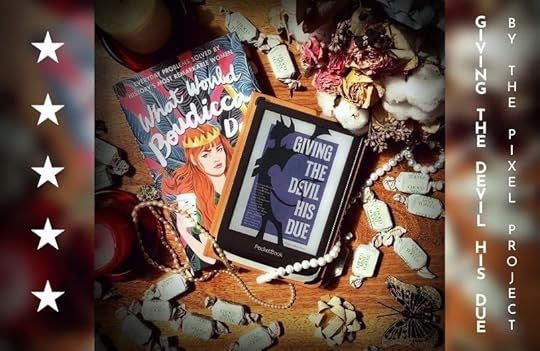
I thank the publicist and author for giving me a free copy of the ebook in exchange to my honest review. This has not affected my opinion.
Book Blog | Bookstagram | Bookish Twitter
Wow… What a book. Giving the Devil His Due is haunting, morbidly interesting, graphic, important, fascinating. It hooks you like a disaster you can’t look away from – it’s scary, but also you just kind of need to know. I can’t quite describe it, but it’s just my lack of words. Because it left me speechless – and I mean that in the best way possible.
Giving the Devil His Due is a very special anthology – and not only because it’s meant for charity and ending violence against women. It’s a collection of stories where the victims are given power against their aggressors, and it shows how violence begets violence – how easily the victim can also become an aggressor. It truly shows the dark side of humanity, but it also sheds light on how complicated acts of cruelty and their effects can be. As you read, it makes you wonder at how thin the line between what’s right and what’s wrong is. This book was brilliant, but it should certainly come with a disclaimer that you will keep thinking about it long after you’re done reading. (Please know it comes with triggers as well. Triggers are listed in the full review.)
I have a longer review here if you'd like to know all my thoughts on this brilliant anthology:
https://avalinahsbooks.space/giving-t...
I thank the publicist and author for giving me a free copy of the ebook in exchange to my honest review. This has not affected my opinion.
Book Blog | Bookstagram | Bookish Twitter

April 23, 2022
This is an excellent collection of short stories by acclaimed speculative fiction authors. Each story focuses on the protagonist facing off against the antagonist and succeeding.
Please know these stories focus on various elements of violence against females. We are all familiar with each scenario presented in these tales; and yet, this ubiquitous societal practice is still an issue worldwide.
That being said, proceeds of this book will be donated to "The Pixel Project," a non-profit organization, to combat and to end violence against women and all forms of domestic violence.
Complete RTC.
Please know these stories focus on various elements of violence against females. We are all familiar with each scenario presented in these tales; and yet, this ubiquitous societal practice is still an issue worldwide.
That being said, proceeds of this book will be donated to "The Pixel Project," a non-profit organization, to combat and to end violence against women and all forms of domestic violence.
Complete RTC.

December 15, 2021
“Giving the Devil His Due” is a worthy anthology published for a good cause by The Pixel Project. All net proceeds from the anthology will be going to the Pixel Project’s anti-violence against women programs, campaigns and resources. This is for any female that has ever been abused at the hands of a man, the survivors of rape, incest, domestic abuse, and trafficking. Any and all survivors of, this anthology is for you, by authors like you, that hear you and support you.
The authors have penned a relentless collection of stories of anger, loss, grief, justice and revenge, each one carries the same message. Survivors can and will overcome, they will see the sun again, reclaim their identity and their power, they will exact their justice, all in due time. A couple of standouts for me were “Hell on the Homefront too” by Stephen Graham Jones, “Just Us League” by Angela Yuriko Smith, and “The Little Thing” by Christina Henry. These lingered with me well after I finished reading but there is not a disappointing story in the bunch.
I fully support anthologies of this nature and this cause. Five stars for this superb collection for a very worthy cause. Kudo’s to each author for shedding more light on this truly dark topic.
The authors have penned a relentless collection of stories of anger, loss, grief, justice and revenge, each one carries the same message. Survivors can and will overcome, they will see the sun again, reclaim their identity and their power, they will exact their justice, all in due time. A couple of standouts for me were “Hell on the Homefront too” by Stephen Graham Jones, “Just Us League” by Angela Yuriko Smith, and “The Little Thing” by Christina Henry. These lingered with me well after I finished reading but there is not a disappointing story in the bunch.
I fully support anthologies of this nature and this cause. Five stars for this superb collection for a very worthy cause. Kudo’s to each author for shedding more light on this truly dark topic.

April 29, 2022
It’s not every day that you come across an anthology where just about every story hits. Sure, a few of the stories didn’t work for me, but I am comfortable with saying that these particular stories will most likely be favorites for other readers. Giving the Devil His Due has a very important theme, but even if you’re just simply looking for a good horror collection to read, I definitely recommend this one.
There are a lot of familiar names in Giving the Devil His Due. I know a lot of readers will be excited to find Stephen Graham Jones, author of My Heart is a Chainsaw and The Only Good Indians in the collection, along with Christina Henry who’s known for her dark fairytale retellings like Alice and The Girl in Red. After reading Giving the Devil His Due, I’m looking forward to checking out more work from all of the authors in the TOC.
Circling back to Giving the Devil His Due’s important theme, I want to give credit to every single author for the way they handled writing stories that center around violence against women and the way justice is served for all of the abusers in these stories. Revenge comes in different forms in Giving the Devil His Due; some with a simple weapon and others with help from spirits. All of the stories in this collection bring something new to the table, while simultaneously serving as a message about the same important topic. This is definitely a collection worth reading.
Giving the Devil His Due ends with “Violence Against Women: Learning More and Getting Help — A Starting Point.” This resource guide contains valuable links that list crisis numbers for multiple countries.
There are a lot of familiar names in Giving the Devil His Due. I know a lot of readers will be excited to find Stephen Graham Jones, author of My Heart is a Chainsaw and The Only Good Indians in the collection, along with Christina Henry who’s known for her dark fairytale retellings like Alice and The Girl in Red. After reading Giving the Devil His Due, I’m looking forward to checking out more work from all of the authors in the TOC.
Circling back to Giving the Devil His Due’s important theme, I want to give credit to every single author for the way they handled writing stories that center around violence against women and the way justice is served for all of the abusers in these stories. Revenge comes in different forms in Giving the Devil His Due; some with a simple weapon and others with help from spirits. All of the stories in this collection bring something new to the table, while simultaneously serving as a message about the same important topic. This is definitely a collection worth reading.
Giving the Devil His Due ends with “Violence Against Women: Learning More and Getting Help — A Starting Point.” This resource guide contains valuable links that list crisis numbers for multiple countries.

June 26, 2024
That was a lot more than I bargained for. But each story was unique and engaging. It's a rough one to read all at once. But I would recommend it, provided the reader is able to handle the grotesque imagery and horrifying elements of these stories. Violence against women is hard to handle on the page.

February 28, 2023
If you read only one anthology this year, let it be this one.
This is an important collection of stories written by talented and knowledgeable authors, about a subject that needs to see more light of day. These stories address the often taboo topic of violence against women in a way that only fiction can - by making the horrors women suffer relatable while at the same time keeping it at arm's length.
I'm sure most women reading this book will personally relate to at least one story within its pages, if not more. And for those who can't personally relate, they will have their eyes opened and come away with more empathy for victims.
The fact that this is a charity anthology just makes purchasing such an excellent collection of tales all the sweeter.
This is an important collection of stories written by talented and knowledgeable authors, about a subject that needs to see more light of day. These stories address the often taboo topic of violence against women in a way that only fiction can - by making the horrors women suffer relatable while at the same time keeping it at arm's length.
I'm sure most women reading this book will personally relate to at least one story within its pages, if not more. And for those who can't personally relate, they will have their eyes opened and come away with more empathy for victims.
The fact that this is a charity anthology just makes purchasing such an excellent collection of tales all the sweeter.

August 17, 2023
Such impressive, heartbreaking, and important stories. I highly recommend this anthology!

September 23, 2021
Full disclosure: I have a story in this charity anthology, "Daughter of Echidna," but given the impressive lineup of authors and the good cause for which it's raising money, I would have read it anyway!
Reading sixteen stories in a row about the abusers of women meeting their comeuppance could result in a feeling of monotony, but credit goes to the authors for keeping things fresh and different in each story. You'll find everything from secret societies to ancient gods to TALES FROM THE CRYPT-style supernatural twists. As with any anthology, some stories resonated with me more than others, but I didn't find a single dud in the bunch.
All net proceeds from sales of this anthology go toward supporting The Pixel Project’s anti-violence against women programs, campaigns, and resources. Pick it up; you won't be disappointed. It's sixteen great stories for one great cause!
Reading sixteen stories in a row about the abusers of women meeting their comeuppance could result in a feeling of monotony, but credit goes to the authors for keeping things fresh and different in each story. You'll find everything from secret societies to ancient gods to TALES FROM THE CRYPT-style supernatural twists. As with any anthology, some stories resonated with me more than others, but I didn't find a single dud in the bunch.
All net proceeds from sales of this anthology go toward supporting The Pixel Project’s anti-violence against women programs, campaigns, and resources. Pick it up; you won't be disappointed. It's sixteen great stories for one great cause!

Read
September 4, 2021Full review to come in The Nerd Daily.

November 14, 2022
• Hell on the Home front too: 3.5/5 stars... A man who just won't die. Feels a bit like something Stephen King would write. Cool concept but I feel it would have been better in a bit of a longer format.
• Steering Wheel Club: 3/5 stars... A steering wheel imbued with the memory of a horrific crash haunts the skeevy man who purchases it. Interesting concept but the storytelling felt a bit lackluster.
• Sweet Justice: 2/5 stars... A supernatural investigator is on the case when a bunch of sleezy elites go missing. Again, good concept but the writing was just a bit cringey. It also felt like the author threw in many unnecessary details for a short story. I'm also just not a big fan of detective stories, or ghost stories usually so I am a bit biased against this one!
• The Moon Goddess's Granddaughter: 5/5 stars. Eloquently and beautifully told, this story parallels the legend of the Chinese moon goddess, Chang'e. Written in second person, you are drawn in to the story of marriage which slowly, gradually turns abusive. This poem describes the pressures placed on women, particularly Asian women, to be submissive and fulfill their nuptial duties.
• The Kindly Sea: 4/5. Retaliation against an abuser that involves more than just violence but puts him through the same feelings of powerlessness and humiliation. The story also briefly highlights how abuse comes to all varying degrees but how each survivor's experience is just as valid and they all deserve justice.
• Just Us League: 3.5/5. A middle aged janitor comes across a card that exacts revenge on the person whose name is written on it. Cool concept and reminds me a bit of Death Note! Overall though I felt the story wasn't exceptional although I did like the message about paying it forward and supporting other women at the end.
• American Murder. 4/5. I love this dystopian feel! In this story, murder is the latest crime to be legalized for the sake of entertainment. With government support, victims are allowed to exact revenge for the sake of television. Very unsettling! The author did a great job creating an immersive story in less than 10 pages, but I do wish it had been a bit longer!
• As We Stand and Pray: 2.5/5. A young woman with the ability to see into people's souls travels back home to her village of monsters to reveal the dark truth of the human priest who leads the village. This story felt very surface level. While I don't mind fantasy elements, this felt like a YA fanfic. Not to mention it felt like the main characters revenge was oversimplified and it doesn't make sense why she couldn't have done it earlier.
• Finding Water to Catch Fire: 3/5. A story of a woman who meets two goddesses who help her destroy the evil that took her life. Written well enough but the plot felt a little underdeveloped.
• Escape from Point Pleasant: 4/5. A beautifully written gothic tale of a woman in the 1850s with spiritual powers kept captive after being termed delusional by her family. Highlights how spiritualism was a key component of women's suffrage and movement towards freedom.
• Daughter of Echidna: 4/5. An expertly woven story with contrasts tales of Greek mythology against a young girl fighting to rid herself and her mother from an abusive father. The time skips featured in this story kept me turning the page to find out what had happened.
• The Devil's Pocket Change: 4/5. A man is haunted by his deceased wife after he pushes her towards suicide. This story excellently captures how abuse takes more forms than physical, and how narcissists justify their actions.
• The Tawny Bitch: 4/5. An orphan is sent to live with her tyrannical cousin after being discovered as queer and kicked out of boarding school. This gothic tale wonderfully accounts for the intersection of gender, race and sexuality in 19th century Britain. I loved the the themes of this story but only wish the ending had provided more closure.
• Happy Birthday Baby: 3/5. A woman avenges the death of her sister on what would have been her birthday. An especially short story that felt pretty surface level and lazily written.
• Devil's Hollow: 4/5. After 18 years of suppression by her husband, a woman's journey to freedom is kickstarted when her son leaves for college and she is given the number to a mysterious helpline.
• The Little Thing: 3/5. A teenage girl makes a pact with a demon after being assaulted by a group of boys from her high school. Overly simple and predictable.
• Steering Wheel Club: 3/5 stars... A steering wheel imbued with the memory of a horrific crash haunts the skeevy man who purchases it. Interesting concept but the storytelling felt a bit lackluster.
• Sweet Justice: 2/5 stars... A supernatural investigator is on the case when a bunch of sleezy elites go missing. Again, good concept but the writing was just a bit cringey. It also felt like the author threw in many unnecessary details for a short story. I'm also just not a big fan of detective stories, or ghost stories usually so I am a bit biased against this one!
• The Moon Goddess's Granddaughter: 5/5 stars. Eloquently and beautifully told, this story parallels the legend of the Chinese moon goddess, Chang'e. Written in second person, you are drawn in to the story of marriage which slowly, gradually turns abusive. This poem describes the pressures placed on women, particularly Asian women, to be submissive and fulfill their nuptial duties.
• The Kindly Sea: 4/5. Retaliation against an abuser that involves more than just violence but puts him through the same feelings of powerlessness and humiliation. The story also briefly highlights how abuse comes to all varying degrees but how each survivor's experience is just as valid and they all deserve justice.
• Just Us League: 3.5/5. A middle aged janitor comes across a card that exacts revenge on the person whose name is written on it. Cool concept and reminds me a bit of Death Note! Overall though I felt the story wasn't exceptional although I did like the message about paying it forward and supporting other women at the end.
• American Murder. 4/5. I love this dystopian feel! In this story, murder is the latest crime to be legalized for the sake of entertainment. With government support, victims are allowed to exact revenge for the sake of television. Very unsettling! The author did a great job creating an immersive story in less than 10 pages, but I do wish it had been a bit longer!
• As We Stand and Pray: 2.5/5. A young woman with the ability to see into people's souls travels back home to her village of monsters to reveal the dark truth of the human priest who leads the village. This story felt very surface level. While I don't mind fantasy elements, this felt like a YA fanfic. Not to mention it felt like the main characters revenge was oversimplified and it doesn't make sense why she couldn't have done it earlier.
• Finding Water to Catch Fire: 3/5. A story of a woman who meets two goddesses who help her destroy the evil that took her life. Written well enough but the plot felt a little underdeveloped.
• Escape from Point Pleasant: 4/5. A beautifully written gothic tale of a woman in the 1850s with spiritual powers kept captive after being termed delusional by her family. Highlights how spiritualism was a key component of women's suffrage and movement towards freedom.
• Daughter of Echidna: 4/5. An expertly woven story with contrasts tales of Greek mythology against a young girl fighting to rid herself and her mother from an abusive father. The time skips featured in this story kept me turning the page to find out what had happened.
• The Devil's Pocket Change: 4/5. A man is haunted by his deceased wife after he pushes her towards suicide. This story excellently captures how abuse takes more forms than physical, and how narcissists justify their actions.
• The Tawny Bitch: 4/5. An orphan is sent to live with her tyrannical cousin after being discovered as queer and kicked out of boarding school. This gothic tale wonderfully accounts for the intersection of gender, race and sexuality in 19th century Britain. I loved the the themes of this story but only wish the ending had provided more closure.
• Happy Birthday Baby: 3/5. A woman avenges the death of her sister on what would have been her birthday. An especially short story that felt pretty surface level and lazily written.
• Devil's Hollow: 4/5. After 18 years of suppression by her husband, a woman's journey to freedom is kickstarted when her son leaves for college and she is given the number to a mysterious helpline.
• The Little Thing: 3/5. A teenage girl makes a pact with a demon after being assaulted by a group of boys from her high school. Overly simple and predictable.

December 31, 2024
Rebecca Brewer curates an anthology for the Pixel Project, amassing a series of tales aimed at raising awareness of violence against women in Giving the Devil His Due. Each of the sixteen fictional stories provides a powerful narrative dealing with abuse, giving the female protagonists an opportunity to speak for the millions of silenced victims across the globe. The opener is Hell on the Homefront Too, as the wife of a military veteran must forcefully deal with a husband who believes himself as untouchable at home as he was in the battlefield. The Steering Wheel Club follows a man who collects automobile wrecks, who finally experiences the pain he inflicted on others after getting hold of a possessed wheel. Sweet Justice highlights a supernatural private eye looking to deal out some punishment - only to suspend her pursuit at the request of the vengeful spirits tailing her. Chinese folklore is given a modern spin in The Moon Goddess’s Granddaughter; when an arranged marriage goes sour, the wife spins a cage of moonlight to entrap the beast that was once her doting husband. A grad student receives a shell necklace from the ocean to take revenge on her vile professor in The Kindly Sea, and becomes an instrument of retribution for others like herself. A mysterious business card promises to remove problems in Just Us League, giving a harried cleaning lady the opportunity to pay back her tormentors. American Murder turns an abuser’s death into the latest reality TV phenomenon, As We Stand and Prey gives a community of literal monsters a platform to voice their grievances against the human preacher preying on them, and Finding Water to Catch Fire grants a recently murdered woman the chance to join with empowered spirits on a mission of saving lives destroyed by evil. A female medium meets with fellow incarcerated girls during Escape from Pleasant Point, summoning aid from the afterlife to upend her tormentor. Daughter of Echnida uses the Grecian myth to empower the young protagonist in defense of her mother, while an emotionally-stunted widower remains eternally haunted by the wife he drive to suicide in The Devil’s Pocket Change. A more Victorian tale, The Tawny Bitch is a series of letters detailing a woman’s forced institutionalization at the hands of her cousin - and the mysterious dog the played a role in her escape. Happy Birthday Baby recalls a woman setting out to terminate the man who killed her sister, and Devil’s Hollow details a telephone network of ladies able to help each other break free from violent relationships. The final story, The Little Thing, gives a rape survivor control over its titular demon in order to enact much needed revenge. The book concludes with information on abuse, offering various hotlines and websites for those in need. In terms of its overall production, this collection is an empowering force of nature. The willingness to discuss silent suffering - and make it the conjoined narrative element in all of the pieces - is inspiring and deserving of praise. That said, many of the stories are painted as revenge fantasies that do not touch on the trauma of the survivors. Whilst entertaining to see vile and perverse abusers receive due comeuppance, very few of the authors tackle what happens next. Sharing the ability to overcome and grow beyond such evil acts is a vital part of the missive that does feel absent from this anthology, and hopefully is addressed properly in a future volume. Giving the Devil His Due deserves respect for its accomplishments, but can do better in its discussion of abuse and vengeance.
April 25, 2022
Giving the Devil His Due was a lot. This charity anthology is a collection of short stories compiled by the global, virtual organization that works to end violence against women called The Pixel Project. They are doing some cutting edge things and reimagining what nonprofits can look like and their efforts to mobilize communities.
I do want to give a trigger warning for this collection. Some of these stories go into graphic detail about violence against women, including sexual and physical violence, but it also can get pretty graphic in other violent ways as well.
I think the whole project was an interesting concept. Each of the authors wrote about what they imagined justice for women who have been victims of violence. There were men and women who contributed to the collection.
There were no limits to these authors’ imaginations. Justice was not limited to a court of law. The perpetrators in these stories suffered awful fates. An eye for an eye.
This was the thing that intrigued me the most. From the abolitionist’s standpoint, putting more perpetrators in prison isn’t the answer. And for most people, there should be a punishment equal to the crime.
Regardless of my feelings about what I realistically think should happen to perpetrators of violence, I think this was a really important cathartic experience for survivors. Because these violent acts aren’t real, they have an important outlet to imagine revenge for themselves.
This is the power of books in general. They allow us a space to imagine what life could be, from the things we can work toward, and the things that can stay a fantasy.
For the most part, the collection comes from a diverse group of authors, although many of the experiences are written from the point-of-view of white women. And while I love that men who identify as allies contributed to the work, I just don’t care for men, writing from the point-of-view of women. These were the biggest limitations for me.
Overall, I would recommend this book to any victim/survivor of violence who is at a place in their journey for this outlet. Even though they might not be able to kill their perpetrator in an act of revenge, this book may give them the courage to be bold and fight for what justice looks like to them.
I do want to give a trigger warning for this collection. Some of these stories go into graphic detail about violence against women, including sexual and physical violence, but it also can get pretty graphic in other violent ways as well.
I think the whole project was an interesting concept. Each of the authors wrote about what they imagined justice for women who have been victims of violence. There were men and women who contributed to the collection.
There were no limits to these authors’ imaginations. Justice was not limited to a court of law. The perpetrators in these stories suffered awful fates. An eye for an eye.
This was the thing that intrigued me the most. From the abolitionist’s standpoint, putting more perpetrators in prison isn’t the answer. And for most people, there should be a punishment equal to the crime.
Regardless of my feelings about what I realistically think should happen to perpetrators of violence, I think this was a really important cathartic experience for survivors. Because these violent acts aren’t real, they have an important outlet to imagine revenge for themselves.
This is the power of books in general. They allow us a space to imagine what life could be, from the things we can work toward, and the things that can stay a fantasy.
For the most part, the collection comes from a diverse group of authors, although many of the experiences are written from the point-of-view of white women. And while I love that men who identify as allies contributed to the work, I just don’t care for men, writing from the point-of-view of women. These were the biggest limitations for me.
Overall, I would recommend this book to any victim/survivor of violence who is at a place in their journey for this outlet. Even though they might not be able to kill their perpetrator in an act of revenge, this book may give them the courage to be bold and fight for what justice looks like to them.

December 21, 2025
The stories in this collection mostly involve the direct ways men respond to their mental health crises. With physical violence/abuse--tragically, callously and criminally--against the familial and romantic women in their lives…
However, we can imagine similar situations involving mental abuse. Like on his wife's bday, intentionally texting her a pic of he and his mistress flying off for a beach weekend. Or being candid about how fat she looks in that dress—she asked…
"the devil's pocket change"
This story screamed DARVO. Here the wife is suffering a mental health crisis. She seems to have been "sad" forever and in some type of ineffective treatment for years. Now married for years she has shut down to the point where even her closest female friend has given up trying… Her husband cannot escape, he must suffer her abusive closed-in behavior of silence and withdrawal from him and life. He's fed up with the abuse he must endure and he's contemplating an exit from the relationship… Just like a woman might dream while enduring a man's physical abuse, hubby contemplates her committing suicide…
Every story in this anthology is of some abuser's comeuppance… But here, the husband-victim is cursed—he alone, not the wife's family, therapists, pharmacists, friends, cat… Because from a certain toxic femineity perspective, he should have been less a lunk; he must be the white knight, love her harder or something… Unfortunately for him, he's not some emotional superman meeting the author's Disney prince ideals… No woman would be told to take a few extra slaps to help her man thru his mental health issues… But here, hubby is supposed to give just a bit more to wife's emotional black hole; until his light is fully eaten, he has an obligation to give more. BS!!
However, we can imagine similar situations involving mental abuse. Like on his wife's bday, intentionally texting her a pic of he and his mistress flying off for a beach weekend. Or being candid about how fat she looks in that dress—she asked…
"the devil's pocket change"
This story screamed DARVO. Here the wife is suffering a mental health crisis. She seems to have been "sad" forever and in some type of ineffective treatment for years. Now married for years she has shut down to the point where even her closest female friend has given up trying… Her husband cannot escape, he must suffer her abusive closed-in behavior of silence and withdrawal from him and life. He's fed up with the abuse he must endure and he's contemplating an exit from the relationship… Just like a woman might dream while enduring a man's physical abuse, hubby contemplates her committing suicide…
Every story in this anthology is of some abuser's comeuppance… But here, the husband-victim is cursed—he alone, not the wife's family, therapists, pharmacists, friends, cat… Because from a certain toxic femineity perspective, he should have been less a lunk; he must be the white knight, love her harder or something… Unfortunately for him, he's not some emotional superman meeting the author's Disney prince ideals… No woman would be told to take a few extra slaps to help her man thru his mental health issues… But here, hubby is supposed to give just a bit more to wife's emotional black hole; until his light is fully eaten, he has an obligation to give more. BS!!

partly-read-anthologies
September 10, 2021I got this for the Kelley Armstrong short story, read that right away and planned to read the others as well, but then got distracted. Might finish the whole thing some day. For now:
"Happy Birthday Baby" by Kelley Armstrong - 3 stars
This one was a very short story - it only took me 10 minutes to read, which was a little too short for me to get really into it. By the time I was getting invested, the story was already over! - about a woman avenging her sister's death. Not unexpectedly, the "bad guy" isn't the one the story wants you to initially suspect/blame... though that one isn't innocent either... two bad guys for the price of one! There's a slight - very slight - paranormal aspect that was unexpected, especially since the main character's "power" is - as said in the story itself - no more than a parlor trick, and isn't even hinted at until the very end. I did like the way she put it to use here. Very satisfying!
"Happy Birthday Baby" by Kelley Armstrong - 3 stars
This one was a very short story - it only took me 10 minutes to read, which was a little too short for me to get really into it. By the time I was getting invested, the story was already over! - about a woman avenging her sister's death. Not unexpectedly, the "bad guy" isn't the one the story wants you to initially suspect/blame... though that one isn't innocent either... two bad guys for the price of one! There's a slight - very slight - paranormal aspect that was unexpected, especially since the main character's "power" is - as said in the story itself - no more than a parlor trick, and isn't even hinted at until the very end. I did like the way she put it to use here. Very satisfying!
Currently Reading
September 18, 2021I'm approximately half way through and have been enjoying it. Lots of vicarious pleasure. And then I read The Devil's Pocket Change. I disagree vehemently that the husband in this story is abusive. He's living with a chronically depressed wife who no longer seems to have good hours, let alone good days. What, exactly, is he supposed to do for her? According to the story, he was supportive, for quite a while. Then he got burned out.
Abuse is about power. He isn't seeking power over her, he just doesn't give a shit anymore. And I, for one, don't blame him.
We could even turn it around and say that she's an emotional vampire who sucked him dry, couldn't we? That's probably how it would look from his point of view. Except she didn't do it on purpose. And neither did he.
Abuse is about power. He isn't seeking power over her, he just doesn't give a shit anymore. And I, for one, don't blame him.
We could even turn it around and say that she's an emotional vampire who sucked him dry, couldn't we? That's probably how it would look from his point of view. Except she didn't do it on purpose. And neither did he.
January 17, 2023
This fantasy / horror anthology is an effort to use fiction to counter some of the toxic narratives that trivialise issues surrounding violence against women. The book sets itself up as call to action to help starting breaking the silence around such violence, which is a noble and admirable ambition. Whether it manages that it debatable, but what it certainly manages is to showcase a number of powerful short stories that are by turn ambitious, angry, provocative and horrific. Not all the tales work but the majority are excellent, delivering revenge-driven narratives that are grim, thoughtful and appropriate.

June 25, 2023
I don't usually like short stories, but this collection was incredibly hard to put down.
Unlike other books with abuse in it, I found the actual abuse to be vague and not detailed. Which, when you consider the majority of who would be reading this, it's a kindness. Of course, with no abuse in my past, that's how I felt. I can't speak for others who have experience with abuse. They might find that there are still triggers in some of these stories. All I can speak to is that the abuse is not the point, it's not used as titillating entertainment.
Unlike other books with abuse in it, I found the actual abuse to be vague and not detailed. Which, when you consider the majority of who would be reading this, it's a kindness. Of course, with no abuse in my past, that's how I felt. I can't speak for others who have experience with abuse. They might find that there are still triggers in some of these stories. All I can speak to is that the abuse is not the point, it's not used as titillating entertainment.

July 25, 2022
Short stories. Which I realize I'm not a big fan of, I either want the story to keep going or I just don't get invested enough in the story. These are all stories of revenge against abusers, so for that reason alone it's worth the read. Some great authors have contributed to this anthology. Some of these stories were awesome and I really didn't want them to be so short! Would recommend, it's a worthy charity project.

September 23, 2022
All of the stories in this anthology are wonderful. Here we have 16 different short stories navigating the horrors and trauma of domestic violence and abuse. It’s a beautiful catharsis for those who have suffered such abuse and sheds light into the inner reality of survivors for those who have not been abused.
Moreover this book’s net profits go to help The Pixel Project’s anti-gender-based violence programs, campaigns, and resources. It’s a wonderful cause and a fantastic book.
Moreover this book’s net profits go to help The Pixel Project’s anti-gender-based violence programs, campaigns, and resources. It’s a wonderful cause and a fantastic book.
April 2, 2023
I sometimes find short story collections can be a bit variable but, on the whole, I really enjoyed the vast majority of them in this excellent anthology. The most powerful tales for me were, in no particular order, Just us League, Hell on the Homefront too, Escape from Pleasant Point and Sweet Justice. An important message raising funds for an excellent cause.

October 14, 2021
Gritty, hard and satisfying
This book has all the trigger warnings for a reason and it hits hard. But damn, it os really, really satisfying seeing the lot of them get what they deserve.
Grostly horror revenge.
This book has all the trigger warnings for a reason and it hits hard. But damn, it os really, really satisfying seeing the lot of them get what they deserve.
Grostly horror revenge.

November 16, 2023
A collection of short stories with the focus on a revenge of sorts, or accountability. Focused on violence against women, so it's not a particularly easy read, even if you know their reckoning is coming at some point in the story.

October 29, 2024
Like most short story collections, this wasn't completely even, but it was better than most. I already liked a bunch of these authors, and found some others whom I really enjoyed. There was only one story that was a near-complete miss for me, but it was outweighed by the ones I thought were lovely.

April 20, 2022
Read full review here
Giving the Devil His Due shines a powerful spotlight on a topic which is so often ignored and does so in a powerful, impactful way. If you are looking for some great stories while supporting a great cause then look no further. Highly recommended!
Giving the Devil His Due shines a powerful spotlight on a topic which is so often ignored and does so in a powerful, impactful way. If you are looking for some great stories while supporting a great cause then look no further. Highly recommended!
September 28, 2022
somewhat depressing
Most stories are well crafted. The topic of violence against women was too graphic for me.
Some creative forms of revenge.
Most stories are well crafted. The topic of violence against women was too graphic for me.
Some creative forms of revenge.

October 18, 2022
Great short stories about those that stand up to their abusers

December 8, 2022
Excellent stories. Feels good to want to continue reading after your finished!

January 10, 2023
So many great stories. My favorite one is The Moon Goddess's Granddaughter. So beautifully written.

March 28, 2023
such a brilliant take on fighting back
Displaying 1 - 30 of 43 reviews