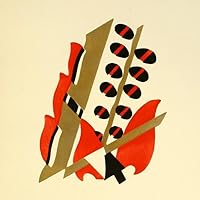
Long available and celebrated in German—Kafka himself championed the 1911 Rowohlt edition of Anekdoten—Anecdotes gathers the first extensive English-language collection of Heinrich von Kleist’s short fiction and feuilletonic digressions that appeared in Berliner Abendblätter, the newspaper for which he served as editor from 1810 to 1811. Writing under increasingly unfriendly social and political conditions, this is arguably Kleist at his funniest and most irreverent, not shying away from dirty jokes while nevertheless displaying the same knack for the stylish prose that Rilke called “beautiful and so blind and skillful”.
The dramatist, writer, lyricist, and publicist Heinrich von Kleist was born in Frankfurt an der Oder in 1777. Upon his father's early death in 1788 when he was ten, he was sent to the house of the preacher S. Cartel and attended the French Gymnasium. In 1792, Kleist entered the guard regiment in Potsdam and took part in the Rhein campaign against France in 1796. Kleist voluntarily resigned from army service in 1799 and until 1800 studied philosophy, physics, mathematics, and political science at Viadrina University in Frankfurt an der Oder. He went to Berlin early in the year 1800 and penned his drama "Die Familie Ghonorez". Kleist, who tended to irrationalism and was often tormented by a longing for death, then lit out restlessly through Germany, France, and Switzerland.
After several physical and nervous breakdowns, in which he even burned the manuscript of one of his dramas, Heinrich von Kleist reentered the Prussian army in 1804, working in Berlin and Königsberg. There he wrote "Amphitryon" and "Penthesilea."
After being discharged in 1807, Kleist was apprehended on suspicion of being a spy. After this he went to Dresden, where he edited the art journal "Phoebus" with Adam Müller and completed the comedy "The Broken Pitcher" ("Der zerbrochene Krug") and the folk play "Katchen von Heilbronn" ("Das Käthchen von Heilbronn").
Back in Berlin, the one time Rousseau devotee had become a bitter opponent of Napoleon. In 1811, he finished "Prinz Friedrich von Homburg." Finding himself again in financial and personal difficulties, Heinrich von Kleist, together with his lover, the terminally ill Henriette Vogel, committed suicide near the Wannsee in Berlin in 1811.
More hits than misses. Read it with an eye out for its influence on Kafka more than an interest in Kleist himself (read his stories a few years ago). Can definitely see this one's influence on Kafka's stories titled Investigation or Report, or The Blue Octavo Notebooks. The shorter humorous bits (one early on about an alternative postal service involving a series of cannons, followed by a letter regarding this proposed postal service, but also a handful of consecutive "anecdotes" midway through including one involving a gallows operator, another involving the testing of a purported strong man's strength, and another about sirens/mermaids) inflated the pig bladder Franz mentions on the back cover, making this very worth my while and a welcome addition to any one's short stack of sweet small paperbacks.
This collection of short stories and anecdotes originally published in the pages of the Berliner Abendblätter were written between 1810 and 1811, over the year and one month that spanned the paper's first issue and the death by suicide of their author at the age of 34. Kleist was the editor and chief contributor to this publication that owes its reputation to the wit, satire and social commentary that comes through in these short—mostly very short—stories. As the first extensive collection of Kleist's short work in English translation this is an opportunity to read the stories that delighted and inspired Franz Kafka and Robert Walser. A solid and entertaining read. Longer review here: https://roughghosts.com/2021/11/25/ru...
I haven’t finished it yet (am awful at finishing books tbh) but love the typography & the tone of the translation. There’s no doubt that Kleist is one of the great writers of the 19C & these short pieces are perhaps the most accessible volume for getting a taste of his humor & his world. “Michael Kohlhaas” may be Kleist’s masterpiece but this is the book that you dip into for a laugh or a strange reflection. Very unpretentious & important touchstone of the era of German romanticism. I think I saw on social media that the translator is working on something by Jean Paul for the same publisher. Let’s hope.
A brilliant assembly of short pieces by von Kleist, some of which have a very Flann O'Brien feeling. For people who enjoy miscellany and digressive stuff.
Spencer's sometimes wry footnotes deftly provide the needed historical context. Don't skip the introduction - this is an unusual collection and you'll want to understand its whences and whys.
"May you never lack for the powder of noble health, nor the cannonballs of everlasting pleasure, neither the bombs of satisfaction, nor the carcass of composure, nor the fuse of a long life... May your Excellency pass, without loss or damage, through every mountainous defile on the arduous march of this life, neither lacking for the cavalry of desire nor the infantry of hope, the mounted artillery of your plans outfitted with all the provender and munitions necessary for happy success. Incidentally, may I never lack for a rifle, loaded with hot rounds of gratitude, to fire salvos of your most gracious goodwill and and charge with a whole platoon's worth of appreciation..."
Since Goodreads won't recognize me as the author of this translation, I suppose I'll review my own book, for lack of anything else to do. I think I did a good job.
This entire review has been hidden because of spoilers.