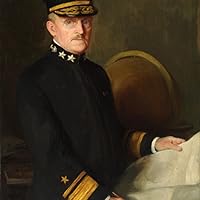
A myth-puncturing indictment of the actions of General Douglas MacArthur in Korea both explores how the brilliant but irresponsible general almost caused World War III before losing from his position and indelibly describes the soldiers who paid for political mistakes. Reprint. 30,000 first printing.
Weintraub was born in Philadelphia, Pennsylvania, on April 17, 1929. He was the eldest child of Benjamin and Ray Segal Weintraub. He attended South Philadelphia High School, and then he attended West Chester State Teachers College (now West Chester University of Pennsylvania) where he received his B.S. in education in 1949. He continued his education at Temple University where he received his master's degree in English “in absentia,” as he was called to duty in the Korean War.
He received a commission as Army Second Lieutenant, and served with the Eighth Army in Korea receiving a Bronze Star.
After the War, he enrolled at Pennsylvania State University in September 1953; his doctoral dissertation “Bernard Shaw, Novelist” was accepted on May 6, 1956.
Except for visiting appointments, he remained at Penn State for all of his career, finally attaining the rank of Evan Pugh Professor of Arts and Humanities, with emeritus status on retirement in 2000. From 1970 to 1990 he was also Director of Penn State’s Institute for the Arts and Humanistic Studies
Some of MacArthur’s worst traits remind me of Donald Trump. Although he was not a blithering idiot like the President, and many competent people thought highly of him, he had curious failings that would seem almost comical in different circumstances. To call him egotistical would be an understatement; he was megalomaniacal, recognizing no peers and certainly no superiors, he believed that all orders were advisory only, and seemed to think himself almost infallible, one of history’s indispensable men. He was quick to take credit for the successes of his subordinates, and just as quick to blame them for his own failures. Those subordinates, in any case, were not selected for their abilities, but for their personal loyalty to him. He also lied, aggressively and even when it was obvious that he was lying. For instance, when he met with President Truman on Wake Island, he repeatedly assured the President that he did not believe the Chinese would get involved. These statements was recorded by three different people, but when the Chinese attacked a month later, MacArthur and his surrogates repeatedly and vociferously denied that he had ever said anything of the sort. Very Trumpian.
If you already had a low opinion of him, this book will not change your mind. It is hard to think of another military leader whose reputation has fallen so far so fast. He went from being considered a great general by many, perhaps the greatest of them all (an opinion he would have shared) to a ridiculous puffed up failure, a bizarre conflation of hubris and mediocrity. William Manchester titled his biography American Caesar, but Max Hastings, in Retribution: The Battle for Japan 1944-45, painted a scorching portrait of him squandering opportunities and wasting lives in World War II. He performed no better in Korea.
He was the ruler of Japan (the emperor himself paid twice annual visits as a show of respect), but he allowed the military forces under his command to wither into a constabulary force, and a poor one at that. The great military machine of the Second World War had fallen far in five years, and the soldiers in the four under strength divisions he had were unfit for anything but garrison duty; the fighting in Korea would show that many did not know how to clean a rifle, pitch a tent, or heat their own field rations, but they were expert bar crawlers and whoremongers. Admittedly, the military’s focus was on Europe, where the possibility of a Soviet invasion seemed entirely plausible, leading to the Pacific theater being under strength and under equipped. Still, MacArthur, living like a king and surrounded by a fawning staff, showed no interest in the military efficiency of the troops under him.
Stalin was reluctant to give Kim Il Sung approval for the invasion, fearing that war could spread, and the Soviet Union desperately needed to rebuild its economy. Kim finally convinced him that this would be an easy conquest, needing only a few weeks to defeat South Korea’s weak forces led by the unpopular strongman Syngman Rhee. Both sides had been engaging in raids across the 38th parallel, daring the other to respond. The Americans believed that Rhee was recklessly trying to provoke a war, so they withheld tanks, artillery, and anti-tank weapons, but he believed, correctly, that no matter what he did he could count on the United States for support.
He badly overestimated his army’s abilities versus those of the North. Kim had soldiers with experience fighting the Japanese, and across the border Mao had two entire veteran divisions made up of Koreans who had spent years fighting Chiang Kaishek and the Nationalists. The Russians also supplied plenty of artillery and tanks, as well as advisors.
The North Korean attack on 25 June 1950 surprised everyone. The badly trained and badly led South Korean troops abandoned their weapons and fled at first contact. It was a sorry performance they were to repeat throughout the war. It reached the point where the Americans didn’t want to rearm them anymore because they kept throwing everything away at first sight of the enemy.
The first American troops to arrive were unprepared, and their performance was as bad as their South Korean counterparts. The North Koreans would attack their front to pin them down, then swing around to the flank, and the American lines would break again and again. It wasn’t even a retreat, it was a rout, a panicked, pell-mell race to the rear. Between the Americans and the South Koreans, so many weapons and vehicles, and so much equipment were abandoned that the North Koreans started factoring them into their logistics plans to compensate for their lengthening supply lines. Within a few weeks the American and South Korean forces were barely holding on to a small perimeter around Pusan, having lost the rest of the country. To stave off complete collapse MacArthur threw in hastily assembled garrison troops piecemeal, who were quickly destroyed and the survivors sent fleeing to the rear.
Inchon saved the day, and it was MacArthur’s finest hour. Far behind enemy lines, with a huge range of tides that limited when troops could land and when they could be resupplied, it was an enormous risk, and all of his advisors recommended against it. He overrode their objections and pressed forward, and was saved by the the Navy and Marines, who retained enough experience in amphibious assaults from World War II that they were able to force a landing and hold their ground. Had the assault faced opponents like the Japanese or German troops of World War II, it would probably have failed spectacularly, but the North Koreans, caught off guard, had only a small number of second rate units in the area, and were brushed aside. Even so, Inchon was close enough to North Korea that they were able to rush in reinforcements from the other side of the 38th parallel, making the recapture of Seoul a slow and bloody affair, fighting house to house.
After that, the siege of Pusan was lifted, as the Americans pushed to establish a line running across the country and the North Korean troops rushed up the peninsula to avoid being caught in the trap. It was a great success but was followed up poorly. The American forces were now nominally under the UN, and supplemented with troops from a dozen allied countries. MacArthur retained overall command of the war effort, but split the forces in Korea into two groups, the 8th Army, which was tasked to move up the west coast of North Korea, capturing Pyongyang and moving to the border with China, and X Corps, moving up the east coast. The center of the country was a spine of steep mountain ridges inaccessible to vehicle traffic (but not, as it would turn out, to Chinese soldiers moving by foot).
MacArthur made a terrible blunder with his next move. His success at Inchon made him eager to repeat it, so he planned another amphibious invasion, to take place on the other side of the Korean peninsula and far behind enemy lines. However, if he had simply ordered his troops to move there by land, he could have cut off the retreating enemy forces and reached the border with Manchuria before the Russians and Chinese had decided to intervene. Instead, he ordered the Marines to leave Inchon, reorganize and resupply, and then move to Wonsan, where they found the harbor had been expertly mined by Russian advisors. It took so long to sweep the channel that not only did the North Korean army escape, but even the South Korean forces had already arrived. Not to be denied, MacArthur then decided to land the Marines at a port even farther north, but before he could redirect them the South Koreans were there too.
And then, disaster struck. After repeatedly dismissing the possibility of Chinese troops entering Korea, they attacked in force. MacArthur’s intelligence reports said that there would be no more than 25,000 Chinese in the country, when there were 300,000, with more arriving all the time. In addition, the overextended UN troops on both coasts were now fighting the weather as much as the enemy, with temperatures plunging to twenty degrees below zero, disabling weapons and vehicles, and sapping the strength of the men.
The Marines managed a magnificent but costly fighting retreat from the Chosin reservoir on the east coast, but in the west it was a sorry repeat of the first days of the war. American and South Korean troops collapsed, abandoned their weapons, equipment, and wounded, and fled in panic. Reconnaissance photos indicated that 6000 vehicles and a thousand tanks and weapons carriers were abandoned. Tactically, a defensible perimeter could have been established north of Pyongyang and stretched across the country, which would have altered the ultimate outcome of the war, but the troops were in full flight, and could not be stopped until their panic had run its course. The Army’s carefully chosen words to describe the disaster sound almost comical: troops running away from the enemy were “breaking off contact;” retreat was “redeployment;” and full scale panicked retreat was a “deep withdrawal.” MacArthur tried to spin the disaster as a brilliant strategy to lure the Chinese and North Koreans south in order to overextend their supply lines.
Ultimately a line was established well south of Seoul, although MacArthur had gone from predicting imminent victory to believing that nothing would save the country, and was making plans for a Dunkirk-style evacuation of the survivors.
At around that time General Walker, in command of the troops along the west coast, died in a car accident, and was replaced by Matthew Ridgway, who stopped the retreats, reestablished a line, and started planning offensives that pushed the now overextended Chinese and North Koreans back north of the 38th Parallel. By the time Seoul was recaptured again, it had changed hands four times in nine months.
MacArthur’s behavior became increasingly deplorable. He repeatedly disobeyed orders from the President to stay out of political matters, and issued press releases designed to sabotage diplomatic efforts to end the fighting. He actively courted a larger war, trying to arrange for the Nationalist forces on Taiwan to invade south China. “He also sent the Pentagon a list of what he described as ‘retardation targets’ for which he wanted thirty-four atomic bombs. Four were...to drop on Chinese troop masses and four were for ‘critical concentrations of enemy air power.’ Since no such airfields existed in Korea, the bombs had to be meant for Manchuria.” (p. 263) A later study would come to the conclusion that “thirty-four Bombs would be inadequate to impede the estimated 120 Chinese divisions the Communists could put in the field, and that 360 would be needed to inflict 30% casualties.” (p.263) There was also a plan to use fifteen bombs to create a radioactive corridor across North Korea to impede movement.
He was actively courting dismissal, with an eye toward the Republican nomination for the upcoming 1952 election. Finally, Truman had enough, and MacArthur was formally relieved and ordered home. At that point he affected an air of aggrieved innocence, claiming “he had never disobeyed orders, and that his dismissal was part of a plot in Washington to weaken the American position in the Far East.” (p. 342) The strangest thing about this is that he probably believed it, because he was incapable of seeing things from anyone’s perspective but his own.
He arrived back in the United States to thunderous acclaim, and Truman was excoriated, with Republicans, including Richard Nixon, demanding his impeachment. It all started well for him, with a ticker tape parade, but when he got his chance to make his case at Congressional hearings, it became obvious that his version of events had little relation to the truth. Eisenhower got the Republican nomination, and won the election, leaving MacArthur to fade away, later releasing an embarrassing memoir inflating his achievements and deflecting blame for his failures. In the end, for all of his promise, he was a failure, a man of intelligence and capability doomed by pride and ambition.
This is another of those stories about wars that 'will be over by Christmas,' which seem to permeate history. 1861, 1914, 1944, and as this book illustrates--1950. From the debacle of the North Korean invasion below the 38th Parallel in June of 1950, UN forces rallied to take Inchon and push on to the Yalu. Most of the troops believed they were destined to be home by Christmas, but they weren't.
It is also the story of ego and hubris, when a military commander believed his way was the right way despite the wishes of the government back home. Many people were afraid of Douglas MacArthur. His position and reputation seemed unassailable, until the spring of 1951 when he began to push at the door of what he could get away with. From his position as 'Viceroy' in Japan he espoused total victory, won a monumental victory at Inchon, only to be proven wrong that Red Cina would not enter the war.
This book does a fine job describing the period of MacArthur's triumph and his abysmal failures. He refused to lose, but the U.S. was more than willing not to win. Korea is still in the news today. The ghosts of 1950-53 are still controversial, even if it is frequently known as the 'Forgotten War.'
The Korean War is sometimes referred to as the "forgotten war" of the 20th Century. The casualty rate was high and 21 countries of the United Nations fought for the South, yet it inevitably gets passed by in the lapse of memory. This book concentrates on the main man in that war's spotlight, Douglas MacArthur, showing it to be both his high point (Inchon) and his low point (forced retirement).
"This is the damndest war. We can't win, we can't lose, and we can't quit."
After WWII finished, Korea, which had been ruled by the Japanese since 1910, was divided into North (supported by the Soviet Union) and South (supported by the Americans). In June of 1950, the North put into action the plans hatched by Stalin and Mao and invaded the South. This all caught the Americans by surprise and this is where Mr. MacArthur hits the spotlight. Despite the fact that he was unprepared for the WWII Clark Field debacle and the fact that he had a tendency to disregard any higher orders, Doug Mac was the top dog in the Pacific after Japan surrendered. He was accepted as the reigning shogun in post-war Japan, where he was successful in turning that nation into a pillar of capitalism and exhibiting the old Roman attribute of accepting yesterday's enemies as today's allies (the Korean War made Japan, as the Japanese economy zoomed with the need for bases and manufacturing and back-end service administration).
"If MacArthur had gone on the stage, you would never have heard of John Barrymore."
Showing his previous tendencies of unpreparedness, Big Mac was not prepared for the North Korean transgression. American troops were ill-trained and the very best lived the cushy life in Tokyo, working desk jobs. The South Korean troops spent more time running than fighting and for a while it appeared the North Koreans would simply march to the southern shores of Korea to threaten Japan. American weapons were still WWII leftovers. There weren't enough fighting planes. And the food...
A check of stockpiled K rations of World War II vintage showed that the ham-and-egg component had turned black...
It all looked bleak. Then, as he had in the past, MacArthur came up with one of his off-the-mark ideas and decided to do a sea invasion that would land at Inchon, right inside North Korean territory. It was so audacious, it worked. The tide turned, the South Koreans turned arrogant, and the allied forces turned the tables and started marching right through North Korean land.
And this is why it is referred to as "MacArthur's War". Instead of stopping, setting the new boundaries, installing a non-corrupt South Korean government, and, oh I don't know, obeying his own President (Truman), Big Mac just kept marching. Sure of victory. But China, which we now know, had collaborated with the Soviets from the beginning to support North Korean aggression, decided the UN troops threatened their own borders. Mao now sent hundreds of thousands of his troops into Korea, since Stalin wouldn't. The Korean War turned nasty.
The latter part of the book deals with turning tides of war, as the politicians step in to prevent WWIII. MacArthur would eventually lose his godhood and be recalled, while the UN found a stronger leader in Ridgeway, who stopped what seemed to be an inevitable loss and ended up with more territory for the South Koreans.
"I do not want to have him get me into a war with mainland China." - President Truman
I found this to be a fascinating book on a fascinating topic. It's not necessarily a tell-all on the Korean War, for which there are more specific books, but it is a telling bio on Doug MacArthur and how even he could not bypass the American President. The author shows that Mac was unprepared and ran the war from his residence in Japan, where he was revered. The fact of the matter is that MacArthur never spent a single night in Korea. He ran the Korean War as though he was running a large corporation where the CEO rarely mingles with his employees.
Weintraub has done a buttload of research here with the results of not only showing the full range brilliance and limitations of MacArthur, but also showing the nutbucket Mao, who didn't think twice about sending his people into war, because after all, China had "so many". Stalin played everyone like a puppet, letting China take the hits, while Truman finally put his foot down and called the Emperor General home, where MacArthur eventually faded away.
Korea was a horrible war on all sides. The North Koreans killed prisoners and villagers and the South Koreans reciprocated. Mao sent his young men into freezing conditions wearing cotton uniforms and disintegrating shoewear, while Stalin supplied the MIGs and advisors while forcing China to take on the burden of the fighting. The UN was clueless, as Turkish soldiers were killed fighting in a country which meant nothing to them, while British troops squirmed under the clumsy Yanks.
And Douglas MacArthur learned a harsh lesson. All glory is fleeting.
A detailed, readable and well-documented if not always well-written history of MacArthur’s tenure as commander in Korea, although it can be a little dull at times and is never really put into the proper strategic context. Weintraub does a fine job portraying MacArthur’s personality and character, and showing how the interplay between MacArthur and his superiors affected the conduct and outcome of the war.
Weintraub’s MacArthur sometimes comes off as a genius but always as a self-aggrandizing egotist. MacArthur was ill-served by his staff, who were unswervingly loyal to him but played a large part in reinforcing MacArthur’s view of things, notably Charles Willoughby, who ignored the CIA’s warnings about possible Chinese intervention and threatened to close down any CIA intelligence collection efforts that were independent from him.
Well-researched, engaging and interesting, if a bit dry, and Weintraub has a tendency to meander to topics that don’t really seem relevant. And it would have been nice to see Truman’s side of the Truman-MacArthur controversy.
Too mighty, too powerful, for too long. Lots of too's there, but I believe that is what happened to MacArthur regarding his stellar career and his downward spiral to dismissal. We do not have MacArthur career paths anymore. He was Chief Of Staff of the Army. He then took over command of the Filipino forces and was de facto head of the Filipino Army.
The Pacific War 1941: War broke out too soon for the unready joint American/Filipino forces. A disastrous retreat and surrender. A flight to Australia. The reconquest of the Pacific. The United States created two prongs for the Pacific to handle Army and Navy rivalry, one for MacArthur and one for Nimitz. Five star rank followed.
At the end of the war, he was essentially viceroy to Japan. He lead the reconstruction efforts and established himself as the head of a state, not military governor, but the leader of a country. In essence we was a head of a conquered nation answering to the President of the United States.
Now comes Korea. The American occupation troops are no match for the North Korea forces. Soft occupation duty and dereliction regarding military readiness has left weak and unprepared forces to match the Korean veterans who had years of combat experience from fighting Chiang's Nationalist forces. The UN forces are driven to Pusan...another repeat of Bataan one may say. Except this time, MacArthur has a base of resupply next door and a Fleet unmatched by any the communist North can field and overwhelming air superiority. Still, the UN forces struggle to learn afresh the combat lessons of WWII forgotten while pursuing the pleasures of occupation duty. MacArthur with his island hopping brilliance creates Inchon and cuts of the NKPA and recaptures Seoul. A victory of enormous magnitude and brilliance. But MacArthur wants more. He now wants all of Korea and he courts war with the entire communist world. Total victory and reunification of the Korean peninsula are now the objectives. A general used to the ultimate victory of WWII would want no less. MacArthur creates another separate force in Korea under his Chief Of Staff, general Almond. Now there are two separate UN armies pushing north, answerable and coordinated by MacArthur in Tokyo. A mistake of enormous magnitude. The UN forces race to the Yalu. Slumbering China is not so sleepy. Slowly Chinese army groups move across the Yalu into North Korea moving only by night and aided by a bitter winter. Rumors of different soldiers being found and an unknown language on the radios filters back through the American Army to the Dai Ichi. The UN forces still move north with the distances separating between armies and divisions. Its almost as if they were invited. Chinese forces then strike and rout the overconfident UN forces. Chosin, Unsan, Kunari, and hundreds of other actions result in the UN forces being defeated and forced back. Pyongyang falls. Seoul is recaptured. MacArthur's invincibility is shattered.
That is essentially the stage that as the final act is set. MacArthur still wants his overall war with the communist world. Truman and the UN want a localized war only. How does a man of MacArthur's stature deal with a President thousands of miles away. A President that will not allow MacArthur's total war. Atomic bombs are also on the table as MacArthur proposes striking mainland China and bringing Taiwanese Nationalist Chinese soldiers back into the battle. The UN mandates only the War in Korea. Also, this is the beginning of the Red Scare in the US where communists are seen lurking among the American population. A President cannot appear weak on communism either. Whispers of MacArthur as the upcoming presidential Republican nomination begin. MacArthur feeds the press as a tough candidate that can handle world communism. MacArthur begins to make his own political reality which markedly diverges from those of Truman. The general is cautioned and directed to follow the JCS and the President's lead. Yet those military members of the Joint Chiefs were junior officers when MacArthur was already a general. Imagine how someone feels answering to those that are his junior even though they are in a position of authority. George C. Marshall is the SecDef as well...a man that MacArthur sparred with during his time in WWII. A test is now set for America. Is the military under civilian control, or can a general defy orders, set his own policy, and make the American military organization play to his strategy. Truman passes the test and dismisses MacArthur, at a cost of his future presidential ambitions.
The Korean War is much more than the West fighting communism. It is a test of American military-civil relations. Every war is a test of the constitutionality of the American system. Civilians control the military and ultimately fire senior military leaders who undermine our civilian leadership. Korea was the first modern test of this nature. I find the Korean War fascinating in this respect. Imagine what Korea would be today had MacArthur not driven recklessly towards the Yalu. Maybe a buffer zone only would separate China and Korea with the rest of the Korean nation being united. The DMZ is one of the most fortified areas on the planet. North Korea is a military dictatorship with a growing nuclear arsenal. What could have been different if MacArthur had not chosen his battle with Truman?
Highly detailed, perhaps so much so that I got so bored with the incessant documenting of each and every detail, note, letter, and troop movement.
Okay, we know MacArthur was part genius, part tremendous Prima Donna, part surrounded by nothing but "yes-men", and also had massive political aspriations after the war. But, the author really doesn't mask his distaste for MacArthur's personality at all. Maybe that is a good thing.
If you are looking for a highly researched and documented history of the beginning of the Korean War until spring 1951, this is IT. If you are looking for a basic better understanding, then maybe you need to look in another direction.
Great information and detail regarding MacArthur and the complicated Korean War, but I found it hard to finish. A lot of detail about correspondence (or lack thereof) between the military leaders that was obviously important, but just not that interesting to read about.
Over Sixty-five years from today a war happened on the scale of no other of its time. It was not as significant and memorable as the wars that occurred around it but has major effects on what we see as the american foreign policy that has defined the 1900’s and the early 2000’s. One notable man stepped to the duty of overseeing the operations in this war in korea and his name was Douglas MacArthur. In the span of two yeats he went form one of the most respected individuals in american history to an insane war mongering general that stood against the values that the nation that appointed him held. This book describes the story of one of the most sour breakups with an American hero named Douglas MacArthur. “MacArthur’s War: Korea and the undoing of an American hero” is the story of the 5 star general Douglas MacArthur and his oversight of the korean war and the united nations forces in korea. It tells the history of the conflict and the events that led to the undoing of an important american hero until his relieved of command of the United Nations forces in korea. The book shows the military actions and the highs and subsequent lows of MacArthur’s administration of operations. The book also shows the disconnect between Douglas MacArthur and the white house and Harry Truman and the ideas behind the operations of the korean war. The book shows in great detail Douglas MacArthur’s incompetence of reliable planning to his very successful invasion to capture lost south korean territory to reestablish the 38th parallel and his invasion of north korea against Truman's order to capture the 38th parallel. The book ends with the final events that got Douglas MacArthur fired from his position as the leader of the UN forces and his return back to the united states and his life after the korean war up to his death. The book is mostly set in the year of 1951 and doesn't have a real clear setting but varies its location and time but does a well enough job to summarize the events it's portraying in the book. The author does a really good job of showing the setting in brief details that are filled with context and the current events of the time in a non biased way making it feel like you are actually watching Douglas MacArthur carrying out these actions in the moment. The book is grounded on Douglas MacArthur more as an individual then his legacy and his previous qualifications to make him seem as a reliable individual to lead the operations in korea. The book makes sure you see Douglas MacArthur like the average american would during the time by telling of some of his accounts from World war 2 and to fluff his legendary reputation to make you see his actions like they are the best possible ones and to have the same concern and distrust when his plans started to fall back on him. It's hard to determine whether Douglas MacArthur is meant to be portrayed as a hero in the story or not as, like the korean war, shifts back and forth depending on the events of the war’s progression. He is seen as a legendary hero at the beginning and around chapter 5 is seen as incompetent. Then in chapter 8 during the indochen landings he is seen as a tactical genius but by chapter 11 is seen as a rebellious and overconfident warmonger during the invasion of the north and finally is portrayed as insane during the chinese pushback and his nuclear option to stop the chinese. Although throughout the turns that the novel takes Douglas MacArthur is relatable in the sense that like many of life's decisions Douglas was a fish out of water and was required to hold his reputation of an american hero and show results and win the war to make the people of america care. The theme of the book can be identified has change as the book sees many of the american values of the american dream and other societal changes effected by the korean war. The book tries to teach the lesson that it is important to always have opposition to challenge your opinion and have people willing to say no to a suggestion you give as it can help you revise a plan and make it more effective or inclusive whatever the situation. The book teaches the reader that it is important to have facts and follow ideas not based on what is easy and shows that it is important to take risks and push the boundaries in order to find success but most importantly to know when to walk away from something if it seems you are wrong or if you are being irrational. The book can teach a person that it is important to stay open to others opinions and that everyone, no matter how good they think their plan is, to have a metaphorical anchor whether that be a friend, spouse, or family member. This book will help the reader also understand the origins of current conflicts between North korea and the United States and help that person make educated decisions on what they want to believe and support. The line that sticks with me the most is a line said during Douglas MacArthur’s farewell speech after being fired by the United nations and his relieved of command in korea is when he said the line “Old soldiers never die; they just fade away” as it represents what really happened to Douglas as he became an obscure member of american history outside of the context of world war 2 and his post pacific campaign got buried under the other events of the cold war. This also is a good representation of the korean war because it has been forgotten by the public because there was no “Big victory for america” and no “Parade for the Veterans” like world war 2 and then was obscured even further by the 1960’s and the vietnam war. “MacArthur’s War: Korea and the undoing of an American Hero” is a excellent telling of one of the main faces of the korean war but is definitely a hard book to pick up and just read and may not be the best book for a casual reader. This book is more made for the enthusiasts of the cold war and for people who enjoy reading books about individuals in US history. This book seemed interesting to me because of the larger than life character that was Douglas MacArthur and the stories of valor and success of his days during the second world war. Another thing that made me wonder was after reading the book “We were soldiers once… and young” and subsequent research on 5 star General William Westmoreland and the intrigue of how suddenly a american hero suddenly vanishes from the 20 years between these two wars. This book does a amazing job of describing Douglas MacArthur’s decline in popularity and desperation for a victory that ultimately led to his dismissal from his position. One last inspiration for me to read the book was the more dark theme more hidden in the text being the ideas of the duality of man and the “normalization of atomic weaponry” credited to Douglas MacArthur and how his decisions during the war shaped the roots of the cold war for years to come. The book shows the unsettling idea that Douglas MacArthur’s idea to stop the chinese support of north korea by dropping atomic bombs along the borders of the two countries making it into a atomic wasteland would have, in theory, made the use of tactical nuclear arms a normal part of warfare. This book is morde geared to adults than teens as it really makes the reader consider their values and the fact that it needs a lot of backstory to understand the causes of the korean war and what made the war play out in the way it did. This book is different than most Korean war books as they almost always focus on the turmoil of the korean leadership and not what was happening with the United states politics instead. This book will also engage your emotions with unease as how the operations used in the war echo in later US foreign policy and actions in later years even to today. Stanley Weintraub’s writing style is unique on the topic in the sense that it takes a very unbiased stance to the history and the actions of Douglas MacArthur during the war in order to let the reader think what they want to think of him. Stanley also goes into depth describing the recorded meetings between Douglas MacArthur and his superiors and the brainstorming of plans for future operations with the sense of his style of negotiations brought to the table. Stanley's ways of writing are engaging only if you are interested in the topic as it seems it may be boring for readers who are not interested in the early events of the cold war in which the reader will inevitably will get very bored as it is very daft and dried of content at the beginning. Although the rough start stanley achieves his goals of the article to depict the events that led to the deterioration of Douglas MacArthur’s image over the course of the Korean war in very great detail while being very interesting for the reader and keeps them engaged with enough content to keep the individual reading and still guessing. If there is one big fault to the book it is that it could give more of his backstory of the second world war to define his qualifications in a crystal clear light. Often the book relies on the reader to know background information of Douglas MacArthur himself and will not work with readers who have not heard of him before reading. Compared to most books about the Korean war this is a nice breath of fresh air in a genre, although not big, is often filled with the same cookie cutter story with little deviation. A;though there are no stories told in the book that are fake there are ideas that are made by Douglas MacArthur that seem incompetent and although you think it would make the book feel less enjoyable it does the opposite which makes you step back and think for a while about what the book is describing and how these events could have and have impacted our country as a whole when it comes to foreign policy. Overall my favorite part of the book is without a doubt Douglas MacArthur’s idea on creating the Atomic wasteland on the border of north korea and china because it is great food for thought and makes you really think of the consequences of the actions if they were really carried out in the war. It gives the book an almost apocalyptic vibe and shows the disconnect between Harry Truman and Douglas MacArthur in no better way and finally shows the shift of the opinion of the United nations and the White house to remove his command from korea. If i could do one thing different from the author it would be that I would make it have less of a requirement to know the background of Douglas MacArthur himself and elaborate on the philippines campaign and his brutal dn outstanding defence of the islands and show his actions during the Great war in his teenhood. MacArthur’s War: Korea and the undoing of an American hero is a decent book that deserves to get more exposure but is not without its flaws that may make it a hard read for new people to the genre it's from. This is a book for any individual who enjoys US history or cold war history or for people who may want more contact with the recent boiling tensions between north korea and the white house today to get a further understanding on a war as crazy as this one. Although I enjoyed it i can't say the same for people who may not want to read it and there were times where i just simply got bored of the book and had to set ito down for a bit before I could come back to it. Overall if i had to give it a score it would be 3 stars out of 5 in the sense that it is not bad but you don't need to read it right now but it definitely is not a book you should pass up and is worth a read.
“Old soldiers never die; they just fade away” - Douglas MacArthur 1951
I feel like I bit off more than I could chew with this one. I don't typically read about Korea, as I had said in the review of Bevin Alexander's book on MacArthur in Korea that I finished recently, it was due to this being around my grandfather's birthday and his having served in Korea.
As such, I felt I was lost at sea without a paddle. Many of the personalities and geographic locations were unfamiliar to me. This part of the world is generally outside of my wheelhouse, I am much more comfortable in European settings.
Much to my frustration, then, this took an enormously long time to finish. I had to jot down notes and look up names and places constantly. It felt like I would never finish this book.
So to start off, this book is very dense. Though it only covers the Korean War up to MacArthur's dismissal, it is excessively long.
There are many similarities and similar conclusions between Weintraub and Alexander, and in that sense I am grateful that I read this book because some of my suspicions that I mentioned in the review for Alexander's book were justified in this one.
For example, whereas Alexander claimed that the Chinese had withdrawn after their initial contact in order to give the United States the chance to agree to a ceasefire, Weintraub says instead that this was Mao and Peng's strategy to draw MacArthur deeper into China so that his forces could be encircled.
My suspicions about the supposed obviousness of Chinese intervention were also largely vindicated. Weintraub criticizes MacArthur for making a limited personal reconnaissance of the Yalu, but aerial photographs revealed nothing even from more meticulous sources.
The most fascinating part of this book revolves around this question. The Chinese using mostly human locomotion, were able to disguise the fact that they had crossed the Yalu in huge numbers. They anticipated maintaining their offensive momentum by seizing American stocks.
This is deeply intriguing for me because I had read a work on military theory by Waldemar Erfurth regarding strategic surprise. Erfurth concluded that surprise in modern war was impossible in the sense of concealing your armies. He thought it could not be done. Therefore the real trick was misdirection. If you could not hide your forces from the enemy, then you must deceive him as to the point of attack.
This principle was applied to great effect in WWII and after. But Peng's offensive proves that, in certain circumstances, you *CAN* conceal an army, and achieve surprise by appearing invisible.
Interestingly enough, Ridgway adopted some of these tactics in one of his offensives described by Weintraub. Taking a page of the Chinese playbook, Ridgway had supplies and weapons moved by men rather than vehicles, and he surprised the Chinese in turn.
This book is full of endless interviews and personal anecdotes and vignettes. We learn all about the courageous female war correspondent Maggie Higgins. We learn about the legendary Chesty Puller. And of course, all about MacArthur and his entourage. We learn about turkeys flown in for Thanksgiving, 1950, and the bitter cold suffered by the GIs.
We learn that, contrary to Alexander, Mao did want to drive the Americans from Korea. We learn that Peng resisted a major advance south of the 38th Parallel because he believed he would fall into the same trap MacArthur had in his advance to the Yalu, with the same results. Peng specifically said that he refused to be a MacArthur.
Weintraub seems to agree with my suspicions that MacArthur's gloomy reports to the Pentagon about the inability to hold Korea were more of an attempt to get permission to expand the war to China as he desired. The Joint Chiefs briefly considered this, and interestingly enough so did Ridgway and his possible replacement James van Fleet. Even Mark Clark agreed with MacArthur's position, which was, perhaps, less insane than it appears to us today.
MacArthur even received curious support from Bernard Montgomery, who argued he was never given very clear or satisfactory orders. Montgomery is himself a controversial soldier, so make of that what you will.
Unlike Alexander, Weintraub touches upon the nuclear issue and comes to the surprising conclusion that the Pentagon was more eager to use nukes than MacArthur. MacArthur, it would seem, desired to expand the war against China using conventional means more than nukes.
He is quoted as having regretted not using nuclear weapons to create a radiation belt south of the Yalu, but Weintraub points out that this was not his idea and he probably lifted it from the original source. He possibly did not fully understand it.
Weintraub seems often hostile to MacArthur. Mocking his theatrics, such as his shady attempts to take credit for Ridgway's offensives. There is also an episode where MacArthur sent a curt message reminding Ridgway who was theater commander, and it is clear that Weintraub considers this message to have been unfair.
So we are once again in some difficulty in getting the measure of MacArthur as a commander. Weintraub concedes that Inchon was inspired, but otherwise seems quick to detract from MacArthur's generalship, even quoting the Chinese military theorist Sun Pin to highlight MacArthur's seemingly amateurish mistakes.
Some more interesting sidelights include Operation Turncoat, and the seemingly deliberate surrenders of a number of high-ranking Chinese or North Koreans in order to mobilize communist POWs behind the lines.
Strangely, the actual Truman-MacArthur controversy is given only short-shrift at the end. While Weintraub states that MacArthur was induced to hurry back to the States, he doesn't even mention MacArthur's famous farewell address to Congress. The story just ends with MacArthur's slide into obscurity.
I felt that, sadly, a lot of the information about the movements on the ground and the military decisions made went over my head. I am simply not familiar enough with this war or this part of the world to really immerse myself in this book. For that reason it was a long painful read.
I am glad I finished it, and for Korean War enthusiasts there is endless food for thought to chew on, but I am eager to get away from this subject and towards ones that I am more comfortable with.
I feel that I am unable to make any concrete conclusions about MacArthur's generalship in this war, whether he was wise or foolish, whether the Korean War itself was even justified. I should have approached this book after building a more solid base on which to engage this subject.
I give this one 4.5 stars (out of 5). It was well-researched, easy listening, and I learned a lot. I guess all I previously knew about the Korean war came from books I'd read from the GIs' perspectives and some documentaries based on 1950's newsreels (which were mostly uninformed propaganda). This gave a much broader view of the conflict from the view of the generals.
Korea was a fiasco from start to finish. MacArthur's hubris as America's greatest general was quite costly. His poor decisions probably cost us the war while his political statements kept the nation fiercely behind him, calling for an impeachment of the President that fired him. Most people probably remember the firing as being because of his threats to drop A-bombs on mainland China, but that would be inaccurate. The Chairman of the Joint Chiefs concluded in the end that he should have been fired years earlier for incompetence and insubordination. But, at the time, MacArthur was a living legend, "God among us," blasphemed many Congressmen.
There are perhaps several parallels to the Korean effort and the wars in Iraq and Afghanistan, but Korea had the potential to be a flashpoint for World War III. Great book, great read.
In addition to painting a vivid portrait of MacArthur, still in his role as Supreme Commander for the Allied Powers, serving as the first ever Commander-in-Chief of the United Nations Command (UNCOM), conducting the war from the Dai-Ichi Seimei Building in Tokyo, the book details the setback and advances made by UNCOM forces, as well as good information on the movement of the Korean People's Army and, later, the Chinese People's Volunteer Army. Weintraub also informs the reader of the goings-on in Washington, Beijing, and Moscow.
Book does a fine job documenting the rare instances of valor and the colossal errors in judgement made by MacArthur, his staff, commanding generals of the US Army, the CIA, The Republic of Korea Army, and others during the first few months of the Korean War. This is an important contribution to the history the Korean War, and provides insight into the controversial, distinguished career of General Douglas MacArthur.