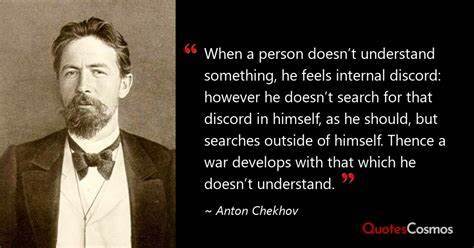
Dramas, such as The Seagull (1896, revised 1898), and including "A Dreary Story" (1889) of Russian writer Anton Pavlovich Chekhov, also Chekov, concern the inability of humans to communicate.
Born (Антон Павлович Чехов) in the small southern seaport of Taganrog, the son of a grocer. His grandfather, a serf, bought his own freedom and that of his three sons in 1841. He also taught to read. A cloth merchant fathered Yevgenia Morozova, his mother.
"When I think back on my childhood," Chekhov recalled, "it all seems quite gloomy to me." Tyranny of his father, religious fanaticism, and long nights in the store, open from five in the morning till midnight, shadowed his early years. He attended a school for Greek boys in Taganrog from 1867 to 1868 and then Taganrog grammar school. Bankruptcy of his father compelled the family to move to Moscow. At the age of 16 years in 1876, independent Chekhov for some time alone in his native town supported through private tutoring.
In 1879, Chekhov left grammar school and entered the university medical school at Moscow. In the school, he began to publish hundreds of short comics to support his mother, sisters and brothers. Nicholas Leikin published him at this period and owned Oskolki (splinters), the journal of Saint Petersburg. His subjected silly social situations, marital problems, and farcical encounters among husbands, wives, mistresses, and lust; even after his marriage, Chekhov, the shy author, knew not much of whims of young women.
Nenunzhaya pobeda, first novel of Chekhov, set in 1882 in Hungary, parodied the novels of the popular Mór Jókai. People also mocked ideological optimism of Jókai as a politician.
Chekhov graduated in 1884 and practiced medicine. He worked from 1885 in Peterburskaia gazeta.
In 1886, Chekhov met H.S. Suvorin, who invited him, a regular contributor, to work for Novoe vremya, the daily paper of Saint Petersburg. He gained a wide fame before 1886. He authored The Shooting Party, his second full-length novel, later translated into English. Agatha Christie used its characters and atmosphere in later her mystery novel The Murder of Roger Ackroyd. First book of Chekhov in 1886 succeeded, and he gradually committed full time. The refusal of the author to join the ranks of social critics arose the wrath of liberal and radical intelligentsia, who criticized him for dealing with serious social and moral questions but avoiding giving answers. Such leaders as Leo Tolstoy and Nikolai Leskov, however, defended him. "I'm not a liberal, or a conservative, or a gradualist, or a monk, or an indifferentist. I should like to be a free artist and that's all..." Chekhov said in 1888.
The failure of The Wood Demon, play in 1889, and problems with novel made Chekhov to withdraw from literature for a period. In 1890, he traveled across Siberia to Sakhalin, remote prison island. He conducted a detailed census of ten thousand convicts and settlers, condemned to live on that harsh island. Chekhov expected to use the results of his research for his doctoral dissertation. Hard conditions on the island probably also weakened his own physical condition. From this journey came his famous travel book.
Chekhov practiced medicine until 1892. During these years, Chechov developed his concept of the dispassionate, non-judgmental author. He outlined his program in a letter to his brother Aleksandr: "1. Absence of lengthy verbiage of political-social-economic nature; 2. total objectivity; 3. truthful descriptions of persons and objects; 4. extreme brevity; 5. audacity and originality; flee the stereotype; 6. compassion." Because he objected that the paper conducted against [a:Alfred Dreyfu
In the Cart is the first short story George Saunders presents in his wonderful book A Swim in a Pond in the Rain, where he takes the reader through a number of short stories written by Russian writers Chekhov, Tolstoy, Turgenev and Gogol (swoon).
In the Cart is a story about Marya Vasilyevna, a schoolteacher travelling in a cart to collect her salary. It seems on first pass, not much happens in this one, but there is plenty going on. Chekhov allows the reader to fill in the gaps, and learn more about Marya via what is not said.
I’ve read a couple of Chekhov’s short stories, before picking up this one and enjoyed them. I suppose, I didn’t know why. But now I understand the author provides the reader with an opportunity to fill in the gaps, he also was able to create a fascinating piece out of the very ordinary.
Aint that a good thing?
This story left me thinking, it left me a bit sad. Partly because of the ordinariness of life. The lives’ we all live where major parts of it appear to be empty – but are filled with thoughts and feelings where we dwell on the past, and think about our regrets and hopes.
Story #1, In The Cart Chekhov provides a great place for Saunders to start, because my usual experience with his stories is that I never quite know what he’s talking about but feel I understood them on some subconscious level. Saunders helped inch me a little towards conscious awareness.
In the cart is where the story takes place. Marya, a lonely and depressed young teacher, is taking a little journey.
“Hold on, Vasilyevna!” says old Semyon, her driver.
The reader gets her thoughts about the boredom of her life, the problems at her school, and the handsome rich man that rides alongside her for a time. A flash from the past brings those thoughts to a different focus.
Not having read any Chekov previously, I found this short short story to be a little gem, deftly catching the intensity of a moment in the life of a woman suddenly realizing how things might have otherwise been.
I read this one for my creative writing class on short stories as well, but with immediate comments by George Saunders from his book ‘A swim in a pond in the rain’ which made it so much more interesting, but also showed me how incredibly deeply layered one simple story is. This also made me afraid of how I am supposed to be able to analyse such stories though (help cause I don’t sound that smart).
I was Not able to finish the whole George Saunders audiobook where he goes from short story to short story bc I just lack the time, but I will say that this one short story genuinely made me cry while I was walking down the street like I really feel like it fully captures a part of my psyche and perhaps a part of many people’s psyches. That ending just makes me emotional whenever I remember it. I feel like I’ve read many things that try to be this story but fail. I myself have written a story much like this (esp the ending) and it makes me feel like I’ve failed. It’s just really unflinchingly complex and sublime.
tbh one of the easiest russian literature i’ve read so far. my first chekhov read and im impressed will definitely be reading more by him. i liked the writing style and the translation ( i read the one by robert chandler ) was very nice. i’ve read russian lit that was translated in a bad way and it almost made me hate the genre in general but this one was light and easy. and story was very short and so monotone that i wanted to make a short movie about it.
Pretty much the literary equivalent of fantasizing about your crush to avoid the fact your life is shit, melancholic doesn’t even begin to describe this one. With contents equaling whatever a day in the life of Marya Vasilveyna, a Russian schoolteacher regarded by the system (and pretty much the entirety of humanity) with mild disinterest, is like, eleven pages of clever prove add up to leave you with one burning question: Chekhov, my guy, who hurt you?
But don’t worry, not all is dark for our girl Marya. There’s light there too, and I believe she learns to push her boulder with a little less sadness. I have to.
Being imperfect in a lonely world or lonely in an imperfect world is the question in Marya inevitably thrusts herself into in this story. The semantics in which Chekhov puts on display here reduce other writers works to nothing short of poor imitation at best. Forever engrained in my mind will be the apartment in which Marya lived so beautifully for a time and the juxtaposition between the darkened reality around her
This entire review has been hidden because of spoilers.
Read in A Swim in a Pond in the Rain by George Saunders. I believe Saunders made me enjoy the story much more than I would have without his commentary, but the last few lines of the short story brought it back down to three stars.
Two words of note before starting in on my actual review/thoughts here. One, like so many others I am reading this because it was featured in George Saunders' college course-by-way-of-anthology A Swim in a Pond in the Rain, so this will be paired eventually with six other stories by Russian masters I'll be reading in the near future (stay tuned for that); if you want views on this story in relation to that, go look at other reviews. Two, for context of the evening I read this in, it came on the heels of me finishing Autumn de Wilde's adaptation of Jane Austen's Emma from a few years ago, and in the midst of reading the story, Edoardo Ponti's adaptation of Jean Cocteau's The Human Voice came on TCM (as part of their month-long celebration of Sophia Loren, the director's mother who starred in the film), and I paused my reading to watch that. As a result, I noticed a theme between the three works I indulged in tonight, so pardon my focusing on those as much (if not more) as the story at the heart of this.
In thinking about these stories, I found that there was a running trend between the protagonists of each work: all three women (Emma Woodhouse in Emma, La Signora in Voce Humana, and Marya Vasilyevna in this) were, ultimately, lonely, and it's this feeling that drives their actions in all of these works. Now, I'm sure some people that know Emma are already up in arms at me saying that she's lonely when, by her own admission, she's content with her place in life (at the beginning of the story at least), and I will fully admit I am not as familiar with the actual story as I am with de Wilde's film version, but this is my reading of it.
Emma Woodhouse lives alone (especially after her sister was married, a match that is implied to have been Emma's doing) with her hypochondriacal father in an estate that's far larger than what they need. The person she seems to relate most to (or at least jumps to the defense of) is a figure who, up until about the half-way point, is only ever referenced as not being able to attend events, on account of having an obligation to his sick mother. Everyone else is at arm's length, even her close childhood friend George Knightley, who she has a playfully antagonistic relationship with for the lion's share of the story. The point we first meet Emma at in the story, she's lost her other closest companion, her governess, to a marriage (that, once again, Emma takes credit for), once again leaving her and her father. And though she herself claims happiness in the current station of her life, and the tone is a light-hearted one, I can't help but look at these elements, and her future actions in the story (such as the immediate taking in of a local girl under her wing, and the subsequent puppetmastering and match-making she does, treating all the people around her more as if they were dolls than humans, and then constantly being shocked at how people don't react in the way she expects them to) as symptomatic of an inherent loneliness that comes with solitude, one that begins to resolve as the story goes on as she (through Knightley's not-so-gentle pushing-via-lecturing) starts to let other people's emotions affect her and find companionship in others, not just being around others. Hers is the happiest resolution to loneliness of the three.
La Signora (we never get a name, she's just referred to as "The Lady") in Voce Umana is someone, much like Marya in this story, who we only get a snapshot of her life, a mere moment in a larger tapestry. However, what that moment shows is a woman trapped in the past. The first thing we hear about in the short film is how she lost her previous love some years before (Cocteau's original play was written in the inter-war years, Ponti recontextualizes the story to be set in post-war Italy, also aging The Lady up more too) during the War, and how in her grief she found a new love, Il Signore (likewise, never named, only "The Man"), and she was happy again. But that was all 5 years before, and on this night, on these brief four hours we punch-in on, all of that has fallen apart. On the phone with her Signore, she feigns a busy day, fancy outfits, misplaced items, but we see the reality her lover cannot: she has done none of the things she pretends she has, she's been waiting by the phone for this very call, waiting for her one connection to life and happiness. And as the call goes on, the hours pass, we see it get broken, literally through interruptions in the phone call, and figuratively through tonal shifts in the conversation. We learn why Il Signore isn't here physically, only on the phone; we learn why La Signora lied; we learn why her loneliness is spiraling further and further into insalvageable territory. I'd go on, but I don't want to spoil the film. Go see it if you can, hopefully TCM will put it on WatchTCM for all of you out there that still have cable. And if not, it's also bundled in with the Criterion Collection's Blu-ray Issue of the Sofia Loren/Marcello Mastroianni film A Special Day. But to bring to some kind of point what I'm talking about here, I'll admit it's a tragic end.
Now, finally, we come to the story you all are reading this review for (again, I apologize; these reviews are my space to finally do the kind of analysis I love to do with my art, as nowhere else really allows me to share it, you all just have to come along on the ride with me). Marya Vasilyevna is a schoolteacher in a poor village in Russia. She once lived a decently opulent lifestyle in Moscow, we find out, but those days are long behind her. Now she's stuck caring for a school she otherwise wouldn't care a whit for, living a monotonous life she believes is beneath her. The other villagers believe that she is part of the corrupt problem, keeping much of her meager salary to herself (which she isn't), and as a result, she's shut herself off emotionally from most others, including a local, more well-off man who seems to be in a similar depressive spiral, just as lonely as she is. And then, for just a brief moment, she gets thrust into imagining what might have been, and in a tint of rose she almost sees a way out from her loneliness. But, as quick as it comes, it passes again, destined to fade into the monotony much like her memories of her childhood have. This is tragic too, but in a different way from Voce Umana.
To try and bring this all to some kind of head (now that I've been writing this for nearly an hour), we have three lonely women, whose stories and actions are influenced by that loneliness, but all three have different endings to their stories. Emma's, as befitting the story's lighter, more comedic tone, is a happier one, able to push past her loneliness and find some sense of belonging. La Signora's is purely tragic, a loss of all connection resulting in a dramatic, explosive finish. And Marya's, while being tragic in its own way, is somewhere in the middle. It's not happy by any stretch, but it's not as dramatic as La Signora's is. It's almost apathetic in its tragedy, a bleak acceptance of the nature of loneliness and solitude, that it can act like an ouroboros eating its own tail. In that sense, this can almost be seen as a companion piece to Emma's ending: the only way one can overcome the loneliness is to change oneself, to reach out and find that connection, which, for a brief moment, Marya saw too. But, much like the 11 pages of the story, or the train that caused the revelation, it, too, swiftly passed, leaving Marya back where she was headed for all along.
"In the Cart" (wow, look at that, finally actually writing a review for it) is a good story for what it is. It's not the best story I've ever read, and of the two things by Chekhov I've read, I think The Seagull still tops (I watched the recent film adaptation with Saoirse Ronan as Nina a few weeks ago; even with the film's flaws, Chekhov's powerful story shined through and I was still blown away), but it's certainly a good read, especially with Saunders' commentary along side it. And hey, even if not, it's only 11 pages, so what have you got to lose?
My rating: 4.25/5 (rounded down) Would I own/re-read?: Sure. TW: Depression, Corruption, Death (referenced) Does the animal die?: No animals are harmed in this cart ride home, though a forded stream does cause concern about the potential safety of the horse.
“In the Cart” (also titled elsewhere as “The Schoolmistress”) (1897) is a short story written by the Russian nineteenth century master short story writer, playwright, and physician, Anton Chekhov. It is also the first story the contemporary short story master George Saunders uses to teach the art of the short story in his book, A Swim in the Pond in the Rain: In Which Four Russians Give a Master Class in Writing, Reading, and Life, and Saunders does a brilliant job of teaching us how this story works, but I want to respond to it separately. And will spoil it for you, maybe.
Marya once lived in relative comfort, but her parents have been gone a long time and she is forced to become a rural schoolteacher. She lives alone, and is lonely. On the way home from school (in the cart, led by an older guy, Semyon) she meets another guy, Hanov, whom we briefly wish could have been her lover, but he’s lacking in some key areas. She also stops at a public house to have tea where she is lightly disrespected by locals drinking there. They think she is over paid for the work she does; they live in greater poverty than she and resent it.
On the way home she passes a train station where she sees a woman who reminds her of her mother, a moment that fills her with gleefully fond memories. Will her life change? Something has changed, certainly, but the ambiguity of the ending is heart-rending. Maybe we were hoping for an unambiguous happy ending, Marya tumbling into bed with Hanov?
The beauty of this story is that he helps us understand Marya, and care for her. This is what Chekhov and many greater masters do; they create empathy. We are for a time Marya. Her loneliness is ours. And now she lives in us.
"Here was the train; the windows reflected the gleaming light like the crosses on the church: it made her eyes ache to look at them. On the little platform between two first-class carriages a lady was standing, and Marya Vassilyevna glanced at her as she passed. Her mother! What a resemblance! Her mother had had just such luxuriant hair, just such a brow and bend of the head. And with amazing distinctness, for the first time in those thirteen years, there rose before her mind a vivid picture of her mother, her father, her brother, their flat in Moscow, the aquarium with little fish, everything to the tiniest detail; she heard the sound of the piano, her father’s voice; she felt as she had been then, young, good-looking, well-dressed, in a bright warm room among her own people. A feeling of joy and happiness suddenly came over her, she pressed her hands to her temples in an ecstacy, and called softly, beseechingly:
'Mother!'
And she began crying, she did not know why. Just at that instant Hanov drove up with his team of four horses, and seeing him she imagined happiness such as she had never had, and smiled and nodded to him as an equal and a friend, and it seemed to her that her happiness, her triumph, was glowing in the sky and on all sides, in the windows and on the trees. Her father and mother had never died, she had never been a schoolmistress, it was a long, tedious, strange dream, and now she had awakened. . ."
In The Cart captures a day in the life of a Russian village school mistress, Marya Vasilyevna, who is retuning from town in a cart driven by a peasant called Semyon. It is a beautiful spring morning, but Marya feels no joy. This is a trip like any other she has taken countless times to town to collect her meager salary and stock up on flour and sugar. That her family of origin hails from the gentry class does not alter the fact that she is all alone now that her parents are dead. Her preoccupation is with how to keep her students warm in class so they can learn and be ready to take their examination. She feels powerless working in a system manned by corrupt officials and the school caretaker who are siphoning money to line their own pockets.
Chekhov did a skillful job painting a portrait of a lonesome woman who has nothing to look forward to. I began to wish that the arrival of spring would herald new beginnings for her. On the journey home her cart is overtaken by Khanov, a rather handsome rich bachelor landowner in his horse-drawn carriage. Marya imagines briefly falling in love with Khanov whom she finds attractive, and I wonder if she will get a chance at happiness. In his analysis of this story, George Saunders, an author who teaches a 19th century Russian short story class at Syracuse University, suggests that this spark of curiosity is Chekhov’s way of allowing the reader to care for Marya. How wonderful!
Marya and Semyon stop at a tavern where the local men gather for a pint or two. Her reception by the rough-talking men confirms her membership among the lowly despite her being a member of the educated gentry. Chekhov, I have learnt, was a realist. Yet, he was kind to offer Marya a moment of epiphany, an affirmation of sorts, before she returns to her lack-lustre day-to-day life.
In The Cart is one of the short stories analyzed by George Saunders in his book, A Swim in the Pond in the Rain. His commentary is brilliant.
Read this short story through my favourite book, “a swim in a pond in the rain.” I don’t think I’ve ever been this captivated by an explanation of a short story. George Saunders’ discussion of Chekhov and “In the Cart” stayed with me for days, not just because of the story itself, but of how he revealed what a short story can truly do.
The idea that a story captures a moment where something changes forever, or almost changes forever, completely shifted how I viewed the story. Marya’s moment at the train tracks is so quiet, yet so devastating. It is not a simple redemption arc where everything is suddenly fixed. Instead, it asks what happens when someone who has spent years believing they are nothing suddenly remembers that, once, they were something? Saunders’ idea that a powerful story captures a moment of change, not necessarily a dramatic transformation, but a moment where a person sees themselves differently. Marya’s brief awakening at the train tracks is so powerful because it leaves us wondering whether that moment will change her forever or fade away. Perhaps that uncertainty is what makes it human.
What I loved most was Saunders’ insight that Chekhov does not present Marya as a perfect victim we simply pity. Through Chekhov’s deep interiority, we experience loneliness from inside her world. She is not reduced to “a lonely person”; she becomes a complicated human being, imperfect, vulnerable, and someone we recognise in ourselves. I honestly think I would have missed much of this without Saunders’ lens. His explanation made me appreciate not only Chekhov’s writing, but the craft behind storytelling itself, how a few pages can quietly reveal an entire life.
As masterful short-story writers go, one can hardly top Anton Chekhov. I have read a number of his stories, and I realized almost immediately that I had read this one before. What was different this time, was the company with which I was reading it--George Saunders introduces it as his first example in his reading/writing class/journey in his book, A Swim in a Pond in the Rain.
Chekhov gives us one day, really just one late afternoon return trip, of a small town Russian school teacher, Marya Vasilyevna, from the town where she has gone to pickup her pay and back to the smaller town where she teaches. On the surface, it is a rather uninteresting trip home, with little to distinguish it from any other day in the life of a lonely school marm. But (and aren't the buts always the thing?) there is a moment of revelation in which she sees what she might have been, perhaps what she should have been, and we are allowed to see it as well.
For me, the essence of a story is always how it relates to my own life or the lives of those around me. I think, perhaps, each of us has a vision of who we ought to be that often does not match the reality of who we are or who we have become.
I had given the story 4-stars, but in the course of writing this review, I decided I was cheating Chekhov, he earned them all.
In the Cart by Anton Chekov is the first short story featured in A Swim in a Pond in the Rain by George Saunders. The story follows a school teacher named Marya as she rides in a cart on her way into town to purchase some basic supplies. We observe her inner thoughts and watch her interact with a few locals before making her return home.
On the surface this is a very simple and accessible story about a lonely woman who has forgotten that everyone, including herself, is worthy of love and respect. And although the story did manage to stir up a brief emotional response from me during its final few paragraphs, it was Saunders analysis of the story that moved me to tears as I gained deeper insight. Yes it’s a very sad story but I believe it also serves as a hopeful reminder of the power of restorative memories. As Saunders notes “something long dead just flickered back alive in her.” I believe this story achieved exactly what it set out to do, which wasn’t to solve the problem of loneliness but to help readers gain empathy for people like Marya. Dearest Marya, I see you and wish I could hug you 🥺🫶
“ We know, if we didn’t before, that loneliness beyond relief is possible, and is all around us, in people showing no outward signs of it, as they go into town, pick up their checks, head quietly home (or stand in line at the post office, or sit in a car at a stoplight, singing with the radio.” -George Saunders (A Swim In A Pond In The Rain) This was the first short story in George Saunders novel “A Swim In A Pond In The Rain” and I thoroughly enjoyed the experience of reading it with his insight as I learned more about the craft of writing and why certain choices are made in a story. I’ve never been much of a writer, but even as a reader I got to take notice of things that often times I wouldn’t have thought twice about. I think I appreciated and liked “In the Cart” the way I did because of how human and real it felt to me, at the end Marya isn’t automatically fixed and happy forever, instead we see that loneliness and sadness are something that aren’t easily fixed with one happy experience, but are instead part of a person, and you can only hope for more moments of happiness and peace as you go on.
regrettably, i had taken a literature module overseas. woe to the forgotten reader.
ANYWAYS in the cart was the first story i’d read in an eternity, mostly because i’ve lost my will to read. i’d also done an overanalysis of it that amounted to piss, so i’ll probably just summarise it:
a teacher, down on her luck, goes on a trip in a cart (how surprising!) and encounters a hot guy who is almost immediately stripped of his status as a knight in fabric armor. i read this alongside Saunders’ A Swim in a Pond in the Rain, which helped me conceptualise it as a rather traditional, descriptive piece of literature.
are there better words to describe this story? yes, but i got a 1/2 for this assignment, so i HATE this story. the plot was absolutely fantastic, don’t get me wrong, but i tend to favour books that serve me some grander purpose than pure enlightenment
Loneliness dissected with surgical precision. In true Chekhov flair: we discover that there isn't always a happy ending. Life simply doesn't work that way. That's not to suggest it's all doom and gloom, overcast skies, and leaden steps.
In this short story, Chekhov creates a friend who comes to life within the pages. Her memory lives and breathes beyond those pages being perused.
A sad tale, but it's also strangely beautiful. It evokes a similar feeling to watching a sunset, melancholy tinged with yearning. It stirs that part of you that watches, entranced, as the emotions shift and ripple like the colours used to paint the sky.
In the midst of the drudgery, there is a stillness to simply being.
This entire review has been hidden because of spoilers.
Chekhov captures so much in so little. Just a simple ride in a cart brings so much to life. A whole lifetime is taking place through these pages. So many impressions on this brief journey. I wonder how often Marya ponders away like this? Often, I would imagine, especially as the scenery is so familiar to her. Although it may be the disruption of the easy-going bachelor which sets her on these wonderings and remembrances, to be finally transported to ecstasy by the apparition of her mother.
Chekhov’s writing conveys the fullness of the moment. All of life is in the single moment, every single moment.
The quiet weight of a life not chosen. Years of bad roads, underpaid work, a cold room, and the slow fading of whatever dreams once seemed possible. The real devastation of routine—the way life shrinks within the same narrow limits.
And then, out of nowhere, a memory that appears the way grief sometimes does, wearing the face of [lost] beauty. For just a moment and then it's gone.
the raw quick descriptions are just so admirable. seemingly plain and mundane - but also encompass the tone efficiently. chopped up description moving consciousness along grappling with the larger questions of self & loneliness.
after reading it i can’t help but want to read it again and again. the ending descriptors of how light and memory overcome her mundanity is so beautifully sad and hopeful? but you can’t help but feel sadness in her revelation. sorrow in remembering beauty and self. grieving the joy she’s once felt. & a glimpse of making peace with those feelings existing at once.
(4.5, maybe five if i’m being honest) read this in george saunders’ book and man, that last page really got me. i personally viewed the ending with more hope than the constant lonely despair that permeates the narrative, although i understand how almost cyclical the story becomes with that ending, esp the last sentence. but i have faith in marya! i think there’s a chance for her to go beyond the little village.
This is my first engagement with Chekhov reading within George Saunders’ A Swim in a Pond in the Rain. While describing a day-in-the-life experience of Marya, it also captures the human condition of loneliness and glimmers of belonging anyone can feel among life’s demands. Are those glimmers enough? Who knows? But it was lovely connecting with such a short text!
This entire review has been hidden because of spoilers.