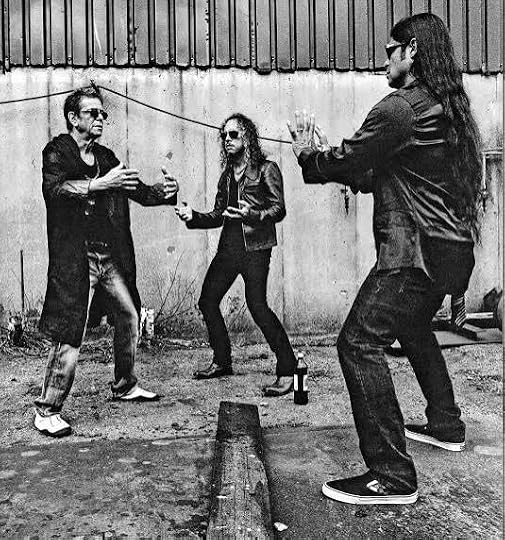
The Art of the Straight Line captures the energy of Lou Reed’s worlds of Tai Chi, music, and meditation. It was edited by his wife, the artist Laurie Anderson, with Stephan Berwick, Bob Currie, and Scott Richman. Lou Reed was a musician, singer, songwriter, poet, and founding member of the legendary rock band the Velvet Underground. He collaborated with many artists, from Andy Warhol and John Cale to Robert Wilson and Metallica. Reed had a groundbreaking solo career that spanned five decades until his death in 2013. Reed was also an accomplished martial artist whose practice began in the 1980s. He studied with Chen Tai Chi pioneer Master Ren GuangYi. This book is a comprehensive collection of Reed’s writings on Tai Chi. It includes conversations with Reed’s fellow musicians, artists, friends, and Tai Chi practitioners, including Julian Schnabel, A. M. Homes, Hal Willner, Mingyur Rinpoche, Eddie Stern, Tony Visconti, and Iggy Pop. Including over 150 photos, ephemera, and a color photo insert, The Art of the Straight Line features Reed’s unpublished writings on the technique, practice, and purpose of martial arts, as well as essays, observations, and riffs on meditation and life.
Lou Reed was an influential American rock singer-songwriter and guitarist. He first came to prominence as the guitarist and principal singer-songwriter of The Velvet Underground (1965-1973). The band gained little mainstream attention during their career, but in hindsight became one of the most influential of their era. As the Velvets’ principal songwriter, Reed wrote about subjects of personal experience that rarely had been examined in rock and roll, including bondage and S&M ("Venus in Furs"), transvestites ("Sister Ray" and "Candy Says"), drug culture ("Heroin" and "I'm Waiting for the Man"), and transsexuals undergoing surgery ("Lady Godiva's Operation"). As a guitarist, he was a pioneer in the use of distortion, high volume feedback, and nonstandard tunings.
Reed began a long and eclectic solo career in 1971. He had a hit the following year with "Walk on the Wild Side", though for more than a decade Reed seemed to willfully evade the mainstream commercial success its chart status offered him. One of rock's most volatile personalities, Reed's work as a solo artist has frustrated critics wishing for a return of The Velvet Underground. The most notable example is 1975's infamous double LP of recorded feedback loops, Metal Machine Music, upon which Reed later commented, "no one is supposed to be able to do a thing like that and survive." By the late 1980s, however, Reed had won wide recognition as an elder statesman of rock.
I've been a fan of Lou Reed since the mid-80's. He was known - to put it politely - as difficult. Yet, I also heard stories of how gentle, funny, and warm he could be. This book reveals all of that: Lou the brutish jerk, Lou the sweetheart, and most of all, Lou the passionate practitioner. Lou felt that his devotion to Tai Chi saved his life when he left his days of drug and drink behind him. Only music held his interest as much as the martial arts did.
This book is the completion of a project Lou started in the early 2000's, but couldn't complete before his death. His longtime partner, musician and performance artist Laurie Anderson, devoted herselt to completing the book and getting it out into the world. To do so, she gathered reminiscences from friends, other artists (Iggy Pop, Wim Winders, members of Metallica, and others), Buddhist teacher Mingyur Rinpoche, other friends that Lou encountered during his Tai Chi journey, and his revered teacher, Master Ren GuangYi.
The result is a loving, compelling tribute to Lou's indefatigable spirit, his love of Tai Chi, and his deep desire to be as healthy as possible: healthy physically, mentally, and spiritually. Up against liver disease, diabetes, arthritis, and a body worn down by years of substance abuse, Lou went all in with Tai Chi as a way to work with his pain and live as fully as he could.
How convincing are the stories? I just ordered two books on Tai Chi and have started doing it with the help of a video series available on Gaia.
And here's the verdict on Lou, the man: was he abrasive and rude? Yes...and the next minute, he could be kind and gentle. He was aware of it, he was working on it, and his anger was often perpetuated by a rigorous liver treatment he was on. He felt Tai Chi was the best way he could work with his most difficult emotions. I'd also say that Laurie Anderson brought out the best in him. Her love for Lou shines through this book. She is a radiant gift, to Lou and to all who encounter her work and spirit.
I learned a lot from this book: about Lou, Laurie, Tai Chi, and the martial arts. I recommend it if any of these topics are of interest to you.
"Any state you canachieve with chemicals, you can achieve with silence."
"Don't stretch the body muscle, stretch the inside energy. Stretch your brain. Thai chi makes your mind big." 3.28
"Every system, when it's repetitive, has a drawback, every system has a flaw. (...) Sometimes you can pick things from other systems to stop the repetitive nature of something else."
I really love this book. There are parts I will return to, and resources it suggests that I’m looking forward to looking into. It’s certainly not everyone’s cup of tea—but there’s a lot of good thoughts and expressions of love that I enjoyed.
An interesting biography, told largely in short snippets from those around Reed with special emphasis on his love of Tai Chi. A biography through archive more than narrative. Admittedly, you learn little about his own understanding of Tai Chi, so the subtitle is a bit of a misnomer.
This is a book of interviews with people who had interactions with Lou Reed. The theme of the interviews is Reed's involvement in martial arts. There are some quoted passages from interviews Reed did on the subject of martial arts. As a Tai Chi practitioner, I found it interesting. It seems like Reed's involvement with martial arts was a force for good in his life.
Tai Chi moves in circles within circles, so a straight line becomes the art. Lou Reed gave a quarter century to those circles, the later years beside Master Ren GuangYi and the Chen family form, and this posthumous volume gathers what he wanted to say about the discipline that remade his physique and steadied his temper. The catch is that Lou died in 2013 with the book still scattered across notes he began in 2009. Laurie Anderson and three editors assembled the rest from interviews, magazine pieces, transcripts, and Lou's own recorded talk. So the reader hears a chorus. Producer Tony Visconti recalls meeting a half asleep Lou on the Transformer sessions. A.M. Homes reads back the email that shaped the project. Chen Bing watched Lou push hands in a village courtyard and saw a Wuxia hero. An endocrinologist, a tour manager, and a Tibetan Buddhist teacher each add a facet. The result is a group portrait drawn from many hands, warm and looping and repetitive, which suits a practice made of repetition. The pleasures here are granular. Lou christened one graceful move Delivering the Pizza, palm turned up like a cartoon chef with a hot pie. Hotel security once flagged a guest waving a sword in a courtyard, Lou at his morning forms. Ren generated such explosive power, the fajin Lou chased for years, that he broke through the stage floor at two venues. Off the Mexican coast, Lou lost his glasses to a wave and plucked them from the sand with his toes, balanced on one leg. His cousin Shirley, lucid at 102 and worn by macular trouble, left him an aging mantra that runs through the book, her weary shrug of what can you do. The book also opens his stage life, Ren beside him as he read his rewritten Poe, the night David Letterman practiced the form on air. The anecdotes carry a working philosophy of power and grace. Lou drew a clean boundary between a dancer emptied of force and a brute waving a weapon, and he wanted the rare thing between them, motion with real weight behind it. He bragged about a punch even tighter than Bruce Lee's fabled one inch strike, learned to slow down until every move became legible, and cast pain as the toll for correct alignment. Each correction was a fresh incapacity on the march toward an improved body, while diabetes, hepatitis C, a rheumatoid toe, and the liver cancer he foresaw pressed against him. That mortality gives the book a quiet Magic and Loss gravity. Laurie describes collaborating with a partner gone almost a decade, guessing what the author would want, working, as one watercolor has it, beside Lou doing Tai Chi in the afterlife. The reverence occasionally softens the edges. Newcomers cool on Lou will find slim pickings, a loose garland of testimonials and instructional scraps held together by devotion. Devotees will find a banquet of relics.
For those devotees, one steer. Choose the audiobook over the printed edition. This grew out of Lou's friends' recorded voice and transcribed talk, and hearing it aloud recovers the timing, the dryness, the laugh in the throat that the page flattens to gray type. A.M. Homes says she stopped looking up during a playback, wanting to hear Lou across the room a while longer. That desire is the pulse of the endeavor, and audio serves it best.
Lou wanted to mature like a warrior and welcome the newfound man practice made of him. The straight line reached its end in 2013. This gathering returns his reflection to anyone still listening, a fitting close for the singer of I'll Be Your Mirror. A beautiful eulogy that sheds light on several works and an incredible life of a remarkable artist.
Lou Reed had been practicing tai chi for a decade or two by the time I first began to learn it during my late teens/early twenties. Most of the practice soundtrack consisted of my teacher narrating the forms; otherwise, I mostly practiced in silence. And yet, by coincidence or kismet–you decide–if my practice was linked to any actual music, it was linked to Lou Reed’s music. “Heroin” was the one song I would listen to while practicing tai chi at home (the slow parts encourage you to slow down, the fast parts challenge you to keep slow, and it's just a tremendous song). And then, one of my tai chi classmates gave me a dubbed tape of Songs for Drella one night after class–the first time I'd ever listened to that album. At the time, I had no idea of Lou Reed’s own gravitation towards the art. It would be a few more years until I’d come upon a video of Master Ren performing during one of Reed’s concerts. It was a few years after that, or perhaps even just after Lou's death, that I learned the extent to which he immersed himself during the last few decades of his life.
Fast forward to 6 months ago when I began attending tai chi classes again after a two-decade lull, which has been lovely. Last month, just as I was realizing how much joy I was finding in returning to tai chi, the universe dropped a Laurie Anderson interview into my life. I was reminded yet again of the Lou Reed connection, so I went in search of more information. I found this book.
This is a peculiar and imperfect book–understandable considering its origins and posthumous nature. I was able to connect given my love for Lou Reed and tai chi, but I wonder if others will have a harder time finding a way in if they don’t have a foundation in tai chi, specifically, or martial arts, generally. I was a little bummed to find that you do not hear much from Lou Reed directly in the book, as the idea for the book remained in its nascent stage until his death. It mostly consists of other’s experiences with him and/or with tai chi or other martial arts. The montage of voices was inconsistent. A few moved me nearly to tears, but more often than not, the passages fell a little flat. Many read like unedited audio transcripts, which doesn't usually make for compelling writing. A few seemed to use the platform as a means to brag about their own martial arts prowess over any talk of Lou, and some seemed to almost entirely miss the point of reminiscing about Lou vis-à-vis tai chi.
And yet, you will find Lou Reed here–the asshole, the tenderheart. That's why I'm bumping the rating up to 4 stars. It was incredibly endearing to find his enthusiasm in account after account. It echoed almost verbatim the enthusiasm I hear from other practitioners with decades of experience and made me feel like Lou Reed was another classmate or teacher I see every week. I deeply identified with how Reed approached his practice with humor (and/or perhaps tai chi encouraged him to lighten up a little...), which has been one of the delightful silver linings to my practice over the years. I felt a twinge of wistfulness as well–to understand how much Reed got out of tai chi, morphing from a recovery tool to a motivation of its own accord. I wish he had had many more years to live with it. One of the delights I get out of tai chi happens when my seemingly feeble 80-something-year-old sifu knocks me off-balance with the slightest push, and I really wish that Lou Reed could have had more time to knock around a few younger folks.
Just did a little 10-form to “Heroin” for the first time in years, for old time's sake. This more thorough understanding of Lou Reed’s legacy will certainly inspire my practice going forward.
“Art of the Straight Line” celebrates Lou Reed, the pursuit of centering craftsmanship in your life, exploring creativity in all its forms, and living fully into old age. As most people who knew the image of Lou Reed, I associated him with the cloaked genius of the Velvet Underground. A punk rock animal who lived wildly and produced some of the most influential rock music in the cannon. At various times, all four Velvet Underground albums have topped my favorite album of all-time.
Here is an intimate portrayal of Reed that reveals a perfectionist, an iconoclast, a spiritual seeker, a fierce lover, and a relentless creative. Laurie Anderson, also a legendary artist in her own right, produced a beautiful frame. She bookends this book with thoughts about Lou and their relationship, and her stories reveal a deep abiding love that is built from decades of love. Her spirit weaves through these stories - though not centered on her story - her craft in putting together the photos, poems, collection of interviews, quotes and general publishing is truly an object of beauty.
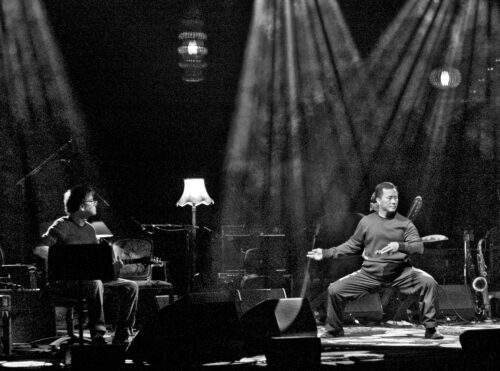
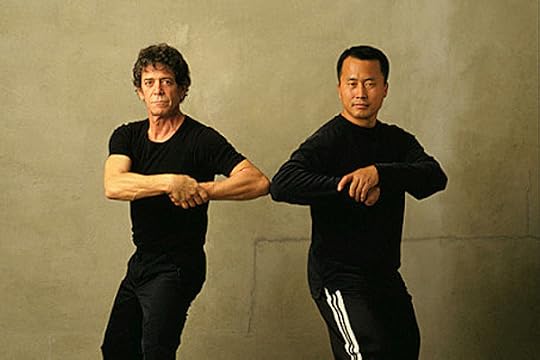
There are so many stories to love here. Tony Visconti, a longtime producer, sharing how Lou introduced him to Tai-Chi. On a rooftop in the West Village they would practice with master Ren the instructor. Ren represented the true master for Reed, the real deal for him, and a teacher he would pursue late in life, and even collaborating tai-chi into his Raven tour, a recreation of Edgar Allen’s work into a musical project.
I thought the words from artist Anohni were quite moving, about Lou giving them a space to practice, at a time when transgender artists were marginalized. This beautiful quote from them - “Sometimes we make artists of those individuals {like Reed}; we marvel over them. They’re like these weird pearls that our culture has made…and then we’re fascinated by them, because they contain this depth of experience, especially if they start to express themselves in transcendental ways. (p.220).
The collection of interviews is staggering: personal assistants, tai-chi classmates, ex-wives, Iggy Pop, Jonathan Richman, tai-chi teachers. The artwork shared is truly gorgeous. Their is a portrait of Reed (p.29), that appears to be an artistic rendering of his soul or vital force - a beautiful abstract piece. A poem from Anne Waldman “New Scar Right Over My Heart” (p.185) has an oceanic feeling - a loving tribute to Lou with word play from his songs and iconography.
“Art of the Straight Life” explores what it means to give and surrender yourself to the arts. Always an artist, Reed’s maintained an unguarded and original voice. Many people, myself included him, see him as a luminary of creative music. His pursuit of tai-chi, more private but one assumes an equally rewarding exploration. His surrender to community, training, friendship, teaching others, and a path to guide. Our lives are never neatly summed up. They blossom in a myriad of messy ways. And still the foundations of a discipline, a practice, a perspective, a yoga light the way.
I’ll always love the image I had for Reed, especially in my younger years, where the coolness, machoness and swagger of his music inspired me. His music with the Velvets or solo is just on another level. But I love this honest portrait of Reed. It more fully sees him, humanizes him, and gives me a deep respect for how he embraced tai-chi and the artistic community. It’s a testament to the attentive power to our bodies and spirits, and how our energies can deeply transform each other.
This book changed my life. I can't imagine this book will appeal to anybody other than people who practice Tai Chi because of Lou Reed. Die-Hard Lou Reed, the rockstar-singer-songwriter, will probably not care for this book and people who practice Tai Chi for whatever reason may be curious but it's not really for them either. Who is this book for? It's for people who took up Tai Chi because of Lou Reed, like me. Shortly after he died, there was an exhaustive biography published about his life and work that featured warnings from multiple reviewers, "You won't like him." Lou Reed the rockstar-singer-songwriter was a huge asshole. Caustic, mean, moody, bitter, angry; probably an undiagnosed borderline personality disorder, or bipolar. He treated everybody badly esp. his lovers which including men, women and transwoman. As an artist, he lived an extraordinary life, (Andy Warhol's house band) and was ahead of his time, writing sympathetic songs about transgender persons in the 1960s, "Candy Says." Lou Reed, the artist was an uncompromising prick who never played it safe, and his career and musical output proves it. The original biography mentions he took up Tai Chi at 45 and while it acknowledges it seemed to have a positive effect on him as a person, it doesn't cover much. Reading that at age 45 inspired me to take up Tai Chi, a Kung Fu/Tai Chi dojo happened to be walking distance from my house in New Orleans. Been doing it for 6 years now but had recently plateaued this past year or so, unable to maintain a discipline. This book is an oral biography about Lou Reed, the Tai Chi master. The man was a sweetheart, as passionate a student of Tai Chi as has ever existed. Everybody in this book loves Lou Reed, describe him as loving, kind, sensitive, encouraging and his partner and last wife, performance artist, Laurie Anderson, a woman who only met him after he took up Tai Chi, has only wonderful, positive things to say about the man. Lou Reed found sobriety through the Chinese martial art, became a much better person. Arriving to his first dojo, the instructor looked at the track marks in Reed's arms and said, "You can't do Tai Chi if you're doing heroin." He cleaned up and came back only to be told, he can't do Tai Chi if he's angry, bitter and one must learn to forgive in order to do Tai Chi effectively. In time, a long-time junkie, chain-smoking, type A personality, typical New Yorker, changed into a peaceful loving Tai Chi master who traveled with an instructor and typically practiced a Tai Chi a minimum of 2 hours daily, if not more. I was never a junkie, rarely drink and never smoked, except a brief foray managing a cigar shop. However, I've been an angry, bitter person who'd refuse to forgive individuals from my past and this book without really preaching it, inspired me to finally let-go and I couldn't be happier and finally feel at peace. This book was written for people like me who took up Tai Chi because Lou Reed inspired us to do so, and again, reading this book, his life has inspired me to finally forgive, get over my anger, to finally let-go and find peace. Thank you, a solid 5 stars.
As a lifelong Lou Reed fan and on-again/off-again martial arts student, I am this book's target audience, I'm guessing. Not sure how many of us there are, but I enjoyed every page of this collection of thoughts, essays, musings, memories, photographs, and artwork.
For Lou Reed fans interested in the person and the life he lived and not just the albums, this is a must-read. It supplements everything else you've read about this guy, who happens to be one of the most important artists of the last 50 years in any medium. You don't often get a sense of the fuller depth of a well-known human being and well-trodden subject of journalism as you do here. It's not really relevant, but Reed turned me down for an interview years ago, and I wrote and published a lengthy article on his 1970s musical output without speaking to him. His reputation as cantankerous and unfriendly to journalists is well-known. That rejection didn't bother me in the slightest (quite expected).
Here, I found it refreshing in that light to read so much positivity and to learn more about his actual relationship with his actual people--and with tai chi. I saw Lou perform with Master Ren onstage twice, and I found it interesting but slightly confusing as a "rock show" presentation ... Wish I could go back and see it a third time, having now read this book.
If you don't know much about Lou Reed, haven't listened to his music for 40 years as I have, and don't care to start now but ARE interested in tai chi, I would still recommend this. I think, using Lou as an example, you can really see where dedicated tai chi practice can take you and what it can do for you, even as your body declines.
At my age, this is of interest. Unfortunately, there seems to be no Chen-style tai chi in my area, but the book has motivated me to get back to that moment in the sun, beside a lake in northern Michigan, years ago, when I was first guided through a tai chi exercise by my then-sifu. This book has reminded me that it's time to take that up again.
I thank Laurie Anderson and the other editors for putting this out there.
Llegué a Lou Reed y los Velvet Underground en mis años formativos, en los que estaba buscando mi identidad musical y literaria. Junto a Bob Dylan y Joe Strummer forjaron mi ética y estética artística más temprana. Lou tocaba guitarra como me gustaba hacerlo, cantaba sin cantar y contaba historias. Y lo principal, toda su apuesta era obviamente imperfecta, real.
En una historia paralela, de joven descubrí el Tai Chi, primero el estilo Yang, luego el Chen. Practiqué un tiempo antes de dejarlo, hice boxeo un tiempo, hasta que un infarto me regresó al Tai Chi de la familia Chen. Por aquella época, o quizás un poco antes, me enteré que Lou Reed practicaba precisamente esta forma de tàijí quán, y lo hizo hasta el final de su vida.
Nunca he querido conocer a mis ídolos ni personas admiradas, pero esta conexión con Lou Reed se sintió palpitante, no solo compartíamos una curiosidad por una bella forma de arte marcial, sino que de cierta forma también compartíamos maestros. Ambos practicamos bajo la escuela de Chen Xiaowang, y aún más cercano, Jan Silberstorff con quien Reed practicó en Alemania, es el maestro de mi maestro.
Todo eso bastaba para que mi fanboy interno brincara, pero el libro es más que eso. Son testimonios de amigos, familia y colaboradores de Reed, especialmente de los últimos días. Laurie Anderson llena de dulzura los textos, las entrevistas. En las páginas encontramos a algunos conocidos como Iggy Pop quien habla de su experiencia en el qigong, Win Wenders hace su aparición y también lo hace gente común que compartió con el hombre.
Es un libro simple, sin pretensiones, no pretende cambiar la imagen de un músico conocido por su ocasional hosquedad y momentos de furia. Este es un tomo hecho desde el amor, que probablemente sea el mejor lugar para hacer un libro.
I loathed this. The life of an overindulged spoiled child. I know the book is supposedly to show the power of tai chi. Lou was interested in the more militaristic aspects of the practice. He contained unchecked rages that would erupt--lashing out at the people who cared for him most, and if you were wise, you left his orbit or got out of his path early on, because apparently this was a lifetime habit. His wife is defensive. She surprisingly comes across as rather "don't rock the boat" passive. His sister sounds sane. Anytime someone keeps ranting about "Master" anyone, I think "cult" and con man. He gets upset when he tries to take vintage Chinese spears and swords into the countries he's visiting and has temper tantrums like a child. He sends underlings to go out and buy more. It was interesting when the author (editors) reported he settled for a "second rate" liver transplant. I couldn't help but remember when that health nut David Crosby jumped to the head of the line to get a top notch liver, and his bandmates funded it. I just know they never got the money back. Graham Nash poured millions into him and finally hit the wall, and yet Crosby to the end, while admitting he was and had been an asshole, was still crying poor without reducing his lifestyle.
As much as I enjoyed Reed's early work (and I still listen to it,) I have to separate the man from his craft because he sounds like a miserable human being. I think he had control and power issues, unchecked aggression, and egocentric arrogance. I never let people like this into my life anymore. Why bother?
I initially struggled with giving this book a rating. On one hand, the book shares an intimate and different perspective on Lou's personal life, his later years, and his relationship with Tai Chai. On the other hand, the book comes off as redundant as Lou only fully realized it after his passing. To make up for this, the book comprises interviews with friends, family, colleagues, collaborators, employees, and acquaintances. The book is supplemented with random excerpts from Lou's writings, pictures, and interviews with Lou. I consider myself a long-time Lou Reed fan, though I was not entirely in tune with how much Tai Chi truly meant to him. This book aims to give perspective on why it meant so much to Lou. I have always thought Tai Chai and Eastern culture, in general, can be alluring, so pairing that with Lou is a win for me. Unfortunately, however, the book dragged on for me as it increasingly repeats in its interview formats. "Lou loved Tai Chi. Lou asked me to do Tai Chi, I did Tai Chai, and it taught me this." Don't get me wrong; this book sheds new light on the man himself and shares some very personal and touching anecdotes surrounding his later years. The book benefited from key contributors, some of whom I was particularly fond of, such as Iggy Pop, Fernando Saunders, and Wim Wenders. If you are interested in reading this book, you are undoubtedly already interested in Lou and maybe Tai Chi. Perhaps you are even interested in both. With everything being said, it is still a worthwhile book for any Lou fan to read. To Lou, Tai Chi was the only answer; while, generally, I wouldn't say I like this way of thinking, it benefited Lou significantly.
This is a delight of a book. I've not read anything quite like it. So much of it is Laurie Andersons meticulous and layered approach to uncovering more than story, a glimpse into a a soul. It is also a telling of the great love those who knew Lou had for him, and he them. The editing of this book was an unmistakable opportunity taken to spend time with him again, 10 years after his death. It filled in a lot of what the biographies had (obviously, in my opinion) missed about him, who he truly was outside of the sneering, stage persona. I've been a lifelong fan of his since that first baseline on Walk on the Wildside first stopped me in my tracks age 13 and saw me gathering up my pocket money and heading off to hmv to buy whatever else I could find of his. That was my first musical purchase and I listened over and over trying to make sense of who he was through those vignettes and their pared back muscled scores. I was glad to hear in this book I am not the only person to feel that his music opened a door to something that changed them fundamentally. And how Tai Chi became that channel and transformation spiritually that resonated so much in his work. It was also overwhelming at times as a read, such a singular commitment and discipline is overwhelming to hear about. Beautiful, all the same.
Found this very interesting, despite not having any interest in Tai Chi, before or after reading it. Its really not necessary, though you do need to at least be cool with reading a lot about Tai Chi, ha. I found there were enough correlations and similar-yet-different qualities to Tai Chi to my own yoga and meditation practice so I found it all pretty fascinating and thought-provoking, despite not particularly making me want to leave the yoga mat behind for a Tai Chi class. Ultimately though its really just a great snapshot of sober(ish) Lou Reed, embracing a spiritual practice that would hopefully and sometimes succeed in giving him peace and serenity after many years of chaos and pain. So in that way, he's a perfect spokesperson and subject for a book like this. A lot of the anecdotes kind of blend into one another which some might find tiresome and repetitive, but that's kind of what I liked about it, it shows how consistent he was in his personality in those years. Touching tribute!
This book is kind of sweet and disappointing at the same time. I have always found Lou Reed's association with Tai Chi interesting and wanted to know more about it from his perspective. Unfortunately the book does not really deliver this.
Lou Reed was preparing a book about Tai Chi but could never finish it. Instead we have this book where tens of interviewees tell pretty much the same thing over and over again: - Lou Reed was very passionate about Tai Chi - he practiced it six to seven times a week - he took his Tai Chi master to tour with him and performed with him on stage - apparently it really helped him to change the course of his life
So there is quite little new information here. There are some interesting interviews though, especially Anohni's. I guess two stars out of five is a bit harsh because I did enjoy this book to some degree. And they also included the lyrics to Magic and Loss which happens to be my personal favourite from all of his work.
The book is not what I was expecting at all. Firstly it was not really written by Lou Reed. Secondly I expected it to be about Tai Chi and not really interesting to me. In fact I almost stopped reading it about a 10th in but I went away and then came back to it and found I was curious enough to continue. From my perspective this book is a good biography of Lou's later years. Biographies on Lou always tend to lack detail but this book gives good insight into Lou as a character. It is based on lots of interviews with his friends and acquaintances. It does talk a lot about Tai Chi because it was a major part of Lou's life and he was always encouraging friends to take it up because of the benefits it gave him. He was totally dedicated to it and while he hated talking rock music especially to journalists he always loved talking martial arts. I found this to be a surprisingly good read all around.
There are some wonderful anecdotes throughout the book from friends, and some very cleverly woven parallels of Lou's lyrics and the philosophies of Tai Chi. I think it could've been condensed in parts as some stories overlap and are slightly redundant. And at the risk of sounding cynical, some of the contributors sound more like they knew Lou from tai chi class or doctors visits, but looked for ways to deepen the story of their relationship afterwards. All in all though, an interesting peek into one aspect of Lou's life. Great for Lou Reed completists, but probably not for someone looking to get a better education solely on his music career. If you listen to the audiobook, you get the added bonus of hearing Laurie Anderson read portions of the book which is a treat since she's a master of spoken word.
It fits that such creative people would create such a beautiful, unique way to tell Lou's story and to honor him. When I started the book, I only knew his name, the band's name, and "Walk on the Wild Side." I picked it up after hearing Laurie Anderson on Marc Maron's podcast. You don't have to know or care about Tai Chi or martial arts to enjoy this book. It's his journey, funny, sad, interesting, and full of heart. I wanted to give him, Laurie and their loved ones a big hug. Thanks to everyone who worked on this. It's a treasure, and it's an inspiration to everyone who's looking for something bigger than themselves and good in life.
This is such a wonderful book. I guess you can't get any closer to a Lou Reed autobiography of Reed. Lou started on this book in 2009. Then he died in 2013. His wife Laurie Anderson, finished the project. It's account of the Power of tai chi and how it influenced Lou, how in chanched him for the better. A person emerged from the book that is vulnerable and loving and that struggles with anger. I was lucky enough to have known Lou. The book shows me why i loved him so much. He was such a sweet guy.
I've been reading his poetry, listening to his music for decades, and read enough bios about Reed to think that I know 'Lou Reed' the public persona pretty well. This book gives you insight into Lou Reed the person, the friend, the student and the husband. It's someone you might not recognize if all you know is 'Lou Reed', but it's someone you'd wish you knew. Thanks to Laurie Anderson for sharing this side of her Lou with us. It's a bit disorganized and repetitive in some parts, but worth the read if you want to know and understand (a bit) the man.
I was interested in Lou Reed's life story. This isn't that. In fact, this isn't 'by' Lou Reed at all. His wife and friends put together a bunch of testimonials after he died about how much he loved martial arts. That's it. Now maybe if you love his music (I don't) and you think he's a musical genius (I don't) you will still find this book interesting (I didn't). When people talk about his 'music' they must be referring to the stories (that I don't care about) because, as a professional musician, I can assure you that 'musically' there is nothing there.
I saw that this book sells for $26 US on Kindle! Save your money and try the library. I want to be honest: the book lacks a strong story, which might disappoint those expecting a detailed biography. Yes, there is a little written by Lou Reed himself. However, most of this book is filled with other people's remembrances of him, both good and bad. They almost seem like stories of the past or eulogies. There are also interviews with Mr. Reed by various people, as well as many black-and-white photographs. In my opinion, there are too many photos. Perhaps they were filler?
I don't want to make Lou Reed cry and because of that, I don't want to write much about the book. I want to say that this is not Lou Reed's book, it is his wife and friends' book about Lou's relationship with Tai Chi and the impact of the practice on his life. I find some parts interesting and recommend book to persons interested in martial arts, holistic, alternative approaches to healing, and Lou Reed.
Due to the way it was constructed after his death, this is part biography of Lou Reed, part auto-biography, part story of Lou's Tai Chi experiences and how he affected those around him. Sometimes it dips a little too far into the "magical" aspects of Tai Chi, but there's enough of the rest to keep it interesting. I'd say this is a book for the Lou Reed completist.
A really interesting deep dive into the practice of Tai Chi and its transformational potential. I learned a lot about the art and about Lou Reed, although this definitely is not a Lou Reed biography. A family member is just starting out learning tai chi at a local community centre, and I'm going to recommend this book to him.
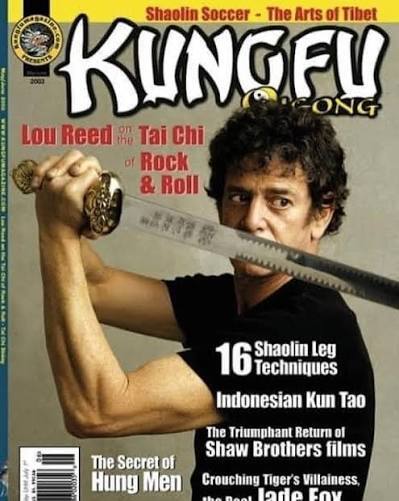
Recommended for the Lou Reed completist only. Mostly other people talking about Lou Reed, most of whom know little to nothing about Tai Chi. The best bits are extracts from interviews Lou did together with his Tai Chi teacher, Master Ren, in Kung Fu magazine. And the anecdotes about Lou teaching Tai Chi to Metallica are pretty funny.
Lou Reed's songwriting and musical performances mattered to me when he released Heroin, when I fell in love with the Velvet Underground, and when he made New York Stories. I love that he drank in a Syracusse saloon with Delmore Schwartz before he wrote songs on Tin Pan Alley. This book guides my understanding of his latter years as those devoted to his Tai Chi practice.
Interesting subject (Lou Reed and his experience with Tai Chi).
Some of the pacing was slow, friends and/or alliances gave their perspectives on what they perceived Reed's benefits, growth and experiences were. Overall I am glad I read this book.