

What do you think?

1000 Years of Joys and Sorrows: A Memoir
"In his widely anticipated memoir, Ai Weiwei-one of the world's most famous artists and activists-tells a century-long epic tale of China through the story of his own extraordinary life and the legacy of his father, Ai Qing, the nation's most celebrated poet. Hailed as "the most important artist working today" by the Financial Times and as "an eloquent and unsilenceable voice of freedom" by The New York Times, Ai Weiwei has written a sweeping memoir that presents a remarkable history of China over the last 100 years while illuminating his artistic process. Once an intimate of Mao Zedong, Ai Weiwei's father was branded a rightist during the Cultural Revolution, and he and his family were banished to a desolate place known as "Little Siberia," where Ai Qing was sentenced to hard labor cleaning public toilets. Ai Weiwei recounts his childhood in exile, and his difficult decision to leave his family to study art in America, where he befriended Allen Ginsberg and was inspired by Andy Warhol. With candor and wit, he details his return to China and his rise from artistic unknown to art world superstar and international human rights activist-and how his work has been shaped by living under a totalitarian regime. Ai Weiwei's sculptures and installations have been viewed by millions around the globe, and his architectural achievements include helping to design the iconic Bird's Nest Olympic Stadium in Beijing. His political activism has long made him a target of the Chinese authorities, which culminated in months of secret detention without charge in 2011. Here, for the first time, Ai Weiwei explores the origins of his exceptional creativity and passionate political beliefs through his own life story and that of his father, whose own creativity was stifled. At once ambitious and intimate, 1000 Years of Joys and Sorrows offers a deep understanding of the myriad forces that have shaped modern China, and serves as a timely reminder of the urgent need to protect freedom of expression"--
381 pages, Kindle Edition
First published November 2, 2021
About the author
Weiwei Ai
77 books273 followersAi Weiwei is one of the world's most important living artists. Born in 1957, He lives in Cambridge.
Ratings & Reviews
Friends & Following
Create a free account to discover what your friends think of this book!
Community Reviews
Displaying 1 - 30 of 516 reviews

December 28, 2021

(Andy Warhol & Ai Weiwei Exhibition-35, photo by Russell Charters)
"With art I opened up a space that was new to me, an abandoned space infested with weeds, in wild and desolate ruin.... it offered the prospect of self-redemption and a path toward detachment and escape."
In 2016, my partner and I visited the Andy Warhol Museum in Pittsburgh. There was an exhibition by the artist Ai Weiwei, someone I hadn't previously heard of.
I was captivated by his work and wanted to know more about him. I read a couple books and watched some of his documentaries. The more I learned the more intrigued -and impressed- I became. He quickly became my favourite living artist.
Ai Weiwei's early years were spent in "Little Siberia", where his poet father had been sent by the Chinese government during the Cultural Revolution. He was sentenced to hard labor and his son was punished along with him.
He endured many hardships and in spite of, or because of, that Ai Weiwei became an activist, using his art to speak for the rights of people. His courage and compassion are tantamount to his artistic genius.
100 Years of Joys and Sorrows is his memoir, beginning with his early life in that hard labor camp. The first part of the book felt disjointed and detached, as though he were writing about someone and something that was foreign to him. He writes, "I felt no attachment to my memories. My memories didn’t belong to me" and that is apparent.
The little he wrote about himself and his early years is entwined with details of his father's life. It jumped around... he would write a tiny bit about his child self and I got the sense it was too uncomfortable, perhaps too painful, for him to write about so he would quickly shift to writing about his father instead.
However, after the first one hundred pages or so, this all changed and I could feel the person writing, could feel that he felt what he was writing. And I was enthralled.
I loved learning more about his life and the inspiration behind many of his works. No matter how the Chinese government tries to suppress him, Ai Weiwei never fails to speak up and to use his work to speak for those who are unable to speak for themselves. He was under constant surveillance, kept in a secret prison for a time, was under house arrest for five years, and now lives in exile in Portugal. But no matter their efforts, the Chinese government was unable to silence him.
100 Years of Joys and Sorrows is a memoir worth reading, and Ai Weiwei is a man worth admiring and emulating. If you aren't familiar with his work, I urge you to Google him.... and read this wonderful book. It is powerful and interesting, a unique blend of historical fact, memoir, and philosophical thoughts.
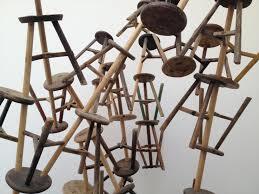
"I am no admirer of order—whether order appears in Eastern or Western guise, it always triggers suspicion in me. I dislike the constraints on human nature and the restrictions on choice that order imposes."
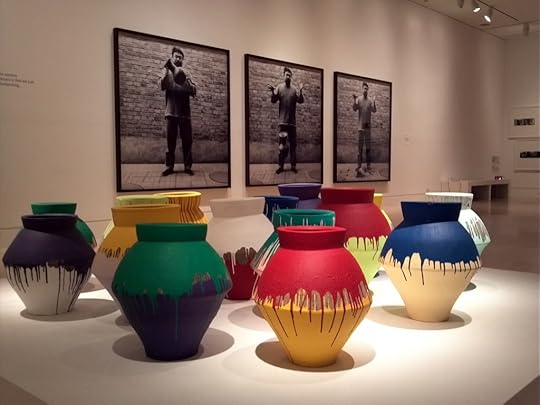

December 4, 2021
[3.4] I am grateful to this book for bringing Ai Weiwei's art and activism to my attention. After reading it, I browsed through photos of his many installations, creations and "destructions". I also listened to a fascinating podcast of him talking about his art and feelings about China. Next, I plan on watching some of his documentaries.
Unfortunately, his writing is devoid of the passion found in his art. I found the book to be a fairly dry reportage of his life, without much introspection or emotion. He is very reticent about his personal life. The beginning of the book, which focuses on his childhood, banished with his poet father to a remote outpost called Little Siberia, is the most compelling.
Unfortunately, his writing is devoid of the passion found in his art. I found the book to be a fairly dry reportage of his life, without much introspection or emotion. He is very reticent about his personal life. The beginning of the book, which focuses on his childhood, banished with his poet father to a remote outpost called Little Siberia, is the most compelling.

January 1, 2022
Audiobook…read by David Shih
….13 hours and 7 minutes
I appreciated learning about Ai Weiwei ….(born in 1957 in Beijing), the Chinese contemporary artist…
…. Architect, activist, sound producer, film directors, visual artist….
I honesty never knew a thing about him until this book….
his artwork, his artistic influences, his childhood in exile with his father — the son of a poet - history about his father - [a year in Paris] -
the cultural revolution before- during - and after -
The political history —
Ai’s social activism - his nitty-gritty family background stories — his marriages — his son - his career development- living in New York - his return to China - imprisonment- and his reflections on freedom.
Ai Weiwei is a humanitarian powerhouse….
…. a global citizen, Artist and thinker!!
I read up more on Wikipedia—
(fabulous artwork; sculptural installations, architectural projects, photographs, and videos)….
and enjoyed a YouTube interview.
Although the audiobook reader - for ‘this’ book:
“1000 Years of Joy and Sorrows”, was excellent …
at times ‘listening’ to it became daunting — for one reason or another - and I started to become indifferent…
That said….it got me thinking about the years in Chinese cultural and political history- kidnappings- refugees- ‘sorrow & joy’ combinations in any one man’s lifetime …
And the discovery of some magnificent artwork.
Today… Ai Weiwei lives in Portugal. He Maintains a base in Cambridge, Rivers son attends school and a studio in Berlin. He says she will stay in Portugal long-term “unless something happens”.
….13 hours and 7 minutes
I appreciated learning about Ai Weiwei ….(born in 1957 in Beijing), the Chinese contemporary artist…
…. Architect, activist, sound producer, film directors, visual artist….
I honesty never knew a thing about him until this book….
his artwork, his artistic influences, his childhood in exile with his father — the son of a poet - history about his father - [a year in Paris] -
the cultural revolution before- during - and after -
The political history —
Ai’s social activism - his nitty-gritty family background stories — his marriages — his son - his career development- living in New York - his return to China - imprisonment- and his reflections on freedom.
Ai Weiwei is a humanitarian powerhouse….
…. a global citizen, Artist and thinker!!
I read up more on Wikipedia—
(fabulous artwork; sculptural installations, architectural projects, photographs, and videos)….
and enjoyed a YouTube interview.
Although the audiobook reader - for ‘this’ book:
“1000 Years of Joy and Sorrows”, was excellent …
at times ‘listening’ to it became daunting — for one reason or another - and I started to become indifferent…
That said….it got me thinking about the years in Chinese cultural and political history- kidnappings- refugees- ‘sorrow & joy’ combinations in any one man’s lifetime …
And the discovery of some magnificent artwork.
Today… Ai Weiwei lives in Portugal. He Maintains a base in Cambridge, Rivers son attends school and a studio in Berlin. He says she will stay in Portugal long-term “unless something happens”.

April 30, 2024
Meine Gedanken hierzu muss ich noch ordnen.
Folgen wahrscheinlich in den nächsten Tagen.
Folgen wahrscheinlich in den nächsten Tagen.

December 9, 2021
I love going to museums but I’m not very knowledgeable about art, and particularly ignorant about modern art. So, when I first saw this memoir, I was intrigued because I wanted to know more about this person’s story but I didn’t know who he was. However, I was eager to get to know him.
This is a memoir I can’t review. Written for his son, Ai Weiwei documents both his father’s and his life in this book and as much as it’s about these two people, it’s also about living under an authoritarian regime which doesn’t believe in freedom of expression. And in such a place, even the existence of the father-son duo and many other such artist activists is a spark that might ignite a fire one day. Their life story might feel bleak, especially his father’s life who was wrongfully convicted and exiled for years on end during the cultural revolution, but this is also the story of a family which resiliently survived the oppression and never let go of their artistic expression or principles.
It’s both a sad and awe inspiring memoir and I felt small and insignificant after getting to know such artists. The writing itself may feel detached and dry but I think it reflects the author’s own feelings about his life and purpose. But all the art interspersed within the text is fascinating and I can’t wait to read up more about his installations as well as about his father’s poetry.
This is a memoir I can’t review. Written for his son, Ai Weiwei documents both his father’s and his life in this book and as much as it’s about these two people, it’s also about living under an authoritarian regime which doesn’t believe in freedom of expression. And in such a place, even the existence of the father-son duo and many other such artist activists is a spark that might ignite a fire one day. Their life story might feel bleak, especially his father’s life who was wrongfully convicted and exiled for years on end during the cultural revolution, but this is also the story of a family which resiliently survived the oppression and never let go of their artistic expression or principles.
It’s both a sad and awe inspiring memoir and I felt small and insignificant after getting to know such artists. The writing itself may feel detached and dry but I think it reflects the author’s own feelings about his life and purpose. But all the art interspersed within the text is fascinating and I can’t wait to read up more about his installations as well as about his father’s poetry.
November 25, 2021
First off, let me say how much I like Ai's work. Very provocative and thought provoking pieces.
Now, for the book.
This was a good read. An interesting memoir and had some touching moments.
That being said, it was not as shocking or activist as I thought it was going to be.
Still a great memoir.
Some pretty fascinating and eye opening moments too.
3.8/5
Now, for the book.
This was a good read. An interesting memoir and had some touching moments.
That being said, it was not as shocking or activist as I thought it was going to be.
Still a great memoir.
Some pretty fascinating and eye opening moments too.
3.8/5
August 7, 2021
Outspoken artist and international human-rights icon Ai Weiwei here chillingly documents--originally as a record for his young son, and subsequently for all the rest of us--the brutal life of privation and repression he experienced growing into manhood in remote China before, during, and after the Cultural Revolution as the son of a prominent poet, one of many thousands of wrongfully imprisoned political prisoners. Years later, when he himself is taken into custody for 81 angst-ridden days by Chinese authorities who do not respect his provocative politically-charged public art and social media posts, Ai feels a renewed closeness with his now-deceased father: both men of principle, courage, and conviction under extreme and protracted pressure. Throughout his life, Ai has sacrificed almost every creature comfort and stability in pursuit of his artistic freedom (and the right of others to enjoy the same) against overwhelming odds, enduring a fallen-apart marriage, an art studio bulldozed before his eyes, hostile 24/7 surveillance by Chinese police and state, and much more. Through it all, his wit, his optimism, and his playful vision of art as meaningful expression remain unstoppable. Luckily for us, after a nail-biting exit from his native land, Ai is today writing and creating his thought-provoking art installations from a new home, safe in Europe. As a bonus, Ai's memoir is replete with his own sketches of scenes and artworks which played a pivotal role throughout his development as artist and human-rights advocate. Thought-provoking, meaningful, very deftly told.

April 22, 2023
Ai Weiwei hat das Buch seinen Eltern gewidmet. Er schildert darin seine Kindheit, Jugend und Schaffensjahre bis zu seiner Auswanderung aus China 2015. Dabei holt er aus und erzählt uns die Geschichte seines Vaters, dessen Verbannung unter Mao an die äussersten Rände China zu einem Leben in den widrigsten Umständen Ai Weiweis Charakter nachhaltig prägte und stählte.
Eine eindrückliche Lebensgeschichte, die nicht nur zeigt, wie sich ein berühmte Person sondern auch wir im kleinen für die Menschenrechte überall auf der Welt einsetzen können. Das Buch wartet zudem mit vielen kleinen Skizzen, Bildern und einer teilweise lyrischen Sprache auf. Eine absolute Empfehlung für alle, die sich für Ai Weiwei, Kultur, Menschenrechte und China interessieren.
Mehr zum Buch:
https://youtu.be/3G9msVc5DAY
Viel Spass bei der Lektüre!
Eine eindrückliche Lebensgeschichte, die nicht nur zeigt, wie sich ein berühmte Person sondern auch wir im kleinen für die Menschenrechte überall auf der Welt einsetzen können. Das Buch wartet zudem mit vielen kleinen Skizzen, Bildern und einer teilweise lyrischen Sprache auf. Eine absolute Empfehlung für alle, die sich für Ai Weiwei, Kultur, Menschenrechte und China interessieren.
Mehr zum Buch:
https://youtu.be/3G9msVc5DAY
Viel Spass bei der Lektüre!

November 25, 2025
Це той випадок, коли ти відкриваєш мемуари митця й очікуєш більше про мистецтво, а в результаті отримуєш… дуже детальний краш-курс з історії сучасного Китаю. І, чесно, це і плюс, і мінус одночасно.
Перша частина книжки — найбільш захоплива. Ай Вейвей багато пише про свого батька, поета Ай Ціна, якого то визнавали, то кидали в трудові табори. І весь цей жах маленький Вейвей проживав разом із ним.Через історію батька ти реально починаєш розуміти Китай останніх 100 років краще, ніж з будь-яких підручників.
А потім книжка змінюється — фокус переходить на самого Вейвея, на його боротьбу, арешти, безкінечний нагляд, перформанси, які доводили владу до сказу. Його історія — це суцільне протистояння системі, яка робить все, щоб змусити людину замовкнути.
Але.
По-перше, стиль. Іноді це настільки сухий виклад, що ти буквально продираєшся крізь сторінки. Події важливі, але подача — як документальний звіт. Дуже мало емоцій, майже немає рефлексії. В якийсь момент я зрозуміла, що читаю більше про хронологію, ніж про людину(читала якось нейміврно довго).
По-друге, особистість самого Вейвея тут не до кінця розкривається. Він більше говорить про дії, ніж про почуття. Про події — а не про те, як він їх пережив. Якби не знати, що він один із найвідоміших митців та активістів, можна так і не зрозуміти, який він насправді. В якийсь момент він одружується, потім інша дівчина від нього вагітніє - він проводить час і там - і едине, що ми про це знаємо, це що він каже: всім це ок(ну якось мало)
І по-третє — мистецтва тут менше, ніж я сподівалась. Я брала книжку саме як про митця, а отримала радше політичну і соціальну історію. Це теж важливо, але не зовсім те, чого я чекала.
Книжка корисна, сильна й дає дуже об’ємне розуміння Китаю та ціни свободи слова. Але читання не буде легким: місцями сухо, місцями надто формально, місцями хочеться більше про людину й митця. Якщо чекати від книги надихнутись його мистецтвом — то тут буде не зовсім той вайб.
Більше книжкового:https://t.me/knygonos
Перша частина книжки — найбільш захоплива. Ай Вейвей багато пише про свого батька, поета Ай Ціна, якого то визнавали, то кидали в трудові табори. І весь цей жах маленький Вейвей проживав разом із ним.Через історію батька ти реально починаєш розуміти Китай останніх 100 років краще, ніж з будь-яких підручників.
А потім книжка змінюється — фокус переходить на самого Вейвея, на його боротьбу, арешти, безкінечний нагляд, перформанси, які доводили владу до сказу. Його історія — це суцільне протистояння системі, яка робить все, щоб змусити людину замовкнути.
Але.
По-перше, стиль. Іноді це настільки сухий виклад, що ти буквально продираєшся крізь сторінки. Події важливі, але подача — як документальний звіт. Дуже мало емоцій, майже немає рефлексії. В якийсь момент я зрозуміла, що читаю більше про хронологію, ніж про людину(читала якось нейміврно довго).
По-друге, особистість самого Вейвея тут не до кінця розкривається. Він більше говорить про дії, ніж про почуття. Про події — а не про те, як він їх пережив. Якби не знати, що він один із найвідоміших митців та активістів, можна так і не зрозуміти, який він насправді. В якийсь момент він одружується, потім інша дівчина від нього вагітніє - він проводить час і там - і едине, що ми про це знаємо, це що він каже: всім це ок(ну якось мало)
І по-третє — мистецтва тут менше, ніж я сподівалась. Я брала книжку саме як про митця, а отримала радше політичну і соціальну історію. Це теж важливо, але не зовсім те, чого я чекала.
Книжка корисна, сильна й дає дуже об’ємне розуміння Китаю та ціни свободи слова. Але читання не буде легким: місцями сухо, місцями надто формально, місцями хочеться більше про людину й митця. Якщо чекати від книги надихнутись його мистецтвом — то тут буде не зовсім той вайб.
Більше книжкового:https://t.me/knygonos

February 15, 2023
This book took me a long time to finish. I stalled a couple of times, but kept coming back.
His Dad's life was tragic. He survived Mao's Cultural Revolution, just barely. Ai Weiwei is one strange dude, but interesting.
Ai Weiwei and his poet father lived and suffered through the whole history of Communist China. I found his father's story the more interesting. Very bad times during Mao's Cultural Revolution.
His son's story: offering 1001 random Chinese a free month's vacation in rural Germany! It was a success, and quite a stunt.
The Sunflower Seed show at the Tate Modern (2010-2011) consisted of 102.5 million porcelain sunflower seeds, covering the floor of the Turbine Hall. "It took more than 1,600 artisans in Jingdezhen (the town that once made the imperial porcelain for over a thousand years), two and a half years to manufacture this huge pile of ceramic husks out of the kaolin from local mountains." See https://en.wikipedia.org/wiki/Sunflow... for more on this epic show. Photos! Prices!
All the deluded Westerners, courting China, smelling $$$$, hoping it would turn into a normal country. . .
Ai Weiwei was definitely a fighter, a famous Protest Artist, and has a very high opinion of himself. OTOH: he pissed off the CCP, lost his Chinese studios, lost his passport, and was almost beaten to death by the secret police. He was very fortunate to be allowed to go into exile years later. Plus, a womanizer, just like his Dad. Nor did he accomplish anything substantial in his time in New York. He's now living in rural Portugal, and looks very old and tired.
So. For me, this was a 3.3 star book. Worth reading, but left me somewhat grumpy. Opinions differ!
His Dad's life was tragic. He survived Mao's Cultural Revolution, just barely. Ai Weiwei is one strange dude, but interesting.
Ai Weiwei and his poet father lived and suffered through the whole history of Communist China. I found his father's story the more interesting. Very bad times during Mao's Cultural Revolution.
His son's story: offering 1001 random Chinese a free month's vacation in rural Germany! It was a success, and quite a stunt.
The Sunflower Seed show at the Tate Modern (2010-2011) consisted of 102.5 million porcelain sunflower seeds, covering the floor of the Turbine Hall. "It took more than 1,600 artisans in Jingdezhen (the town that once made the imperial porcelain for over a thousand years), two and a half years to manufacture this huge pile of ceramic husks out of the kaolin from local mountains." See https://en.wikipedia.org/wiki/Sunflow... for more on this epic show. Photos! Prices!
All the deluded Westerners, courting China, smelling $$$$, hoping it would turn into a normal country. . .
Ai Weiwei was definitely a fighter, a famous Protest Artist, and has a very high opinion of himself. OTOH: he pissed off the CCP, lost his Chinese studios, lost his passport, and was almost beaten to death by the secret police. He was very fortunate to be allowed to go into exile years later. Plus, a womanizer, just like his Dad. Nor did he accomplish anything substantial in his time in New York. He's now living in rural Portugal, and looks very old and tired.
So. For me, this was a 3.3 star book. Worth reading, but left me somewhat grumpy. Opinions differ!
October 17, 2021
You might know him for creating the “Bird’s Nest” which is the Beijing National Stadium for the 2008 Summer Olympics.
As for this book talking about life in the camps in China was very eye-opening and interesting. But I found this book did bounce around a little too much. So much so I could not get a handle on his entire family. It kept going back and forth between him and his father.
Sadly most editors now seem to turn a blind eye to these last two issues in the book:
Explaining how Chairman Mao would talk/write to his followers is fine but dumbing down your audience and trying to compare this to Trump’s late-night tweets is just stupid and an insult to the reader. (page 11)
Also on page 366, the author claims that in most European countries that migrants receive no assistance is incorrect.
If I have two items already that are false how can I take the rest of the book seriously?
https://theworldisabookandiamitsreade...
As for this book talking about life in the camps in China was very eye-opening and interesting. But I found this book did bounce around a little too much. So much so I could not get a handle on his entire family. It kept going back and forth between him and his father.
Sadly most editors now seem to turn a blind eye to these last two issues in the book:
Explaining how Chairman Mao would talk/write to his followers is fine but dumbing down your audience and trying to compare this to Trump’s late-night tweets is just stupid and an insult to the reader. (page 11)
Also on page 366, the author claims that in most European countries that migrants receive no assistance is incorrect.
If I have two items already that are false how can I take the rest of the book seriously?
https://theworldisabookandiamitsreade...

February 13, 2022
It was an impressive journey to Ai Weiwei's family history that is tightly connected to the history of China. Some parts were heartbreaking, some were immensely insightful in providing the artist's view on his sources of inspiration.
As for me, I've learnt a lot about contemporary China, about the impact of a totalitarian state on people's life. I wish Ai Weiwei had paid more attention to his own work, as he only touches upon main pieces, these bits are amazing and could be not so brief.
I can't recommend this book enough, I think it's interesting not only to those who enjoy art, but to everyone who wants to understand China or get inspiration from Ai Weiwei's courage and wisdom.
As for me, I've learnt a lot about contemporary China, about the impact of a totalitarian state on people's life. I wish Ai Weiwei had paid more attention to his own work, as he only touches upon main pieces, these bits are amazing and could be not so brief.
I can't recommend this book enough, I think it's interesting not only to those who enjoy art, but to everyone who wants to understand China or get inspiration from Ai Weiwei's courage and wisdom.

November 22, 2021
My recent deep dive of Ai Wei Wei includes this riveting memoir, his Rapture show in Lisbon, and his many documentaries, some by him and some about him. I know I’m not alone when I say Ai Wei Wei is one of the most important artists / activists of our time, and I deeply appreciate his and his family’s sacrifices that make this world a better place.
July 18, 2022
I really admire Ai Weiwei’s art and activism, so it’s disappointing I can’t recommend his memoir.
The first 30-40% of the book is about his life of his father Ai Qing. His father is a very famous Chinese poet and I understand sharing details about your parents’ lives to provide context for your own, but I wasn’t expecting him to dedicate such a huge portion of the book to him.
His writing style is quite dry and is mostly concerned with explaining a timeline of events or minute details of a scene, with very little insight to his thoughts and feelings during formative and fascinating parts of his life. The day that he's released after the Chinese government detained him for 81 days, the most emotion we get from him is: “I was looking forward to seeing Lu Qing and Ai Lao,” his wife and son. I feel like I didn’t learn much at all about how he thinks about art or how he processed events in his life. However, his experiences do provide a very clear and maddening view into how unjustly the Chinese government treats people who criticize the CCP, and made me admire how he's conducted himself and managed to still make such a big impact while being censored at every turn.
The first 30-40% of the book is about his life of his father Ai Qing. His father is a very famous Chinese poet and I understand sharing details about your parents’ lives to provide context for your own, but I wasn’t expecting him to dedicate such a huge portion of the book to him.
His writing style is quite dry and is mostly concerned with explaining a timeline of events or minute details of a scene, with very little insight to his thoughts and feelings during formative and fascinating parts of his life. The day that he's released after the Chinese government detained him for 81 days, the most emotion we get from him is: “I was looking forward to seeing Lu Qing and Ai Lao,” his wife and son. I feel like I didn’t learn much at all about how he thinks about art or how he processed events in his life. However, his experiences do provide a very clear and maddening view into how unjustly the Chinese government treats people who criticize the CCP, and made me admire how he's conducted himself and managed to still make such a big impact while being censored at every turn.

February 7, 2022
I’m speechless, such an incredible story and wonderful storyteller. I can only say read it!!

October 8, 2024
Geweldig portret van China over een periode van twee generaties. De periode van Chiang Kai-Shek, over Mao Zedong tot Deng Xiaoping blijkt gewoon één lange periode van verdrukking van de individuele vrijheid te zijn. Ontluisterend hoe in 2010 Ai Weiwei in de gevangenis behandeld werd. Ongetwijfeld is dat nu nog altijd het geval.
‘Doordat kunst in het hart verborgen waarheid blootlegt, is ze in staat krachtige boodschappen te verkondigen’, zegt Ai. Het zet je aan tot het zoeken naar geëngageerde kunstenaars. Zet gerust namen van zo’n types gerust in de comments.
‘Doordat kunst in het hart verborgen waarheid blootlegt, is ze in staat krachtige boodschappen te verkondigen’, zegt Ai. Het zet je aan tot het zoeken naar geëngageerde kunstenaars. Zet gerust namen van zo’n types gerust in de comments.
November 27, 2021
-While a lot of other reviews touched on Ai Wei Wei's time in exile with his father, I don't agree with it being the most compelling part of the book - we get it shovelling poo sucks and shovelling frozen poo sucks even more
-His first hand accounts of living as an immigrant, his experience in solitary confinement, and his shrewd ways of creating art while fighting injustice made for a very enjoyable, varied read
-I find it very touching that this book came about after reflection on his strained relationship with his own father. Further complicated by state censorship of both individuals, the act of writing a well researched memoir of both their hardships/experiences for his son's understanding is powerful form of reconciliation
-Getting a personal explanation on the thought processes behind the development/evolution of his installations is very enlightening - but perhaps some of the intrigue/mystery/magic behind contemporary art is lost when attributed to storylines and reason. The little drawings and his crass, tongue in cheek sense of humour was also really great (grass mud horse lol)
-Honestly astonishing how Ai Lao is so poignant at the age of like 10... take a look at this list of interview questions he posed: https://www.documentjournal.com/2020/...
-Prob my fave book of 2021, would love to see his next exhibition or see some of his documentaries, I should brush up on my mando lol
-His first hand accounts of living as an immigrant, his experience in solitary confinement, and his shrewd ways of creating art while fighting injustice made for a very enjoyable, varied read
-I find it very touching that this book came about after reflection on his strained relationship with his own father. Further complicated by state censorship of both individuals, the act of writing a well researched memoir of both their hardships/experiences for his son's understanding is powerful form of reconciliation
-Getting a personal explanation on the thought processes behind the development/evolution of his installations is very enlightening - but perhaps some of the intrigue/mystery/magic behind contemporary art is lost when attributed to storylines and reason. The little drawings and his crass, tongue in cheek sense of humour was also really great (grass mud horse lol)
-Honestly astonishing how Ai Lao is so poignant at the age of like 10... take a look at this list of interview questions he posed: https://www.documentjournal.com/2020/...
-Prob my fave book of 2021, would love to see his next exhibition or see some of his documentaries, I should brush up on my mando lol
March 12, 2024
This was a difficult read due to the gruelling hardships Ai Weiwei, and particularly his father, faced as outspoken intellectuals under the Communist regime and the turbulent evolution of modern China. The writing style of the translation also took some getting used to.
That being said, it was intriguing to learn about Ai Weiwei’s artistic process and how he managed to find inspiration even in the most meager of conditions. His memoir is an encouraging reminder of the power of grassroots activism and art as a medium for free expression and political condemnation.
That being said, it was intriguing to learn about Ai Weiwei’s artistic process and how he managed to find inspiration even in the most meager of conditions. His memoir is an encouraging reminder of the power of grassroots activism and art as a medium for free expression and political condemnation.

July 14, 2022
I am torn a bit between 3 and 4 stars. I learned a lot about China, plus Ai Weiwei’s art, and found some of the sentiments very pertinent to a number of culture today. Ultimately though I found it a bit dry and dense and struggled to get through a few sections. If people are interested in the subject I’d still say give it a go

November 7, 2021
It was a great choice for a 100th book this year. Short history of the recent Century in China plus the personal carrer choices of named artist. I knew his work as a documentarian, but the rest not so much. Definitely recommend!!!!

July 9, 2022
Ai Weiwei’s life is so fascinating & I knew very little about him before reading this! Thinking about art, democracy, elitism, and fatherhood! BTG #2
April 3, 2023
3.5/5
Once upon a time, I thought Ai Weiwei was the coolest person ever. I remember tracking the Bird's Nest at the 2008 Olympics, attending a transpacific workshop where Ai responded to translated questions while broadcasted on a projector screen, adding a compilation of his blog posts to my TBR, and otherwise becoming intimately familiar with the name and the mystique attached but not really, until now, devoting some time to figuring out who he actually is. Now, reading this, a triptych memoir that frames Ai's life between the ancestry that is his father and the progeny that is his son, I found both more and less than I had expected to. It's certainly Ai's life, and it certainly presents a more complicated picture than I imagine the typical US WASP has of the China that raised Ai's father and sent Ai's son on his way, both the good and the ill. The fact of the matter, though, is that I operate from behind a US-lens that I am constantly trying to deconstruct, and the fact that my country continues to whip itself into a Sinophobic frenzy means I have to notice every time Ai criticizes China and falls silent in regards to the US, and there was enough inconsistency in certain key respects that words such as "democracy" were a bit too cherry-picked by this work's conclusion. Still, I may shove my rating over the other side of the half star divide, for I would say that this piece does a much better job at what it does than much else on the US market, and that may convince me to adjust my judgment by the time this review is through.
If you started reading this book with your focus firmly set on Ai Weiwei, you would be forgiven for wondering whether you were reading the right book, considering how much time the first section spends drawing up a portrait of Ai Weiwei's father, Ai Qing: Chinese poet, Parisian student, anti-nationalist, sometimes social philanderer and target under the Anti-Rightest Movement and Cultural Revolution. Personally, I was rather pleased with the structure, as Ai didn't mince his efforts to flesh out the history of both his father and his country, delving into the Occidental imperialism that would radicalize both Chinese nationalist and Chinese communist (which can be explored in much greater detail in Mishra's From the Ruins of Empire). This complicated what could have otherwise been yet another 'China bad, US good!' slogan that so many Chinese works that are permitted in the Anglo sphere are reduced to, thus ultimately strengthening Ai's entire narrative. Indeed, it is these complications that were my bread and butter, noteworthy ones including Ai's sympathetic relationships with many of the "grunts" who had played an unwilling roll in his 81-day detention. Still, I have to wonder at an incident where, after taking photos of cops beating protestors in the streets, Ai's first instinct was to run the film straight to the New York Times, presented with little of the critical commentary that tends to suffuse his commentary on other similarly charged interactions between individual and hegemonic media. True, Ai Weiwei was young back then, but some acknowledgement of the similarities between building his reputation off of giving the US status quo power over mainstream representation of dissident social discourse and government lackeys earning their pay by tailing Ai would have signified a consistent level of critique that I could get behind. In light of that, Ai's closing commentary on the relationship between artistry, freedom of speech, and the powers that be wasn't as airtight as it could have been, so while I'm not going judge his actions, I'm also not going to jive with his giving the US a relative free pass. I appreciate Ai's commitment to facing off with China's authoritarianism; all I ask is a little consistency beyond the borders.
I've reached the close of my review, and I haven't decided to tip my rating over to the four star side of things. I also haven't decided to delete Ai Weiwei's Blog from my TBR, as while it has languished unread and unacquired since 2013, I'm still curious about what material wasn't backed up by the Internet Archive (threatened by its own share of greedy and puerile antagonists) after the blog was taken down by the Chinese government in 2009. My librarian powers, considerably developed by nine months of collection development, shows me that that particular work is present in the collections of many an academic library, including the more local ones. So, theoretically, I might be able to wrangle a copy in the near future if I really put my mind to it, and knowing that was sufficient for me to keep on with this Ai Weiwei engagement of mine, at least for one more book. Life has taught many before me the woes of holding up someone as idol and will teach many more long after my bones have been ground to dust, but it has also given me the ability to hold many true realities in the palm of my hand and not throw out the baby with the bathwater on any of them. It is true that Ai Weiwei faces oppression under the current Chinese government, but it is also true that the bigoted imperialism of the current US government has a history of profiting from racist fearmongering about said oppressions, always while hiding behind a selected coterie of public facing speakers as a show of diverse authenticity. As such, I think news about Ai and his doings is always going to draw my eye, one way or another. But I have my own fights to conduct in my own homeland, and just as I trust him to know what's best in his own country, I trust him to not interfere with me in mine.
Once upon a time, I thought Ai Weiwei was the coolest person ever. I remember tracking the Bird's Nest at the 2008 Olympics, attending a transpacific workshop where Ai responded to translated questions while broadcasted on a projector screen, adding a compilation of his blog posts to my TBR, and otherwise becoming intimately familiar with the name and the mystique attached but not really, until now, devoting some time to figuring out who he actually is. Now, reading this, a triptych memoir that frames Ai's life between the ancestry that is his father and the progeny that is his son, I found both more and less than I had expected to. It's certainly Ai's life, and it certainly presents a more complicated picture than I imagine the typical US WASP has of the China that raised Ai's father and sent Ai's son on his way, both the good and the ill. The fact of the matter, though, is that I operate from behind a US-lens that I am constantly trying to deconstruct, and the fact that my country continues to whip itself into a Sinophobic frenzy means I have to notice every time Ai criticizes China and falls silent in regards to the US, and there was enough inconsistency in certain key respects that words such as "democracy" were a bit too cherry-picked by this work's conclusion. Still, I may shove my rating over the other side of the half star divide, for I would say that this piece does a much better job at what it does than much else on the US market, and that may convince me to adjust my judgment by the time this review is through.
If you started reading this book with your focus firmly set on Ai Weiwei, you would be forgiven for wondering whether you were reading the right book, considering how much time the first section spends drawing up a portrait of Ai Weiwei's father, Ai Qing: Chinese poet, Parisian student, anti-nationalist, sometimes social philanderer and target under the Anti-Rightest Movement and Cultural Revolution. Personally, I was rather pleased with the structure, as Ai didn't mince his efforts to flesh out the history of both his father and his country, delving into the Occidental imperialism that would radicalize both Chinese nationalist and Chinese communist (which can be explored in much greater detail in Mishra's From the Ruins of Empire). This complicated what could have otherwise been yet another 'China bad, US good!' slogan that so many Chinese works that are permitted in the Anglo sphere are reduced to, thus ultimately strengthening Ai's entire narrative. Indeed, it is these complications that were my bread and butter, noteworthy ones including Ai's sympathetic relationships with many of the "grunts" who had played an unwilling roll in his 81-day detention. Still, I have to wonder at an incident where, after taking photos of cops beating protestors in the streets, Ai's first instinct was to run the film straight to the New York Times, presented with little of the critical commentary that tends to suffuse his commentary on other similarly charged interactions between individual and hegemonic media. True, Ai Weiwei was young back then, but some acknowledgement of the similarities between building his reputation off of giving the US status quo power over mainstream representation of dissident social discourse and government lackeys earning their pay by tailing Ai would have signified a consistent level of critique that I could get behind. In light of that, Ai's closing commentary on the relationship between artistry, freedom of speech, and the powers that be wasn't as airtight as it could have been, so while I'm not going judge his actions, I'm also not going to jive with his giving the US a relative free pass. I appreciate Ai's commitment to facing off with China's authoritarianism; all I ask is a little consistency beyond the borders.
I've reached the close of my review, and I haven't decided to tip my rating over to the four star side of things. I also haven't decided to delete Ai Weiwei's Blog from my TBR, as while it has languished unread and unacquired since 2013, I'm still curious about what material wasn't backed up by the Internet Archive (threatened by its own share of greedy and puerile antagonists) after the blog was taken down by the Chinese government in 2009. My librarian powers, considerably developed by nine months of collection development, shows me that that particular work is present in the collections of many an academic library, including the more local ones. So, theoretically, I might be able to wrangle a copy in the near future if I really put my mind to it, and knowing that was sufficient for me to keep on with this Ai Weiwei engagement of mine, at least for one more book. Life has taught many before me the woes of holding up someone as idol and will teach many more long after my bones have been ground to dust, but it has also given me the ability to hold many true realities in the palm of my hand and not throw out the baby with the bathwater on any of them. It is true that Ai Weiwei faces oppression under the current Chinese government, but it is also true that the bigoted imperialism of the current US government has a history of profiting from racist fearmongering about said oppressions, always while hiding behind a selected coterie of public facing speakers as a show of diverse authenticity. As such, I think news about Ai and his doings is always going to draw my eye, one way or another. But I have my own fights to conduct in my own homeland, and just as I trust him to know what's best in his own country, I trust him to not interfere with me in mine.
May 19, 2022
Someone else needs to write this biography. His dad was a national poet and friends with Mao, he was buddies with Ginsburg and Andy Warhol!? This life is crazy and I felt like we get a personal story about how life changed when the regime decided that intellectuals were no longer useful, but rather enemies. He and his dad to work camps, he gets put into secret prison, he worked on the bird's nest for the Olympics. He tells the story as boringly as possible, but it's still fascinating. Good for him for speaking truth to power, he could have lived a pretty easy life but refuses to be silenced. Looking forward to someone writing this with a little more verve and a third person perspective. I don't think he realizes how crazy you. Any one of those instances or circumstances is from an outsider.
April 21, 2023
tldr; Ai Weiwei, radical contemporary artist and hardcore Twitter stan
Ai's writing style definitely takes some time to adjust to - he is blunt and concise no matter what he is discussing, and he often blurs the boundaries between memoir, biography, and catalog raisonnee. This book is a platform for discussing art as activism first and an account of specific events in his life second. An unexpectedly endearing part was the mental image of this man slowly typing out his political thoughts on Twitter one key at a time.
Ai's writing style definitely takes some time to adjust to - he is blunt and concise no matter what he is discussing, and he often blurs the boundaries between memoir, biography, and catalog raisonnee. This book is a platform for discussing art as activism first and an account of specific events in his life second. An unexpectedly endearing part was the mental image of this man slowly typing out his political thoughts on Twitter one key at a time.
March 29, 2022
The first third of this book was very good--very intense with its imagery and tug to pathos, but the rest changed--slide into a detailed play by play of numerous interrogations of the author by the Chinese police. I found the word-for-word dialogues tedious. I found I wanted to see more of the effects of the oppressive Chinese political policies and less about the author's role.

July 4, 2022
This has so many five-star ratings and I'm not I'm not sure why. It was a lot more dull than I expected it to be. And I feel like I need to apologize to every member of my book club for picking this book as this month's book

July 18, 2022
Ai Weiwei is one of China’s most famous, and infamous, internationally known artists. His artistic style ranges from representational to pushing boundaries all over the place. Not only in his visual work has he stretched and pushed, but in his thoughts, ideas and comments about his native country and its lack of expressive freedom; its authoritarian disregard for humanity and oppression of different types of people within its own borders, as well as supporting various types of repression throughout the world. This drive to express, and lack of concern for his own safety, landed Ai Weiwei in prison and under torture. It might be part of his family’s tradition, in that his father Ai Qing, once a celebrated poet and friend to Mao, was sent to a horrific labor camp, where Ai Weiwei grew up--in exile in his own country. Born in 1957, it was a time according to Ai Weiwei of the "New China, and, "In satisfying the demands of the new order, the Chinese people suffered a withering of spiritual life and lost the ability to tell things as they had truly occurred." His father was among those who dared not speak about what had taken place, for fear of further punishment and mistreatment.
On April 3, 2011, as Ai Weiwei was about to fly out of Beijing's Capital Airport, " ... a swarm of plainclothes police descended on me, and for the next eighty-one days I disappeared into a black hole." It gave him time to reflect about his father, and part of his country's history that was blocked out of existence, and fear silenced many of its citizens, who were unable to talk about what had taken place and how they had been treated. Looking back at his own history, it is multifaceted. After Mao’s death and the end of the Cultural Revolution, the family returned to Beijing, where Ai Weiwei studied art and animation. From 1980 to 1983, he was allowed to leave China and study in the United States, which was a great awakening for him, being able to learn about all types of artists, art forms and freedom of expression. In 1993 he returned to China because his father was ill, but the artist continued expanding his artistic forms of expression, until it was more than the Chinese government could bear, and he was arrested and his passport was confiscated. In 2015 his passport was returned to him and he moved to Berlin; later to England, and now lives in Portugal.
The title of the book is part of a poem written by his father, Ai Qing. The book is a memoir about his father; about himself; about his country; about the necessity for freedom of expression everywhere in the world. Many of Ai Weiwei's international political positions are controversial, but living in the West has made it possible for him to express those ideas. If there is any group of people who seek freedom of expression, it is artists, and as one of those artists this man does not veer off course. For someone who has been a witness to his family being tormented, punished and exiled, and having survived similar treatment, Ai Weiwei takes the long view and has a spiritual patience about repression and about his art. Despite living in relative freedom, he knows that because of his notoriety, there are forces within China that will not allow him to live completely free. He knows that he is still a hunted man by those who fear what this one man might say or do.
Throughout the book, as well as the book jacket, there are illustrations by Ai Weiwei, with additional photographs of the artist, his family and his work.
Reviewed by Sheryn Morris, Librarian, Literature & Fiction
On April 3, 2011, as Ai Weiwei was about to fly out of Beijing's Capital Airport, " ... a swarm of plainclothes police descended on me, and for the next eighty-one days I disappeared into a black hole." It gave him time to reflect about his father, and part of his country's history that was blocked out of existence, and fear silenced many of its citizens, who were unable to talk about what had taken place and how they had been treated. Looking back at his own history, it is multifaceted. After Mao’s death and the end of the Cultural Revolution, the family returned to Beijing, where Ai Weiwei studied art and animation. From 1980 to 1983, he was allowed to leave China and study in the United States, which was a great awakening for him, being able to learn about all types of artists, art forms and freedom of expression. In 1993 he returned to China because his father was ill, but the artist continued expanding his artistic forms of expression, until it was more than the Chinese government could bear, and he was arrested and his passport was confiscated. In 2015 his passport was returned to him and he moved to Berlin; later to England, and now lives in Portugal.
The title of the book is part of a poem written by his father, Ai Qing. The book is a memoir about his father; about himself; about his country; about the necessity for freedom of expression everywhere in the world. Many of Ai Weiwei's international political positions are controversial, but living in the West has made it possible for him to express those ideas. If there is any group of people who seek freedom of expression, it is artists, and as one of those artists this man does not veer off course. For someone who has been a witness to his family being tormented, punished and exiled, and having survived similar treatment, Ai Weiwei takes the long view and has a spiritual patience about repression and about his art. Despite living in relative freedom, he knows that because of his notoriety, there are forces within China that will not allow him to live completely free. He knows that he is still a hunted man by those who fear what this one man might say or do.
Throughout the book, as well as the book jacket, there are illustrations by Ai Weiwei, with additional photographs of the artist, his family and his work.
Reviewed by Sheryn Morris, Librarian, Literature & Fiction
January 3, 2023
The quote I remember most came at the end and for me summed up Ai Weiwei's life and work: "Art is the antidote to fear" (p. 347). It's seldom that one reads a book that completely reverses one's former opinions or judgments about an individual, but this book was such an experience. I realize now that my former erroneous impressions came solely from a lack of curiosity and knowledge and I sorely regret that I once considered Ai Weiwei just another contemporary [Chinese] artist out for personal/financial gain. That couldn't have been farther from the truth.
From the first few pages, I was spellbound by the story of Ai Weiwei's life, which he begins with the story of his father--a highly respected poet who suffered throughout his life for his beliefs and poetry. His father was given the name Ai Haicheng (b. March 27, 1910 in Zhejiang Province), born into a pre-Mao China at a time of great political and national chaos as it transitioned from the Qing Dynasty into an unknown future. He trained at Hangzhou's National Art Academy but secured permission to study abroad in Paris in the late 1920s, the city George Orwell described then as a "moveable feast". Later in life, he would be known as Ai Qing. His son, Ai Weiwei, would later follow, unknowingly at first, in his father's footsteps--moving abroad (but to New York, not Paris), eventually returning 'home' to China to be branded an enemy of the 'new' China. Today, after arrest, imprisonment and considerable harassments, he lives abroad.
Ai Weiwei grew up with his father as they were moved from desolate post to post during the 40s and 50s, and it isn't until the end of his autobiography and father's biography, that we find the reason for the writing of this volume: "That night, as the hours stretched out ahead of me, I thought of my father, and I realized just how incomplete my understanding of him was... My father had endured a harsher one, when so many people paid with their lives for the words they uttered. I had never asked him what he was thinking, never wondered what the world was like for him as he looked at it through his one good eye. I felt a deep pang of regret at the unbridgeable gap between him and me. Then and there, the idea of writing this book came to me, for I did not want [my son] to suffer the same regret" (p. 315).
If you have seen or heard of Ai Weiwei's exhibitions and pieces, without reading or hearing where they sprang from in his heart, you will not understand his art, as I did not for many years. As many others interested in China, we sometimes wear blinders to that which makes us uncomfortable, and there is much in today's China that should make those of us who live in more open and democratic societies, more than uncomfortable. The word I want to write is 'outraged'. All humanity should feel fortunate to have those brave enough to express their outrage (through their words, or votes, or acts of protest, or art) against regimes who claim to be 'for the people' but who do not understand what makes humans 'human'. "Self-expression is central to human existence. Without the sound of human voices, without warmth and color in lives, without attentive glances, Earth is just an insensate rock suspended in space" (p. 369). For Ai Weiwei, art was the antidote.
For those who do not consider Ai Weiwei's documentaries and installations 'art', I would urge you to be open to a re-boot.
From the first few pages, I was spellbound by the story of Ai Weiwei's life, which he begins with the story of his father--a highly respected poet who suffered throughout his life for his beliefs and poetry. His father was given the name Ai Haicheng (b. March 27, 1910 in Zhejiang Province), born into a pre-Mao China at a time of great political and national chaos as it transitioned from the Qing Dynasty into an unknown future. He trained at Hangzhou's National Art Academy but secured permission to study abroad in Paris in the late 1920s, the city George Orwell described then as a "moveable feast". Later in life, he would be known as Ai Qing. His son, Ai Weiwei, would later follow, unknowingly at first, in his father's footsteps--moving abroad (but to New York, not Paris), eventually returning 'home' to China to be branded an enemy of the 'new' China. Today, after arrest, imprisonment and considerable harassments, he lives abroad.
Ai Weiwei grew up with his father as they were moved from desolate post to post during the 40s and 50s, and it isn't until the end of his autobiography and father's biography, that we find the reason for the writing of this volume: "That night, as the hours stretched out ahead of me, I thought of my father, and I realized just how incomplete my understanding of him was... My father had endured a harsher one, when so many people paid with their lives for the words they uttered. I had never asked him what he was thinking, never wondered what the world was like for him as he looked at it through his one good eye. I felt a deep pang of regret at the unbridgeable gap between him and me. Then and there, the idea of writing this book came to me, for I did not want [my son] to suffer the same regret" (p. 315).
If you have seen or heard of Ai Weiwei's exhibitions and pieces, without reading or hearing where they sprang from in his heart, you will not understand his art, as I did not for many years. As many others interested in China, we sometimes wear blinders to that which makes us uncomfortable, and there is much in today's China that should make those of us who live in more open and democratic societies, more than uncomfortable. The word I want to write is 'outraged'. All humanity should feel fortunate to have those brave enough to express their outrage (through their words, or votes, or acts of protest, or art) against regimes who claim to be 'for the people' but who do not understand what makes humans 'human'. "Self-expression is central to human existence. Without the sound of human voices, without warmth and color in lives, without attentive glances, Earth is just an insensate rock suspended in space" (p. 369). For Ai Weiwei, art was the antidote.
For those who do not consider Ai Weiwei's documentaries and installations 'art', I would urge you to be open to a re-boot.

July 10, 2022
Originally posted on my blog: Nonstop Reader.
1000 Years of Joys and Sorrows is a memoir by Ai Weiwei of the sociopolitical changes in the 20th century in China and of his own place in the larger picture as an artist, philosopher, and activist. Released 2nd Nov 2021 by Penguin Random House on their Crown Publishing imprint, it's 400 pages and is available in hardcover, audio, and ebook formats. Paperback format due out in 4th quarter 2022. It's worth noting that the ebook format has a handy interactive table of contents as well as interactive links and references throughout. I've really become enamored of ebooks with interactive formats lately it makes it much easier to find particular text in a search.
This is an engaging and honest memoir of the author's life, part of which he spent in exile as a child with his father, a poet of renown. The philosophy with which he was surrounded and the privation of his early life informed much of his personality and later artistic expression. The writing is intelligent and open and there are glimpses of genuine wit and humor. I enjoyed his reminiscences very much; the recollections of culture shock and confusion as a young Chinese student in America were touching and honestly told.
The book is enhanced throughout with glimpses into his sketchbooks and drawings. They add a lot of depth to the read. The translation work is flawlessly provided by Dr. Allan Barr. It scans very well and doesn't read in the English edition as though it were translated, which is obviously the ideal.
Four and a half stars. This would be a superlative choice for public library acquisition as well as recommended for readers of memoir and biography.
Disclosure: I received an ARC at no cost from the author/publisher for review purposes.
1000 Years of Joys and Sorrows is a memoir by Ai Weiwei of the sociopolitical changes in the 20th century in China and of his own place in the larger picture as an artist, philosopher, and activist. Released 2nd Nov 2021 by Penguin Random House on their Crown Publishing imprint, it's 400 pages and is available in hardcover, audio, and ebook formats. Paperback format due out in 4th quarter 2022. It's worth noting that the ebook format has a handy interactive table of contents as well as interactive links and references throughout. I've really become enamored of ebooks with interactive formats lately it makes it much easier to find particular text in a search.
This is an engaging and honest memoir of the author's life, part of which he spent in exile as a child with his father, a poet of renown. The philosophy with which he was surrounded and the privation of his early life informed much of his personality and later artistic expression. The writing is intelligent and open and there are glimpses of genuine wit and humor. I enjoyed his reminiscences very much; the recollections of culture shock and confusion as a young Chinese student in America were touching and honestly told.
The book is enhanced throughout with glimpses into his sketchbooks and drawings. They add a lot of depth to the read. The translation work is flawlessly provided by Dr. Allan Barr. It scans very well and doesn't read in the English edition as though it were translated, which is obviously the ideal.
Four and a half stars. This would be a superlative choice for public library acquisition as well as recommended for readers of memoir and biography.
Disclosure: I received an ARC at no cost from the author/publisher for review purposes.
Displaying 1 - 30 of 516 reviews