On the Hawaiian island of Molokai, life goes on for the three young Ogata children after the death of their mother and subsequent emotional withdrawal of their grief and guilt-stricken "Poppy." The eldest at 13, Ivah is now responsible for the safety and well-being of tiny Maisie, vulnerable and mute since their mother's passing; and for Blu, her uncontainable brother whose desperate need for love has made him vulnerable to the most insidious of relationships.
Lois-Ann Yamanaka is the author of Saturday Night at the Pahala Theatre, Wild Meat and the Bully Burgers, Blu's Hanging, Heads by Harry, Name Me Nobody, Father of the Four Passages, The Heart's Language, and Behold the Many. Her work has received numerous awards including the Hawai'i Award for Literature, the American Book Award, the Children's Choice for Literature, the Pushcart Prize for poetry, and Yamanaka was the recipient of a National Endowment for the Arts Fellowship.
Divisive as this book remains, more than a decade after its publication, I'm surprised more people don't know about it. From what I've read, the controversy mostly involves Yamanaka's use of a sexually depraved Filipino-American man as her villain, an artistic/political decision that transforms Blu's Hanging into the story of one Asian-American family's triumph over another Asian-American family. Given that political structures in Hawaii already empower Japanese-American subjects (comparatively) over Filipino/Filipino-American ones, I can understand the Filipino/Filipino-American community's outrage that Yamanaka's book would be deemed "best of the year" by the Association for Asian American Studies, an organization that *should* strive to recognize fictions that contest rather than reaffirm harmful stereotypes.
Controversy aside, however, there is much to admire about the book, and to be honest, had I not read some compelling scholarship about the book's problematic politics before writing this review, I would probably have given it four rather than three stars. Stereotyped or not, the Filipino-American villain (who sexually molests many of the children in the book) is a rather minor character, and not even a terribly interesting one. Whatever her politics, Yamanaka's prose is stirring. Much of her narration and most of her dialogue is written in the pidgin dialect -- and anyone who says "minority accents" aren't beautiful or expressive of artistry should read this book. When the pidgin is interrupted by, say, the tyrannical white schoolteacher's standard American English, the comparative loveliness of the Hawaiian cadence becomes clear.
What to do with a book that's nicely written but potentially furthers the subordination of an already subordinate ethnic community? If the book were written a century earlier, when authors weren't expected to "know better", we could overlook the racism or, if we were really bothered by it, account for it in footnotes and clarifying parenthetical statements. Such is the case of Charlotte Perkins Gilman, Zora Neale Hurston and plenty of earlier writers whose projects are worthwhile but racist, homophobic, etc.
But can similar efforts salvage contemporary books? Should Blu's Hanging have been stripped of its critical acclaim because one of its minor characters emblematizes long-standing condescension toward Hawaiians of Filipino ancestry?
I won't even pretend to know the answers to such questions...
Wow, dunno if I can survive this one. Kinda makes me want to run through the streets screaming or shouting "This was so good! This was so hard! Why is this so hard." Ya know?
Having grown up on Moloka`i, I wanted to share my perspective on the plot as well as my own experience with abuse on this island. I recommend reading up the works of Demiliza Sagaral Saramosing, Roderick N. Labrador and Candice Fujikane to explore the controversy behind this novel. I agree with them on many of their points, and wish Yamanaka had included more positive, non-abusive Filipino characters. Realistic Filipinos, in other words.
I was Ivah’s age when this novel first came out. As a member of a different generation, I genuinely wasn’t aware that Filipino men were stereotyped as sexual predators. I was surrounded by Filipinos, and they may even comprise a majority on the island. Regarding newer immigrants, the kids I grew up with were, sadly, not above making fun of “FOB” (even Filipinos used terms like that in the ‘90s) accents. Racial humor was common at the time. Our elders told us that equal opportunity racial jokes was just a sign of how accepting Hawai’i is of different groups.
I’m not saying this is 100% correct or fair, but racial humor in Hawai`i isn’t as malignant or insidious as it is in the contiguous U.S. It feels more like a level playing field, so “punching down” isn’t a thing we had to be concerned about. Generations of different races met on plantations, developed Pidgin to communicate, married each other, and had a bunch of mixed race kids. When we made racial jokes, we were basically making jokes about family members.
One of my teachers said something like, “Hawai`i isn’t a ‘melting pot.’ It’s chop suey.” In other words, each group is allowed to maintain their ethnic identity rather than being forced to assimilate into the white American patriarchy. As with chop suey, each “ingredient” only enhances the flavor. Mixed race kids (and most of us were mixed) don’t have to choose between racial identities.
When I was growing up, most racial vitriol (enacted by a minority of students) was directed at haole kids, particularly those with lighter coloring. “Kill Haole Day” wasn’t necessarily alive and well by this time, but may have been when Yamanaka was growing up. This is not to erase the racial privilege of haole kids, but to show that those who are hurt and oppressed will often use any opportunity they have to hurt and oppress others — a recurring theme in Yamanaka’s oeuvre. It isn’t right, but usurping an entire nation through an HCR isn’t right, either. I wish adults could get it together so children didn’t grow up dealing with the continued violent fallout of colonization.
The haole teachers Yamanaka depicts are genuinely cruel, and I didn’t experience anything on this level. By the time I was in intermediate school, the kids were so mean that they pretty much bullied the teachers, some of whom disappeared after a single year. That said, haole teachers also didn’t learn how to pronounce our names before teaching or integrate into the community.
As for previous generational attitudes toward Filipinos and Japanese, I can only draw from what my father told me. He is not a terribly rational or decent human being, so I take this with a grain of salt. He said nobody liked “da Japanee” because they acted like they were haole even more than “da Podagee” — even to the point of rarely marrying outside their own race. This wasn’t the case when I was growing up. He also claimed everyone liked the Filipinos when they arrived, because they were nice and the women were very pretty, and that Filipina-haole is one of the prettiest mixes.
As for the Filipinos I grew up with, it wouldn’t have occurred to me that they were somehow more dangerous than members of any other race. There was an old WW2 veteran who played the “Boogie Woogie” on his piano. There were the Jehovah’s Witnesses who never teased anyone at school and were very respectful when they knocked on our doors. There was a classmate’s mother, who was always smiling and often teased her children lovingly. There were classmates who spoke in horror about their grandfathers eating balut.
In fact, a few years ago, the Filipino police officer who taught us all about DARE when I was in elementary school demanded that the community do more about child sexual abuse. I believe he called it an “open secret.” Everything on a small island is an open secret.
Were some of the perpetrators Filipino? Of course. But child abuse is a global issue. I don't know anyone back home who thinks it's more pronounced in Filipino communities.
With that long preamble over, how did I feel about Blu’s Hanging? I think it’s absolutely enthralling prose — the sort of book that turns “one more chapter” into reading the whole book. I recognized everything Yamanaka referenced, from Imamura’s to Friendly Market to the teacher’s cottages to the red dirt to the Groceteria, which closed when I was in kindergarten or so. That said, I’m not 100% sure that her worldbuilding in this regard would make as much sense to someone unfamiliar with the area. She references Halawa Valley, for example, but doesn’t mention how far of a drive it is from Kaunakakai or describe how different it is in climate and character. It doesn’t play a role in the story apart from a brief reference, but I would have appreciated a comparison between East End and town culture.
Likewise — and this is the most disappointing part of the story — there are no Native Hawaiian characters and no discussion of our particular racial struggle. This is particularly egregious because so many Native Hawaiian activists come from Moloka`i, and they saved the island of Kaho`olawe from the U.S. military in the ‘70s. This was also the era of the Hokule`a and proving Thor Heyerdahl was a racist moron. I understand that this wasn’t Ivah’s struggle to depict, of course.
In addition, parties on Moloka`i tend to include the entire community. These kids don’t go to a single baby lu`au or wedding or grad party. I don’t know if this was due to lingering fears/prejudice about leprosy. Their father appears to have no friends, but unless Kaunakakai culture really is that different from East End culture, I think they would have been invited to these events as a courtesy.
This doesn’t detract from the readability of the novel. It is addictive, and Ivah’s narration— her heartbreaking description of taking care of everyone yet feeling powerless to stop her brother from engaging with a dangerous family — will likely stay with me forever. I loved the pets, the superstitions, the mercurial specter of their mother, the obake moth, the descriptions of poverty fare (though I was confused as to why they rarely ate vegetables from their father’s garden). So many details are specific to Hawai`i — the haole teachers lured over, only to be put off by the impact colonization has had on their students. The dolls that look nothing like their owners. The rice cookers. The near-complete lack of veterinary care for the animals (I grew up this way, so I can say it). The adults punishing children for having been abused. The homophobia. The animal abuse.
That last one is as disturbing as other readers have suggested. I don’t recall any major abuse of cats growing up, but I knew little boys who captured pregnant geckos and cracked the eggs within their little bodies. A neighbor shot our dog. I assume this behavior, like “Kill Haole Day,” is symptomatic of -- though obviously not justified by -- postcolonial pain and child abuse.
Blu’s Hanging also features kind characters who are determined to help kids make a better life for themselves. In this case, a queer Japanese couple, both educators. One is Ivah’s older cousin, who is quite familiar with the family dynamic and determined to rise above it. Others have probably complained that they are portrayed as too perfect or too generous, but people like this do exist. In fact, most people on Moloka’i are incredibly kind and generous. It’s just that those who aren’t are known throughout the community for their misdeeds.
I am glad Yamanaka shows that there is some escape from the cycle of abuse, that children who grow up poor can still aspire to care for themselves and improve their lives. I know several kids who escaped their abusive families by getting accepted into boarding school. Granted, this is way easier for Hawaiians on the honor roll (look up “Kamehameha Schools”), but it certainly wouldn’t be impossible for the Ogatas to rise above their circumstances. They are already problem-solvers who love each other. They could all go very far in life.
Since I guess I need to talk about him, Uncle Paolo. Honestly, I found him cartoonishly evil — a combination of Ramsay Bolton and Quagmire from Family Guy. In most places, if a guy was literally displaying the panties of his teenage victims on the antenna of his “Da Sun,” he would probably be beaten bloody. On the outside, abusers are typically charming, funny, and don’t advertise their crimes. Perhaps the neighborhood rapists were more flagrant in Yamanaka’s childhood, but nothing about Uncle Paolo rang true for me. Incidentally, there are very few references to Filipino culture, though he would probably be third or forth generation.
Now, as much as I appreciate the scholarship on this novel and understand why the Filipino community took issue with Uncle Paolo — this novel isn’t about him. It’s about the children. Given the title, people understandably fixate on Blu’s abuse … but I was left wanting to rescue the Ivah and the Reyes girls. I want to wrap them up in a big hug.
I would also note a tendency society has to put their energy toward defending abusers rather than recognizing the pain of their victims. I worry that the controversy could potentially erase the tragedy of the Filipina abuse survivors in this novel. The Reyes sisters, so trapped that they cope by spreading abuse to others. None of them are escaping to MidPac. They will continue enduring Uncle Paolo until they are grown, at which point they will move in with some other abuser.
There are plenty of predators out there, but there are far more abuse survivors. I wish people saw this novel as a call to understand that “troubled” children, even the violent ones, need our sympathy and our help.
This book is beautifully written--engaging and haunting--but after the second act of animal cruelty (which was vividly portrayed), I put it back on the shelf. I'm so tired of animals as sacrificial beings in the craft of writing; if this is what is required of writers, it's time to find a new god of creation.
Ugly. I couldn't get over the animal abuse. The images that this book creates of children killing animals will stay with the reader. If you love animals, DO NOT pick this up.
don't have the words for this one yet (but need to find them soon, essay deadline is fast approaching, ha ha) - one of those books that leaves you hot and cold and liquid, all at once
I found another book recently in my journey to the center of the earth otherwise known as my attempt to clean up my basement.
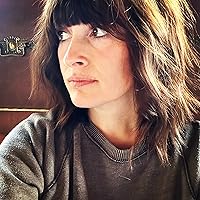
Blu's Hanging is one of my favorite books. I love Lois Ann Yamanaka right down to her flipped out hair and super-dark lipstick. If you pick up a copy that includes a picture of her you'll know just what I mean. You can just tell that she got busted for smoking in the girls room more often than any other girl in school, or at least that's how I imagine her to be from her picture and, most of all, from her writing.
If I was a drag queen, I'd be Lois Ann. She's brilliant.
This genius friend of mine named Mary turned me on to Lois Ann many years ago. Over the course of those years I've read a lot of Lois Ann. I don't love every one of her stories, but I do absolutely totally love Blu's Hanging.
The story is about three working class Japanese American sibs growing up on Molokai, struggling to make sense of life in the wake of the death of their mother and their father's subsequent retreat from the world and from them. My friend (I just know we'd be bffs) Lois Ann's remarkable sensitivity really comes through in her ability to embody the characters of the children, really bringing them to life as whole and complex people. She understands childhood the way we do, not the way Pat Robertson would like us to.
There's no nostalgia; no rose colored glasses; no sexless, simple, run spot run days of lazing around and thinking about nothing. I mean, who really had that childhood? Nope, I mean the kind of childhood where you experiment with drugs and sex and end up feeling kinda dirty and bad but good at the same time, and where you live so acutely and vividly in the present that you might commit suicide at any minute.
Lois Ann also has a very good ear for language and really uses dialogue and dialect to construct the world she writes about. It's all pretty amazing, or at least it was for me.
This story made me feel what Lori Lieberman must have felt when she wrote the poem that led to that song Killing Me Softly. I identified that strongly with these characters, and one in particular. In fact, I identified with them so strongly that I almost felt like it was a story about my own life.
Of course, isn't that how a lot of us feel when we read really good literature, or at least what serves as really good literature to us? You know, like the author is telling your own personal story?
If you read it, let me know what you think. Maybe I just like it because so many of the circumstances mirror circumstances in my own life. But, maybe not. That would be nice to know.
This is another book I read for my Asian American lit class that I think now is one of my favorite books. I don't know why I'm getting so into these novels we've been reading in this class, but maybe they're just good novels.
Anyway, at first I didn't like it. It's about a dirt poor Hawaiian family who is grieving the death of "Mama." It's told from the perspective of Ivah, a 12/13 year old girl who is stuck having to care for her siblings and father after her mother dies. Much of the book is written in pidgin English. The characters' lives are full of the most horrifying, abject suffering you can imagine, and Yamanaka goes full throttle in describing what they face on a day-to-day basis. This book is gross; it will make you physically ill and extremely uncomfortable. There's lots of grossness around urine, sexual abuse, sexual predators, oozing sores, poverty. You just want it to stop, but it's in service of a good purpose. There's also some agonizing stuff to read about how animals are treated by this sector of society.
And it's also heart wrenching. Really and truly heart wrenching. I cried on a plane while reading it.
She describes this wasteland of pain and abject horribleness, but in the middle of that there's some really wonderful stuff that somehow crops up and survives.
The point is that someone -- anyone -- has to tell about the lives of these folks who are living at the margins of Hawaiian and American society, and are invisible to the hordes of tourists who are a mainstay of the Hawaiian economy. Someone has to capture their speech, their communities, their myths and fears, before they are completely obscured by the high-rise luxury hotel resorts and fake luaus -- and it doesnt really matter too much that the story itself is a rough-hewn, clumsy vehicle.
Like other streams of narrative -- African writers, Indian writers in English -- perhaps this will be the start of the telling and other voices will build upon this foundation with more sophisticated, better-hewn stories.
I read this book because two friends strongly suggested I read it. Well written with great character descriptions, the book depicts in great detail a portion of Hawaiian life, unfortunately not a portion that I would like to visit. The story of three children left without adult supervision and protection after their mother's death and their father's virtual disappearance into grief, guilt, and work, the book portrays the gritty picture of life outside the tourist track, filled with various types of predators and a few who are able to escape them.
I also found it difficult to get past the torture and mistreatment of dogs and cats. This alone kept me from reading past the first couple of chapters for over a year.
Written in pidgin, the use of local dialect added emphasis and aroma to a story set in Molokai that absolutely made my belly ache from laughing so hard (when i wasn't crying). Nothing funny about lepers, poverty or abuse, yet like with the greatest literature, Yamanaka is able to weave painful subjects with truth, engaging readers, and most importantly leaves us questioning.
The diction well represented the mix of cultures present in the Hawaiian islands and made the read very quick and vivid...despite the fact that the protagonist was Filipino.
Don't waste your time. Pretty sad because it could be good but what is brutal in it is vulgar and not tasteful at all. My line may be far away, but it's there and this book crossed it.
I thought this book was really beautifully written and with so much love and care for the characters. The writing is incredibly evocative and I really appreciate how the author writes the dialogue in Pidgin. We learn about the Hansen’s disease colonies and Father Damien in school but not really much about its impacts on the people with the disease or the social stigma they faced after, so this really opened my eyes.
I understand that Blu’s Hanging has attracted much controversy for its portrayal of an abusive Filipino man but I’m concerned about how people seem to automatically reject the entire book based on that instead of recognizing how the book discusses the cycle of abuse and how colonization plays into that — talking about real life issues is not the same as condoning it or stereotyping entire communities. It’s clear that Uncle Paolo is far from the only predatory figure in the community.
I’m also pretty befuddled that reviewers are so upset with the depictions of animal abuse and giving it low ratings as a result — if that’s your main takeaway from the book then that’s a really myopic way of consuming media. I understand that everyone has their personal limits — I had to take some breaks while reading this — but I’m concerned with how so many people are obsessed with reading what makes us comfortable and content instead of realizing that the entire point of lit is to portray and challenge.
This entire review has been hidden because of spoilers.
This was another book I read for my English/Asian Studies class. I gave a presentation on the first 100 pages or so of this book, and at that point, I really loved it. I do think that the things I loved then still held true as I continued through the book: Yamanaka does an amazing job at bringing us into the lives of these children, at characterizing them and their surroundings. I really felt such a close connection with Ivah and was deeply emotionally invested.
As I progressed through the novel, I did come across some issues that stopped me from giving 5 stars. I think plot-wise, this novel didn't progress the right way, and I was very surprised by the ending, which did not feel like a conclusion to the story at all. Instead, this novel felt like endless trauma porn, explaining how terrible the Ogata children's circumstances were without really showing any change or progression in their lives or actions. I also felt this unresolved tension between Ivah and Blu's control of the plot. At first, I thought it was Ivah telling Blu's story, and then I think the narrative switched over to Ivah being the focus of the story, and then the ending confused all of that for me again.
Ultimately, I think this was a beautiful novel, but with serious flaws. I did enjoy reading it and analyzing it in class, but I also do not think I would classify it as a favorite.
Taking place in (approximately) the 1980s, Blu's Hanging is a portrait of poverty and resilience on the island of Molokai, Hawaiian Islands. It follows the Ogato family, who are recovering from the recent death of their matriarch. They each battle grief in their own way. The protagonist, Ivah, is the family's defacto caregiver since her mother's passing and the book details the struggles associated with raising two younger siblings (Blue and Maisie), working for a supplemental income, going to school, and dealing with her own grief patterns.
I picked this book to read because it is supposed to show a non-touristy side of the Hawaiian Islands. I was recently visiting Oahu and stayed in a more "local" party of the island; one where poverty was wide spread and very evident. Litter and proof of people living out of their cars, stray animals, drugs... these are all the things I saw and will remember about "island life" and Yamanaka's book details much of the same. From a sociological/anthropological perspective: this book is very interesting. One learns about the culture (including issues of race; some Hawaiian history can be learned but will need to be supplemented from other sources), the food, the religions on the Islands. As a writer, Yamanaka is very poetic and much of her prose is powerful. In spite of this praise, however, where Blu's Hanging loses major points for me is in plot. There is not much to carry the story forward and it is depressing and predictable. Things get "lighter" (i.e. the mood shifts), but overall the story isn't one to remain remarkable after its close.
Created an account just to bring the rating lower. This is the nastiest, most disgusting, inappropriate, lame, lazy, self-jack-off book I've ever had the displeasure of reading. There is no plot. The plot is graphic dedications of child sexual abuse and animal violence. Yamanaka leans on gore as substance because she's incapable of producing depth in any measure. The way she writes about the children's abuse is very strange and is written in way that does not bring awareness, but does bring a very gross vibe to the party. It indulges in the details and does so far too many times.
It offers a very shallow view of life in Hawaii, ignoring the systematic issues and racial inequalities between ethnic groups, weaponizing stereotypes of predatory Filipino men against innocent Japanese girls. For being written in the 90s, it has a shockingly low awareness of Hawaiian sovereignty and localness. It's clear the book is just one sad woman's gore fantasy wrapped in an attempt to define local Hawaii literature. It's unfortunate it's required reading in my class.
To me, it's about how 3 kids (older sister Ivah, middle brother Blu, Younger sister Maisie) cope with life and build a "family" after their mother dies, even though their father is still there, so wracked by grief & other problems that he is hardly present in their lives. I can see it being taught in ethnic studies, but to me it was not primarily about ethnicity, nor poverty (although that was obvious). Ivah, the oldest girl, has to assume Mama's role, although she has no idea what to do; she is a success, given how strongly the kids hang together for each other. And Ivah finally gets out of her extremely confining village life to see what could be beyond it. Structurally, it is a series of character/place sketches covering events 'in the life of', rather than having a definite plot. That is all for the better, so you can live the place with the characters.
There are disturbing scenes of animal cruelty and sexual perversion. There is implied resolution but no overt justice meted out by the end.
The book (260 pages) may take more time to read as much is told in pigeon English, but it's definitely worth the slowness. Themes of growing up, innocence, strength of character, loss, letting go, denial, and family solidarity all packed in a good story with a believable narrator, Ivah, the eldest of three siblings of the Ogata family. Her sibs, Blu and Maisie, are superbly well crafted, and Ivah's storytelling is as believable as Scout from Mockingbird, though the stories are quite different. Many times authors drop names of books in their novels as subtle recommendations, which is how I picked up this novel, and I'm glad I did.
Blu’s Hanging is one of the most heartbreaking portrayals of childhood neglect and grief I’ve ever read.
Lois-Ann Yamanaka writes with remarkable honesty about poverty, loneliness, and children trying to survive circumstances no child should have to navigate alone.
Reading this as a parent was particularly difficult because I kept returning to the same thought: where were the adults who should have protected these children?
There’s a specific kind of heartbreak in watching children normalize survival.
No child should have to become their own source of safety.
The sibling relationships are beautifully rendered, and the novel never loses sight of their humanity despite immense hardship.
Ugh. I cannot shake off this book. I would not have finished it were it not for book bingo (which is compelling me to read all sorts of weird things and to finish books I wouldn’t otherwise). It was so intensely traumatic. Terribly terribly so. I’m not sure who can actually enjoy this book. It’s not enjoyable. It is a beautifully written novel of pain, suffering and terror. I’m glad it’s over.
(SPL 2018 book bingo: takes place in the area where you were born)
I feel I pretty much have to give 5 stars to any book that has me bawling like a baby 1/3 the way through, and then gets sadder. That said, it's mostly tropes, but the author makes them work in a unique way by blending in the whole Hawaiian angle with the Molokai lepers, etc. The main trope is the 13 y.o. girl who has to raise her two younger siblings after her mother dies and father becomes inconsolable and unable to parent. But there are a lot of animals and a teensy bit of magic and I just loved this book.
Thinking that this was going to be an enjoyable novel, I started reading, only to find that the first 20 or so, or more, pages were about children getting sexually abused by their neighbors and community. Not exactly enjoyable reading material, and who knows how it ends, but the beginning was off putting enough to stop reading. Which is too bad, because I was looking forward to the cultural aspects of this Molokai-based story. But.... Who needs any more disgusting incidences in his or her life ?
Extremely beautifully written throughout, with really strong imagery, compelling characters, use of complex, poetic themes, etc. Incredible and rare slice-of-life portrayal of a working-class japanese-hawaiian world, complete with use of pidgin in the dialogue. However MASSIVE TRIGGER WARNING for anyone who has suffered sexual abuse. There are extremely graphic scenes of child rape that are profoundly disturbing and impossible to remove from your brain– I read this book years ago and I'm still haunted by many of the scenes.
'For the girl without words, there is laughter for what is light, gesture for want, and tears for all that is dark. There is not much more. Names are nothing but extravagance.' (131)
'In a little while, we’ll board the plane to Honolulu, and I carry on a shoebox full of treasures I’ve kept under my bed: a tablet, a pan of stones, wild violets pressed thin, pictures, sweet oil—stories that keep forever of a girl born at the time of a full moon, a sister with God's wonder in her silent mouth, and a brother who sings songs with the long, deep notes of his sweet, sweet sorrow.' (260)
It's fitting I read this while vacationing in Hawaii and the story takes place on Molokai which I've visited on a previous trip. The author tells the story using a child's voice and is both touching and sad. Three children and their father lose their mother and wife after surviving Hansen's disease but the pain of the lose takes them into painful places. I couldn't help but cheer for them all and the animals they care for. There is a spiritual aspect to their grief and recovery.
Powerful, unsparing story about the strength, resilience, loyalty, and devotion of and to oneʻs family, in the face of brutal loss, degradation, and abuse. While this is fiction, it is not difficult to see that there is a kernel of truth in this, perhaps a very large, very hard kernel. For those who know the history of Kalaupapa, or Moloka‘i, of the treatment of Hansenʻs Disease patients, this offers a look at the other end of the "treatment".
This was beautifully written and certainly painted a nuanced picture of Hawai’i, but my goodness…the animal and child abuse in this book is beyond disturbing. I wouldn’t exactly “recommend” this book without some major caveats. I understand that these phenomena are very real and it’s important that we don’t pretend like they don’t exist, I just wish it wasn’t written so graphically. VERY difficult read.
This book demonstrates the harsher and crueler side of humanity (graphic in terms of many forms of abuses) as a mourning, destitute family is struggling to fend for themselves without the guidance of a mother-figure. It is quite beautifully crafted and can get intense; none-the-less it's a bitter-sweet read.
Detailed descriptions of animal cruelty, used as a method to paint a certain picture of a bad childhood. After pages of this, you start wondering if the author is being creative by thinking up ways to hurt cats. It's sick. I enjoyed the book at first because the prose is good, but when Yamanaka described putting a firecracker in a cats butt I ripped this book in half and threw it out.