

What do you think?
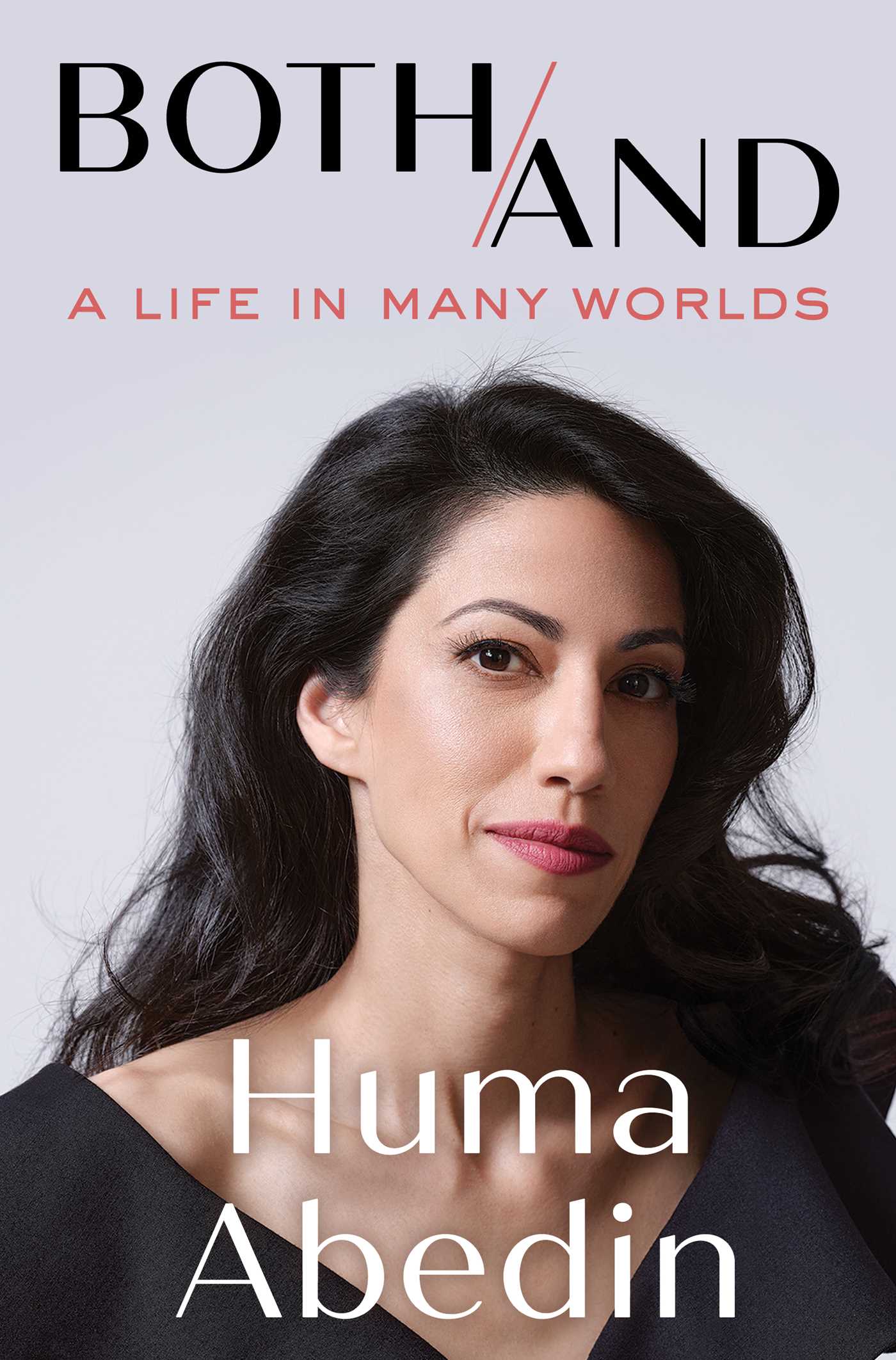
Both/And: A Memoir
A New York Times bestseller, this extraordinary memoir from Huma Abedin—Hillary Clinton’s famously private top aide and longtime advisor—offers “a gripping testament to the power of a woman finding her voice, owning her ambition, and sharing her truth” (Glennon Doyle).
Abedin’s stunning memoir garnered an extraordinary amount of media coverage, with appearances on CBS Sunday Morning , the Today show, The Late Show with Stephen Colbert , The View , Late Night with Seth Meyers , Christiane Amanpour, and coverage in many other outlets, including The Washington Post , The New York Times , and NPR.
The daughter of Indian and Pakistani intellectuals and advocates, Abedin grew up in the United States and Saudi Arabia and traveled widely. Both/And grapples with family, legacy, identity, faith, marriage, motherhood—and work—with wisdom, sophistication, grace, and clarity.
Abedin launched full steam into a college internship in the office of the First Lady in 1996, never imagining that her work at the White House would blossom into a career in public service, nor that her career would become an all-consuming way of life. She thrived in rooms with diplomats and sovereigns, entrepreneurs and artists, philanthropists and activists, and witnessed many crucial moments in 21st-century American history—Camp David for urgent efforts at Middle East peace in the waning months of the Clinton administration, Ground Zero in the days after the September 11 attacks, the inauguration of the first African American president of the United States, and the convention floor when America nominated its first female presidential candidate.
Abedin’s relationship with Hillary Clinton has seen both women through extraordinary personal and professional highs, as well as unimaginable lows. Here, for the first time, is a deeply personal account of Clinton as mentor, confidante, and role model. Abedin cuts through caricature, rumor, and misinformation to reveal a crystal-clear portrait of Clinton as a brilliant and caring leader, a steadfast friend, generous, funny, hardworking, and dedicated.
Both/And is “the story of a person of substance—someone determined to tell her own story” ( The New York Times ) including the heartbreaking chronicle of her marriage to Anthony Weiner, what drew her to him, how much she wanted to believe in him, the devastation wrought by his betrayals—and their shared love for their son.
Abedin’s journey through the opportunities and obstacles, the trials and triumphs, of a full and complex life is a testament to her profound belief that in an increasingly either/or world, she can be both/and. Abedin’s compassion and courage, her resilience and grace, her work ethic and mission are an inspiration to women of all ages.
Abedin’s stunning memoir garnered an extraordinary amount of media coverage, with appearances on CBS Sunday Morning , the Today show, The Late Show with Stephen Colbert , The View , Late Night with Seth Meyers , Christiane Amanpour, and coverage in many other outlets, including The Washington Post , The New York Times , and NPR.
The daughter of Indian and Pakistani intellectuals and advocates, Abedin grew up in the United States and Saudi Arabia and traveled widely. Both/And grapples with family, legacy, identity, faith, marriage, motherhood—and work—with wisdom, sophistication, grace, and clarity.
Abedin launched full steam into a college internship in the office of the First Lady in 1996, never imagining that her work at the White House would blossom into a career in public service, nor that her career would become an all-consuming way of life. She thrived in rooms with diplomats and sovereigns, entrepreneurs and artists, philanthropists and activists, and witnessed many crucial moments in 21st-century American history—Camp David for urgent efforts at Middle East peace in the waning months of the Clinton administration, Ground Zero in the days after the September 11 attacks, the inauguration of the first African American president of the United States, and the convention floor when America nominated its first female presidential candidate.
Abedin’s relationship with Hillary Clinton has seen both women through extraordinary personal and professional highs, as well as unimaginable lows. Here, for the first time, is a deeply personal account of Clinton as mentor, confidante, and role model. Abedin cuts through caricature, rumor, and misinformation to reveal a crystal-clear portrait of Clinton as a brilliant and caring leader, a steadfast friend, generous, funny, hardworking, and dedicated.
Both/And is “the story of a person of substance—someone determined to tell her own story” ( The New York Times ) including the heartbreaking chronicle of her marriage to Anthony Weiner, what drew her to him, how much she wanted to believe in him, the devastation wrought by his betrayals—and their shared love for their son.
Abedin’s journey through the opportunities and obstacles, the trials and triumphs, of a full and complex life is a testament to her profound belief that in an increasingly either/or world, she can be both/and. Abedin’s compassion and courage, her resilience and grace, her work ethic and mission are an inspiration to women of all ages.
544 pages, Hardcover
First published November 2, 2021
About the author
Huma Abedin
1 book169 followersHuma Abedin has spent her entire career in public service and national politics, beginning as an intern in First Lady Hillary Clinton’s office in 1996. After four years in the White House, she worked in the U.S. Senate as senior advisor to Senator Clinton and was traveling chief of staff for Clinton’s 2008 presidential campaign. In 2009, she was appointed deputy chief of staff at the U.S. Department of State. Huma served as vice chair of Hillary for America in 2016, resulting in the first woman elected nominee of a major political party. She currently serves as Hillary Clinton’s chief of staff. Born in the United States and raised in Saudi Arabia, Huma moved back to the U.S. in 1993. She lives in New York City with her son, Jordan. BOTH/AND: A Life in Many Worlds is her first book.
Ratings & Reviews
Friends & Following
Create a free account to discover what your friends think of this book!
Community Reviews
Displaying 1 - 30 of 691 reviews

November 13, 2021
A moving and well-written memoir by Hillary Clinton's most famous aide. I was interested in Huma Abedin because she was the rare senior public servant in the U.S. government who was Muslim-American. The degree to which that was important to her was a personal matter, but as it turns out, and as this memoir explains rather movingly, it is actually something very core to her life. Abedin was a young and extremely talented political staffer, who wound up becoming someone very close to the Clintons on a personal level. This book treats both Hillary and Bill with quiet reverence, almost like parents, so do not expect any harsh revelations on that front. But it does lay bare very painfully the terrible experience that Abedin went through with her ex-husband Antony Weiner, who famously dragged her name through the mud with his own sex scandals. For a very private person for whom, as a matter of culture, maintaining dignity was of the greatest importance, this was a harrowing experience.
Throughout her life Abedin was a person with a lot of potential. She was influenced by Islamic modernist scholars and thinkers who are popular with many educated Western Muslims. Her faith is not incidental to this memoir and arguably even forms the crux of it, as she describes prayer and her link to Islam as not just a part of her identity but the spiritual ballast that got her through the worst times of her life. I don't necessarily share all her political allegiances but I have a lot of sympathy for her after reading this book. She was treated like a punchline for too many years due to the actions of her husband, which sadly occluded what a unique person she is in her own right.
Throughout her life Abedin was a person with a lot of potential. She was influenced by Islamic modernist scholars and thinkers who are popular with many educated Western Muslims. Her faith is not incidental to this memoir and arguably even forms the crux of it, as she describes prayer and her link to Islam as not just a part of her identity but the spiritual ballast that got her through the worst times of her life. I don't necessarily share all her political allegiances but I have a lot of sympathy for her after reading this book. She was treated like a punchline for too many years due to the actions of her husband, which sadly occluded what a unique person she is in her own right.

January 12, 2022
I really enjoyed Both/And: A Life in Many Worlds, a memoir by Huma Abedin, long time right hand
to Hillary Rodham Clinton. Huma began working for HRC at age 20 and continued working for her in different roles over the next two decades. After spending 20 years working for a well-known politician, there is a lot of information about Huma’s time spent and work for HRC, which comprises a significant portion of the book — It was interesting to hear about and I appreciated that she shared both high and lows. While her work experience is unique compared to most, I think many people will relate to some lessons learned along the way and Huma’s professional growth over the course of her career.
Huma also talks about her childhood and personal life. She is an American Muslim, born in Michigan and grew up in Saudi Arabia until she returned to the US for college. Though her and her family were often physically far apart, they remained close.
In 2010, she married Anthony Weiner, who unfortunately threw them into the spotlight not for his political career, but for scandals. Huma tried to make it work and gave him multiple chances to correct his issues, however, his repeated transgressions ultimately could not be forgiven. Huma shares her decisions related to their marriage and eventual divorce. I can’t say I’d feel the same or react with the decisions she made, but I felt like Huma shared enough that I can at least understand where she was coming from and why she wanted to give Anthony so many chances before splitting up. They have a son together who is now 10 and do seem to have a strong commitment to co-parenting.
I listened to the audiobook of Both/And, which is the way to go — The book is long but I enjoyed hearing the story directly from Huma.
to Hillary Rodham Clinton. Huma began working for HRC at age 20 and continued working for her in different roles over the next two decades. After spending 20 years working for a well-known politician, there is a lot of information about Huma’s time spent and work for HRC, which comprises a significant portion of the book — It was interesting to hear about and I appreciated that she shared both high and lows. While her work experience is unique compared to most, I think many people will relate to some lessons learned along the way and Huma’s professional growth over the course of her career.
Huma also talks about her childhood and personal life. She is an American Muslim, born in Michigan and grew up in Saudi Arabia until she returned to the US for college. Though her and her family were often physically far apart, they remained close.
In 2010, she married Anthony Weiner, who unfortunately threw them into the spotlight not for his political career, but for scandals. Huma tried to make it work and gave him multiple chances to correct his issues, however, his repeated transgressions ultimately could not be forgiven. Huma shares her decisions related to their marriage and eventual divorce. I can’t say I’d feel the same or react with the decisions she made, but I felt like Huma shared enough that I can at least understand where she was coming from and why she wanted to give Anthony so many chances before splitting up. They have a son together who is now 10 and do seem to have a strong commitment to co-parenting.
I listened to the audiobook of Both/And, which is the way to go — The book is long but I enjoyed hearing the story directly from Huma.

September 25, 2022
Audiobook…read by Huma Abedin
…..21 hours and 47 minutes
ANOTHER…..
….FABULOUS audiobook-listen…
… a little long- packed filled with juicy details — and I listened to every word!
At times I was incredibly inspired by Huma Abedin and the opportunities she has had — plus, from woman to woman — I genuinely liked her.
….other times …(laugh with me?)….I felt like I was getting swept away into Esquire Gossip type voyeurism.
Huma Abedin was born in Michigan- but grew up in Saudi Arabia.
Her parents emigrated from India to Pakistan to the United States. - before - moving to Saudi Arabia.
Huma is part Black, White, American, Indian, and Pakistani.
Her life is as colorful -
textured - enthralling- and complicated- as is her multicolored ethnicity is.
Huma Abedin worked in the state department. She traveled the world with Secretary Hillary Clinton as her long time adviser. (started as an intern in 1996- worked 25 years)
Their relationship developed into a sincere friendship that grew from loyalty, ability, and trust.
If being a witness to Hillary, (right hand assistant), during the very beginning days of Bill Clinton’s public sex scandal wasn’t enough for Huma to endure—
we learn of Huma’s own - very public - clandestine sex scandal from her husband Anthony Weiner.
Weiner, went to federal prison for a 21-month sentence for sexting with an underage girl over Skype.
Later, Huma discovered photos confirming that Weiner’s infidelity was not only digital fantasy—but he had brought women into their home - while their son, Jordon, (four years of age at the time), was sleeping in the next room.
Huma said she wrote this memoir to “write my own history” and also a manifestation of her determination to close the book on the scandal and move on.
Ha…
….and (as for me?/!), as if 21+ hours of listening to “Both/And” ….an ‘everything-tell-all’ memoir wasn’t enough ….
And as if…..
this memoir wasn’t already packed to the brim with political - travel - multicultural - and personal interest……
Joyful to painful ….
Emotionally angry/biter to understanding/forgiving — with a purpose to provide moral integrity for their son….
….There is ‘more’ public news since this memoir was written.
Huma is now dating Bradley Cooper.
Did I enjoy this audiobook?
I did — I admit I did….
(a ‘touch of self doubt when finished)…
But yes….
Huma writes well - and speaks well.
She’s not dull (no matter how much she tries to convince us she grew up in a conservative controlled environment who is dedicated to healthy lifestyle choices)
I believe Huma! I believe she always intends to make healthy lifestyle choices and make a difference in the world ….
But she is anything but dull!
4.5 rating …. rating up.
Truth is — it was the type of audiobook I didn’t want to put down — ( but I needed to often) … yet every time I returned to it — I was excited to read ‘what’s next’.
…..21 hours and 47 minutes
ANOTHER…..
….FABULOUS audiobook-listen…
… a little long- packed filled with juicy details — and I listened to every word!
At times I was incredibly inspired by Huma Abedin and the opportunities she has had — plus, from woman to woman — I genuinely liked her.
….other times …(laugh with me?)….I felt like I was getting swept away into Esquire Gossip type voyeurism.
Huma Abedin was born in Michigan- but grew up in Saudi Arabia.
Her parents emigrated from India to Pakistan to the United States. - before - moving to Saudi Arabia.
Huma is part Black, White, American, Indian, and Pakistani.
Her life is as colorful -
textured - enthralling- and complicated- as is her multicolored ethnicity is.
Huma Abedin worked in the state department. She traveled the world with Secretary Hillary Clinton as her long time adviser. (started as an intern in 1996- worked 25 years)
Their relationship developed into a sincere friendship that grew from loyalty, ability, and trust.
If being a witness to Hillary, (right hand assistant), during the very beginning days of Bill Clinton’s public sex scandal wasn’t enough for Huma to endure—
we learn of Huma’s own - very public - clandestine sex scandal from her husband Anthony Weiner.
Weiner, went to federal prison for a 21-month sentence for sexting with an underage girl over Skype.
Later, Huma discovered photos confirming that Weiner’s infidelity was not only digital fantasy—but he had brought women into their home - while their son, Jordon, (four years of age at the time), was sleeping in the next room.
Huma said she wrote this memoir to “write my own history” and also a manifestation of her determination to close the book on the scandal and move on.
Ha…
….and (as for me?/!), as if 21+ hours of listening to “Both/And” ….an ‘everything-tell-all’ memoir wasn’t enough ….
And as if…..
this memoir wasn’t already packed to the brim with political - travel - multicultural - and personal interest……
Joyful to painful ….
Emotionally angry/biter to understanding/forgiving — with a purpose to provide moral integrity for their son….
….There is ‘more’ public news since this memoir was written.
Huma is now dating Bradley Cooper.
Did I enjoy this audiobook?
I did — I admit I did….
(a ‘touch of self doubt when finished)…
But yes….
Huma writes well - and speaks well.
She’s not dull (no matter how much she tries to convince us she grew up in a conservative controlled environment who is dedicated to healthy lifestyle choices)
I believe Huma! I believe she always intends to make healthy lifestyle choices and make a difference in the world ….
But she is anything but dull!
4.5 rating …. rating up.
Truth is — it was the type of audiobook I didn’t want to put down — ( but I needed to often) … yet every time I returned to it — I was excited to read ‘what’s next’.

November 24, 2021
This is probably one of the most courageous, moving, and interesting books I have read this year.
Huma Abedin's life before Hilary or Anthony is an amazing story in itself. Her portrayal of Hilary Clinton caught me way off guard. Far from the impersonal, brilliant, let's do it Hillary, I discovered another warmer, compassionate woman who supported Huma at every difficult turn.
I would highly recommend this book; if only we, as American readers, could possibly imagine what it must have been like to grow up in a family such as Huma did, we would be more than fortunate.
Huma Abedin's life before Hilary or Anthony is an amazing story in itself. Her portrayal of Hilary Clinton caught me way off guard. Far from the impersonal, brilliant, let's do it Hillary, I discovered another warmer, compassionate woman who supported Huma at every difficult turn.
I would highly recommend this book; if only we, as American readers, could possibly imagine what it must have been like to grow up in a family such as Huma did, we would be more than fortunate.

December 20, 2021
I need to preface this review with 2 disclaimers: 1.) I think Huma Abedin is an absolutely fascinating and highly accomplished individual whom I absolutely want to learn more about and 2.) I think Hillary Clinton is an absolutely fascinating and highly accomplished individual whom I absolutely want to learn more about.
That said, as much as I enjoyed Abedin's open, honest, and raw memoir, I was mostly befuddled that at least 2/3 of this book (22 hours on audiobook) was about Hillary and her political ambitions and doomed Presidential campaign. This is why I feel like it's important to say that I really think Hillary is a woman who is absolutely deserving of more credit for the work that she has done and her accomplishments and qualifications. But there was so much Hillary in this book that it was hard to find the Huma, and that seems to be my main quibble here. By the time I was done with this book, I knew a LOT about Huma's family, and a lot, I mean a LOT, about Hillary's political activities, but I didn't know as much as I wanted to know about Huma, particularly how a woman as spectacularly talented and accomplished as she is becomes enmeshed with a man like Anthony Wiener.
In Abedin's defense, she is transparent about the Wiener debacle while simultaneously being gracious, which is admirable. And she does her best to answer the eternal question of "why women stay" and "why women leave" in a way that is true and authentic. But always nagging at the back of my consciousness as I read this book was wanting to blame deeply restrictive purity cultures (of ANY religion--I'm not singling out Islam here) for essentially setting Abedin up for failure by not giving Abedin any tools or experience that would have helped her avoid falling in with a louse like Wiener in the first place.
Ultimately, I have 2 theories about why this book is so very much about Hillary:
1.) Hillary became a surrogate mother to Huma in many ways. Huma's identity as an adult woman is so tied up in Hillary's career and presence as to be inextricable. In other words, it's pretty much impossible to explore Abedin's career as anything that happened separately from HRC's, because it didn't. Telling Hillary's story is essential to telling Huma's story. (There are some bigger issues to explore here about codependency but it's easy to be an armchair psychologist and I really don't want to judge Huma harshly for the way in which she chooses to live her extraordinary life.)
2.) In some ways, I see this book as Huma's public apology to Hillary for all the ways that her personal scandals engulfed and possibly compromised Hillary's presidential campaign. I don't think HRC asked for it or expected it, but I think by being as open as possible about the parts of HRC that none of us really got to see, she tells the story of Hillary in a way that makes HRC an incredibly sympathetic figure, in direct contrast to the typical media narrative surrounding the Clintons. So I wonder if, in some ways, she tells this story as an act of atonement, knowing that Hillary will not tell these stories herself.
In summary: This is a fascinating story of fascinating people living complex political and personal lives.
That said, as much as I enjoyed Abedin's open, honest, and raw memoir, I was mostly befuddled that at least 2/3 of this book (22 hours on audiobook) was about Hillary and her political ambitions and doomed Presidential campaign. This is why I feel like it's important to say that I really think Hillary is a woman who is absolutely deserving of more credit for the work that she has done and her accomplishments and qualifications. But there was so much Hillary in this book that it was hard to find the Huma, and that seems to be my main quibble here. By the time I was done with this book, I knew a LOT about Huma's family, and a lot, I mean a LOT, about Hillary's political activities, but I didn't know as much as I wanted to know about Huma, particularly how a woman as spectacularly talented and accomplished as she is becomes enmeshed with a man like Anthony Wiener.
In Abedin's defense, she is transparent about the Wiener debacle while simultaneously being gracious, which is admirable. And she does her best to answer the eternal question of "why women stay" and "why women leave" in a way that is true and authentic. But always nagging at the back of my consciousness as I read this book was wanting to blame deeply restrictive purity cultures (of ANY religion--I'm not singling out Islam here) for essentially setting Abedin up for failure by not giving Abedin any tools or experience that would have helped her avoid falling in with a louse like Wiener in the first place.
Ultimately, I have 2 theories about why this book is so very much about Hillary:
1.) Hillary became a surrogate mother to Huma in many ways. Huma's identity as an adult woman is so tied up in Hillary's career and presence as to be inextricable. In other words, it's pretty much impossible to explore Abedin's career as anything that happened separately from HRC's, because it didn't. Telling Hillary's story is essential to telling Huma's story. (There are some bigger issues to explore here about codependency but it's easy to be an armchair psychologist and I really don't want to judge Huma harshly for the way in which she chooses to live her extraordinary life.)
2.) In some ways, I see this book as Huma's public apology to Hillary for all the ways that her personal scandals engulfed and possibly compromised Hillary's presidential campaign. I don't think HRC asked for it or expected it, but I think by being as open as possible about the parts of HRC that none of us really got to see, she tells the story of Hillary in a way that makes HRC an incredibly sympathetic figure, in direct contrast to the typical media narrative surrounding the Clintons. So I wonder if, in some ways, she tells this story as an act of atonement, knowing that Hillary will not tell these stories herself.
In summary: This is a fascinating story of fascinating people living complex political and personal lives.
November 14, 2021
I could not put this book down!
Huma Abedin has shared her story in amazing detail. What an amazing woman! Despite having experienced some very difficult episodes, her presentation does not drag the reader down. She immerses herself in every aspect of life that is important to her. Her love for her religion, her country, her heritage, her family - especially her son, Jordan, and her friends is palpable. She clearly has an amazing relationship with Hillary, whom I have always admired, and let’s the reader see the real Hillary Clinton.
« Both/And » is well written, the story is organized in an easy to follow manner, and i truly had a hard time putting the book down.
Huma Abedin has shared her story in amazing detail. What an amazing woman! Despite having experienced some very difficult episodes, her presentation does not drag the reader down. She immerses herself in every aspect of life that is important to her. Her love for her religion, her country, her heritage, her family - especially her son, Jordan, and her friends is palpable. She clearly has an amazing relationship with Hillary, whom I have always admired, and let’s the reader see the real Hillary Clinton.
« Both/And » is well written, the story is organized in an easy to follow manner, and i truly had a hard time putting the book down.

January 28, 2022
Great biography of HRC! O wait, that wasn't the purpose of this book. Sadly, however, that probably was Huma's life following around HRC for 25 years. I was disappointed that Huma has not yet developed or did not share her life lessons and insights. I am sure she has more to offer the world than a blow-by-blow of Hillary's career.
November 16, 2021
It's hard to write a review of this book without tipping into a judgment on Huma Abedin's life and how she's chosen to present it. The shadow of Anthony Weiner hangs over the entire book leading up to the time of their meeting--I'd be caught up in the story and Abedin's many accomplishments, remember what was coming, and just be filled with a sense of dread.
The first half of the book starts before her existence, with her convincingly telling the reader about how interesting and accomplished her parents and grandparents are/were--ahead of their time feminist intellectuals, living in an exciting era of change in India and Pakistan. This ultimately segues into her own international childhood in Saudi Arabia, where her parents were both professors. Imo, this is one of the strongest parts of the books.
Things transition to the primary section of the book as she goes to college in the US and begins a White House internship. At one point, she leaves a family wedding early for a work trip, full of excitement, but with perspective now that this was a turning point: from here on out, she basically missed out on being an intimate member of her own family or really having any personal life at all. She outright questions--was it worth it?
At this point, the book becomes a haze of 18 hour days and Hillary Clinton fangirling (I'm mostly pro-Hillary, ftr), told almost like a CV. We went here, did this, did that, HRC gave a brilliant, impactful speech, I debased myself in various ways to help her achieve this, let me talk about how Nelson Mandela only saw me and HRC, because he was only seeing familiar people. I dunno. It's all impressive, she worked hard, and she should be proud. But something about all the namedropping comes across as insecure or even defensive at times. This covers Clinton's time as First Lady, senator, Secretary of State, and her presidential campaigns.
At some point around there, Abedin meets Weiner. Previously, she had briefly touched on dating to say that her Muslim faith (uninterested in casual dating or sex), accurate perception of her as someone with "wife" vibes, and, oh, working and traveling literally all of her waking hours had basically kept her from doing more than having a mutual crush once in college. In some ways, she conveys well his appeal: many gestures (Abedin doesn't drink, and Weiner immediately stopped once he realized this), charisma (both with constituents and women--she repeatedly says she felt lucky to have him interested in her), and both deeply invested in their political jobs. In other ways, I felt at a loss--they seemed to barely see each other and never really dated in any sense that I would recognize it, like hanging out at home together. The engagement almost comes out of nowhere, and she openly acknowledges ambivalence about it--she's worried about their mixed faiths (Weiner is Jewish; her family also shares this worry), but also believes that Weiner does care about her, and, in her mid-thirties, isn't sure she'll have a chance for marriage/children after this, considering, again, she's never dated before. She strongly implies that she was a virgin on their wedding night.
Here, we have a brief interlude of romance, early marriage, and pregnancy, which is almost immediately brought down, repeatedly, by Weiner's online extramarital dalliances. While Weiner is CLEARLY, 100% at fault for this, Abedin's actions around this time are also not entirely sympathetic. While they separate in the sense of not having a romantic or sexual relationship and intend to divorce, they continue to live together while Weiner cares for their son, because Abedin is still constantly travelling and working crazy hours for HRC's presidential campaign--she states that she doesn't have time to get divorced and also cites financial issues. Under those circumstances, while Weiner's contact with a minor and lack of boundaries with his son is reprehensible, I'm not exactly sure that sexting constitutes cheating. I believe that as of late 2021, they're STILL not divorced.
The "financial issues" are also off-putting. Abedin states that they used more or less her entire savings on their wedding (!), they then move to an apartment in Manhattan, basically as a way of distancing themselves from Weiner's old apartment and her need to have some direction in the situation, but which they can barely afford, and, while Weiner is initially able to get some consulting work, he's ultimately more or less unemployable. HOWEVER, while this is not referenced in the book, their 2012 household income was $490,000. So, either they're both very irresponsible with money, or this presentation of the facts is rather disingenuous.
This time period, with her and her family being tracked through NYC by paparazzi, HRC's email scandals bubbling over to the Abedin/Wiener abode, and visits from DFCS, is genuinely rough. Basically, all of this constant work on Abedin's part for almost 20 years is being challenged. Luckily, she's able to go back to some name-dropping, i.e. her bestie Anna Wintour and Oscar de la Renta, who designed her wedding dress as a favor. Barack Obama comforts her. She's talented enough to make the situation sympathetic and relatable, but then the faux money issues and fancy friends form this disconnect. I also think she's trying to show how many powerful people are on her side, but is it really great to have various politicians pity your marital situation?
There's an obvious, terrible symmetry in HRC being Abedin's idol, and both of them being intelligent, gifted women, who marry men that are in many ways their downfall. Abedin dances around her own relationship to Bill Clinton (who married her and Weiner, rather a harbinger of what was to come) and his own cheating scandals.
At this point in the story--the end--as other readers have wondered, what's next for Abedin? HRC has wound down her work at this point, and presumably Abedin can't continue with that forever. She's never sought any political office of her own. She's somehow still married to Anthony Weiner. The question now re-emerges from that earlier chapter--was it all worth it? She asserts that it was, but I can't say that I agree.
The first half of the book starts before her existence, with her convincingly telling the reader about how interesting and accomplished her parents and grandparents are/were--ahead of their time feminist intellectuals, living in an exciting era of change in India and Pakistan. This ultimately segues into her own international childhood in Saudi Arabia, where her parents were both professors. Imo, this is one of the strongest parts of the books.
Things transition to the primary section of the book as she goes to college in the US and begins a White House internship. At one point, she leaves a family wedding early for a work trip, full of excitement, but with perspective now that this was a turning point: from here on out, she basically missed out on being an intimate member of her own family or really having any personal life at all. She outright questions--was it worth it?
At this point, the book becomes a haze of 18 hour days and Hillary Clinton fangirling (I'm mostly pro-Hillary, ftr), told almost like a CV. We went here, did this, did that, HRC gave a brilliant, impactful speech, I debased myself in various ways to help her achieve this, let me talk about how Nelson Mandela only saw me and HRC, because he was only seeing familiar people. I dunno. It's all impressive, she worked hard, and she should be proud. But something about all the namedropping comes across as insecure or even defensive at times. This covers Clinton's time as First Lady, senator, Secretary of State, and her presidential campaigns.
At some point around there, Abedin meets Weiner. Previously, she had briefly touched on dating to say that her Muslim faith (uninterested in casual dating or sex), accurate perception of her as someone with "wife" vibes, and, oh, working and traveling literally all of her waking hours had basically kept her from doing more than having a mutual crush once in college. In some ways, she conveys well his appeal: many gestures (Abedin doesn't drink, and Weiner immediately stopped once he realized this), charisma (both with constituents and women--she repeatedly says she felt lucky to have him interested in her), and both deeply invested in their political jobs. In other ways, I felt at a loss--they seemed to barely see each other and never really dated in any sense that I would recognize it, like hanging out at home together. The engagement almost comes out of nowhere, and she openly acknowledges ambivalence about it--she's worried about their mixed faiths (Weiner is Jewish; her family also shares this worry), but also believes that Weiner does care about her, and, in her mid-thirties, isn't sure she'll have a chance for marriage/children after this, considering, again, she's never dated before. She strongly implies that she was a virgin on their wedding night.
Here, we have a brief interlude of romance, early marriage, and pregnancy, which is almost immediately brought down, repeatedly, by Weiner's online extramarital dalliances. While Weiner is CLEARLY, 100% at fault for this, Abedin's actions around this time are also not entirely sympathetic. While they separate in the sense of not having a romantic or sexual relationship and intend to divorce, they continue to live together while Weiner cares for their son, because Abedin is still constantly travelling and working crazy hours for HRC's presidential campaign--she states that she doesn't have time to get divorced and also cites financial issues. Under those circumstances, while Weiner's contact with a minor and lack of boundaries with his son is reprehensible, I'm not exactly sure that sexting constitutes cheating. I believe that as of late 2021, they're STILL not divorced.
The "financial issues" are also off-putting. Abedin states that they used more or less her entire savings on their wedding (!), they then move to an apartment in Manhattan, basically as a way of distancing themselves from Weiner's old apartment and her need to have some direction in the situation, but which they can barely afford, and, while Weiner is initially able to get some consulting work, he's ultimately more or less unemployable. HOWEVER, while this is not referenced in the book, their 2012 household income was $490,000. So, either they're both very irresponsible with money, or this presentation of the facts is rather disingenuous.
This time period, with her and her family being tracked through NYC by paparazzi, HRC's email scandals bubbling over to the Abedin/Wiener abode, and visits from DFCS, is genuinely rough. Basically, all of this constant work on Abedin's part for almost 20 years is being challenged. Luckily, she's able to go back to some name-dropping, i.e. her bestie Anna Wintour and Oscar de la Renta, who designed her wedding dress as a favor. Barack Obama comforts her. She's talented enough to make the situation sympathetic and relatable, but then the faux money issues and fancy friends form this disconnect. I also think she's trying to show how many powerful people are on her side, but is it really great to have various politicians pity your marital situation?
There's an obvious, terrible symmetry in HRC being Abedin's idol, and both of them being intelligent, gifted women, who marry men that are in many ways their downfall. Abedin dances around her own relationship to Bill Clinton (who married her and Weiner, rather a harbinger of what was to come) and his own cheating scandals.
At this point in the story--the end--as other readers have wondered, what's next for Abedin? HRC has wound down her work at this point, and presumably Abedin can't continue with that forever. She's never sought any political office of her own. She's somehow still married to Anthony Weiner. The question now re-emerges from that earlier chapter--was it all worth it? She asserts that it was, but I can't say that I agree.

November 28, 2021
The story of a woman who tried so hard to stay in the background but becomes chased by paparazzi, because of her husband. What I enjoyed most: her parents, her childhood in Jeddah, her faith and reminders of what Islam really is. But it was sometimes painful to read about all the ways that the man she married--the first man she'd ever dated!--messed up her life, to the point that she had good reason to worry children's services would take away their son.
This could have been shorter, by about 100 pages. There are some explanations of how things work in the White House and a few cute stories (such as about a garment bag getting blown into a river), but nothing juicy. The first half of the book is about a young woman working 18-hour days and moving up in her career.
Ms. Abedin came up in Hillaryland, and she still wants us to know how amazing, and tragically misunderstood, HRC is. I'm not one of the people (and they're on both ends of the political spectrum) who is angry at HRC, and I didn't expect this book to say anything HRC would disapprove of. But reading pages of hagiography about HRC mostly just made me sad.
I kept wondering, why this book now? Is Ms. Abedin going into politics herself? Is HRC going to run for something again? Maybe the answer is simple--she has a story to tell, and she surely has bills to pay.
This could have been shorter, by about 100 pages. There are some explanations of how things work in the White House and a few cute stories (such as about a garment bag getting blown into a river), but nothing juicy. The first half of the book is about a young woman working 18-hour days and moving up in her career.
Ms. Abedin came up in Hillaryland, and she still wants us to know how amazing, and tragically misunderstood, HRC is. I'm not one of the people (and they're on both ends of the political spectrum) who is angry at HRC, and I didn't expect this book to say anything HRC would disapprove of. But reading pages of hagiography about HRC mostly just made me sad.
I kept wondering, why this book now? Is Ms. Abedin going into politics herself? Is HRC going to run for something again? Maybe the answer is simple--she has a story to tell, and she surely has bills to pay.

June 6, 2022
Huma Abedin takes you through her amazing life, showing how it really began with her grandmother who went off to school in an ox cart to 2021 (shall we call it a mid-point) when she is a single mother with experience at the pinnacle of power.
The early part is a page turner. It shows how her grandmother encouraged Abedin’s mother whose husband’s work took her to Kalamazoo, MI where Huma was born, and finally to Saudi Arabia, where Huma was raised, all the while carving out a career. Huma’s mother’s work and values clearly align with Hillary’s Clinton’s work on behalf of women and children. Her father was also a distinguished professional with an interesting family background. He was ill most of her life and suffered in silence.
Unlike most Saudi women, Huma did not have to fight to go to school. She was encouraged by both parents and learned from her mother’s international career and relationships. She chose to, and was able to, go to the US for college and landed an internship in the Office of the First Lady.
You read how the internship opened the doors for a hard worker like Abedin who continued into various capacities in “Hillaryland”. If you follow the news, you will not be fully glued, but will find some interesting background as to how things are done at this level. These parts are a paean to HRC (and Bill) showing the emotional support offered by both that heartened Abedin when she needed it.
Once Abedin “dates” Anthony Weiner the page turning starts again. Both have intensive careers with limited time to be together. Despite religious differences they have the same ideas on public service and Abedin slowly falls in love. You see how two marriage ceremonies are wedged into their overscheduled lives. A pregnancy quickly follows. Both are overcome with joy with the birth of Jordan/ Joy is soon disrupted when Weiner’s private life becomes public with the first scandal regarding Anthony’s “addction”.
The last 3rd or so of the book is how Abedin coped with her distress about Weiner; her high pressure and very public position; the shame she feels she has brought on her family, Hillary and self; raising and protecting her son; the gaggle or reporters who followed her around and the known and unknown well wishers and haters. There are second chances for Weiner, some involve therapy and his mayoral campaign. There are child care arrangements, social services visits, divorce papers, Anthony’s crime and punishment; and prejudice against Muslims continues to come out of nowhere at any time.
Weiner’s behavior does not come to the level of Prince Andrew’s, nor the gun toting ex-husbands who need restraining orders. A comparison with Bill Clinton’s behavior’s effect on Hillary can be debated. Weiner’s sexting victims probably made money through leaking the photos. His real victim was Abedin. In the future someone will create a credible regression to isolate, from the other variables, the impact of Jim Comey’s decision that Weiner’s computer could not be examined in 24 hours of its receipt and required an (despite departmental policy) announcement of an investigation of it. I presume this will validate that this was significant making HRC and her millions of supporters victims too.
This was surely a difficult book to write. This book can give comfort to those who have burdens thrust upon them by people they trusted. For others, it will help them understand their trauma while glimpsing the logistics of high level political campaigns and public service.
The early part is a page turner. It shows how her grandmother encouraged Abedin’s mother whose husband’s work took her to Kalamazoo, MI where Huma was born, and finally to Saudi Arabia, where Huma was raised, all the while carving out a career. Huma’s mother’s work and values clearly align with Hillary’s Clinton’s work on behalf of women and children. Her father was also a distinguished professional with an interesting family background. He was ill most of her life and suffered in silence.
Unlike most Saudi women, Huma did not have to fight to go to school. She was encouraged by both parents and learned from her mother’s international career and relationships. She chose to, and was able to, go to the US for college and landed an internship in the Office of the First Lady.
You read how the internship opened the doors for a hard worker like Abedin who continued into various capacities in “Hillaryland”. If you follow the news, you will not be fully glued, but will find some interesting background as to how things are done at this level. These parts are a paean to HRC (and Bill) showing the emotional support offered by both that heartened Abedin when she needed it.
Once Abedin “dates” Anthony Weiner the page turning starts again. Both have intensive careers with limited time to be together. Despite religious differences they have the same ideas on public service and Abedin slowly falls in love. You see how two marriage ceremonies are wedged into their overscheduled lives. A pregnancy quickly follows. Both are overcome with joy with the birth of Jordan/ Joy is soon disrupted when Weiner’s private life becomes public with the first scandal regarding Anthony’s “addction”.
The last 3rd or so of the book is how Abedin coped with her distress about Weiner; her high pressure and very public position; the shame she feels she has brought on her family, Hillary and self; raising and protecting her son; the gaggle or reporters who followed her around and the known and unknown well wishers and haters. There are second chances for Weiner, some involve therapy and his mayoral campaign. There are child care arrangements, social services visits, divorce papers, Anthony’s crime and punishment; and prejudice against Muslims continues to come out of nowhere at any time.
Weiner’s behavior does not come to the level of Prince Andrew’s, nor the gun toting ex-husbands who need restraining orders. A comparison with Bill Clinton’s behavior’s effect on Hillary can be debated. Weiner’s sexting victims probably made money through leaking the photos. His real victim was Abedin. In the future someone will create a credible regression to isolate, from the other variables, the impact of Jim Comey’s decision that Weiner’s computer could not be examined in 24 hours of its receipt and required an (despite departmental policy) announcement of an investigation of it. I presume this will validate that this was significant making HRC and her millions of supporters victims too.
This was surely a difficult book to write. This book can give comfort to those who have burdens thrust upon them by people they trusted. For others, it will help them understand their trauma while glimpsing the logistics of high level political campaigns and public service.

November 23, 2021
I wish I could give this 10 stars. It's a fantastic book. Ms. Abedin has led a fascinating life. By the time she went to college she had already been to more places and done more things that most will do in a lifetime. The book details her early life with her devoted, progressive Muslim parents, who believed in family, education, and commitment. It also, of course, details her many years in public service, her work for Hillary Clinton, and her marriage to Anthony Weiner. She tells the story of her marriage without any self-pity or blame. She doesn't say an unkind word about anyone, including opponents and people who made her life a living hell at times (I'm looking at you Michelle Bachman, Trey Gowdy and Jim Comey). It's clear that in the worst of times, her commitment was to her child, her family and her public service. I knew little of Ms. Abedin before reading her book, but now am in absolute awe of her.
Reading about the numerous stressors facing Ms. Abedin during just the 2016 presidential campaign filled me with wonder that she was able to deal with it all----the campaign itself, exhausting travel, the third set of allegations against Anthony Weiner, this time with a teenager, the sense of anger and betrayal, the turmoil it threw her life into, the resulting months-long child welfare investigation during which she feared losing her son, the final destruction of what was left of her marriage, trying to keep her son's life as normal as possible when she was being hounded by photographers, reporters and ordinary people even when she had her son with her, the e-mail investigations, Republican investigations into her maternity leave from the State Department (she worked during most of it), the Republican investigation into her outside work after she left her permanent position at State to be home with her son more, the multiple Republican investigations into Benghazi that all came to the same conclusion (no wrong-doing by Hillary Clinton), Jim Comey, and on and on. All within a relatively short time frame. I don't know how she did it. Again, she recounts it all without self-pity or aggrandizement---she just put her head down and got through it, and honored her commitments to the campaign and made the best possible life for her son. I am in awe.
It was also wonderful to read about the real Hillary Clinton, the one that people who really know her describe, not the caricature. She is brilliant, loyal, funny, empathic, considerate, harder working than anyone and determined to make life better for every family and child. That combination of loyalty, brilliance, caring and commitment engendered complete devotion from all who worked with her.
I did not want this book to end.
Reading about the numerous stressors facing Ms. Abedin during just the 2016 presidential campaign filled me with wonder that she was able to deal with it all----the campaign itself, exhausting travel, the third set of allegations against Anthony Weiner, this time with a teenager, the sense of anger and betrayal, the turmoil it threw her life into, the resulting months-long child welfare investigation during which she feared losing her son, the final destruction of what was left of her marriage, trying to keep her son's life as normal as possible when she was being hounded by photographers, reporters and ordinary people even when she had her son with her, the e-mail investigations, Republican investigations into her maternity leave from the State Department (she worked during most of it), the Republican investigation into her outside work after she left her permanent position at State to be home with her son more, the multiple Republican investigations into Benghazi that all came to the same conclusion (no wrong-doing by Hillary Clinton), Jim Comey, and on and on. All within a relatively short time frame. I don't know how she did it. Again, she recounts it all without self-pity or aggrandizement---she just put her head down and got through it, and honored her commitments to the campaign and made the best possible life for her son. I am in awe.
It was also wonderful to read about the real Hillary Clinton, the one that people who really know her describe, not the caricature. She is brilliant, loyal, funny, empathic, considerate, harder working than anyone and determined to make life better for every family and child. That combination of loyalty, brilliance, caring and commitment engendered complete devotion from all who worked with her.
I did not want this book to end.

July 22, 2022
Really enjoyed this book and was always excited when I got to dive back in for a chapter. First, this is very well written in a non-flashy way - she is incredibly observant, honest and straightforward, uses simple language, finds the perfect way to describe things, and seems to have a crazy memory - every word feels chosen yet modest. Second, she has lived a very fascinating life. I admire the way she throws herself into things, her incredible work ethic, her willingness to be inspired and uncynical, her devotion to the Clintons, her worldliness, her faith and the role it plays in her life, etc. I appreciate how seemingly honest and vulnerable she was in writing this - she seems to lay it all bare - it really endears her to the reader but must have been incredibly scary. I would expect someone in her shoes to display a lot of ego, but she seems genuinely motivated by serving/being around those that inspire her and seems grateful/surprised when they praise her. Her marriage is a fascinating one to peer into - I was struck by how differently I view it after hearing her retelling. It’s so sad as it was never a real marriage/partnership from the very beginning, but she didn’t stay in it for appearances, gullibility or to look the other way, she had very relatable reasons to stay and other priorities to tend to. It was gut-wrenching to walk through every revelation and put yourself in her shoes with the email scandal. Third, I loved how refreshingly honest and unapologetic she was about her career focus and the very real trade offs she’s made. This is probably typical in DC/NY, but feel it’s less common more broadly. Lastly, obviously a biased source but she validated so many of my beliefs about HRC and added a human dimension that I’ve always sensed but was so hard for her to convey given the crazy double standard in politics. If you loved HRC, this may be a saddening/maddening book given the reminder, but as a big fan I don’t actually feel sad or mad - history is what it is, but it’s just nice to be reminded how capable and competent she is. I think this is well worth a read, I’m sad it’s over!

Read
January 5, 2022I respect Huma Abedin, she's been Hillary Clinton's faithful lieutenant and she bore the spotlight on her miscreant husband with grace. But she has a quite rosy outlook of her Saudi upbringing, which I think deserves a slight pushback or correction. She says 'there's no compulsion' in religion and all three Abrahamic faiths are brothers in religion. But that's not reflected in Saudi practice; Christian churches are banned from practice, private celebrations are barred as well, and conversion to Christianity is regarded as apostasy and can be brought to Saudi courts on criminal charges and threatened with worse. Religious freedom without compulsion is not exactly a thing. She says that before, Muslims were kings and conquerors and now they are persecuted minorities in their lands. While persecution of minorities is a discredit to our times, the first part about conquest doesn't strike me as something to be mourned or missed, given that the fact of their status as conquerors before entails that other local peoples were subjugated.. All the same, I admire Huma's insistence to pursue what's right, to embody the kindness, perseverance and purity of heart she learned from her scholarly father, and to straddle a life in many worlds, as she indicates in the cover-- all the spokes of her unique heritage.

September 21, 2022
Very Profound . I listen to the audiobook narrated by Huma who has a thoroughly "down home"American accent and is an excellent writer and narrator.
Its an autobiography telling of her childhood and adolescence in Pakistan which endeared her parents and siblings to me and gave me an inside view of the love, purity and virtue engendered in an intelligently progressive Muslim family . I found plenty of human interest/drama throughout the book
I so busy with my own family, farm and meditation that I don't have time to write a book review but this book touched the humanity inside me . The "take away" for me was that politicians are pretty good human beings and that on line sex addiction is very scary. I have always warned GR members to avoid books and movies with too much sex and violence and have always recommended books that don.t have these .
I think I would have become an online sex addict if not for Surat Shabd yoga which gives its partitioners a higher bliss than sex and the more pure you keep your mind the more you enjoy it .I think it saved me
This book is highly recommended
Its an autobiography telling of her childhood and adolescence in Pakistan which endeared her parents and siblings to me and gave me an inside view of the love, purity and virtue engendered in an intelligently progressive Muslim family . I found plenty of human interest/drama throughout the book
I so busy with my own family, farm and meditation that I don't have time to write a book review but this book touched the humanity inside me . The "take away" for me was that politicians are pretty good human beings and that on line sex addiction is very scary. I have always warned GR members to avoid books and movies with too much sex and violence and have always recommended books that don.t have these .
I think I would have become an online sex addict if not for Surat Shabd yoga which gives its partitioners a higher bliss than sex and the more pure you keep your mind the more you enjoy it .I think it saved me
This book is highly recommended

February 15, 2022
I do know that I have walked through fire and it didn't destroy me.
In this excellently written memoir, Huma Abedin tells her remarkable story of how she rose from foreign White House intern from Saudi Arabia to Hillary Clinton's top political aide, serving the US government as a civil servant for nearly a quarter of a century. She also sheds light on how her ex-husband, former congressman Anthony Weiner, brought down their well-established lives when his sex addiction went on rampage, eventually costing Clinton her promising 2016 presidential bid, landing him in prison for 21 months, and causing trauma for their shared young son.
I've read a number of memoirs of Democratic Party aides (Samantha Power's The Education of an Idealist: A Memoir and Ben Rhodes' The World As It Is: Inside the Obama White House), but hers was the most sweeping, starting back in the 90s when good old Bill Clinton was still president. I look up to Huma for being both aspiring, honest, and willing to help a suffering man with a psychological disease - even though the cost to her own life was incredible.
In this excellently written memoir, Huma Abedin tells her remarkable story of how she rose from foreign White House intern from Saudi Arabia to Hillary Clinton's top political aide, serving the US government as a civil servant for nearly a quarter of a century. She also sheds light on how her ex-husband, former congressman Anthony Weiner, brought down their well-established lives when his sex addiction went on rampage, eventually costing Clinton her promising 2016 presidential bid, landing him in prison for 21 months, and causing trauma for their shared young son.
I've read a number of memoirs of Democratic Party aides (Samantha Power's The Education of an Idealist: A Memoir and Ben Rhodes' The World As It Is: Inside the Obama White House), but hers was the most sweeping, starting back in the 90s when good old Bill Clinton was still president. I look up to Huma for being both aspiring, honest, and willing to help a suffering man with a psychological disease - even though the cost to her own life was incredible.
January 2, 2022
She addresses any questions you may still have concerning why she stayed with Anthony Wiener, her relationship with Hillary Clinton, before and after the election, and what she’s doing now. She covers it all and gives you better insight regarding those questions. The one thing she does not address is what her ex is doing now. Not a must but a good read.

July 18, 2022
Absolutely wonderful read. Huma's life is interesting, complex, and she shares her struggles selflessly with the readers. If you'd like to listen to a wonderful woman's story and gain a new mentor, this is your book!

February 27, 2022
Huma Abedin came to my attention during Hillary Clinton's run for President when she e-mail problems due to her husband, Anthony Weiner. Both/And is her life story, especially focused on her work with HRC.
It's a fascinating story about someone I knew nothing about at all. She was born in Michigan; her parents were of Muslin / Pakistani and Muslim / Indian descent. The story follows Huma and her family to Saudi Arabia, where both of her parents helped set up a university for women. The story continues with Huma returning to the US for university and then the beginning of her career with HRC, from her time as First Lady up until her unsuccessful run for President (*sigh*.. yeah, I know. Get over it already)
Besides an excellent portrayal of Huma's life, the story also provides quite a bit of insight into the workings of Hillary Clinton. Of especial interest in this story, of course, is the incident involving her husband, Anthony Weiner; a successful New York politician whose life (and Huma's as well) was turned upside down due to his sexting incidents. It must have been such a terrible time for Huma, trying to continue to work for HRC (it also shows how loyal HRC is to those close to her) and keep her family together.
Many interesting themes highlighted in Huma's story; e.g. the inherent racism of the right wing of the GOP, starting with an incident involving Michele Bachmann. The story is well-written, moves along very nicely, circling back when needed to cover differing aspects of specific periods and is a portrayal of one person's life, her family, her friends and her future. An interesting read. (4 stars)
It's a fascinating story about someone I knew nothing about at all. She was born in Michigan; her parents were of Muslin / Pakistani and Muslim / Indian descent. The story follows Huma and her family to Saudi Arabia, where both of her parents helped set up a university for women. The story continues with Huma returning to the US for university and then the beginning of her career with HRC, from her time as First Lady up until her unsuccessful run for President (*sigh*.. yeah, I know. Get over it already)
Besides an excellent portrayal of Huma's life, the story also provides quite a bit of insight into the workings of Hillary Clinton. Of especial interest in this story, of course, is the incident involving her husband, Anthony Weiner; a successful New York politician whose life (and Huma's as well) was turned upside down due to his sexting incidents. It must have been such a terrible time for Huma, trying to continue to work for HRC (it also shows how loyal HRC is to those close to her) and keep her family together.
Many interesting themes highlighted in Huma's story; e.g. the inherent racism of the right wing of the GOP, starting with an incident involving Michele Bachmann. The story is well-written, moves along very nicely, circling back when needed to cover differing aspects of specific periods and is a portrayal of one person's life, her family, her friends and her future. An interesting read. (4 stars)
January 12, 2022
Najprv sa mi zdalo, že Huma zdieľa príliš malo p svojom súkromnom živote a jej zvykoch a fungovaní, a privela o práci, ale potom to otočilo a je to jedna skvelá, detailná biografia. Silný príbeh ženy, ktorá v sebe skrýva množstvo vrstiev a svetov, na pozadí svetových dejín. Ak máte radi/rady politiku, a nutne ani Humu nepoznáte, aj tak knihu odporúčam. Za mňa - jednoznačné áno.

January 4, 2022
So, I came to this book for the same reasons I imagine a lot of other readers did...to hear directly from the source about how she weathered the scandal involving her husband and the way it certainly and negatively impacted the HRC presidential campaign.
I didn't know much about Abedin going into the book other than her vital but vague role in HRC's political life, and her marriage to disgraced NY politician Antony Weiner. I remember her as the woman who stood by her man through a series of scandals involving really skeezy exchanges with women, some underage and some involving pics of his crotch that also included their young son (albeit, not in a way that sexualized the child.) She was a curiosity and a distraction at a time when I was hyperfocused on HRC's campaign and the unfolding horror of Donald Trump. I wasn't impressed by what I knew of Abedin given her seeming unflappable dedication to a man who clearly didn't deserve it.
I'm glad she wrote this book and I'm glad I read it. Hers is a fascinating story of a fascinating life that was interesting long before she ever met the man she would marry. As you get to know Huma through her own words it becomes astonishing that a man like Anthony Weiner even had a shot with her. Not because smart women are impervious to the charms of badly behaved men. I've been a woman far too long to believe that fairy tale. It's just that her bar for love and relationships was set so high; so high that I guess it took a guy like that to figure out that it would be easier to just stroll in under it.
I'm still not entirely sure what role Abedin played in HRC's professional life because it changed over the years, but in essence, Abedin was Hillary's body man. I was very interested in reading about this relationship that was both personal and professional. I'm not sure it reveals much other than Huma's deep loyalty to the family and has nothing but praise for Hillary. If one refrains from cynicism, that loyalty could be the revelation I was looking for. But that's a big ask from me.
It was crushing to have to relive the 2016 loss. The moment Podesta came out to say that they were calling it a night was a gut punch that I've played over and over in my head a million times. Even though it wasn't a concession, I felt in my soul that it was over and the unthinkable had happened.
Because I listened to the audiobook I need to add that Huma's reading was...adequate. But I think it would have better served the book to have a professional read it. I listened to this on the heels of listening to Katie Couric read her own book and it suffered by comparison.
I didn't know much about Abedin going into the book other than her vital but vague role in HRC's political life, and her marriage to disgraced NY politician Antony Weiner. I remember her as the woman who stood by her man through a series of scandals involving really skeezy exchanges with women, some underage and some involving pics of his crotch that also included their young son (albeit, not in a way that sexualized the child.) She was a curiosity and a distraction at a time when I was hyperfocused on HRC's campaign and the unfolding horror of Donald Trump. I wasn't impressed by what I knew of Abedin given her seeming unflappable dedication to a man who clearly didn't deserve it.
I'm glad she wrote this book and I'm glad I read it. Hers is a fascinating story of a fascinating life that was interesting long before she ever met the man she would marry. As you get to know Huma through her own words it becomes astonishing that a man like Anthony Weiner even had a shot with her. Not because smart women are impervious to the charms of badly behaved men. I've been a woman far too long to believe that fairy tale. It's just that her bar for love and relationships was set so high; so high that I guess it took a guy like that to figure out that it would be easier to just stroll in under it.
I'm still not entirely sure what role Abedin played in HRC's professional life because it changed over the years, but in essence, Abedin was Hillary's body man. I was very interested in reading about this relationship that was both personal and professional. I'm not sure it reveals much other than Huma's deep loyalty to the family and has nothing but praise for Hillary. If one refrains from cynicism, that loyalty could be the revelation I was looking for. But that's a big ask from me.
It was crushing to have to relive the 2016 loss. The moment Podesta came out to say that they were calling it a night was a gut punch that I've played over and over in my head a million times. Even though it wasn't a concession, I felt in my soul that it was over and the unthinkable had happened.
Because I listened to the audiobook I need to add that Huma's reading was...adequate. But I think it would have better served the book to have a professional read it. I listened to this on the heels of listening to Katie Couric read her own book and it suffered by comparison.
February 24, 2022
Three stars because I give half of the book 4 stars and half 2 stars.
I enjoyed reading about Huma's childhood in US and Jeddah very much. I also admire her depiction of horrific situation his husband created for her. I admire the fact that she does not simplify the situation and deal with all its complexity. These are the parts i give 4 stars.
I got very irritated reading Huma's glossy description of HRC political life. I felt Huma assumed the readers are stupid enough to believe HRC was the greatest with no flaws, Islam is a peaceful and just religion; and Pakistan is joyful place*. She is clearly a very intelligent political operative but she chose to stay silent about event of Bill and Hillary political life pretending she was just a personal assistant. I think she did not take many political stand because she wants to keep her options open for future political assignments. This may be good for her but infuriating for the reader.
* Disclosure: I vote for democrats , I was born Muslim and I lived in Pakistan for two years.
I enjoyed reading about Huma's childhood in US and Jeddah very much. I also admire her depiction of horrific situation his husband created for her. I admire the fact that she does not simplify the situation and deal with all its complexity. These are the parts i give 4 stars.
I got very irritated reading Huma's glossy description of HRC political life. I felt Huma assumed the readers are stupid enough to believe HRC was the greatest with no flaws, Islam is a peaceful and just religion; and Pakistan is joyful place*. She is clearly a very intelligent political operative but she chose to stay silent about event of Bill and Hillary political life pretending she was just a personal assistant. I think she did not take many political stand because she wants to keep her options open for future political assignments. This may be good for her but infuriating for the reader.
* Disclosure: I vote for democrats , I was born Muslim and I lived in Pakistan for two years.
February 7, 2022
I picked this book up after hearing the author interviewed on the NY Times Book Review. It sounded as if she had an interesting early life, and I was aware of her White House career. Being a New Yorker, I knew of her marriage and divorce, although I never followed the story closely. I've been reading a lot of memoir lately and thought I'd really dig in. Unfortunately, the book was a big disappointment. It was really more about Hillary Clinton than Huma Abedin. And it was full of gratuitous butt kissing of politicians and colleagues. It's unfortunate, because what there was of her own story was compelling, just too little of it. If you like Washington-insider type books then you'll probably enjoy it. But for me it didn't resonate at all.

December 6, 2021
The acknowledgments in this book are the most insane piece of writing I’ve read…….. maybe ever?
July 21, 2023
Had it been cut in half my review would be 3 or 4 stars. Too many insignificant details for my liking, but then not many when it comes to events that played out and why we chose to read this book.

February 15, 2022
Initially, I found this book difficult to put down, then later on, could only read it in fits and starts. The latter experience was more to do with the subject matter than the writing style. Huma Abedin is a really engaging writer, particularly when the narrative is about her own family of origin. She writes with a great tenderness about her father, who died when she was still a teenager. (He is a man whose writings I would like to explore.) The description of her father's death in the book is incredibly moving and heartbreaking.
Abedin grew up between the U.S. and Saudi Arabia with Muslim parents, of Indian and Pakistani descent. She has a family history of engaging with different worlds, including that of empire. An uncle was aide-de-camp to the last Viceroy of India, Lord Mountbatten (who was assasinated by the IRA in 1979, along with two teenagers, in a bomb attack in Sligo during the Troubles). The fact that Abedin ended up working at the heart of another empire is possibly not so surprising.
Abedin knows instinctively that public service often involves having to carry contradictions on one's shoulders and is willing to live with this. As someone who has noticed through my own experiences that activists at grassroots level can sometimes get too comfortable with the moral highground if we forget to interrogate ourselves and one another regularly, I do not intend to judge this. In fact, there are many ways in which I can really admire it, in a world that is often deeply unkind to women who take a stand. Abedin's life became public by default after a time, even if that wasn't part of her actual job description. There were a number of factors influencing this, including her marriage to a politican and her willingness to appear in a Vogue spread early in her career - I could understand this on one level, as Abedin is stunningly beautiful, but I did wonder while reading the narrative about this whether it was a normal activity for political aides.
It does surprise me that there is so little written about Iraq in the book, and what is said is rather one-sided. The total disregard for the U.N. that was displayed by the U.S. and U.K. administrations at the time doesn't make it into Abedin's apologia for Hillary Clinton's vote in favour of the invasion. The lack of any evidence of WMDs doesn't get covered, nor does the fact that the invasion unleased and motivated a new, more dangerous wave of terrorist brutality and humanitarian crises in the region that has lasted to this day. The book goes right up to 2017. You'd think the Iraq quagmire would be questioned a little more. Then again, I am sure this book had to be heavily vetted and redacted by relevant authorities before it was published, given the nature of Abedin's work.
The above would seem to those who know me a bit of a predictable concern on my part about the book. But it also cuts to the heart of one of my main critiques: it did, at times, feel a bit like a party political broadcast on behalf of the Democratic Party, that is, the old guard of the party, as opposed to the new wave who were elected after Trump became President. In her haze of admiration for the Clintons, Abedin misses, in my opinion, various of the reasons the election was lost to Trump, including the fact that the old guard of Democrats were and remain widely seen as too deeply ingrained and elitist. Perceptions are important in politics, whether they represent the reality or not. Some of this is because Abedin's admiration for Hillary Clinton (or HRC, as she refers to her throughout the book) is fairly infinite, and there seem to be some good reasons for this.
HRC, it appears, is a complete powerhouse, who is extremely loyal to her staff and has treated Abedin with great compassion during highly challenging times Abedin suffered personally. Another fact worth noting here is that the late Republican senator John McCain also supported Abedin when unfair accusations were made against her to try to damage HRC. It's no harm reminding ourselves that there used to be some decent, reasonable individuals in the Republican Party, even though in the wacky grotesqueness of recent years (specifically 2017-2021), this has been difficult to remember. (McCain's choice of his own running mate in 2008 is something that will always remain difficult to credit, however.)
The parts of the book about Abedin's marriage to Anthony Weiner are difficult and painful to read. I imagine they would be such for any woman who has ever been in a relationship that seemed promising at the start, but that later began to have confusingly abusive overtones (that is a pain that is hard to get over, even when you narrowly avoid marrying the person). Those of us who have been there can testify to the fact that these situations can creep up on anybody, like the cliched metaphor of the frog in lukewarm water that is on a low heat, then a while later is surprised and scared to find himself in boiling water. The drip-feed of problematic actions on the part of a partner can be highly incremental, to the point where you write instances of problematic behaviour off as one-off blips, and you remain loyal and loving until it is suddenly no longer tenable to be such. The common, and deeply facile, reaction of 'Why doesn't she leave?' is, therefore, easy for others to ask, but not so easy for a woman to enact when the relationship is established. For those who would judge, I can testify that all it takes to find oneself in a bad relationship scenario is to be a well-meaning person, brought up by decent parents, who teach you by loving example that loyalty matters. Nevertheless, Abedin did divorce Weiner, eventually, and one can only wish her every happiness and fulfillment in her post-Weiner life.
To have these patterns of abuse played out on the world stage at incredibly inopportune times, as if calculated to humiliate and derail Abedin's life and career, is a form of torture that only the strongest of women could endure, and come out the other end with her values and sense of self intact. I am in awe of the strength of character Abedin shows in this respect. She really was in a position of checkmate at times, not only dealing with a publicly, and criminally, deviant former congressman husband, but also being a mother, a senior member of HRC's staff, the main and at times only breadwinner for her family after her then-husband's initial fall from grace, and later, a Muslim facing all kinds of false accusations about her associations in an at-times hostile political climate. It is fortuitous, I guess, that her boss is a woman who has also faced more than her own fair share of public pressures, some of these related to her husband (President Clinton). One can only assume that this is part of the reason for the solidarity and mutual loyalty.
There are many other strands to this book that will be of interest to many readers. Political memoir is not normally my cup of tea, partially because it is often an apologia for a person's decisions while in office. Abedin is not a politician per se, but it wouldn't surprise me, honestly, if she became one some day. That could, in fact, be a very good thing, given the life she has led to date and the grace with which she has handled the often incredibly burdensome personal realities she has had to face, through no fault of her own.
Abedin grew up between the U.S. and Saudi Arabia with Muslim parents, of Indian and Pakistani descent. She has a family history of engaging with different worlds, including that of empire. An uncle was aide-de-camp to the last Viceroy of India, Lord Mountbatten (who was assasinated by the IRA in 1979, along with two teenagers, in a bomb attack in Sligo during the Troubles). The fact that Abedin ended up working at the heart of another empire is possibly not so surprising.
Abedin knows instinctively that public service often involves having to carry contradictions on one's shoulders and is willing to live with this. As someone who has noticed through my own experiences that activists at grassroots level can sometimes get too comfortable with the moral highground if we forget to interrogate ourselves and one another regularly, I do not intend to judge this. In fact, there are many ways in which I can really admire it, in a world that is often deeply unkind to women who take a stand. Abedin's life became public by default after a time, even if that wasn't part of her actual job description. There were a number of factors influencing this, including her marriage to a politican and her willingness to appear in a Vogue spread early in her career - I could understand this on one level, as Abedin is stunningly beautiful, but I did wonder while reading the narrative about this whether it was a normal activity for political aides.
It does surprise me that there is so little written about Iraq in the book, and what is said is rather one-sided. The total disregard for the U.N. that was displayed by the U.S. and U.K. administrations at the time doesn't make it into Abedin's apologia for Hillary Clinton's vote in favour of the invasion. The lack of any evidence of WMDs doesn't get covered, nor does the fact that the invasion unleased and motivated a new, more dangerous wave of terrorist brutality and humanitarian crises in the region that has lasted to this day. The book goes right up to 2017. You'd think the Iraq quagmire would be questioned a little more. Then again, I am sure this book had to be heavily vetted and redacted by relevant authorities before it was published, given the nature of Abedin's work.
The above would seem to those who know me a bit of a predictable concern on my part about the book. But it also cuts to the heart of one of my main critiques: it did, at times, feel a bit like a party political broadcast on behalf of the Democratic Party, that is, the old guard of the party, as opposed to the new wave who were elected after Trump became President. In her haze of admiration for the Clintons, Abedin misses, in my opinion, various of the reasons the election was lost to Trump, including the fact that the old guard of Democrats were and remain widely seen as too deeply ingrained and elitist. Perceptions are important in politics, whether they represent the reality or not. Some of this is because Abedin's admiration for Hillary Clinton (or HRC, as she refers to her throughout the book) is fairly infinite, and there seem to be some good reasons for this.
HRC, it appears, is a complete powerhouse, who is extremely loyal to her staff and has treated Abedin with great compassion during highly challenging times Abedin suffered personally. Another fact worth noting here is that the late Republican senator John McCain also supported Abedin when unfair accusations were made against her to try to damage HRC. It's no harm reminding ourselves that there used to be some decent, reasonable individuals in the Republican Party, even though in the wacky grotesqueness of recent years (specifically 2017-2021), this has been difficult to remember. (McCain's choice of his own running mate in 2008 is something that will always remain difficult to credit, however.)
The parts of the book about Abedin's marriage to Anthony Weiner are difficult and painful to read. I imagine they would be such for any woman who has ever been in a relationship that seemed promising at the start, but that later began to have confusingly abusive overtones (that is a pain that is hard to get over, even when you narrowly avoid marrying the person). Those of us who have been there can testify to the fact that these situations can creep up on anybody, like the cliched metaphor of the frog in lukewarm water that is on a low heat, then a while later is surprised and scared to find himself in boiling water. The drip-feed of problematic actions on the part of a partner can be highly incremental, to the point where you write instances of problematic behaviour off as one-off blips, and you remain loyal and loving until it is suddenly no longer tenable to be such. The common, and deeply facile, reaction of 'Why doesn't she leave?' is, therefore, easy for others to ask, but not so easy for a woman to enact when the relationship is established. For those who would judge, I can testify that all it takes to find oneself in a bad relationship scenario is to be a well-meaning person, brought up by decent parents, who teach you by loving example that loyalty matters. Nevertheless, Abedin did divorce Weiner, eventually, and one can only wish her every happiness and fulfillment in her post-Weiner life.
To have these patterns of abuse played out on the world stage at incredibly inopportune times, as if calculated to humiliate and derail Abedin's life and career, is a form of torture that only the strongest of women could endure, and come out the other end with her values and sense of self intact. I am in awe of the strength of character Abedin shows in this respect. She really was in a position of checkmate at times, not only dealing with a publicly, and criminally, deviant former congressman husband, but also being a mother, a senior member of HRC's staff, the main and at times only breadwinner for her family after her then-husband's initial fall from grace, and later, a Muslim facing all kinds of false accusations about her associations in an at-times hostile political climate. It is fortuitous, I guess, that her boss is a woman who has also faced more than her own fair share of public pressures, some of these related to her husband (President Clinton). One can only assume that this is part of the reason for the solidarity and mutual loyalty.
There are many other strands to this book that will be of interest to many readers. Political memoir is not normally my cup of tea, partially because it is often an apologia for a person's decisions while in office. Abedin is not a politician per se, but it wouldn't surprise me, honestly, if she became one some day. That could, in fact, be a very good thing, given the life she has led to date and the grace with which she has handled the often incredibly burdensome personal realities she has had to face, through no fault of her own.

November 29, 2021
This is a good book worth reading. Ms. Abedin’s writing style is simple and direct. I admire her courage in sharing her deeply personal information with the public. To me, she comes across as very honest. This is a book of tragedy but interspersed with stories of compassion, and chivalry. The incident of a good Samaritan helping her to a taxi when he noticed a man menacingly following her is an example of humanity that still exists in New York City. It makes me wonder what motivated her to risk so much in her life in the cause of public service especially vis-a-vis empowerment of women worldwide, a subject close to the heart of her mentor and guide Hillary Rodham Clinton. The support she got from her family especially her sister Huba in times of her extreme grief and the strength she derived from her faith Islam are worthy of notice. Betrayal by her husband Anthony Weiner, fear of losing custody of her only son to Child Welfare Agency due to unsubstantiated report of child abuse or maltreatment, feeling hopelessly responsible for the defeat of Hillary Rodham Clinton in the 2016 presidential election, the false feeling that she brought shame and disgrace to her family and friends, the insanity of the media and more brought her to brink of suicide but credits her son as the reason for living. Was the career path in public service she chose worth it? She concludes if she has to do this all over again she will in a heartbeat. She had many fights with her husband who ruined her life but she had the goodness of the heart to thank him for two things, for their son and for giving her an experience where she felt that she was the most special person in the room. Courage to forgive is a virtue she has and exhibits clearly. In the entire book I did not find even an iota of selfishness in her but rather complete sacrifice. There is a touch of guilt that she did not give the time and attention as a mother should towards her son. I cannot help but draw parallels to the life of Indra Nooyi who broke the glass ceiling rising to the position of CEO of the fortune 500 company Pepsico (Her memoir My Life in Full) setting an example of the possibilities for all women in this land of the free, USA. Here again Nooyi has to give up so much of her family life but she not only had the support of her live-in mother but her husband Raj led a clean non-eventful life. But, there is also a guilt feeling that Nooyi felt that she was not a perfect mother to her two daughters. So this begs the question, can seriously career focused women truly find the balance between family and career? Nooyi says that it is a myth. This book is a story of courage, resilience, grace, guilt, betrayal, love, family and her strong beliefs in the teachings of Islam by Islamic scholars and intellects. I do not think Huma is finished yet. Although she considers Christiane Amanpour as her role model and still wants to pursue a career in journalism, I will not be surprised if she finds an important role in the election campaign of Kamala Harris in 2024 and eventually a diplomatic position such as ambassador to Saudi Arabia which will enable her continue her work in empowering women.

January 26, 2022
I questioned before I started why I should bother listening to Huma Abedin's memoir of her time in service to Hillary Clinton - in the end I am marginally glad I did so. Why? It was encouraging to see her growth in self-awareness over the course of her career in government service, loosely defined. I say that because I would distinguish that hers was political service to a questionable polity with which I fundamentally disagree.
History will have to bring its judgement to bear on Abedin's impact on American politics. I sympathized with her feeling that she may have quashed Hillary's chances when the FBI dug into her computer. As Abedin tells the story she is completely ignorant of how Hillary's emails showed up on her laptop. To me this was little more than a reflection of the gross ignorance of most people on the risks of going online. She did try to levy some of HRC's failure on James Comey; this was a painful part of the story, and I hope some day that a smoking gun reveals more elements of criminality that were/are manifest in the nation's "premier law enforcement" agency.
Anthony Weiner's part in all this is minuscule to the overall story but important to Abedin because of her investment in her son the the failed marriage that produced him.
My heart went out to Abedin when she described some of the hate that was directed at here personally - that should not have happened. On the other hand her description of her faith journey is a bit problematic. She calmly mentions that her belief structure allows God and Allah to be the same God, so she and I are on divergent paths. Overall, not a bad story.
History will have to bring its judgement to bear on Abedin's impact on American politics. I sympathized with her feeling that she may have quashed Hillary's chances when the FBI dug into her computer. As Abedin tells the story she is completely ignorant of how Hillary's emails showed up on her laptop. To me this was little more than a reflection of the gross ignorance of most people on the risks of going online. She did try to levy some of HRC's failure on James Comey; this was a painful part of the story, and I hope some day that a smoking gun reveals more elements of criminality that were/are manifest in the nation's "premier law enforcement" agency.
Anthony Weiner's part in all this is minuscule to the overall story but important to Abedin because of her investment in her son the the failed marriage that produced him.
My heart went out to Abedin when she described some of the hate that was directed at here personally - that should not have happened. On the other hand her description of her faith journey is a bit problematic. She calmly mentions that her belief structure allows God and Allah to be the same God, so she and I are on divergent paths. Overall, not a bad story.

January 31, 2022
Fantastic read. Fascinating life story at the forefront of American / Democratic politics, whilst having grown up in Saudi Arabia. The subsequent stories involving working with HRC, her marriage, choices from her parenthood, reconciling faith and career, What an entertaining, but more importantly, inspiring story. Can’t wait to see a movie made of this story some day.

November 10, 2021
This memoir started off very slow, and there were some dry as hell moments, but over all it was excellently narrated.
I've read and listened to Hilary Clinton quite a bit, and her influence is clear, but also perfectly compatible with how Huma was raised. Truly, a perfect match.
I've read and listened to Hilary Clinton quite a bit, and her influence is clear, but also perfectly compatible with how Huma was raised. Truly, a perfect match.

November 9, 2021
As heartbreaking as parts of this book are, it is also equal parts fascinating, uplifting and beautifully written.
Displaying 1 - 30 of 691 reviews