Claire Askew’s electrifying second collection is an investigation of power: the power of oppressive systems and their hold over those within them; the power of resilience; the power of the human heart. It licks flame across the imagination, and rewrites narratives of human desire. It is a collection for anyone who has ever run through their life ‘backwards/ in the dark,/ with no map’ – these bright poems illuminate the way. How to burn a woman throngs with witches, outsiders, and women who do not fit the ordinary moulds of the world. It is a collection which traces historic atrocities, and celebrates the lives of those accused of witchcraft with empathy, tenderness and rage. It lifts a mirror up to contemporary systems of oppression and, in language that is both vivid and accessible, asks hard questions of our current world. These poems also delve deep into love in all its forms: from infatuations to the bitter ending of relationships. They ask what it is we want, how we might go about getting it, and what its cost might be. How to burn a woman sweeps the world up in its arms and presents it: a rough bonfire of London buses, Salem streets, Edinburgh closes. Askew’s astute, incisive language lifts from every page, throwing sparks. "In this book of spells, Askew stirs together smart, modern poems about whisky, heartbreak and male-female relationships with a darker sequence about our “foremothers” who were persecuted as witches. How to burn a woman is full of hard-won wisdom and beauty. The vibe is Kim Addonizio joins a coven."—Clare Pollard
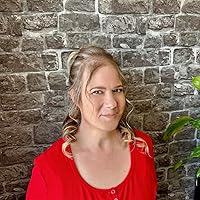
Claire Askew is a poet, novelist and the current Writer in Residence at the University of Edinburgh. Her debut novel, All the Hidden Truths, was the winner of the 2016 Lucy Cavendish Fiction Prize, and longlisted for the 2014 Peggy Chapman-Andrews (Bridport) Novel Award. Claire holds a PhD in Creative Writing from the University of Edinburgh and has won a variety of accolades for her work, including the Jessie Kesson Fellowship and a Scottish Book Trust New Writers Award.
Her debut poetry collection, This changes things, was published by Bloodaxe in 2016 and shortlisted for the Edwin Morgan Poetry Award and a Saltire First Book Award. In 2016 Claire was selected as a Scottish Book Trust Reading Champion, and she works as the Scotland tutor for women's writing initiatives Write Like A Grrrl! and #GrrrlCon.
Claire Askew was born in 1986 and grew up in the Scottish Borders. She has lived in Edinburgh since 2004. Her poems have appeared in numerous publications, including The Guardian, Poetry Scotland, PANK, Edinburgh Review and Be The First To Like This: New Scottish Poetry (Vagabond Voices, 2014), and have been selected twice for the Scottish Poetry Library's Best Scottish Poems of the Year. In 2013 she won the International Salt Prize for Poetry, and in 2014 was runner-up for the inaugural Edwin Morgan Poetry Award for Scottish poets under 30. She runs the One Night Stanza blog, and collects old typewriters (she currently has around 30).
I really enjoyed the focus here on witches as a theme for female liberation and thought it was interesting how poems about want were spliced between. The witch poem/biographies in this are powerful. The language reminded me of Plath, however lacked the same lyricism and rhythms.
My favourites were: - A field journal of witches - Eunice Cole - Things men want to hear you say
The title poem in this collection was a set text in the feminist writing course I’m taking this term, and I knew I wanted to read the rest of the poems in the collection.
It definitely felt different reading the poem’s instructions after reading poems about people who were killed as witches. These are interspersed with poems set today, often with a first person narrator, exploring sexual violence, licentiousness, independence, and other qualities / behaviours for which one would have been classified as a witch in the 1600s. The title poem ends the collection.
My personal favourite is ‘A Field Journal of Witches’, in which Askew pays tribute to the majority of women condemned:
“All but the most famous were nameless: plain women who ended up living alone.”
This book is a discomfiting read, and the author has given it a trigger warning on its half-title page, “for sexual abuse, sexual assault, and descriptions of torture”.
This poetry is an exploration of what it feels like to be a woman. How throughout history we have been blamed criticized and constructed in the eyes of men. To be deceitful and beautiful beings where we are constantly paying the price for things we have no control. These poems and prose are thought-provoking, inspirational and powerful. This book is about both the beauty and the devastation of what womanhood is all about. This collection even takes us back in time to the Salem witch trials and figures that should never be forgotten.
I think Askew is definitely good at writing, but I think poetry about the Salem witch trials and women witches can be kind of boring. The poems that were not about witches were quite enjoyable. I will probably go back and revisit some of them. I would read another collection from her, as long as it wasn't about witches. I mostly did enjoy this, though.
A slim volume which felt very meaty, very scratchy, very uncomfortable, very good. I enjoyed the interspersing of poems about women persecuted as witches in history with poems about being a 'not good girl' in contemporary life, the inconvenient desires and acquiescences - one or the other alone would have been too hard to take and they spoke to each other.
A brilliant collection, one which I know I'll come back to again and again. Every new poem was a delight, whether it was furious, lustful, passionate or thoughtful tribute. Each page hit different and all of them were excellent.
I really enjoyed this collection and the influence of Anne Sexton upon Askew is blatant, without every feeling cheap or copycat-ish. The titular poem was a highlight. The mix of natural and sensual imagery was fantastic, winding in together beautifully.
3.5/5 stars a very witchy girlboss poetry collection, loved the random Scotland references which made me feel superior for understanding. Also very easy to read which we love!!
i liked some of this, felt ambivalent about other poems. i really like the theme, and there were some gems, but overall it just wasn’t a standout for me.