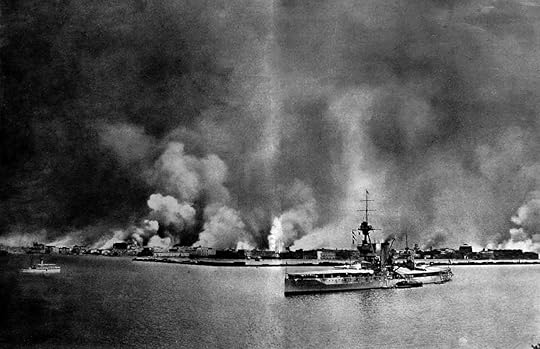
Tον Iανουάριο του 1915, λίγο μετά την έναρξη του Πρώτου Παγκοσμίου πολέμου, η Bρετανία προσέφερε στην Eλλάδα σημαντικά εδαφικά αντισταθμίσματα στη Mικρά Aσία προκειμένου να μπει η Eλλάδα στον πόλεμο στο πλευρό της Aντάντ. H πρόταση αυτή υπήρξε αφετηρία μιας διαδοχής γεγονότων που κατέληξαν στην τραγωδία του 1922, με την καταστροφή της ελληνικής Σμύρνης και τον ξεριζωμό του ελληνισμού της Mικράς Aσίας. Tο βιβλίο περιγράφει την κατοχή της Σμύρνης και τον μικρασιατικό πόλεμο σε σχέση με την ελληνική Mεγάλη Iδέα και τις διαμάχες των Mεγάλων Δυνάμεων στη Mέση Aνατολή. Iχνηλατεί τις απαρχές του «οράματος της Iωνίας» του Eλευθερίου Bενιζέλου αλλά και της ιδέας που μοιράστηκε με τον Nτέιβιντ Λόυντ Tζωρτζ για μια αγγλοελληνική συνεννόηση στην ανατολική Mεσόγειο. H συναρπαστική αφήγηση ζωντανεύει τα γεγονότα που διαμόρφωσαν την πολιτική και την κοινωνία της νεότερης Eλλάδας.
Sir Michael John Llewellyn-Smith is a British diplomat and academic. He was Ambassador to Poland from 1991 to 1996 and Ambassador to Greece from 1996 to 1999. Since his retirement he writes and lectures about Greek history and culture.
What a display of nearly all the pitiful weaknesses of the human creature: self-interest, the lust for revenge, self-delusion, the demonization and hate of the Other, self-delusion, greed, despair, cynicism, self-delusion...
Welcome to the Greco-Turkish War of 1919-1922. By the end of the First World War Greece had more than doubled its size and population since its war of independence of the 1820's, and the Greeks were dreaming their Ionian Vision: the re-institution of the Byzantine Empire in modern form and encompassing all of present day Greece as well as Macedonia, eastern Thrace, Anatolia and a few other odds and ends. The members of the victorious Entente each had their own dreams of slicing and dicing the Near East into zones of influence with the aim of maximizing their own individual advantage. Despite the fact that they had just emerged from four years of unprecedented carnage (the Greeks had been fighting since at least 1912), everybody was making plans for Turkey without asking the Turks, who according to the Greeks could return to the far reaches of Asia from whence they came, who according to the British could have a rump state in the high plateau and mountains of Anatolia, etc. The French and the Italians each had their own axes to grind, while the Russians were still intensely occupied in killing each other and preparing one of the worst dictatorships in human history. Only the Americans were not (yet) plotting their advantage in the region.
In Ionian Vision (1973) Michael Llewellyn Smith relates primarily the diplomatic and political history of the events which ultimately led to large scale massacres of, first, Turkish civilians by Greek civilians and military and then even larger massacres of non-Turkish civilians by Turkish civilians and military, which caused the migration of millions of Greeks and Armenians out of present day Turkey. With predominant focus on the activities and thoughts of the British and Greeks (and very secondary interest in those of the French and Italians - the Turks and Russians are described wholly from the outside by the author and only as absolutely necessary), Llewellyn Smith displays the maneuvers, plots and schemes that placed a puppet Sultan in Constantinople, created an international zone along the Dardanelles and a French zone in Cilicia,(*) and landed a Greek army at the ancient city of Smyrna (now Izmir). The Turks were being pressed to the wall, so it could hardly surprise that they rallied in eastern Anatolia under Mustapha Kemal with the clandestine support of the Italians and, after they gave the French a stinging defeat in Cilicia, of the French, as well.
I have written elsewhere of the schism in Greek society between the royalists and the republicans led by Eleftherios Venizelos during World War I which resulted in the victory of the republicans and the full scale entry of Greece into the war on the side of the Entente. In 1918 Venizelos was riding high and the siren song of the Ionian Vision, supplemented by empty promises made by Lloyd George,(**) was too powerful to resist. So he sent the Greek army to western Anatolia to establish the new Byzantium, even though cooler heads advised a century of careful Hellenization of the population before taking military and political control. And it all went so swimmingly, until the stunned Turks slowly recovered and started first irregular and then more concerted resistance.
Though the Greeks were tired and wanted peace, they also wanted Byzantium. So, as it is with humans, they soon idiotically wanted two mutually exclusive things and became frustrated that they couldn't get what they wanted. Of course, it didn't take long before they were looking for scapegoats. In an attempt to strengthen his political position preliminary to an increase in the Greek commitment in Anatolia and completely misjudging the mood of the electorate, Venizelos called an election and lost it badly to the royalists.(***) These gentlemen, in the standard human manner, then exercised their revanchism to the max: not only did they call the old king back to the throne, but they purged the government and, much worse, the officers corps of republicans (in the middle of a war!). The royalists and the king had resisted Greece's entry into WWI on the Entente's side, so the latter now had a good reason (excuse) to abrogate their increasingly uncomfortable agreements with the Greeks, who were now left alone (with constraints imposed by the Great Powers) to fight the Turks (who were secretly being aided by the Italians and French and labored under no externally imposed constraints).
Some Greeks saw clearly now that the jig was up, but politics is politics. The royalists had to make an effort and show some kind of victory in Anatolia, even though they knew they were broke and exhausted. The farce that was subsequently performed cost many men their lives, but also finished the offensive spirit of the Greek army. It was now just a matter of time until the Turks were ready to administer the coup de grâce. Everybody knew it and everybody prevaricated and stalled and shilly-shallied, as people do so well when they don't want to face reality. So no preparations were made for the inevitable. When it came, the Greek army collapsed in two days and what was left of it had to fight its way back to the coast with the Turks on their heels, eager for murder. And the Greek and Armenian civilians in Anatolia? - it's too depressing for me to write about.
(*) Here I am only mentioning what was taking place in Turkey, but the French claimed Lebanon and Syria, and the Brits took Iraq, Palestine and Egypt.
(**) The British were exhausted but needed "boots on the ground" to keep the Turks cowed. The Greek army would serve that purpose.
(***) If you want a model example illustrating the inherent weaknesses of democracies, you will find it here.
2η ανάγνωση, μετά από 20 χρόνια. Δεν έχω αλλάξει γνώμη από την παρακάτω ανάρτηση, απλά πλέον εντόπισα την απουσία ενσυναίσθησης του Σμιθ, ειδικά σε σχέση με την ανθρώπινη τραγωδία. Δεν είναι όμως τέτοιου είδους βιβλίο, αλλά μία χειρουργική και ψύχραιμη, και όσο το δυνατόν αντικειμενική, προσέγγιση σε αυτήν την απόλυτα παράλογη, από κάθε πλευρά και άποψη, ιστορία.
-------------------------------------------
1η ανάγνωση, 2002
Άκρως απαραίτητο ανάγνωσμα, όχι μόνο για εμάς τους Έλληνες αλλά και για όποιον άλλο θέλει μία αντιπροσωπευτική εικόνα των γεωπολιτικών παιχνιδιών που επηρεάζουν ολόκληρους λαούς και εθνότητες στο διηνεκές.
Νηφάλια και ρέουσα γραφή, προσεγμένη ανάλυση, από τα πιο ενδιαφέροντα θέματα, προφανώς. Το συστήνω ανεπιφύλακτα.
A well-considered political and military overview of the events leading to and comprising the Greek occupation of Smyrna and the campaign to enforce and expand the Treaty of Sevres. The strengths of this book are Llewellyn Smith's excellent grasp of the diplomatic intricacies between the Allies and the factional parliamentary politics in Greece itself. Yet it also has some major limitations. It ascribes heavily to an older style, 'Great Men' school of history and provides little information about the social dimensions of the occupation and how it was experienced. It also dwells in great detail upon the violence and suffering enacted against the Asia Minor Christian populations, but discusses similar retaliatory actions against Muslims far more briefly and dispassionately. Throughout, Mustafa Kemal's nationalist forces and the Ottoman and Turkish diplomatic delegations are presented as paper cut-outs, without any examination of their motivations or decision-making processes. When this is held up alongside a consideration of every whim and changing opinion of a figure like Lloyd George, for example, the result is a lop-sided narrative where Turkish forces take on a deus ex machina like role. On the whole, this is a good survey of the topic and a useful tool, but treating it as the definitive history would leave much to be desired.
Admittedly, this is a book I bought more to learn something than as an engrossing read, and on that score I have few complaints. Smith, a diplomat and historian, does a fine job showing the political divisions rending early 20th Century Greece, namely the rivalry between nationalist Eleftherios Venizelos, who envisioned a new Hellenic Empire across Asia Minor (with winking support of Britain and its allies), and the more conservative, cautious King Constantine and his advisers, who took hold of Greece in 1920 and drove it to disaster. Smith navigates these strands well, showing how this internal division, along with confused strategy, dismal military leadership (not least the half-mad General Hatzianestis) and the British withholding support at crucial moment. Strangely, Smith treats Mustafa Kemal and his Turkish nationalists as almost passive players in the story, except when they're slaughtering Christians in Smyrna and elsewhere. While consistently informative, Smith does often become bogged down in oft-repetitive detail, transcripts of political debates and policy papers that don't make for gripping reading. Between this and David Walder's The Chanak Affair, my excursions into this chunk of Greek history have been disappointing; will have to keep my antennae raised for something better.
Έχουν γραφτεί πολλά βιβλία γι' αυτή την περίοδο, αλλά αν, αν λέω, έπρεπε να διαβάσει κανείς μόνο ένα βιβλίο σχετικά με τη Μικρασιατική Καταστροφή και πώς οδηγηθήκαμε σ' αυτή, αυτό θα ήταν το Όραμα Της Ιωνίας. Αυτό το βιβλίο αποτελεί την αντικειμενική καταγραφή - από έναν φιλέλληνα παρόλα αυτά - γεγονότων, αγνώστων πτυχών και απόρρητων εγγράφων από διπλωματικές πηγές. Παρατίθεται ακόμη αλληλογραφία των πιο σπουδαίων πρωταγωνιστών και άλλων και πλείστες άλλες πηγές της εποχής και όχι μόνο. Όλα εξελίσσονται γραμμικά και περιγράφονται με τρόπο καθηλωτικό κι ας γνωρίζουμε το δραματικό τέλος. Πρέπει να πω επίσης ότι είναι πάντα πολύ ενδιαφέρον να διαβάζεις ελληνική ιστορία από μη Έλληνες.
Ένας πολύτιμος θησαυρός, που θα κοσμήσει τη βιβλιοθήκη κάθε φιλίστωρα.-
While centering the focus on how internal Greek politics lead to the invasion and subsequent disaster of Asia Minor, it perhaps unintentionally seems to leave the Allies a bit off the hook for responsibility in terms of their unwillingness to enforce their own victory and sending in the Greek army to do their dirty work for them without supporting them or even being in agreement on doing it. Also, as has already been said, very little of the Turkish side was described that would have explained further how the disaster happened and this almost seems to also exclude them from responsibility aside from brief mentions of their atrocities.
Nevertheless, a great description of the finer details of how events in Greece unfolded and developed if, as others have already said, it does get bogged down in tedious and superfluous detail at times.
"Greece got her dream, and when she woke up she threw it all away" - a good overview of the Asia Minor Catastrophe. Some of the political paragraphs are a bit long, but the greater dynamics in Greece and the Great Powers are really well described. A book which has remained in my thoughts for quite a while.
It's a book that although provides useful details about the events and especially the British perspective, on the other hand the author gives the impression that he does not have the capacity to comprehensively analyze the battles and to understand the challenges and the difficulties both sides had. By focusing only in the Greek difficulties, he is not taking into consideration the much worse situation of the Kemalists at the time. As a result, he illustrates the Greek expedition as doomed from the beginning. But as someone who has read the military history of the Asia Minor expedition -as it is called in Greece- I do not agree with the presentation of the battles and military challenges for the Greek leadership by the author.
Μία αρκετά λεπτομερής και μεθοδική καταγραφή των γεγονότων, των αποφάσεων αλλά και των παραλήψεων που οδήγησαν στη Μικρασιατική καταστροφή. Άγγλος ο συγγραφέας και ως τέτοιος προπαθεί να επιδείξει τα χαρίσματα της αγγλοσαξονικής ιστοριογραφίας, δλδ μεθοδικότητα, πληρότητα, στρωτή γραφή χωρίς συναισθηματικές εξάρσης και "αντικειμενικότητα" (τουλάχιστον σε ένα πρώτο επίπεδο). Επίσης, βασίζεται και χρησιμοποιεί εκτεταμένα, έγγραφα από το βρετ. υπουργείο Εξωτερικών, ενώ η αναφορές σε γαλλικές, ιταλικές, ελληνικές και τουρκικές πηγές είναι πολύ πιο περιορισμένες. Οι αναφορές του στα πραγματικά κίνητρα που εξηγούν συγκεκριμένες δηλώσεις και αποφάσεις, όπως και οι χαρακτηριολογικές αναφορές στα πρόσωπα, είναι περιορισμένες αλλά κατά κανόνα εύστοχες, λογικές και χωρίς να έρχονται σε σύγκρουση με όσα γενικά γνωρίζουμε.
Ως προς την αντικειμενικότητα, έχω να σχολιάσω το εξής: μαζί με τα γεγονότα και τις δηλώσεις δίνει με διακριτικό τρόπο αλλά πολύ ξεκάθαρο τρόπο (αν θέλει κάποιος να κατανοήσει και να συνδυάσει όσα γράφει) τα κίνητρα και τα τερτίπια των Άγγλων και των τρόπο με τον οποίο χειραγώγησαν τους Έλληνες πολιτικούς για να πετύχουν το μέγιστο των στόχων τους, με το ελάχιστο δυνατό κόστος σε ζωές Άγγλων και αγγλικά κεφάλαια. Ουσιαστικά επρόκειτο για ένα διπλωματικό παίγνιο υψηλού ρίσκου (για όσους είχαν ανθρώπους, ζωές και επιχειρήσεις στο έδαφος) όπου η συνεισφορά της Αγγλίας περιοριζόταν σχεδόν αποκλειστικά σε "διπλωματικό κεφάλαιο". Η προνομιακή του πρόσβαση σε υλικό του υπ. Εξωτερικών δίνει βάθος στα λεγόμενα του, όμως δεν μπορούμε να γνωρίζουμε πόσο αντικειμενική και πλήρης ήταν η χρησιμοποίηση του υλικού. Χωρίς να μπορώ να το αποδείξω είμαι βέβαιος ότι μετρίασε την παρουσίαση της ευθύνης των Βρετανών, όπως είμαι βέβαιος ότι θα απέκρυψε στοιχεία που αποδεικνύουν τη βρετανική δολιότητα, εάν είχε βρει κάποια.
Πέρα από αυτά, προσπαθεί να εμφανίσει ως σχεδόν αποκλειστικό υπεύθυνο τον Λόυντ Τζόρτζ, ωσάν να ασκούσε προσωπική φιλελληνική πολιτική, για το ότι άφησε τους Έλληνες να "παρασυρθούν" από ελπίδες πως θα μπορούσαν να κρατήσουν τη Σμύρνη. Όσα περιγράφει όμως στη συνέχεια δείχνουν ότι ναι μεν ο Λ.Τζ. ήταν το κύριο πρόσωπο αναφοράς που "συμβουλεύονταν" οι Έλληνες πολιτικοί, ωστόσο ήταν πλήρως εναρμονισμένος και γνώστης της γενικότερης βρετανικής στάσης να τζογάρουν χοντρά και άμετρα στο διπλωματικό παίγνιο έχοντας την ελαχιστότερη δυνατή συμμετοχή στο ρίσκο. Η υποκριτική στάση της Μ. Βρετανίας που όποτε ήθελε κρυβόταν πίσω από την ενότητα της Αντάντ (όταν ερχόταν η ώρα να βάλουν τεχνητά εμπόδια στην ελληνική προσπάθεια) και όποτε ήθελε την περιφρονούσε και έπαιζε το παιχνίδι των συμφερόντων της αποκαλύπτεται σε όλο το βιβλίο.
Detailed history of the Greco-Turkish war after the end of the First World War. An older book, originally published in 1973 but I read an updated version published in 2022 (so if it still being printed it must hold up pretty well). Mostly focused on the high level internal (Venizelist vs Royalist) Greek politics and decision making as well as the role of the foreign major powers (Britain, France and Italy) in the war and their influence on Greek decision making. Not that much of on the ground ordinary people's experiences. So while good it is not a particularly engrossing read. The early chapters describe the political, religious and ethnic context in the areas Greece wanted to take over pretty well. Plenty of extracts from letters and documents throughout the book, as well as lots of explanatory footnotes.
Overall I enjoyed it but I would only recommend it if you are specifically interested in this topic and already know a bit about the post-WWI political situation. Not as a random book or a trying something new book.
Ionian vision offers an impartial approach of the Greek adventure in Asia minor in a way that the reader, who is interested in this history, will gain a comprehensive idea of the political balances away from the war front. For someone who is interested in Asia minor war, this book is just one of the many that one has to read in order to gain the whole picture of this sensitive aspect of greco-turkish relationship.
Kurtuluş Savaşı'nı derinden inceleyen ve kendi kaynaklarımızı okuduktan sonra diğer tarafın da bakış açısını görmek isteyenler için güzel bir kaynak. Olabildiğince tarafsız yazılmışsa da en nihayetinde bir Batılı'nın bakış açısını veriyor. Zaten biz de o yüzden okumalıyız :)
Ότι καλύτερο κυκλοφορεί για νά καταλάβουν ακόμα και οι απλοί αναγνώστες το τι έγινε στην Μικρά Ασία. Χωρίς νά αγιοποίησει κανέναν από τους εμπλεκομενους. Όλα τεκμηριωμένα με ντοκουμέντα από επίσημα αρχεία των πρωταγωνιστών.
Una narración excelente de los acontecimientos de hace justo un siglo, sobre todo desde la perspectiva griega y británica. A mi entender, quien sale peor parado del libro es Venizelos, cuyas actuaciones distaron mucho de ser las de un gran estadista.
this is, of course, the best account of Greece's anatolian venture. But it is also an absorbing account of Greece itself in the early 20th century. Does not shrink from showing Venizelos as he was, rather than as his followers or his opponents imaginved him to be