Jump to ratings and reviews
Rate this book

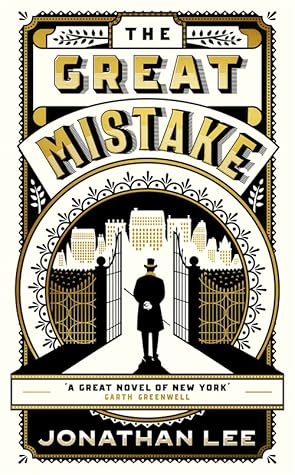
The Great Mistake

Rate this book
*Duration: 9 hours and 42 minutes*

An exultant novel of New York City at the turn of the 20th century, about one man's rise to fame and fortune, and his mysterious murder.

Andrew Haswell Green is dead. Shot at the venerable age of 83, when he thought life could hold no more surprises. The killing - on Park Avenue in broad daylight, on Friday the 13th - shook the city.

Born to a struggling farmer, Green was a self-made man without whom there would be no Central Park, no Metropolitan Museum of Art, no Museum of Natural History, no New York Public Library. But Green had a secret, a life locked within him that now, in the hour of his death, may finally break free.

A work of tremendous depth and piercing emotion, 'THE GREAT MISTAKE' is the story of a city transformed, a murder that made a private man infamous, and a portrait of a singular individual who found the world closed off to him - yet enlarged it.

10 pages, Audible Audio

First published June 15, 2021

342 people are currently reading
8062 people want to read

About the author

Jonathan Lee

64 books178 followers
“THE GREAT MISTAKE is a great New York story.” —Entertainment Weekly

“The best American novel of the year.” —The Guardian

“Seriously entertaining...The detective work is ingenious.” —The Sunday Times (London)

JONATHAN LEE's new novel, THE GREAT MISTAKE (June 2021) dramatizes the mysterious life and murder of a real historical figure — Andrew Haswell Green — who was central to the creation of Central Park, The Met, The New York Public Library, and much more.

Jonathan's previous book HIGH DIVE was named a best book of the year in publications including The New York Times, The Guardian, and The New Yorker.

Jonathan is also editor in chief of the indie publishing house Catapult in NYC, publishing work he loves by authors like Chelsea Bieker, Jon McGregor, Jokha Alharthi, Chloe Aridjis and more.

Ratings & Reviews

What do you think?
Rate this book

Friends & Following

Create a free account to discover what your friends think of this book!

Community Reviews

5 stars
482 (17%)
4 stars
1,030 (37%)
3 stars
886 (32%)
2 stars
270 (9%)
1 star
73 (2%)
Displaying 1 - 30 of 430 reviews
Profile Image for Adam Dalva.
Author 8 books2,160 followers
April 17, 2021
Terrific, really terrific. A beautifully researched examination of Andrew Haswell Green, with an innovative structure, bold writing, and a ton of heart. The scenes with Samuel Tilden exploded off the page - marvelous to learn about a figure while marveling at the quality of Lee's prose.

“New York is a comedy to those who think, and a tragedy to those who feel.”
Profile Image for Annette.
956 reviews613 followers
April 5, 2021
What shaped Andrew Haswell Green to become one of the most influential people shaping the map of New York City as we know it today? And what drove another man to murder Green at the age of eighty-three?

NYC, 1903: “The last attempt on the life of Andrew Haswell Green took place on Park Avenue in 1903.” Mrs. Bray, a housekeeper, is questioned at a police station, repeatedly by different officers. She relates the events of the day leading to murder, and through her eyes we glimpse who her employer was – a pioneer.

As a young boy growing up on a farm in Massachusetts, Andrew enjoys the farm choirs and the long walks in nature. He enjoys that feeling of adventure and exploration. And though he is not one for reading, when his sister puts him to shame he develops a technique for reading certain pages and imagining the rest. His farm life ends when his father arranges an apprenticeship at a general store in New York. While he doesn’t want to leave the farm, once in the city, his first independent income gives him a thrilling satisfaction. And it’s here he meets and forges a friendship with Samuel Tilden, who later becomes a prominent New York lawyer.

The title of The Great Mistake comes from the story of New York’s consolidation of five boroughs. “A project his critics described as the Great Mistake of 1898.” The Father of Greater New York was the founder of many public places, including museums, zoo, parks, and more. Places that are enjoyed by many New Yorkers and visitors every day.

The proceedings in the murder case create underlying suspense and the character development gives the story an interesting depth, which is the strength of this story.

(4 stars: Personally, I don’t like to read about any kind of proceedings. Thus, the proceedings of the murder case did not hold my interest. However, the life of Andrew Green is interesting.)

Source: ARC was provided by the publisher via NetGalley in exchange for an honest review.

Review originally posted at mysteryandsuspense.com
Profile Image for Peter Boyle.
581 reviews742 followers
June 13, 2021
This captivating novel focuses on the life of Andrew Haswell Green, the man who is considered "the Father of Greater New York." The story begins with his death, murdered outside his front door by a distressed individual named Cornelius Williams. The book then splits into two narratives. The first takes a look at highlights from Green's life. We learn about his humble beginnings, working on the meagre family farm. In his teens, he is sent to New York to become an apprentice in a general store, in the hopes of setting him on the path to earn a respectable living ("His family feared he might one day succumb to the catastrophe of being a poet"). There he falls under the spell of the two real loves of his life - books, and his great friend Samuel Tilden. The second plot strand takes a look at the investigation into Green's death, led by the capable Inspector McClusky, who tries his best to understand the motive behind the murder.

The Great Mistake is billed as historical fiction, but it's all based on events in the life of a real person, so a 'reimagining' might be a more accurate description. I had never heard of Green before reading the book, and I was amazed to learn about the enormous impact he had on New York City, being responsible for the creation of Central Park and New York Public Library, among many other significant projects. The story also captures Green's profound loneliness and I found this quite moving. He was obviously gay, though never able to publicly acknowledge the fact, and his repressed sexuality only served to drive him further into himself. His close friendship with Tilden seemed to be a single source of comfort, and though it appears his deeper feelings were reciprocated, they both held back from pursuing a relationship. Lee also paints a vivid picture of a bustling and booming New York, a melting pot of multiple cultures, still scrabbling to forge its true identity. I didn't find the police investigation quite as riveting as other reviewers, but that's probably down to my own personal preference. The Great Mistake is an immersive, poignant tale, and a fitting tribute to the life of a man who deserves to remembered.

Favourite Quotes:
"He loved this city. He hated it. It was a cathedral of possibilities, it would never settle down, it might remember him or it might forget him, there was a sense of no control..."

"He likes the way the slightest impressions are magnified at this early hour: the distant crack of a cratemaker’s hammer; the flat beauty of a flake of downtrodden tobacco; the vendor pulling a cart out of the shack on the other side of the street, ears all aquiver with the effort. This is an area of hatters and druggists, of print shops and bookstores, of hackney coachmen waiting on corners praying for rain."

"Eighty-three years old. A lifetime of being a bachelor. This extended life of aloneness might have an effect on a man’s character, might it not? Independence might have rusted into obstinacy."

"You wake up one day and realize you are a different person. That seems to be how life happens, how it establishes its patterns. The adult becomes a stranger to the boy he used to be. You become distant from everybody, especially yourself, even if, in the secrecy of your heart, you feel mostly unchanged."

"And was it so bad, really, to be plagued by regret? Might our private loneliness, our most crushing inner fears, push us outward, at times, into greater public good? The building of bridges, of open spaces, of consolidated places where others might feel less alone? Is such an idea too ridiculous to form the foundation of action, or inaction?"
Profile Image for Gumble's Yard - Golden Reviewer.
2,189 reviews1,797 followers
July 4, 2021
Published today 11 June 2021

This book is a historical novel about the life and death of the real-life 19th century lawyer, civic leader and city-planner Andrew Haswell Green the so-called “Father of Greater New York” who developed (among other things) Central Park, the Bronx Zoo and the Metropolitan Museum of Art. His final major act was drawing up the plans for including Brooklyn, Queens and Staten Island in a greater New York – the criticism of which at the time gave this book its title.

The book opens with Haswell’s murder – at the age of 83 - in 1903, shot in a seeming case of mistaken identity.

Haswell we are told in the novel, as a young man, stung by criticism that he did not read enough, started reading but “developed a habit of reading five pages from the opening of a book, and then five pages from the end, going back and forth like this for some time until he could picture the raw sprawl of story in the middle.” – and this serves as a deliberate nod to the structure of the novel.

Effectively we have two or perhaps three main sets of chapters

One strand tells Green’s story – starting with his Massachusetts upbringing on the family farm, with a distant father who rather scorned his efforts around the farm and later, alarmed by a close briefly quasi-physical friendship that Andrew forms with another boy, sends him to New York to work for a pittance with a local merchant. There Andrew’s only real positive experience is an unlikely friendship he strikes up with the up and coming lawyer Sam Tilden (later the controversial loser in a disputed Presidential election) – but in an echo of his previous experience, Sam withdraws from the relationship due to not entirely unfounded rumours about the closeness of their relationship – and the devastated Andrew spends a year on a Trinidad plantation. The money he gains there and the time for reflection enables him to re-establish himself not just in Sam’s friendship but in his sponsorship – and it is the start of his own successful career, one sketched out only at intervals (for example in a public meeting where he first takes over the Central Park project).

The second set of chapters looks at the events of his death and the subsequent investigation into his death – a number of chapters written from the viewpoint of a Police Detective addicted to the medicinal use of cocaine, and who quickly focuses his attention on the murderer’s claim that Green was conspiring against him with a black courtesan, brothel owner and landlord (the real life Hannah Elias).

The detective says at one point “The manner of death could be the clue from which the heart of a life could be reached” – and his own attempts to unravel both Green’s life and the motivations for his death serve as a clear analogy for the author’s own interest in writing the book (an interest the novel implies in a brief breaking-the-fourth-wall moment by coming across a Central Park bench which acts as a modest memorial to the Park’s visionary founder.

This is, as the above may imply, a novel with a three-way interaction between Green’s own story, the dialogue and action in the novel and the way in which the novel is constructed.

Just as some other examples: Green himself observing happenings at a public meeting remarks “There are always at least two histories happening, the inner and the outer, the private and the public” - fitting the book's different levels; the chapters are each named after the original names of the entrance gates in Central Park, which are taken “not from great men of the City, as almost everyone else suggested, but from the pursuits of the ordinary people, so trapped in their own unfulfilled desires” – so here not only do the gates themselves serve as different entry points to Green’s life, but the chapters themselves link to the pursuits picked (Scholars, Artists) and perhaps most of all this is the story of a so-called great-man trapped in his own unfulfilled desires.

For Green we are told is a “person who, in his last twenty years, had campaigned tirelessly against the idea of isolation [in setting up public parks, public libraries, in breaking down boundaries and natural barriers between different parts of his vision of a Greater New York] while remaining himself isolated”

There is an element of artifice in this – but even that is symbolic as the novel reminds us how Central Park is a man-made, artifice, “imagined and realized through years of careful fraudulence” and how this showed that Green himself “admired, presumably, the careful construction of a suitable human story”

So a lot to admire in this very carefully constructed novel.

What did not quite work for me. Well here I will try to switch my review to the same level of analogy as used in the book. Pre COVID I would work in mid-town New York around once a month – but I have never visited Central Park. Why? Well because in the UK I live within a 5 minute walk of miles of entirely natural hills and countryside. A City Park – while an appealing idea for some relaxation if in New York - seems like an uneasy compromise to me. And perhaps at times this novel with its mix of a rather straight detective sub-story, US urban history with the meta-literary fiction seemed to be an uneasy compromise also, while still very enjoyable.

My thanks to Granta Publications for an ARC via NetGalley
Profile Image for Ari Levine.
241 reviews242 followers
April 27, 2021
A strangely subversive historical novel about the life, thwarted sexuality, and murder of a now-forgotten historical figure who once dominated Gilded Age New York. The novel's title is meaningful in many different personal and political contexts.

I knew next to nothing about Andrew Haswell Green's (1820-1903), and his only memorial is a marble bench in a distant corner of Central Park, near Harlem Meer. But, as we learn here, Green was the Robert Moses of his day. He was extremely influential in unifying the five boroughs into the City of New York in 1898, planning its major landmarks (including Central Park, the New York Public Library, the Metropolitan Museum of Art, the Bronx Zoo, and the American Museum of Natural History), and cleaning up after the vast municipal corruption ring of Boss Tweed.

Lee's style is wry and observant, but he doesn't attempt a late nineteenth-century pastiche (except in some purple arias of period-perfect dialogue). So this is less like Francis Spufford's Golden Hill and more like a loving homage to E.L. Doctorow's Ragtime-- it's totally immersive but Lee doesn't gratuitously flaunt the deep research. Each chapter, named after a gate in Central Park, interleaves Green's life story with the investigation of his seemingly random murder on Park Avenue (not a spoiler-- this happens on page 1!).

The son of an indebted Massachusetts farmer, Green apprentices as a shop boy in New York, becomes an overseer of a sugar plantation in just-emancipated Trinidad, and cunningly maneuvers himself into a position of wealth and power as corporate lawyer and power broker. He was the law partner of Samuel Tilden, who is relatively better-known as the governor of New York and a failed presidential candidate in the rigged election of 1876.

Both Green and Tilden died as bachelors, and Lee portrays them as chaste companions, at least one of whom longed for something slightly more than platonic-- very Henry Jamesian. The cast of characters also includes a fantastically wealthy Black courtesan, a cocaine-addicted NYPD detective, a sly Irish housekeeper, Teddy Roosevelt, and a madman with a revolver.

Irresistibly enjoyable, and does something new in a very crowded field.

Thanks to Netgalley and Knopf for providing an ARC in exchange for an honest and unbiased review.
Profile Image for Eric Anderson.
716 reviews3,925 followers
July 13, 2021
There's a strange irony in how a man's influence can be felt everywhere in a city, but the man himself is mostly unknown. Andrew Haswell Green was considered “the Father of Greater New York”. He was a city planner responsible for some of the city's most notable landmarks and institutions including Central Park, the New York Library and the Metropolitan Museum of Art. This businessman and lawyer created a tremendous legacy, but when he was 83 years old he became the victim of a strange murder case which occurred in 1903. The mystery surrounding the inner life of this figure is the subject of Jonathan Lee's new novel “The Great Mistake” and Green comes to feel like a chimera the author is chasing in order to understand him – even when Green seems not to know himself. The story is framed around the peculiar circumstances of his death and gradually we come to discover the motive behind it, but the real enigma is Green's inexpressible desire which accompanies him throughout his life and never finds fulfilment. In this way, Lee captures a tender sense of loneliness and these grand spaces for the public good which Green created are underlined by a solemn yearning for human connection.

Read my full review of The Great Mistake by Jonathan Lee on LonesomeReader
Profile Image for Barbara K.
709 reviews199 followers
December 6, 2022
I tend to have difficulties appreciating historical fiction that doesn't just recreate a time and place, but also invents an interior life for real people. At times the overall scope of a book wins out, such as in When We Cease to Understand the World. But in the case of other books, particularly those set in relatively modern times, it just doesn't work for me.

Andrew Haswell Green had a dramatic effect on the character of New York City during the latter half of the 19th century. He was responsible for the development of Central Park, the Metropolitan Museum, and the Museum of Natural History, as well as crushing "'Boss" Tweed's corrupt dominance of NYC politics, and the unification of the five boroughs into the New York City we know today. No small accomplishments, these.

And yet he is little remembered today. He was a solitary man who never married and who did not campaign for recognition in his lifetime. His close friend, driven politician Samuel Tilden, governor of NY and winner of the popular vote in the 1876 presidential election but loser of the presidency through electoral college chicanery, was his opposite in temperament. Tilden was also a lifelong bachelor and Lee posits a repressed homosexual relationship between the two. After finishing the book I poked around online a bit and found nothing to substantiate this beyond author Lee's imagination. That is irksome to me.

But that proposed need on Green's part to hide part of himself is a key element of the book, the explanation for his ephemeral personal legacy in contrast to his very substantial accomplishments.

In structure the book begins with Green's murder outside his Park Avenue home when he was 83 years old. Initially there seemed to be no reason for Cornelius Williams to have shot him. From there, Lee pursues two timelines. One is the story of Green's rise from the child of an impoverished Massachusetts farmer to become a powerhouse of New York City life. The other is the investigation into the cause for the murder.

Along the way we are introduced to an array of artfully described individuals, some real, some fictional, as well as vivid depictions of NYC life throughout the 19th century. At times these characters seem to be present specifically to draw a contrast to Green, whether because of their financial circumstances or their emotional connectedness. My own favorite was his housekeeper Mrs. Bray, a canny, resourceful survivor who facilitated Green's life in many ways over the years.

I wonder if I am the only reader who sensed parallels to E.L. Doctorow's Ragtime? They are closely set in time and place, and both include a scattering of historical figures. Very different books, certainly, but vaguely similar in their illumination of turn of the century NYC through the lens of very public murders. Of course it's been a long time since I read Ragtime and my recollections could be blurred.

It would be unfair of me not to give credit to the writing, which is often gorgeous. Lee frequently puts acute observations on life, on society, on politics, into his character's minds, one of whom reflects, for instance: "One's past is as much an act of imagination as one's future." Not only each chapter, but each paragraph and each sentence are carefully constructed.

As I suggested at the start of this review, there are inherent reasons I'm not the best one to judge this book. It's beautiful in many ways, but I never really connected properly with it.
Profile Image for Nigeyb.
1,476 reviews404 followers
September 17, 2022
The Great Mistake (2021) by Jonathan Lee is an engrossing and clever book which credibly evokes the life of a fascinating person.

That fascinating person is Andrew Haswell Green (October 6, 1820 - November 13, 1903) and the novel opens with Green's death, shot aged 83 on the steps of his Park Avenue home by a man named Cornelius Williams. Dual narratives then cut between the aftermath of the murder and Green’s personal history.

Green is the father of modern New York. Brought up dirt poor and not suited to the family farm, he eventually made his name as a lawyer then as the architect of the union of Manhattan with Brooklyn and Queens. Green also founded the Public Library of New York, the Metropolitan Museum of Art and, most famously, that breath at the heart of the city, Central Park.

By the novel's conclusion we understand the reason behind his apparently motiveless murder and learn much more about the remarkable life of Green including his thwarted relationship with Samuel Tilden. It's beautifully written and well worth reading.

4/5


The ‘Father of Greater New York’ is dead. Shot outside his Park Avenue mansion in the year of our Lord, 1903. In the hour of his death, will the truth of his life finally break free?

Born to a struggling farming family in 1820, Andrew Haswell Green was a self-made man who reshaped Manhattan, built Central Park and turned New York into a modern metropolis. Now, at eighty-three, when he thought the world could hold no more surprises, he is murdered. As the detective assigned to the case traces his ghost across the city, other spectres appear: a wealthy courtesan; a broken-hearted man in a bowler hat; and an ambitious politician, Samuel, whose lifelong friendship was a source of joy and frustration.

In a life of industry and restraint, where is the space for love? As restlessly inventive and absorbing as its protagonist, The Great Mistake is the story of a city, and a singular man, transformed by longing.
Profile Image for Mohammed omran.
1,839 reviews191 followers
February 13, 2022
تعريف أدب الغموض في القرن الواحد والعشرين انه جوناثان لي
أندرو هاسويل جرين ,والعوامل اللي شكلت شخصيته شاب حبوب قاعد في مزرعه وحابب الطبيعه والعزله فجاه ابوه يجبره للانتقال لنيويورك ليصبح أحد أكثر الأشخاص نفوذاً في تشكيل خريطة مدينة نيويورك كما نعرفها اليوم؟
وبعدين تلاقي محاوله قتل لشخص عنده 83 سنه
. كان محامياً في مدينة نيويورك ومخططًا للمدينة وقائدًا مدنيًا ، وكان مسؤولاً عن العديد من الأشياء التي تشتهر بها مدينة نيويورك بما في ذلك سنترال بارك ، وحديقة حيوان برونكس ، ومكتبة نيويورك العامة ، والمتحف الأمريكي للتاريخ الطبيعي ، ومتحف متروبوليتان للفنون.
small4-15985816404032056

كان جرين مسؤولاً أيضًا عن دمج الأحياء الخمس لنيويورك في مدينة واحدة. عن عمر يناهز 83 عامًا ، قُتل بالرصاص خارج منزله في 13 نوفمبر ،! 1903. يتناوب فيلم "الخطأ العظيم" بين وضعين ، سيرة ذاتية خيالية تستند إلى تفاصيل من حياة جرين وتحقيقات الشرطة في ملابسات وفاته المروعة. تكمن قوة "الخطأ العظيم" في جمله الفردية. الجمل دقيقة ومعبرة ولديها فورية دراماتيكية تضعك في صف بطلنا أندرو هاسويل جرين. إذا كنت من القراء الذين يقدرون الجمل الرائعة التي تستدعي المشاعر ، فاقرأ بكل الوسائل "الخطأ العظيم". "حفلة اللحظات المتصلة بالكاد والتي تشكل أي حياة."
ا. يجد كاتبنا جوناثان لي الكلمات والمشاهد للتعبير عن الحقائق التي لا يتم التعبير عنها كثيرًا. كان جرين رجلاً كان عليه أن يتغلب على الظروف التي أصبحت واضحة جدًا له في طفولته من أجل تحقيق ما فعله. سواء كنا على دراية بذلك أم لا ، فقد عاش كل واحد منا حالة طفولة شكلت معظم حياتنا بأكملها. تشمل حالة الطفولة
المثير ان اي حد يري تخطيط نيويورك يعجب به
بالرغم من الوقت الطويل الخطا كان خطأ القتل ام خطأ المقتول
غموض حلو وانجلش حلو 3 نجوم
Profile Image for switterbug (Betsey).
936 reviews1,497 followers
December 6, 2021
The auguring title promises several meanings--some which are specified and some that readers will identify while reading. The unlucky protagonist, octogenarian Andrew Haswell Green, is shot dead on page three in front of his house on a Friday the 13th in November, 1903. Who is Green? A civic leader responsible for some of the most well-known public, cultural, and green spaces in New York--including the Greater New York consolidation with Brooklyn dubbed by some as “The Great Mistake of 1898.”

But this book isn’t a Wiki entry, it's about an incongruent life. Lee's subject matter and the shooter (especially the shooter) by definition (a Black man) is way controversial to this day and age, and yet the author didn't shy away from it. I felt relaxed reading it because I knew that Lee was not trying to throw shade on people--only ourselves, when we repress our authentic lives. (It's not cliché in Lee's hands).

Is there a scandal? This is what Inspector McClusky needs to determine. The president of the U.S. praised Green and is demanding justice. But scandals “were always looking for ways to spread their mass.” The president “did not want to get his shoes covered in shit, and Inspector McClusky did not want to lick them clean.” The killer is known; the motivation remains opaque, but full of possibilities, limited only by the imagination and the racial prejudices of the time. Lee is so utterly droll!

The chapters alternate between the present (mostly the murder investigation) and Green’s past, starting with his childhood on a farm in Worcester, Massachusetts, and up through to the finale of revelations. However, if you are seeking a tense thriller or cat and mouse adventure, look somewhere else. This is primarily a portrait of a lonely man who remained a cipher to himself, most of all. He kept his emotional aspirations so private that they were never fulfilled.

It did take me a minute to engage and see how powerful this story is done, as the entire history, facts, and setting needs laying out, and then the fictional elements, which are truer than fact (or need to be, if you want to be convincing). If that sounds confusing, let me clarify. Green is an obscure person, except for his civic life and tragic death. The author filled in the details to give the man, celebrated by his contemporaries, an inner life. Green did keep a diary of his time in Trinidad as a young man (one of the key and shining chapters for me), but for the most part, Lee created the persona out of the man, and it is highly persuasive.

I went all in after reading a vintage Lee scene with an elephant that…well, really exposes the elephant in the room! I read the scene twice--it was that impressive and animated. I only wish there had been more exquisitely rendered scenes like that. In some ways, I liked his earlier HIGH DIVE a bit more for its immediacy and intimacy. THE GREAT MISTAKE is paced and depicted at a remove, purposely, I'm confident. A few times it flattened the story, or threatened to, and required my patience to get into it. But I was rewarded, duly.

So who is Andrew Haswell Green, the man? That is for the reader to discover, although it isn’t particularly cryptic, at least not his individual nature. What Lee did was explore why Andrew Green did not pursue his individual longings and life, and how it relates to his background, his father, and his many siblings. The author also included characters that were the antithesis of Green in order to enhance the theme of incongruity to oneself, i.e. Green's repressive nature. At the same time, he insisted that the corruption in the city be decontaminated. He became the city comptroller, which fit well with his incorruptible nature.

Staid, solid, a man who was yet a shadow of himself. Highly recommended for lit lovers! Don't read the Wiki entry until you finish the book, because it will give away the "motive" of the killer, and some truly great mistakes therein. A bit slow at first, and the ending just sort of loses steam, but worth the read. Droll, sublime, and might even be mistaken as a romance of early 20th century New York. 4.5 rounded up
Profile Image for Erik.
331 reviews278 followers
June 4, 2021
Jonathan Lee's The Great Mistake brings into the light the story of the father of Greater New York City, Andrew Green - a man forgotten to history but brought back to life in this bit of historical fiction.

Andrew Green finds himself cast from his family's farm after an adolescent sexual encounter with another boy in the mid-19th Century. Sent to New York to work as a cashier at a mercantile shop, he meets Samuel Tilden, a man of means who will eventually go on to become the Governor of New York and candidate for U.S. President. When a lone gunman kills Green in 1903, journalists and a cocaine-induced detective search for answers in the life of Mr. Green. What comes to light is a tale of the life of a man who fought social isolation by giving birth to New York City's great public parks and institutions, all while keeping his own internal workings and desires completely isolated.

Despite the historical nature of this book, Lee's writing doesn't convince me with regards to this setting. At times it feels as though Lee cannot quite decide if he wants to present a world of camp or a serious literary historical world and as a result the setting seems at times to be shallow and fake. But the most egregious issue to me is the book's almost complete failure (with the exception of a single line) to address the fact that Andrew Green's biggest accomplishment - the creation of Central Park - displaced an entire neighborhood of Black residents.

Nonetheless The Great Mistake is interesting and well-written, an homage to a complicated fan that still remains, to many, a mystery.
Profile Image for Marion.
1,189 reviews21 followers
July 14, 2021
What a disappointment! I had looked forward to learning about the life and times of Andrew Haswell Green, a significant Gilded Age figure who was known at the time as the father of Greater New York and instrumental in the creation of Central Park, the NY Public Library, the Natural History Museum and other significant contributions to NYC’s standing as a world class city. Instead I got a turgid mishmash of his early life, fleeting views of his major contributions to NYC, the thoughts and viewpoints of his housekeeper and the detective assigned to his murder case, a madam of a house of ill repute and the ambitions of the lawyer representing his murderer. Of greater interest, the author does spend quite a bit of time on his relationship with Samuel Tilden, who became governor of NY and a candidate for the presidency, and who elevated him into the circles of power and influence. The author spends a lot of time hinting broadly at a sexual relationship between the two - but offers no substantial proof.
Written in the stodgy prose style of the era made the story less accessible to my modern day sensibilities as well. I elevated my rating to 3 stars only because of what I did learn about Green’s life, but I found myself struggling to maintain interest.
Profile Image for Kasa Cotugno.
2,755 reviews587 followers
July 2, 2021
I've seemed to have chosen so many books lately set in present-day New York, but here is a fictionalized biography of a person responsible for many iconic venues that make that City what it is. Andrew Haswell Green, who played a large part in development of Central Park, the Metropolitan Museum, Public Library among others, was still a working lawyer of 83 in 1903 when he was shot outside his Park Avenue home. This immersive account follows the timeline of his life as it unfolds, and another timeline set in 1903 which followed his death and the investigation into it, giving a wonderful reader experience with exquisite detail and possible explanation for the act.
Profile Image for Kit Wren.
358 reviews11 followers
July 10, 2021
T.S. Eliot said, immature writers, imitate, mature artists steal. At least, I think he did. That is one of those aphorisms that get credited to everybody clever and notorious. In any case, Thomas Stearns Eliot died about twenty years before Thomas Harris wrote Silence of the Lambs, so he was not aware of a third option, the Buffalo Bill. In this book, a fictive account of the life and sudden death of Andrew Haswell Green, father of Greater New York, Johnathan Lee does not imitate E.L. Doctorow or steal from him. He digs him up from his grave and tries to wear him.

The result is a pitiful, irritating novel convinced of its own grandness but entirely unconvincing. There are plashes of attempts at lyricism that just sound like noise, there's an attempt at a tragic backstory that does not land with any weight whatsoever. Green is made queer, which is plausible for any 19th century lifelong bachelor, but is buried so deep in the closet that he never does anything more than hold hands briefly in an experimental subway car. People were gay in the 19th century; some of them were throwing it around town. I don't see the point in constructing a closet around Green for him to hide in.

The supporting characters have nothing to offset them besides, in some cases, famous names. Samuel Tilden is there to serve as a mentor and an object of queer desire for Green, but almost literally does nothing in the entire narrative. He might as well just be a name in blue on wikipedia. The third-person narrator constantly drops his omniscience to try and re-gift musty old aphorisms to the reader, some of which are probably already 50% off at Target The only spark of wit or life in all of this was the buffoonish police inspector charged with finding a motive to the killing, but even he is reduced to being the minute hand on the plot watch, suddenly solving the case when Mr. Lee, looks up at the calendar, see that it's November 29th, and he better wrap this up so he can get the free t-shirt from his local NaNoWrimo chapter.

THis is a type of novel that in general I like done so poorly that I have taken it personally. Do not read this. Do not let your friends read this. Read Ragtime instead. Read Billy Bathgate. Read World's Fair. And for god's sake don't go to the graveyard, some weird shit happened there.
Profile Image for Dan.
499 reviews4 followers
July 14, 2021
In The Great Mistake, Jonathan Lee fictionally recreates the life of Andrew Haswell Green, the remarkably prescient and influential 19th century New Yorker who created much of New York City as we know it today. Despite his lasting imprint on New York City—Central Park, the New York Public Library, the Bronx Zoo, the Metropolitan Museum of Art, Morningside Park, Fort Washington Park, a veritable catalog of my teen haunts—and the very existence of a New York City, Green himself is neither widely remembered nor celebrated.

The Great Mistake focuses on two supposed great mistakes that framed Green's life and death. First, his devotion to and affection for Samuel Tilden, leading to Green’s one-time youthful rejection by Tilden, who feared that their close friendship would foster gossip that would harm Tilden's social and political standing. Second, the great mistake of the confusion by Green's murderer over Green's identity. Lee ironically frames these momentous highly personal mistakes for Green against the popularly named Great Mistake, which consisted of Green’s advocacy for the 1898 consolidation of New York City. Lee leaves to the reader to parse which of these great mistakes are fictional and which are not.

The emotional guts of The Great Mistake lie in Green's struggles as a closeted gay man in 19th century New York; Green’s mentorship by Samuel Tilden, New York City’s Corporation Counsel, New York Governor, failed presidential candidate, and adept money manager; the development of Green and Tilden’s close friendship, its abrupt and temporary end, and its ultimate re-establishment and their subsequent law partnership

In The Great Mistake, Jonathan Lee has made the authorial choice of focusing especially on Green as a gay man and less on Green as a remarkably able and forward thinking urban planner and developer. As a reader, I worry that Lee’s focus on Green’s sexuality rather his accomplishments has contributed to shortchanging contemporary recognition of him. Despite my cavils, I hope that Jonathan Lee’s The Great Mistake will help to correct the contemporary great mistake of forgetting Andrew Haskell Green the man while celebrating his legacy. The Great Mistake is engaging, a readable and compelling good story: a thoroughly excellent historical novel.

4.5 stars
Profile Image for fatma.
1,021 reviews1,179 followers
May 27, 2021
3.5 stars

"He would go looking for it everywhere in the years to come. Love, love, love. As if it were a coin to be found in a field, or a park. As if it could be obtained without forfeiture."

I think I wanted to like this more than I did, but I still really did like it.

First of all: Jonathan Lee's writing is absolutely exquisite. I could run through a whole laundry list of adjectives, here: beautiful, evocative, moving, earnest, endearing. Reading The Great Mistake, you get the sense that Lee is genuinely enjoying playing with language, stretching and shaping it to his own ends. If I were rating this novel on the basis of its writing alone, it would without a doubt get a 5 stars. As an example: Lee's writing can take something as simple as a hug and turn it into this,
"And then, after a moment of hesitation, comes the embrace--one that seems to lack a center. A feeling of being held only by the very edges of who you are. Of wanting, so intensely, to be brought into the heart."

One reason the writing works so well is because it almost effortlessly endears you to the novel's main character, Andrew. You get such an intimate sense of his longing and his loneliness, his persistent sense of inadequacy and alienation. I've never felt so sympathetic towards a character so quickly.

Plot is, unfortunately, where this novel falls short. The plot of The Great Mistake feels a bit janky, like an object with all its screws a little loose. The object still presents well, but when you hold it, you can't help but feel like it's about to come apart in your hands. Despite the beautiful writing, this novel was missing a strong, more streamlined plot. It has two timeliness, one following Andrew's past, and one following the present investigation of his murder (the first line of the book is literally: "The last attempt on the life of Andrew Haswell Green took place on Park Avenue in 1903"). I was much more invested in the former plotline than the latter; the whole murder mystery aspect of it all didn't really feel like it belonged to the novel, and as a plotline it felt shoddy, with characters I didn't much care about doing things I also didn't much care about.

Despite the weakness of its plot, though, the writing in this novel is so strong that it almost makes up for that plot's inadequacies. Almost being the operative word, here, since the writing never fully picks up the slack from the plot. Still, though, an excellent novel.

Thanks so much to Granta for providing me with an e-ARC of this in exchange for an honest review!
Profile Image for Ellinor.
758 reviews361 followers
March 23, 2022
Der große Fehler von Jonathan Lee ist ein ungewöhnliches Buch. Erzählt wird die Geschichte von Andrew Haswell Green. Er ist heutzutage fast gänzlich vergessen, sein Werk kennt jedoch jeder: Green ist der Schöpfer von Greater New York, des Central Parks, der New York Public Library und vieler weiterer Gebäude. Am 13. November 1903 wurde er auf offener Straße erschossen, ein Mord der viele Rätsel aufgab.

Der große Fehler ist ein literarischer Krimi, bei dem natürlich das Motiv des Täters (der von Beginn an bekannt ist) eine Rolle spielt. Es ist allerdings eine untergeordnete. Denn viel interessanter ist eigentlich die Lebens- und auch Liebesgeschichte von Andrew Green. Vom kleinen Ladegehilfen wurde er zu einem der prägendsten Männer dieser riesigen Stadt. Seine Fehler sind eher die vertanen Chancen, es geht aber auch um große Missverständnisse.

Jonathan Lee hat einen besonderen historischen Roman geschrieben, wie man ihn nur selten findet. Große Leseempfehlung von mir!
Profile Image for Alan.
1,269 reviews158 followers
November 5, 2021
How fragile is Man, and how fragile are His works!

Aboard a recent flight approaching Chicago's sprawling O'Hare International Airport, I was struck by how tiny even the tallest towers look from 10,000 feet. That toylike cluster of buildings at the foot of Lake Michigan can be spanned by a single airplane window.

Andrew Haswell Green must have possessed some of that perspective (often called "Olympian"), too, although he never had the chance to see New York City from the air, in order to have reimagined that city as sweepingly as he did. Green was responsible for—or greatly influential in the creation of—landmarks like Central Park; the Metropolitan Museum of Art; the Museum of Natural History; and the New York Public Library, to list some of his more significant accomplishments.

The dead have stopped pretending.
—p.233


Jonathan Lee's biographical novel The Great Mistake (which I kept misperceiving as the "Great Escape" for some reason) hops back and forth in time among Green's childhood, his formative experiences as a young man in New York City and Trinidad, his life's end at age 83 when Green was gunned down in front of his Park Avenue dwelling by a man named Cornelius Williams—and the postmortem investigation that uncovered the reason for Williams' act.

Is it foolish to talk of turning points? Days in a life that set a person on a course they cannot alter, or that lock them into a position from which they might never move?
—p.260


From hints and episodes which I must believe are in some way part of the historical record, Lee leads us to conclude that Andrew Haswell Green was gay—although deeply closeted (I am tempted to add, "of course"). What is beyond question is that Green also comes across as very cold, molded by upbringing and circumstances into an aloof and often unsympathetic dignitary, having many acquaintances but very few friends.

The manner of some people was so irritating that their occasional truths never sounded smooth.
—p.260


In alignment with his protagonist's personality, Jonathan Lee's prose is often dry and formal as well. An exemplary passage:
History suggests that Inspector McClusky was a person built of oxygen, carbon, hydrogen, nitrogen, calcium, phosphorus, potassium, sulfur, sodium, chlorine, magnesium, pride, and shame. He was the same as any human, in other words—but perhaps with an extra dose of arrogance, and a corresponding excess of self-hate, which are both useful qualities for any professional trespasser to possess. If he were alive today, he might agree that what varies in all of us, on a case-by-case basis, is the proportions rather than the ingredients.
—p.118


Just what the Great Mistake actually was isn't explained until page 56, by the way... and of course it's debatable whether Green's "mistake" was really one at all.

Ultimately, reading The Great Mistake was no mistake. Thanks to Bronwen for recommending this one—I doubt I'd have run across it on my own.
Profile Image for Jill.
Author 2 books2,058 followers
December 15, 2021
Andrew Haswell Green may be the most famous man you’ve never heard of.

Known at the time as the Father of New York, Green was instrumental in the creation of Central Park (even naming it and all its portals), the Metropolitan Museum of Art, the Museum of Natural History, the New York Public Library and the Bronx Zoo. He took on Boss Tweed.

At the age of 83, he was gunned down in front of his Park Avenue house by a Black man named Cornelius Williams, for no immediately understandable reason. It is 1903 and racism is overt so it is no surprise that for a short time, the murder is sensationalized.

The murder is interspersed with a bigger story, of a very private man born to a struggling farmer who, through his own imagination and powerful work ethic, seizes the “cathedral of possibilities” offered by New York City, where he arrives as an apprentice. Early on, he becomes “intimate friends” with Samuel Tilden, who rises to become the governor of New York and even wins the popular vote for the presidency of the U.S. The bond between them is palpable but cannot be actualized – particularly in that time.

Jonathan Lee handles both the racial and gay undertones of this novel with admirable restraint. His goal is to bring a city on the verge of greatness to life and to explore the gaps between action and inaction. “So much of a life happens offstage, in silence,” Green muses. One’s past is often as much a work of imagination as one’s future.

The novel often rises to lyricism, particularly in the passages where Green oversees a sugar plantation in Trinidad, losing much of his innocence and in truth, some of himself. In the heady later years, his exhilarating successes are tempered by his inability to grab life for all its gusto.

The title of the book refers to another of Green’s accomplishments: a consolidation plan to prepare a charter for the City of Greater New York, the five-borough city that exists today, which received a lot of pushback in his day. But the astute reader will recognize many other applications for the title, even including the last day of his life. The novel, more slow-moving than Jonathan Lee’s former books (after all, it is about a private man) was a book I mostly admired and in some places, loved.
Profile Image for Dr. Andy.
2,537 reviews257 followers
April 18, 2022
This was an interesting historical fiction. Didn't know a lot about Andrew Haswell Green to begin with. This is part life story, part murder mystery in reverse.

The Great Mistake recounts Andrew Haswell Green's life and his roles in creating Central Park, the New York Met, the NYPL and more. It also follows his murder as detectives trace back why a seemingly random stranger shot him dead outside his apartment.

I enjoyed reading this in general, but I didn't feel super connected to the characters or the story being told. Many times I found myself distracted while reading and not able to follow the story. I wanted more from the murder mystery part but it was pretty meh and as the title says a great mistake.

Rep: white gay cis male MC, white gay cis male side character, Black cishet female side character, Black male side character, various other white cishet male side characters.

CWs: Murder, death, gun violence, racism, sexual content, misogyny, sexism.
Profile Image for Alex.
817 reviews124 followers
July 10, 2021
3.5

This greatly improved in the last third
Profile Image for Jin.
840 reviews147 followers
March 26, 2022
Es ist eine New Yorker Geschichte, die mit dem Mord an Andrew Haswell Green anfängt und auch mit der Aufklärung des Mordes aufhört. Ich kenne mich mit USA nicht gut aus und kannte Andrew Haswell Green nicht. (Jetzt wo ich das Buch gelesen habe, ist es eine Schande, dass ich nie von ihm gehört hatte) Aber trotzdem war es ein wunderbares Buch mit einer fesselnden Geschichte über einen Mann, der etwas großes geschaffen hat trotz all der Schwierigkeiten, die er überwältigen musste. Der Titel gibt den Ton der Geschichte an: Es werden mehrmals Fehler erwähnt und die Charaktere selbst sprechen und denken über große Fehler. Allerdings muss man als Leser selbst grübeln, was nun der große Fehler war.

Ich fand es übrigens schön, dass der Fokus der Geschichte tatsächlich auf dem Menschsein war und nicht auf die glorreichen Erfolge von dem Herrn Green. Die Entwicklung des Charakters Green war sehr schön verdeutlicht und am Ende hat sie auch mein Herz berührt. Die Geschichte war spannend und gefühlvoll, die Sprache mit Witz und kurzen Sätzen gespickt. Leider hatte die Spannung am Ende etwas nachgelassen, aber trotzdem hat mir das Buch gefallen.

** Dieses Buch wurde mir über NetGalley als E-Book zur Verfügung gestellt **
Profile Image for Nadine in California.
1,188 reviews134 followers
couldn-t-get-through-it
July 24, 2021
DNF. After nearly 100 pages, I both admired this novel and was bored by it. Coe's Andrew Green is a repressed, OCD-ish iceberg of a character, and the writing style perfectly matches him - particular, precise but not wordy, moving at a measured pace. Since Green was a highly influential Manhattanite who occupied many positions of power, I'm guessing that the hidden part of the iceberg is eventful, but that still doesn't tempt me to spend more time with this character. I did get far enough along to meet Green's future best friend, Samuel Tilden, who appears to be his opposite and no doubt enlivens the rest of the book, but it wasn't enough for me. One thing that impressed me about the book was how well it evoked the noxious, unsanitary streets of NYC in the 1850's. My first reaction was relief that today's City is no longer like that, until I started thinking about those icebergs again.....
Profile Image for Siobhan.
Author 3 books119 followers
April 17, 2021
The Great Mistake is a historical novel about the transformation of a city and a man, and the unravelling of his death. Andrew Haswell Green is shot outside his New York City home in 1903, an old man known for his work transforming New York. A detective investigates what happened, and if it really could be a case of mistaken identity, with Green apparently unsure why the man was there to shoot him. Alongside this story runs another, that of Green's life: growing up on a farm, looking for opportunities, and meeting Samuel Tilden, who would be a lifelong friend and source of great longing.

I'd never heard of Andrew Haswell Green, and only found out from glancing at a couple of reviews before starting to read The Great Mistake that he was a real person. The novel feels like an attempt to fictionalise some of the gaps and strange events in his life, though I don't know what is from historical records and what is imagined or elaborated upon. The structure—cutting between the 'present' of 1903 as he is murdered and the case investigated, and his life in not always chronological order—brings tension to the latter narrative, which sometimes is bogged down with details of construction and industry in the later 1800s, even though there's not really a huge case to solve so to speak. The book is more of a slow burn, rather than something with fast-paced revelations.

The central character's attraction to his best friend, a relationship defined by longing and Green's idea of restraint clashing with any hope of anything more happening, brings another dimension to the novel. It's frustrating to see something play out as it must have for many people, with a sense nothing could ever go anywhere between them if they want to keep their positions in society, and their hopes of greatness. The dissatisfying, understated tragedy of it gives the book its own sense of the restraint that Green holds up as an ideal, frequently showing his feelings but not quite dwelling on them.

Combining the history of New York with the story of a change and murder, The Great Mistake is a novel ideal for historical fiction fans who like the fictionalisation of real figures in clever ways, or looking beyond the famous landmarks or moments to see what made them. It's an understated tragedy that can be a bit slow at times, but also does draw you in.
Profile Image for miss.mesmerized mesmerized.
1,405 reviews42 followers
March 23, 2022
Er war der Mann, der Greater New York zu dem gemacht hat, was es heute ist. Und doch ist der Erschaffer des Central Parks, der New York Public Library und des Metropolitan Museum of Art weitgehend unbekannt, nur eine winzige Plakette an schwer zugänglicher Stelle im Central Park erinnert an ihn und ein Gemälde, das jedoch nicht öffentlich zugänglich ist. Jonathan Lee beginnt die Geschichte des größten Bauherrn der Stadt mit dessen Todestag. An dem unheilvollen Freitag, dem 13. November 1903 wird Andrew Haswell Green vor seinem Haus in der Park Avenue von Cornelius Williams mit fünf Kugeln erschossen.

Wie auch in seinem Roman „Wer ist Mr Satoshi?“ lässt Jonathan Lee die Geschichte von einem Ende her erzählen, das jedoch zahlreiche Fragen aufwirft. Während sich Inspector McClusky auf die Erforschung der Gründe für den Mord macht, erfährt der Leser, wie aus dem armen Farmerjungen aus Massachusetts der Mann werden konnte, der das Bild des Big Apples für immer prägen sollte. Im Wechsel taucht man ein in die Lebensgeschichte Greens und die Ermittlungen, die trotz der Festnahme des Tatverdächtigen nur langsame Fortschritte machen.

Am prägendsten für Green war sicher die Freundschaft mit Samuel J. Tilden, Rechtsanwalt und späterer Gouverneur von New York und Präsidentschaftskandidat. Er nahm den damaligen Lehrling unter seine Fittiche, ermöglichte den Aufstieg und ermutigte ihn auch, seine Träume zu verfolgen.

Auch wenn ein Mord im Zentrum steht, ist der Roman doch sicherlich kein Krimi – allein das Ergebnis der Ermittlung verbittet dies schon. Lee hat eine spannende Mischung aus Biografie einer Person und einer Stadt erschaffen, man spürt den Herzschlag New Yorks. Einerseits fließen vielfältige Details in die Handlung ein, dann wiederum lässt der Autor auch Leerstellen, beispielsweise wenn es um das Verhältnis von Green und Tilden geht. Er bedient damit keinen Voyeurismus, ebenso wie man kaum Greens Gedankenwelt bei der Erschaffung seiner großen Werke nachvollziehen kann.

Lee gelingt im letzten Kapitel ein grandioser Abschluss, der vielleicht am besten die schwer zufassende Figur Andrew H. Green beschreibt:

„Parks. Brücken. Große Institutionen. Kunst. Sie waren die einig erschwinglicheren Formen der Unsterblichkeit (...) Doch kam ihm hier und jetzt der Gedanke (...), dass all seine öffentliche Arbeit nicht so viel bedeutete, wie einen Freund zu haben, der seine Hand hielt, wenn er starb.“
Profile Image for Macartney.
158 reviews102 followers
July 22, 2021
Shallow, clumsy and almost offensive. To make/out two historical figures as gay but then... not do anything with that choice? Beyond comprehension. Why do you even go there, if you then choose to keep your characters' motivations, secrets and desires off the page? "Sex? What's that! Couldn't be us. Ew!" Just stunningly bad. The past/present framing mainly serves to obscure that there's very little actually here in these pages. You don't get to know the characters, the places, the time periods. I mean, these are two "important" and "productive" men who helped form NYC and you know them less after reading this than before. Everything is framed as a mystery... but it's never a good sign when it turns out it's even a mystery to the author! Just seriously cannot get over how painful and misguided this whole effort was.
1,136 reviews29 followers
July 31, 2021
Quiet, understated prose and story both…a bit too quiet for my taste, but some of the writing is exquisite, and the portrait of the main character is beautifully done.
Profile Image for Brad.
98 reviews7 followers
August 3, 2021
Straight-up masterpiece. Staggeringly good: rich and multilayered, elegantly crafted and boldly written. That this isn’t on the 2021 Booker longlist is - dare I say it? - a great mistake.
Profile Image for pergamentfalter.
116 reviews21 followers
March 24, 2022
***Der große Fehler***

Jonathan Lee

Selten habe ich einen Krimi gelesen, der literarisch so hohe Ansprüche verfolgt hat, wie "der große Fehler" von Jonathan Lee. Ausgehend von dem gewaltsamen Tod der historisch realen Person Andrew Greens wird den Lesern dessen Leben näher gebracht.Ein Leben, dass trotz vieler Entbehrungen letztlich Erfolg brachte, denn Green gilt als Gründervater des Centrel Parks, der New York Public Library, dem Bronx Zoo und dem American Museum of Natural History sowie dem Metropolitan Museum of Art.

Viele feine Verknüpfungen, schlaue Überlegungen und Überleitungen und ein überzeugendes sprachlichen Geschick, lassen diesen um Green kreierten Kriminalroman zu einem literarischen Genuss fern ab vom Mainstream werden.

Jonathan Lees Literaturstudium kommt diesem Roman ganz offensichtlich ebenso zugute, wie seine Jahre in einer Anwaltskanzlei. So schafft Lee es historische Fakten, Krimielemente und literarische Expertise kunstvoll zu verweben.
Ein Roman, der mich immer wieder an zeitlose Vorgänger wie die von Agathe Cristie denken ließ.

Mir hat dieser Krimi wirklich gut gefallen, daher 4,5 von 5 Sternen.

"Er stellte fest, dass sich echter Schwung daraus gewinnen ließ, sich voller Schwung zu zeigen."(S.24)
Displaying 1 - 30 of 430 reviews

Can't find what you're looking for?

Get help and learn more about the design.