

What do you think?

The Social Lives of Animals
A rat will go out of its way to help a stranger in need. Lions have adopted the calves of their prey. Ants farm fungus in cooperatives. Why do we continue to believe that life in the animal kingdom is ruled by competition?
In The Social Lives of Animals, biologist Ashley Ward takes us on a wild tour across the globe as he searches for a more accurate picture of how animals build societies. Ward drops in on a termite mating ritual (while his guides snack on the subjects), visits freelance baboon goatherds, and swims with a mixed family of whales and dolphins. Along the way, Ward shows that the social impulses we’ve long thought separated humans from other animals might actually be our strongest connection to them.
Insightful, engaging, and often hilarious, The Social Lives of Animals demonstrates that you can learn more about animals by studying how they work together than by how they compete.
In The Social Lives of Animals, biologist Ashley Ward takes us on a wild tour across the globe as he searches for a more accurate picture of how animals build societies. Ward drops in on a termite mating ritual (while his guides snack on the subjects), visits freelance baboon goatherds, and swims with a mixed family of whales and dolphins. Along the way, Ward shows that the social impulses we’ve long thought separated humans from other animals might actually be our strongest connection to them.
Insightful, engaging, and often hilarious, The Social Lives of Animals demonstrates that you can learn more about animals by studying how they work together than by how they compete.
384 pages, Hardcover
First published March 1, 2022
Ratings & Reviews
Friends & Following
Create a free account to discover what your friends think of this book!
Community Reviews
Displaying 1 - 30 of 87 reviews

February 22, 2022
A 10-star book. Let me tell you how good this book is. If the whole book had been 1 star (which it wasn't) and only the epilogue was good, it would still have been a 10 star book. What makes a book 5 star to me is if I really learn something and enjoy the book. What makes it 10 star is I learn things I hadn't even thought of and ideas to ponder on in areas I have a real interest in such as the intelligence of ants or the hyper-sexuality of the matriarchal bonobos compared to the somewhat aggressive lives of the extremely patriarchal chimpanzees.
It isn't very often a science book is unputdownable, that you associate more with a thriller, but every time I put the book down, I wanted to go back to it, sometimes I wanted to know more about that particular animal or sometimes to reread paragraphs because there were many ideas to think about.
I enjoyed the way the book was written, sticking to the science and anecdotes but from a personal and chatty way so you get to know the author. He has his favourite animals, Orcas and humpback whales for example, and communicates that with his speculation on their feelings and even their thoughts as well as their motivations beyond that of the obvious. It drew me in, his interest became mine.
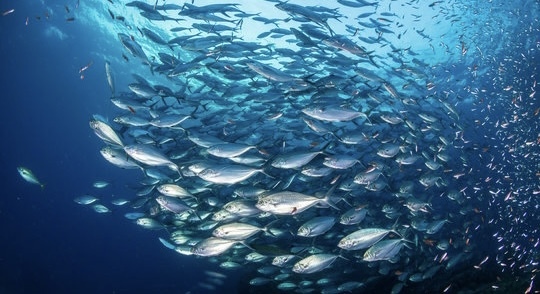
Some of the behaviour of animals, like fish shoaling - large numbers swimming together, maintaining a pattern and never touching, or sheep following the leader, are repeatable with people, and quite amusing too.
I didn't agree with everything the author said, I have read other accounts of say, lions - The Tribe of Tiger: Cats and Their Culture by Elizabeth Marshall Thomas for instance, that do not see them in the same way. But I like reading two different viewpoints, it gives me more to think about.
In the epilogue the author is talking about animals belonging to large social groups tending to develop bigger brains and intelligence. But there are, as always, exceptions.
__________
Notes on reading, mostly about Krill which are a lot more fascinating that you probably think.
It isn't very often a science book is unputdownable, that you associate more with a thriller, but every time I put the book down, I wanted to go back to it, sometimes I wanted to know more about that particular animal or sometimes to reread paragraphs because there were many ideas to think about.
I enjoyed the way the book was written, sticking to the science and anecdotes but from a personal and chatty way so you get to know the author. He has his favourite animals, Orcas and humpback whales for example, and communicates that with his speculation on their feelings and even their thoughts as well as their motivations beyond that of the obvious. It drew me in, his interest became mine.
Some of the behaviour of animals, like fish shoaling - large numbers swimming together, maintaining a pattern and never touching, or sheep following the leader, are repeatable with people, and quite amusing too.
I didn't agree with everything the author said, I have read other accounts of say, lions - The Tribe of Tiger: Cats and Their Culture by Elizabeth Marshall Thomas for instance, that do not see them in the same way. But I like reading two different viewpoints, it gives me more to think about.
In the epilogue the author is talking about animals belonging to large social groups tending to develop bigger brains and intelligence. But there are, as always, exceptions.
Nutcrackers aren't especially social birds, but they have impressive brains. For them, it's a matter of remembering where they've hidden seeds to see them through the winter. They might hide as many as a hundred thousand seeds each autumn and can remember where they've hidden them even months later - bear that in mind next time you lose your keys.When I read a book this exceptional, it makes me happy and I think life is good.
__________
Notes on reading, mostly about Krill which are a lot more fascinating that you probably think.

December 5, 2022
“Ultimately, our instinct for cooperation has provided the foundation for human civilization. But this instinct didn’t begin with the first people; rather, it was something intrinsic to us, a legacy inherited through our shared ancestry with the animals that we live among.”
Honestly, I’m not even a big animal lover; pet rocks would be more my jam. And yet I have absolutely loved every page of this book.
Maybe it’s the sheer enthusiasm Ashley Ward has for all kinds of creatures, rats and locusts included. Maybe it’s his ability to be a very engaging narrator. Maybe it’s his sense of humor which often is gently scatologic (yes, poop is funny and I’m totally a mature adult, I swear).
Ward doesn’t start with the easy targets for our love — fluffy and cuddly or terrifyingly majestic animals (although later on we do get bonobos and lions and wolves and dolphins). Instead he starts with krill (“I’m told that to perfectly mimic the experience of eating krill, you need only get a piece of toilet paper and dampen it slightly. Next, put it in the freezer for an hour. Remove and serve.”) and locusts and termites (“In 2011, one enterprising gang of termite robbers even broke into a bank in India and ate their way through ten million rupees worth of paper money.”) and rats.
Oh, and do not forget cockroaches, those maligned creatures that will replace us one day after a nuclear winter, surely. Ashley Ward finds beauty even there:
Life comes down to poop, sex and being social. And Ashley Ward hits all of my funny buttons while remaining perfectly informative. (Although it’s funny how much umbrage he takes with a silly tweet by Neil deGrasse Tyson — but your mileage may vary).
I learned so much from this, and loved every moment of that learning. Without krill, our oceans collapse. Guppies are sex-crazy. Fish shoals are fascinating. Ants, termites and bees have odd levels of group intelligence that makes me consider them basically nature supercomputers — or individual neurons in one large superorganism brain. Hyenas have what known as a “social erection” with both penis and pseudo-penis. Humpback whales, when not taunting overconfident orcas, are not going to make it as opera stars anytime soon.
5 stars. Nature is awesome and often unintentionally hilarious. And Ashley Ward is a very engaging guide to its intricacies and idiosyncrasies. It made me genuinely happy, and it’s definitely worth $18 I spent on it.
—————
Very enjoyable buddy read with Dennis. Thanks for suggesting this one!
——————
Also posted on my blog.
Honestly, I’m not even a big animal lover; pet rocks would be more my jam. And yet I have absolutely loved every page of this book.
Maybe it’s the sheer enthusiasm Ashley Ward has for all kinds of creatures, rats and locusts included. Maybe it’s his ability to be a very engaging narrator. Maybe it’s his sense of humor which often is gently scatologic (yes, poop is funny and I’m totally a mature adult, I swear).
“Whales eat a colossal amount of food—for blue whales, as much as 4 tons per day—and what goes in must come out. Whales typically crap near the surface of the ocean. If you’ve ever lain awake at night wondering what whale shit looks like, allow me to enlighten you: they don’t produce a great whale-sized log; it’s much more of a massive, explosive, nuggety cloud of Brown Windsor soup. This is something I learned as I watched from a boat, with an exquisite mixture of delight and horror, as a snorkeling colleague of mine became engulfed in one such gargantuan cetacean bum detonation.”
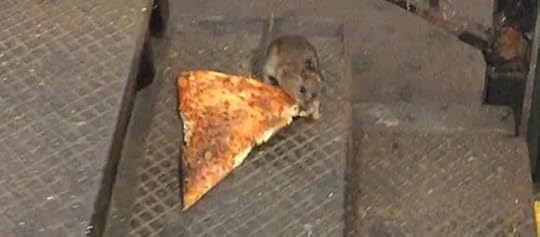
Ward doesn’t start with the easy targets for our love — fluffy and cuddly or terrifyingly majestic animals (although later on we do get bonobos and lions and wolves and dolphins). Instead he starts with krill (“I’m told that to perfectly mimic the experience of eating krill, you need only get a piece of toilet paper and dampen it slightly. Next, put it in the freezer for an hour. Remove and serve.”) and locusts and termites (“In 2011, one enterprising gang of termite robbers even broke into a bank in India and ate their way through ten million rupees worth of paper money.”) and rats.
“Armed with an artist’s paintbrush, Steve and his colleagues diligently and repeatedly tickled specific parts of solitary locusts’ bodies for five seconds every minute. The outcome of the experiment was stunning—simply stroking the hind legs of solitary desert locusts periodically over a period of four hours caused them to morph into their marauding, hyper-social form.”
Imaginary conversation ensues:
‘So, what do you do for work?’
‘Tickling locusts. You?’
‘Oh, I observe whale poop.’
Oh, and do not forget cockroaches, those maligned creatures that will replace us one day after a nuclear winter, surely. Ashley Ward finds beauty even there:
“A cockroach isolated in early life is in fact a tragic figure. It grows more slowly than its peers, and, even as an adult, it finds itself on the margins of its society. Unable to mingle and interact properly, it struggles to join cockroach groups and has an unfulfilling love life. If only they could write, such cockroaches might produce haunting poetry of surpassing beauty and pathos about their existential misery.”
Life comes down to poop, sex and being social. And Ashley Ward hits all of my funny buttons while remaining perfectly informative. (Although it’s funny how much umbrage he takes with a silly tweet by Neil deGrasse Tyson — but your mileage may vary).
“This Caribbean island is home to the guppy, a familiar resident of many a fish tank. These are small fish, no more than an inch or so in length, with a relentless, unquenchable commitment to sex.”
————
“For those high-status birds who attract a following, there may be a benefit to drawing a crowd. Often, the top birds can be found in the most desirable place in the roost, whether that be in the center of the congregation or toward the tops of trees. Those birds that cluster around them, or below them, act as a buffer against predators. Those below also pay the price of being crapped on.”
I learned so much from this, and loved every moment of that learning. Without krill, our oceans collapse. Guppies are sex-crazy. Fish shoals are fascinating. Ants, termites and bees have odd levels of group intelligence that makes me consider them basically nature supercomputers — or individual neurons in one large superorganism brain. Hyenas have what known as a “social erection” with both penis and pseudo-penis. Humpback whales, when not taunting overconfident orcas, are not going to make it as opera stars anytime soon.
“There he was, magnificently poised, his head down, his gargantuan body at an oblique angle, his great pectoral flukes held out to either side like an opera star in the full throes of musical drama. Just one small thing was wrong—his song was awful. I’m not being overly critical—I don’t mean he fluffed a note. For all I know, listening humpbacks in a 50-mile radius were entranced by its soulfulness. But he sounded like a pig coming round from a hangover. He was among a select and tiny group of animals on Earth who are worse at singing than me.”
5 stars. Nature is awesome and often unintentionally hilarious. And Ashley Ward is a very engaging guide to its intricacies and idiosyncrasies. It made me genuinely happy, and it’s definitely worth $18 I spent on it.
“Yet despite the multifarious ways that we greet friends, we can’t match the diversity seen in the animal kingdom. Lobsters urinate in each other’s faces as a “how d’you do,” while dogs, of course, are inveterate bum sniffers. Cichlid fish buzz at the return to the nest of a partner. White-faced capuchins say hello by sticking their fingers up their chum’s nose, while the same message in male Guinea baboons is achieved by fiddling with a friend’s phallus. It’s a demonstration of trust, you see, though, on balance, I prefer the Yorkshire approach.”
—————
Very enjoyable buddy read with Dennis. Thanks for suggesting this one!
——————
Also posted on my blog.

January 11, 2023
With great enthusiasm and a lovely sense of humor Ashley Ward writes about the social lives of animals.
Empathic rats supporting each other in stressful times, whales adopting underprivileged dolphins, tickled locusts becoming hyper-social, socially awkward cockroaches struggling with their love life, insect hive minds (bees are awesome; unless they are cuckoo bees - those are assholes), termite bank robbers, guppies with an unquenchable commitment to sex, the hierarchy of bird societies (spoiler: being way down on the ladder can be a rather crappy experience), hyenas having social erections (both sexes!), bonobos' dick fencing and general hippie lifestyle ... the list goes on.
Ward is covering a lot of ground and his passion shines through in every chapter. His self-depreciating and sometimes silly humor reminded me a lot of Mary Roach. Both have the ability to write books that are highly informative but also super funny. I had a great time. Ward's book should be read a lot more.
The only reason this is more a 4.5 than a 5-star read for me is that his passion sometimes got the better of him. There are some chapters, the one on elephants for instance, that are more about the relationship between people and animals than about the animals' social lives. It's an often sad relationship that we have with those and many other animals and it's important to speak about it. I'm in no way not supportive of what Ward says. I just feel that he got carried away on some occasions and veered of the path a little. If anything, this makes him even more likeable as a person. But the shift in tone and topic didn't quite feel right to me.
Also, the chapters on big cats were a little repetitive and less interesting, to me personally, than the rest. But I'm nitpicking now. This is a fantastic book. If you have so much as even a passing interest in the animals we are sharing this planet with, then go and get it. You won't regret it.
Buddy read with Nataliya, who must be the world's biggest fan of poop humor. Her hunger for it got satisfied here.
Empathic rats supporting each other in stressful times, whales adopting underprivileged dolphins, tickled locusts becoming hyper-social, socially awkward cockroaches struggling with their love life, insect hive minds (bees are awesome; unless they are cuckoo bees - those are assholes), termite bank robbers, guppies with an unquenchable commitment to sex, the hierarchy of bird societies (spoiler: being way down on the ladder can be a rather crappy experience), hyenas having social erections (both sexes!), bonobos' dick fencing and general hippie lifestyle ... the list goes on.
Ward is covering a lot of ground and his passion shines through in every chapter. His self-depreciating and sometimes silly humor reminded me a lot of Mary Roach. Both have the ability to write books that are highly informative but also super funny. I had a great time. Ward's book should be read a lot more.
The only reason this is more a 4.5 than a 5-star read for me is that his passion sometimes got the better of him. There are some chapters, the one on elephants for instance, that are more about the relationship between people and animals than about the animals' social lives. It's an often sad relationship that we have with those and many other animals and it's important to speak about it. I'm in no way not supportive of what Ward says. I just feel that he got carried away on some occasions and veered of the path a little. If anything, this makes him even more likeable as a person. But the shift in tone and topic didn't quite feel right to me.
Also, the chapters on big cats were a little repetitive and less interesting, to me personally, than the rest. But I'm nitpicking now. This is a fantastic book. If you have so much as even a passing interest in the animals we are sharing this planet with, then go and get it. You won't regret it.
Buddy read with Nataliya, who must be the world's biggest fan of poop humor. Her hunger for it got satisfied here.

July 25, 2022
This was an entertaining book about how animals cooperate together. The author discusses everything from termites to great whales. He also discusses how he came to be a zoologist, and I am so jealous! It would be much more fun hunting for fish in a dirty pond than my well-paid desk job. Or so I like to think. I LOVED animals, observing them and sometimes killing them by mistake, when I was a child. I realized for example, when I was 9 years old, that if you do not feed your fresh-water crabs, they will kill the weakest and eat that one. I was horrified when I saw this and promptly let them all go. Possibly it was just over-crowding and not hunger, or a combination. A little earlier I had also learned about oxygen - and that guppies caught in the creek would not survive the night without some greenery in the glass jar. Maybe it's just as well I didn't become a zoologist, come to think of it.
Anyway, I digress. This is a brilliant book that shows that animal societies differ from ours by degree, not by kind. We aren't quite as unique as we would like to think, and a lot of traits have co-evolved with other creatures we evolved with. Empathy and reciprocity are traits we find in many other mammals, not just us. I wonder, that if we had not been so brain-washed through the ages, of being the pinnacle of creation, that we would take better care of the creatures we share the earth with. Less arrogant in the face of their distress.
Another example, also used in the book, but this from my current daily life. There are some beef cattle on a field near where I live. I've walked past a few times, talked to them, given them some grass (although there is grass in the field). The other day, I was walking past, stopped, and the cattle started to congregate. After five minutes or so, the cow tagged 4782 and with warts on her nose, came running and shoved the other ones out of the way to get closest to me. She remembered well that I was the one who had given her a treat a couple of weeks earlier. I don't eat beef. At least the beef calves get to stay with their mothers though, unlike dairy cows and calves.
Anyway, if you care at all about the other creatures we share this planet with, do read this book. Although a lot of it will be familiar, there will still be new material. Plus the author does a great job mixing seriousness with joviality.
Anyway, I digress. This is a brilliant book that shows that animal societies differ from ours by degree, not by kind. We aren't quite as unique as we would like to think, and a lot of traits have co-evolved with other creatures we evolved with. Empathy and reciprocity are traits we find in many other mammals, not just us. I wonder, that if we had not been so brain-washed through the ages, of being the pinnacle of creation, that we would take better care of the creatures we share the earth with. Less arrogant in the face of their distress.
Another example, also used in the book, but this from my current daily life. There are some beef cattle on a field near where I live. I've walked past a few times, talked to them, given them some grass (although there is grass in the field). The other day, I was walking past, stopped, and the cattle started to congregate. After five minutes or so, the cow tagged 4782 and with warts on her nose, came running and shoved the other ones out of the way to get closest to me. She remembered well that I was the one who had given her a treat a couple of weeks earlier. I don't eat beef. At least the beef calves get to stay with their mothers though, unlike dairy cows and calves.
Anyway, if you care at all about the other creatures we share this planet with, do read this book. Although a lot of it will be familiar, there will still be new material. Plus the author does a great job mixing seriousness with joviality.

January 11, 2023
9/10 stars
My full review on my blog.
Ward’s The Social Lives of Animals delivers exactly what it promises - a highly interesting, sometimes humorous, sometimes dead serious account on the social aspects of animal lives. It’s a very good popular science book, full of fun facts and anecdotes made more engrossing by the fact that many of them were witnessed first-hand by the author. As Ward is a professor of biology, there is a certain hierarchy detectable in the storytelling, a slow journey through the animal kingdom following the growing social complexity of behaviour: from the invertebrate toward vertebrates, and among these, from fish to mammals. The natural science lens is visible in other aspects of the book, as well - Ward judiciously spices his account with more scientific terms, taking care to explain what each means and why it is important. It is a highly entertaining, educational book and while maybe a tad less jaw-dropping and more anecdotal than I expected, it’s still a great resource for those interested in animal ethology. Ward is a great storyteller and possesses a wealth of data he itches to share with everybody. His enthusiasm is palpable, as is his knowledge. There’s humour, horror, sadness and joy, and loads of fun facts about a host of animals as varied as krill, termites, humpback whales, cockroaches, gorillas and vampire bats. I, for once, will never look at tits (erm, the birds) the same way.
The one element that I found truly tiresome, and which also seems to stem from Ward’s biological science background, is the constant hedging around animal emotional states, consciousness and the terrible sin (gasp!) of ascribing human categories to animals. If it looks like grief, feels like grief, smells like grief, and most notably has all the contextual signs of grief, maybe it is grief? Why would the act of ascribing basic human emotions and states to highly evolved animals such as elephants, apes, and cetaceans be more erroneous than not doing this and hedging behind stupid descriptions - and denying animals their cognitive abilities or worse, sentience, in the process - is simply beyond me. I am tired of biological sciences clinging desperately to their inaccessible ideal of objectivity. Go ahead, get as close to it as you can, that’s a worthy goal. But stop pretending you can actually get there! I much prefer de Waal’s approach, who is the first to admit we might simply be too stupid to really understand animals - but that shouldn’t mean we have the right to demean them. Ward, on the other hand, goes to lengths to emphasise that his emotions and observations are unscientific and that there is no consensus in biology when it comes to animal sentience or emotions. He thankfully drops the act when talking about chimpanzees and bonobos, and by then it would be really hard not to, as the apes are increasingly recognized by the scientific community not only as our genetic cousins, but as our behavioural and social family, too.
The Social Lives of Animals served also as an intriguing counterpoint to Bitch, which focused almost solely, and sometimes even, it seems, vengefully, on females of the species. In many cases both books described the same species, be they orcas, bonobos, termites, etc., but did it in somewhat divergent terms. Ward focused on the complexity of social relations and the material substrates of why these social relations grew to be the way they are, paying more attention to the species as a whole, a sort of cooperative between the sexes. Cooke, on the other hand, looked for specific instances where females, for a variety of reasons, had the upper hand in what she perceives more as the war of the sexes than the cooperation. These two perspectives formed a surprising whole in the end, though, and I’m happy I was able to compare them and access the information in both. Ward also adds a lengthy bibliography at the end, which is a rare and welcome supplement for all those who want more detail ;).
All in all, a great popular science book, engaging, entertaining, educational and accessible, which I can wholeheartedly recommend to all interested in biology, behavioural sciences, and animals in general.
Ah, and word for the wise: if anybody offers to greet you the lobster way, decline.
I have received a copy of this book from the publisher through NetGalley in exchange for an honest review. My thanks.
My full review on my blog.
Ward’s The Social Lives of Animals delivers exactly what it promises - a highly interesting, sometimes humorous, sometimes dead serious account on the social aspects of animal lives. It’s a very good popular science book, full of fun facts and anecdotes made more engrossing by the fact that many of them were witnessed first-hand by the author. As Ward is a professor of biology, there is a certain hierarchy detectable in the storytelling, a slow journey through the animal kingdom following the growing social complexity of behaviour: from the invertebrate toward vertebrates, and among these, from fish to mammals. The natural science lens is visible in other aspects of the book, as well - Ward judiciously spices his account with more scientific terms, taking care to explain what each means and why it is important. It is a highly entertaining, educational book and while maybe a tad less jaw-dropping and more anecdotal than I expected, it’s still a great resource for those interested in animal ethology. Ward is a great storyteller and possesses a wealth of data he itches to share with everybody. His enthusiasm is palpable, as is his knowledge. There’s humour, horror, sadness and joy, and loads of fun facts about a host of animals as varied as krill, termites, humpback whales, cockroaches, gorillas and vampire bats. I, for once, will never look at tits (erm, the birds) the same way.
The one element that I found truly tiresome, and which also seems to stem from Ward’s biological science background, is the constant hedging around animal emotional states, consciousness and the terrible sin (gasp!) of ascribing human categories to animals. If it looks like grief, feels like grief, smells like grief, and most notably has all the contextual signs of grief, maybe it is grief? Why would the act of ascribing basic human emotions and states to highly evolved animals such as elephants, apes, and cetaceans be more erroneous than not doing this and hedging behind stupid descriptions - and denying animals their cognitive abilities or worse, sentience, in the process - is simply beyond me. I am tired of biological sciences clinging desperately to their inaccessible ideal of objectivity. Go ahead, get as close to it as you can, that’s a worthy goal. But stop pretending you can actually get there! I much prefer de Waal’s approach, who is the first to admit we might simply be too stupid to really understand animals - but that shouldn’t mean we have the right to demean them. Ward, on the other hand, goes to lengths to emphasise that his emotions and observations are unscientific and that there is no consensus in biology when it comes to animal sentience or emotions. He thankfully drops the act when talking about chimpanzees and bonobos, and by then it would be really hard not to, as the apes are increasingly recognized by the scientific community not only as our genetic cousins, but as our behavioural and social family, too.
The Social Lives of Animals served also as an intriguing counterpoint to Bitch, which focused almost solely, and sometimes even, it seems, vengefully, on females of the species. In many cases both books described the same species, be they orcas, bonobos, termites, etc., but did it in somewhat divergent terms. Ward focused on the complexity of social relations and the material substrates of why these social relations grew to be the way they are, paying more attention to the species as a whole, a sort of cooperative between the sexes. Cooke, on the other hand, looked for specific instances where females, for a variety of reasons, had the upper hand in what she perceives more as the war of the sexes than the cooperation. These two perspectives formed a surprising whole in the end, though, and I’m happy I was able to compare them and access the information in both. Ward also adds a lengthy bibliography at the end, which is a rare and welcome supplement for all those who want more detail ;).
All in all, a great popular science book, engaging, entertaining, educational and accessible, which I can wholeheartedly recommend to all interested in biology, behavioural sciences, and animals in general.
Ah, and word for the wise: if anybody offers to greet you the lobster way, decline.
I have received a copy of this book from the publisher through NetGalley in exchange for an honest review. My thanks.

October 6, 2021
I've read a lot of pop science and nature writing relating to, among other things, animal sociality and intelligence. A LOT. Which means that I find it harder these days to find fresh information. Happily, 'The Social Lives of Animals' manages the tough job of covering a lot of different species and behaviours while providing a satisfying amount of depth.
I did indeed learn new things, even some mind-blowing new things. I didn't feel like I was reading a biology textbook for twelve-year-olds (an irritating feeling I did experience with a pop science book recently); Ward explained things clearly, but engagingly. And what I most loved about the book was the anecdotes which the author had experienced first-hand, or had heard about from colleagues - the case of the sperm whales and the dolphin was my favourite. I always appreciate a book by a scientist that shares snippets from their life or career; it illuminates the science. There's also a fair bit of humour thrown in that doesn't feel forced.
On the whole, I've come to the conclusion that I prefer books which focus on one or a few species at a time - but if you're looking for a pop science book showcasing sociality across a wide range of other animals, you really can't do better than this one.
(With thanks to Perseus Books and NetGalley for this ebook in exchange for an honest review)
I did indeed learn new things, even some mind-blowing new things. I didn't feel like I was reading a biology textbook for twelve-year-olds (an irritating feeling I did experience with a pop science book recently); Ward explained things clearly, but engagingly. And what I most loved about the book was the anecdotes which the author had experienced first-hand, or had heard about from colleagues - the case of the sperm whales and the dolphin was my favourite. I always appreciate a book by a scientist that shares snippets from their life or career; it illuminates the science. There's also a fair bit of humour thrown in that doesn't feel forced.
On the whole, I've come to the conclusion that I prefer books which focus on one or a few species at a time - but if you're looking for a pop science book showcasing sociality across a wide range of other animals, you really can't do better than this one.
(With thanks to Perseus Books and NetGalley for this ebook in exchange for an honest review)

January 26, 2023
In 'The Social Lives of Animals', author Ashley Ward provides a summary overview of various interactions between social animals: how they relate to one another; how they connive and compete with each other; and also how they unite and co-operate with one another. Ward states that the book is an attempt to distill the wonder that he feels in the company of animals - and I think he has succeeded in that regard.
The ability of humans to co-operate with each other has provided the foundation for human civilization: the ability to live and work with each other in groups; to find solutions to problems; to safeguard ourselves against predators; to hunt prey in groups; to share information; to learn from one another; to explore the globe; and overcome challenges in an ever changing world. However, while our society is different, we are not unique. This legacy of co-operation has been inherited through our shared ancestry with the animals we live (and evolved) amongst. Ward shows the reader how social behaviour and living in groups with various social structures provides success for those species. He also shows parallels between our own societies and those of the other species with whom we share the planet.
Each chapter deals with a particular type of social animal, getting more advanced (in terms of social behavior) as we go along. Ward starts off with arthropods (krill, locusts, cockroaches, bees, termites, ants). Then moves on to shoaling fish and flocking birds. The complex social lives of rats get an extensive section, showing how their behaviour is very similar to human behaviour. Herding animals like cattle and elephants get a chapter, so do carnivorous beasts: lions (the only social cat), hyenas and wolves. The author's love of whales and dolphins is particularly apparent when he discusses these creatures. Primates, especially Chimpanzees and Bonobos, make an appearance, especially in light of their evolutionary relationship to us.
The krill and locust sections were particularly fascinating (and new to me). Locusts are usually solitary creatures, but sometimes they form extensive, devastating swarms. Ward explains why locusts suddenly become such "social" and ravenous creatures... and that "ultimately, the transformation of the locusts into their gregarious alter-egos is an emergency measure in response to the risk of starvation, and the movement of large numbers of locusts is a forced march" (because hungry locusts are quite happy to eat the locust in front of it and are terrified of being eaten by the locust behind it).😱
I didn't find much information that was new to me in this book (an unfortunate hazard of reading so many animal books!), and Ward left out anything to do with genetics (it's not that kind of book). However, the author's writing style (focus on the interesting animals with a bit of relevant, humorous personal anecdotes and no political diatribe) was particularly pleasant to read, and having a refresher summary of the social behaviours of various animals in one book was nice. This is not a detailed book about any of these animals, but rather a broad view on how their social interactions help them survive and how this compares to human social interactions.
The ability of humans to co-operate with each other has provided the foundation for human civilization: the ability to live and work with each other in groups; to find solutions to problems; to safeguard ourselves against predators; to hunt prey in groups; to share information; to learn from one another; to explore the globe; and overcome challenges in an ever changing world. However, while our society is different, we are not unique. This legacy of co-operation has been inherited through our shared ancestry with the animals we live (and evolved) amongst. Ward shows the reader how social behaviour and living in groups with various social structures provides success for those species. He also shows parallels between our own societies and those of the other species with whom we share the planet.
Each chapter deals with a particular type of social animal, getting more advanced (in terms of social behavior) as we go along. Ward starts off with arthropods (krill, locusts, cockroaches, bees, termites, ants). Then moves on to shoaling fish and flocking birds. The complex social lives of rats get an extensive section, showing how their behaviour is very similar to human behaviour. Herding animals like cattle and elephants get a chapter, so do carnivorous beasts: lions (the only social cat), hyenas and wolves. The author's love of whales and dolphins is particularly apparent when he discusses these creatures. Primates, especially Chimpanzees and Bonobos, make an appearance, especially in light of their evolutionary relationship to us.
The krill and locust sections were particularly fascinating (and new to me). Locusts are usually solitary creatures, but sometimes they form extensive, devastating swarms. Ward explains why locusts suddenly become such "social" and ravenous creatures... and that "ultimately, the transformation of the locusts into their gregarious alter-egos is an emergency measure in response to the risk of starvation, and the movement of large numbers of locusts is a forced march" (because hungry locusts are quite happy to eat the locust in front of it and are terrified of being eaten by the locust behind it).😱
I didn't find much information that was new to me in this book (an unfortunate hazard of reading so many animal books!), and Ward left out anything to do with genetics (it's not that kind of book). However, the author's writing style (focus on the interesting animals with a bit of relevant, humorous personal anecdotes and no political diatribe) was particularly pleasant to read, and having a refresher summary of the social behaviours of various animals in one book was nice. This is not a detailed book about any of these animals, but rather a broad view on how their social interactions help them survive and how this compares to human social interactions.

October 12, 2021
The Social Lives of Animals is about exactly what it says on the tin: the social lives of animals. The author, Ashley Ward, argues that animals have complex social lives, and that learning about the importance of animals' social lives teaches us about the importance of humans' social lives. So this book doesn't really have a provocative thesis or groundbreaking argument -- for the most part, it's 380 pages of animal facts. And I absolutely love it.
Why? First of all, I am always up for animal facts. Do I want to know about the intricacies of bee dances? Absolutely. Whale songs? One hundred percent. Elephant mourning? Sign me up. When I was little, I was the kid who watched Zoboomafoo religiously and spent hours digging through my children's encyclopedias. The Social Lives of Animals reminds me of the best parts of that curiosity and wonder.
Another reason I had a blast reading this book was Ashley Ward's voice as a writer. He intersperses his animal facts with personal stories, told in a voice that reminds me of my scientist grandfather. Here's a short example, which comes from a section where Ward has been searching for whales:
"We racked up hour after hour of zilch, but that's all part and parcel of looking for animals -- if you want guarantees, go to a zoo."
Ward's style is genuine and keeps his subject matter fresh and interesting. All told, I'd recommend The Social Lives of Animals for readers who are looking for a solid collection of fun animal facts, or who are seeking to reignite their curiosity about the animal world.
[Thank you to Netgalley and the publisher for providing an eARC for review.]
Why? First of all, I am always up for animal facts. Do I want to know about the intricacies of bee dances? Absolutely. Whale songs? One hundred percent. Elephant mourning? Sign me up. When I was little, I was the kid who watched Zoboomafoo religiously and spent hours digging through my children's encyclopedias. The Social Lives of Animals reminds me of the best parts of that curiosity and wonder.
Another reason I had a blast reading this book was Ashley Ward's voice as a writer. He intersperses his animal facts with personal stories, told in a voice that reminds me of my scientist grandfather. Here's a short example, which comes from a section where Ward has been searching for whales:
"We racked up hour after hour of zilch, but that's all part and parcel of looking for animals -- if you want guarantees, go to a zoo."
Ward's style is genuine and keeps his subject matter fresh and interesting. All told, I'd recommend The Social Lives of Animals for readers who are looking for a solid collection of fun animal facts, or who are seeking to reignite their curiosity about the animal world.
[Thank you to Netgalley and the publisher for providing an eARC for review.]

February 25, 2023
An excellent book on just what it says, by a working wildlife biologist. My kind of pop-sci book!
I have the happy dilemma of which GR friend's review to pick, to save me the work of writing a real one. Will it be Petra's or Nataliya's? Both gave it 5 stars. OK, I'll quote a bit from both:
Petra:
"A 10-star book. Let me tell you how good this book is. If the whole book had been 1 star (which it wasn't) and only the epilogue was good, it would still have been a 10 star book. What makes a book 5 star to me is if I really learn something and enjoy the book. What makes it 10 star is I learn things I hadn't even thought of and ideas to ponder on in areas I have a real interest in such as the intelligence of ants or the hyper-sexuality of the matriarchal bonobos compared to the somewhat aggressive lives of the extremely patriarchal chimpanzees."
Nataliya:
"Honestly, I’m not even a big animal lover; pet rocks would be more my jam. And yet I have absolutely loved every page of this book.
Maybe it’s the sheer enthusiasm Ashley Ward has for all kinds of creatures, rats and locusts included. Maybe it’s his ability to be a very engaging narrator. Maybe it’s his sense of humor which often is gently scatologic "(yes, poop is funny and I’m totally a mature adult, I swear)."
Really, just read them both! At the moment, they are #1 & #2 on my version of the GR page. Petra has been pointing out hanky-panky from GR on how they display GR friend reviews . . .
I'll drop a couple of quotes from my notes:
ANTS! Something like 100 trillion ants alive at any given moment, worldwide! Or, put more individually, you have something like 15,000 ants assigned to you personally. I believe it, and you will too, at your next picnic in the grass . . .
(p.78, hc ed) "When I tell people I research animal behaviour . . . [they] often picture a glamorous series of wildlife encounters in exotic places. [Such as] the ditches of Lancashire"! This after a colorful description of a day there, getting muddy and filthy, And smelly!
4.5 star book, high marks. Best pop-science book I've read so far this year! Granted, it's only mid-February . . . 😇
I have the happy dilemma of which GR friend's review to pick, to save me the work of writing a real one. Will it be Petra's or Nataliya's? Both gave it 5 stars. OK, I'll quote a bit from both:
Petra:
"A 10-star book. Let me tell you how good this book is. If the whole book had been 1 star (which it wasn't) and only the epilogue was good, it would still have been a 10 star book. What makes a book 5 star to me is if I really learn something and enjoy the book. What makes it 10 star is I learn things I hadn't even thought of and ideas to ponder on in areas I have a real interest in such as the intelligence of ants or the hyper-sexuality of the matriarchal bonobos compared to the somewhat aggressive lives of the extremely patriarchal chimpanzees."
Nataliya:
"Honestly, I’m not even a big animal lover; pet rocks would be more my jam. And yet I have absolutely loved every page of this book.
Maybe it’s the sheer enthusiasm Ashley Ward has for all kinds of creatures, rats and locusts included. Maybe it’s his ability to be a very engaging narrator. Maybe it’s his sense of humor which often is gently scatologic "(yes, poop is funny and I’m totally a mature adult, I swear)."
Really, just read them both! At the moment, they are #1 & #2 on my version of the GR page. Petra has been pointing out hanky-panky from GR on how they display GR friend reviews . . .
I'll drop a couple of quotes from my notes:
ANTS! Something like 100 trillion ants alive at any given moment, worldwide! Or, put more individually, you have something like 15,000 ants assigned to you personally. I believe it, and you will too, at your next picnic in the grass . . .
(p.78, hc ed) "When I tell people I research animal behaviour . . . [they] often picture a glamorous series of wildlife encounters in exotic places. [Such as] the ditches of Lancashire"! This after a colorful description of a day there, getting muddy and filthy, And smelly!
4.5 star book, high marks. Best pop-science book I've read so far this year! Granted, it's only mid-February . . . 😇

May 17, 2022
Excellent! The book is very well organized, starting with smaller, more primitive animals. It follows tiny krill, then insects, fish, birds - no reptiles, hmm. The last half of the book follows mammals, starting with rats, and on up to the larger ones, ending up with marine mammals and finally our closest relatives, primates. It all fits together well, and you can see how social practices have evolved. The biochemical components are mentioned when relevant, but are not given in detail, so the book is very accessible to the layperson. It's written in an engaging, straightforward style - not too cute, not too technical, not simplified, and not condescending. The epilogue pulls everything together nicely.
My only problem with the book - and this is on me, not on the book - is that at least half the information was covered in books I've previously read. I'm afraid I've reached a saturation point on animal ethology for the moment.
My only problem with the book - and this is on me, not on the book - is that at least half the information was covered in books I've previously read. I'm afraid I've reached a saturation point on animal ethology for the moment.

December 28, 2021
Thanks to NetGalley and the publisher I got the opportunity to read this book in advance. I feared it might be another book mired with statistics and meaningless (to the un-initiated folk) numbers, but it wasn't.
Put simply, the main topic of the book was how various classes of animals form societies and tries to answer the enigma of why in that certain manner and why at all. The book gives us a delightfully humorous and fascinating insight into the social lives of animals of all strata and spaces, going from tiny creatures such as krill to insects over to fish to birds to mammals. Some tales were endearing while others quite shocking, meaning, not family-friendly. That shouldn't surprise us though; it is our own fault that quite often the only way our urban lives get in touch with the nature is through the TV screen, and even then the more gruesome aspects of it are shown in words only or not mentioned altogether.
I've never put much thought into how social characters of some species affect their learning and decision making processes, so much they balance between life and death there. A simple example from the book gives a lot to think about us too - a mere shoal of fish very often has to make a life-challenging decision: to dare and go at once over there to another coral reef based on a hunch of a single curious fish or to wait for a mutual agreement of the whole shoal. For more advanced species the level of sociality is more complex, requiring brain cells working in many directions, from communication methods to familiarity and conformity levels, not so far from our own human means of surviving. Sometimes nice gestures do wonders for their well-beings, and opposite.
What exactly governs social lives of animals (us included), scientists are still doing thorough dissertations about. With this book we the ordinary readers get the glimpse of what they discovered so far. If you are fascinated with the nature, I would highly recommend reading this book. It is a treasure trove of many tales about animals and their lives that TV teams rarely get chance to or simply cannot film. While carefully citing the scientific sources for each of them, the book does not take a dry and strictly scientific approach to them. In that sense, the book is worthwhile read even to novices.
Put simply, the main topic of the book was how various classes of animals form societies and tries to answer the enigma of why in that certain manner and why at all. The book gives us a delightfully humorous and fascinating insight into the social lives of animals of all strata and spaces, going from tiny creatures such as krill to insects over to fish to birds to mammals. Some tales were endearing while others quite shocking, meaning, not family-friendly. That shouldn't surprise us though; it is our own fault that quite often the only way our urban lives get in touch with the nature is through the TV screen, and even then the more gruesome aspects of it are shown in words only or not mentioned altogether.
I've never put much thought into how social characters of some species affect their learning and decision making processes, so much they balance between life and death there. A simple example from the book gives a lot to think about us too - a mere shoal of fish very often has to make a life-challenging decision: to dare and go at once over there to another coral reef based on a hunch of a single curious fish or to wait for a mutual agreement of the whole shoal. For more advanced species the level of sociality is more complex, requiring brain cells working in many directions, from communication methods to familiarity and conformity levels, not so far from our own human means of surviving. Sometimes nice gestures do wonders for their well-beings, and opposite.
What exactly governs social lives of animals (us included), scientists are still doing thorough dissertations about. With this book we the ordinary readers get the glimpse of what they discovered so far. If you are fascinated with the nature, I would highly recommend reading this book. It is a treasure trove of many tales about animals and their lives that TV teams rarely get chance to or simply cannot film. While carefully citing the scientific sources for each of them, the book does not take a dry and strictly scientific approach to them. In that sense, the book is worthwhile read even to novices.

February 18, 2022
This book was so entertaining! My son and I took turns reading it and have very much enjoyed sharing what we found most interesting. In this book, Ashely Ward shares the importance of the social connections of animals and how they build relationships with one another. It was interesting to read about how these different species of animals communicate and work together and even show compassion for one another. I would recommend this book to anyone who enjoys reading about the animal kingdom.. and it would definitely make a great gift for animal lovers. This one will be a read again book for me!
I received this book as a part of a Goodreads giveaway! Thank you, Goodreads, Ashley Ward and Basic Books!
I received this book as a part of a Goodreads giveaway! Thank you, Goodreads, Ashley Ward and Basic Books!

July 21, 2025
4,5
Bawiłam się baaaardzo dobrze. Dużo informacji ale napisane przystępnie, z poczuciem humoru. Każdy rozdział poświęcony jest innemu gatunkowi, od mrówek i karaluchów po wieloryby i szympansy. Polecam!!
Bawiłam się baaaardzo dobrze. Dużo informacji ale napisane przystępnie, z poczuciem humoru. Każdy rozdział poświęcony jest innemu gatunkowi, od mrówek i karaluchów po wieloryby i szympansy. Polecam!!

August 6, 2022
Book club #3
I worried a bit when I read the blurb for this book: "A rat will go out of its way to help a stranger in need. Lions have adopted the calves of their prey. Ants farm fungus in cooperatives. Why do we continue to believe that life in the animal kingdom is ruled by competition?"
Was this going to be a serious book, or the paperback version of The Dodo? Not that I don't love The Dodo, I'm no monster and of course I love kitties, but still why do we continue to believe that life in the animal kingdom is ruled by competition? Because often it is.
Luckily, whoever wrote that didn't apparently read the book. The lion bit in particular is from the lion experiencing a (social) trauma and the "adoption" is highly unusual and not at all "cute".
The Social Lives of Animals is a bit of a simplified summary of Matthew Lieberman conversing with Robert Sapolsky and Richard Dawkins over beers. I enjoyed it, but I think it could have been a far better series of in-depth books that built off one another: The Social Lives of Fish, The Social Lives of Birds, The Social Lives of Canines, The Social Lives of Primates, etc.
Ashley Ward has an engaging writing style and a clear love for the topic. The information as presented was authoritative and accurate.
The early chapters covering fish and birds were a bit weak with species introductions, summaries, and conclusions happening within 2-3 pages making it hard to track and recall each one. This continued to a lesser extent through the book until improving some on the back half.
Good intro to the topic, but left me wanting more depth and less breadth.
As usual with nonfiction, the references in this book cost me a few bucks and some added price tracking - creating an odd inverse relationship between finishing a book and the number of books on the list.
I worried a bit when I read the blurb for this book: "A rat will go out of its way to help a stranger in need. Lions have adopted the calves of their prey. Ants farm fungus in cooperatives. Why do we continue to believe that life in the animal kingdom is ruled by competition?"
Was this going to be a serious book, or the paperback version of The Dodo? Not that I don't love The Dodo, I'm no monster and of course I love kitties, but still why do we continue to believe that life in the animal kingdom is ruled by competition? Because often it is.
Luckily, whoever wrote that didn't apparently read the book. The lion bit in particular is from the lion experiencing a (social) trauma and the "adoption" is highly unusual and not at all "cute".
The Social Lives of Animals is a bit of a simplified summary of Matthew Lieberman conversing with Robert Sapolsky and Richard Dawkins over beers. I enjoyed it, but I think it could have been a far better series of in-depth books that built off one another: The Social Lives of Fish, The Social Lives of Birds, The Social Lives of Canines, The Social Lives of Primates, etc.
Ashley Ward has an engaging writing style and a clear love for the topic. The information as presented was authoritative and accurate.
The early chapters covering fish and birds were a bit weak with species introductions, summaries, and conclusions happening within 2-3 pages making it hard to track and recall each one. This continued to a lesser extent through the book until improving some on the back half.
Good intro to the topic, but left me wanting more depth and less breadth.
As usual with nonfiction, the references in this book cost me a few bucks and some added price tracking - creating an odd inverse relationship between finishing a book and the number of books on the list.

April 6, 2022
It has been a long time since I've read a book on animal behavior that is as good as "The Social Lives of Animals." Ashley Ward is a professor and director of the Animal Behavior Research Lab at the U of Sydney. He is not afraid to show his chops. This book is extensively researched and pulls from Wards own impressive experiences studying animal behavior. 'Social Lives' is highly readable and written in a warm, humorous manner that really engages the reader with the subjects. Ward loves what he does and he wants you to love it too.
'Social Lives' is organized by social complexity. There are 9 chapters that begin with krill and end with primates. Ward is thorough in his examinations of each case of animal sociability and takes the time to explain important experiments and discoveries without ever getting to dry or dull. The book is loaded with animal anecdotes and humorous tales which help reinforce the lessons Ward is trying to teach.
This book is fantastic. I learned a lot of new information and I had a fun time doing it.
'Social Lives' is organized by social complexity. There are 9 chapters that begin with krill and end with primates. Ward is thorough in his examinations of each case of animal sociability and takes the time to explain important experiments and discoveries without ever getting to dry or dull. The book is loaded with animal anecdotes and humorous tales which help reinforce the lessons Ward is trying to teach.
This book is fantastic. I learned a lot of new information and I had a fun time doing it.

September 21, 2022
Ever become so engrossed in a book that you forget to do basic things like eat? This was my experience reading The Social Lives of Animals. Through fascinating stories, I was given a glimpse into a world of animal behaviors and intelligence that frequently made my jaw drop. I appreciate that the author did not anthropomorphize the behaviors and cautioned repeatedly against assuming intent and emotion.
I do hope that a sequel is forthcoming that includes prairie dogs (I'm especially fond of squirrels, both tree and ground species.)
I do hope that a sequel is forthcoming that includes prairie dogs (I'm especially fond of squirrels, both tree and ground species.)

January 10, 2025
An excellent dive into how various social animals live and structure their societies - from plankton to chimps and bonobos, via termites, cockroaches, rats, naked mole rats, herring, whales, elephants, and others.
Ward writes with a passion for his subject (on several occasions slipping in anecdotes about encounters with various creatures form his childhood or career as a biologist), as well as a great deal of confident knowledge and humour.
Ward writes with a passion for his subject (on several occasions slipping in anecdotes about encounters with various creatures form his childhood or career as a biologist), as well as a great deal of confident knowledge and humour.

February 28, 2022
The Social Lives of Animals by Ashley Ward
Informative, insightful, and delightful ~ What a marvelous way to spend the day!
What I Liked:
* All of it…from introduction through to the last page of the epilogue
* Learning something new in every chapter of the book
* Seeing in how many ways animals are social and how that social aspect overlaps with other animals/species
* Being reminded again that we are animals
* Wondering if humans will ever understand and be able to truly communicate with animals – completely
* The wide variety of animals covered: krill, locusts, cockroaches, bees, ants, termites, fish, birds, rats, cows, elephants, lions, hyenas, wolves, whales, dolphins, primates, and more
* Being reminded of stories I have heard about local wildlife
* Reading of ways animals cooperate to hunt and to ward off predators
* How social animals are similar and different from one another
* The writing style – more a conversation with tidbits of science, fact, and trivia presented in a captivating easy to understand way
* The personal anecdotes of the author
* The variety of experiences shared
* The way some societal behaviors or the animals overlap with those of humans and inferences that can be made
* Contemplating what *I* would have done if I had been in the shoes of the author and seen the dolphin in the whale pod or the eye of the whale open while I was checking on it to make sure it was okay…and so many others
* The admiration I felt for the author – his ability to find his true calling, pursue it, enjoy what he does, and share this with us in the book he has written
What I didn’t like:
* Not much…mostly the times I thought of man’s ill treatment of so many animals over the span of time, and the extinction and near extinction of so many species,
* Knowing that humans think they are superior and have more rights on earth than other animals
Did I enjoy this book? Yes
Would I read more by this author? Yes
Thank you to NetGalley, Hachette Books, and the author for the ARC – This is my honest review.
5 Stars
Informative, insightful, and delightful ~ What a marvelous way to spend the day!
What I Liked:
* All of it…from introduction through to the last page of the epilogue
* Learning something new in every chapter of the book
* Seeing in how many ways animals are social and how that social aspect overlaps with other animals/species
* Being reminded again that we are animals
* Wondering if humans will ever understand and be able to truly communicate with animals – completely
* The wide variety of animals covered: krill, locusts, cockroaches, bees, ants, termites, fish, birds, rats, cows, elephants, lions, hyenas, wolves, whales, dolphins, primates, and more
* Being reminded of stories I have heard about local wildlife
* Reading of ways animals cooperate to hunt and to ward off predators
* How social animals are similar and different from one another
* The writing style – more a conversation with tidbits of science, fact, and trivia presented in a captivating easy to understand way
* The personal anecdotes of the author
* The variety of experiences shared
* The way some societal behaviors or the animals overlap with those of humans and inferences that can be made
* Contemplating what *I* would have done if I had been in the shoes of the author and seen the dolphin in the whale pod or the eye of the whale open while I was checking on it to make sure it was okay…and so many others
* The admiration I felt for the author – his ability to find his true calling, pursue it, enjoy what he does, and share this with us in the book he has written
What I didn’t like:
* Not much…mostly the times I thought of man’s ill treatment of so many animals over the span of time, and the extinction and near extinction of so many species,
* Knowing that humans think they are superior and have more rights on earth than other animals
Did I enjoy this book? Yes
Would I read more by this author? Yes
Thank you to NetGalley, Hachette Books, and the author for the ARC – This is my honest review.
5 Stars

December 2, 2021
A wonderful and vast collection of fresh, strange, eclectic, and diverse tales and facts about the social lives of a wide array of different animals. This isn’t a quick read. It’s more the kind of book where keep coming back to read it a bit at a time. You get your fix of fresh animal facts to keep your mind occupied for awhile. Then, you go back to read a bit more. This diverse collection is vast and detailed enough to last you a good long while. A fitting match for such varied and vast subject matter: social behavior of animals. You’ll find personal anecdotes, secondhand stories, and wisdom from both researchers and experts. This has a better variety of animals then I’ve seen in most animal books. This book covers not only social interactions among animals that are all of the same species, but also interactions between animals that belong to different species. Ward compiles this impressive collection in the hopes that we humans can better understand and improve our social lives by understanding social lives of the animals we share the earth with. It’s is informative, comprehensive, entertaining, and full of material that’s brand new to me. A very enjoyable read.

February 10, 2022
I learned something new and had a good time doing it. What more can one ask, really?
The author is a very gifted storyteller. He manages to take a very academic subject and make it interesting to a general audience. This goes down so easy, with lots of humor and clear explanations of somewhat esoteric concepts. It's amazing how much we can learn about the smallest, most obscure animals, and now much of it parallels human behavior. One needn't have a particular interest in zoology, populations, or animal behavior for this to be a good read. Anyone curious about the natural world or just looking for something interesting to learn about will be quite satisfied!
Many thanks to the publisher and NetGalley for the opportunity to read and review!
The author is a very gifted storyteller. He manages to take a very academic subject and make it interesting to a general audience. This goes down so easy, with lots of humor and clear explanations of somewhat esoteric concepts. It's amazing how much we can learn about the smallest, most obscure animals, and now much of it parallels human behavior. One needn't have a particular interest in zoology, populations, or animal behavior for this to be a good read. Anyone curious about the natural world or just looking for something interesting to learn about will be quite satisfied!
Many thanks to the publisher and NetGalley for the opportunity to read and review!

February 23, 2022
A fascinating read that delves into the lives of creatures big and small. Learn how connected these animals are with each other and even us in these nine well-organized chapters. Insects, fishes, birds, mammals are connected back to history, biology, psychology, and sociology in this book that will give you a greater appreciation for the interrelations between all living things on our planet. Helpful references and further reading list serves as an excellent springboard for those whose curiosity was piqued on a particular topic.

October 9, 2021
Thank you to NetGalley for an e-ARC of this title, in exchange for my honest review. I love animals and all the quirks that come with them. This book was informative, but one that I wanted to continue turning the page. I learned many new pieces of information, and it gave me a new respect for the social ladder that exists even in the animal kingdom. This was a very good read, and if you're looking for a bit of non fiction, don't hesitate to pick this one up.

September 6, 2022
Given the content, this book has a more generic cover than I think appropriate. The author begins by putting forward his stance on the concept of humans as social animals by providing personal anecdotes that outline the theory. It is a good jumping-off point to the animals' social structures because, at each stage, we return to the book's central theme. Each creature is part of a very different society, and it was extremely fascinating once I got into the groove of reading it. In the very beginning, I felt the content was a little dense. As I kept reading, however, I got used to the author's style and started to focus more on the contents. I am a fan of factoids that I can regale people if I am ever in a social setting that might appreciate such facts. This book is not conducive to individual facts being taken out and examined. It is best understood (at least it was by me) as part of the whole.
There is not much more that I, as a layperson, could talk about a non-fiction title. The writing was interesting, and the combination of that and the content had me enjoying this entire book.
One main thing I took away was that I never really registered that termites were vegetarians while ants are not! Thinking back, this distinction makes sense, but it came as a big surprise for some reason.
I have read/listened to quite a few standard and anecdotal books on animals this year, and this definitely tops the list of the ones I would recommend for people to keep on the shelf to peruse at leisure. Each individual creature can be taken as a chapter distinct from the rest, making it easier to read a book like this.
I received an ARC thanks to Netgalley and the publishers, but the review is entirely based on my own reading experience.
There is not much more that I, as a layperson, could talk about a non-fiction title. The writing was interesting, and the combination of that and the content had me enjoying this entire book.
One main thing I took away was that I never really registered that termites were vegetarians while ants are not! Thinking back, this distinction makes sense, but it came as a big surprise for some reason.
I have read/listened to quite a few standard and anecdotal books on animals this year, and this definitely tops the list of the ones I would recommend for people to keep on the shelf to peruse at leisure. Each individual creature can be taken as a chapter distinct from the rest, making it easier to read a book like this.
I received an ARC thanks to Netgalley and the publishers, but the review is entirely based on my own reading experience.

February 26, 2022
Wild Romp. This is a book that takes us on a wild adventure across the planet as we see the societies various animals have built, from the smallest Antarctic krill to the large Orcas and Humpback whales to the largest land animals out there - the African Elephant. Fascinating in breadth (though with a dearth of bibliography, as the Advance copy I read only contained about 9% bibliography compared to 3x that amount being more typical, even in early copies) and often hilarious in approach, this is a book that lovers of any animal great or small are going to want to check out. Though I *would* be careful with younger readers (and apparently there is a children's edition already being planned), as the primate chapter in particular gets a bit salacious. Apparently you can't talk about baboon social life without talking about just how promiscuous - and "pansexual", to put a human label on it - they are. Other than that particular section though, most anything here is about the same as anyone will hear on TV / at work / at school as far as "bad" language goes. Truly a fun tale that never gets too academic and yet manages to present quite a few (presumed, see note about bibliography above) facts that are likely new to most readers. Very much recommended.

December 31, 2021
Fantastic book! I love watching and learning about the interaction of animals. I enjoy documentaries and will watch them first before anything else.
This book is really good! I truly enjoyed it and learned several things that I didn't know. If you have any interest in animals you will want to read this one.
Thank you so much, NetGalley, for allowing me to read and review this great book!
This book is really good! I truly enjoyed it and learned several things that I didn't know. If you have any interest in animals you will want to read this one.
Thank you so much, NetGalley, for allowing me to read and review this great book!

October 9, 2022
“It is fair to say that gregarious animals who don’t experience a stimulating social environment in early life fail to thrive later on. A cockroach isolated in early life is in fact a tragic figure. It grows more slowly and, even as an adult, finds itself on the margins of its society. Unable to mingle and interact properly, it struggles to join cockroach groups and has an unfulfilled love life.”

May 5, 2022
Outstanding! I will sign up for any lecture by Professor Ward. His approach to animals, their behavior and communication is natural, fun and relaxed.

May 10, 2022
Review to come.

October 12, 2025
musicie dowiedzieć się co zrobiła gorylica Koko

October 6, 2025
Fascinating info about all creatures, from insects to fish and birds to whales and wolves, all told in an easy flow of quantities of facts and anecdotes and studies. Author has a wry clever sense of humor that adds color to it all. Suggested it for book club and everyone enjoyed it!
Displaying 1 - 30 of 87 reviews