

What do you think?
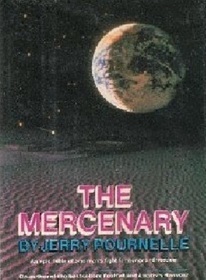
Falkenberg's Legion #a
The Mercenary
In a future universe in which prisoner colonists are shipped to strange worlds for a corrupt alliance of Earth nations, John Christian Falkenberg gives up a brilliant military career and makes a monumental sacrifice
269 pages, Library Binding
First published February 1, 1977
About the author
Jerry Pournelle
280 books562 followersDr Jerry Eugene Pournelle was an American science fiction writer, engineer, essayist, and journalist, who contributed for many years to the computer magazine Byte, and from 1998 until his death maintained his own website and blog.
From the beginning, Pournelle's work centered around strong military themes. Several books describe the fictional mercenary infantry force known as Falkenberg's Legion. There are strong parallels between these stories and the Childe Cycle mercenary stories by Gordon R. Dickson, as well as Heinlein's Starship Troopers, although Pournelle's work takes far fewer technological leaps than either of these.
Pournelle spent years working in the aerospace industry, including at Boeing, on projects including studying heat tolerance for astronauts and their spacesuits. This side of his career also found him working on projections related to military tactics and probabilities. One report in which he had a hand became a basis for the Strategic Defense Initiative, the missile defense system proposed by President Ronald Reagan. A study he edited in 1964 involved projecting Air Force missile technology needs for 1975.
Dr. Pournelle would always tell would-be writers seeking advice that the key to becoming an author was to write — a lot.
“And finish what you write,” he added in a 2003 interview. “Don’t join a writers’ club and sit around having coffee reading pieces of your manuscript to people. Write it. Finish it.”
Pournelle served as President of the Science Fiction and Fantasy Writers of America in 1973.
From the beginning, Pournelle's work centered around strong military themes. Several books describe the fictional mercenary infantry force known as Falkenberg's Legion. There are strong parallels between these stories and the Childe Cycle mercenary stories by Gordon R. Dickson, as well as Heinlein's Starship Troopers, although Pournelle's work takes far fewer technological leaps than either of these.
Pournelle spent years working in the aerospace industry, including at Boeing, on projects including studying heat tolerance for astronauts and their spacesuits. This side of his career also found him working on projections related to military tactics and probabilities. One report in which he had a hand became a basis for the Strategic Defense Initiative, the missile defense system proposed by President Ronald Reagan. A study he edited in 1964 involved projecting Air Force missile technology needs for 1975.
Dr. Pournelle would always tell would-be writers seeking advice that the key to becoming an author was to write — a lot.
“And finish what you write,” he added in a 2003 interview. “Don’t join a writers’ club and sit around having coffee reading pieces of your manuscript to people. Write it. Finish it.”
Pournelle served as President of the Science Fiction and Fantasy Writers of America in 1973.
Ratings & Reviews
Friends & Following
Create a free account to discover what your friends think of this book!
Community Reviews
Displaying 1 - 30 of 40 reviews

April 6, 2013
-De lo militar como resultado de lo político, o más bien de su falta de resultados.-
Género. Ciencia-Ficción.
Lo que nos cuenta. Tras un brevísimo retrato de la incorporación de John Christian Falkenberg a la Armada del CoDominio (versión futurista la Legión Extranjera francesa) saltamos a finales de un siglo XXI en el que los políticos deben enfrentar la oposición y los nacionalismos que se han exacerbado en las colonias espaciales y el Coronel Falkenberg, al mando de un pequeño destacamento de mercenarios, comienza su servicio en el planeta Hadley. Partes de la novela se editaron como relatos a comienzos de los años setenta. Primer volumen de la saga Historia del Futuro.
¿Quiere saber más de este libro, sin spoilers? Visite:
http://librosdeolethros.blogspot.com/...
Género. Ciencia-Ficción.
Lo que nos cuenta. Tras un brevísimo retrato de la incorporación de John Christian Falkenberg a la Armada del CoDominio (versión futurista la Legión Extranjera francesa) saltamos a finales de un siglo XXI en el que los políticos deben enfrentar la oposición y los nacionalismos que se han exacerbado en las colonias espaciales y el Coronel Falkenberg, al mando de un pequeño destacamento de mercenarios, comienza su servicio en el planeta Hadley. Partes de la novela se editaron como relatos a comienzos de los años setenta. Primer volumen de la saga Historia del Futuro.
¿Quiere saber más de este libro, sin spoilers? Visite:
http://librosdeolethros.blogspot.com/...

March 7, 2026
This is a fix-up that collects three stories from early 1970s issues of Analog. Peace With Honor was published in the May 1971 issue when John W. Campbell was still the editor, The Mercenary was first published in the July 1972 issue (and was a Hugo award finalist) after Ben Bova had assumed editorship, and Sword and Scepter was serialized in the May and June issues in 1973. It was the cover story of that May issue with a fine Jack Gaughan painting, and I'll note in passing that it also had my very favorite George R.R. Martin story of all time, With Morning Comes Mistfall. Anyway, The Mercenary has a conversational framing to link the stories, which concern John Christian Falkenberg, arguably his best character, who leaves the CoDominium service and establishes his own legion of mercenary soldiers. It's very good military science fiction, in the tradition of Drake or Dickson, but with more interesting scientific properties and equally questionable political and governmental philosophies and theories. As the cover (which is a kind of unpleasant green one) states, it's the forerunner to what became known as his and Larry's Niven's Motie universe. It's classic military sf.

June 15, 2024
Se toma su tiempo en afirmar la cuestión política, lo que en novela tan corta hace temblar las expectativas de violencia, pero por suerte cuando la guerra se desata despliega imágenes bélicas de excepción. Toda la cultura mercenaria surgida del CoDominio ofrece un escenario espacial inconmensurable, mas el tratamiento de la historia no considera ningún elemento propio de ciencia ficción. Que si hubiera sido desarrollada en algún escenario alternativo de las Guerras Mundiales del siglo XX, hubiera dado el mismo resultado.
Pero hay que decir que entretiene, así que apenas pueda me agencio el segundo.
Pero hay que decir que entretiene, así que apenas pueda me agencio el segundo.

October 4, 2022
Militay-SF, Weltraum-Action um einen Söldneranführer mit dem deutsch klingenden Namen John Christian Falkenberg. War spannend zu lesen, hat aber bei mir keinen bleibenden Eindruck hinterlassen, da doch eher konventionell. Anscheinend war der Roman so erfolgreich, dass es Nachfolger gab: Falkenberg's Legion.

November 23, 2018
No tengo mucho tiempo para explayarme, así que os dejo un rápido resumen.
Si te gusta la novela bélica y la ciencia ficción, creo que dentro de sus limitaciones, podrás disfrutar de esta novela. Ahora bien, sino te gusta la temática militar, pues casi mejor que busques otro libro que leer, ya que con este vas a perder tu tiempo.
Os dejo el enlace a mi blog, por si queréis darle una ojeada a la reseña más completa que publiqué allí:
https://fantasiascifiymuchomas.blogsp...
Si te gusta la novela bélica y la ciencia ficción, creo que dentro de sus limitaciones, podrás disfrutar de esta novela. Ahora bien, sino te gusta la temática militar, pues casi mejor que busques otro libro que leer, ya que con este vas a perder tu tiempo.
Os dejo el enlace a mi blog, por si queréis darle una ojeada a la reseña más completa que publiqué allí:
https://fantasiascifiymuchomas.blogsp...

May 22, 2015
The title says it all. "The Mote in God's Eye" is set in the same universe.

February 12, 2019
7/10. CF bélica entretenida, clásica y con mucha acción. No da para grandes profundidades, claro, pero entretiene mogollón.
Mas conocido este autor por su colaboración con Larry Niven en algunas muy buenas como "La paja en el ojo de Dios"
Mas conocido este autor por su colaboración con Larry Niven en algunas muy buenas como "La paja en el ojo de Dios"

July 20, 2021
2.5 stars. I try not to judge old books by modern standards, but Asimov makes me shine the hard light of modernity on classic sci-fi (not that he was a master of complex narrative or characterization either, but the imagination was certainly there).
If I were to critique this book by modern feminist or political standards, I would be hard pressed to even give it two stars, but Pournelle knows the craft of writing. He puts together a decent story, but his characters are completely lacking in complexity or interest. They are soulless husks, designed merely to be conveyances for the plot he wants to weave.
This book was apparently written first as a series of short stories, which doesn’t help it any. I’m not sure if later editions in the John Christian Falkenberg saga are any better, but I’m not sure I’ll ever find out.
If I were to critique this book by modern feminist or political standards, I would be hard pressed to even give it two stars, but Pournelle knows the craft of writing. He puts together a decent story, but his characters are completely lacking in complexity or interest. They are soulless husks, designed merely to be conveyances for the plot he wants to weave.
This book was apparently written first as a series of short stories, which doesn’t help it any. I’m not sure if later editions in the John Christian Falkenberg saga are any better, but I’m not sure I’ll ever find out.
January 31, 2026
Military SF that sadly mostly missed the mark for me. Essentially two novellas jammed together this is pretty bog standard stuff that reminded me of Starship Troopers with half of the quality. The biggest problem I have with this novel is Pournelle does a TON of telling but not showing. Most of this book is people sitting around in rooms talking about politics. The Military aspect is decent but it's mostly the day to day operational stuff which just bores me to tears. The SF aspect (while decent) is barely present and is essentially relegated to the background so it ends up being (at best) window dressing. All in all, I was pretty disappointed in this but I'd still probably tell Military SF fans to give it a go. Just expect a bumpy ride. 2.9 Stars rounded up.
April 23, 2020
Not really a novel, this is a collection of shorter works with bridging material. The weakness is that the first two thirds fit together nicely, but the final third is very much a separate tale, a sequel separated in time from the earlier parts. Because this final tale closely references material told in other volumes, that makes it an awkward fit.
On the other hand, as an explanation of military action in a science fiction setting, it is excellent, and one of the combat sequences is a retelling of a historical incident from the Korean War.
So, if you like military science fiction, told well, then you will enjoy this volume, even with its minor flaws.
On the other hand, as an explanation of military action in a science fiction setting, it is excellent, and one of the combat sequences is a retelling of a historical incident from the Korean War.
So, if you like military science fiction, told well, then you will enjoy this volume, even with its minor flaws.

October 28, 2023
The first book in the Falkenberg's Legion military SF series, this follows John Christian Falkenberg's early career as the head of a mercenary unit of varying size (generally in the 1000 - 3000 soldier range).
The series does not flinch in its description of the difficult and often ugly choices that must be made in extremis ... "Needs must when the devil drives", to quote the old saying.
Pournelle was a soldier during the Korean War and followed military history for his whole life, so the military elements are very strong. The plotting is tight and believable in each of the three stories that make up this book. And the world is depressingly believable, if more than a bit overtaken by the events since it was published.
I hesitated to give this book five stars, because it was not a pleasant experience (re-) reading it. But I would recommend this book strongly to anyone that likes military fiction at all, so I felt it had to get full marks.
The series does not flinch in its description of the difficult and often ugly choices that must be made in extremis ... "Needs must when the devil drives", to quote the old saying.
Pournelle was a soldier during the Korean War and followed military history for his whole life, so the military elements are very strong. The plotting is tight and believable in each of the three stories that make up this book. And the world is depressingly believable, if more than a bit overtaken by the events since it was published.
I hesitated to give this book five stars, because it was not a pleasant experience (re-) reading it. But I would recommend this book strongly to anyone that likes military fiction at all, so I felt it had to get full marks.

February 19, 2018
Fascinating to read this in 2018 when it was first published in 1977, 41 years ago and to see what Pournelle thought the future might be like in 2060. It reminds me a lot of 70's space westerns. It's more of a war yarn based on a time before it was written with a few futuristic ideas built in. Worth reading from a historic perspective but I think people like HG Wells had a better idea for the future 100 years ago to be fair. Nevertheless I remember that many years ago I liked A Mote in God's Eye and he was a very successful author. I guess I knew less then.
This entire review has been hidden because of spoilers.
October 29, 2018
Pretty good military sci-fi. The story had two concurrent plots of the unravelling of humanity's galactic/Earthly alliance of planets and nations (The Co-Dominium) and the story of a military commander and his men. The story does a good job of covering the life story of the Colonel John Christian Falkenberg III. The growth of him as a person and leader. It gives a peak into the brotherhood of groups like military units and the trust those groups have in each other and their leaders. It also shows the ups and downs of politics.

July 15, 2023
First, it's Jerry Pournelle. Therefore, it will be -- at worst -- above average.
Second, I really don't care for war stories, but it's Jerry Pournelle so it has its attractions.
I used to see him at meetings of LASFAS, Los Angeles Science Fantasy Society, and he was always fun to listen to or even talk to -- he was very approachable, a charming and interesting man.
Anything by Jerry Pournelle is worth reading. I recommend him and his entire body of work.
Second, I really don't care for war stories, but it's Jerry Pournelle so it has its attractions.
I used to see him at meetings of LASFAS, Los Angeles Science Fantasy Society, and he was always fun to listen to or even talk to -- he was very approachable, a charming and interesting man.
Anything by Jerry Pournelle is worth reading. I recommend him and his entire body of work.
August 16, 2018
I'm continuing going through some of my older paperbacks. This is a military sf action adventure. Curiously, at about the 60% mark the book abruptly drops the current plot, moves to a different planet, and starts a romance (done so badly that Falkenberg does not even tell the girl about his feelings). The book does not hold up well.

May 29, 2026
Very Vietnam-y and WW2-y. Dated for sure, but also firmly stylized. Like true detective fiction in the 40s, all women character development in it is puppeted sterotypes. Ambushes, infighting, civilian massacres, political tension, colonialism, farmers rebelling, and nation building. Lots of oddly romantic violence and enemy face to face negotiations.
July 7, 2017
Aunque no ahonda mucho en elementos de CF, sí es convincente en la estrategia mercenaria que se plasma. Buena cantidad de política y acción.

September 27, 2017
Read as part of The Prince. Wonderful series.
September 30, 2017
Great SciFi military fiction by the late Pournelle. Realistic political dynamics combined with a deep understand of both military history and conventional warfare make for a gripping read.

March 30, 2020
Outdated.
February 1, 2021
Poctivé military scifi zo starej školy.
September 18, 2023
Millitary-style SF is not generally my thing, although I did enjoy the Dorsai books.
Very enjoyable.
Very enjoyable.

December 28, 2023
I came to this off Iain M. Banks--on the record as saying The Culture is a reaction to the American right-wing militarification of the SF future--and for about the first half I was thinking, well, actually, this does something better with its future-history than 'Consider Phlebas' manages. We reach the end of history with the end of the Cold War (though it's a truce, in this telling) and resurgent nationalist instincts lead to collapse: I'll buy that, actually. But by the two-thirds point the fixup nature of the book started to annoy; worse, the last section, ironically mashing up the nomenclature of the American Revolutionary War and the American Civil War, loses track of where the ironies are meant to lie; worse still, the psychology of the sexual relationship at the end really is a pointed reminder of how adolescent everything really is.

April 18, 2024
Still as good as ever

July 20, 2026
It was like revisiting an old friend. Visiting Jerry and Christ Johnny makes for an enjoyable couple of hours.

August 31, 2025
Very glad I picked up this paperback at a used bookstore. Enjoyable, and now I need to read the rest of the series of books!
April 16, 2026
Well done mil SF novel. A bit like Hammer's Slammers by David Drake but more grounded. The story is episodic and skips ahead at some parts. Really good worldbuilding and characters. The presentation of space colonies as living, breathing, and growing places different from one another is excellently done, whether that be the swamps of Tanith, the bustling streets of Hadley, or the forests of New Washington. In contrast, Earth slowly decays whilst the political, military power of the colonies burgeon.
As a bit of an overture to the CoDominium universe, anyone reading this should seriously consider reading the other works in the same setting. If I can dare say, I believe Jerry Pournelle's setting is better than Star Trek and Star Wars not only in terms of feeling alive but also making a lot more sense writing wise.
As a bit of an overture to the CoDominium universe, anyone reading this should seriously consider reading the other works in the same setting. If I can dare say, I believe Jerry Pournelle's setting is better than Star Trek and Star Wars not only in terms of feeling alive but also making a lot more sense writing wise.

July 16, 2014
I read this originally back in high school ('83 or '84) but did not appreciate just how on-target Pournelle was when it came to dealing with politicians who were in it for personal wealth and not the good of the nation (or the CoDominium in this case).
The author did not real-life examples and slap a new names on them. Instead, he took the worse actions of a few and threw in a planet falling apart from a despotic world government along with the worst case scenarios of several economists and zero-population advocates. The nightmare he creates is one that nobody wants, but the reader can easily see how it happened.
His hero, Falkenburg, is the kind of military leader everyone who ever served wanted, but was as rare as hen's teeth. He leads from the front where possible but understands that he has to survive in order to keep his people alive as well.
I won't spoil anything except for this. There are a number of traditional songs from across centuries of service. It is the lyrics that affected me the most and may just tear at your heart as well, so be ready with a kleenex and a stiff drink.
Highly recommended to fans of military fiction, military sci fi, or anyone who enjoys a good tale regardless of the subject.
Find it! Buy it! READ IT!
The author did not real-life examples and slap a new names on them. Instead, he took the worse actions of a few and threw in a planet falling apart from a despotic world government along with the worst case scenarios of several economists and zero-population advocates. The nightmare he creates is one that nobody wants, but the reader can easily see how it happened.
His hero, Falkenburg, is the kind of military leader everyone who ever served wanted, but was as rare as hen's teeth. He leads from the front where possible but understands that he has to survive in order to keep his people alive as well.
I won't spoil anything except for this. There are a number of traditional songs from across centuries of service. It is the lyrics that affected me the most and may just tear at your heart as well, so be ready with a kleenex and a stiff drink.
Highly recommended to fans of military fiction, military sci fi, or anyone who enjoys a good tale regardless of the subject.
Find it! Buy it! READ IT!

March 21, 2013
Very, very uneven. Not enough background information to gauge who was who in the battle scenes, initial chapters seemed completely unrelated to the rest of the plot, and rough transitions. However, the strategy and battle scenes were extremely well written and the romance was believable and uplifting at the end. I would recommend skimming the initial parts of the book, as the good parts do make up for it eventually.
April 7, 2025
My first solo novel by Pournelle. I prefer his collaborations with Larry Niven. This is an OK military SF adventure, but the SF element is only the background. A crumbling galactic empire is necessary for a story of mercenary forces hired by now largely abandoned colony worlds to defend or conquer. Ultimately, the book is easy reading but a little boring.
Displaying 1 - 30 of 40 reviews