A 2022 Whiting Award Winner in FictionFinalist for the 2022 Reading the West Debut Fiction AwardFinalist for the 2022 Colorado Book Award for Literary FictionLonglisted for the 2022 PEN/Robert W. Bingham Prize for Debut Short Story CollectionSet in the western sagebrush steppe, Site Fidelity is a vivid, intimate, and deeply human exploration of life on the shifting terrain of our changing planet.
Firmly rooted in the modern American West, Site Fidelity follows women and families who feel the instinctual, inexplicable pull of a home they must work to protect from the effects of economic inequity and climate catastrophe. A seventy-four-year-old nun turns to eco-sabotage to stop a fracking project. A woman delivers her own baby in a Nevada ghost town. A young farmer hides her chicken flock from the government during a bird flu epidemic. An ornithologist returns home to care for her rancher father and gets caught up trying to protect a breeding group of endangered Gunnison sage grouse.
In lean, lyrical prose, Claire Boyles evokes the bleakness and beauty of our threatened western landscapes. Spanning the decades from the 1970s to a plausible near future, this knockout debut introduces unforgettable characters who must confront the challenges of caregiving and loss alongside the very practical impacts of fracking, water rights law, and other agricultural policies. Site Fidelity is a vivid, intimate, and deeply human exploration of life on the shifting terrain of our changing planet.
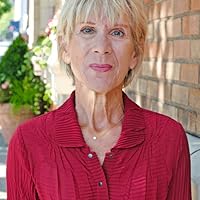
Claire Boyles (she/her) is a writer and former farmer. A 2022 Whiting Award winner in fiction, she is the author of Site Fidelity, which won the High Plains Book Award and was longlisted for the PEN/Robert W. Bingham Award, the Colorado Book Award, and the Reading the West Award. Her nonfiction has appeared in Sierra Magazine and Virginia Quarterly Review, among other journals, and she is a screenwriter with multiple credits on the Hallmark Channel. She teaches in low-residency MFA programs at both Eastern Oregon University and Western Colorado University. Her debut novel, Appraisals, is forthcoming in 2026.
Site Fidelity is an interconnected collection of stories largely set in Colorado, featuring people, most often women, struggling to live on the land. The time is initially set in the years around the recession of 2008, when those who lived off the land, and those who supplied them, were increasingly having difficult lives. In addition to money worries, the land itself was worrying. Water was scarce here or birds were disappearing there. Husbands/men were fairly disappointing as a group.
Common themes are human frailty vs tenacity, fears of environmental collapse, family with all of its potential for good and bad, the power of sisterhood and strong women, Colorado itself, the continuum of life itself as well as the affects of life choices and the effects of illness on families, and the effects of economic changes. And all is described in the author’s wonderful prose which ranges from elegiac to down home barnyard.
I recommend Site Fidelity for all who enjoy short stories.
I have also reviewed the book for the Mark Twain American Voice Award and received a copy by being a member of the Selection Committee.
"It took effort to keep moving when there was no visible destination, when it felt like something larger was stalking you, like the unfortunate end of everything approached, wrapped in destiny, absolute."
I now have a copy of this book full of little sticky notes on multiple sentences and portions that are exquisitely written and cut right to the bone. "It was painful to look closely enough at the world to draw it. It made her itch. It made her ache."
You can feel the ache in Boyles' pen on paper, or fingers on the key board, as she loses herself in her family stories and in her imagination. There is pain in the mostly female characters who see their way of life and the natural world being destroyed, mainly be men. These women fight for their farms, their chickens, their land, and the wildlife that surrounds them. It takes effort. They break the law, the fail, they win, they drink and find joy in their children and in the stars and clouds.
I loved this book, and was surprised (the publisher did not highlight this) to learn that many of the stories are linked, I think more than most people realize. Almost every story is an offshoot of another. It's subtle in some cases, obvious in others (there are 3 sisters and we get the POV of each one, but there are also ex's and grandkids as the decades fly by, and the connections are easy to miss, so enjoy the mystery of finding them).
Watch this writer. If her novel is as intelligent, poised, fluid, and full of awe as her collection, she's heading to bigger pastures, pun intended!
(4.5) A love for their Colorado homeland inspires women’s environmental activism and determination to keep their families together in this linked short story collection. Hope and perseverance are watchwords for Boyles’s characters, many of whom are single mothers or unmarried women. Nearly half of the stories center on a trio of feisty sisters. This has me eagerly awaiting whatever Boyles writes next. It reminded me most of Love Medicine by Louise Erdrich, as well as Barbara Kingsolver’s early fiction set in the Southwest.
See my full review at BookBrowse. (See also my related article on sagebrush steppe and the Gunnison Sage-Grouse.)
I loved these stories. Many of the stories are interconnected, which is a favorite element of short stories for me, which I thought was done quite well in this collection. I also loved the thematic explorations of the environment and protecting the environment, particularly how environmental activism can relate to familial or even spiritual connections. The emotional depth of these stories also was a favorite element for me. If you like short stories that center the environment/environmental change, I can't recommend this collection enough!
Thank you to W. W. Norton and Claire Boyles for providing me with an early copy of this work through Netgalley in exchange for an honest review. Site Fidelity comes out on June 15.
Whew. These stories really laid me out. For a short book it is dense with information and emotion. These linked stories, some closely linked, others not, are all set in the rural west of mostly Colorado, where things like farms and water and relationship to government are very different from anywhere else in the states. They focus on women, mostly, with sisters, mothers and daughter.relationships.featured prominently. There are a few good men, and a lot of disappointing ones. Like the landscape, these stories can be emotionally tough and chewy, like jerky, but also lovely and arid, like sage and mountains. Climate and animals and conservation run deep under all these stories, the background to the very human, very flawed, so very beautiful humans in the foreground. As one of three sisters, I think the sisters are my favorite, but each story yielded a different standout right up to the end with Gracie and Fran. This is not an easy book, but it's a stunningly beautiful one.
A Winesburgian story cycle set in rural CO, this is a book about land and how it's used: There are stories about fracking protests, cutthroat trout dieoffs, sage grouse surveys, and even (my favorite) irrigation ditch management.
3.5 - these were all very well-written & full of beautiful story telling. The ones that hit, HIT but there were also quite a few that were not my vibe. Regardless, they all contained rich characters & a lot of depth.
I really enjoyed this novel. I love the format of the short stories and I love how Boyles portrayed complex portraits of women interacting with government, men, the environment, and other women. It’s hard to find nuance when reading about environmentalism so I found these accounts very refreshing.
Author Claire Boyles has been a farmer and teacher, but throughout it all, she yearned to write. This novel is her debut collection of short stories.
An intimate exploration of the lives and livelihoods of all-too-human people living in the American West (Colorado in particular), this collection is vivid, in both its depictions of the human emotions that define the characters and the beauty of the land that they call home.
The stories converge around a general theme: Earthly existence for humans is both a struggle with their fellow humans (and the nature of emotions--both good and bad--that that entails) and with their environment, which is made particularly difficult thanks to man-made governmental and political issues disrupting that natural connection. Each story explores an environmental justice issue--water laws, fracking, endangered species, etc.--within the confines of characters struggling to make sense of their lives and the people in them. The idea of “site fidelity” is a concept of animals staying in, or habitually returning to, a certain area. The characters in these stories experience the same pull. They love their families and the land they call home, even as they hurt, challenge them, and break their hearts again and again.
While all the stories were gorgeously written and emotionally resonant, I especially enjoyed the interconnected stories that followed three sisters through various stages in their--and their families’--lives. In “Sister Agnes Mary in the Spring of 2012,” Sister questions her relationship with her priest and God, while trying to stop a fracking operation from going up near a children’s playground. Her sister, Ruth, delivers her own baby in “Alto Cumulus Standing Lenticulars,” while also questioning whether to leave her absent husband and pursue the career she longs for. The third sister Mano, gets her story in “Early Morning Systems,” where she must decide how much of an activist for environmental justice she wants to be, while sussing through her messy love life. Learning about these women’s lives--and their complex yet real relationships with each other--was a novella of sorts in-and-of-itself and thoroughly engrossing.
Boyles uses evocative language to describe the land in all its beauty--and stark descriptions to reveal how its natural elegance can be marred by destructive humans and the systemic policies that threaten its destruction. This was such a distinct theme/idea to build this collection around. You certainly can see Boyles love of the land and her fellow humans shining through. I highly recommend this powerful collection.
Many thanks to W.W. Norton for a free digital ARC of this short-story collection in exchange for an honest review.
A really strong collection of interconnected short stories that span decades about people's relationship with the land and balancing that with survival. Generations just live. If you enjoyed Jennifer Haigh's Bakerton trilogy, you will love this, as will readers who appreciate sparse but eventful short stories.
Upon reflection, there is a tone throughout this collection that is slightly disquieting. Many of the characters pride themselves on being individualists as well as environmentalists. There is at least one comment about the character being a patriot. It subtly romanticizes the entire libertarian/far right movement without bringing the bigger societal picture in it. Furthermore, I always find it uncomfortable when there isn't a single BIPOC character even mentioned. So all these experiences are solely from a white perspective. Given the locale, there should be indigenous voices as well and how they find these environmental and economic issues.
I received an arc from the publisher but all opinions are my own.
Claire Boyles deftly draws relationships among family and community, and relationships between people, ecology and place in these interrelated stories that are sometimes funny, sometimes sad, and always vibrating with seismic tremors of compassion for all those who are muddling through and grief for all that we stand to lose. Oh and that last story “Chickens” is an absolute marvel. I will be thinking about it for a long time. This book is up there with Lauren Groff’s “Florida” as one of my fav story collections.
I came across this short-story collection on a display in the fiction section at my local branch library here in Salt Lake City. When I saw that the stories were about people living in the American West, I immediately knew I wanted to read it.
As a connoisseur of fiction set in the milieu of the Mormon environment I grew up in, I was curious to learn what stories about the same region but without this connection might be like.
The stories here are loosely related through a family of three sisters, one of whom is a nun, and a late-night radio show about aliens and ghosts. Environmental concerns are an important part of the thematic material, and the stories range from a North Dakota oil field to a dying Nevada mining community and lots of places in between: Las Vegas, a ranch where endangered Gunnison sage grouse breed, a Catholic school and a Forest Service station in Colorado and other venues.
I absolutely loved this collection of interconnected short stories. The writing is amazing-it’s delicate and yet packs a punch. I’ve read short stores where the science was a gimmick, but here, it’s part of the architecture. Ecology, birding, engineering, clouds, water, it’s all in there, but these sciences live within the stories, not apart from them. And if you’re worried that the emotions take a back seat? Nope-they’re there, too. Love, hate, revenge, loss, kindness-beautifully rendered.
I had a hard time getting started on this book but I don’t usually read short stories. Once I got going, the characters charmed me and because I’ve lived in the Colorado/Wyoming region, they connected with me. We had this author, Claire Boyles, join our book group discussion and her background on the book helped understand it all so much more. She is working on a fiction novel and will give it a try when it is released.
I very very much enjoyed this book. Well crafted sentences and story structure, common threads between the short stories make you smile, descriptors of Colorado and the sky and the sage brush and personal relationships, so well done! She reminds me a little of Larry Brown the southern writer. Claire has made me a lover of short stories again.
The first and the last stories in this collection were enough to make up for some of the sluggish middle stories. In all, it excelled when it leaned into its characters relationship to the land and other species, rather than their relationships to each other. As a collection of stories about real-feeling characters it’s hit or miss but as a love letter to the west it’s a very successful book.
One of the best books I've read recently - indeed, I've been teaching it these last two semesters. I'm going to quote one of my students, actually: "I started reading Site Fidelity and could not/did not put it down, for a million reasons, but largely due to these jaw-droppingly exquisite characters that Boyles has created and the ways in which they keep appearing, over and over again, in the flesh or by mention, through time and space. "
Милый сборник рассказов для взрослых, поучительных о жизни, смерти, взрослении, выборах. Такая, чтобы уснул с ней и проснуться и дальше читать перед сном нескончаемо. Пойдет. Пессимистично, как в жизни мы любим.
Strong writing, strong women characters. I highly recommend this collection. My personal enjoyment was tempered because so much of it was set in a place I hated living, so it brought back a lot of difficult memories. If you did not have the misfortune to grow up in Loveland, Colorado, you have the opportunity to fully appreciate this collection.
This is a wonderful collection of stories. Unique characters with depth, some of whom appear in multiple stories. Nature threaded throughout, often threatened but sometimes threatening. Personal and natural tragedies tangled with luminous hope. Lyrical language. Easily the best set of short stories I've read in a long time. I wanted to start re-reading the moment I was finished.
Site Fidelity contained multiple short stories; some connected to others, some not at all. What they all had in common was each character’s reverence for nature. It’s nice reading about characters who value nature in a way that made it seem insane that someone wouldn’t. Site Fidelity felt like a call to action, but not extreme action. The characters were doing what they could in their communities, and that itself felt revolutionary as many of them felt like the world/government was against them in this fight.
Boyles's writing was atmospheric; I could tell that she knew these places intimately and wrote about them with love. There were a few scenes I can still see and smell in my head as I write this. Many of the stories made me tear up because they weren’t just about the environment, which is what I thought when I picked this book up. They were about being a woman and growing old, motherhood, mother-daughter relationships, and the complex decisions that come with being a person in a society that doesn’t value your ideals. These stories were filled with so much compassion and understanding that made me feel like I could be full of those things for people I struggle to deal with as well.
While many of these short stories flew by and I found myself with zero complaints, there were maybe 3 or 4 that absolutely stunted my reading. There was just something about the character or the topic of those specific stories that didn’t land for me, dragging this 200-page short story collection from something I thought I would finish quickly to something I had to force myself to pick back up. Once I would get past those parts, it was usually back to the good stuff. I would recommend this book, especially to women who have interests involving the environment.
Review by Julia Romero, Proofreader and Book Reviewer at October Hill Magazine
Set in the North American sagebrush steppe and spanning multiple decades, Site Fidelity is an intimate look into the lives of Americans burdened by the 2008 housing crisis, economic inequity, and impending climate catastrophes that threaten the fragile and lush ecosystem of the American West. This collection embodies our instinctual desire for a place to call home and the lengths that we will go—or should go—to protect it. At the root of Site Fidelity is our species’ need for connection with one another, with ourselves, and with this green planet we call home.
"If we are to survive, even the next several decades, we need to feminize the myth of the American West…Claire Boyle’s stories do just that, the tenacious, unsinkable women who inhabit them no longer content to sit back and let powerful men of industry make us all extinct. For anyone who loves and grieves the West, who isn’t afraid to open their eyes and see her distress, these beautifully forged stories are as essential as water." So says Pam Houston, one of my favorite novelists and herself an eloquent advocate for earth and it's children. The short stories here span the beginning of an epoch - 1970s through near future - sometimes dubbed the anthropocene or the age of man vs earth. They are gracefully written, linked at times and not polemical but descriptive. Read, weep and enjoy these unforgettable, resilient characters,
In order to describe this collection without spoilers, I'll share my experience of reading it. It's a collection that teaches you to love - land, water, birds, people. Claire's fiction made each piece of land it touches a whole, real world for me. I learned about events that shaped my grad school home - the flooding of the Big Thom River, the sugar beet industry. There's also the important discussions around water rights and BLM lands, and an intimate, passionate love of farming. These stories are vibrant - there is no way to remain unmoved.
This is a truly lovely collection, and I highly recommend it.
Found this gem in the new reads section of the library. Readers of Pam Houston (who wrote a blurb for the book) would like this one, too! The short stories make a grand character out of the American West - and showcase all of its complicated beauty, the way it’s fallen victim to the fossil fuel industry, and the ways it’s an enduring home to animals and the women narrators in each tale. I like how the book sprinkles in stand alone stories and also follows the longer journey of a family of three sisters - an artist, a nurse, nun, who all stand up to the patriarchy in their own small and brave ways.
I was drawn to this book of stories by the first chapter about a woman wildlife biologist that came back to the ranch to tend to her father who was in the midst of cognitive impairment.
I’m not usually drawn to stories with a lot of emphasis on emotions, introspection, life decisions about choice of partners or work paths. But this book of stories had so many interesting descriptions of places and current issues found in the Rocky Mountain West that I kept reading. It reminds me of Barbara Kingsolver’s books where I enjoy the mix of people’s life experiences and environmental issues.
I am awarding this collection of short stories five stars because the first story "Ledgers" was pretty darn close to perfect in my opinion. Boyles' prose is concise and quick but she does not hesitate to linger on the exhale of a scene and tie everything together in the end. A really pretty story and one I am sure I will return to.
I have a soft spot for farmers and am drawn to story collections, so this was a win-win even before Claire Boyles captured my heart with portraits of characters, heartbreaks and raw scenarios. "Flood Stories" reads like an Elizabeth Strout novel (that is a huge compliment!), and Terry Tempest Williams hovered over numerous, beautifully scripted paragraphs. I await Boyles' next collection!