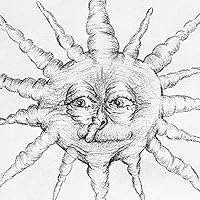
In Wild Experiment , Donovan O. Schaefer challenges the conventional wisdom that feeling and thinking are separate. Drawing on science studies, philosophy, affect theory, secularism studies, psychology, and contemporary literary criticism, Schaefer reconceptualizes rationality as defined by affective processes at every level. He introduces the model of “cogency theory” to reconsider the relationship between evolutionary biology and secularism, examining mid-nineteenth-century Darwinian controversies, the 1925 Scopes Trial, and the New Atheist movement of the 2000s. Along the way, Schaefer reappraises a range of related issues, from secular architecture at Oxford to American eugenics to contemporary climate denialism. These case studies locate the intersection of thinking and feeling in the way scientific rationality balances excited discovery with anxious scrutiny, in the fascination of conspiracy theories, and in how racist feelings assume the mantle of rational objectivity. The fact that cognition is felt, Schaefer demonstrates, is both why science succeeds and why it fails. He concludes that science, secularism, atheism, and reason itself are not separate from feeling but comprehensively defined by it.
Donovan Schaefer is an associate professor in the Department of Religious Studies at the University of Pennsylvania. He earned his B.A. in the interdisciplinary Religion, Literature, and the Arts program at the University of British Columbia in Vancouver. His master’s and doctoral degrees are from the Religion program at Syracuse University. After completing his PhD, he held a Mellon Postdoctoral Fellowship at Haverford College. From there, he went on to teach in the Faculty of Theology and Religion at Oxford for three years before taking up his position at Penn in 2017. His research focuses on the role of embodiment and emotion in religion, science, and secularism.
Really enjoy Schaefer’s perspective and find his argument convincing! An interesting and entertaining collection of historical and contemporary case studies and a great call to action at the end that effectively reasserts the importance of the humanities. “The urgent task in front of us is learning how to move with confidence through a world where certainty is impossible, but resolute action is vital”…
Donovan O. Schaefer stellt in Wild Experiment die klassische Trennung von Gefühl und Denken in der Wissenschaft grundlegend infrage. Er argumentiert, dass Rationalität auf allen Ebenen von affektiven Prozessen durchzogen und mit ihnen verschränkt ist, und entwickelt hierfür das Modell der „Überzeugungskraft-Theorie“ (cogency theory). Anhand historischer Kontroversen – etwa der Darwin-Debatten im 19. Jahrhundert, des Scopes-Prozesses von 1925 sowie der „New Atheist“-Bewegung der 2000er Jahre – zeigt Schaefer, wie wissenschaftliche Rationalität zwischen begeisterter Entdeckung und ängstlicher Abwehr oszilliert. Auch gegenwärtige Konstellationen wie Klimawandelleugnung oder die Wirksamkeit rassifizierter Affekte in vermeintlich objektiven Diskursen werden analysiert. Sein Fazit lautet, dass Wissenschaft, Säkularismus und Vernunft nicht vom Gefühl zu trennen sind, sondern ihre Form und Wirksamkeit gerade durch affektive Dynamiken erhalten.