FINALIST FOR THE NAACP IMAGE AWARD - A collection of essays and stories documenting the lived theology and spirituality we need to hear in order to lean into a more freeing, loving, and liberating faith--from the hosts of the beloved Truth's Table podcast
"The liberating work of Truth's Table creates breathing room to finally have those conversations we've been needing to have."--Morgan Harper Nichols, artist and poet
Once upon a time, an activist, a theologian, and a psychologist walked into a group chat. Everything was laid out on the table: Dating. Politics. The Black church. Pop culture. Soon, other Black women began pulling up chairs to gather round. And so, the Truth's Table podcast was born.
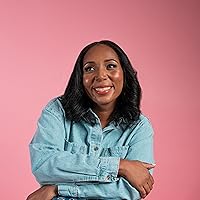
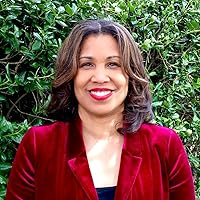
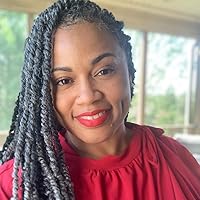
In their literary debut, co-hosts Christina Edmondson, Michelle Higgins, and Ekemini Uwan offer stories by Black women and for Black women examining theology, politics, race, culture, and gender matters through a Christian lens. For anyone seeking to explore the spiritual dimensions of hot-button issues within the church, or anyone thirsty to deepen their faith, Truth's Table provides exactly the survival guide we need, including:
- Michelle Higgins's unforgettable treatise revealing the way "racial reconciliation" is a spiritually bankrupt, empty promise that can often drain us of the ability to do real justice work - Ekemini Uwan's exploration of Blackness as the image of God in the past, present, and future - Christina Edmondson's reimagination of what a more just and liberating form of church discipline might look like--one that acknowledges and speaks to the trauma in the room
These essays deliver a compelling theological re-education and pair the spiritual formation and political education necessary for Black women of faith.
If you are Black Woman who grew up the church and you are still searching or healing in some day, I consider this a must read. This book is written by Black Women for Black Women and I think it is one of those books that you read slowly- leave, consider it's impact on you and what it is trying to teach you.
Truth's Table much like the podcast is a book written by black women for black women. It is unapologetically Black and unapologetically Christian. As a white man, I have always seen myself as an eavesdropper on the Table. Since these conversations are not for my ears it requires the hard work of listening quietly and well. I think this book is a remarkable achievement.
The book is a series of essays under three headings of Life, Love, and Liberation. The chapters themselves are written by individual women and cover topics from colorism, divorce, singleness, marriage, protest, multiethnic worship, the black diaspora, and more. I typically struggle with books that are simply a gathering of essays, but I enjoyed this one. The authors writing their own individual chapters gives the book a greater sense of their voices and perspectives. It also functions much like their podcast, but instead of different episodes, you have different chapters.
The book does not read like content creators who have a good podcast but can't translate that into another medium. These women are writers. The chapters are almost academic in places because they have receipts. These are not light topics, colorism is the topic of the very first chapter for example. But the content is personal, researched, and biblical. Each chapter wrestles with Scripture and how it applies to the real life of the black experience.
I am sure that this book will only be the first installment from these three women.
If any talk of race or racism bothers you, then go ahead and skip this book. It is proudly black and you will likely not understand it, nor be willing to listen.
Fans of the podcast will find themselves right at home. I think that even white men like me would benefit from this book. There is plenty I didn't always understand, nor am I able to relate to. But I can listen and try to learn. Those who are content to listen will find much worth listening to.
I received a copy of this book from NetGalley in exchange for a review.
This book took me quite some time to read, and not just because I was in a reading slump. This is the kind of book that you need to read a chapter at a time and sit with it considering the implications the truth of the book has for your life. As a white woman reading this book, I found it best to follow my grandma's often-given advice to keep my ears open and my mouth shut. I am thankful for the time and thought that Edmondson, Higgins, and Uwan put into this book and that they shared their lives and their hearts within its pages. This book left me with a larger view of God and a better understanding of his people, and I think that's exactly what was intended. Read this book with an open mind when you really have the time to invest in it and digest it.
This book was difficult to rate because there were some chapters I wanted to cry, "Amen! Yes!" and others where I wanted to throw the book across the room. This variability seems to be due to the fact that there are three authors. I noticed that every chapter during which I struggled was written by Michelle Higgins, and in particular "Divorce: From Chaos to Care" and "The Keys to the Kingdom of God." First, I'll relate my disappointment with Higgins' writing before affirming other chapters which were excellent.
In her chapter on divorce, Higgins relates her experience feeling uncared for by fellow Christians during her divorce. Fellow Christians coached her toward temporary separation and reconciliation since she was leaving her husband due to years of arguing, disconnection, misunderstanding and decreasing respect, and not due to biblical reasons of abuse, infidelity or abandonment. I soaked in Higgins' point. The church needs to care. Even care first, question later. Absolutely, and in this, I benefitted from Higgins' rebuke of the church. But I also agreed with the church. Higgins' justification for divorce was unbiblical, and I'm not convinced the church didn't care for her. They just didn't care in the way she wanted, that is, in granting her pardon for sin.
In "The Keys to the Kingdom" Higgins employs "whiteness" and "blackness" categorically a la James Cone. Where Cone says white folks must "become black" and "Jesus is black" not as a historical or biological truth, so Higgins works similarly. She says things like, "As Blackness is empowered, whiteness cannot exist. And this is good news, for there is no room for whiteness in the economy of God" (247). As a white woman, maybe I'm just not the target audience to receive that statement because I could have used a whole lot of couching explanation before arriving at a declaration like that. Still, this chapter is missing the Bible. Higgins uses good sources: James Baldwin, Willie James Jennings...etc. but I saw little reference to the Bible in this chapter, and that is my main contention with most liberative theology too.
10/10 chapters were Ekemini Uwan's "Hidden in Plain Sight: A Single Black Woman's Manifesto" and "Diaspora Dreams: Blackness as the Image of God" and Christina Edmondson's "I's Married Now: Christian Marriage for Grown Black Women" and "Disciplining the Church." Phenomenal.
Uwan's narrative of being perpetually single in "Hidden in Plain Sight" struck a personal note for me but also was intriguing sociologically. Uwan examines the societal and cultural issues, such as colorism, incarceration, education, beauty standards and more, that is causing black women to be disproportionally single. (For more "Is Marriage for White People?: How the African American Marriage Decline Affects Everyone" by Ralph Richard Banks is an excellent book on the sociology of black marriage in America that emphasizes the difficulty for black women, in particular, in finding a spouse). Uwan ends with Hagar's story. Uwan is consistently biblical, and I so appreciate that.
Uwan beautifully weaves an eschatological vision in the final chapter "Diaspora Dreams." She affirms blackness as part of the imago Dei, making it central to embodied faith. Vivid is the narrative from "The Color Purple" with which Uwan ends. Separated sisters Nettie and Celie's are reunited, and so, Uwan envisions a final "God-ordained cosmic pan-African family reunion that culminates in us playing and singing makidada in unison around the throne of God" (284).
I'll end this review with a final word on Christina Edmondson's "I's Married Now: Christian Marriage for Grown Black Women" and "Disciplining the Church." As I am recently married, Edmondson's chapter on marriage carried a sweetness. She affirms black love and black marriage but also says generally good things about the delight of marriage.
In her chapter on church discipline, Edmondson begins bluntly, "All theology is political" (168). And so church discipline is political too. Using Scripture, Edmondson praises loving and sacrificial leadership which is aware of its ability to abuse power, especially in regards race and sex. How timely for the church today.
These theologian-sisters have a wonderful, hugely popular podcast that they call "a table set by Black women for Black women." Their book of the same title is much of the same - scripture, relational wisdom, dismantling the evil of white supremacy (especially in the Western Church) and sampling from other brilliant theologians, writers and artists. One amazing aspect of this book is that every quote, song or entertainment clip shared originates from Black folks. Every single one. This book takes the reader to school, and I definitely recommend it.
I appreciated the opportunity to learn about living out Christianity from se different perspectives. Full of thought-provoking essays. Great for a book club.
This book wasn't written for me, but it was a privilege to hear these esteemed women explore race, faith, femininity, singleness, divorce, psychology, protesting, history, and more through a variety of essays. It was an eclectic mix of topics, but I appreciated how it was tied together and reflected each woman's voice. As a long-time fan of the podcast by the same name, this book was a welcome expansion of so many ideas important to contemporary black women.
”Truth’s Table” is a collaboration, Ekemini Uwan, Christina Edmondson and Michelle Higgins each write essays on key topics facing, especially but not limited to, black women in the United States. I was invited by the publisher to review this book and I was honoured to read it. I anticipated gaining wisdom into the lives of women’s shoes I can never walk in as a white woman, I knew it would be insightful. I didn’t realise how much I would relate to, how seen I would feel in it and how much I would be able to apply to my life.
This book is brutal, gentle, opinionated, unifying depending on the topic, the writer and the reader’s feelings on….its wonderfully diverse and entirely challenging! What it isn’t is sugar-coating, shy or holding anything back. It’s straight-talking approach is refreshing.
Trauma is intrusive, obstructive, and all-consuming; depending on what kind of trauma you are dealing with, it can warp your view of God and the faith altogether. Trauma is so loud that it can impair our ability to discern truth from lies, which prevents us from disentangling white supremacy from the faith. I cannot stress this enough, because some people are decolonizing their faith to the point that they are decolonizing their way out of the faith. It is broken into three major parts: love; life; and liberation. Within each are four essays. Life covers Colorism, Protest, Discipleship and Forgiveness. Love talks about Singleness, Divorce, Marriage and the Church. Liberation speaks to Justice, Resisting, God’s Kingdom and Dispora Dreams. Each of these is discussed using the authors” stories, their experiences as well as their knowledge and expertise as a theologian, educator and organiser.
If you are looking for a captivating, mind-set shifting, relatable and challenging book, pick this one up! It’s a five out of five on the enJOYment scale, and highly recommended!
I have never heard of these ladies until now, and Now I have a new podcast to listen too. This book is so needed for those of us who are over religion as we know it and grew up on. Especially with all of the racial issues that have been coming more to the surface after the last couple of years. These three ladies give such a great advice and is written for black women in any stage in their life, from singleness, to being married, dealing with racisism and divorce and many other situations. This is an amazing, on time and much needed resource.
I received a copy of the book via NetGalley and am voluntarily leaving an honest review of my own thoughts and opinions.
It is definitely the most insightful book of nonfiction I’ve read in awhile.
A. It gave food for thought and added counterpoints to some of popular narratives being pushed at the moment.
B. I believe it has something for everyone in faith to take from. That is to say -for men, women, young, older, those at different points in their faith, and etc. At the same time it is for Black women and speaks to them directly.
C. It has a mind to many of the pressing issues going on in body of Christ.
D. It was a quick read that is accessible to everyone.
The Meh
Does it miss the mark sometimes?
I would have liked it to have went further with a few topics (ex: colorism)
It does not go as far as the whole:
dark/Black=bad
light/white=good
Then again that may be part of disentangling white supremacy and a larger conversation that could be a book in itself.
Thoughts & Feelings
I. When did social justice equate to the opposite of Christ?
II. Is your faith a worship of God or whiteness/men/money/man?
“Christianity predates white supremacy, and it will outlast it.”- 71
attributing everything to whiteness gives whiteness the glory. -55
III. Colorism did not start with slavery/colonialism?
IV. So much of our view is not rooted in God but more so society/worlds hierarchy.
V. Marriage
A. At this point are you having a productive Black marriage/relationship conversation if you ignore realities of what is happening in the Black community with men and women?
B. Putting marriage on pedestal? Putting men on pedestal?
VI. As a Black woman so many expect you to fix everything/know everything which is in opposition to God.
VII. A Reckoning
A. I struggle because at a certain point change has to come from the center/core and you have to be open. At this point a reckoning has to happen on so many fronts.
B. More is required of body of Christ than in past?
C. Is our visions of God being limited by earthly?
VIII. Makes me want to read books about Black worship & history with religion.
IX. Thinking on our humanness/fallibility/just how human we are. Are we afforded grace?
X. Visions of diaspora
Make sure we are not letting the things of this world cloud our vision.
I won this book in a giveaway on goodreads from Convergent Books
I was already familiar with the ‘Truth’s Table’ podcast and it’s cohosts. This book was a culmination of essays on topics seen through lens of the black, female Christian perspective. I enjoyed the book. There was some things I’ve never thought about and learned. I loved how they weave the Bible to support blackness, black liberation, etc. The book is in 3 different parts to separate the type of essays. My favorite one is definitely the one on singleness by Ekemini since I relate to it so much.
I recommend this book to fans of the podcast and ladies and to folks who to learn from a black female Christian perspective.
I received a complimentary copy of this book through NetGalley. Opinions expressed in this review are completely my own.
It wasn’t my cup of tea— certain chapters resonated with me, but it didn’t move me nor did I find it enlightening. Definitely could’ve skipped this one
Necessary and important. I'm so grateful for Truth's Table insights and reflections about multiple topics--the presence of these multiple topics becoming a celebration and affirmation of the wonderful complexity of Black women. This is a place of depth, truth, and liberation.
These three sister-authors touched things so deep within that ending the book brought me to tears. Literally. Please sit at Truth’s Table and soak in the life-giving, love-centered messages of lament and liberation, and of hope and healing for Black women.
When I found Truth’s Table in 2016, it was at a pivotal time - I was suddenly in “full-time ministry” and I had so many questions, insecurities, and frustrations. The podcast gave words to so many of my thoughts, hurts, challenges, and hopes as a Black woman in ministry. The table was a place to feel completely at home, like I was chatting with a group of girlfriends sharing experiences and calling out truth in love.
To say it was a privilege to preview this book isn’t enough. It was an HONOR. This book is full of moments that will have you as full as your granny’s Sunday dinner - about to pop, but always down for more!
I have way too many favorite portions to list here, but lemme drop a few lines from Part 1 that resonated with me:
“We were given dominion over every living thing that moves on earth *except* one another. We were not made to dominate one another.” (on The Audacious Perseverance of Colorism)
“This story of the Black church is a continuation of a long history of building safe places for Black people to be themselves without explaining themselves. For many, these places were the hush harbors that were built “for us by us”.” (on Protest as Spiritual Practice)
“To be clear, no church this side of glory is perfect. The church is being sanctified as all believers are, individually and collectively. But at the very least, your dignity and humanity as a Black person will never be despised in the Black church.” (on Decolonized Discipleship)
“Seventy times seven does not represent a literal number to be tallied, but rather a way of being. Live as a forgiving person. Live forgiven and repentantly every day.” (on Forgiveness)
I laughed, I praised, and I cried reading this book. Don’t even get me started on the way the book moves like the waves of the sea, from calm and serene to crashing violently into our personal pain and trauma, and finally to a beautiful resting place: “Diaspora Dreams” - the chapter that will wreck you and leave you with a soaring hope for eternity.
I’m still chewing on much of this work, but my heart is filled just having sat at the table with “my guhls”.
Christina, Ekemini, and Michelle: LOVE Y’ALL. Everyone else: Get the book.
I've been listening to the Truth's Table podcast ever since it launched, and have loved all 7 seasons of the show. It was great to see Ekemini, Christina, and Michelle channel their insights, scholarship, and creativity into the form a full-length book. I appreciated the multi-author format, and the countless insights that they brought to a variety of topics loosely collected around the themes "Live, Love, and Liberation." Highlights for me included Ekemini Uwan, "Decolonized Discipleship," MIchelle Higgins, "Love and Justice in Multi-Cultural Worship," and Christina Edmonson, "Disciplining the Church,"-- although all of the chapters were great.
This book was written at a table "built by Black women and for Black women," but readers and listeners like me have always been welcome in the "standing room section." It has been a blessing all these years to listen in from that location, de-centered but welcomed, engaged in sustained attention to another, and a different kind of "belonging" in spite of my own "otherness." The very format of the show, and this book, are a model of one necessary mode of practice, what you could call "loving specificity," the need for attention specifically to the concerns of Black women, yet a loving and gracious openness to others at the same time. I know I have been shaped in countless ways to navigate my current church and work context because of the ministry of these Black women, and I'm grateful. Can't wait for Season 8!
Also, be sure to check out the other books and chapters by Ekemini and Christina.
Truth's Table: Black Women's Musings on Life, Love, and Liberation is like the best group hug for Black girls. I felt seen, dignified, loved, spoken to, convicted, and cared for — which means the book accomplished its purpose in me.
I loved the ways the authors (Ekemini Uwan, Christina Edmondson, Michelle Higgins) pointed us back to scripture to affirm our dignity and God’s love for us. Sometimes I felt convicted (and called in), like during Dr. Christina’s chapter “Reborn to Resist.” Ironically, but not ironically because God authors “coincides” all the time, I listened to John 3, which includes Jesus telling Nicodemus about the spiritual rebirth we need, this morning. That story ended up being central to Dr. C’s chapter on Rebirth and an important reminder to me – to not treat God like the song "Creep" by TLC (!) and to resist. Real and relatable.
I am grateful for a book that loves me by seeing me and calling me further into who I am created to be. Even more than the book, I am grateful for a God who sees me and is calling me further into who I am created to be. I'm also looking forward to revisiting this book. It won't be a "one and done" text for me.
In a world that disrespects Black women, writes us off, calls us less beautiful, less worthy, yet continually asks us to save it, does God loves us? The answer is a resounding yes. He love us. *“You have claimed us in a world that ignores us.” “How good and pleasant it is to know that we are your daughters. May our lives reflect the overflowing of grace that You have granted to us.”Amen.
*From the book.
Note: I listened to this on audiobook and generally appreciated hearing the authors read their respective chapters. It would've been nice to highlight/underline in a physical copy at times.
I have to start off this review by saying I am not a listener of the podcast (to be honest, I don’t really listen to podcasts in general) and I am not hugely familiar with the authors, aside from having read Dr. Edmonson’s Faithful Antiracism earlier this year. This book is hard for me to review because in a way, it felt like I was dropped into a conversation that was already happening without being given context. I think if I was a listener of the podcast, I would have connected with the book more to start out.
Additionally, a lot of the chapters felt disjointed. The authors brought their own distinct voices to the book, which I believe is a good thing; but they did so in such a way that there wasn’t really a consistent flow in reading the book. It felt a little choppy at various parts. I also wish that some of the topics were explored more deeply.
That said, the book was very conversational and engaging. You can tell that the authors were passionate about what they were writing about. They bring different perspectives to show an interesting picture of how they see the world. Unfortunately, I don’t think I could ever realistically recommend this book to my audience, even with some caveats. As much as I have been reading about racial justice and the church for the last several years, this book certainly burned me out on the topic for a very long time.
Truth’s Table the book lives like the podcast. It is a conversation that you enter as a participant from the first few pages. Split into 3 sections on life, love, and liberation, with each author writing one chapter per section, each has their own distinct voice which I was able to feel the further I went into the book, and yet all 3 voices still coalesce into a conversation which is what makes this book so brilliant and intuitive. I found it hard to resist audibly agreeing or furiously scribbling into post its to affirm and further explore what I was reading. For me, it was as soul-affirming a read as it was many, many lessons (theologically, spiritually, sociologically, relationally, etc etc). I struggle to read really any Christian book but what made this one different was the relatability and authenticity. Real life, faith, and justice in practice all coexist here under a huge offering of vulnerability from each writer.
Crazy that I never knew of Truth’s Table the podcast before randomly finding this book in Barnes & Noble. I will count it as a blessing and am so thankful for the ways this book intellectually impacted my own faith, as well as my womanhood and Blackness (which one thing you will learn in this book is that they are not at all mutually exclusive). I will surely be a loyal podcast listener going forward!
A moving collection of essays from the voices behind the Truth's Table podcast. In spite of being anchors of the church community, Black women are often relegated to doing the work, but not speaking the word. In this book, Christina, Ekemini and Michelle take the wisdom they share in the podcast and expand on it in this collection of essays. Having gotten used to hearing the writers as podcast hosts, in conversation with each other and with guests, the individual essays in this collection are an opportunity to hear from each author directly. While the chapters are still in conversation with each other, each essay is a glimpse into the particular story and experience of one Black woman. The book is split into three parts: life, love and liberation with each part containing 1 or 2 essays by one of its authors. As they describe their upbringings, successes and failures in romantic relationships, and their hopes for the future, we see three women who love the church and love Black women.
Truth’s Table is a gritty, transparent look into the lived experiences of three black Christian women and how those experiences helped shape both their philosophy and who they are today. I feel each author was honest as well as transparent, but personally I feel this is another book full of buzzwords that take away from the heartfelt emotions and life lessons shared in the book. Having said this, I will say this book challenges your thinking, broadens your perspective, and causes you to wrestle with preconceived ideas. Did I agree with everything in it, change all of my thoughts to line up with the text? Of course not, but I did find some hidden gems of wisdom scattered throughout that for me totally redeem the book and make it well worth reading. I recommend it for anyone interested in the social climate in our country today. I was given a copy courtesy of Convergent Books, Penguin Random House. This is my honest opinion.
I found it very interesting and helpful in understanding how black women (be it in the past or today), live their lives day to day. How so many times there are topics that are pushed aside or not necessarily seen from their perspective. It has brought thoughts to keep in mind. Like, how to be a supportive friend and empathize and fight for them. To believe in what they say and see them for who they are and who God has told them they are. Empower them in their lives and be passionate about what they have and can accomplish.
This book has put many of unspoken topics into perspective and I'm very glad I got to see things from these beautiful women's perspectives.
As an older white woman, I am not the intended audience for this book. That doesn’t mean I was excluded from being schooled over and over. Having listened to the podcast these three women host, I was not surprised at the depth of honesty they provide and the broad scope of topics. I’m always receiving & learning when they’re sharing their experiences and wisdom.
I constantly sense the love they have for each other, their work, other Black women, and for God. The only thing I missed was the warm back and forth and give and take that is punctuated with laughter. I bet an audio listen would satisfy that which I missed.
Not the intended audience, but I found this book a great book to ponder as a slow read, not just to mark of a “Want to Read” list.
There truly is no other book like this one out there. What stuck out to me was their individual and collective love for Jesus, themselves, Black women, and others in general. The authors have 3 distinctive voices and writing styles, yet they all flow together really well in the book and share that posture of love. There’s so much grace in how they address those who have wronged them (much more grace and restraint than I would have). I just really love how the authors interweave their personal stories into each topic that will resonate with someone. It makes me excited for all who will read this book and find healing and a warm embrace.
The hosts of The Truth's Table podcast had penned extremely insightful reflections on faith, justice, protest, and the church among other topics.
The book is grouped into 3 sections: life, love and liberation. Within these sections, the authors each write a chapter or two on various related topics from the vantage point of black, American women.
Powerful reflections include those on colourism, divorce within the church and the apparent lack of dating options for black Christian women.
This is an excellent resource. So many topics that I had never considered before are discussed here, candidly and openly.
This is a super easy read but it is not a fast read. Not a fast food dinner, but a Thanksgiving feast. Dine on a chapter. Walk away. Think about it. Journal about it. Cry about it. Come back for seconds. Thirds. Maybe even save some for leftovers. Trying to digest too much of this book at one time will result in emotional indigestion. 😊
CONTENT
The book’s three authors (with distinct writing styles and personas) explore what it means to be Black, Christian and female in America.
The book is divided into three sections: Life, Love, and Liberation. Life discusses colorism, protest, discipleship, and forgiveness. Love discuses singleness, divorce, marriage, and the Church. Liberation covers love & justice in multiethnic worship, sanctified resistance, Kingdom living , and Diaspora Dreams.
I highly encourage you to read this book if you are a Black, Christian female.
Honestly, I encourage you to skim the book if you are parenting, wedding, or befriending a Black, Christian female.
Even if the reader is unable to completely agree with every theological or political point presented, the reader will get to enjoy moments of insight (at the least) or moments of healing (at the most).
It felt like a privilege to read this book. The authors explicitedly wrote these essays for black women. This book was beautifully well-written. I read a couple reviews that disapproved of the essay on divorce, but that was one of my favorite essays. I've known women personally to pray that their husband will hit them or even die because they believe that is the only "Christian" way out of a soul-sucking, destructive marraige. Overall, these were powerful essays that encouraged and challenged. I especially liked Ekemini Uwan's writings; hopefully we see more writings from her in the future!
I loved this book so much😆, as a black girl who is in her young adult years of life. It was the best thing I could’ve done for myself. It educated me on so many aspects of my life. I may have to do a reread on some of the things that were talked about when I get to a certain points in my life journey. I don’t know 🤷🏽♀️ what else to say. If you’re a black girl, woman, Christian, mother, teacher all of the above. What are you waiting for good pick up a copy today. PS. And even if you’re not black it’s also a good way to educate yourself on Black people, specifically black women.
This collection of essays by the authors follows many topics of racism, colorism, and other related truths of the Black Christian experience. I found them to be very insightful, interesting, and well-written. They can be read in small increments as they cover many topics, so it is a good book for something like reading a chapter a day.
This book is a favorite! So relatable, authentic, & needed to be said. It was a body formation, heart alignment & spiritual check for believers & non-believers too! Everything I’ve felt being single, black, a woman, & a Christian was mentioned in this book. I literally could not put it down!! Thank you sistas for this. This book blessed me! Looking forward to another one.