This is a book about being successful, fulfilled and happy in a world in which you don't always feel you fit in. Many people are emotionally sensitive and intense and while these characteristics need not limit us, they often hold us back from expressing ourselves, being heard and taking charge of our life, love and work. This book is a complete guide which shows sensitive and intense people how to navigate, successfully and predictably, the fundamental relationships that make up their lives - demonstrating along the way that intense feelings are a gift not a curse.
Grounded in the author's extensive clinical and personal experience, the book advises readers on challenges such as low self-esteem, family conflicts, loneliness, complex work challenges and times of emotional crisis. Readers are given actionable steps to change their lives.
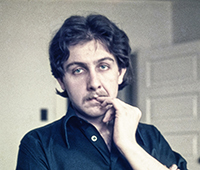
Imi Lo is a psychotherapist and consultant working with emotionally and intellectually intense people.
With three master's degrees in Mental Health (University of Queensland), Buddhist Studies (University of Hong Kong), and Global Cultures (King's College London), Imi brings an interdisciplinary perspective to her work. She has over fifteen years of clinical experience as a psychotherapist and art therapist, including work with Médecins Sans Frontières and the UK National Health Service.
She has published three books with Hachette: Emotional Sensitivity and Intensity (2018, translated into seven languages), The Gift of Intensity (2021), and The Gift of Empathy (2025).
Her training includes art therapy, philosophical counselling, Jungian psychology, mentalization-based treatment, EMDR, Schema Therapy, mindfulness-based and trauma-informed modalities, and she works integratively with psychodynamic, philosophical, and creative methods. Her academic research focuses on the philosophy of emotion and death, drawing on Hellenistic and East Asian philosophical sources.
It is a pretty good follow up to Ms Lo's other book. She covers a lot of possible options for dealing with the issues described in a fairly comprehensive way, as well as possible reasons why sensitive people are the way they are, also known as "affect". It's worth the read to round out what the current thinking around Adverse Childhood Experiences, and Highly Sensitive Person attributes. If you are looking for the easy button, read this and your troubles will go away, this isn't that book. It's more like "here is a bunch more "hidden" pieces to the puzzle you might want to look at to possibly make sense of one's experience".
I have to admit, I felt a bit cheated by this book. I've been following Imi's work for a while, having really enjoyed her first book. I signed up to her newsletter, and was delighted when she announced the new book ... but it's really just an expanded set of her blog posts and items from her newsletter! I kept coming across sections that I'd already read about.
tl/dr: don't bother with this if you've been on the mailing list - although maybe it'll be a useful resource in future once the memory has faded!
"By honouring your idiosyncrasies and demonstrating self-acceptance, you are allowing others to do the same...
Your true home is not a particular person nor group nor place, but the 'moments of meetings' when you intellectually, emotionally and spiritually connect. It lies beyond the physical, the biological or what you can see. It is when your soul aligns with a piece of writing, art or music, and when you are inspired, transformed, elevated. It is when you download materials from a source bigger than yourself, and when you express yourself freely and unapologetically...
Think of the reactions to your emotions as a muddy swamp. Like in quicksand, the more you try to escape it, the more stuck you get. Reactive and agitated movements will not only get you sucked in deeper, but your movement will also expand the size of the swamp, making it even harder to reach the solid ground around it. To get out, use slowness, stillness and patient watchfulness...
The opposite of joy is not pain, but a sore emptiness where you watch life go by without being in it...
When you 'over-react', it is not the adult you that is behaving badly, but a hurting child. Therefore, as much as you can, approach yourself gently and tenderly, as you would with a wounded young person. Try not to add a 'second arrow' of judgement and condemnation to the suffering...
Poet Kahlil Gibran [wrote]... 'Your children are not your children. / They are the sons and daughters of Life's longing for itself. / They come through you but not from you, / And though they are with you, yet they belong not to you.' ... Consider the cycles in nature, things are produced but not possessed...
Please don't deprive the world of your light -- someone like you is looking for you, and they can only find you if you show up as who you are...
People and your feelings towards them are not here to haunt you, but rather they are invitations for you to process and digest what was unfinished so that you can become more whole, more healed, and free. Our ability to love and risk being loved is the most tender, yet strongest, part of our human capacity and the origin of much of our creative potential...
As the season changes, nature will help you shed dead leaves and branches. You will not have to worry about the shape and form of your new fruits either, for you will be provided with the necessary nutrients and resources for the very fruits you are destined to bear."
This entire review has been hidden because of spoilers.
The Gift of Feeling Deeply Notes on Emotional Intensity and Living Fully
1. What It Means to Feel Deeply Emotional intensity isn’t a flaw—it’s a way of experiencing life with depth, creativity, and presence. It often shows up as emotional depth, strong empathy, perceptiveness, a rich inner world, and creative highs and lows. These traits can feel overwhelming, but they are also signs of deep aliveness and growth potential.
2. Why Self-Understanding Comes First Before we can build meaningful relationships, we need to understand ourselves—how we feel, how we connect, and what we need. Emotional self-awareness helps us stop outsourcing our worth to others and start honoring our inner experience. True belonging doesn’t come from fitting in; it comes from feeling in sync with who we are.
3. How to Work With (Not Against) Your Intensity Learning to relate to your emotions without being consumed by them is key. Practice noticing emotions, feeling them in your body, and letting them pass without controlling or suppressing. It’s also essential to let go of perfection, build emotional boundaries, and embrace solitude when needed. Real growth happens when you allow your full spectrum of emotion to exist.
4. Navigating Family, Love, and Work Many emotionally intense people grew up as caretakers or emotional anchors in their families. Healing means naming that truth and letting go of impossible roles. In relationships, we need clarity, boundaries, and self-trust. In work, we must seek meaning and protect our energy. Intensity doesn’t need to be managed—it needs to be rooted.
To feel deeply is not something you need to fix—it’s something you can grow into. With the right tools and self-compassion, emotional intensity can become your greatest source of connection, creativity, and resilience.
Insightful Guide for Navigating Sensitivity: Unearthing Gems Amidst Repetition
This book serves as a handbook-like guide for people who are highly sensitive. It addresses not only those born with such characteristics but also individuals shaped by childhood trauma. Due to this broad approach, the book sometimes appears repetitive or too generic, as it tries to cover a wide range of individual characteristics. However, for the content that you do find relatable, this book offers a broader perspective. The exercises are thoughtfully designed and challenge you to think more deeply. Having undergone two years of therapy for childhood trauma, I still learned a few new things that I can take with me into my next stage of healing.
I also find Imi's blog about her working approach inspiring. It offers a structured framework for the healing-to-thriving process. Highly recommended and can be found on Imi's Goodreads page.
I highly recommend this book for anyone who has ever felt they were too “much,” too “sensitive,” or too “intense.” Research suggests that approximately one-fifth of the global population falls into the category known as Highly Sensitive Persons (HSP).
Initially, I presumed this would be just another self-help book, but I was pleasantly surprised. Imi Lo, a certified psychotherapist, brings a deep understanding to her writing, supported by scientific evidence. Unlike many self-help authors who peddle pseudoscience and prescribe a one-size-fits-all approach, Lo refrains from imposing her ideology. Instead, she shares her experiences as an HSP and offers practical exercises for personal growth.
What sets this book apart is its incorporation of neuroscience. Lo delves into how hypersensitivity is rooted in brain functioning, with HSPs’ brains wiring differently than those of ‘typical’ individuals.
I particularly appreciate how the book explores an HSP’s relationships—with oneself, society, and family. Lo acknowledges the significant influence family dynamics can have on an HSP’s mental health, drawing from her own childhood experiences.
While I found much to admire, there are a couple of drawbacks. Firstly, Lo’s descriptions of HSP traits occasionally blur with characteristics associated with ADHD, which could be clearer to avoid confusion. Additionally, her reference to MBTI as factual is problematic, given its status as pseudoscience within the psychology community.
Despite these criticisms, I found the book immensely valuable. It deepened my understanding of HSP traits, provided insight into myself, and offered practical exercises for further self-exploration.
To be honest, the book helps me know more about myself as a HSP. And I realized I would not be alone any more because there are so many HSP in this world. Whereas, the context in this book is not systematic enough, and the thoughts are not so deep and insightful. Also, it lacks of examples and cases to clearly explain the situations. And practical instructions need to be added in the context. There are repeated information in some contexts and some descriptions are not accurate. Generally, it’s a good book to roughly learn about HSP for ppl who are confused about themselves but not suitable for those who prefer deeply self-exploring.
Phenomenonal book! Never read something quiet so helpful - I think. This book introduced me to object...thingy thingy ( can't remember the scientific name). Up until this point in my life I truly thought I was crazy because of this. I thought I was in a movie, it's why I never watched or read stuff like the Truman show because I really couldn't believe other people thought about me or that other people existed when I weren't there. It's so hard to explain but ultimately the book is amazing and I highly recommend it to anyone with BPD/EUPD
This is by far the most validating book I have ever read. It is insightful and well written. I feel lighter, like I unpacked a lot of baggage. Don't get me wrong. There are some very intense parts and I did put the book down for periods at a time and picked it back up when I was ready to continue to unpack. I can't recommend this book enough, especially for people who have been called drama, queens or two emotional or anyone with borderline personality. Or depression and lots of family trauma. Pick up this book and read it with an open mind.
As an highly sensitive and emotionally intense person this book spoke to me on a very personal level. That said I skipped the parts about childhood as I have always had loving parents and a supportive family. I don’t think it’s fair that so many of these books like to blame childhood or the parents. Sometimes you can have a great childhood but it’s your experiences in adulthood away from your safe family nest that bring about emotional triggers and trauma that will haunt you for years. I think more books that discuss mental health should focus on that.
Loved it. There was a lot that I already knew, because of years of research and therapy, and there were also parts that were a bit repetitive. But it was really really good, very empathetic and loving, it makes you feel seen and heard and I will definitely come back again to this. Just to reinforce and keep the messages fresh in my mind. It really feels like a safe space for highly sensitive people
I especially loved the chapter about intimate love. It was so perfectly written and it gave me so many new insights, I will definitely come back to this to reread
I read this book precisely when I needed it, in a period of huge change and isolation. For anyone struggling to feel understood, regularly dismissed as too sensitive, and struggling to find connections that outlast first impressions, this book is extremely validating and comforting. I was occasionally creeped out by how relevant some of the info was to me, like when a horoscope gets a detail too right. Still, it’s the most seen I’ve felt in years and I will definitely be rereading it.
A decent overview into some of the psychological basises for why so-called "intense" people are the way they are. Fundamentally one of the core concepts that the reader is left to ponder on is this transcient self application of self-compassion on oneself, as well as those around them. To embrace fully themselves, and the fullness of their intensity and dare to be great in their own stead.
This entire review has been hidden because of spoilers.
A powerful, validating insightful book that frames emotional intensity as a strength and offers practical strategies for embracing and managing this emotional superpower. Provides a compassionate and empowering perspective for anyone who has ever felt overwhelmed by their emotional experiences and sensitivity, guiding them toward self-acceptance, emotional regulation, and personal growth.
Not the best writing, and not everything will apply to everyone. Bu5 there were some really useful insights in here, and she hit the bullseye with my experiences enough that the book was worth reading and will be worth returning to in the future.
Overall a nice quick read! I wouldn’t say I was heavily engaged but the sections about family dynamics was amazing. Lots of food for thought on processing emotions and distant parents that I will carry with me.
I've never felt so seen and understood as when reading this book. And finally, I found useful insights and advice on how to approach that what I'm experiencing daily. An amazing book!
As usual, Imi Lo has the power to explain how it feels to live in my skin in excruciating detail. Feeling seen is feeling validated, and that is essential to anyone's wellbeing.